
Peptide storage & stability
Peptides are fragile chains. How you store them, as powder and in solution, decides whether they stay intact.
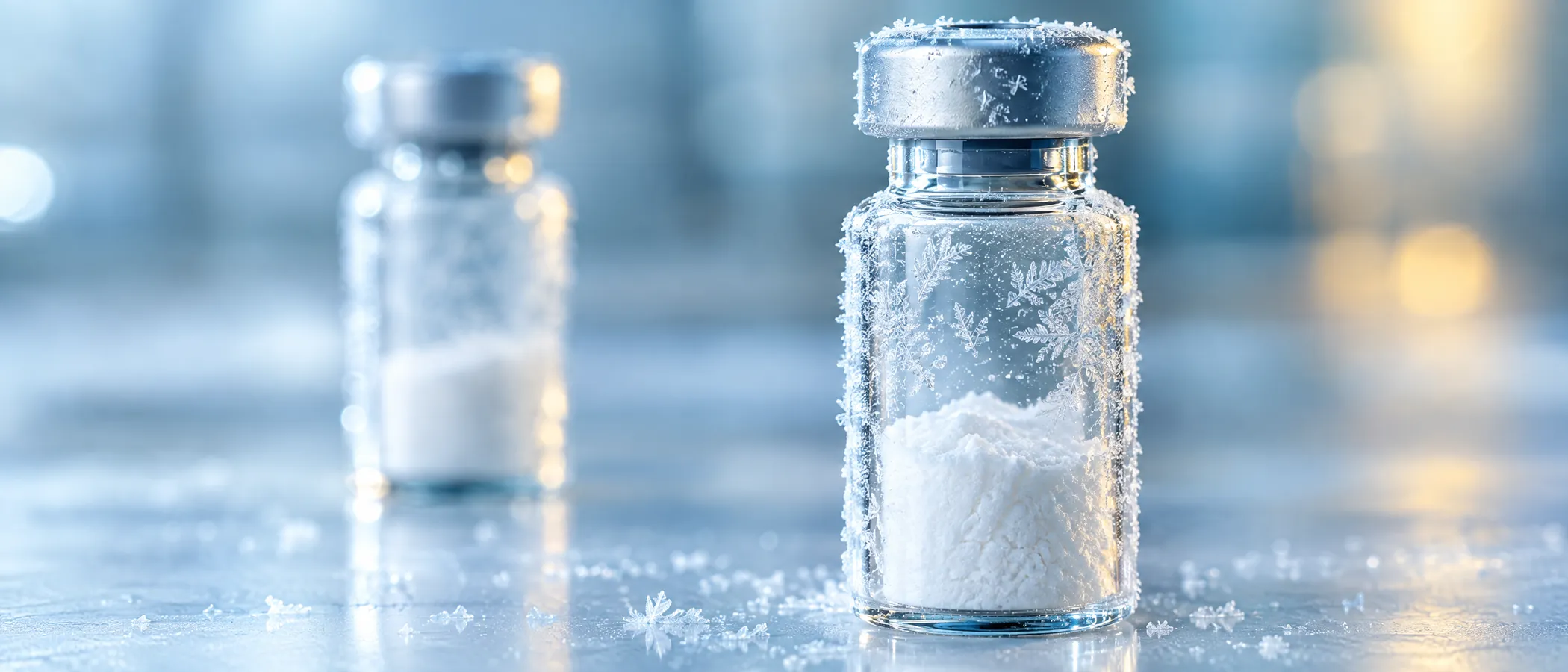
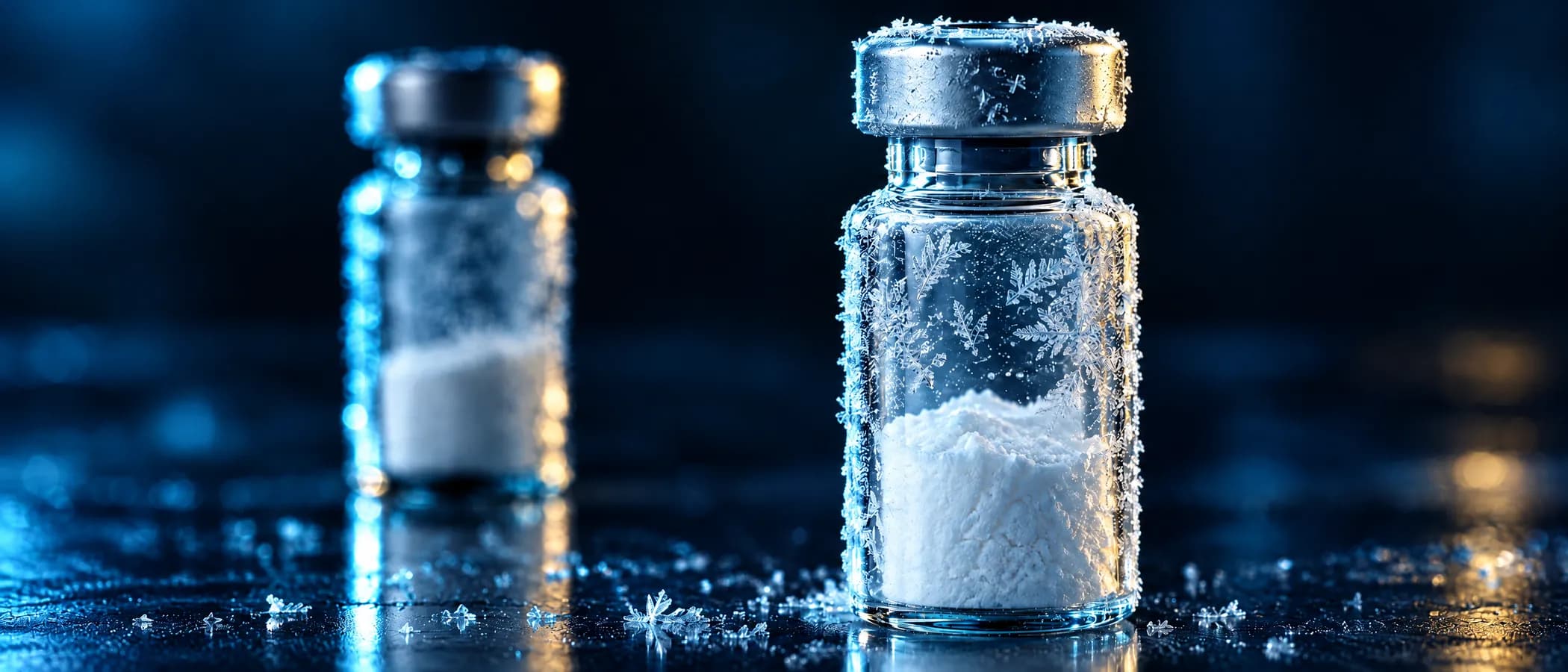
A peptide is a short chain of amino acids, and that chain can break. Heat, light, and time all degrade it, so storage is not an afterthought. It is what protects the potency you paid for. The rules differ before and after reconstitution.
Before reconstitution (the powder)
The lyophilized (freeze-dried) powder is the most stable form. This is how peptides survive shipping. Keep the sealed vial refrigerated at 2–8 °C (36–46 °F); for long-term storage the freezer is fine. Keep it away from light and heat. A dry, cold, dark powder keeps for a long time.
After reconstitution (in solution)
Once mixed with bacteriostatic water, keep the vial refrigerated at 2–8 °C and use it within the bacteriostatic window, commonly cited as up to ~28 days. Protect it from light. Never freeze a reconstituted peptide, and avoid repeated freeze–thaw cycles. The ice crystals and temperature swings shear the peptide chain and destroy potency.
What degrades a peptide
- Heat. Leaving a vial at room temperature, or worse, warm.
- Light. Especially UV; store in the dark.
- Freeze–thaw cycles. Repeated freezing and thawing of a reconstituted solution.
- Time in solution. A reconstituted peptide has a far shorter life than the powder.
- Contamination. A non-sterile draw introduces microbes the preservative may not fully hold.
Inspect before every use and discard any vial whose solution has turned cloudy or shows particulates. When in doubt, remember the powder keeps longest. Reconstitute only what you will use within the window.
Related peptides
Research use only · Not medical advice · Updated 2026-09-22