
Reference
Glossary
Plain-language definitions for the mechanism terms, hormones, lab markers, and units used across the library, 60 terms and counting.
60 terms
Mechanism & cell biology
19- Agonist
- A molecule that binds a receptor and switches it on, triggering the cell's response. Most peptides here are agonists of a specific receptor.
- Amino acid
- The building blocks of peptides and proteins. A peptide's sequence is its specific order of amino acids.
- AMPK
- A cellular energy sensor that switches on when energy is low, promoting fat-burning and mitochondrial work.
- Analog
- A man-made molecule designed to closely mimic a natural one, often modified to last longer or act more strongly.
- Angiogenesis
- The growth of new blood vessels. It's central to how tissue-repair peptides bring fresh blood supply to healing tissue.
- Antagonist
- A molecule that binds a receptor and blocks it, preventing the normal signal from firing.
- cAMP
- A small messenger inside the cell that relays a receptor's signal onward; many hormone receptors raise cAMP when activated.
- Cytokine
- A small signaling protein immune cells release to coordinate a response; 'pro-inflammatory' cytokines amplify inflammation.
- Desensitization
- When a receptor becomes less responsive after sustained stimulation. It's the reason many peptides are cycled with planned breaks.
- Lipohypertrophy
- Fatty lumps under the skin from injecting the same spot repeatedly; rotating injection sites prevents it.
- MAP kinaseMAPK
- A signaling pathway that relays growth and stress messages from the cell surface to the nucleus.
- mTOR
- A central cellular sensor that drives growth and protein-building when nutrients and growth signals are plentiful.
- NF-κB
- A master 'switch' protein inside cells that drives inflammatory signaling. Several peptides act by turning it down.
- PepT1
- A transporter protein that carries small two- and three-amino-acid peptides into cells; some peptides rely on it to get inside.
- Peptide
- A short chain of amino acids. It's smaller than a protein. Every compound in this library is a peptide or a peptide-like molecule.
- Receptor
- A protein, usually on the cell surface, that acts as a switch. When the right molecule docks, it starts a signal inside the cell.
- Secretagogue
- A compound that prompts a gland to secrete a hormone. A GH secretagogue prompts the pituitary to release growth hormone.
- SirtuinsSIRT1
- A family of enzymes that regulate metabolism, stress resistance, and aging. They depend on NAD+ to work.
- Tachyphylaxis
- Rapid loss of response to a compound with repeated dosing. It's why some peptides are pulsed rather than run continuously.
SeeKPV
SeeKPV
SeeNAD+
SeeMelanotan 2
Hormones & signaling
20- ACTH
- Adrenocorticotropic hormone: the pituitary signal that tells the adrenal glands to make cortisol.
- BDNF
- Brain-derived neurotrophic factor: a protein that supports the survival and growth of neurons. Several nootropic peptides raise it.
- FSH
- Follicle-stimulating hormone: a pituitary hormone that governs sperm and egg production.
- GHRH
- Growth-hormone-releasing hormone: the natural signal that tells the pituitary to release GH. Several peptides are GHRH analogs.
- GHRP / ghrelin receptor
- Growth-hormone-releasing peptides act on the ghrelin receptor to trigger a GH pulse. It's a lever complementary to GHRH.
- GIP
- Glucose-dependent insulinotropic polypeptide: a second incretin gut hormone. Some newer molecules target both GIP and GLP-1.
- GLP-1
- Glucagon-like peptide-1: a gut hormone that boosts insulin, slows the stomach, and reduces appetite. It's the basis of the GLP-1 weight class.
- Growth hormoneGH
- The pituitary hormone that drives growth, repair, and metabolism. Many peptides here aim to raise it.
- hCG
- Human chorionic gonadotropin: mimics LH to stimulate the gonads; used to keep the testes functioning during other protocols.
- HPA axis
- The hypothalamic-pituitary-adrenal axis: the body's central stress-response system, ending in cortisol release.
- HPG axis
- The hypothalamic-pituitary-gonadal axis: the chain of signals (GnRH → LH/FSH → testosterone/estrogen) that controls reproduction.
- IGF-1
- Insulin-like growth factor 1: the downstream hormone (mostly made by the liver) through which GH produces much of its growth and repair effect. Also a key lab marker.
- Insulin
- The hormone that lowers blood sugar by moving glucose out of the blood and into cells.
- Luteinizing hormoneLH
- A pituitary hormone that signals the gonads. It drives testosterone production in men and ovulation in women.
- Melanocortin receptorsMC1R–MC5R
- A family of five receptors that α-MSH-like peptides act on. MC1R handles pigment, MC4R handles appetite and erection, and others cover immune and adrenal roles.
- NAD+
- A coenzyme central to energy production and DNA repair that declines with age. Sirtuins depend on it to work.
- Prolactin
- The pituitary hormone behind milk production. Some peptides can raise it, which matters for side effects.
- SHBG
- Sex-hormone-binding globulin: a blood protein that binds sex hormones and sets how much is free and active.
- VEGF
- Vascular endothelial growth factor: the main signal that drives new blood-vessel growth.
- α-MSH
- Alpha-melanocyte-stimulating hormone: drives skin pigmentation and carries anti-inflammatory activity. Several peptides are fragments or analogs of it.
SeeTirzepatide
SeeHCG
SeeNAD+
SeeMelanotan 2,KPV
Administration & formulation
10- Bacteriostatic water
- Sterile water with 0.9% benzyl alcohol added as a preservative, so a single vial can be drawn from repeatedly over weeks.
- Every other dayEOD
- A dosing schedule of one dose every two days. It's common for longer-acting peptides.
- Insulin unit
- 0.01 mL of liquid on an insulin syringe, shown by the marks on the barrel. On a U-100 syringe, 100 units = 1 mL; the calculator converts a dose to units. An IU (international unit) measures a drug by its effect.
- IntramuscularIM
- An injection into muscle. It absorbs on a different curve than a subcutaneous injection.
- Intranasal
- Delivery as a nasal spray. It's the primary route for a few peptides such as Semax and Selank.
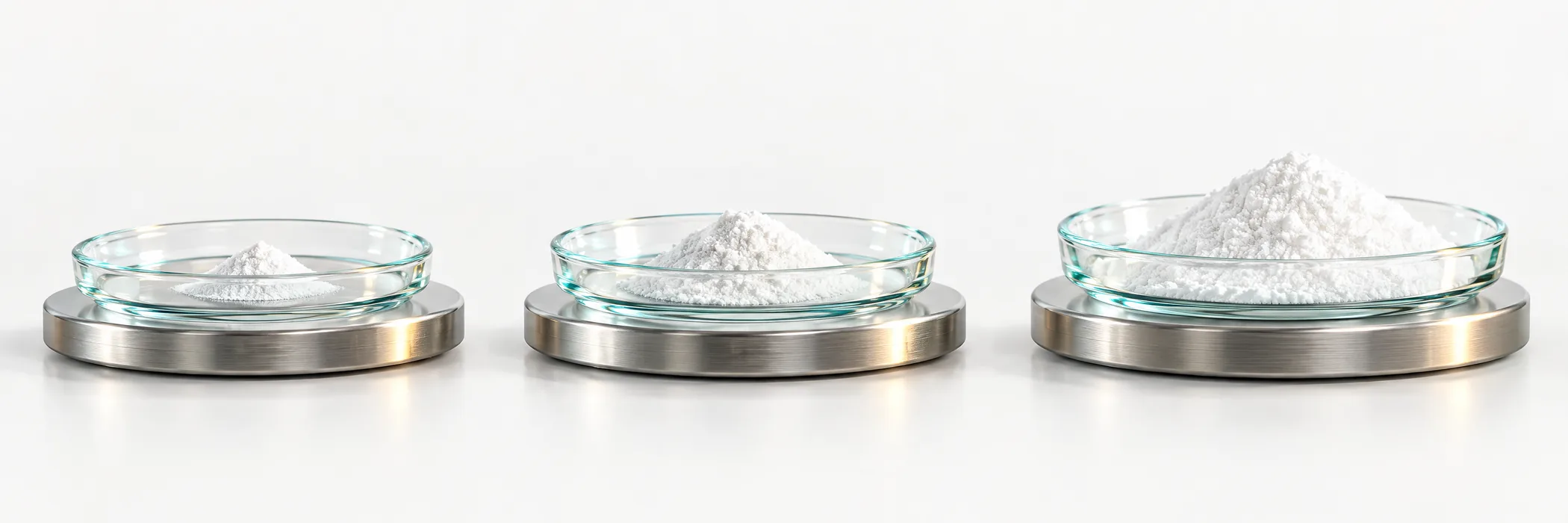
- Lyophilized
- Freeze-dried into a stable powder. It's how peptides ship before you reconstitute them.
- Reconstitution
- Dissolving a lyophilized peptide powder in bacteriostatic water to make an injectable solution. The calculator does the math.
- SubcutaneousSubQ
- An injection into the fat just under the skin. It's the standard route for the research peptides in this library.
- Titration
- Starting low and stepping the dose up gradually to limit side effects. It's standard for the GLP-1 peptides.
- Washout
- A planned break between cycles that lets receptors re-sensitize before dosing resumes.
Lab markers
6- Fasting insulin
- Insulin measured after an overnight fast. It's a marker of how sensitive the body is to insulin.
- Ferritin
- The body's stored-iron marker; checked around recovery and performance protocols.
- HbA1c
- A blood test reflecting average blood sugar over the past ~3 months; tracked with metabolic peptides.
- hs-CRP
- High-sensitivity C-reactive protein: a blood marker of low-grade, body-wide inflammation.
- Lipid panel
- A blood test of cholesterol and triglycerides; watched with the GLP-1 and metabolic peptides.
- MCAS
- Mast cell activation syndrome: a condition of over-reactive mast cells releasing histamine and other inflammatory mediators.
SeeKPV
Pharmacology & units
5- Bioavailability
- The fraction of a dose that actually reaches the bloodstream. It's high for injection, lower for oral or nasal routes.
- Half-life
- The time it takes for the blood level of a compound to fall by half. It sets how often you need to dose.
- IC50
- The concentration of a compound that produces half its maximum effect. It's a potency measure reported in lab studies.
- mcg / mg
- Units of mass. 1 mg = 1,000 mcg (micrograms). Peptide doses are usually given in mcg or mg.
- PharmacokineticsPK
- How the body absorbs, distributes, and clears a compound over time. It's the source of a peptide's half-life.