
5-Amino-1MQ
Small-molecule NNMT inhibitor · metabolic
5-Amino-1MQ is a small-molecule NNMT blocker, not a peptide. People run it at 5 mg a day under the skin for fat loss and aging muscle. In obese mice it cut body weight and fat-pad mass while food intake stayed the same.
Buy 5-Amino-1MQ50 mg vial
Ki Researcher is affiliated with Ki Peptides.
Ships to the US only. Buyers must be 21 or older.
At a glance
- Dose
- 2.5 to 10 mg once daily (5 mg is standard)
- How often
- Once daily
- How
- A small injection under the skin
- When
- Morning, with or before food
- Cycle
- 4 to 6 weeks on (8 for muscle) then 4+ weeks off
The 30-second versionEverything on this page, fast
Fat Metabolism · NAD+ Sparing · NNMT Inhibitor · Aging Muscle
The NAD+-sparing fat-loss molecule. In studies this small-molecule NNMT blocker cut body weight and fat-pad mass, raised NAD+ in cultured fat cells and improved grip strength in aging muscle. It saves the cell's own NAD+ and methyl groups instead of adding more from outside.
The basics
- A small synthetic molecule (a methylquinolinium) that blocks NNMT, the enzyme overactive in obese fat tissue and aged muscle. Not a peptide; no amino-acid sequence.
- Run under the skin, the route of every 5-Amino-1MQ mouse study on this page. The injectable-vial standard is about 5 mg a day, and a 50 mg vial holds about 10 doses.
Why people use it
- Fat loss without eating less. In obese mice it cut body weight and fat-pad mass and shrank fat cells, with no change in food intake.
- Spares the cell's own NAD+. Blocking NNMT keeps nicotinamide from being methylated and leaves more SAM in fat cells.
- Stronger aging muscle. In aged mice on daily shots, grip strength was up by week 6 of an 8-week run.
- Lower cholesterol in obese mice. Plasma cholesterol fell over the 11-day study.
Stacks well with
- NAD+, the most direct pairing. It fills the pool 5-Amino-1MQ conserves.
- MOTS-c, the AMPK pairing. It switches on AMPK, the cell's energy sensor, while 5-Amino-1MQ spares NAD+.
- Retatrutide, the appetite pairing. It cuts calorie intake while 5-Amino-1MQ works inside fat cells.
Good to know
- Blocking NNMT leaves more SAM, the main methyl donor, in fat cells. Many people also add TMG (trimethylglycine), methylfolate and methyl-B12.
- A 50 mg vial mixed with 2 mL bacteriostatic water gives 25 mg/mL. At that mix the 5 mg dose is 20 units (0.2 mL), and the vial yields about 10 doses.
What it does
What mouse and cell research reports on fat loss and aging muscle.
- Lowers fat and body weightIn obese mice, it cut body weight and fat-pad mass and shrank fat cells, with no change in food intake.
- Spares NAD+ instead of adding itNMN and NR add NAD+ building blocks from outside. 5-Amino-1MQ blocks NNMT, so the cell's own nicotinamide isn't methylated away.
- Improves grip strength in aging muscleIn 22-month-old mice on daily shots, grip strength was up by week 6 of an 8-week run.
- Helps aged muscle repair after injuryIn injured aged mice it switched on muscle stem cells, and the new muscle fibers grew larger.
- Stacks with other metabolic compoundsPartners include retatrutide for appetite, NAD+ for direct supply, MOTS-c for AMPK signaling and SS-31 for membrane protection.
How it works
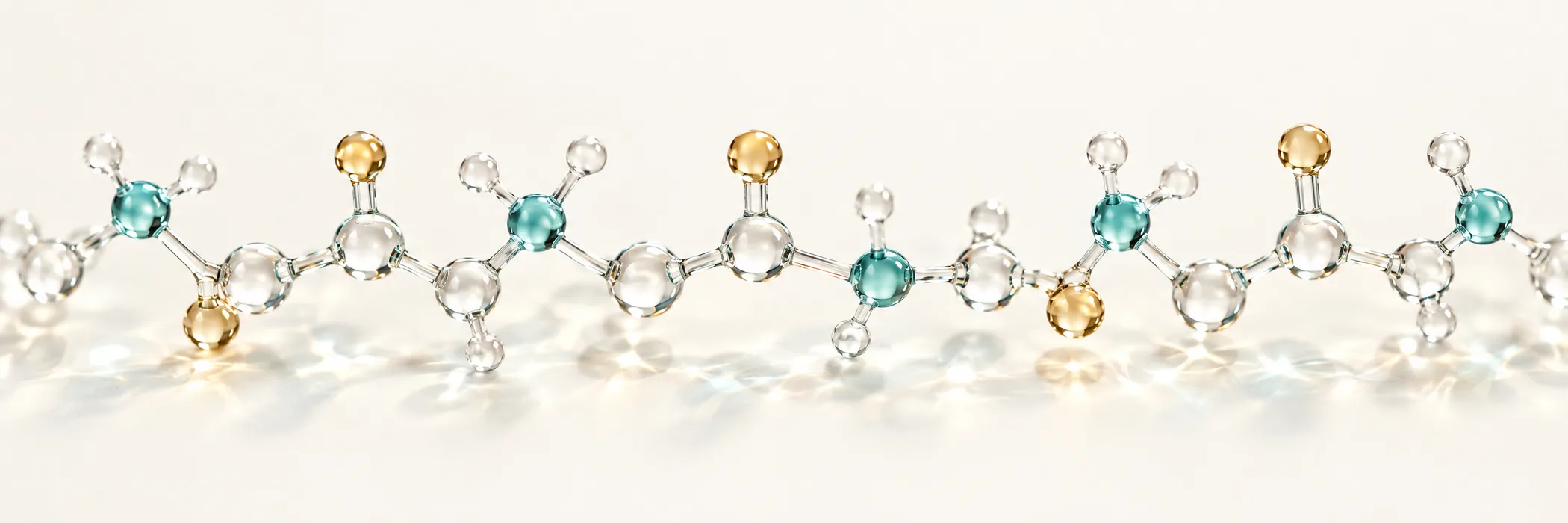
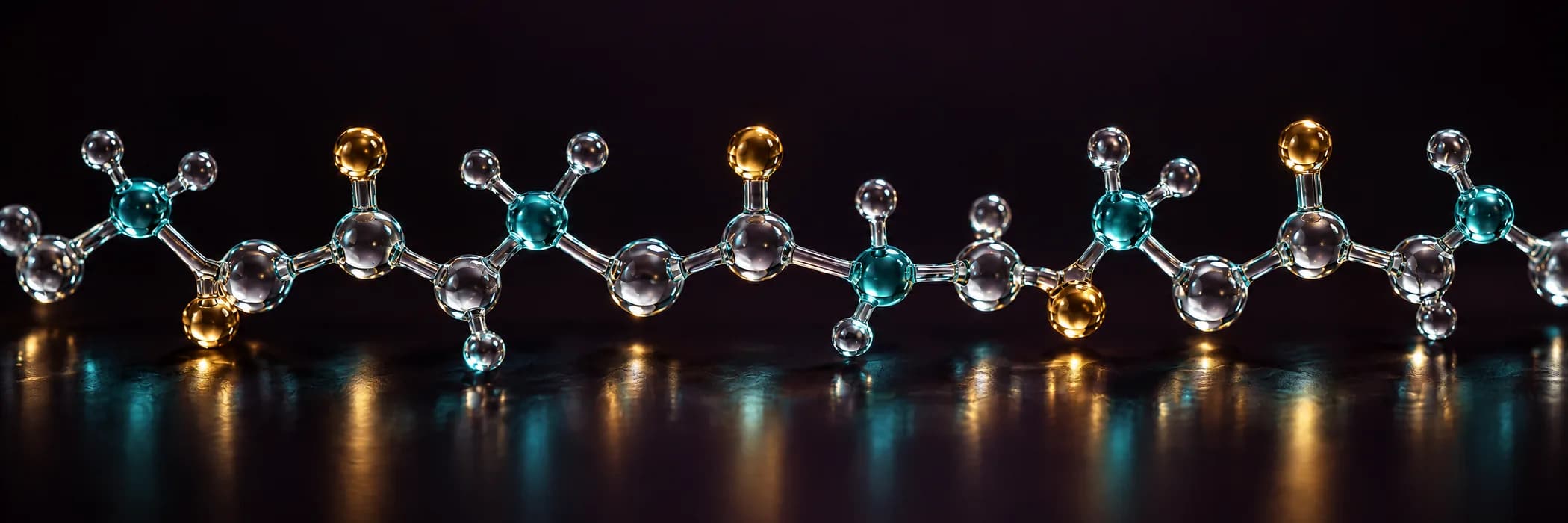
Blocks an NAD+ drain. NNMT (nicotinamide N-methyltransferase) takes a methyl group from SAM (S-adenosylmethionine) and puts it on nicotinamide, an NAD+ building block. That uses up both. NNMT runs high in obese fat tissue and aged muscle.
Target confirmed in mice. A 2014 study knocked NNMT down in mouse fat and liver. That protected the mice against diet-induced obesity and raised their energy use. 5-Amino-1MQ is a drug-like inhibitor built to copy that effect.
Tested in fat cells. In cultured fat cells it blocks NNMT at low micromolar levels. Higher levels modestly raise NAD+ and SAM and cut fat build-up in maturing fat cells. It barely touches related methyl enzymes.
Sources:PMID 24717514PMID 28548833PMID 29155147PMID 30753815
How to dose it
Most people run 5-Amino-1MQ as a daily subcutaneous (SC) shot.
Dose tiersMost run 5 mg a day. Online 50 to 100 mg figures are oral-capsule doses.
- Low / introductory:
- 2.5 mg once daily. A first-week check for new users.
- Standard:
- 5 mg once daily, the usual dose and the calculator's default.
- Upper range:
- 10 mg once daily, the top dose, for fat-loss phases.
How to injectOne small shot a day into the fat under the skin.
- Injection site:
- Abdomen (a couple of inches from the navel), love handle or thigh. Rotate sites to avoid irritation and lipohypertrophy.
- Measuring the dose:
- At 25 mg/mL (50 mg + 2 mL bacteriostatic water), a U-100 syringe draws 2.5 mg as 10 units, 5 mg as 20 units, 10 mg as 40 units.
- Time of day:
- Morning is the common default.
- Food window:
- It bypasses the gut. Most take it with or before breakfast.
- Why inject it:
- Every 5-Amino-1MQ mouse study cited here used shots under the skin, the route these doses assume.
Cycle and breaksPeople run it in blocks, then take at least 4 weeks off.
- Fat-loss cycle:
- 4 to 6 weeks of daily dosing, often paired with a calorie deficit, scaled from the 11-day and multi-week mouse blocks.
- Muscle / aging cycle:
- 8 weeks daily, the length of the aged-mouse grip-strength study.
- Washout:
- At least 4 weeks off before running it again. Use the break to recheck fasting glucose, lipids and body weight.
Mixing the vialA 50 mg vial takes 2 mL bacteriostatic water. The calculator does the math live.
- Mixing:
- At 25 mg/mL, 2.5 mg takes 10 units, 5 mg takes 20 units, 10 mg takes 40 units. One 50 mg vial gives about 10 doses at 5 mg standard.
- Why 2 mL:
- At 2 mL, 5 mg takes 20 units. For a larger draw, mix with 3 mL (30 units).
- Salt vs active cation:
- Doses here are the active compound. Iodide-salt vials are only about 56% active, so a 50 mg label holds about 28 mg. Scale the mix; the calculator won't catch it.
Best time to take it


Implied best time
Morning
Most people take 5-Amino-1MQ in the morning, with or before food, to match the day's metabolic rhythm.
- It is a metabolic compound, so people line the dose up with the active part of the day.
- It's one dose a day. Morning, with or before food, is the common habit.
- Rats clear it with a half-life of about 3.8 h by IV and 6.9 h by mouth.
Sources:DOI 10.1016/j.jpba.2021.114255
What to stack it with


Each partner adds a second mechanism to NNMT blocking.
5-Amino-1MQ + NAD+5-Amino-1MQ spares NAD+, and NAD+ supplies more from outside.
- Why it works:
- 5-Amino-1MQ keeps the nicotinamide that feeds NAD+ synthesis from being methylated.
- The protocol:
- 5-Amino-1MQ 5 mg SC daily with NAD+ SC at the dose on its own page. Inject at separate sites, rotated.
- Outcome:
- Reached for on metabolic and longevity goals.
5-Amino-1MQ + MOTS-cMOTS-c switches on AMPK, the cell's energy sensor, while 5-Amino-1MQ spares NAD+.
5-Amino-1MQ + SS-315-Amino-1MQ feeds energy production, and SS-31 protects the membrane that makes it.
- Why it works:
- SS-31 binds cardiolipin, the inner-membrane fat that shapes the cristae and organizes the electron transport chain.
- The protocol:
- 5-Amino-1MQ 5 mg SC daily with SS-31 SC at the dose on its own page. Inject at separate sites, rotated.
- Outcome:
- Reached for on mitochondrial-aging and longevity stacks.
5-Amino-1MQ + RetatrutideRetatrutide cuts appetite. 5-Amino-1MQ works inside fat cells.
- Why it works:
- Retatrutide cuts appetite, and in obese mice it raised energy use. Blocking NNMT in fat cells works by a separate route.
- The protocol:
- Retatrutide goes first on its weekly step-up schedule. 5-Amino-1MQ 5 mg SC daily joins once that is tolerated.
- Outcome:
- Reached for on recomposition.
Support nutrients
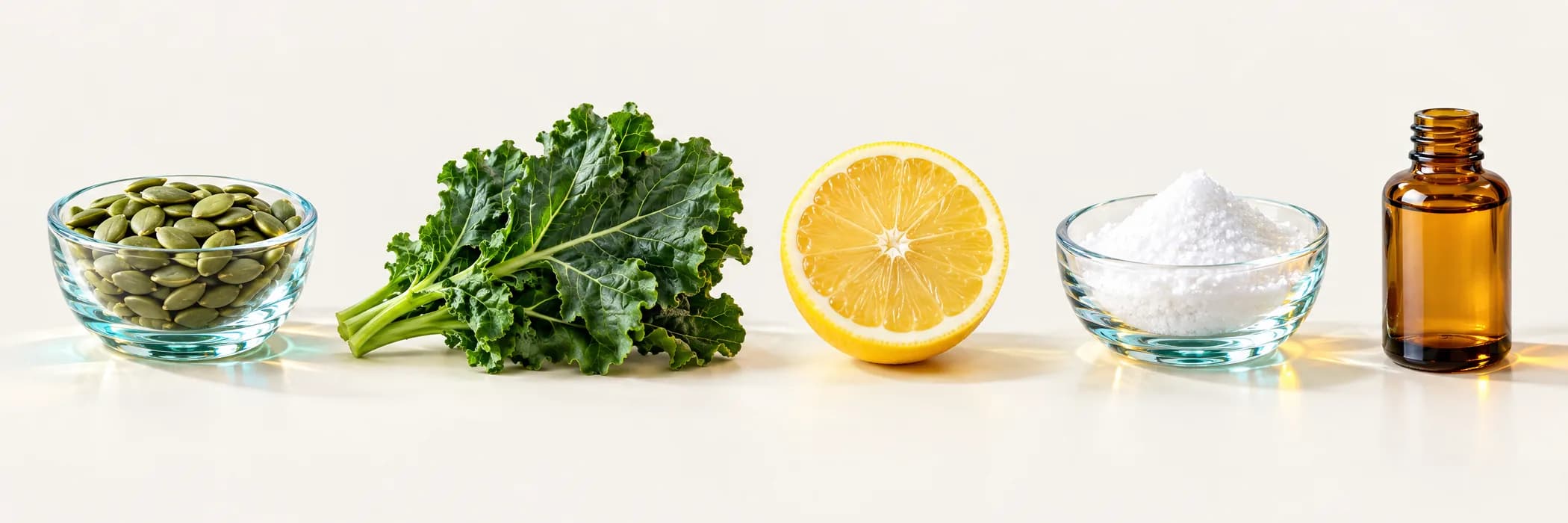
5-Amino-1MQ blocks NNMT, the enzyme that uses up methyl groups and nicotinamide, an NAD+ precursor.
Feed the spared NAD+ poolBlocking NNMT saves nicotinamide for NAD+. These keep that pool supplied.
- NR or NMN:
- 250 to 500 mg of NR or NMN once daily, in the morning, to feed the NAD+ pathway.
- Niacin (nicotinic acid) or nicotinamide:
- 50 to 100 mg of plain niacin or nicotinamide once daily, a lower-cost B3 option. Plain niacin can cause flushing from about 50 mg. Nicotinamide does not.
- L-Tryptophan:
- 500 mg with dinner. Tryptophan feeds NAD+ synthesis through a separate pathway.
Power the mitochondrial engineSpared NAD+ only helps if mitochondria can use it. These keep them running.
- CoQ10 (ubiquinol form):
- 200 mg of ubiquinol with the largest meal. CoQ10 carries electrons through the chain.
- B-complex (activated forms):
- One activated B-complex daily, 50 mg each of B1, B2, B3, B6, 400 mcg methylfolate and 1,000 mcg methyl-B12. B1, B2, B3 are direct electron-transport, Krebs-cycle cofactors.
- Magnesium glycinate:
- 200 to 400 mg of magnesium glycinate at bedtime. ATP needs magnesium to form.
Feed the methionine cycleBlocking NNMT spares SAM, the main methyl donor. These feed the methionine cycle that makes it.
- TMG (trimethylglycine / betaine):
- 1,000 to 2,000 mg of TMG with the largest meal. It replenishes SAM by recycling homocysteine to methionine.
- Methylfolate (5-MTHF):
- 400 to 800 mcg daily, the active folate form that feeds the methionine cycle.
- Methyl-B12 (methylcobalamin):
- 1,000 mcg sublingual daily, alongside methylfolate for the methionine cycle.
Dose calculator
Reconstitution calculator
Calculated for a 1 mL U-100 insulin syringe (100 units/mL).
Units per dose
20 units
Draw this many units on a U-100 syringe
Each unit holds 250 mcg
- Volume per dose
- 0.2 mL
- Doses per vial
- 10
- Concentration
- 25 mg/mL
One vial lasts
- Daily
- 10 days
- Every other day
- 20 days
- 5×/week
- 14 days
Research use only. Not for human consumption. Outputs are reference values based on research literature. Verify all measurements independently.
Side effects and what to watch
What the study saw. In an 11-day study, obese mice showed no observable adverse effects, and food intake did not change.
Worth knowing. Blocking NNMT leaves more SAM, the main methyl donor, in fat cells. Long-term effects of that shift in a person are unknown. Many people also add TMG, methylfolate and methyl-B12.
Sources:PMID 29155147
Common questions
Is 5-Amino-1MQ a peptide?
No. It's a small synthetic molecule, a methylquinolinium, with no amino-acid sequence. People mix and inject it like the peptides here.
What does 5-Amino-1MQ do in the body?
It blocks NNMT, an enzyme that uses up nicotinamide and methyl groups and runs high in obese fat and aged muscle. In fat cells that spares NAD+ and SAM and cuts fat storage.
How is 5-Amino-1MQ dosed?
Most people run 5 mg once a day under the skin, starting at 2.5 mg for the first week. The top dose for fat-loss phases is 10 mg. A run lasts 4 to 6 weeks, or 8 for muscle, then at least 4 weeks off.
Is 5-Amino-1MQ injected or taken by mouth?
Most people inject it under the skin, the route every 5-Amino-1MQ mouse study on this page used. The 50 to 100 mg figures online are oral-capsule doses, not injection doses.
What side effects does 5-Amino-1MQ have?
In an 11-day study, obese mice showed no observable adverse effects, and food intake did not change. Many people also add TMG, methylfolate and methyl-B12 for the methionine cycle.
Can you stack 5-Amino-1MQ with retatrutide or MOTS-c?
People do. Retatrutide cuts appetite, MOTS-c switches on AMPK, and NAD+ fills the pool 5-Amino-1MQ spares. Each partner runs at the dose on its own page.
Deep dive
Doses used in studies · Molecular identity · References
10From the researchDoses used in studies
These are the doses used in the published cell and mouse studies.
| Dose | Route | Model | Outcome | Sources: |
|---|---|---|---|---|
| Low micromolar (IC50 ≈ 1 µM) | In vitro (enzyme assay) | Recombinant NNMT enzyme | Inhibited NNMT at the substrate site; ~10-fold more potent than the parent 1-methylquinolinium | PMID 28548833 |
| 0.3–60 µM | In vitro (cell culture) | 3T3-L1 adipocytes | Lowered 1-methylnicotinamide, modestly raised NAD+, and suppressed lipogenesis; selective vs other methyltransferases | PMID 29155147 |
| 20 mg/kg, 3×/day, 11 days | Subcutaneous | Mouse, diet-induced obesity | ~5% body-weight loss, ~35% lower epididymal fat-pad mass, smaller adipocytes, lower plasma cholesterol, with no significant change in food intake | PMID 29155147 |
| 5 or 10 mg/kg, 2×/day, 1 week before to 1 week after injury; 10 mg/kg also for 3 weeks after | Subcutaneous | Aged mouse (24-month), injured skeletal muscle | Activated aged muscle stem cells (more proliferation and fusion); nearly 2-fold larger muscle fibers after injury; ~70% higher peak torque vs saline controls | PMID 30753815 |
| 32 mg/kg, daily, ~7 weeks | Subcutaneous | Mouse, diet-induced obesity + diet/microbiome | Combined with a reduced-calorie diet, normalized adiposity and shifted the gut microbiome vs diet alone | PMID 35013352 |
| 10 mg/kg, daily, 8 weeks | Subcutaneous | Aged mouse (22-month), skeletal muscle | ~40% greater grip strength vs untreated sedentary mice (measured in week 6) | PMID 38969654 |
11ChemistryMolecular identity
- Molecular formula (cation)
- C10H11N2+
- Molecular weight (cation)
- 159.21 g/mol
- Monoisotopic mass (cation)
- 159.0922 Da
- XLogP
- 1.1
- Topological polar surface area
- 29.9 Ų
- H-bond donors / acceptors
- 1 donor · 1 acceptor
- Compound class
- Small-molecule N-methylquinolinium (not a peptide)PubChem CID 950107
- IUPAC name
- 1-methylquinolin-1-ium-5-aminePubChem CID 950107
- Common salt form
- 5-amino-1MQ iodide (C10H11IN2, 286.11 g/mol)PubChem CID 66522933
- CAS / UNII
- 42464-96-0 · K9G33W2TTZ (iodide salt)PubChem CID 66522933
- Cation registry
- CAS 685079-15-6 · UNII PMX593N4N3 (free cation)PubChem CID 950107
- Molecular target
- NNMT (nicotinamide N-methyltransferase)PMID 28548833
- Half-life
- ~3.8 h (rat IV) · ~6.9 h (rat oral, F ≈ 38%); no human PK publishedPMID 34304009Half-life curve →
- Regulatory status
- Research chemical; no human trials; not FDA-approvedClinicalTrials.gov / research literature
12Primary sourcesReferences
- PubChem CID 950107PubChem CID 950107 (5-amino-1-methylquinolinium cation)
- PubChem CID 66522933PubChem CID 66522933 (5-amino-1-methylquinolinium iodide salt)
- PMID 24717514Kraus et al., Nature 2014 (NNMT knockdown protects mice against diet-induced obesity; target validation, not this molecule)
- PMID 28548833Neelakantan et al., J Med Chem 2017 (SAR of methylquinolinium NNMT inhibitors; scaffold IC50 ~1 µM)
- PMID 29155147Neelakantan et al., Biochem Pharmacol 2018 (5-amino-1MQ reverses high-fat-diet obesity in mice; adipocyte NAD+/lipogenesis)
- PMID 30753815Neelakantan et al., Biochem Pharmacol 2019 (NNMT inhibitor activates senescent muscle stem cells in aged skeletal muscle)
- PMID 35013352Dimet/Neelakantan et al., Sci Rep 2022 (NNMT inhibition + reduced-calorie diet; adiposity & microbiome in DIO mice)
- PMID 38969654Dimet-Wiley et al., Sci Rep 2024 (5A-1MQ mimics/boosts exercise; ~40% grip-strength gain in 22-month mice, 10 mg/kg SC × 8 wk)
- DOI 10.1016/j.jpba.2021.114255LC–MS/MS assay for 5-amino-1-methylquinolinium in rat plasma (rat PK; oral bioavailability ≈ 38%)
5-Amino-1MQ
50 mg vial
Ki Researcher is affiliated with Ki Peptides.
Ships to the US only. Buyers must be 21 or older.
Reviewed by Ki Researcher Team · Research use only · Not medical advice · Updated 2026-10-05