
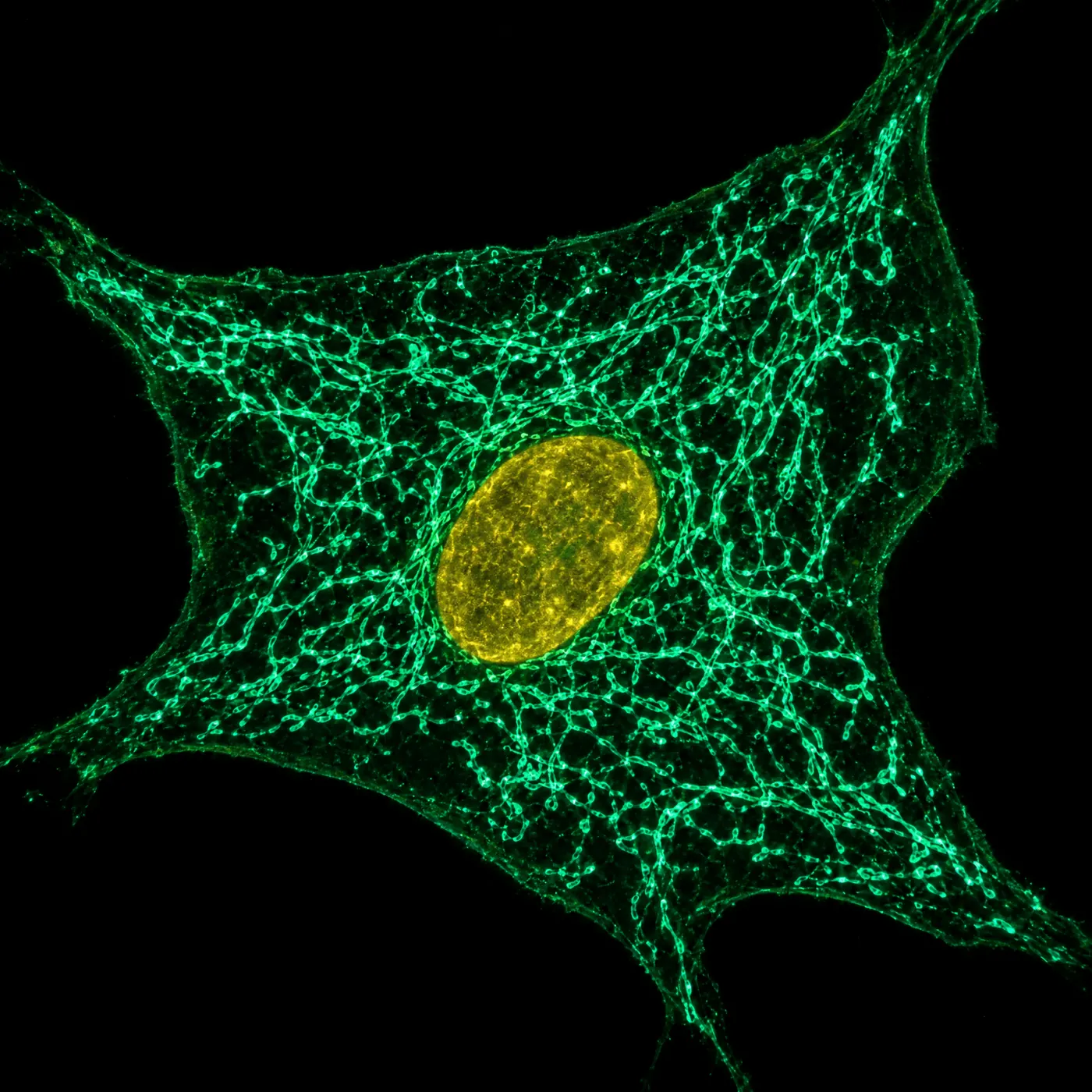
SS-31 (Elamipretide)
Mitochondria-targeting tetrapeptide · binds cardiolipin · FDA-approved for Barth syndrome, 2025
SS-31 (elamipretide) is a four-amino-acid peptide from Stealth BioTherapeutics that targets mitochondria, the cell's power plants. People run it for cleaner cell energy and lower oxidative wear. It binds cardiolipin, a key fat in the inner mitochondrial membrane, and is FDA-approved (2025) for Barth syndrome.
Buy SS-3150 mg vial
Ki Researcher is affiliated with Ki Peptides.
Ships to the US only. Buyers must be 21 or older.
At a glance
- Dose
- 5–10 mg or 20 mg a day (40 mg in the trials)
- How often
- Once daily (some split a higher dose ~10–12 hours apart)
- How
- A small injection under the skin
- When
- Morning, to match the active part of the day
- Cycle
- 4–12 weeks of daily use, then a 2–4 week break
The 30-second versionEverything on this page, fast
Mitochondrial Support · Cardiolipin Binding · Cleaner Cell Energy · Longevity Research
The mitochondria peptide with real pharma pedigree. Research shows SS-31 binds cardiolipin, a key fat in the inner membrane of the cell's power plants, and is proposed to keep them intact and cut oxidative wear. It is one of the rare peptides that is FDA-approved (elamipretide, for Barth syndrome, 2025).
The basics
- A tiny 4-amino-acid peptide that homes in on mitochondria and sticks to cardiolipin, a key fat in their inner membrane.
- The biochemistry is solid, and the mitochondrial-support and longevity angle is what draws people to it.
Why people use it
- Targeted mitochondrial support. Its defining draw. The cardiolipin binding that stabilizes the inner membrane is well supported.
- Cleaner cellular energy. By stabilizing the cristae and electron-transport chain, it is proposed to help mitochondria turn fuel into ATP, the cell's energy currency, more efficiently.
- Lower oxidative wear. It is proposed to cut the leak of reactive oxygen species, the reason people run it for cellular-aging and resilience goals.
- FDA-approved molecule. Unlike most research peptides, SS-31 (elamipretide) earned accelerated approval for Barth syndrome in 2025.
Stacks well with
- NAD+ fuels the electron-transport chain that SS-31 keeps intact. Two angles on the same system.
- MOTS-c adds the metabolic signal inside the membrane SS-31 protects.
Good to know
- The most consistent side effect is an injection-site reaction, redness or irritation where the shot goes. Rotate sites.
- Competing? SS-31 is not named on the 2026 Prohibited List, but its status is uncertain, so ask your anti-doping authority.
What it does

People reach for SS-31 as the mitochondria-targeting peptide with a real pharma program behind it.
- Targeted mitochondrial supportIt homes in on mitochondria and binds cardiolipin, the signature fat of their inner membrane. That binding is well supported.
- Cleaner cellular energyIt is proposed to help mitochondria turn fuel into ATP, the cell's energy currency, more efficiently.
- Lower oxidative wearIt is proposed to cut the reactive oxygen species mitochondria leak. People run it for cellular-aging and resilience goals.
- FDA-approved for Barth syndromeFDA-approved in September 2025 (accelerated approval, as Forzinity) to improve muscle strength in Barth syndrome.
- Walked farther in the Barth extensionIn the Barth open-label extension, walk distance, fatigue and the cardiolipin ratio had all improved by week 168.
- A mitochondrial base that stacks wellIt works on membrane structure, so it pairs with NAD+ for fuel and MOTS-c for the metabolic signal.
Sources:PMID 39940712PMID 38602181
How it works
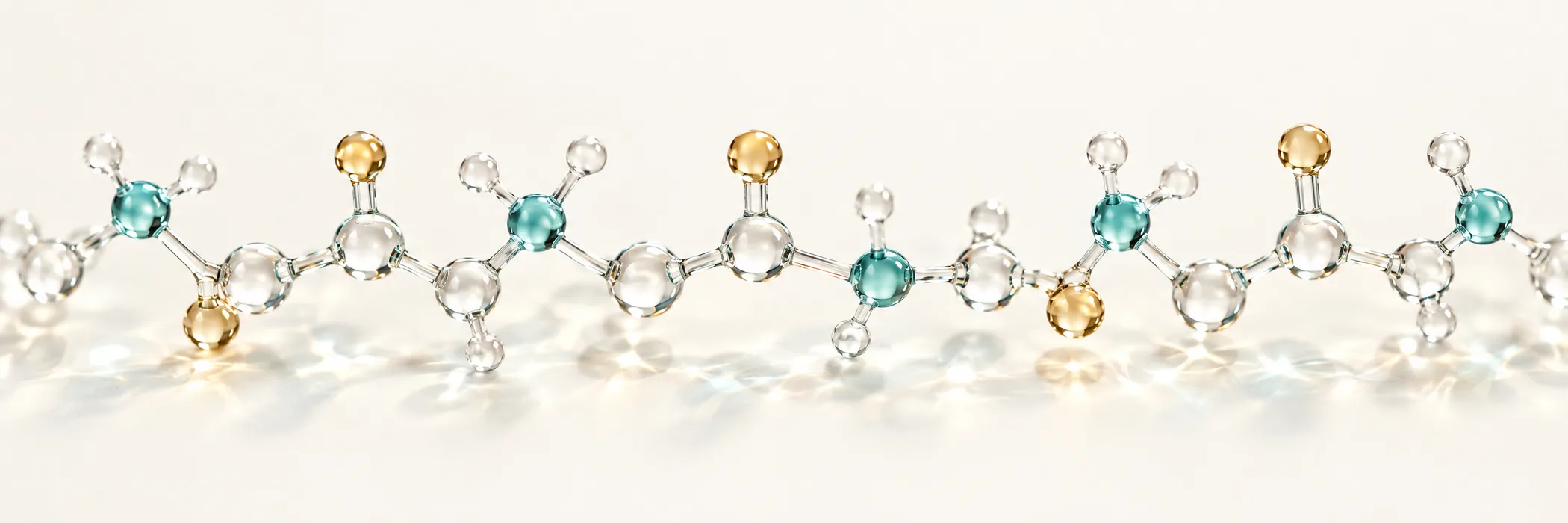

Goes straight to the mitochondria. SS-31 is a positively charged, membrane-loving chain of four amino acids. It crosses into mitochondria and binds cardiolipin, the defining fat of the cristae, the folded inner membranes where energy is made.
Keeps the power plant running cleanly. The electron transport chain needs cardiolipin to assemble into supercomplexes. By stabilizing it, SS-31 is proposed to preserve the folds of the cristae, make the chain more efficient and cut the leak of reactive oxygen species (ROS), the source of oxidative wear.
Fits Barth syndrome best. Barth syndrome comes from mutations in the tafazzin (TAZ) gene that lower mature cardiolipin and raise an abnormal precursor. In the Barth open-label extension, SS-31 was reported to improve that ratio.
Sources:PMID 39940712PMID 38602181
How to dose it
Most people run SS-31 as a once-daily injection under the skin (subcutaneous, SC), the route in every human trial.
Dose tiersPeople run 5–10 mg, 20 mg or the 40 mg trial dose, once daily.
- Micro-start:
- 1 mg once daily, a test dose before stepping up. At the calculator's default mix, 0.1 mL = 10 insulin-syringe units.
- Low:
- 5–10 mg once daily. The low end, used to test tolerance.
- Mid-range:
- 20 mg once daily. A common start that splits the trial dose.
- Trial dose:
- 40 mg once daily SC, the dose in MMPOWER-3 (n=218, 24 weeks), TAZPOWER (n=12), PROGRESS-HF and ReCLAIM-2.
How to injectInto the fat under the skin. Rotate sites.
- Injection site:
- Abdomen (a couple of inches clear of the navel), outer thigh or love-handle area. Rotate between doses, or one spot gets irritated and lumpy over a long course.
- Measuring the dose:
- At 10 mg in 1 mL, 5 mg takes 50 units and 10 mg takes 100 units. 20 mg takes 200 units, two full draws. The calculator converts any vial.
- Time of day:
- Usually morning. The trials set no required time. Split doses go ~10–12 hours apart.
- Food window:
- Meals don't matter. Inject fed or fasted.
Cycle and breaks4–12 weeks on, then 2–4 weeks off. The trials ran 24 weeks and 48 weeks.
- Standard cycle:
- 4–12 weeks of daily use, then reassess. Longer continuous courses match the trials.
- Break:
- 2–4 weeks off, then re-check baseline energy or functional markers.
- Longest course:
- The Barth open-label extension dosed daily for up to 168 weeks (≈3 years) in a small cohort.
Mixing the vialThe default mix is a 10 mg vial with 1 mL of bacteriostatic water.
- Mixing:
- That makes 10,000 mcg per mL, so 5 mg takes 50 units, 10 mg takes 100 units, 20 mg takes 200 units.
- The 40 mg dose:
- 40 mg takes 400 units, or 4 mL of solution, more than one vial at this mix.
- Why 1 mL:
- A tighter mix keeps injection volumes small for the large trial dose. The calculator adjusts for other vials and doses.
Sources:PMID 37268435PMID 38602181PMID 39605874PMID 32068002
Best time to take it


Implied best time
Morning
Most people take SS-31 in the morning, so the energy support lines up with the active part of the day.
- Its proposed effect is supporting mitochondrial energy output, which fits daytime activity better than the evening wind-down.
- Half-life is roughly 2 hours in animals and it peaks ~1–2 h after injection, so a morning dose covers your active hours.
- The human trials dosed once daily with no required time of day. Some split a higher dose ~10–12 hours apart.
Sources:PMID 39940712
What to stack it with


SS-31 protects the membrane. Good partners pull other levers. A second membrane-structure compound only doubles the same one.
SS-31 + NAD+SS-31 keeps the electron-transport chain intact. NAD+ fuels it.
- Why it works:
- NAD carries electrons at ETC Complexes I and III and declines with age. SS-31 covers structure, NMN and NR cover fuel.
- The protocol:
- SS-31 20–40 mg SC once daily (morning) + NMN 500 mg orally once daily (morning, fasted) or NR 500 mg orally twice daily. Full protocol on the NAD+ page.
- Outcome:
- Run for mitochondrial optimization, age-related energy decline, and cognitive or physical performance goals.
SS-31 + MOTS-cSS-31 protects the membrane. MOTS-c drives the metabolic signal inside it.
- Why it works:
- MOTS-c activates AMPK (AMP-activated protein kinase) and metabolic stress-response pathways, shifting how the cell uses energy. SS-31 preserves structure.
- The protocol:
- SS-31 20–40 mg SC once daily + MOTS-c 5–10 mg SC 3–5×/week (morning, fasted). Full dosing on the MOTS-c page.
- Outcome:
- Run for metabolic health, insulin sensitivity and mitochondrial longevity goals. MOTS-c is prohibited in tested sport and SS-31's status is uncertain, so athletes ask their anti-doping authority.
SS-31 + HumaninHumanin adds the stress-resilience and cell-protection angle SS-31 does not cover.
- Why it works:
- Humanin is a mitochondrially-derived peptide proposed to reduce cell death under metabolic stress. It complements SS-31's membrane work.
- The protocol:
- SS-31 20–40 mg SC once daily + Humanin 2–4 mg SC 3×/week. Full dosing on the Humanin page.
- Outcome:
- Run for age-related cellular resilience, neuroprotection and cardiometabolic support.
Support nutrients


These nutrients feed the machinery SS-31 protects and extend its antioxidant cover.
Feed the electron transport chainDirect inputs to the electron transport chain (ETC), the energy machinery SS-31 works to preserve.
- CoQ10:
- 200 mg/day with a fat-containing meal. The mobile electron carrier between Complexes I–III. Ubiquinol absorbs better if your CoQ10 blood levels are low.
- Riboflavin (B2):
- 100 mg/day with meals. The backbone of FAD (flavin adenine dinucleotide), the electron carrier at Complex II. A deficiency measurably impairs it.
- Niacin (B3) or an NAD precursor:
- 500 mg/day of NR (nicotinamide riboside) or NMN (nicotinamide mononucleotide), in the morning. Feeds NAD, the electron carrier at Complexes I and III. Full protocol on the NAD+ page.
- L-carnitine:
- 2 g/day before meals. Carries long-chain fatty acids into mitochondria as fuel. Acetyl-L-carnitine also crosses the blood-brain barrier.
- Magnesium:
- 300–400 mg/day in the evening. The required cofactor for ATP synthase, and it stabilizes ATP, the chain's energy currency.
Extend the antioxidant netCutting reactive oxygen species (ROS) leak is half of SS-31's proposed job.
- Alpha-lipoic acid:
- 600 mg/day with meals. Acts inside the mitochondrion and regenerates glutathione and vitamins C and E. R-ALA, the R form, is the active isomer, and racemic 600 mg is standard.
- NAC (N-acetyl cysteine):
- 600–1,200 mg/day away from meals. The rate-limiting precursor to glutathione, the cell's master antioxidant.
- Vitamins C + E:
- 500 mg C and 200 IU mixed tocopherols, with fat. The water-soluble and fat-soluble front lines against ROS. With alpha-lipoic acid they form a regenerating network.
Dose calculator
Reconstitution calculator
Calculated for a 1 mL U-100 insulin syringe (100 units/mL).
Units per dose
50 units
Draw this many units on a U-100 syringe
Each unit holds 100 mcg
- Volume per dose
- 0.5 mL
- Doses per vial
- 2
- Concentration
- 10 mg/mL
One vial lasts
- Daily
- 2 days
- Every other day
- 4 days
- 5×/week
- 2 days
- Large draw (50 units). That's normal for mg doses. To check it, multiply the units by what each unit holds. You should get your dose.
Research use only. Not for human consumption. Outputs are reference values based on research literature. Verify all measurements independently.
Side effects and what to watch
What people notice. Mostly injection-site reactions, meaning redness, irritation or discomfort where the shot goes in. Across the randomized trials SS-31 was generally well tolerated, with most adverse events mild to moderate and no major trial-stopping safety signal.
In the numbers. In the macular-degeneration trial, adverse events occurred in about 86% of SS-31 patients versus 71% on placebo, a gap driven largely by injection-site reactions.
How people handle it. Rotate injection sites between doses.
Worth knowing. Long-term human safety data come from small open-label cohorts of roughly eight to ten Barth patients. The Forzinity prescribing information carries the approved product's full warnings and precautions.
Sources:PMID 37268435PMID 39605874
Common questions
How is SS-31 dosed?
As a once-daily injection under the skin. The human trials used 40 mg once daily, and the heart-failure trial also tested 4 mg. People also run 20 mg or 5–10 mg once daily, and some start at 1 mg.
When should I take SS-31?
Most people inject in the morning, so the energy support lands in the active part of the day. The trials set no required time, and meals don't matter.
Do I need to cycle SS-31?
Most people run 4–12 weeks of daily use, then take 2–4 weeks off and reassess. The trials dosed daily for 24 weeks and 48 weeks, and the Barth extension ran up to 168 weeks.
What does SS-31 stack with?
NAD+ precursors for fuel, MOTS-c for the metabolic signal and Humanin for cell protection. Each pulls a different mitochondrial lever. A second membrane-structure compound would only double the same one.
How is SS-31 different from MOTS-c?
SS-31 binds cardiolipin and protects the inner mitochondrial membrane. MOTS-c activates AMPK and shifts how the cell uses energy. Different levers, so people run them together.
Is SS-31 banned in sport?
It is not specifically named on the 2026 WADA Prohibited List, but its status is uncertain. MOTS-c is explicitly prohibited, so don't read one from the other. Ask your anti-doping authority.
Deep dive
Doses used in studies · Molecular identity · References
10From the researchDoses used in studies
These are the doses used in the published human trials. Every one was a once-daily injection under the skin.
| Dose | Route | Model | Outcome | Sources: |
|---|---|---|---|---|
| 40 mg/day × 24 wk | SC | Human RCT, MMPOWER-3, primary mitochondrial myopathy (n=218) | FAILED both co-primary endpoints; 6-minute walk difference −3.2 m (p=0.69); fatigue-score difference p=0.37. Well tolerated | PMID 37268435 |
| 40 mg/day, 12-wk crossover | SC | Human RCT, TAZPOWER Part 1, Barth syndrome (n=12) | FAILED randomized endpoints; 6-minute walk difference −0.8 m (p=0.97) | PMID 33077895 |
| 40 mg/day, open-label | SC | TAZPOWER open-label extension, Barth (≈8–10 pts, no placebo) | POSITIVE but uncontrolled; cumulative +96.1 m walk distance by week 168 (p=0.003), improved fatigue and cardiolipin ratio; basis for accelerated approval | PMID 38602181 |
| 4 mg & 40 mg/day × 28 d | SC | Human RCT, PROGRESS-HF, heart failure / HFrEF (n=71) | FAILED. No change in left-ventricular end-systolic volume vs placebo (40 mg p=0.28). Well tolerated | PMID 32068002 |
| 40 mg/day × 48 wk | SC | Human RCT, ReCLAIM-2, dry AMD / geographic atrophy (n=176) | FAILED both co-primary endpoints; only nominal (non-confirmatory) secondary signals on ellipsoid-zone loss | PMID 39605874 |
11ChemistryMolecular identity
- Molecular formula
- C₃₂H₄₉N₉O₅ (free base)
- Monoisotopic mass
- 639.3857 Da (free base)
- Topological polar surface area
- 267 Ų
- CAS / UNII
- 736992-21-5 · 87GWG91S09
- PubChem CID
- 11764719
- Sequence
- D-Arg-Dmt-Lys-Phe-NH₂ (4 AA; non-standard residues: D-arginine + 2,6-dimethyltyrosine)PubChem CID 11764719
- Type
- Aromatic-cationic, cell-permeable tetrapeptide (mitochondria-targeting)Elamipretide review, Int J Mol Sci 2025 (PMID 39940712)
- Molecular weight
- 639.8 g/mol (free base; the approved HCl salt differs)PubChem CID 11764719
- Molecular target
- Cardiolipin on the inner mitochondrial membrane (stabilizes cristae / electron-transport chain)Elamipretide review, Int J Mol Sci 2025 (PMID 39940712)
- Half-life
- Short. Commonly cited as ~2 h elimination in animals (rat/dog/monkey) with renal excretion and rapid SC absorption (Tmax ~1–2 h), but these exact PK values are not established in the cited sourceResearch literature; PMID 29500292 (does not report these values)Half-life curve →
- Regulatory status
- FDA accelerated approval Sept 2025 (Forzinity) for Barth syndrome ONLY; investigational/not approved for all other usesFDA; Drugs@FDA NDA 215244
12Primary sourcesReferences
- PMID 37268435Karaa et al., Neurology 2023. MMPOWER-3, elamipretide in primary mitochondrial myopathy (n=218, failed co-primaries)
- PMID 33077895Reid Thompson et al., Genet Med 2021. TAZPOWER phase 2/3, elamipretide in Barth syndrome (n=12, randomized arm negative)
- PMID 38602181Reid Thompson et al., Genet Med 2024. TAZPOWER 168-week open-label extension, Barth (uncontrolled, positive)
- PMID 32068002Butler et al., J Card Fail 2020. PROGRESS-HF, elamipretide in heart failure / HFrEF (n=71, failed LVESV)
- PMID 39605874ReCLAIM-2, Ophthalmol Sci 2025. Elamipretide in dry AMD / geographic atrophy (n=176, failed co-primaries)
- PMID 39940712Elamipretide review, structure / mechanism of action (cardiolipin binding)
- PubChem CID 11764719PubChem record. CID, CAS, formula, MW, sequence
- FDA; Drugs@FDA NDA 215244FDA. Accelerated approval of first treatment for Barth syndrome (Forzinity, Sept 2025)
- WADA 2026WADA 2026 Prohibited List (elamipretide not individually named; status by inference)
SS-31
50 mg vial
Ki Researcher is affiliated with Ki Peptides.
Ships to the US only. Buyers must be 21 or older.
Reviewed by Ki Researcher Team · Research use only · Not medical advice · Updated 2026-09-24