
GHK-Cu
Copper-binding tripeptide · skin & tissue remodeling
GHK-Cu is a copper-carrying tripeptide your body already makes. People run it for firmer-looking skin and tissue repair. In skin cells it switches on collagen and elastin, and a gene-data analysis found GHK shifts thousands of human genes. Topical human studies back its skin results.
Buy GHK-Cu50 mg vial
Ki Researcher is affiliated with Ki Peptides.
Ships to the US only. Buyers must be 21 or older.
At a glance
- Dose
- 1 mg a day; 500 to 750 mcg to start
- How
- A small injection under the skin
- When
- Evening for overnight repair; morning works too
- Cycle
- 8 to 12 weeks on, then a 4-week break
The 30-second versionEverything on this page, fast
Copper Peptide · Skin Remodeling · Collagen Synthesis · Tissue Repair
The copper peptide people reach for on skin and tissue. In skin cells GHK-Cu switches on collagen, elastin and the skin's matrix. It carries copper into tissue, feeding the enzyme that cross-links collagen into durable structure, and promotes wound healing with new skin and new blood vessels. Its track record is strongest topically, on skin. People inject it to take it body-wide.
The basics
- A tiny three-amino-acid peptide (glycine, histidine, lysine) carrying a single copper atom. Your blood contains it naturally.
- Best known as the star 'copper peptide' in anti-aging skincare. People also inject it under the skin.
Why people use it
- Smoother, firmer-looking skin. Turns on collagen, elastin, and matrix synthesis in skin cells.
- Faster wound healing. In wound models it promotes regrowth of the outer skin layer and new blood vessel growth.
- Stronger, more durable tissue. It ferries copper to lysyl oxidase, the enzyme that cross-links collagen and elastin into durable tissue.
- Calmer, more resilient skin. Shows antioxidant and anti-inflammatory activity in cell studies.
Stacks well with
- BPC-157 is the most common pairing. GHK-Cu remodels the matrix while BPC-157 heals tissue and builds blood supply.
- TB-500 turns the BPC-157 pair into the systemic repair trio. It pulls repair cells in, a third lever.
Good to know
- Two ways to take it. Topical creams are the proven skin play, and people inject it to work body-wide.
- Copper is the main caution, so keep long high-dose runs in check. The copper it carries barely reacted with vitamin C in lab tests, but every dose still adds to your copper load.
- If you supplement zinc, pair it with a little copper. High-dose zinc quietly competes with the copper this peptide relies on.
What it does
The copper peptide people reach for on skin and tissue remodeling.
- Smoother, firmer-looking skinIn an 8-week randomized, double-blind trial in women, GHK-Cu serum cut wrinkle volume 55.8% and depth 32.8% versus plain serum.
- Faster wound and tissue repairIn rats with low-blood-flow skin wounds, GHK-Cu gel shrank wound area 64.5% by day 13, against 45.6% on plain gel.
- Stronger, more durable tissueIn rat wound chambers, injected GHK-Cu raised collagen synthesis twice as much as other proteins and turned up collagen genes.
- Calmer, more resilient skinIn human skin cells, the inflammatory trigger TNF-alpha raised the inflammation signal IL-6 almost 4-fold, and GHK-Cu lowered that rise.
- A remodeling base that stacks wellPaired 1:9 with low-molecular-weight hyaluronic acid, GHK-Cu raised collagen IV 25.4-fold in skin cells and 2.03-fold in skin samples.
Sources:PMID 29986520PMID 14648529PMID 8227353PMID 23285694PMID 37062921
How it works
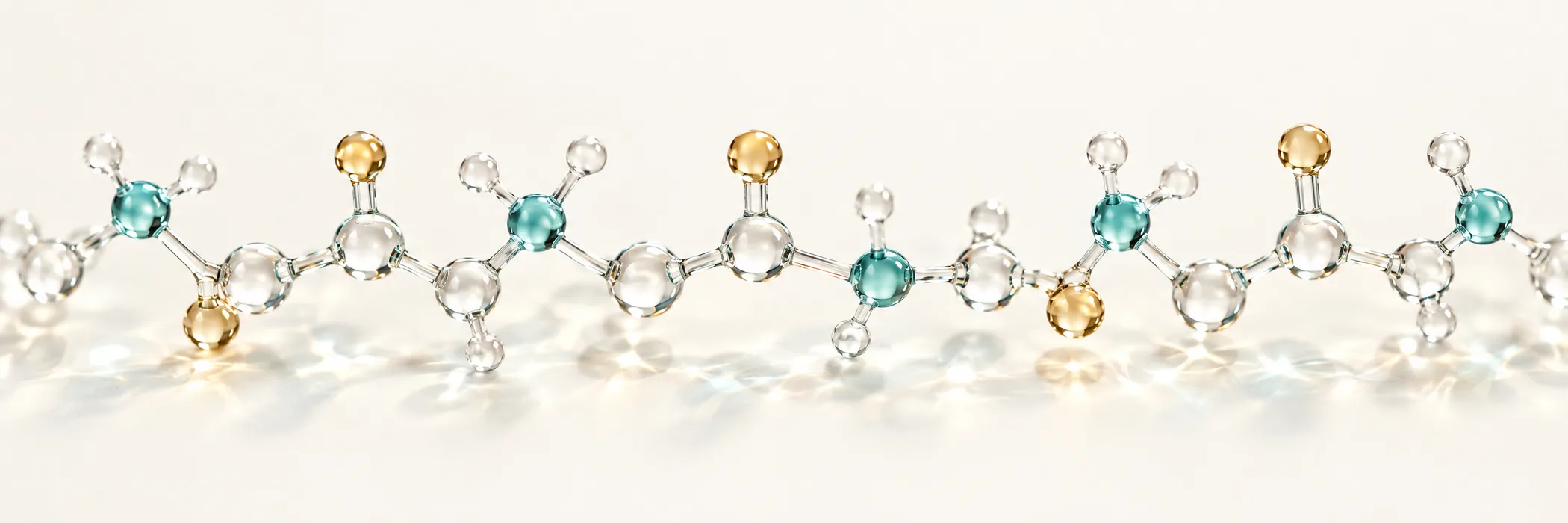
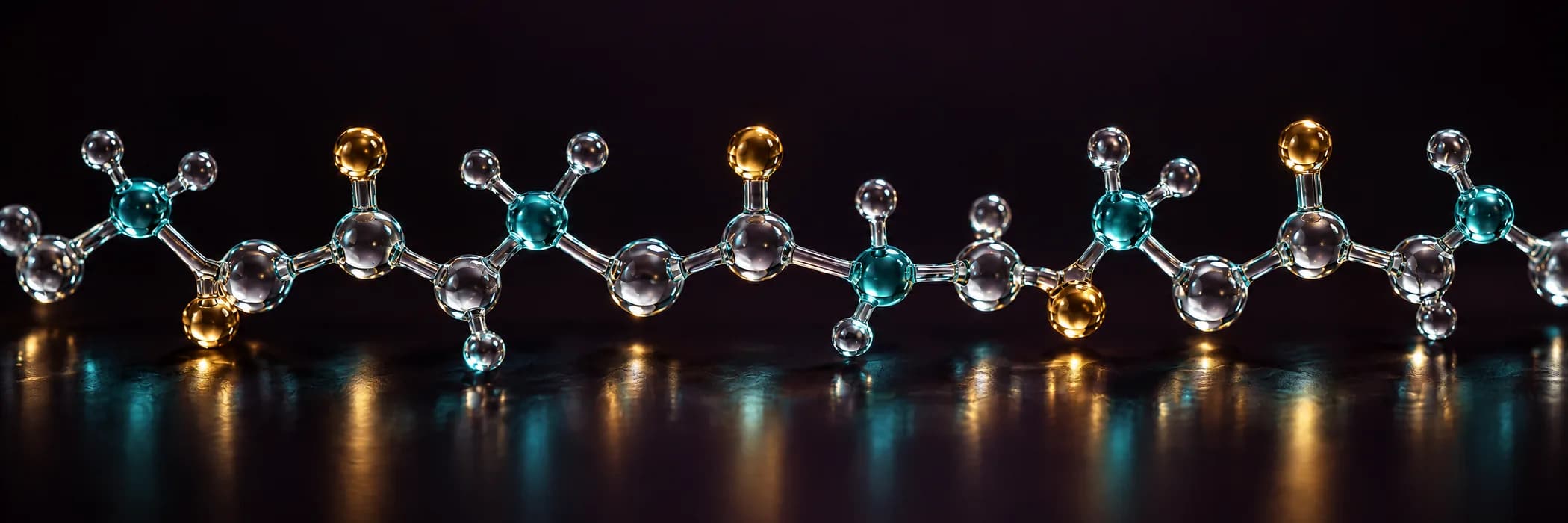
A copper carrier. GHK-Cu (glycyl-L-histidyl-L-lysine) is a naturally occurring human tripeptide first isolated from plasma by Pickart in 1973. It grips a copper(II) ion tightly and is thought to act as one of the body's copper carriers.
Builds skin's scaffold. In cultured human skin cells it switches on collagen, elastin, and other matrix proteins. In wound models it promotes new skin growth and new blood vessels. In cell studies it shows antioxidant and anti-inflammatory activity.
Shifts thousands of genes. A computer analysis of gene-activity data from cells given copper-free GHK found it shifts the activity of roughly 4,000 human genes. It turned up DNA-repair genes and turned down inflammatory ones.
Sources:PubChem CID 73587PubChem CID 71587328PMID 8227353PMID 18644225PMID 26236730PMID 29986520
How to dose it
Most people run GHK-Cu as a small injection under the skin, 1 to 2 mg a day, in cycles.
Dose tiersMost people run 1 mg once a day, starting at 500 to 750 mcg.
- Low / introductory:
- 500 to 750 mcg once daily, to test tolerance or as a steady, conservative skin-support dose.
- Standard:
- 1 mg (1,000 mcg) once daily. The most common maintenance dose for skin remodeling and collagen signaling.
- Higher end:
- 1.5 to 2 mg a day, the range top, sometimes split into two 750 to 1,000 mcg shots. No added benefit shown past 1 mg.
How to injectIt goes into the fat under the skin. Rotate sites between doses.
- Injection site:
- Abdomen (a few centimeters from the navel), outer thigh, or love handle. Rotate sites to avoid irritation and fatty lumps.
- Measuring the dose:
- On a U-100 syringe at the standard mix (50 mg in 2 mL bacteriostatic water), 1,000 mcg takes 4 units, 1,500 mcg takes 6 units, 2,000 mcg takes 8 units.
- Time of day:
- Evening for most, to line up with overnight repair. Morning works too. For a split dose, space the two about 12 hours apart.
- Food window:
- No food interaction. Inject with or without a meal.
Cycle and breaksMost people run GHK-Cu in cycles, not year-round.
- Standard cycle:
- 8 to 12 weeks of daily dosing, then reassess; some run shorter 4 to 6 week blocks.
- Washout:
- A 4-week break between cycles is the convention.
- On-demand use:
- Some run shorter 2 to 4 week skin-focused pulses instead, around a procedure or healing period.
Mixing the vialGHK-Cu often ships as a 50 mg vial. The standard mix adds 2 mL bacteriostatic water.
- Mixing:
- That makes 25,000 mcg/mL. On a 100-unit (1 mL) syringe, 500 mcg takes 2 units, 1,000 mcg takes 4 units, 1,500 mcg takes 6 units, 2,000 mcg takes 8 units.
- Note on the 50 mg vial:
- At 2 mL the mix is strong (25,000 mcg/mL). Mixing with 3 mL, the vial's maximum, gives about 16,667 mcg/mL and a larger draw (1,000 mcg takes 6 units).
Sources:PMID 8227353PMID 26236730AAD Annual Meeting 2002 (conference presentation)
Best time to take it
Implied best time
Evening
Most people take GHK-Cu in the evening, to line up with overnight repair. Morning works too.
- GHK-Cu signals skin cells to build collagen and elastin. Skin rebuilds mostly overnight, so evening dosing lines up with that window.
- It works as a slow remodeling signal, not a stimulant, so there's no wakefulness reason to favor morning over evening.
- No study sets an exact hour, so a consistent daily time matters more than morning versus evening.
What to stack it with


GHK-Cu's strength is local collagen and matrix remodeling. Its best partners hit repair from a different angle.
GHK-Cu + BPC-157The most common pairing. GHK-Cu remodels the matrix while BPC-157 heals tissue and builds blood supply.
- Why it works:
- BPC-157 drives new blood vessels and growth-factor signaling at the site; GHK-Cu lays down the collagen and elastin that fill it.
- The protocol:
- GHK-Cu 1 mg plus BPC-157 250 to 500 mcg, both subcutaneous (SC) daily, rotated sites. Draw separately or co-inject.
- Outcome:
- Reached for on skin aging, wound healing, and soft-tissue recovery.
GHK-Cu + BPC-157 + TB-500The systemic repair trio. TB-500 adds cell migration to matrix remodeling and vascular repair.
- Why it works:
- TB-500 moves repair cells (stem, endothelial, keratinocyte) into damaged tissue. BPC-157 brings blood supply; GHK-Cu drives matrix synthesis.
- The protocol:
- GHK-Cu 1 mg plus BPC-157 250–500 mcg daily; TB-500 5–10 mg a week for 4 weeks to load, then 2.5–5 mg a week, split into one or two injections.
GHK-Cu + free GHKThe same tripeptide with and without copper.
- Why it works:
- Free GHK (GHK (copper-free, Gly-His-Lys)) is the natural, copper-free form your body makes. It grips copper strongly and converts to GHK-Cu wherever copper is around.
- The protocol:
- Typical use pairs GHK-Cu 1 mg with free GHK 500 mcg to 1 mg SC daily, or alternates the two.
- Outcome:
- For users chasing more copper delivery and collagen signaling together.
Support nutrients
GHK-Cu carries copper and signals collagen synthesis. These cofactors supply the collagen-building materials and keep copper and zinc in balance.
Collagen building blocksGHK-Cu signals new collagen and elastin. These supply the raw materials to build it.
- Vitamin C, 500 mg daily:
- Needed by the enzymes that stabilize collagen's structure. Without it, the collagen signal GHK-Cu sends can't be fully used. Take with a meal, any time.
- Hydrolyzed collagen, 10 to 15 g daily:
- Supplies the amino acids fibroblasts reassemble into new collagen. Signaling more collagen without the raw material is a half-measure. Take alongside vitamin C for potential synergy.
- Glycine / proline via diet:
- Glycine is collagen's most abundant amino acid, about a third. Diet (broth, gelatin) or a glycine supplement, roughly 3 to 5 g a day, keeps the supply topped up.
Copper and zinc balanceGHK-Cu already delivers copper, so keep dietary copper steady and pair any zinc with it.
- Dietary copper, 1 to 2 mg a day (food first):
- The copper it delivers feeds lysyl oxidase, the enzyme that cross-links collagen and elastin. Diet (organ meats, shellfish, nuts, legumes) usually covers it; supplements are rarely needed.
- Zinc, 15 to 30 mg, paired with copper 1 to 2 mg:
- Zinc powers MMP (matrix metalloproteinase) remodeling enzymes. High-dose zinc depletes copper. Pair 15 to 30 mg zinc alongside 1 to 2 mg copper bisglycinate, with a meal, away from iron.
Dose calculator
Reconstitution calculator
Calculated for a 1 mL U-100 insulin syringe (100 units/mL).
Units per dose
4 units
Draw this many units on a U-100 syringe
Each unit holds 250 mcg
- Volume per dose
- 0.04 mL
- Doses per vial
- 50
- Concentration
- 25 mg/mL
One vial lasts
- Daily
- 50 days
- Every other day
- 100 days
- 5×/week
- 70 days
Research use only. Not for human consumption. Outputs are reference values based on research literature. Verify all measurements independently.
Side effects and what to watch
What people notice. Topical GHK-Cu was well tolerated in the cosmetic studies, without meaningful irritation.
Skip it or take care if. In lab tests, copper bound to GHK barely reacted with vitamin C. Chronic high-dose systemic use still carries a theoretical risk of copper overload. No study has measured where that risk becomes meaningful for GHK-Cu, but going overboard on dose or duration is the thing to avoid.
Sources:AAD Annual Meeting 2002 (conference presentation)PMID 26236730PMID 21780203
Common questions
What is GHK-Cu?
GHK-Cu (copper tripeptide-1) is a copper-binding tripeptide found naturally in human plasma. It's best known as the active copper peptide in anti-aging skincare, and in skin cells it switches on collagen, elastin, and matrix synthesis.
How is GHK-Cu dosed?
Most people run 1 mg (1,000 mcg) a day as a subcutaneous injection, starting at 500 to 750 mcg and topping out around 2 mg.
Do I need to cycle it?
Most run it 8 to 12 weeks on, then take a 4-week break; some prefer shorter 4 to 6 week blocks.
What does GHK-Cu stack with?
The classic pairing is BPC-157, which heals tissue and builds blood supply while GHK-Cu remodels the matrix. Add TB-500 for a systemic repair trio.
What is GHK-Cu's half-life?
No validated human injectable half-life has been published. Free GHK is expected to clear blood quickly, since its copper is readily traded to other proteins and the peptide breaks down fast. A steady daily time matters more than the exact hour.
Does GHK-Cu shift thousands of genes?
The gene data are for GHK, its copper-free form. A computer analysis found it shifts roughly 4,000 human genes, turning up DNA-repair genes and turning down inflammatory ones.
Deep dive
Doses used in studies · Molecular identity · References
10From the researchDoses used in studies
These are the concentrations used in the published studies, mostly topical creams and gels rather than injected doses.
| Dose | Route | Model | Outcome | Sources: |
|---|---|---|---|---|
| Low-percentage facial cream (<1%) | Topical | Human, 12-week cosmetic study (n≈71; conference / industry-sponsored) | Reported improvements in skin firmness, clarity, and density vs comparators; low-tier evidence | AAD Annual Meeting 2002 (conference presentation) |
| Local intra-wound injection | Injected (local, intra-wound) | Rat, in-vivo experimental wound (foundational mechanism study) | Locally injected GHK-Cu stimulated connective-tissue/collagen accumulation in wound chambers; local delivery, not systemic dosing | PMID 8227353 |
| Injected / systemic dose | Subcutaneous | None published | No systemic injected GHK-Cu dose appears in any published human study; vendor 'mg SC' figures are not literature-derived |
11ChemistryMolecular identity
- Monoisotopic mass
- 402.10768 Da (GHK-Cu complex cation)
- Molecular weight
- 402.92 g/mol (GHK-Cu complex cation); free GHK peptide is 340.38 g/molPubChem CID 71587328 / 73587
- Molecular formula
- C₁₄H₂₃CuN₆O₄⁺ (GHK-Cu complex cation); C₁₄H₂₄N₆O₄ (free GHK)PubChem CID 71587328 / 73587
- Sequence
- Gly-His-Lys (glycyl-L-histidyl-L-lysine), 3 AA tripeptide, chelated to Cu(II)PubChem CID 73587
- Structure / class
- Copper(II) tripeptide complex (INCI Copper Tripeptide-1); the Cu(II) chelate of GHK, not a covalent compoundPubChem CID 71587328; INCI
- Copper coordination
- 1:1 Cu(II) chelate, copper held by the histidine imidazole N, the N-terminal amine, and the deprotonated glycyl amide NCopper-peptide coordination chemistry; PubChem CID 71587328
- CAS / UNII
- 89030-95-5 · 6BJQ43T1I9 (GHK-Cu complex); free GHK has its own CAS 49557-75-7PubChem CID 71587328 / 73587
- PubChem CID
- 71587328 (GHK-Cu, 'Prezatide copper') · 73587 (free GHK)PubChem
- Water solubility
- Water-soluble; highly hydrophilic (free GHK computed XLogP −4.4, TPSA 176 Ų)PubChem CID 73587 (computed properties)
- Origin
- Endogenous human plasma tripeptide; first isolated by Pickart (1973)Research literature
- Molecular target
- No classic receptor. Copper(II) binding & transport; signals dermal-fibroblast extracellular-matrix (collagen/elastin) synthesis in vitroResearch literature
- Half-life
- No validated human injectable pharmacokinetics published; free GHK expected short-lived in plasma (copper exchange with albumin/ceruloplasmin + peptidase cleavage)Not established (mechanistic expectation only)
- Regulatory status
- Cosmetic ingredient (INCI 'Copper Tripeptide-1'); not an approved drug; no approved injectable indicationINCI / FDA
12Primary sourcesReferences
- PubChem CID 73587PubChem CID 73587 (glycyl-L-histidyl-L-lysine / GHK; C14H24N6O4, MW 340.38, sequence)
- PubChem CID 71587328PubChem CID 71587328 (Prezatide copper / GHK-Cu complex; C14H23CuN6O4+, MW 402.92; Cu(II) chelate)
- PMID 8227353Maquart et al., J Clin Invest 1993 (in-vivo: locally injected GHK-Cu stimulates connective-tissue/collagen accumulation in rat wound chambers)
- PMID 18644225Pickart, J Biomater Sci Polym Ed 2008 (GHK-Cu in tissue remodeling and wound healing, review)
- PMID 26236730Pickart, Vasquez-Soltero & Margolina, Biomed Res Int 2015 (regenerative & protective actions of GHK in skin, review; cites plasma age-decline figure)
- PMID 28212278Pickart, Vasquez-Soltero & Margolina, Brain Sci 2017 (GHK gene-expression / nervous-system effects, review)
- PMID 29986520Pickart & Margolina, Int J Mol Sci 2018 (GHK gene-expression & regenerative review; ~4,000-gene transcriptomic claim)
- PMID 21780203Hureau et al., Chem Eur J 2011 (X-ray/solution structures and redox properties of the Cu(II) complexes of GHK and DAHK; copper here is redox-active, not inert)
- AAD Annual Meeting 2002 (conference presentation)Leyden, Stephens, Finkey, Appa & Barkovic. Facial & periorbital GHK-Cu cream cosmetic studies (industry-sponsored; no PMID located)
- PMID 14648529Canapp et al., Vet Surg 2003 (topical GHK-Cu gel on ischemic open wounds in rats)
- PMID 23285694Gruchlik et al., Acta Pol Pharm 2012 (GHK, GHK-Cu and TNF-alpha-driven IL-6 in human dermal fibroblasts)
- PMID 37062921Jiang et al., J Cosmet Dermatol 2023 (GHK-Cu plus hyaluronic acid raises collagen IV in fibroblasts and ex vivo skin)
GHK-Cu
50 mg vial
Ki Researcher is affiliated with Ki Peptides.
Ships to the US only. Buyers must be 21 or older.
Reviewed by Ki Researcher Team · Research use only · Not medical advice · Updated 2026-10-19