
TB-500
Ac-LKKTETQ · the actin-binding fragment of Thymosin β4
TB-500 is Ac-LKKTETQ, the seven-amino-acid piece of Thymosin β4 that holds its actin-binding site. People run it for tendon, ligament and muscle recovery, often with BPC-157. In lab and mouse studies, this site moved repair cells, grew vessels and sped skin repair.
Buy TB-50010 mg vial, the Ac-LKKTETQ fragment
Ki Researcher is affiliated with Ki Peptides.
Ships to the US only. Buyers must be 21 or older.
At a glance
- Dose
- 2–2.5 mg per shot (500 mcg–1 mg for light support)
- How often
- Twice weekly to load, then once weekly to maintain
- How
- A small injection under the skin
- When
- Evening, in line with overnight recovery
- Cycle
- 8–12 weeks on, then 4 weeks off
The 30-second versionEverything on this page, fast
Soft-tissue repair · Cell migration · New blood vessels · Wound repair
BPC-157's classic recovery partner. TB-500 is the actin-binding piece of Thymosin β4. In lab tests that site moves repair cells and sprouts new blood vessels as well as the whole protein, and in aged mice it sped skin repair.
The basics
- A lab-made copy of seven amino acids (LKKTETQ) from Thymosin β4, the body's main actin-holding protein, with an acetyl cap.
- It reaches the bloodstream from a shot under the skin, and enzymes trim it into smaller pieces within hours.
Why people use it
- Moves repair cells in. Its sequence is Thymosin β4's cell-migration site.
- Grows new blood supply. The same site drives new vessel growth.
- Speeds skin repair. Tested on wounds in aged mice.
- Quiets a scarring signal. Tested in human liver cells.
Stacks well with
- BPC-157 is the classic recovery partner. TB-500 pulls repair cells in and BPC-157 builds the blood supply.
- KPV adds an anti-inflammatory brake so the repair zone stays calm.
Good to know
- Banned in tested sport at all times (WADA), listed with Thymosin β4 and its derivatives.
- In horses it left the blood within hours of a shot. On a weekly schedule, the day matters more than the hour.
- Because its sequence spurs vessel growth and cell migration, it's generally avoided by anyone with cancer concerns.
What it does
The recovery peptide people reach for alongside or instead of BPC-157 for soft-tissue healing.
- Get repair cells to the injury fasterIn lab tests, its seven-amino-acid sequence drew human vessel-lining cells as strongly as the whole protein, at about 50 nM.
- Grow new blood supply into healing tissueIn chick aortic arches the uncapped sequence sprouted vessels like the whole protein. Pieces lacking the actin site did nothing.
- Faster skin repair in aged miceIn 26-month-old mice, the uncapped sequence raised wound closure and collagen by day 7, matching the full protein.
- Quiets a scarring signalIn human liver cells, the sequence blocked a growth factor's push toward scarring, while the protein's front piece did not.
Sources:PMID 14500546PMID 12581423PMID 30063851PMID 38382158
How it works
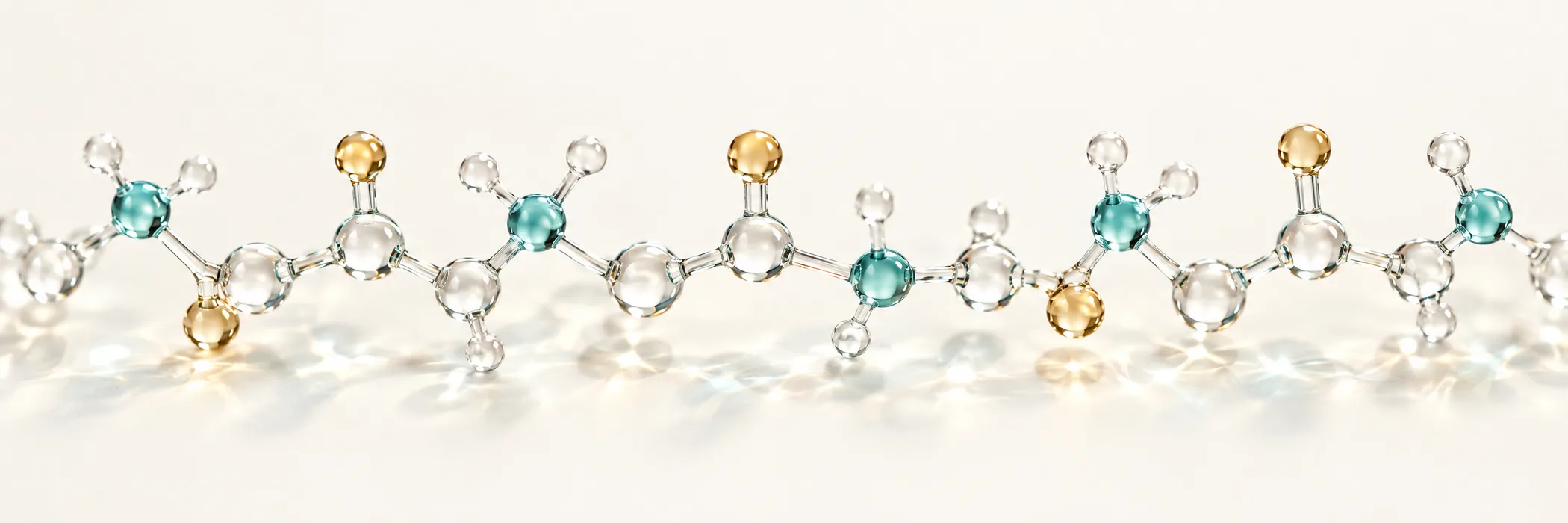
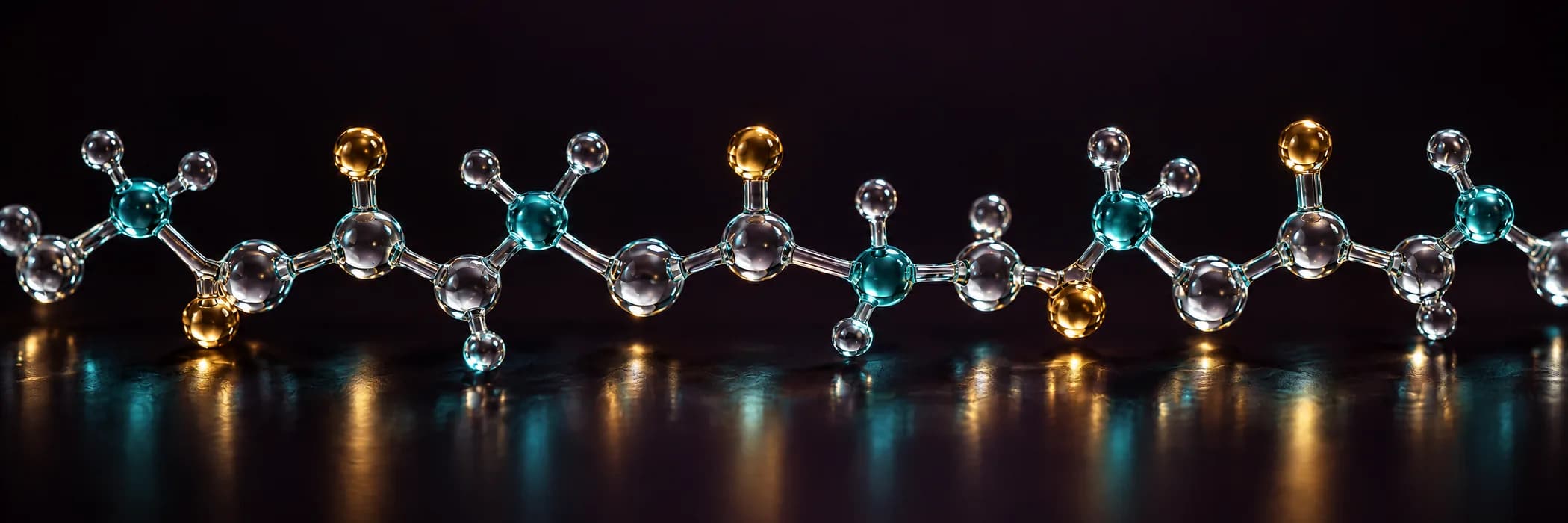
The actin-binding site, on its own. Thymosin β4 grabs and stores actin, the building block of a cell's scaffolding. TB-500 copies its residues 17 to 23, LKKTETQ, which hold the central actin-binding segment, and adds an acetyl cap.
Moves cells and grows vessels. In lab tests the uncapped sequence moved vessel-lining cells and sprouted vessels as well as the whole protein. The same uncapped peptide sped skin repair in aged mice.
Trimmed into pieces. Enzymes clip it from the tail end. In a 2024 cell test, the piece Ac-LKKTE closed scratch wounds while intact TB-500 did not.
What it leaves out. Thymosin β4's anti-inflammatory piece, Ac-SDKP, sits outside this stretch, so TB-500 doesn't carry it.
Sources:PMID 20179146PMID 14500546PMID 12581423PMID 38382158PMID 25313062UniProt P62328PubChem CID 62707662PMID 22962027
How to dose it
Most people run TB-500 as a small injection under the skin, loading around a fresh injury, then stepping down to maintenance.
Dose tiersThe core dose is 2 to 2.5 mg a shot, twice weekly to load, then weekly.
- Loading (active injury):
- 2 to 2.5 mg twice a week (4 to 5 mg a week total) for 4 to 6 weeks, then taper.
- Maintenance:
- 2 to 2.5 mg once a week for 4 to 6 weeks after loading, or ongoing for chronic tissue work.
- General or low dose:
- 500 mcg to 1 mg once or twice a week, a light support outside an acute injury.
How to injectUnder the skin. It reaches the bloodstream, so near the injury is optional.
- Injection site:
- Belly (2 inches from the navel), love handles or outer thigh. Rotate sites to avoid irritation.
- Measuring the dose:
- At 10 mg in 2 mL on a U-100 syringe, 500 mcg takes 10 units, 1 mg takes 20 units, 2 mg takes 40 units, 2.5 mg takes 50 units.
- Time of day:
- Many dose in the evening. On a weekly schedule, the day matters more than the hour.
- Food window:
- With or without food.
Cycle and breaksLoad while the injury is fresh, maintain, then take 4 weeks off.
- Loading phase:
- 4 to 6 weeks at 2 to 2.5 mg twice a week, starting as close to the injury as possible.
- Maintenance phase:
- 4 to 6 weeks at 2 to 2.5 mg once a week, after loading. Reassess based on functional recovery.
- Washout:
- 4 weeks off after loading and maintenance. Track a marker, like pain score or hs-CRP, an inflammation blood marker, to gauge another cycle.
- Total cycle:
- A full run is 8 to 12 weeks of loading plus maintenance, then washout. Stop early if the injury has resolved.
Mixing the vialThe calculator does the math live for any vial size.
- Mixing:
- A 10 mg vial plus 2 mL of bacteriostatic water makes 5,000 mcg per mL.
- Why 2 mL:
- The 2 mL mix keeps 500 mcg to 2.5 mg doses measurable in whole syringe units.
Sources:PMID 23084823FDA briefing document (TB-500), PCAC July 2026
Best time to take it


Implied best time
Evening
Most people take TB-500 in the evening, so the repair signal lands in the overnight recovery window.
- Overnight is when the body repairs most, and deep sleep brings the natural growth-hormone pulse.
- In horses it peaked in the blood 1 to 2 hours after a shot, then fell below measurable levels within 6 to 10 hours.
- It runs on a weekly cadence, so which day matters more than the hour. Evening is a clean, consistent anchor.
Sources:PMID 23084823
What to stack it with


TB-500 drives cell migration and new vessel growth. The best pairings bring a different mechanism, like calming inflammation or a separate healing signal.
TB-500 + BPC-157The classic recovery pair. BPC-157 adds gut healing and a second vessel-growth pathway.
- Why it works:
- TB-500 carries Thymosin β4's cell-migration site. BPC-157 adds its own vessel-growth pathway (VEGFR2) plus gut-lining repair that TB-500 lacks.
- The protocol:
- TB-500 2 to 2.5 mg twice weekly to load, then once weekly. BPC-157 250 to 500 mcg under the skin daily. Both can go at the same site or nearby.
- Outcome:
- The most common TB-500 stack, for tendons, ligaments, muscle tears and post-surgical recovery. Sold together, it's the Wolverine stack.
TB-500 + KPVKPV quiets inflammation around the repair site so TB-500's signals work in calmer tissue.
- Why it works:
- TB-500 brings a cell-migration signal. KPV is a dedicated NF-κB brake that cuts inflammatory cytokines, so repair and calming happen at once.
- The protocol:
- TB-500 on its usual loading and maintenance schedule. KPV 300 to 500 mcg under the skin once daily during loading, then tapered as inflammation resolves.
- Outcome:
- Reached for on injuries with a strong inflammatory component, like acute sprains or post-surgical swelling, where calming the site matters as much as repair.
Sources:PMID 34992578PMID 27847966
Support nutrients
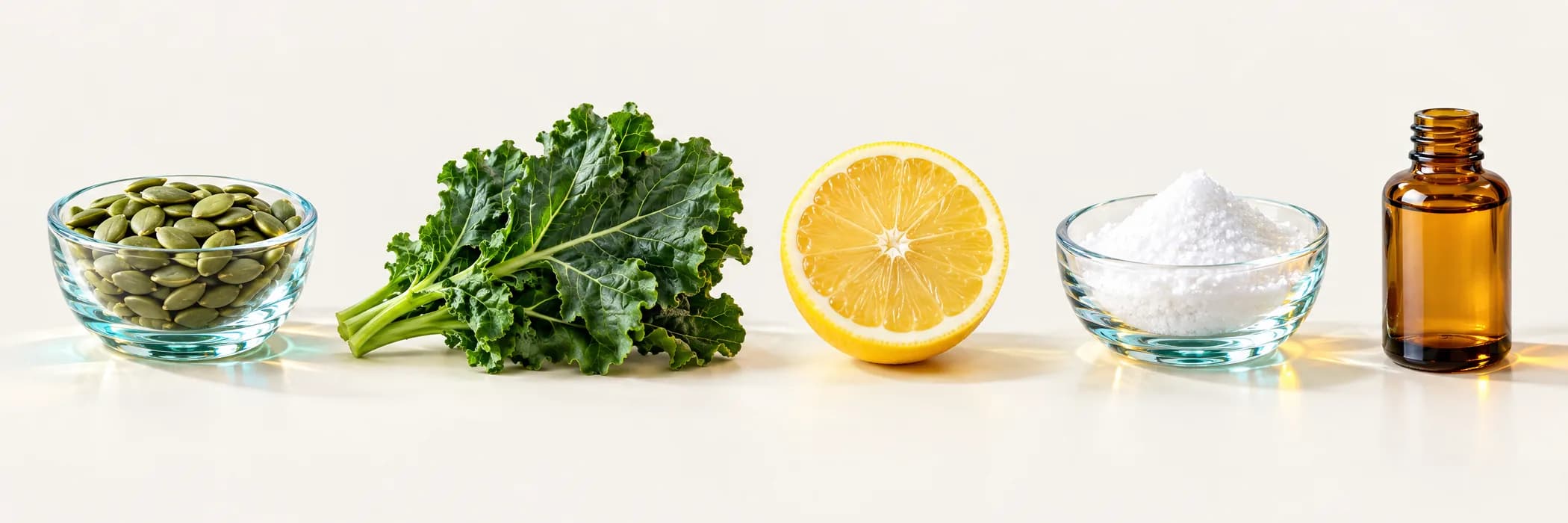
TB-500 signals cells to migrate and grow new vessels. These cofactors supply the raw material those cells need, or support the signal.
Collagen building blocksMigration is a signal. The body still needs raw material to build new tissue.
- Collagen and vitamin C:
- Hydrolyzed collagen 10 to 15 g daily supplies the amino acids for new collagen. Vitamin C 500 mg helps cross-link it into fiber. Take together, away from a heavy meal.
- Total protein:
- 1.6 to 2.0 g per kg of body weight daily. Not a supplement, but the most common bottleneck in people eating below maintenance.
Feed the nitric-oxide pathwayNew vessels need nitric oxide to dilate and carry blood to the healing tissue.
- L-arginine or L-citrulline (NO substrate):
- L-arginine 3 to 6 g or L-citrulline 3 g daily raises nitric oxide to feed the repair zone. Empty stomach or before exercise; skip if blood pressure runs low.
Zinc and copper for matrix strengthCopper cross-links new collagen, and zinc powers the enzymes that remodel it.
- Zinc + copper (balanced):
- Zinc 15 to 30 mg daily (picolinate or bisglycinate) supports scar-remodeling enzymes. Pair with copper 1 to 2 mg bisglycinate, since long zinc courses deplete it. Take zinc with food.
Sources:PMC2589959PMC5793244PMID 9587142
Dose calculator
Reconstitution calculator
Calculated for a 1 mL U-100 insulin syringe (100 units/mL).
Units per dose
40 units
Draw this many units on a U-100 syringe
Each unit holds 50 mcg
- Volume per dose
- 0.4 mL
- Doses per vial
- 5
- Concentration
- 5 mg/mL
One vial lasts
- Daily
- 5 days
- Every other day
- 10 days
- 5×/week
- 7 days
- Large draw (40 units). That's normal for mg doses. To check it, multiply the units by what each unit holds. You should get your dose.
Research use only. Not for human consumption. Outputs are reference values based on research literature. Verify all measurements independently.
Side effects and what to watch
What the research shows. TB-500 itself has been tested in cells and animals, and no toxicity study of it has been published. In human IV trials, the full 43-amino-acid protein was well tolerated up to 1,260 mg.
Skip it or take care if. People with cancer concerns generally avoid it. Its sequence grows blood vessels and moves cells in lab tests, the same activities that can feed a tumor.
Sources:FDA briefing document (TB-500), PCAC July 2026PMID 34346165PMID 20536472PMID 14500546
Common questions
Is TB-500 the same thing as Thymosin β4?
No. TB-500 is Ac-LKKTETQ, amino acids 17 to 23 of Thymosin β4 with an acetyl cap. The full protein has 43 amino acids. Products sold under the name vary, so check what your label lists.
What is TB-500 most studied for?
Its sequence is studied for cell migration, new blood vessel growth and skin wound repair, in lab tests and mice. Research on the full protein goes further, into heart repair after a heart attack and eye drops for corneal healing.
What is TB-500's half-life?
In horses, TB-500 peaked in the blood 1 to 2 hours after a shot under the skin and fell below measurable levels within 6 to 10 hours. Its human half-life has not been measured.
How is TB-500 dosed?
Most people load with 2 to 2.5 mg twice weekly during an active injury, then drop to once weekly for maintenance. A lighter 500 mcg to 1 mg dose covers general connective-tissue support.
Deep dive
Doses used in studies · Blood markers to track · Molecular identity · References
10From the researchDoses used in studies
Doses from published studies. The first five rows used TB-500's own sequence. Rows marked full-length used the whole 43-amino-acid Thymosin β4.
| Dose | Route | Model | Outcome | Sources: |
|---|---|---|---|---|
| 50 nM | In vitro | Human vessel-lining cells and chick aortic arches, uncapped LKKTETQ | Cell migration and vessel sprouting near-identical to full-length Tβ4 | PMID 14500546 |
| 0.01% | Topical | Aged mice (26 months, skin wounds), uncapped LKKTETQ | More wound closure and collagen by day 7, comparable to full-length Tβ4 | PMID 12581423 |
| 50 µg/mL | In vitro | Fibroblasts (scratch wound), Ac-LKKTETQ and its pieces | No significant closure with Ac-LKKTETQ; its piece Ac-LKKTE closed wounds | PMID 38382158 |
| 50 mg/kg | Intraperitoneal | Rat (metabolism), Ac-LKKTETQ | Trimmed into shorter pieces; Ac-LKK in urine up to 72 h | PMID 38382158 |
| 10 mg, single dose | Subcutaneous | Horse (thoroughbred geldings), Ac-LKKTETQ | Plasma peak at 1–2 h; below quantification by 6–10 h | PMID 23084823 |
| Topical / IP | Topical / IP | Rat (dermal wound), full-length Tβ4 | +42% re-epithelialization (d4), +61% (d7) | PMID 10469335 |
| IP / intramyocardial | IP / intramyocardial | Mouse (myocardial infarction), full-length Tβ4 | Improved cardiac function after infarction | PMID 15565145 |
| 0.05–25 µg/kg | Intravenous | Human (Phase I PK/safety, n=84), full-length Tβ4 | Dose-proportional PK; no dose-limiting toxicity | PMID 34346165 |
| 42–1260 mg | Intravenous | Human (Phase I PK/safety, n=40), full-length Tβ4 | Dose-proportional PK; well tolerated | PMID 20536472 |
11Labs before / during / afterBlood markers to track
Blood tests worth tracking around a tissue-repair protocol, not specific to TB-500, include hsCRP for body-wide inflammation, a complete blood count plus ferritin for iron and repair raw material (read alongside CRP since ferritin also rises with inflammation), and 25-hydroxy vitamin D for its role in muscle, bone and connective-tissue health.
Sources:PMC12782873WHO 2020PMC4530385
12ChemistryMolecular identity
- Molecular weight
- 889.0 g/mol
- Molecular formula
- C38H68N10O14
- Monoisotopic mass
- 888.4916 Da
- CAS / UNII
- 885340-08-9 · QHK6Z47GTG
- Sequence (7 AA)
- Ac-Leu-Lys-Lys-Thr-Glu-Thr-Gln-OH (Ac-LKKTETQ)PubChem CID 62707662; FDA PCAC briefing 2026
- Structure / class
- N-acetylated fragment of Thymosin β4, residues 17–23 of the 43-residue protein, holding its central actin-binding segment (LKKTET)FDA PCAC briefing 2026; PMID 20179146
- Parent molecule
- Thymosin β4: 43 AA, C212H350N56O78S, ~4,963 g/mol, CAS 77591-33-4 · UNII 2D5MRE3SSYPubChem CID 16132341; UniProt P62328
- Molecular target
- Monomeric (G-)actin, through Thymosin β4's actin-binding segment (proposed). In lab tests the sequence drives vessel-cell migration and sproutingFDA PCAC briefing 2026; PMID 14500546
- Half-life
- Not established in humans. In horses, plasma levels peaked 1–2 h after a subcutaneous dose and fell below quantification by 6–10 hPMID 23084823; FDA PCAC briefing 2026Half-life curve →
- WADA status
- Prohibited at all times, S2.3 (Thymosin β4 and its derivatives, e.g. TB-500), a non-Specified SubstanceWADA 2026 Prohibited List
- Regulatory status
- Not approved as a drug anywhere. FDA's 2026 compounding review found no published human useFDA PCAC briefing 2026
13Primary sourcesReferences
- PubChem CID 16132341PubChem CID 16132341 (Thymosin β4)
- PubChem CID 62707662PubChem CID 62707662 (Ac-LKKTETQ fragment)
- UniProt P62328UniProt P62328 (human Thymosin β4 / TMSB4X)
- PMID 34346165J Cell Mol Med 2021 (Phase I rhTβ4, IV PK/safety)
- PMID 20536472Phase I synthetic Tβ4, IV PK/safety
- PMID 8506348PNAS 1993 (Tβ4 actin ATP/ADP affinity)
- PMID 25313062PNAS 2014 (structural basis, Tβ4–actin)
- PMID 15565145Nature 2004 (Tβ4, ILK/Akt, cardiac repair)
- PMID 357126782022 (Tβ4 vs cardiac fibrosis, mouse MI)
- PMID 10469335J Invest Dermatol 1999 (Tβ4 wound healing, rat)
- PMID 34992578Front. Endocrinol. 2021 (Tβ4 function & application review)
- PMID 36613994RGN-259 Phase III neurotrophic keratopathy
- WADAWADA Prohibited List (prohibited at all times)
- PMC2589959Ascorbate & collagen (review)
- PMC5793244Zinc in wound healing (review)
- PMC12782873hsCRP review
- WHO 2020WHO 2020 iron guideline
- PMC4530385Vitamin D & muscle (review)
- PMID 14500546Philp et al., FASEB J 2003 (the actin-binding site LKKTETQ drives angiogenesis)
- PMID 12581423Philp et al., Wound Repair Regen 2003 (Tβ4 and LKKTETQ in aged and diabetic mice)
- PMID 30063851Shah et al., Expert Opin Biol Ther 2018 (Tβ4's actin-binding domain blocks liver stellate-cell activation)
- PMID 38382158Rahaman et al., J Chromatogr B 2024 (TB-500 metabolites in rats and cells)
- PMID 23084823Ho et al., J Chromatogr A 2012 (TB-500 in horse urine and plasma)
- PMID 22962027Esposito et al., Drug Test Anal 2012 (Ac-LKKTETQ identified in TB-500)
- PMID 20179146Sosne et al., FASEB J 2010 (Tβ4's active sites in short sequences)
- FDA briefing document (TB-500), PCAC July 2026FDA briefing document on TB-500, Pharmacy Compounding Advisory Committee, July 23–24, 2026
- PMID 9587142Rucker et al. 1998 (copper and lysyl oxidase cross-linking)
- PMID 27847966Hsieh et al., J Mol Med 2017 (BPC-157, VEGFR2 and angiogenesis)
TB-500
10 mg vial, the Ac-LKKTETQ fragment
Ki Researcher is affiliated with Ki Peptides.
Ships to the US only. Buyers must be 21 or older.
Reviewed by Ki Researcher Team · Research use only · Not medical advice · Updated 2026-10-19