
KPV
C-terminal tripeptide of α-MSH · anti-inflammatory
KPV is a three-amino-acid peptide, the anti-inflammatory tail of the hormone α-MSH (α-melanocyte-stimulating hormone), without its tanning effect. It calms inflammation in gut, skin and immune cells. People run it for gut flares and histamine or mast-cell reactions, as a small injection under the skin.
Buy KPV10 mg vial
Ki Researcher is affiliated with Ki Peptides.
Ships to the US only. Buyers must be 21 or older.
At a glance
- Dose
- 200–500 mcg a day (400–500 mcg twice daily in a flare)
- How often
- Once daily, twice daily during a flare
- How
- A small injection under the skin
- When
- Any time of day; many lean evening for gut goals
- Cycle
- 4–8 weeks on, then a 2–4 week break
The 30-second versionEverything on this page, fast
Calms inflammation · Gut flares · Histamine / mast-cell · Recovery support
KPV calms an overactive inflammatory response by quieting NF-κB inside gut and immune cells. It's a go-to for gut-lining flares and histamine / mast-cell reactions, and the calming half of a recovery stack.
The basics
- A tiny three-amino-acid peptide derived from the hormone α-MSH.
- An anti-inflammatory, not a rebuilder. It calms inflammation while other peptides do the repair.
Why people use it
- Calms an overactive inflammatory response. Turns down NF-κB inside gut and immune cells.
- A go-to for gut-lining flares. Its strongest evidence is in colitis models.
- Kept on hand for histamine and mast-cell triggers. People time it around a known trigger.
- The calming half of a recovery stack. Pairs naturally with BPC-157.
Stacks well with
- BPC-157 is the classic partner. KPV calms the inflammation and BPC-157 rebuilds the gut lining.
- BPC-157 + TB-500 adds cell migration for broader soft-tissue recovery.
Good to know
- People run it in cycles, not nonstop, and reassess at the end of each one.
- Most useful around flares. Many keep it on hand and dose on-demand for a few days.
- At the 10 mg plus 2 mL mix, 500 mcg takes 10 units on a U-100 syringe.
What it does
KPV fits when the target is inflammation, not tissue damage.
- Calms an overactive inflammatory responseIn human gut cells IL-1β raised IL-8 messenger about 200-fold, and 10 nM KPV cut that rise about 35%.
- A go-to for gut-lining flaresMice drinking KPV through 8 days of colitis lost less weight, and the rise in the neutrophil marker myeloperoxidase halved.
- A favorite around histamine triggersIn human T cells, 10 nM KPV cut a TNF-driven rise in IL-8 messenger.
- Calms stressed skin cells, speeds corneal repair50 μg/mL restored viability in dust-hit skin cells. Eye drops closed every scraped rabbit cornea by 60 hours.
- Killed staph bacteria in a dishIn buffer, α-MSH's KPV end killed over 90% of methicillin-sensitive and resistant Staphylococcus aureus at micromolar strengths.
- α-MSH's calming effect, without the tanningIn mouse macrophages KPV matched α-MSH at keeping NF-κB out of the nucleus, without binding MC1 receptors.
Sources:PMID 18061177PMID 40073467PMID 16965771PMID 21282427PMID 11239505
How it works
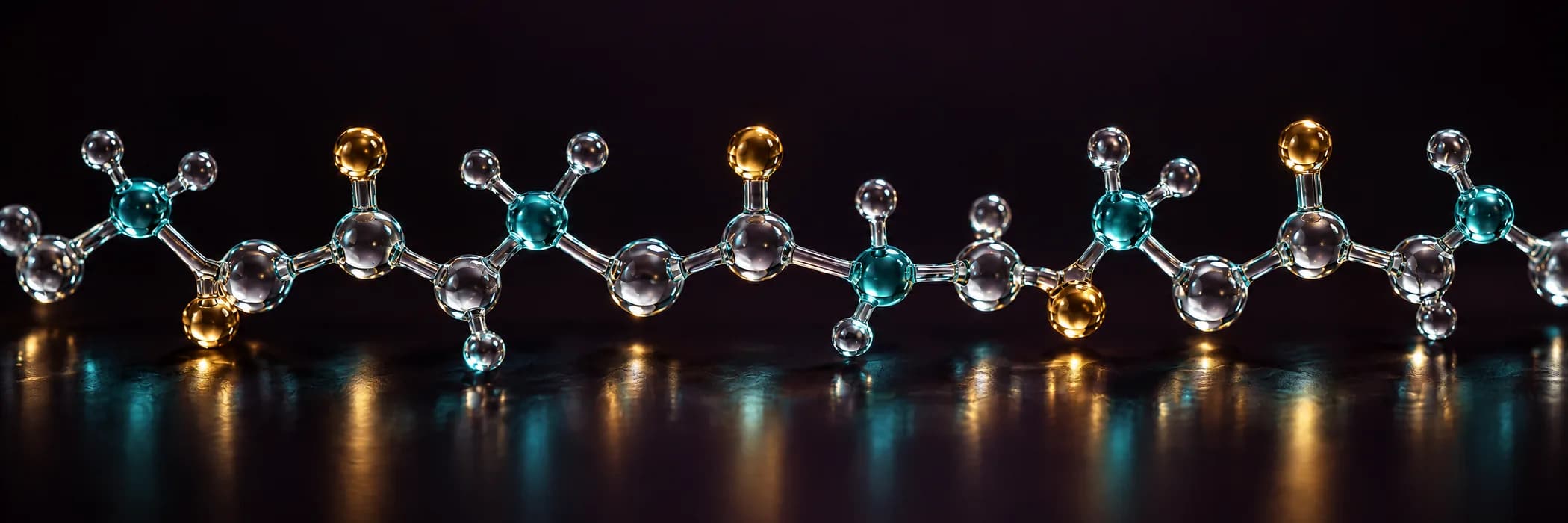
Works from inside the cell. In gut and immune cells, KPV turns down NF-κB and MAP-kinase, the switches driving cytokine release. In airway cells it kept NF-κB out of the nucleus.
Gets in through a doorway protein. PepT1, a small-peptide transporter, carries KPV into cells. The inflamed colon makes more of it. In mice without PepT1, KPV no longer protected against colon tumors in a colitis-driven cancer model.
Works without α-MSH's receptors. KPV lacks the core that switches melanocortin receptors on. It still worked in mice without a working MC1R. It also worked with MC3R and MC4R blocked.
Not the same as KdPT. KdPT comes from interleukin-1β (IL-1β), a different parent molecule. This page covers only KPV.
Sources:PMID 18061177PMID 22837805PMID 27458604PMID 22178636PMID 18092346PMID 12750433PMID 17934097
How to dose it
Most people run KPV as a small injection under the skin, once or twice daily.
Dose tiersThe common dose is 300–500 mcg once a day, and more during a flare.
- Low / maintenance:
- 200 mcg once daily, for maintenance, mild inflammation or a first run to check tolerance.
- Standard:
- 300–500 mcg once daily. The common range for ongoing inflammatory goals.
- Acute flare:
- 400–500 mcg twice daily, about 800–1,000 mcg a day, for 7–10 days during a flare or severe mast cell activation syndrome (MCAS) episode.
How to injectIt goes into the fat under the skin. Rotate sites and keep a steady time.
- Injection site:
- Belly (a couple of inches clear of the navel), love-handle area or outer thigh. Rotate to avoid irritation and lumps.
- Time of day:
- No hour works better than another, so a steady time matters most. For a split flare dose, space doses 10–12 hours apart, such as 8 AM and 8 PM.
- Food window:
- Injected KPV doesn't compete with food, so meals don't matter.
Cycle and breaksMost people run KPV in cycles, 4–8 weeks on, then 2–4 weeks off.
- Standard cycle:
- 4–8 weeks of daily use, then reassess.
- Washout:
- A 2–4 week break follows. People check inflammatory markers such as hs-CRP (high-sensitivity C-reactive protein) during it.
- On-demand:
- For occasional flares, some run it only 3–5 days around a known trigger, instead of a fixed cycle.
Mixing the vialMix a 10 mg vial with 2 mL of bacteriostatic water, the calculator's default.
- Mixing:
- 5,000 mcg/mL. On a U-100 (100-unit, 1 mL) syringe: 200 mcg takes 4 units, 300 mcg takes 6 units, 400 mcg takes 8 units, 500 mcg takes 10 units.
- Why 2 mL:
- Each unit holds 50 mcg, which keeps the math simple. The vial holds 3 mL at most.
- For a larger draw:
- At 3 mL, about 3,333 mcg/mL, 300 mcg takes 9 units and 500 mcg takes 15 units.
- Acetate or free base:
- KPV acetate dissolves at 5 mg/mL, the strength of this mix. KPV free base dissolves only to 0.70 mg/mL.
Sources:PMID 18061177PMID 27458604PMID 18092346PMID 28143741FDA briefing document (KPV), PCAC July 2026
Best time to take it
Implied best time
Anytime (consistent)
Most people take KPV at one steady time each day, many in the evening for gut goals.
- KPV works through a steady anti-inflammatory mechanism, not a circadian one, so consistency matters more than the exact hour.
- For gut and recovery goals, an evening dose lines the calming signal up with the body's overnight repair window.
- On-demand users time it around a known trigger rather than a daily clock.
What to stack it with


KPV turns down the cytokine cascade. The best pairings work differently, rebuilding tissue or regulating immunity. Adding another anti-inflammatory doubles up on the same pathway.
KPV + BPC-157It's the most common KPV pairing. KPV calms the inflammation and BPC-157 rebuilds the tissue.
- Why it works:
- BPC-157 heals the gut lining and grows new blood supply. KPV turns down local NF-κB so repair happens with less inflammation.
- The protocol:
- KPV 300–500 mcg with BPC-157 250–500 mcg, injected under the skin once daily, together or at two nearby sites.
- Outcome:
- People reach for it on gut flares and on tendon or ligament recovery.
KPV + BPC-157 + TB-500TB-500 adds cell migration to the KPV and BPC-157 pair. Premixed with GHK-Cu, it's KLOW.
- Why it works:
- TB-500 pulls repair cells into the injury, BPC-157 rebuilds the structure, and KPV calms the inflammation.
- The protocol:
- KPV 300–500 mcg daily alongside the standard BPC-157 and TB-500 pairing, which runs its own loading and maintenance schedule.
- Outcome:
- People run it for wider soft-tissue recovery where inflammation and structural damage overlap.
KPV + Thymosin Alpha-1Covers both arms of immunity when an immune problem drives the inflammation.
- Why it works:
- KPV calms the overactive innate inflammatory response while Thymosin Alpha-1 tunes the adaptive immune system.
- The protocol:
- KPV 300 mcg under the skin daily, with Thymosin Alpha-1 at 1.6 mg twice weekly, its own page's dose.
- Outcome:
- People reach for it on MCAS and chronic-inflammation cases where immunity runs both overactive and underpowered.
Support nutrients
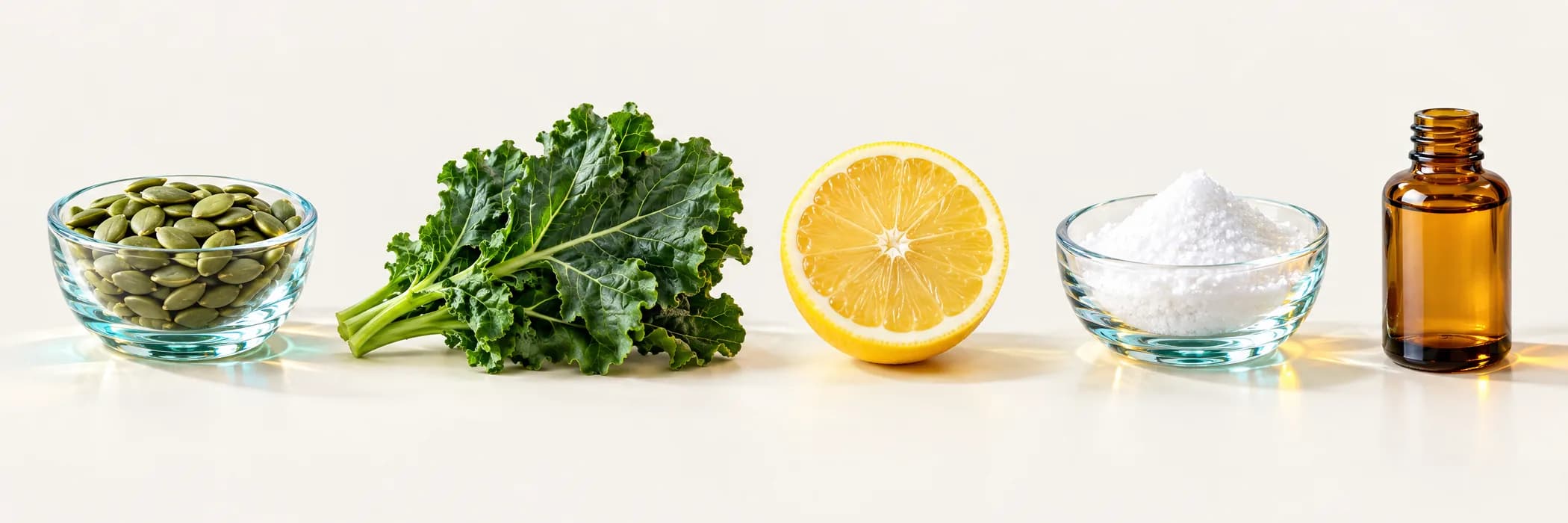
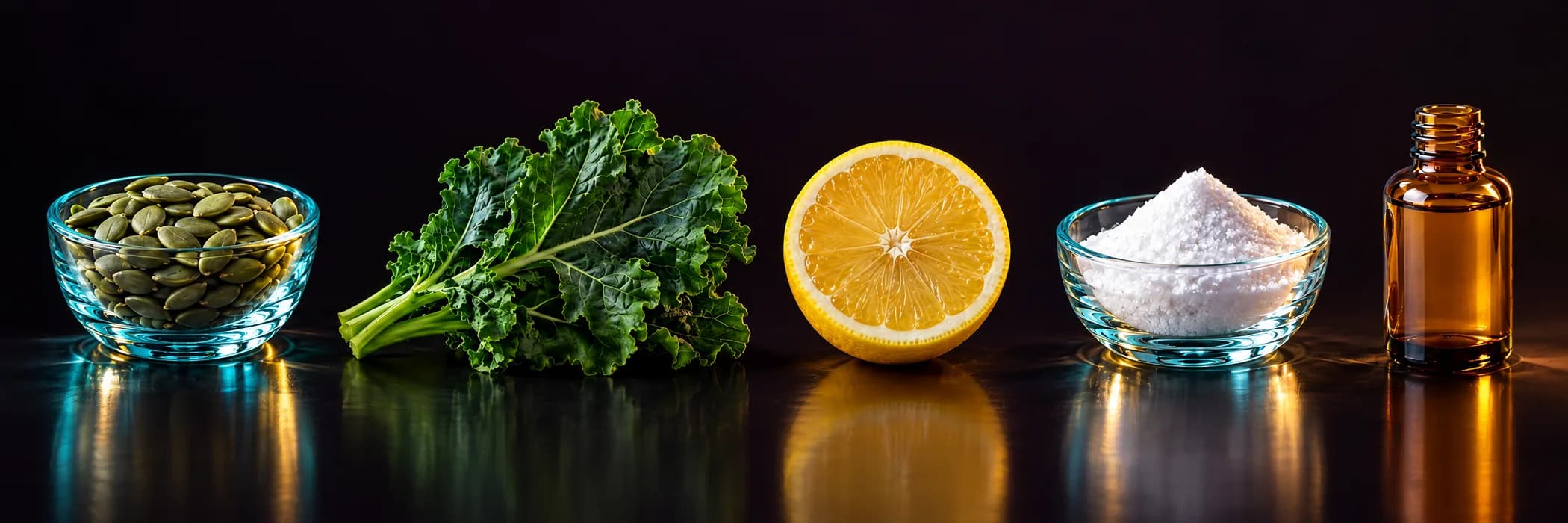
KPV calms inflammation from inside gut and immune cells. These act on the same pathway or feed the gut lining KPV works on.
Calm mast-cell flaresQuercetin is the best match when MCAS or leaky gut is the goal.
- Mechanism:
- Quercetin stabilizes mast cells and blocks histamine, while KPV calms cytokines downstream. It also shuttles zinc into the cell to back up NF-κB inhibition.
- Protocol integration:
- 500 mg isoquercetin or quercetin phytosome, twice daily, about 20 minutes before meals.
Feed the inflammation brakeZinc is a natural brake on NF-κB; copper keeps the balance.
- Mechanism:
- Low zinc lets inflammation run hotter.
- Protocol integration:
- 30–50 mg zinc picolinate or bisglycinate daily, with 2 mg copper bisglycinate to prevent depletion.
Rebuild the gut liningGlutamine, zinc-carnosine and vitamin D feed the gut lining KPV works on.
- Mechanism:
- Glutamine fuels gut-lining cells. Zinc-carnosine is a gut-targeted zinc form. Vitamin D tunes intestinal immune tone.
- Protocol integration:
- L-glutamine 5 g once or twice daily; zinc-carnosine 75 mg a day; vitamin D to a sufficient blood level. Prebiotic fiber and fermented foods build butyrate, an anti-inflammatory fat.
Anti-inflammatory foodOmega-3s and plant polyphenols act on NF-κB too.
- Mechanism:
- They dampen the NF-κB signaling KPV targets, so food and peptide work together.
- Protocol integration:
- About 2–3 g combined EPA/DHA (the omega-3 fats) a day, plus a colorful, polyphenol-rich diet. For tissue repair, add enough protein and vitamin C for collagen.
Dose calculator
Reconstitution calculator
Calculated for a 1 mL U-100 insulin syringe (100 units/mL).
Units per dose
10 units
Draw this many units on a U-100 syringe
Each unit holds 50 mcg
- Volume per dose
- 0.1 mL
- Doses per vial
- 20
- Concentration
- 5 mg/mL
One vial lasts
- Daily
- 20 days
- Every other day
- 40 days
- 5×/week
- 28 days
Research use only. Not for human consumption. Outputs are reference values based on research literature. Verify all measurements independently.
Side effects and what to watch
What the record shows. A 2026 federal review searched the US adverse-event database (FAERS) and the medical literature through December 3, 2025, and found no KPV reports. It also found no human pharmacokinetic or clinical studies, and it lists the human risks as unknown. KPV lacks α-MSH's tanning effect.
Skip it or take care if. You are pregnant or breastfeeding. The same review found no reproductive or developmental studies of KPV.
Sources:FDA briefing document (KPV), PCAC July 2026PMID 18612139
Common questions
What is KPV?
KPV is the last three amino acids (Lys-Pro-Val) of α-MSH, a 13-amino-acid hormone. That tail carries most of the hormone's anti-inflammatory effect.
How is KPV dosed?
The common range is 200 to 500 mcg a day as a small injection under the skin. For a flare, some run 400–500 mcg twice a day for 7–10 days.
Does oral KPV work?
In mice, KPV in drinking water or in gut-targeted nanoparticles calmed colitis. Plain KPV breaks down almost fully in simulated gut fluids within two hours. Plain oral KPV also failed in a later mouse study. This page's doses are for injection under the skin.
Do I need to cycle KPV?
Most people run it 4–8 weeks, then take a 2–4 week break. Some use it only 3–5 days around a known trigger instead of a fixed cycle.
How is KPV different from BPC-157?
KPV calms inflammation inside cells. BPC-157, a 15-amino-acid peptide, rebuilds tissue. That split is why they pair, often as KPV 300–500 mcg with BPC-157 250–500 mcg daily.
What side effects does KPV have, and who should skip it?
A search of the US adverse-event database and the medical literature through December 2025 found no KPV reports. Skip it if you are pregnant or breastfeeding.
Deep dive
Doses used in studies · Molecular identity · References
10From the researchDoses used in studies
These are the doses used in the published cell and animal studies on KPV.
| Dose | Route | Model | Outcome | Sources: |
|---|---|---|---|---|
| Nanomolar | In vitro (cell culture) | Human intestinal epithelial cells & T cells | Inhibited NF-κB and MAP-kinase activation; reduced pro-inflammatory cytokine secretion | PMID 18061177 |
| 100 μM in drinking water | Oral | Mouse, DSS & TNBS colitis | Reduced colitis severity and pro-inflammatory cytokine expression | PMID 18061177 |
| Not specified | Not specified | Mouse, DSS & T-cell-transfer colitis (incl. MC1R-deficient) | Earlier recovery, reduced colonic myeloperoxidase; every treated MC1R-deficient mouse survived DSS colitis | PMID 18092346 |
| Nanoparticle-delivered | Oral | Mouse, DSS ulcerative colitis | Hyaluronic-acid-functionalized KPV nanoparticles reduced mucosal damage and downregulated TNF-α | PMID 28143741 |
| Nanoparticles in a colon-targeted hydrogel | Oral | Mouse, DSS colitis | Matched the effect of free KPV at a 12,000-fold lower concentration | PMID 19909746 |
| Prodrug 0.5 or 2.5 mg/kg a day for 7 days; free KPV 1 mg/kg a day, the peptide equivalent of 10 mg/kg prodrug | Oral | Mouse, DSS colitis | The prodrug protected the colon. Free KPV showed no benefit at the higher peptide load, and broke down almost fully in simulated gut fluids within 2 hours | PMID 41533788 |
| 1 mg/kg, single dose | Intraperitoneal injection | Mouse, traumatic brain injury | Lesion about 24% smaller (p = 0.016), with less microglial branching and less neuron death; TNF-α and IL-1β expression and total microglia counts were unchanged | PMID 23940690 |
| 1, 5 or 10 mg/mL eye drops, 4 times a day for 4 days | Topical (eye) | Rabbit, corneal abrasion | Faster corneal healing; every treated cornea had healed at 60 hours, none on placebo | PMID 16965771 |
| 50 μg/mL | In vitro (cell culture) | Human skin cells (HaCaT keratinocytes) exposed to fine dust | Restored cell viability; cut reactive oxygen species and IL-1β; less inflammatory cell death in a 3D skin model | PMID 40073467 |
11ChemistryMolecular identity
- Molecular weight
- 342.43 g/mol (average)
- Molecular formula
- C16H30N4O4
- Monoisotopic mass
- 342.2267 Da
- Sequence (3 AA)
- Lys-Pro-Val (KPV)
- CAS number
- 67727-97-3
- Structure / class
- Free-acid tripeptide; C-terminal fragment of α-MSH (residues 11-13)PubChem CID 125672; research literature
- Molecular target
- Intracellular NF-κB and MAPK signaling (anti-inflammatory); cell entry via the PepT1 di/tripeptide transporter; melanocortin-receptor-independent in gut modelsPMID 18061177; PMID 18092346
- Half-life
- Not established. No published human pharmacokinetics; expected rapid peptidase degradationNot established; FDA briefing document (KPV), PCAC July 2026
- Regulatory status
- Not FDA-approved; research compound. No human clinical trials. FDA's briefing for its July 23, 2026 compounding advisory committee (PCAC) recommended against adding KPV to the 503A bulks list. The committee voted 8 yes, 6 no, 1 abstention to recommend adding it, for the free base and the acetate alike (FDA webcast); the vote is not binding, and no rule had followed as of October 2026No approval record; FDA briefing document (KPV) and webcast, PCAC July 2026
12Primary sourcesReferences
- PubChem CID 125672PubChem CID 125672 (KPV / Lys-Pro-Val, α-MSH 11-13)
- PMID 18061177Dalmasso et al., Gastroenterology 2008 (PepT1 uptake, NF-κB/MAPK inhibition, DSS/TNBS colitis)
- PMID 18092346Kannengiesser et al., Inflamm Bowel Dis 2008 (colitis; protective in MC1R-deficient mice)
- PMID 27458604Viennois et al., Cell Mol Gastroenterol Hepatol 2016 (PepT1 genetic proof; PepT1-KO mice not protected from colitis-associated tumors)
- PMID 28143741Xiao et al., Mol Ther 2017 (oral hyaluronic-acid-functionalized KPV nanoparticles, DSS colitis)
- PMID 17934097Luger & Brzoska, review 2007 (α-MSH anti-inflammatory activity attributed to C-terminal KPV)
- PMID 29953505Glycoalkylated KPV analogs 2018 (modified KPV shows improved proteolytic stability vs native)
- PMID 18612139Brzoska et al., Endocr Rev 2008 (KPV keeps the anti-inflammatory action of α-MSH without its pigment action)
- PMID 22178636Böhm et al., J Allergy Clin Immunol 2012 (KPV lacks the central pharmacophore of α-MSH)
- PMID 12750433Getting et al., J Pharmacol Exp Ther 2003 (KPV anti-inflammatory with melanocortin receptors blocked or missing)
- PMID 22837805Land SC, Int J Physiol Pathophysiol Pharmacol 2012 (KPV blocks nuclear import of NF-κB p65 in human airway cells)
- PMID 19909746Laroui et al., Gastroenterology 2010 (oral KPV nanoparticles in a colon-targeted hydrogel, DSS colitis)
- PMID 41533788Cheng et al., Sci Adv 2026 (oral KPV prodrug; free KPV degraded in simulated gut fluids)
- PMID 23940690Schaible et al., PLoS One 2013 (single 1 mg/kg intraperitoneal dose, mouse traumatic brain injury)
- PMID 16965771Bonfiglio et al., Exp Eye Res 2006 (KPV eye drops, rabbit corneal wound healing)
- PMID 40073467Sung et al., Tissue Cell 2025 (KPV in human keratinocytes exposed to fine dust)
- FDA briefing document (KPV), PCAC July 2026FDA briefing document on KPV, Pharmacy Compounding Advisory Committee, July 23-24, 2026 (adverse-event search, nonclinical review)
- FDA webcastFDA webcast, Pharmacy Compounding Advisory Committee, July 23, 2026 (KPV free base and KPV acetate votes, 8 yes, 6 no and 1 abstention each, read into the record by the designated federal officer; FDA had posted no minutes as of October 5, 2026)
- PMID 11239505Mandrika et al., Biochem Pharmacol 2001 (KPV blocks NF-κB translocation in macrophages without binding MC1 or raising cAMP)
- PMID 21282427Singh & Mukhopadhyay, Antimicrob Agents Chemother 2011 (α-MSH C-terminal fragments kill Staphylococcus aureus)
KPV
10 mg vial
Ki Researcher is affiliated with Ki Peptides.
Ships to the US only. Buyers must be 21 or older.
Reviewed by Ki Researcher Team · Research use only · Not medical advice · Updated 2026-10-19