
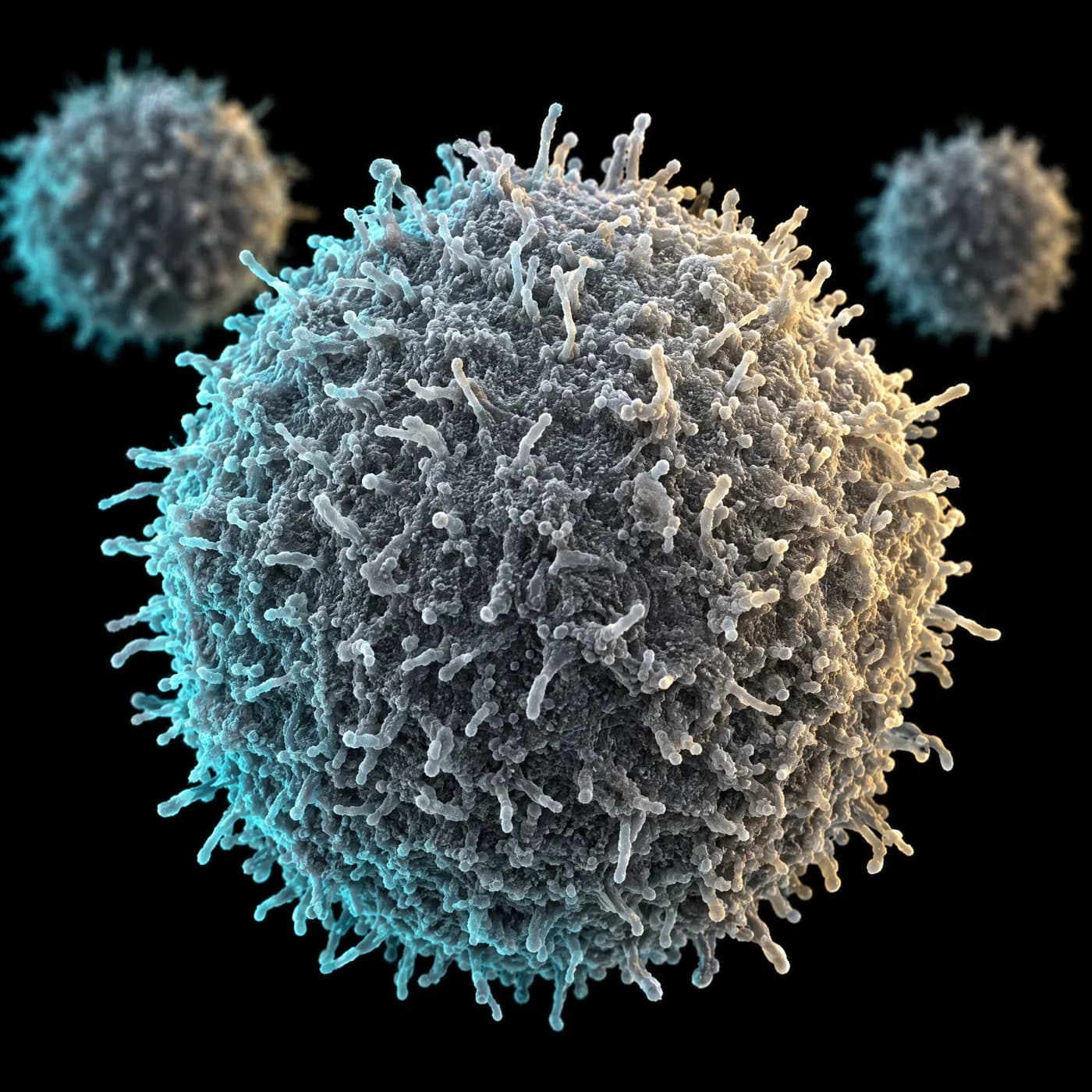
Thymosin Alpha-1
Tα1 / thymalfasin · thymic immunomodulatory peptide (Zadaxin)
Thymosin alpha-1 is a 28-amino-acid peptide your thymus gland makes to steer the immune system. People run it to tune up their immune defenses. As thymalfasin (Zadaxin) it is a registered medicine in roughly 35 countries, with large human trials behind it.
Buy Thymosin Alpha-110 mg vial
Ki Researcher is affiliated with Ki Peptides.
Ships to the US only. Buyers must be 21 or older.
At a glance
- Dose
- 1.6 mg twice weekly
- How often
- Twice weekly, e.g. Monday and Thursday
- How
- A small injection under the skin, never into a vein
- When
- Any consistent time on your dosing days
- Cycle
- 6–12 weeks, then a 4–8 week break
The 30-second versionEverything on this page, fast
Immune tune-up · Th1 antiviral push · Hepatitis-B add-on · Vaccine response
The best-evidenced peptide of the thymic family, and a rare one that's a real, registered medicine (thymalfasin / Zadaxin), approved in ~35 countries. It works by tuning up the immune system, maturing the cells that direct your defenses and pushing a Th1 antiviral response.
The basics
- A 28-amino-acid copy of a peptide your thymus gland makes to steer the immune system.
- Sold as the drug Zadaxin, the best-defined, best-evidenced peptide of the thymic family.
Why people use it
- A well-mapped immune mechanism. It matures the immune system's scout cells and steers a Th1 antiviral response.
- Real evidence as a hepatitis-B add-on, the basis for its approval as Zadaxin.
- Boosts vaccine response in the elderly and immunocompromised, who otherwise respond poorly.
- The standout of the thymic peptides, the one with human trials and a regulatory pedigree behind it.
Stacks well with
- Thymulin and Thymogen, the rest of the thymic peptide family. All three nudge immune signaling from a thymic origin.
- Vaccines. Studied as an immune co-adjuvant alongside flu and hepatitis-B shots in older or immunocompromised people.
Good to know
- Under the skin only. The label specifically prohibits intravenous (IV) use.
- It's a twice-weekly schedule, not daily.
- Registered and approved as a real drug in ~35 countries, a genuine plus most peptides can't claim.
What it does
A registered immune medicine with large human trials behind it. Here is what draws people to it.
- Tunes up your immune defensesResearch shows it matures dendritic cells through Toll-like receptor signaling and steers a Th1 response, the virus-fighting branch.
- A stronger response to vaccinesIn trials with elderly and immunocompromised people, it improved antibody titers in those who otherwise respond poorly.
- Backed as a hepatitis B add-onAdded to antiviral therapy in chronic hepatitis B trials, it raised viral-control markers, the basis for its approval as Zadaxin.
- A clean short-term tolerability recordAcross its studied uses, drug-related side effects run under 1%, mostly mild injection-site reactions.
- A registered medicine in ~35 countriesAs thymalfasin it is nationally registered in roughly 35 countries, a regulatory pedigree most peptides lack.
Sources:PMID 19467157PMID 22010537PMID 14982877PMID 39814420
How it works
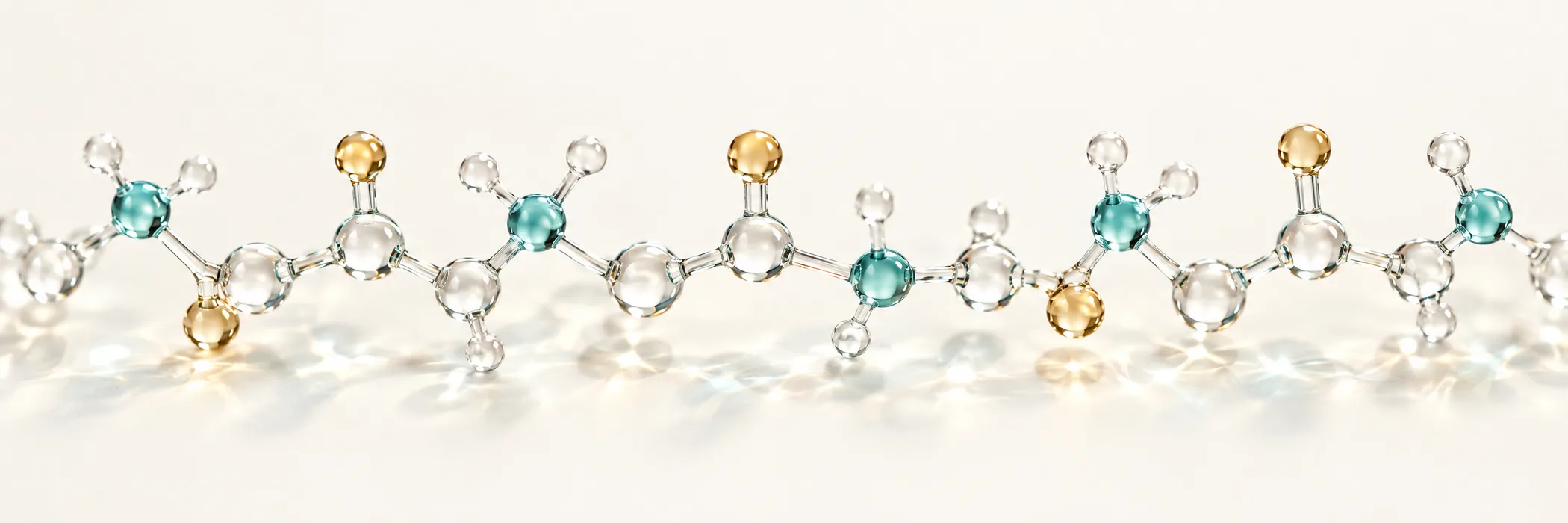
Wakes up the scouts. Thymosin α1 (Tα1) acts mainly on dendritic cells, the immune system's scouts. In cell and mouse studies it matures them and raises interleukin-12, a signal that switches on aggressive immunity, through Toll-like receptors (TLR9 and TLR2), the cell's alarms.
Pushes a Th1 response. That steers immunity toward Th1, the branch that fights viruses and bugs living inside cells. In a mouse mold-infection model it produced protective antifungal immunity.
Keeps the balance. It also engages an enzyme pathway called IDO, which breaks down tryptophan and helps balance inflammation against tolerance.
Shown in people. In the ETASS sepsis trial it raised HLA-DR on monocytes, a surface tag that shows these frontline immune cells are awake and working.
Sources:PubChem CID 16130571PMID 265536PMID 14982877PMID 23327199
How to dose it
Most people run Thymosin α1 (Tα1) as a small injection under the skin, twice a week. It is never given intravenously (IV, into a vein).
Dose tiersMost people run 1.6 mg under the skin twice weekly, the Zadaxin dose.
- Standard (twice weekly):
- 1.6 mg under the skin twice weekly. The Zadaxin hepatitis B dose, run 6–12 months with antiviral therapy. Vaccine studies used the same rhythm for eight doses.
- Hospital sepsis course:
- Twice daily for 5 days then once daily for 2 days (ETASS), or every 12 hours for 7 days (TESTS Phase 3). Hospital-only. TESTS found no survival benefit (HR 0.99).
How to injectInto the fat under the skin, never a vein. Rotate sites between doses.
- Injection site:
- The abdomen (a couple of inches clear of the navel), the outer thigh or the love-handle area. Rotate sites between doses to avoid irritation and fatty lumps.
- Measuring the dose:
- Drawn on a U-100 insulin syringe. The mixing card below converts 1.6 mg to syringe units, and the on-page calculator handles any vial size.
- Time of day:
- Not time-locked. The trials named no time for twice-weekly dosing, so people pick a consistent time on fixed days (e.g. Monday and Thursday). See Best time to dose above.
- Food window:
- It can be injected independently of meals.
Cycle and breaksMost people run 6–12 weeks on, then take a 4–8 week break.
- Standard cycle:
- 6–12 weeks of twice-weekly dosing, mirroring the hepatitis B trial rhythm, then assess, checking relevant immune markers if available.
- Washout:
- A 4–8-week break before repeating. The serum half-life is short (under 3 hours), so buildup isn't the concern. The break is standard peptide-pulsing practice.
Mixing the vialThe default mix is a 10 mg vial with 2 mL of bacteriostatic water.
- Mixing:
- 10 mg vial + 2 mL bacteriostatic water = 5 mg/mL = 5,000 mcg/mL. On a 100-unit (1 mL) insulin syringe, 1.6 mg (1,600 mcg) takes 32 units.
- Higher dilution option:
- Adding 3 mL instead gives about 3,333 mcg/mL, so 1,600 mcg takes 48 units. A standard vial holds 3 mL at most.
Sources:PMID 19467157PMID 23327199PMID 39814420PMID 22010537PMID 10027483
Best time to take it
Implied best time
Anytime (consistent)
Most people take Thymosin Alpha-1 at a consistent time on its dosing days. It isn't tied to a specific hour.
- Its effect is immune signaling that builds over days, so no time of day is favored.
- The trials dosed twice weekly without naming a time. Fixed days (e.g. Monday and Thursday) at a repeatable hour keep the rhythm going.
- Its serum half-life is short (under 3 hours), so the dose doesn't linger and there's nothing to schedule around.
Sources:PMID 10027483
What to stack it with


The trials ran Tα1 on top of antivirals and vaccines. People group it with the other thymic peptides.
Tα1 + antiviral therapyThe combination it was approved for, added to lamivudine or peg-interferon in chronic hepatitis B.
- Why it works:
- Antivirals hold viral load down while Tα1 pushes dendritic cells and T-cells toward a Th1 antiviral response. Two different levers.
- The protocol:
- 1.6 mg under the skin twice weekly for 6–12 months, alongside the prescriber's antiviral regimen. The dose from the positive meta-analysis (8 trials, n=583).
- Outcome:
- Hepatitis B trials showed higher HBeAg seroconversion (~45% vs ~15%), a viral-control marker, and higher virological response.
Tα1 + vaccineStudied alongside influenza and hepatitis B vaccines in elderly and immunocompromised people with weak antibody responses.
- Why it works:
- Tα1 drives dendritic-cell maturation and interleukin-12 production, the same machinery vaccines rely on. Given around vaccination, it amplifies the antigen-presenting response that sets antibody strength.
- The protocol:
- 900 µg/m² (scaled to body surface area) under the skin twice weekly for 8 doses, given with the vaccine course.
- Outcome:
- It improved antibody titers in people who respond poorly to vaccines.
Tα1 + thymulin and thymogenBy convention people group these three as the thymic peptide family.
- Why they are grouped:
- Thymulin is a zinc-dependent peptide that promotes T-cell maturation, complementary to Tα1's dendritic-cell axis. Thymogen is a Thr-Glu dipeptide from thymalin, a thymus extract.
- When to hold back:
- Combined immune stimulation in the wrong context (existing autoimmunity, deliberate immunosuppression) can amplify risk instead of benefit.
Support nutrients
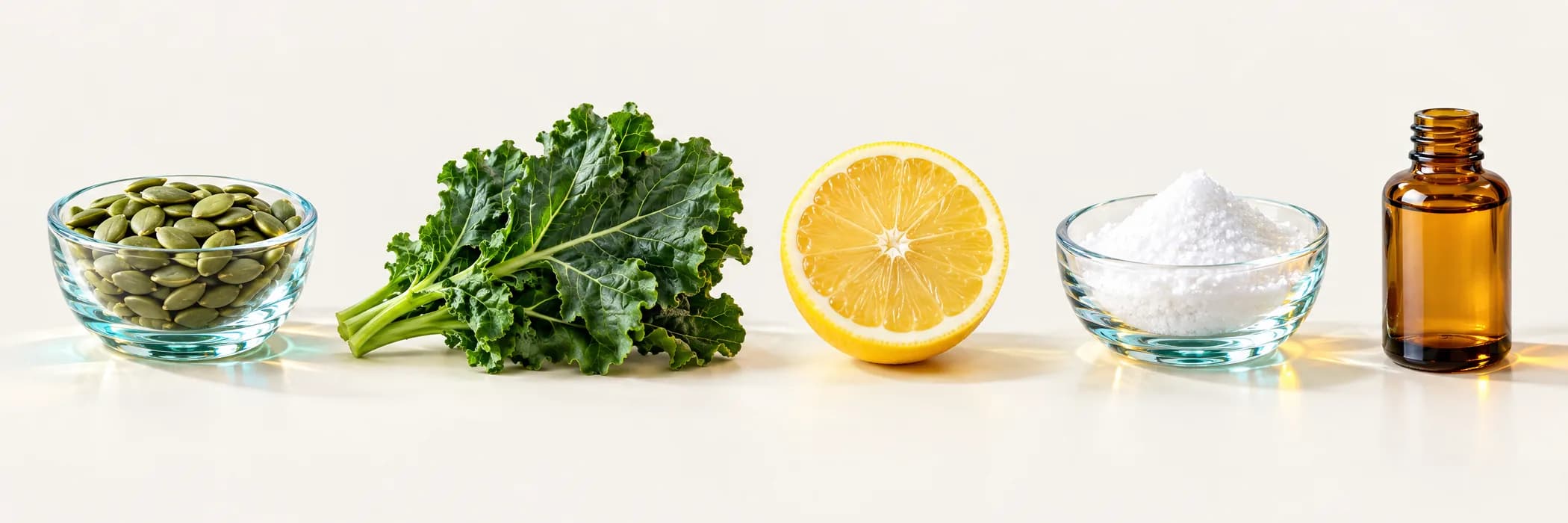
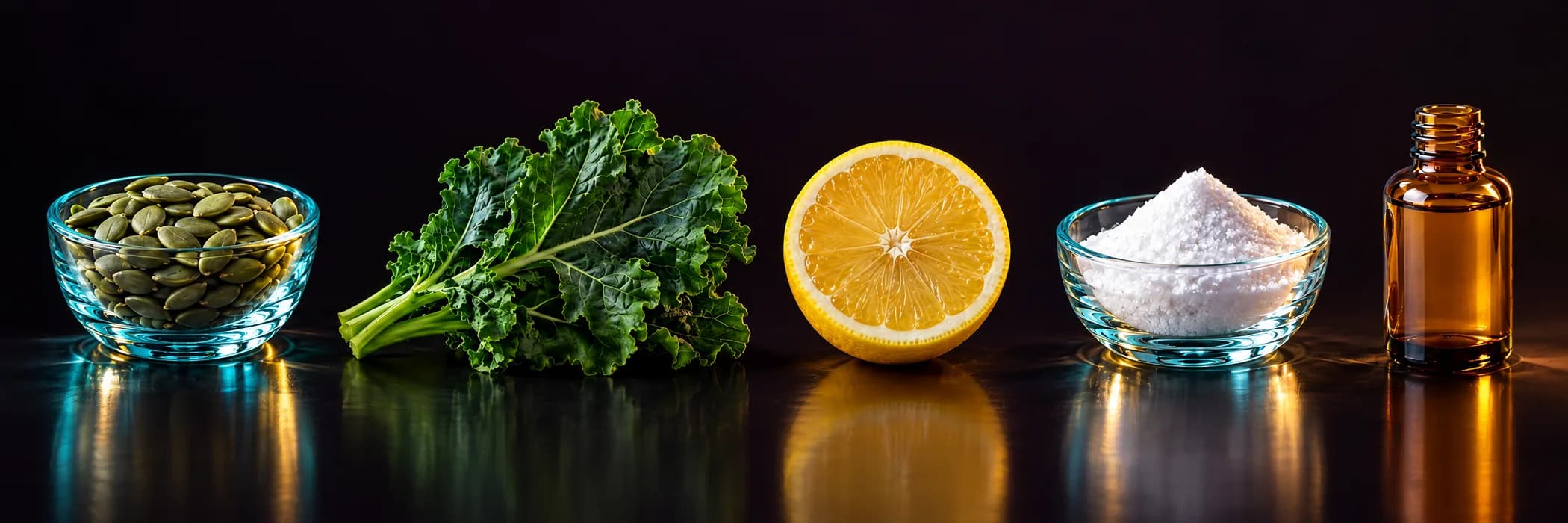
Tα1 steers the immune response. These nutrients are what the immune cells it targets run on.
Zinc for the thymusThymic hormone output and T-cell maturation both depend on zinc.
- Why it matters:
- Zinc deficiency shrinks the thymus gland and blunts T-cell output. Tα1 is a thymic peptide, so low zinc blunts the same biology it engages.
- How people take it:
- 15–30 mg elemental zinc daily (picolinate or bisglycinate), with food to reduce nausea. On any course longer than 4 weeks, add 1–2 mg copper bisglycinate to prevent copper depletion.
Vitamin D and selenium for T-cellsTwo nutrients T-cells rely on, both commonly low.
- Vitamin D:
- T-cell activation needs vitamin D, and deficiency impairs the Th1 response Tα1 promotes. Dose to sufficiency (blood 25-OH-D ≥ 40 ng/mL). Typical corrective doses are 2,000–5,000 IU/day, calibrated by labs.
- Selenium 100–200 mcg/day:
- Supports normal immune-cell function and antioxidant defense in immune tissue. Selenomethionine is the preferred form. Stay within 100–200 mcg/day, since the upper tolerable limit is 400 mcg/day.
Protein and vitamin C to build withImmune cells and antibodies are built from amino acids, and immune activation drains vitamin C.
- Adequate protein:
- T-cells, antibodies and cytokines (chemical messengers) are all built from protein. The practical floor is ≥ 1.2 g/kg body weight/day from complete protein sources.
- Vitamin C 500–1,000 mg/day:
- Immune cells hold vitamin C far above blood levels, and it supports phagocytes, natural killer cells and T-cells. Split dosing (e.g. 500 mg morning + 500 mg evening) improves absorption.
Dose calculator
Reconstitution calculator
Calculated for a 1 mL U-100 insulin syringe (100 units/mL).
Units per dose
32 units
Draw this many units on a U-100 syringe
Each unit holds 50 mcg
- Volume per dose
- 0.32 mL
- Doses per vial
- 6
- Concentration
- 5 mg/mL
One vial lasts
- Daily
- 6 days
- Every other day
- 12 days
- 5×/week
- 8 days
- Large draw (32 units). That's normal for mg doses. To check it, multiply the units by what each unit holds. You should get your dose.
Research use only. Not for human consumption. Outputs are reference values based on research literature. Verify all measurements independently.
Side effects and what to watch
What people notice. Very little. The Zadaxin label reports a drug-related side-effect rate under 1%, mostly mild discomfort or irritation at the injection site. Rarer reports include skin redness, temporary muscle shrinkage, aching in several joints with hand swelling, and rash.
In the big trials. The double-blind sepsis trial (n=1,089) showed no major safety signal, and the earlier randomized sepsis trial reported no serious drug-related side effects. The safety data cover courses of weeks to about twelve months.
Skip it or take care if. You are deliberately immunosuppressed, such as a transplant recipient, because boosting immune function could undermine anti-rejection therapy. Also skip it with a known hypersensitivity to the peptide or any component.
Common questions
How is Thymosin Alpha-1 dosed?
Most people run 1.6 mg twice weekly as a small injection under the skin. That is the Zadaxin dose. It is never given intravenously.
When should I take it?
Any consistent time on your dosing days. Its effect builds over days and its serum half-life is under 3 hours, so the hour doesn't matter. Most people fix two days, such as Monday and Thursday.
Do I need to cycle it?
Most people run 6–12 weeks of twice-weekly dosing, then take a 4–8 week break before repeating.
What does it stack with?
The trials ran it on top of antiviral therapy and alongside vaccines. People also group it with thymulin and thymogen, the other thymic peptides. Zinc is the headline cofactor, since thymic hormone output depends on it.
How is it different from thymulin and thymogen?
Tα1 works through dendritic cells and is the family's registered medicine, with human trials behind it. Thymulin is a zinc-dependent peptide that promotes T-cell maturation. Thymogen is a Thr-Glu dipeptide from thymalin, a thymus extract.
What is Thymosin Alpha-1, exactly?
A 28-amino-acid immune-signaling peptide, the front fragment of a protein called prothymosin alpha, first isolated from thymus extract in 1977. The synthetic version is thymalfasin, sold as the drug Zadaxin.
Deep dive
Doses used in studies · Molecular identity · References
10From the researchDoses used in studies
These are the doses from the human trials and the Zadaxin label. It is given under the skin, and the label rules out a vein.
| Dose | Route | Model | Outcome | Sources: |
|---|---|---|---|---|
| 1.6 mg 2×/week for 6–12 months (the standard Zadaxin regimen, not a figure this meta-analysis states) | Subcutaneous (per the standard regimen; the meta-analysis gives no route) | Human, chronic hepatitis B, add-on to LAMIVUDINE only; meta-analysis, 8 trials, n=583 | Higher HBeAg seroconversion (≈45% vs 15%) and virological response, but small, mostly single-center Chinese add-on trials (moderate-certainty) | PMID 19467157 |
| 1.6 mg, 2×/day ×5 days then 1×/day ×2 days | Subcutaneous | Human, severe sepsis RCT (n=361, single-blind, China; ETASS) | 28-day mortality 26% vs 35%; log-rank p=0.049 (marginal); NOT confirmed by the later rigorous trial | PMID 23327199 |
| Every 12 hours ×7 days | Subcutaneous | Human, sepsis Phase 3 RCT (n=1,089, double-blind, placebo-controlled, China; TESTS) | NO mortality benefit: 23.4% vs 24.1%, HR 0.99 (95% CI 0.77–1.27), p=0.93; the most rigorous trial was NULL | PMID 39814420 |
| Variable (as administered) | Subcutaneous | Human, COVID-19 multicenter retrospective (19 hospitals, n=771) | Apparent mortality benefit DISAPPEARED after propensity matching (51.0% vs 52.9%, not significant); confounded by indication | PMID 33208294 |
| 1.6–6.4 mg + dacarbazine ± interferon-α | Subcutaneous | Human, metastatic melanoma RCT (n=488) | Median OS 9.4 vs 6.6 months, HR 0.80 (95% CI 0.63–1.02), p=0.08; did NOT reach significance (hypothesis-generating) | PMID 20194853 |
| 900 µg/m², 2×/week ×8 doses | Subcutaneous | Human, elderly / immunocompromised, as vaccine co-adjuvant (influenza, hepatitis B) | Improved antibody titers in vaccine-hyporesponders, an immunogenicity endpoint, not a clinical-outcome endpoint; trials small | PMID 22010537 |
11ChemistryMolecular identity
- Molecular weight
- 3108.3 g/mol (average)
- Molecular formula
- C129H215N33O55
- Monoisotopic mass
- 3106.5041 Da (exact mass 3107.5075)
- PubChem CID
- 16130571 (thymalfasin)
- Sequence (28 AA)
- Ac-Ser-Asp-Ala-Ala-Val-Asp-Thr-Ser-Ser-Glu-Ile-Thr-Thr-Lys-Asp-Leu-Lys-Glu-Lys-Lys-Glu-Val-Val-Glu-Glu-Ala-Glu-Asn (N-terminally acetylated)PubChem CID 16130571
- Structure / class
- N-terminally acetylated 28-residue immunomodulatory peptide; N-terminal 1–28 fragment of prothymosin alphaPubChem CID 16130571; PMID 265536
- Origin
- Isolated 1977 from thymosin fraction 5 (Goldstein lab); synthetic form = thymalfasinPMID 265536
- CAS / UNII
- 62304-98-7 (also 69521-94-4) · W0B22ISQ1CPubChem / FDA UNII
- Molecular target
- No single receptor; immunomodulator acting on dendritic cells via TLR2/TLR9–MyD88 signaling → Th1 polarizationResearch literature
- Half-life (human, SC)
- Under 3 h (primary study; commonly cited ~2 h); returns to baseline within 24 hPMID 10027483Half-life curve →
- Regulatory status
- NOT FDA-approved and NOT EMA-centrally approved; nationally registered as Zadaxin (thymalfasin) in ~35 countries for chronic hepatitis B; removed from FDA 503A Category 2 list in 2024 on a withdrawn nomination (not on Category 1)FDA / national drug registers
12Primary sourcesReferences
- PubChem CID 16130571PubChem CID 16130571 (Thymalfasin / Thymosin α1; C129H215N33O55, MW 3108.3 avg, monoisotopic 3106.50; 28-aa N-acetylated sequence Ac-SDAAVDTSSEITTKDLKEKKEVVEEAEN; CAS 62304-98-7 / 69521-94-4; FDA UNII W0B22ISQ1C)
- PMID 265536Low, Thurman, Goldstein et al., PNAS 1977;74(2):725–729 (isolation + sequence of thymosin α1, an immunologically active thymic polypeptide)
- PMID 14982877Romani, Bistoni, Puccetti et al., Blood 2004;103(11):4232–4239 (Tα1 activates dendritic cells for antifungal Th1 resistance through Toll-like receptor signaling; in vitro / mouse)
- PMID 19467157Meta-analysis of thymosin α1 + lamivudine vs lamivudine in chronic hepatitis B, 8 trials, n=583 (HBeAg seroconversion 45.1% vs 15.2%; virological response 84.7% vs 74.9%)
- PMID 23327199Wu, Li, Liu et al., Crit Care 2013. ETASS: thymosin α1 in severe sepsis, multicenter single-blind RCT, n=361 (28-day mortality 26.0% vs 35.0%; log-rank p=0.049, marginal); NCT00711620
- PMID 39814420TESTS: thymosin α1 for sepsis, multicentre double-blind placebo-controlled Phase 3 RCT, 22 centers, n=1,089 (28-day mortality 23.4% vs 24.1%; HR 0.99, 95% CI 0.77–1.27, p=0.93; NO benefit)
- PMID 33208294Multicenter retrospective COVID-19 study, 19 hospitals, n=771 (unadjusted mortality 41.3% vs 60.6%, but after propensity matching 51.0% vs 52.9%, NOT significant; no association with reduced mortality)
- PMID 20194853Maio et al., J Clin Oncol 2010;28(10). Thymosin α1 + dacarbazine ± IFN in metastatic melanoma, RCT n=488 (median OS 9.4 vs 6.6 mo, HR 0.80, 95% CI 0.63–1.02, p=0.08; missed significance)
- PMID 22010537Review: utility of thymosin α1 as co-adjuvant in influenza vaccines / vaccine-hyporesponsive populations (immunogenicity endpoints; e.g. NCT01031966)
- PMID 10027483Pharmacokinetics of thymosin α1 after subcutaneous injection in healthy volunteers (rapid absorption, serum half-life ~2 h, no accumulation; well absorbed SC)
- FDA human-drug-compounding guidanceFDA. Thymosin α1 placed on Category 2 interim 503A bulk drug substances list (Sept 2023; 'may present significant safety risks'), then removed effective 2024-09-27 on withdrawal of the nomination (NOT an affirmative finding; also not on Category 1)
Thymosin Alpha-1
10 mg vial
Ki Researcher is affiliated with Ki Peptides.
Ships to the US only. Buyers must be 21 or older.
Reviewed by Ki Researcher Team · Research use only · Not medical advice · Updated 2026-09-24