
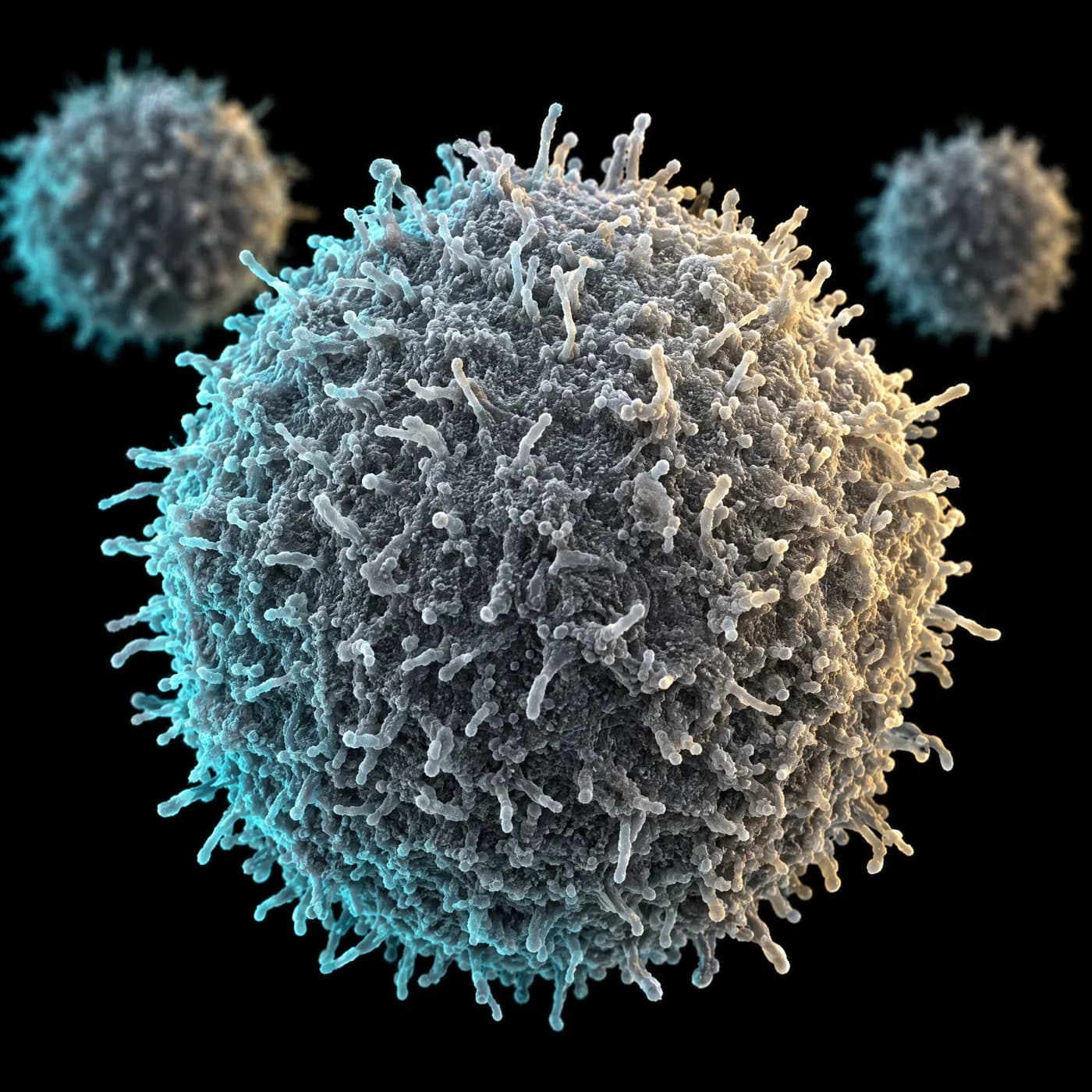
LL-37 (Cathelicidin)
The only human cathelicidin · host-defense peptide · studied on wounds as ropocamptide
LL-37 is humans' only cathelicidin, a 37-amino-acid host-defense peptide. People run it for wound healing and immune defense. It punches holes in microbe membranes and, through formyl peptide receptor 2 (FPR2), helps skin regrow and new blood vessels form. Vitamin D switches its production on.
At a glance
- Dose
- ~100–125 mcg a day (up to ~200–400 mcg for wound healing)
- How often
- Once a day, same time each day
- How
- A small injection under the skin (belly fat or outer thigh)
- When
- Any consistent time of day
- Cycle
- 2–4 weeks on, then a 2–4 week break
The 30-second versionEverything on this page, fast
Host defense · Wound healing · Antimicrobial · Vitamin D link
The body's own cathelicidin. LL-37 is studied as a broad-spectrum host-defense peptide that punches holes in microbe membranes and, through the FPR2 receptor, promotes wound healing and new blood vessels.
The basics
- A 37-amino-acid host-defense peptide cut from the hCAP-18 precursor, the only cathelicidin humans make.
- Run as a small injection under the skin, in short cycles, to engage your innate immune defense directly.
Why people use it
- Broad-spectrum host defense. It disrupts the membranes of bacteria, fungi and some viruses and neutralizes bacterial endotoxin.
- Wound healing and new blood vessels. Through the FPR2 receptor it drives skin-cell migration and new vessel growth.
- Vitamin D raises it. Its gene (CAMP) switches on with vitamin D, which is part of why vitamin D status tracks infection defense.
- Immune tuning beyond killing microbes. It recruits and modulates immune cells and dampens endotoxin-driven inflammation.
Stacks well with
- BPC-157 adds the structural repair while LL-37 seeds the wound with new blood supply and antimicrobial defense.
- BPC-157 + TB-500 makes a recovery trio. LL-37 for new vessels, BPC-157 for the matrix rebuild, TB-500 for repair-cell migration.
Good to know
- Elevated LL-37 is linked to psoriasis, rosacea and lupus-type flares, so people keep the dose low, the cycle short, and stop at the first psoriasis, rosacea or lupus-type symptom.
- Skip it if you already have an autoimmune or inflammatory skin condition.
- Short-acting. Serum proteases cleave it within minutes, so a steady daily dose matters.
What it does
LL-37 is the body's own host-defense peptide. Here is what people run it for.
- Broad-spectrum host defenseIt punches holes in the membranes of bacteria, fungi and some viruses, and neutralizes bacterial endotoxin.
- Supports wound healing and new vesselsThrough the FPR2 receptor it drives skin-cell migration and new blood-vessel growth in lab and animal models.
- Tested on human wounds in topical formIn a human trial, topical LL-37 (ropocamptide) sped healing of hard-to-heal venous leg ulcers.
- Vitamin D raises your own levelsIts gene, CAMP, switches on directly with vitamin D, part of why vitamin D status tracks infection defense.
- Immune tuning beyond killing microbesIt recruits and modulates immune cells and dampens the inflammation that bacterial endotoxin sets off.
How it works
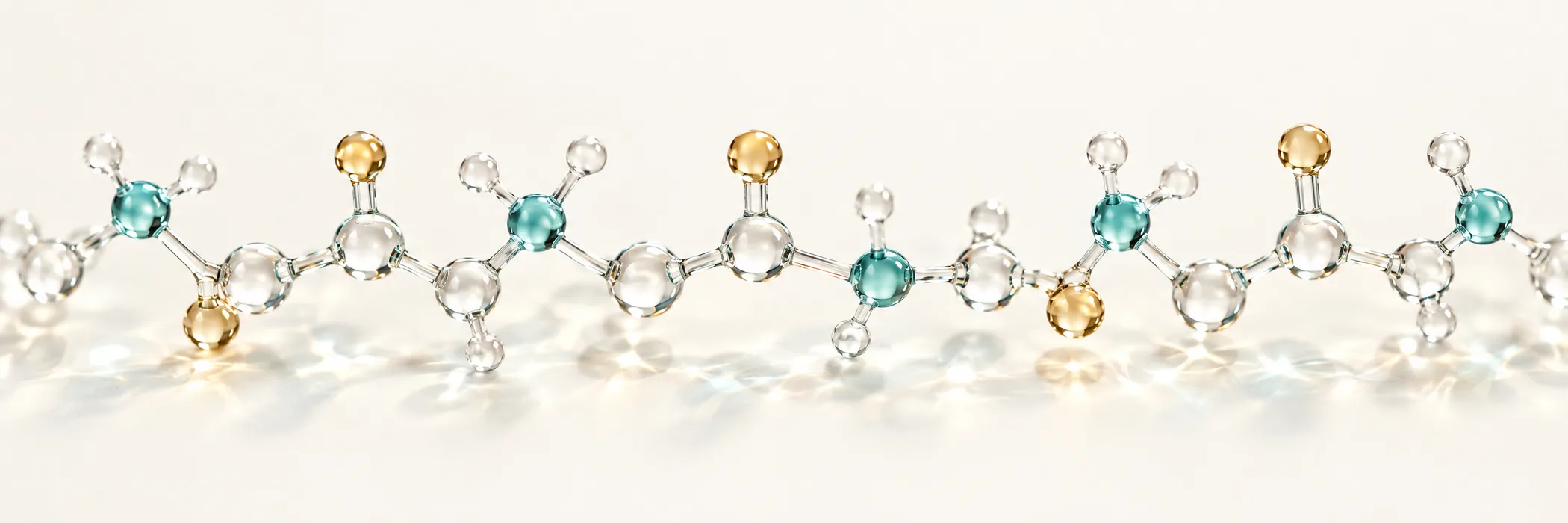
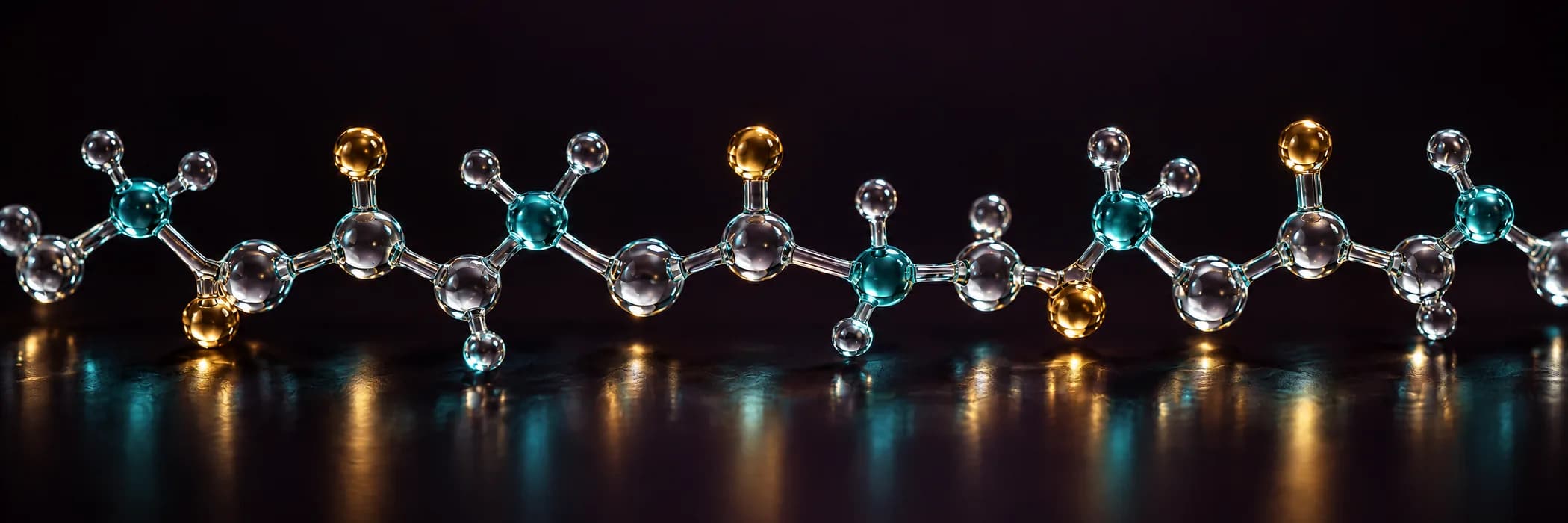
Breaks open microbes. LL-37 is a positively charged peptide that folds into a helix. The charge draws it to the negatively charged membranes of bacteria, fungi and enveloped viruses, and it tears them open. It hits the membrane, not one target, so resistance is harder to evolve than with conventional antibiotics.
Tunes the immune response. It binds and neutralizes bacterial endotoxin, damping the inflammation endotoxin would set off. It also recruits and tunes neutrophils, monocytes and T cells.
Drives wound repair. Through formyl peptide receptor 2 (FPR2), it drives skin-cell migration and new blood-vessel growth, the basis of its wound-healing activity. The vitamin D receptor switches on its gene, CAMP, so vitamin D raises LL-37 levels.
Sources:PMID 12782669PMID 17805349
How to dose it
Most people run LL-37 as a small injection under the skin, once a day, in short cycles.
Dose tiersMost people run ~100–125 mcg once a day, up to ~200–400 mcg.
- Typical:
- ~100–125 mcg once daily under the skin, the most common band, kept low for the autoimmune link.
- High end:
- ~200–400 mcg once daily, for wound healing and new-vessel growth. No surveyed source backs the 500–1,000 mcg figures once seen online.
- Route:
- Under the skin (subcutaneous, SubQ), into belly fat or outer thigh.
- With autoimmune history:
- Elevated LL-37 is linked to psoriasis, rosacea and lupus flares, so many stay at the low end or skip it with any autoimmune history.
How to injectAn injection into belly, thigh or love-handle fat, rotated between doses.
- Injection site:
- Abdomen (a couple of inches clear of the navel), outer thigh or love handles. Rotate sites between doses to prevent local irritation and fatty-tissue changes.
- Measuring the dose:
- Use a U-100 insulin syringe, marked in units. Mixing the vial below gives the units for each dose, and the calculator handles any vial.
- Time of day:
- Any consistent daily slot.
- Food window:
- Inject with or without meals.
Cycle and breaks2 to 4 weeks of daily use, then at least a 2 to 4 week break.
- Cycle:
- 2–4 weeks of daily use, then reassess. The autoimmune link keeps it shorter than most peptides. Longer use calls for tracking inflammatory markers.
- Washout:
- At least a 2–4 week break. Watch for flare signs during it, such as skin changes, joint tenderness or fatigue.
- When to stop:
- Stop and don't restart if psoriasis, rosacea or lupus-type symptoms appear during or after a cycle. Lowering the dose is not the fix.
Mixing the vialA 10 mg vial plus 2 mL bacteriostatic water makes 5,000 mcg per mL.
- Standard mix:
- 10 mg + 2 mL bacteriostatic water = 5,000 mcg/mL. On a U-100 syringe, 100 mcg takes 2 units, 200 mcg takes 4 units, 400 mcg takes 8 units.
- Why 2 mL:
- The calculator defaults to 2 mL, so small doses stay easy to measure.
Sources:PMID 12782669PMID 17805349PMID 17873860PMID 17676051
Best time to take it

Implied best time
Anytime (consistent)
Any consistent daily time works. LL-37 has no time-locked action, so the dose and cycle matter more than the hour.
- Killing microbes, wound signaling and immune tuning don't peak at a set time of day, so no clock window wins.
- Serum proteases cleave it within minutes in lab tests, so a steady daily slot is the practical default.
- Keeping the dose low and the cycle short matters much more than the hour you inject.
What to stack it with


People pair LL-37 with repair peptides. They skip other immune activators, which push the autoimmune risk the wrong way.
LL-37 + BPC-157LL-37 brings new blood supply and microbial defense, and BPC-157 brings the structural repair.
- Why it works:
- LL-37's FPR2-driven vessel growth (Koczulla 2003) seeds the wound with new blood supply. BPC-157 is studied for tendon, gut-lining and connective-tissue repair downstream of it.
- The protocol:
- LL-37 ~100–400 mcg SubQ daily + BPC-157 250–500 mcg SubQ daily, rotating sites across the week. LL-37's 2–4 week cycle ends first, and BPC-157 can continue through the washout.
- Outcome:
- Reached for in wound healing, post-surgical recovery and tissue repair, where host defense and structural rebuild both matter.
LL-37 + BPC-157 + TB-500Adds TB-500's repair-cell migration to LL-37's new vessels and BPC-157's structural rebuild.
- Why it works:
- TB-500 (Thymosin β4) moves repair cells into injured tissue and remodels actin, part of the cell skeleton. BPC-157 rebuilds matrix, LL-37 covers new vessels and microbial defense. None is redundant.
- The protocol:
- LL-37 ~100–400 mcg SubQ daily (2–4 week cycle) + BPC-157 250–500 mcg SubQ daily + TB-500 typically 2–4 mg/week loading for 4 weeks, then 500 mcg–2 mg/week maintenance.
- Outcome:
- Reached for after significant soft-tissue injury or surgery, or with chronic wounds. BPC-157 and TB-500 can continue after LL-37 ends. Skip it with an inflammatory or autoimmune predisposition.
Support nutrients
Vitamin D raises your own LL-37. The rest feed repair and calm inflammation.
Raise your own LL-37Vitamin D switches on the gene that makes LL-37.
- Why it works:
- Its receptor binds the CAMP gene directly (Gombart 2005). Low vitamin D is linked to weaker host defense.
- Dose:
- Vitamin D3 to a blood 25-hydroxyvitamin D (25(OH)D) of 40–60 ng/mL, often 2,000–5,000 IU/day D3 + 100–200 mcg K2-MK7. Test your baseline first.
- Aim for sufficient:
- Optimal, not maximal. Chronically high cathelicidin is the autoimmune-risk direction.
Feed immune cells and wound repairZinc backs the immune cells that make LL-37. Vitamin C builds repair collagen.
- Zinc, dose:
- 25–40 mg zinc picolinate or bisglycinate daily with food. Above 30 mg for more than 4 weeks, add 1–2 mg copper bisglycinate to prevent copper depletion.
- Vitamin C, why:
- Wound repair needs collagen, which needs vitamin C.
- Vitamin C, dose:
- 500–1,000 mg ascorbic acid or buffered ascorbate daily in divided doses, more during wound recovery.
Keep inflammation in checkOmega-3s and vitamin A push immune tone away from autoimmunity.
- Omega-3s (EPA/DHA):
- EPA and DHA (the two main omega-3s) dampen Toll-like receptor and type-I interferon signaling. ~2–3 g combined daily.
- Vitamin A (retinol):
- Regulatory T cells, which check self-reactive inflammation, need it. ~700–900 mcg RAE (retinol equivalents) from food or a modest supplement. Megadosing retinol is toxic.
- When to stop:
- No cofactor offsets a flare. New psoriasis, rosacea or lupus-type symptoms mean stop, not reduce. An existing autoimmune or inflammatory skin condition rules it out.
Dose calculator
Reconstitution calculator
Calculated for a 1 mL U-100 insulin syringe (100 units/mL).
Units per dose
2 units
Draw this many units on a U-100 syringe
Each unit holds 50 mcg
- Volume per dose
- 0.02 mL
- Doses per vial
- 100
- Concentration
- 5 mg/mL
One vial lasts
- Daily
- 100 days
- Every other day
- 200 days
- 5×/week
- 140 days
Research use only. Not for human consumption. Outputs are reference values based on research literature. Verify all measurements independently.
Side effects and what to watch
What people notice. Local injection-site reactions, the usual risk of any injectable.
Worth knowing. LL-37 can carry the body's own DNA into immune cells and switch on a type-I interferon response, an established driver of psoriasis that is also involved in rosacea and implicated in lupus.
How people handle it. They keep the dose low and the cycle short, and stop at the first psoriasis, rosacea or lupus-type symptom.
Skip it or take care if. You have an existing autoimmune or inflammatory skin condition.
Sources:PMID 17873860PMID 17676051
Common questions
What is LL-37?
The only cathelicidin the human body makes, a 37-amino-acid host-defense peptide cut from hCAP-18 and released by neutrophils and at skin and mucosal surfaces. It kills microbes, neutralizes bacterial endotoxin, tunes the immune response and helps wounds heal.
How is LL-37 dosed?
Most people run ~100–125 mcg/day as an injection under the skin, with ~200–400 mcg/day at the high end. At 10 mg in 2 mL bacteriostatic water, 100 mcg takes 2 units on a U-100 syringe.
Do I need to cycle LL-37?
Yes. People run 2–4 weeks of daily use, then take at least a 2–4 week break. Stop and don't restart if psoriasis, rosacea or lupus-type symptoms appear.
When do people take it?
Any consistent time of day. Serum proteases cleave it within minutes in lab tests, so a steady daily slot matters more than the hour.
What does LL-37 stack with?
Repair peptides. BPC-157 adds structural repair to LL-37's new blood supply, and TB-500 adds repair-cell migration. People skip other immune activators.
How does vitamin D connect to LL-37?
Vitamin D switches on CAMP, the gene that makes LL-37, so vitamin D status is a main dial on your own levels. People aim for a blood 25-hydroxyvitamin D (25(OH)D) of 40–60 ng/mL, often on 2,000–5,000 IU/day of D3.
Deep dive
Doses used in studies · Molecular identity · References
10From the researchDoses used in studies
These are the setups used in the published studies, from cell culture to animal and skin models.
| Dose | Route | Model | Outcome | Sources: |
|---|---|---|---|---|
| In vitro / animal | Local / experimental | Angiogenesis & FPRL1 signaling (Koczulla 2003, J Clin Invest) | LL-37/hCAP-18 is angiogenic and promotes new blood-vessel formation via the FPRL1 (FPR2) receptor, linking host defense to neovascularization | PMID 12782669 |
| In vitro / in vivo (skin) | HaCaT keratinocyte culture + adenoviral gene transfer into ob/ob mouse wounds, NOT topical peptide | Wound healing (Carretero 2008, J Invest Dermatol) | Improved re-epithelialization and granulation-tissue formation. The in-vivo arm delivered LL-37 by adenoviral vector, so it does not evidence topical application | PMID 17805349 |
| Cellular / molecular | Experimental | Self-DNA / pDC / TLR9 axis (Lande 2007, Nature) | DOUBLE-EDGED: LL-37 binds self-DNA, forms complexes that activate plasmacytoid dendritic cells via TLR9 → type-I interferon, breaking immune tolerance. A driver of psoriasis | PMID 17873860 |
| Animal / mechanistic | Local | Cathelicidin processing in rosacea (Yamasaki 2007, Nat Med) | DOUBLE-EDGED: abnormal protease (KLK5) processing of cathelicidin generates inflammatory peptide forms that drive rosacea skin inflammation | PMID 17676051 |
11ChemistryMolecular identity
- Molecular formula
- C₂₀₅H₃₄₀N₆₀O₅₃
- Molecular weight
- ~4493 g/mol (average)
- Monoisotopic mass
- 4490.5754 Da
- PubChem CID
- 16198951
- UniProt
- P49913
- CAS / UNII
- 154947-66-7 · 3DD771JO2H
- Sequence
- LLGDFFRKSKEKIGKEFKRIVQRIKDFLRNLVPRTES (37 aa)UniProt P49913 (precursor residues 134–170)
- Class
- Cationic, amphipathic α-helical host-defense (antimicrobial) peptideUniProt P49913; cathelicidin literature
- Gene / precursor
- Gene CAMP; cleaved from hCAP-18 (cathelicidin antimicrobial peptide precursor, 170 aa)UniProt P49913
- INN
- RopocamptidePubChem CID 16198951 (INN synonym)
- Receptor / mechanism
- Membrane disruption (antimicrobial); FPR2/FPRL1 signaling (chemotaxis, wound healing, angiogenesis); LPS neutralization; TLR modulationUniProt P49913; PMID 12782669; PMID 17805349
- Plasma half-life
- Not established (no human PK; rapidly cleaved by serum/tissue proteases, minutes in vitro)Research literature
- Regulatory status
- Not an approved drug; research-grade. No controlled human efficacy trials of injected/systemic LL-37 (completed topical ropocamptide RCTs exist; Gronberg 2014, PMID 25041740; Mahlapuu 2021 Phase IIb)No LL-37 drug approval on record
12Primary sourcesReferences
- PMID 12782669Koczulla et al., J Clin Invest 2003. LL-37/hCAP-18 is angiogenic via FPRL1 (FPR2); links host defense to neovascularization
- PMID 17805349Carretero et al., J Invest Dermatol 2008. LL-37 promotes wound healing / re-epithelialization
- PMID 15985530Gombart et al., FASEB J 2005. CAMP (cathelicidin) is a direct vitamin-D-receptor target gene
- PMID 17873860Lande et al., Nature 2007. LL-37 binds self-DNA, activates pDCs via TLR9 → type-I IFN; breaks tolerance in psoriasis
- PMID 17676051Yamasaki et al., Nat Med 2007. Abnormal cathelicidin (KLK5) processing drives rosacea skin inflammation
- PMID 25041740Grönberg et al., Wound Repair Regen 2014. RCT of TOPICAL LL-37 (ropocamptide) accelerates healing of hard-to-heal venous leg ulcers (the completed human trials are topical, not injected)
- PubChem CID 16198951PubChem record, identity (CID, formula, MW)
- UniProt P49913UniProt P49913. Cathelicidin antimicrobial peptide (gene CAMP); LL-37 sequence
- WADA 2026WADA 2026 Prohibited List. LL-37 not named; classification an inference
Reviewed by Ki Researcher Team · Research use only · Not medical advice · Updated 2026-09-24