
Thymulin (FTS)
Nine-amino-acid thymic hormone (serum thymic factor, FTS) · active only when zinc-bound
Thymulin is a nine-amino-acid hormone the thymus makes, first isolated from blood by French immunologists as serum thymic factor (FTS). People run it to support T-cell maturation and immune balance. It is active only when bound to zinc, so zinc comes first.
At a glance
- Dose
- 1,000 mcg a day (the low end of a 1–5 mg range)
- How often
- Once a day
- How
- A small injection under the skin (belly or thigh fat)
- When
- Any consistent time; zinc status matters far more than the hour
- Cycle
- 4–8 weeks on, then a 2–4 week break
The 30-second versionEverything on this page, fast
Thymic hormone · T-cell maturation · Immune balance · Zinc-dependent
A true thymic hormone. Thymulin is a tiny zinc-dependent nine-amino-acid peptide (serum thymic factor, FTS) the thymus makes to help T-cells mature and tune immune balance. Its standout feature is that it is active only when bound to zinc, so zinc is the single most important thing to get right.
The basics
- A real hormone the thymus secretes, a precisely defined nine-amino-acid molecule.
- People run it to support T-cell maturation and immune balance, with zinc as the one non-negotiable.
Why people use it
- Supports T-cell maturation. Its documented job is helping T-cells develop and tuning immune responses.
- A real thymic hormone. The molecule and its role in the body are well defined.
- The standout zinc story in the library. Zinc switches its activity on, the clearest cofactor case on the site.
- Pairs naturally with the thymic family. It works at the maturation stage, so it slots alongside peptides that act downstream.
Stacks well with
- Thymosin Alpha-1 is the better-studied adaptive-immune partner; the two cover sequential T-cell stages.
- BPC-157 adds tissue repair and systemic healing alongside the immune support.
Good to know
- It only works bound to zinc, so adequate zinc intake is essential. This is the single most important practical point.
- It goes under the skin, not into muscle or a vein.
- It runs in cycles, a few weeks on and then a break, rather than continuously.
What it does
The thymus's own T-cell hormone, with the clearest zinc link in the library.
- A real hormone your thymus makesThymulin is a natural thymic hormone, central to T-cell maturation and a key molecule in 1970s–90s immunology.
- Supports T-cell maturation and immune balanceIts documented role is helping T-cells mature and tuning immune responses. People run it for immune resilience.
- A precisely defined moleculeIt is a fully sequenced nine-amino-acid peptide with confirmed identifiers. Its chemistry is not in dispute.
- A cofactor you can act onZinc switches its activity on, the clearest cofactor case in the library. Keeping zinc sufficient is the lever you control.
- Pairs cleanly with the thymic familyIt works at the T-cell maturation stage, so it slots alongside Thymosin Alpha-1, which acts downstream.
How it works
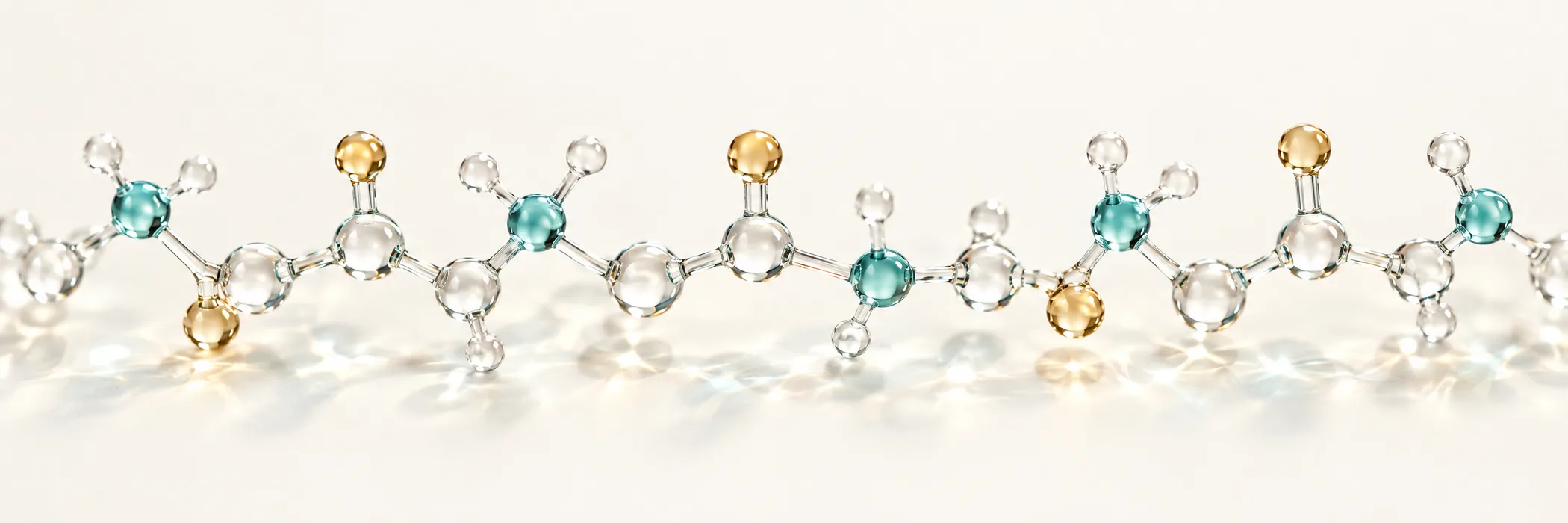
Trains T-cells. Cells lining the thymus make thymulin. It acts as an immune-regulating hormone that promotes T-cell differentiation and maturation and tunes immune responses.
Switched on by zinc. Thymulin folds into its active shape only when it binds a zinc ion. That creates the active epitope, the part of the molecule the immune system recognizes. The zinc-free (apo) form is inactive, which is why serum thymulin activity falls in zinc deficiency and returns with zinc.
A separate lab analog. The newer anti-inflammatory and pain work, including signaling through the α7-nicotinic acetylcholine receptor, used PAT, a synthetic thymulin-related peptide. It is a different molecule from native zinc-thymulin.
How to dose it
Most people run thymulin as a small injection under the skin, once a day.
Dose tiersMost people run 1–5 mg a day, with 1,000 mcg as the conservative low end.
- Route:
- Under the skin (subcutaneous), into belly or thigh fat.
- Where the range comes from:
- The 1–5 mg/day range comes from 1980s trials of synthetic thymulin (nonathymulin), where 5 mg/day worked best in rheumatoid arthritis. The default 1,000 mcg/day is the conservative low end.
- Zinc-bound form:
- A dose figure only counts for the active zinc-bound form. The bare (apo) peptide is inactive, so a product's zinc-bound status decides whether the dose counts.
How to injectIt goes into the fat under the skin. Rotate sites and keep a consistent daily time.
- Injection site:
- Belly (a couple of inches clear of the navel), love handles or outer thigh. Rotate sites to avoid irritation and fatty lumps (lipohypertrophy).
- Measuring the dose:
- On a U-100 (standard) insulin syringe. At the 10 mg + 2 mL mix, 1,000 mcg takes 20 syringe units. The calculator handles any vial size.
- Time of day:
- Any consistent daily time, with at most a mild evening lean. Zinc sufficiency matters far more than the hour.
- Food window:
- Meals don't matter. Food does not affect absorption at the injection site.
Cycle and breaksThe usual thymic-peptide pattern is 4–8 weeks on, then 2–4 weeks off.
- Standard cycle:
- 4–8 weeks of use, then reassess. The same pattern as Thymosin Alpha-1 and other thymic peptides.
- Washout:
- 2–4 weeks off. The break is a precaution, since thymulin's clearance time in humans is not known.
- Zinc status first:
- Get zinc sufficient before and during every cycle (see Cofactors). Without adequate zinc the peptide stays inactive.
Mixing the vial10 mg in 2 mL of bacteriostatic water gives 5,000 mcg (5 mg) per mL.
- Mixing:
- On a 100-unit (1 mL) insulin syringe, 1,000 mcg takes 20 units, 2,000 mcg takes 40 units, 2,500 mcg takes 50 units, 5,000 mcg takes 100 units.
- Why 2 mL:
- It matches the calculator default, so its 20 units for 1,000 mcg lines up.
Best time to take it

Implied best time
Anytime (consistent)
Any consistent daily time works. Zinc status matters far more than the hour.
- No human half-life is on record, so there is no clearance curve to time a dose against. Day-to-day consistency counts more.
- Zinc is the biggest variable. Thymulin is inactive unless zinc-bound, so zinc status (see Cofactors) decides whether a dose does anything.
- A mild evening lean fits the way immune consolidation and repair run overnight. Any consistent time is fine.
Sources:PMID 3262625
What to stack it with


The best partners work another immune stage or add tissue repair. Two thymic peptides on the same T-cell step are redundant.
Thymulin + Thymosin Alpha-1Two thymic peptides for back-to-back T-cell stages.
- Why it works:
- Thymulin matures T-cells from thymic precursors. Thymosin Alpha-1 then boosts mature T-cells' activity and cytokine output.
- The protocol:
- Thymulin at its default dose, plus Thymosin Alpha-1 at ~1.5 mg twice weekly, both under the skin. Both run 4–8 week cycles with a break.
- Outcome:
- People run it when maturation and activation both need support, as in chronic immune suppression or a post-illness reset.
Thymulin + ThymogenA nine-amino-acid hormone plus a two-amino-acid thymic activator (Glu-Trp).
- Why it works:
- Thymogen (gamma-D-glutamyl-L-tryptophan) is framed as an activator of the body's own thymic signaling. Zinc-bound thymulin supplies the hormone itself.
- The protocol:
- Thymogen runs 1–2 mg under the skin daily for 10-day courses. Thymulin runs alongside on its default schedule.
- Outcome:
- People run it for general immune support and recovery, covering thymic signaling from two angles.
Thymulin + BPC-157Pairs immune tuning with systemic tissue repair, two different systems.
- Why it works:
- BPC-157 promotes tissue repair, gut-barrier healing and angiogenesis (new blood vessels into healing tissue). Thymulin tunes T-cell maturation.
- The protocol:
- BPC-157 250–500 mcg under the skin once daily for a 4–6 week cycle, alongside thymulin on its default schedule. Confirm zinc sufficiency before any thymulin stack.
- Outcome:
- People run it after illness or inflammatory injury, when immune balance and tissue repair both matter.
Support nutrients
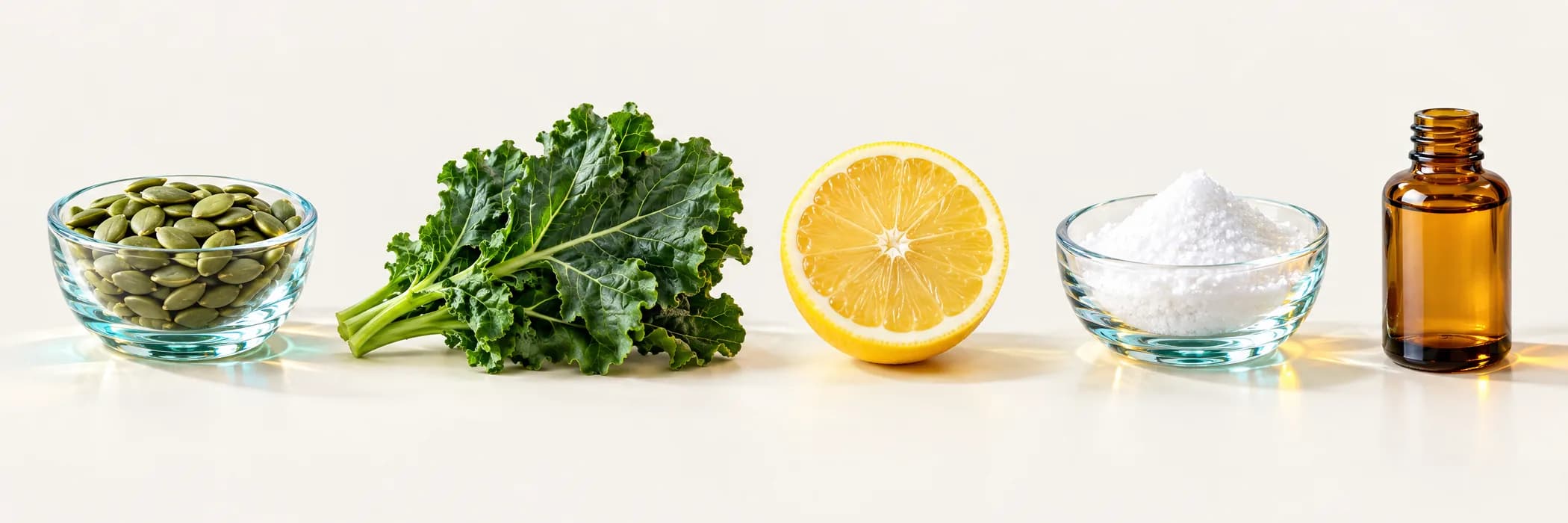
Zinc is the cofactor thymulin cannot work without. Vitamin D and selenium support T-cells.
Zinc switches it onThymulin becomes active only once zinc binds it. The zinc-free form is inert.
- Mechanism:
- Zinc folds thymulin into its active shape. Serum thymulin activity falls in zinc deficiency and returns with zinc repletion.
- Protocol integration:
- People take 15–30 mg elemental zinc daily (picolinate or bisglycinate), dosed to sufficiency, with 1–2 mg copper bisglycinate daily. Test serum zinc first; correct any deficiency.
- Timing:
- With a small meal to ease nausea, 2+ hours from iron. Usually morning or lunch.
Support the T-cell systemVitamin D and selenium both regulate T-cell function.
- Vitamin D mechanism:
- T-cells carry vitamin D receptors; deficiency impairs their activation and differentiation. Most people aim for 25-OH-D (blood vitamin D) at 40–60 ng/mL.
- Vitamin D protocol:
- 2,000–5,000 IU (international units) vitamin D3 daily with a fatty meal. Dose to a measured level; recheck at 3 months.
- Selenium mechanism:
- Selenium runs immune-cell antioxidant enzymes (glutathione peroxidase, thioredoxin reductase), shielding T-cells from oxidative stress.
- Selenium protocol:
- 100–200 mcg selenium daily as selenomethionine or high-selenium yeast. Do not exceed 400 mcg/day; excess is toxic.
Copper and selenium limitsThe main thing to manage is copper loss from ongoing zinc.
- Copper balance:
- Ongoing zinc depletes copper over weeks to months, so people add 1–2 mg copper bisglycinate daily. Low copper causes anemia and neurological symptoms.
- Selenium ceiling:
- Keep total selenium below 400 mcg/day. Excess (selenosis) slowly causes hair loss, nail changes and nerve damage (neuropathy).
Dose calculator
Reconstitution calculator
Calculated for a 1 mL U-100 insulin syringe (100 units/mL).
Units per dose
20 units
Draw this many units on a U-100 syringe
Each unit holds 50 mcg
- Volume per dose
- 0.2 mL
- Doses per vial
- 10
- Concentration
- 5 mg/mL
One vial lasts
- Daily
- 10 days
- Every other day
- 20 days
- 5×/week
- 14 days
Research use only. Not for human consumption. Outputs are reference values based on research literature. Verify all measurements independently.
Side effects and what to watch
What people notice. No side-effect profile has been characterized for injected thymulin. Human research has mostly measured it as a blood marker of zinc status.
Worth knowing. The newer biological-effect data comes from the synthetic analog PAT, a different molecule. Thymulin works only in its zinc-bound form, so the form a product delivers matters.
Competing? Thymulin is not specifically named on the 2026 World Anti-Doping Agency (WADA) Prohibited List, though peptide hormones can fall under its broader categories. Check with your anti-doping authority.
Sources:PMID 24588820
Common questions
What is thymulin?
A hormone the thymus makes, a nine-amino-acid peptide first isolated from blood in the 1970s as serum thymic factor (FTS). It helps T-cells mature and tunes the immune system.
Why does zinc matter so much for thymulin?
Thymulin is only active when bound to zinc. Zinc folds it into its working shape, and the zinc-free form is inactive. So the zinc-bound form, and your own zinc status, decide whether it works.
How is thymulin dosed?
Most people run 1–5 mg a day as a small injection under the skin, with 1,000 mcg as the conservative low end. The range comes from 1980s trials of synthetic thymulin (nonathymulin), where 5 mg/day worked best in rheumatoid arthritis.
Do I need to cycle thymulin?
Yes. The usual pattern is 4–8 weeks on, then 2–4 weeks off. Keep zinc sufficient before and during each cycle.
What does thymulin stack with?
Thymosin Alpha-1 covers the next T-cell stage, Thymogen adds a thymic activator, and BPC-157 adds tissue repair. Skip pairing two thymic peptides that hit the same T-cell step.
Is 'PAT' the same as thymulin?
No. PAT (thymulin-related peptide) is a synthetic analog, a different molecule. Most of the newer pain-relief and brain-inflammation findings come from PAT, not native zinc-thymulin.
Deep dive
Doses used in studies · Molecular identity · References
10From the researchDoses used in studies
These are the published studies behind thymulin. The 1–5 mg/day range comes from 1980s synthetic-thymulin (nonathymulin) trials.
| Dose | Route | Model | Outcome | Sources: |
|---|---|---|---|---|
| Not applicable | Lab (isolation) | Original isolation & sequencing (Bach/Dardenne 1976, C R Acad Sci) | Thymulin (then 'serum thymic factor', FTS) isolated from serum and sequenced by Edman degradation as a thymic nonapeptide, the founding identification | PMID 827370 |
| Not applicable | In vitro (molecular) | Zinc-dependent epitope (1985, PNAS) | Demonstrated that thymulin's active/antigenic epitope is zinc-dependent; the zinc-free peptide is inactive; zinc binding creates the active form | PMID 2413455 |
| 1, 5 and 10 mg/day compared (5 mg best) | Human (interventional) | Synthetic thymulin (nonathymulin) in rheumatoid arthritis (Amor 1987) | 1980s human trial of synthetic thymulin: 5 mg/day was the most effective dose in rheumatoid arthritis, the source of the 1–5 mg/day range. Old evidence, a different indication, and no modern controlled replication, but a real human dosing record | PMID 3310925 |
| Observational | Human (biomarker) | Serum thymulin in human zinc deficiency (Prasad 1988, J Clin Invest) | Serum thymulin activity tracks zinc status. It falls in zinc deficiency and is restored by zinc; thymulin's main human use is as a zinc-status marker, not a treatment | PMID 3262625 |
| Experimental | Animal (analog) | PAT analog, analgesic/anti-inflammatory in rat (2002, Br J Pharmacol) | ANALOG, not native thymulin: the synthetic thymulin-related peptide (PAT) showed analgesic/anti-inflammatory effects in rodents, illustrative of analog biology, not a native-thymulin human result | PMID 12110619 |
11ChemistryMolecular identity
- Molecular formula
- C₃₃H₅₄N₁₂O₁₅
- Molecular weight
- 858.9 g/mol (average)
- Monoisotopic mass
- 858.3832 Da
- CAS number
- 78922-62-0
- PubChem CID
- 71300623
- Origin
- Secreted by thymic epithelial cells
- Sequence
- pGlu-Ala-Lys-Ser-Gln-Gly-Gly-Ser-Asn (<EAKSQGGSN, 9 aa)PMID 827370 (Bach/Dardenne); N-terminal pyroglutamate
- Class
- Thymic nonapeptide hormone; zinc-dependent immunoregulatorPubChem CID 71300623; PMID 2657247
- Active form
- Zinc-bound only; the zinc-free (apo) peptide is biologically inactivePMID 2413455; PMID 2657247
- Molecular target
- No single receptor; zinc-dependent immunoregulator promoting T-cell differentiation/maturationPMID 2657247
- Half-life
- Not established (human data are biomarker/observational, not interventional pharmacokinetics)Not established
- Regulatory status
- Not FDA-approved; research compound. No controlled human efficacy data for injectable therapeutic useNo approval record
12Primary sourcesReferences
- PMID 827370Bach & Dardenne, C R Acad Sci 1976. Original isolation and Edman sequencing of serum thymic factor (thymulin) from pig serum
- PMID 2413455Dardenne et al., PNAS 1985. A zinc-dependent epitope on the thymulin molecule; apo-peptide inactive
- PMID 3711109J Biol Chem 1986. NMR structure; nonapeptide, zinc-dependent immunoregulation
- PMID 2657247Med Oncol Tumor Pharmacol 1989. 'Thymulin, a zinc-dependent hormone'
- PMID 3310925Amor et al. 1987. Synthetic thymulin (nonathymulin) in rheumatoid arthritis; 5 mg/day most effective (source of the 1–5 mg/day range)
- PMID 3262625Prasad et al., J Clin Invest 1988. Serum thymulin in human zinc deficiency (biomarker use)
- PMID 12110619Br J Pharmacol 2002. PAT (thymulin-related peptide ANALOG) analgesic/anti-inflammatory in rat
- PMID 24588820Curr Pharm Des 2014. Review: thymulin physiology and therapeutic potential
- PubChem CID 71300623PubChem record, identity (CID, formula, MW, CAS)
- WADA 2026WADA 2026 Prohibited List. Thymulin not named; classification an inference
Reviewed by Ki Researcher Team · Research use only · Not medical advice · Updated 2026-09-24