
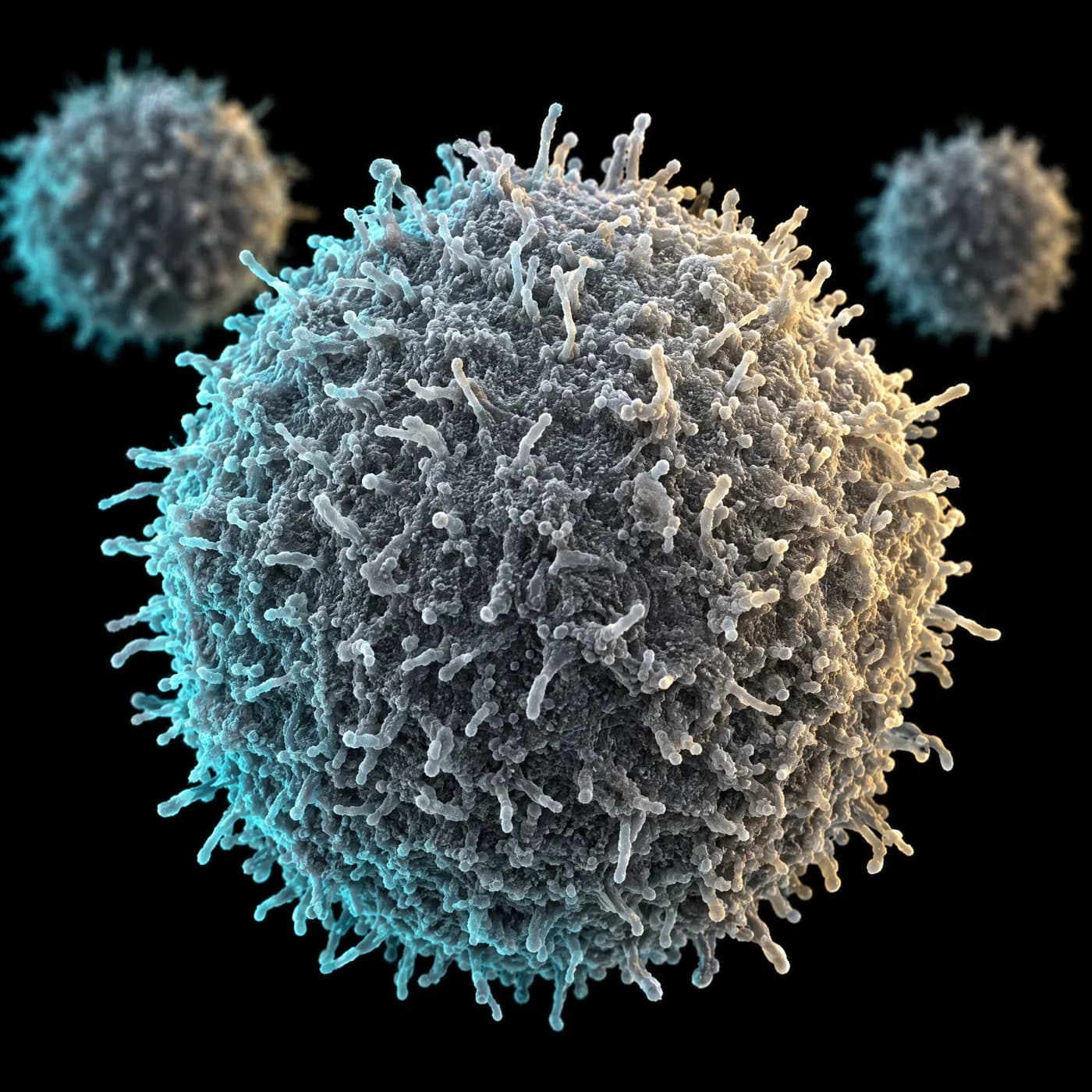
Thymogen (Oglufanide)
Synthetic Glu-Trp dipeptide · Russian immunomodulator · same molecule as Western IM-862
Thymogen is a two-amino-acid peptide, glutamic acid joined to tryptophan (Glu-Trp, drug name oglufanide), from Vladimir Khavinson's program. People run short courses to support a run-down immune system. Russia has registered and sold it since around 1990 as an injection, nasal spray and cream.
At a glance
- Dose
- 100 mcg a day (100–200 mcg is the range)
- How often
- Once a day, in 10-day courses
- How
- A small injection under the skin, or the Russian nasal spray
- When
- Daytime, same slot each day
- Cycle
- 10 days on, then at least a 2-week break
The 30-second versionEverything on this page, fast
Immune support · Thymic dipeptide · Short courses · Simple molecule
A simple, fully defined immune-support peptide. Thymogen is two amino acids (Glu-Trp, drug name oglufanide) that people run in short courses to nudge a run-down immune response back toward normal. Registered in Russia for decades and well tolerated.
The basics
- A lab-made dipeptide, glutamic acid joined to tryptophan.
- Run as short immune-support courses, not open-ended daily use.
Why people use it
- Supports a run-down immune system. Its originators report effects on T-cells and on phagocytosis, the way immune cells engulf pathogens.
- Simple and fully defined. Two amino acids with settled chemistry, so you know what you are taking.
- Decades of real-world use. Registered and sold in Russia since around 1990 as an injection, nasal spray and cream.
- Short, easy courses. 10-day blocks make it easy to trial around seasonal or exposure windows.
Stacks well with
- Thymosin Alpha-1 is the usual thymic pairing. It works the adaptive arm while Thymogen covers broad immune normalization.
- Thymulin is the tighter in-family pairing, both low-dose and run in courses.
Good to know
- Run it as short courses with breaks, not as an everyday peptide.
- It comes as an injection under the skin and as a Russian nasal spray, with a different dose for each.
- Well tolerated in Russian use and in the Western trial of the same molecule.
What it does
People reach for Thymogen as a simple, long-registered immune-support peptide run in short courses.
- Supports a run-down immune systemIts originators report effects on T-cells and phagocytosis. People reach for it during run-down or post-illness stretches.
- Simple, fully defined chemistryTwo amino acids, Glu-Trp (drug name oglufanide), with settled chemistry. You know exactly what you are taking.
- Decades of real-world useRegistered and sold in Russia since around 1990 as an injection, nasal spray and cream.
- Short, easy coursesThe usual pattern is 10-day courses, easy to run around seasonal or exposure windows.
- Well toleratedRussian use and the Western trial of the same molecule both described it as well tolerated.
How it works
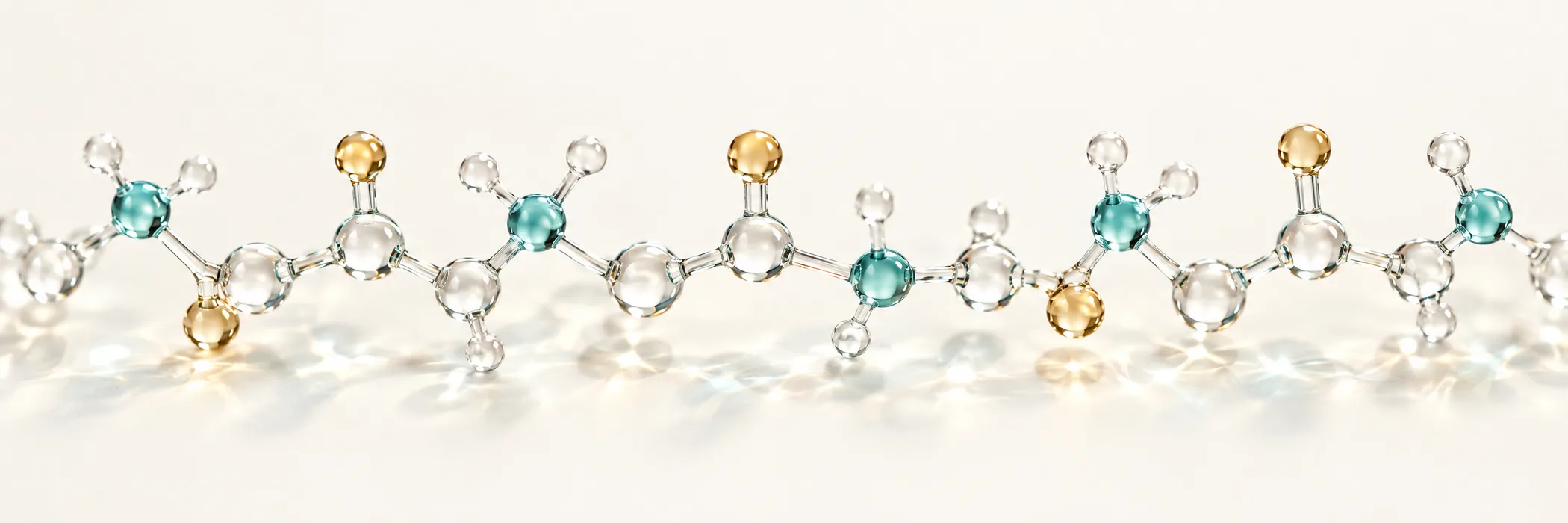
Described as an immune normalizer. Its originators describe Thymogen as an immunomodulator that lifts a depressed immune response and calms an overactive one. Russian sources report effects on T-cells and on phagocytosis, the way immune cells engulf pathogens.
Studied against tumor blood vessels. In the West the same molecule, as IM-862, was pursued for an anti-angiogenic effect. It was thought to block the new blood-vessel growth that tumors depend on.
Matched by its amino acids. A St. Petersburg study in mice found its immune, phagocytosis and antitoxic effects matched those of free glutamic acid plus tryptophan.
How to dose it
Most people run Thymogen as a daily injection under the skin, in short courses. Russia also sells nasal and muscle forms.
Dose tiersMost people run 100 mcg once daily, the Russian label dose, up to 200 mcg.
- Standard:
- 100 mcg once daily, the registered Russian injectable label dose. The often-quoted 300–1,000 mcg is a per-course total, not a daily amount.
- Range:
- 100–200 mcg once daily, conservative to upper conventional use. People gauge their own tolerance within it.
- Courses:
- Short courses following the Russian label (treatment ~10 days, prophylaxis 3–5 days), not open-ended daily use.
- Nasal spray:
- ~25 µg per dose, one spray each nostril, twice daily for 10 days (treatment) or 3–5 days (prophylaxis). The calculator covers the injection only.
How to injectInto the fat under the skin, rotated between doses.
- Injection site:
- Abdomen (a couple of inches from the navel), outer thigh or love handles. Rotate sites to avoid irritation and fatty lumps (lipohypertrophy).
- Measuring the dose:
- U-100 insulin syringe. At 10 mg in 2 mL bacteriostatic water, 100 mcg takes 2 syringe units and 200 mcg takes 4 units. The calculator handles other vials.
- Time of day:
- Any consistent daytime slot. A steady daily time matters more than the hour.
- Food window:
- Food does not affect absorption.
Cycle and breaksPeople copy the short courses in Russian labeling and the Western trial.
- Typical course:
- 10 days straight, the Russian label treatment course. Some run a tighter pattern: two 10-day courses a month, 10 days off between.
- Washout:
- At least a 2-week break between courses. People use it to check how their immune response feels.
- Short pulses:
- Around seasonal or infection-exposure windows, some run the Russian 3–5 day prophylaxis pattern as short pulses.
Mixing the vialThe default mix is a 10 mg vial with 2 mL of bacteriostatic water.
- Mixing:
- 10 mg vial + 2 mL bacteriostatic water = 5,000 mcg per mL. On a 100-unit (1 mL) syringe, 100 mcg takes 2 units and 200 mcg takes 4 units.
- Why 2 mL:
- It matches the calculator defaults and keeps volumes practical for microgram-to-low-milligram doses.
Best time to take it
Implied best time
Daytime (or consistent)
Most people take Thymogen during the day, at the same time each day. Regularity matters more than the hour.
- Immune normalization through T-cells and phagocytosis does not peak at one hour, so morning and evening both fit.
- It runs in short courses (the usual ~10-day block), so a steady daily time keeps doses evenly spaced across the course.
- Its half-life is not established, so there is nothing to time a dose around. Daytime is the easy, repeatable default.
What to stack it with


Its natural partners are other thymic peptides, which work the same T-cell and thymic axis by different routes. A non-immune peptide runs alongside it without synergy.
Thymogen + Thymosin Alpha-1The most common thymic pairing. Thymosin Alpha-1 works the adaptive arm; Thymogen covers broad immune normalization.
- Why it works:
- Thymosin Alpha-1 promotes T-cell differentiation and natural killer cell activity. Thymogen is proposed to act upstream, at the thymic and phagocytic level. Two levers on one axis.
- The protocol:
- Thymogen 100 mcg daily under the skin for a 10-day course, with Thymosin Alpha-1 on its own schedule (~1.5 mg twice weekly under the skin). Separate injections, rotated sites.
- Outcome:
- People reach for it in chronic immune suppression or post-illness recovery, to work the thymic axis from more than one angle.
Thymogen + ThymulinThymulin is a thymic hormone. Thymogen is proposed to mimic part of the thymic signal.
- Why it works:
- Thymulin, a nine-amino-acid peptide from thymic cells, needs zinc and promotes T-cell maturation through a defined receptor. Thymogen's proposed mechanism overlaps it at a different structural level.
- The protocol:
- Thymogen 100 mcg daily under the skin for a 10-day course, with Thymulin 200–400 mcg under the skin in 5-day courses. Both are low-dose courses, so they line up.
- Outcome:
- People run it for layered thymic support. Zinc sufficiency matters here, since thymulin depends on zinc (see cofactors above).
Support nutrients
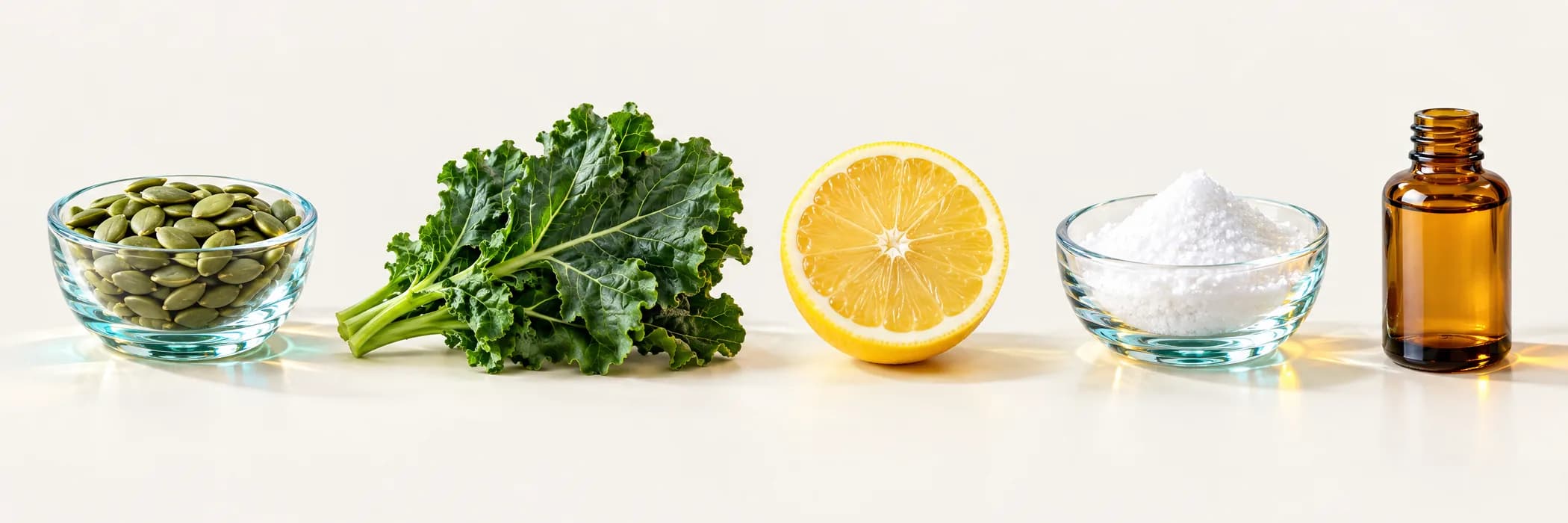
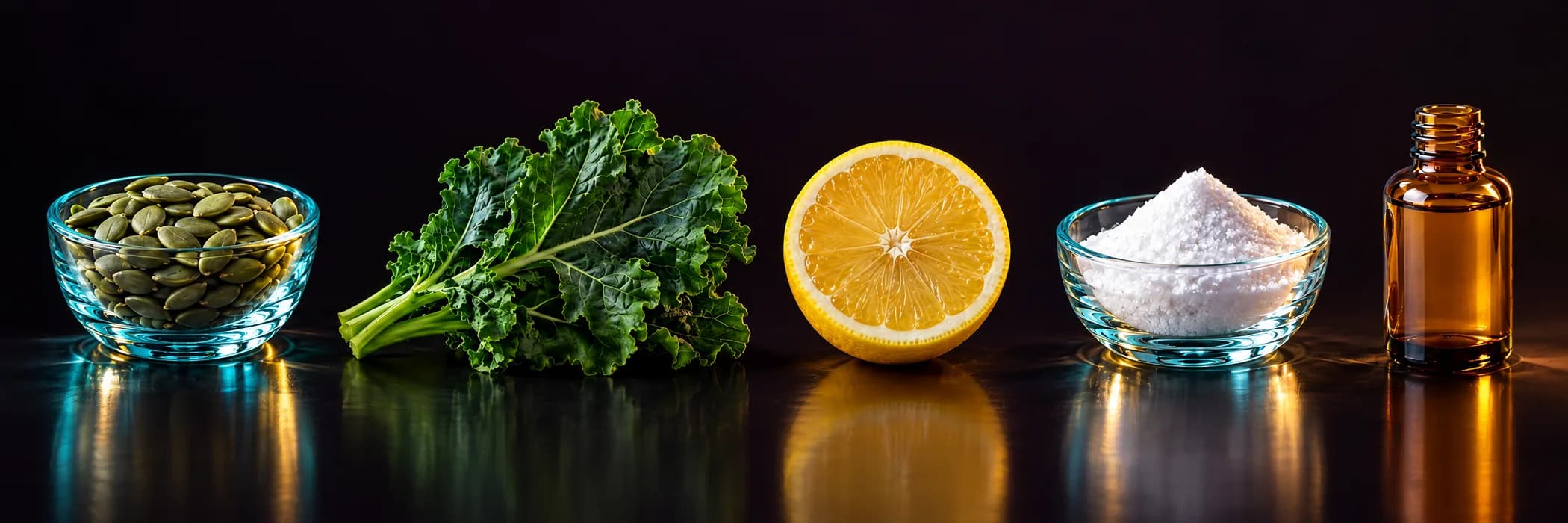
Thymogen works the T-cell and thymic immune arm. These nutrients are what that arm runs on.
Feed the T-cell armZinc, vitamin D and selenium, the nutrients most tied to the thymus and T-cells.
- Zinc 15–30 mg/day:
- Thymic function and T-cell development depend on zinc. Zinc picolinate or bisglycinate daily, with food to reduce stomach upset. Past 4 weeks, add 1–2 mg copper to prevent depletion.
- Vitamin D to sufficiency (≥40 ng/mL serum 25-hydroxy vitamin D):
- Immune cells carry vitamin D receptors. People test first, then dose to sufficiency, typically 2,000–5,000 IU (international units) D3/day with K2, with the largest meal (fat-soluble).
- Selenium 100–200 mcg/day:
- Selenoproteins protect immune cells from oxidative stress and balance T-helper responses. Selenomethionine is the preferred form, with food. The upper limit is 400 mcg/day.
Raw material for immune cellsProtein and vitamin C, the raw material the immune system builds from.
- Adequate protein (≥1.2–1.6 g/kg body weight/day):
- Antibodies and immune cells are built from amino acids. Too little protein caps any immune effect. Spread complete protein across meals.
- Vitamin C 500–1,000 mg/day:
- Supports white blood cells (neutrophils and lymphocytes). Split as 250–500 mg twice daily for better absorption. Ascorbate or buffered forms, any time, with or without food.
Sleep comes firstThymogen's side-effect burden is low, so no mitigation cofactor is needed. Sleep is the base.
- Sleep:
- Immune function is sleep-gated. Cytokine release and T-cell trafficking peak in deep sleep. No immunomodulator substitutes for 7–9 hours.
Dose calculator
Reconstitution calculator
Calculated for a 1 mL U-100 insulin syringe (100 units/mL).
Units per dose
2 units
Draw this many units on a U-100 syringe
Each unit holds 50 mcg
- Volume per dose
- 0.02 mL
- Doses per vial
- 100
- Concentration
- 5 mg/mL
One vial lasts
- Daily
- 100 days
- Every other day
- 200 days
- 5×/week
- 140 days
Research use only. Not for human consumption. Outputs are reference values based on research literature. Verify all measurements independently.
Side effects and what to watch
What people notice. Very little. Russian reports describe a long safety record across its low-dose forms, and the Western trial of the same molecule found it well tolerated. Neither turned up a major safety signal.
Worth knowing. It is a naturally occurring pair of amino acids, with no obvious toxicology red flag.
Sources:PMID 10673512
Common questions
What exactly is Thymogen?
A synthetic dipeptide, two amino acids (glutamic acid and tryptophan) joined as Glu-Trp. Its drug name is oglufanide, and its chemistry is fully settled (PubChem 100094, C₁₆H₁₉N₃O₅, molecular weight 333.34).
How is Thymogen dosed?
Most people run 100 mcg once daily as a small injection under the skin, the registered Russian label dose, with 200 mcg the upper end. The 300–1,000 mcg often quoted is a per-course total.
Do I need to cycle Thymogen?
Most people do. A typical course is 10 days, then a break of at least 2 weeks. Some run two 10-day courses a month, with 10 days off between.
What does Thymogen stack with?
Thymosin Alpha-1 is the usual pairing, at ~1.5 mg twice weekly alongside a 10-day Thymogen course. Thymulin is the in-family option, at 200–400 mcg in 5-day courses.
Is Thymogen the same as Thymalin?
No. They share the Khavinson research lineage but are chemically unrelated. Thymogen is one defined synthetic dipeptide. Thymalin is a thymus-gland extract, a mixture of many peptides with no single formula.
Is it the same molecule as IM-862?
Yes. Russia's Thymogen and the Western anti-angiogenic cancer candidate IM-862 (oglufanide) are one molecule, developed separately for different purposes. The Western program reached Phase III and won US orphan-drug designation for ovarian cancer in September 2001.
Deep dive
Doses used in studies · Molecular identity · References
10From the researchDoses used in studies
Doses from Russian labeling and one Western Phase II cancer trial. Russia's nasal dose (25 µg) is ~200-fold below that trial's 5 mg nasal dose.
| Dose | Route | Model | Outcome | Sources: |
|---|---|---|---|---|
| 25 µg/dose | Intranasal spray | Russian product label, adult immune use (CITED, not trial-verified) | 1 spray each nostril, 2×/day × ~10 days (treatment) or 3–5 days (prophylaxis); manufacturer-reported immune 'normalization', no controlled efficacy data | cytomed.ru (Thymogen) |
| 100 µg/mL | IM injection | Russian registered solution (reg. LS-002304-130911, CITED) | Course-based dosing per Russian label; exact mg/day not independently verified; long claimed safety history, no modern Western RCT | cytomed.ru (Thymogen) |
| 5 mg | Intranasal | Human Phase II, randomized open-label (two dosing arms, no placebo), AIDS-related Kaposi's sarcoma (Tulpule 2000, as IM-862) | Major response 36% (5 complete, 11 partial); well tolerated, but no placebo arm, and a larger follow-on program never led to approval | PMID 10673512 |
| Glu + Trp vs Glu-Trp | IP (mouse) | Mechanistic, constituent amino acids vs dipeptide (Belokrylov 1999) | Immuno-, phagocytosis-modulating and antitoxic effects of the dipeptide were NOT different from its free constituent amino acids, which undercuts a dipeptide-specific mechanism | PMID 10606007 |
11ChemistryMolecular identity
- Molecular formula
- C₁₆H₁₉N₃O₅ (free acid)
- Monoisotopic mass
- 333.13247 Da (free acid)
- CAS / UNII
- 38101-59-6 (free acid) · 4RHY598T5U
- Sequence (2 AA)
- L-α-glutamyl-L-tryptophan (Glu-Trp, α-linked, L,L)PubChem CID 100094
- Structure / class
- Synthetic dipeptide immunomodulator (peptide bioregulator); INN oglufanidePubChem CID 100094; WHO-DD synonyms; Khavinson program
- Molecular weight
- 333.34 g/mol (free acid)PubChem CID 100094; ChEMBL CHEMBL2111029
- PubChem CID
- 100094 (free acid); 158780 (oglufanide sodium, marketed salt)PubChem
- Western identity
- Same molecule as IM-862 / oglufanide (anti-angiogenic candidate)Shared PubChem CID 100094 / synonym set
- Water solubility
- Highly water-soluble (computed XLogP −2.7)PubChem CID 100094 (computed)
- Molecular target
- No defined receptor in primary literature; claimed immunomodulator (T-cell / phagocytosis); effects reported as indistinguishable from free Glu + TrpPMID 10606007
- Half-life
- Not established (no published human pharmacokinetic data, incl. the IM-862 oncology program)Not established
- Regulatory status
- Registered & marketed in Russia (Thymogen); NOT FDA-approved (reached Phase III as IM-862, no approval)ChEMBL max_phase 3, first_approval None; Russian manufacturer pages (CITED)
12Primary sourcesReferences
- PMID 10673512Tulpule, Scadden et al., J Clin Oncol 2000. Randomized study of IM-862 (oglufanide) nasal solution in AIDS-related Kaposi's sarcoma (Phase II, open-label)
- PMID 10606007Belokrylov, Popova, Sorochinskaya, Int J Immunopharmacol 1999. Immuno-/phagocytosis-modulating properties of dipeptides defined by their constituent amino acids
- PMID 17276896Deigin, Semenets et al., Int Immunopharmacol 2007. EW (Glu-Trp) dipeptide isomers and the CFU-S population in mice
- PubChem CID 100094PubChem record, identity (CID, formula, MW, CAS, α-linkage, oglufanide/IM-862 synonyms)
- cytomed.ru (Thymogen)Cytomed / Thymogen manufacturer & registration material. Russian dosage forms and labeling (secondary, CITED, not state-register-verified)
Reviewed by Ki Researcher Team · Research use only · Not medical advice · Updated 2026-09-24