
Vilon (Lys-Glu)
Synthetic Lys-Glu (KE) dipeptide · Khavinson short peptide bioregulator · the immune peptide of the family
Vilon is a two-amino-acid peptide (Lys-Glu, "KE") from Vladimir Khavinson's St. Petersburg institute, the thymus and immune member of the bioregulator family. People run it in short courses as the immune piece of a longevity stack. The institute reports it normalizes immune and blood-clotting measures.
At a glance
- Dose
- 100–300 mcg a day (up to 1,000 mcg)
- How often
- Once a day through the course
- How
- A small injection under the skin, rotating sites
- When
- Any time, with a mild lean to evening
- Cycle
- About 10 days on, then 1–3 months off
The 30-second versionEverything on this page, fast
Immune normalization · Thymic support · Khavinson bioregulator · Short courses
The simplest of the Khavinson bioregulators. A two-amino-acid peptide (Lys-Glu, "KE") that people run as the immune and thymic piece of a tissue-by-tissue longevity protocol, in short pulsed courses.
The basics
- Two natural amino acids, lysine and glutamic acid, joined into a dipeptide.
- The peptide people run as the immune slot in a wider Khavinson longevity stack.
Why people use it
- Fills the immune slot in a Khavinson stack. The program's designated immune and thymic bioregulator, the piece people add to cover that axis.
- Normalizes immune and clotting measures, according to the institute's clinical reports.
- Carries the family's longevity angle. Tied to the institute's aging research, which is why longevity-minded users add it.
- About as simple as a molecule gets. Two amino acids with an identity that is easy to confirm.
Stacks well with
- Epitalon is the classic Khavinson pairing. Vilon covers the immune and thymic axis, Epitalon the pineal and longevity one.
- Thymosin Alpha-1 is the more studied thymic partner, with a larger evidence base of its own.
Good to know
- Run it as short pulsed courses, about 2–4 a year. The long break between courses is part of the design.
- The institute's reports describe it as well tolerated.
- It is one piece of the wider Khavinson system. Most people run it inside a multi-peptide protocol, not solo.
What it does
Vilon is the immune and thymic peptide of the Khavinson bioregulator family. Here is what people run it for.
- The immune slot in a longevity stackThe program's designated immune and thymic bioregulator, the piece people add in a tissue-by-tissue protocol.
- Normalizes immune and clotting measuresThe institute's clinical reports credit it with normalizing immune and blood-clotting indices.
- Part of the family's longevity researchIt belongs to the institute's long-running aging and cancer-prevention work, which draws longevity-minded users.
- About as simple as a molecule getsTwo natural amino acids, Lys-Glu, with an identity that is easy to confirm.
- Short courses, low burdenRun as short pulsed courses, it asks little of the user and carries no obvious nutrient-depletion cost.
Sources:PMID 15455129PMID 18306698PMID 32399807PMID 19670728
How it works
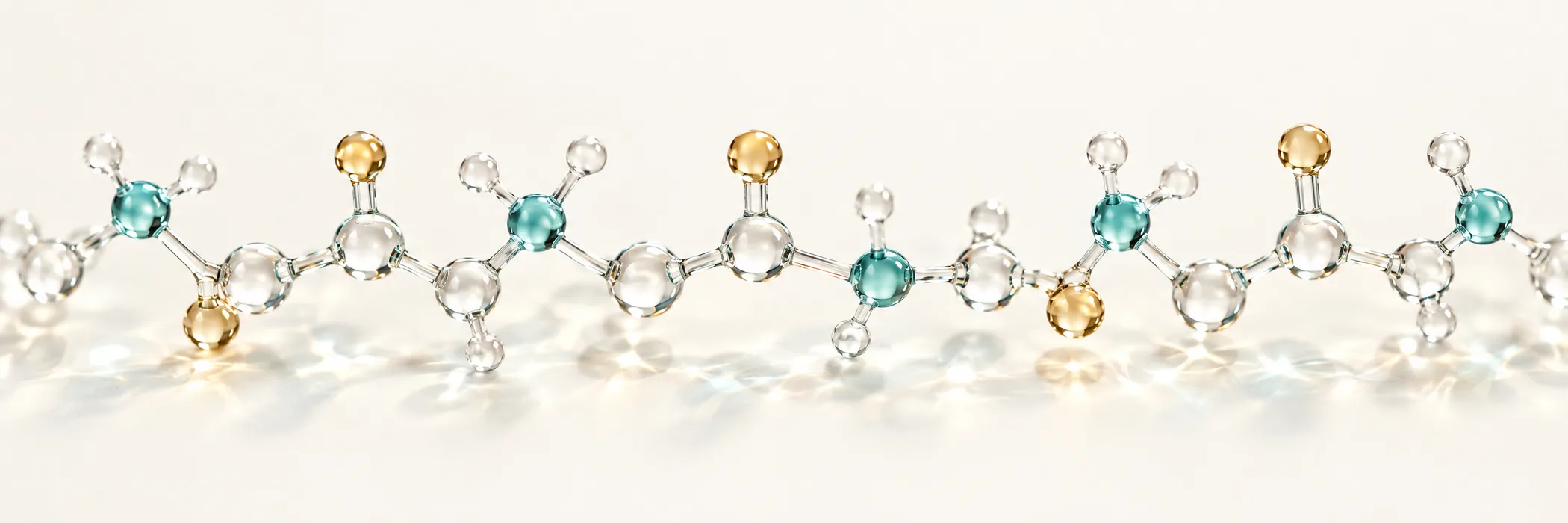
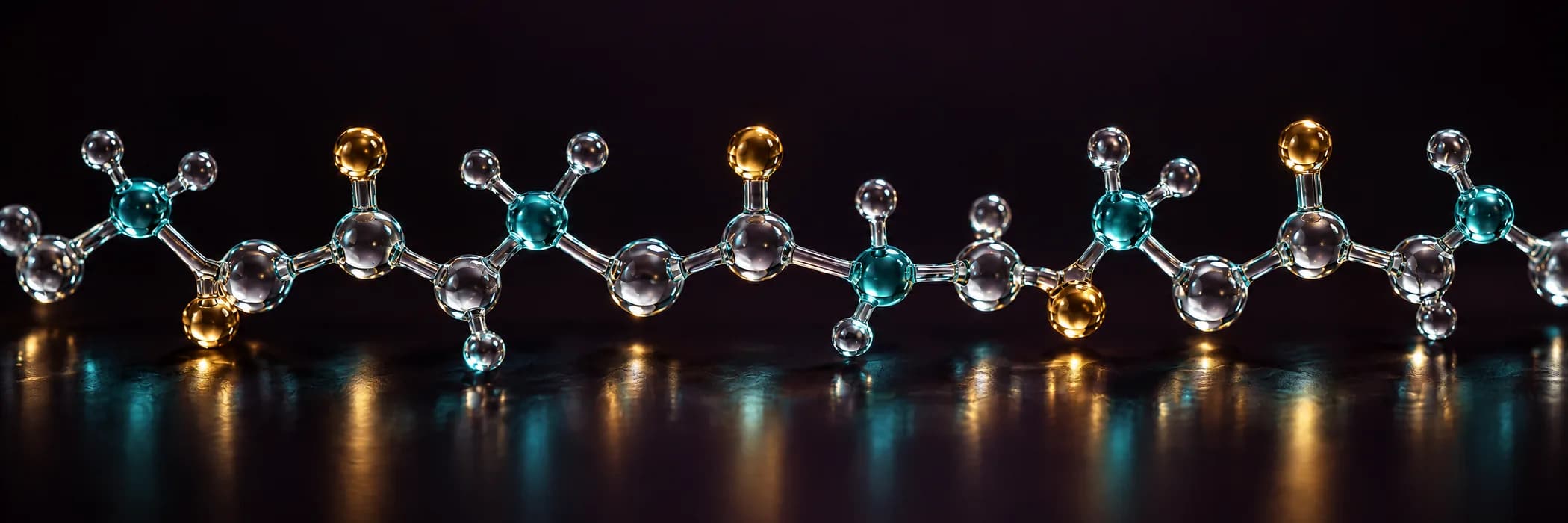
Tunes genes, in the Khavinson model. The Khavinson school proposes that very short peptides enter cells, reach the nucleus and bind specific stretches of DNA. That lets them switch particular genes on or off. Vilon is the thymus-related immune regulator in that framework.
Immune and clotting measures. The Vilon-specific work reports that it normalizes immune indices and blood-clotting (hemostasis) measures.
The division-limit result is Epitalon's. The school's "overcoming the division limit" finding, where cells divide more times than usual, comes from its work on Epitalon (Ala-Glu-Asp-Gly). Short peptides broadly are reported to shift gene expression in aging mesenchymal stem-cell cultures.
Sources:PMID 14666197PMID 15455129
How to dose it
Vilon runs as a small injection under the skin, once a day, in short courses with long breaks.
Dose tiersMost people run 100 to 300 mcg per injection, once a day.
- Range:
- 100–1,000 mcg (0.1–1 mg) per injection, most often 100–300 mcg. That matches the microgram-range dosing in the Khavinson clinical reports.
- Route:
- Subcutaneous (SC), a small injection under the skin. The source studies used intramuscular (IM) injection, and SC is the common swap for convenience.
- Frequency:
- Once daily. Some sources describe every-other-day dosing for lower-frequency runs.
How to injectAn injection into belly, love-handle or thigh fat, rotated between doses.
- Injection site:
- Abdomen (a couple of inches clear of the navel), love handles or outer thigh. Rotate sites between doses to avoid irritation and fatty lumps (lipohypertrophy).
- Measuring:
- At 10 mg in 2 mL, 100 mcg takes 2 U-100 syringe units, 200 mcg takes 4 units, 300 mcg takes 6 units. The calculator does any vial.
- Time of day:
- One consistent time each day, with at most a mild evening lean. See Best time to take it below.
- Food window:
- Food does not affect an injection under the skin. Dose independently of meals.
Cycle and breaksKhavinson bioregulators run in short, pulsed courses rather than continuous use.
- Course length:
- ~10 days of daily injections is the most cited course. Some extend to 2–3 weeks.
- Washout:
- 1–3 months off between courses, then reassess. Courses aim to reset the target tissue, not hold a steady drug level.
- Repeat:
- 2–4 courses per year is typical in the Khavinson literature. Continuous daily Vilon falls outside the course structure.
Mixing the vialA 10 mg vial plus 2 mL bacteriostatic water gives 5,000 mcg per mL.
- Mixing:
- At 10 mg in 2 mL, on a U-100 syringe, 100 mcg takes 2 units, 200 mcg takes 4 units, 500 mcg takes 10 units, 1,000 mcg takes 20 units.
- Easier to measure:
- At this mix, 100–300 mcg takes a tiny draw. 3 mL, the most a standard vial holds, gives about 3,333 mcg per mL, where 100 mcg takes 3 units.
Sources:PMID 18306698PMID 14666197
Best time to take it


Implied best time
Anytime (consistent)
Time of day isn't critical. Pick one daily time for the course and hold it.
- Vilon has no half-life on record, and bioregulators run as short pulsed courses, so there is no level to hold at a set hour.
- Some lean to evening, since immune consolidation and repair run overnight. Any consistent time works.
- Stacked with other Khavinson peptides, one shared daily slot keeps a multi-peptide course simple.
Sources:PMID 18306698
What to stack it with


Vilon belongs to the Khavinson bioregulator family, where each short peptide covers one tissue. People pair it inside the family or with a second thymic peptide.
Vilon + EpitalonThe classic Khavinson pairing. Vilon covers the immune axis, Epitalon the pineal and telomerase axis.
- Why it works:
- The school assigns each short peptide one tissue. Vilon is the immune and thymic bioregulator, Epitalon (Ala-Glu-Asp-Gly, AEDG) the pineal and longevity one. Together they cover both.
- The protocol:
- Vilon 100–300 mcg SC daily for a ~10-day course. Epitalon on its own course, typically 5–20 mg total over 10–20 days. Run together or in sequence.
- Outcome:
- Reached for in longevity-focused Khavinson stacks. Immune normalization and geroprotection, slowing the effects of aging, are the stated aims.
Vilon + Thymosin Alpha-1The more studied thymic partner, with a larger evidence base of its own.
- Why it works:
- Both work on thymic and T-cell immune function, through different mechanisms. Thymosin Alpha-1 (Tα1) is a 28-amino-acid thymic peptide with human research in cancer immunotherapy and chronic viral infections.
- The protocol:
- Vilon 100–300 mcg SC daily for a ~10-day course. Thymosin Alpha-1 on its own schedule, commonly ~1.5 mg SC twice weekly. The two can run at the same time.
- Outcome:
- Reached for on immune-support and thymic-function goals. Thymosin Alpha-1 brings its wider literature, and Vilon adds its immune-normalization angle.
Support nutrients
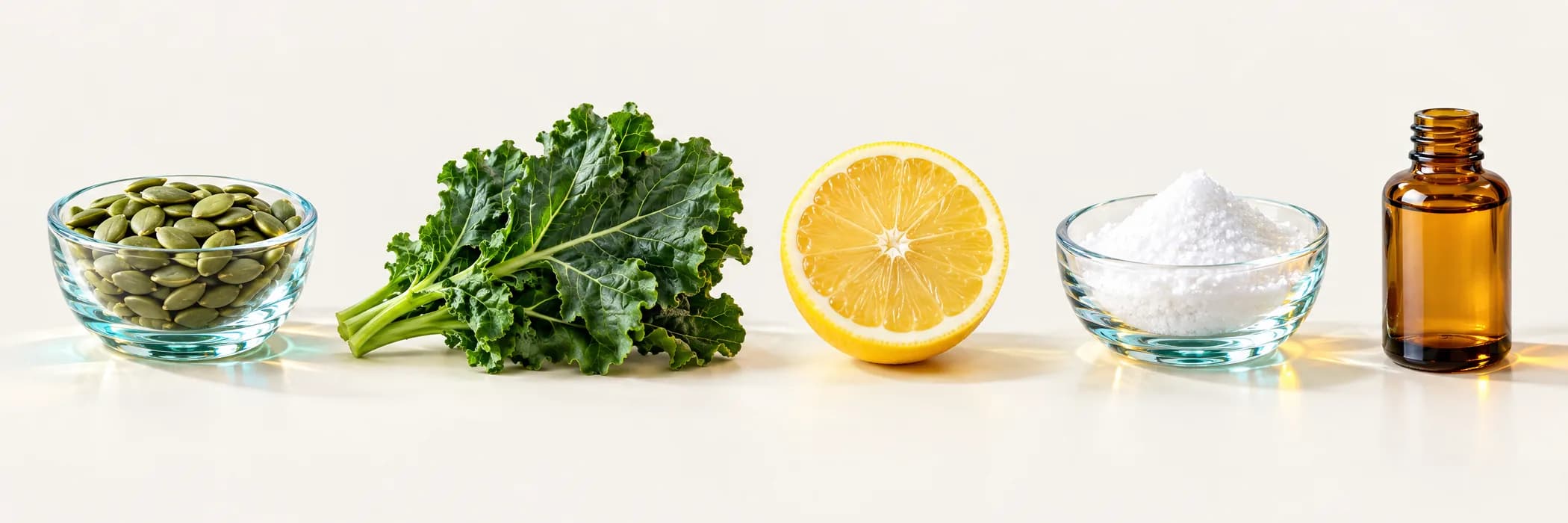
People run Vilon for immunity, so they cover the nutrients immune function runs on.
Thymus and T-cell nutrientsZinc, vitamin D and selenium, the nutrients most tied to thymic T-cell function.
- Zinc 15–30 mg/day:
- Needed for thymic hormones and T-cell maturation. 15–30 mg zinc picolinate or bisglycinate with food. Past 30 mg for over a few weeks, add 1–2 mg copper bisglycinate.
- Vitamin D 2,000–5,000 IU/day:
- 2,000–5,000 IU (international units) D3 daily with a fat-containing meal, or dose to a 25-OH-D blood level of 40–60 ng/mL. Add 100–200 mcg vitamin K2 (MK-7) on longer courses.
- Selenium 100–200 mcg/day:
- Feeds immune tissue's antioxidant enzymes. 100–200 mcg selenomethionine daily with food. Stay at or below 200 mcg. Chronic high doses are harmful.
Immune building blocksProtein and vitamin C, the raw materials immune cells are built from and run on.
- Protein ≥1.2 g/kg body weight/day:
- Antibodies and immune cells are proteins, so low intake limits immunity. Whole foods first (meat, fish, eggs, legumes).
- Vitamin C 500–1,000 mg/day:
- Immune cells hold it at 10–100× plasma levels. 500–1,000 mg/day in divided doses with meals for better absorption.
Copper balance and sleepVilon carries no obvious nutrient-depletion risk.
- Copper balance on zinc:
- At 30 mg zinc or above for over a few weeks, add 1–2 mg copper bisglycinate. On short ~10-day courses below 30 mg it is optional and cheap.
- Sleep:
- Short sleep suppresses T-cell and NK (natural killer) activity more reliably than supplements support it. No cofactor or peptide makes up for lost sleep.
Dose calculator
Reconstitution calculator
Calculated for a 1 mL U-100 insulin syringe (100 units/mL).
Units per dose
4 units
Draw this many units on a U-100 syringe
Each unit holds 50 mcg
- Volume per dose
- 0.04 mL
- Doses per vial
- 50
- Concentration
- 5 mg/mL
One vial lasts
- Daily
- 50 days
- Every other day
- 100 days
- 5×/week
- 70 days
Research use only. Not for human consumption. Outputs are reference values based on research literature. Verify all measurements independently.
Side effects and what to watch
What people notice. Very little. The institute's studies generally present Vilon as well tolerated, with no major safety signal, and as two natural amino acids it has no obvious toxicology red flag.
Worth knowing. The safety data come from small studies. There is no large-scale or long-term Western safety database.
Competing? Vilon is not named on the World Anti-Doping Agency (WADA) Prohibited List. A peptide can still be flagged by analogy, so athletes check the current list.
Common questions
What is Vilon, chemically?
A synthetic dipeptide, two amino acids (lysine and glutamic acid) joined together, known as KE. The name Vilon and the sequence Lys-Glu both resolve to the same PubChem record, 7010502.
How is Vilon dosed?
Most people run 100–300 mcg once a day as a small injection under the skin, inside a wider 100–1,000 mcg range. The institute's clinical reports used short intramuscular microgram-range courses.
When do people take it?
Time of day isn't critical. People pick one daily time for the course and hold it, with at most a mild evening lean.
Do I need to cycle Vilon?
Yes. A course is ~10 days of daily injections, sometimes 2–3 weeks, then 1–3 months off. Most people run 2–4 courses per year.
What does Vilon stack with?
Epitalon is the classic Khavinson pairing, with Vilon on the immune side and Epitalon on the pineal side. Thymosin Alpha-1, commonly ~1.5 mg twice weekly, is the more studied thymic partner.
How does Vilon work?
The Khavinson school proposes that short peptides enter the nucleus and tune gene transcription. Vilon's own clinical work reports normalized immune and clotting measures. The extended cell-division result comes from the school's Epitalon research.
Deep dive
Doses used in studies · Molecular identity · References
10From the researchDoses used in studies
These are the key studies behind Vilon, from cell culture to the institute's clinical report in a diabetes cohort.
| Dose | Route | Model | Outcome | Sources: |
|---|---|---|---|---|
| Not asserted | In vitro / cell culture | Gene-transcription mechanism study (Khavinson 2003), Epithalon-family, not Vilon-specific | Claimed that regulatory short peptides affect gene transcription, the paradigm's foundational mechanism claim; single-school, not independently confirmed. Not a Vilon-specific study; included as background for the bioregulator framework | PMID 14666197 |
| Not asserted | Human somatic cells | Cell division-limit study (Khavinson 2004), Epithalon (AEDG), not Vilon | Claimed Epithalon promotes 'overcoming of the division limit' in human somatic cells (telomere/division framing), a striking longevity claim from the originating group, but an Epithalon-family result, NOT demonstrated for Vilon | PMID 15455129 |
| Microgram course (IM) | IM (parenteral) | Clinical immune/hemostasis report, diabetes cohort, varied ages (2007) | Claimed normalization of immune status and coagulation hemostasis indices; small, single-school clinical report, exact dosing not verified | PMID 18306698 |
| Not asserted | Cell culture (MSC aging) | Gene-expression study in aging mesenchymal stem-cell cultures (Ashapkin 2020) | Claimed modulation of aging-related gene expression by short peptides; more recent and in a conventional journal, but still Khavinson-authored | PMID 32399807 |
11ChemistryMolecular identity
- Molecular formula
- C₁₁H₂₁N₃O₅
- Molecular weight
- 275.30 g/mol
- Monoisotopic mass
- 275.1481 Da
- CAS / UNII
- 45234-02-4 · H34V7IM5ML
- Sequence (2 AA)
- L-Lysyl-L-Glutamic acid (Lys-Glu / KE)PubChem CID 7010502
- Structure / class
- Synthetic dipeptide; Khavinson 'short peptide bioregulator' / cytogenPubChem CID 7010502; Khavinson program
- PubChem CID
- 7010502PubChem (name 'Vilon' and 'Lys-Glu' both resolve here)
- Water solubility
- Freely water-soluble (small, highly polar free-acid dipeptide; reconstituted in bacteriostatic water)Structural inference (ionizable Lys/Glu side chains)
- Molecular target
- No classic receptor identified; claimed gene-expression / 'peptidergic' regulator (single-school hypothesis)Khavinson-school framework (not independently established)
- Half-life
- Not established (no published human pharmacokinetics)Not established
- Evidence base
- Single-school (Khavinson / St. Petersburg); ~74 PubMed records cluster in same author/journal network; minimal independent replicationPubMed (verified PMIDs)
- Regulatory status
- Not FDA-approved; Russian peptide-bioregulator tradition (synonym 'Normophthal' suggests a registered preparation); current Russian status UNVERIFIEDAbsence of FDA record; PubChem synonyms
12Primary sourcesReferences
- PMID 14666197Khavinson, Shataeva, Chernova, Bull Exp Biol Med 2003. Effect of regulatory peptides on gene transcription (Epithalon-family / Khavinson-paradigm mechanism work; NOT Vilon-specific)
- PMID 15455129Khavinson, Bondarev, Butyugov, Bull Exp Biol Med 2004. Epithalon (AEDG) promotes overcoming of the division limit in human somatic cells (Epithalon-family result, NOT Vilon-specific)
- PMID 18306698Effect of Vilon on immune status and coagulation hemostasis in diabetes patients of different age, Adv Gerontol 2007 (Vilon-specific clinical/immune claim)
- PMID 32399807Ashapkin, Khavinson, Shilovsky, Mol Biol Rep 2020. Gene expression in human MSC aging cultures modulated by short peptides
- PMID 19670728Anisimov, Khavinson, Vopr Onkol 2009. 35-year review of peptide bioregulators for cancer prevention (source-school summary)
- PubChem CID 7010502PubChem record, identity (CID, formula, MW, CAS, sequence; 'Vilon' and 'Lys-Glu' co-resolve)
Reviewed by Ki Researcher Team · Research use only · Not medical advice · Updated 2026-09-24