Thymalin
Thymus-gland polypeptide extract · Khavinson and Morozov immunomodulator · used in Russia for decades
Thymalin is a freeze-dried polypeptide extract of calf and cattle thymus, from Vladimir Khavinson and Vladimir Morozov. People run it to support T-cell immunity as the thymus ages. In their long-term trial, elderly users had about two-fold lower mortality, up to four-fold with epithalamin.
At a glance
- Dose
- 5–10 mg a day
- How often
- Once a day through a 5–10 day course
- How
- An injection into the muscle, mixed from a freeze-dried powder
- When
- Evening, to ride the overnight immune-repair window
- Cycle
- 5–10 daily injections then weeks to months off; 1–2 courses a year
The 30-second versionEverything on this page, fast
Thymic immune restoration · T-cell support · Russian bioregulator · Immune balance
The thymus-based immune restorer of the Russian bioregulator tradition. A freeze-dried thymus-gland extract people run to support T-cell immunity and restore aging thymic function, with decades of Russian clinical use behind it as a short-course immune adjunct.
The basics
- A thymus-gland polypeptide extract, a mixture pulled from calf and cattle thymus.
- The immune piece of a Russian bioregulator routine, run as short injection courses.
Why people use it
- Restores aging thymic immunity. It supports T-cell differentiation and immune balance as the thymus declines with age.
- A long clinical track record. Used for decades in Russia as a short-course immune adjunct.
- The immune anchor of a bioregulator stack. The thymic piece that pairs across the immune peptides.
- Works upstream. It acts at thymic T-cell maturation, so it complements peptides acting further downstream.
Stacks well with
- Thymosin Alpha-1 is a defined-molecule adaptive-immune complement that works downstream of the thymic stage.
- Epitalon is the classic Khavinson longevity pairing (thymic plus pineal bioregulator), the combination from the long-term trial.
Good to know
- It goes into muscle, not under the skin like most peptides, so the technique differs.
- It runs as short courses, a 5–10 day block, then a rest of weeks to months.
- Recent work pins its activity on two dipeptides inside the extract, Lys-Glu (lysine-glutamic acid) and Glu-Trp (glutamic acid-tryptophan).
What it does
Thymalin is the thymic immune piece of the Khavinson bioregulator family. Here is what people run it for.
- Supports T-cell immunity as the thymus agesBuilt as thymic hormone replacement, it is proposed to restore T-cell maturation and rebalance immunity in aging.
- Decades of clinical use in RussiaRegistered and used in the USSR and Russia as an immune adjunct in oncology support, infection, surgery and burns.
- Lower mortality in a long-term trialOver 6 to 8 years, elderly people on it had two-fold lower mortality, and up to four-fold with epithalamin.
- Active dipeptides identified inside itRecent work pins its activity on two dipeptides in the extract, Lys-Glu (lysine-glutamic acid) and Glu-Trp (glutamic acid-tryptophan).
- Pairs across immune armsIt works at the thymic T-cell maturation stage, so it slots beside downstream peptides like Thymosin Alpha-1.
How it works
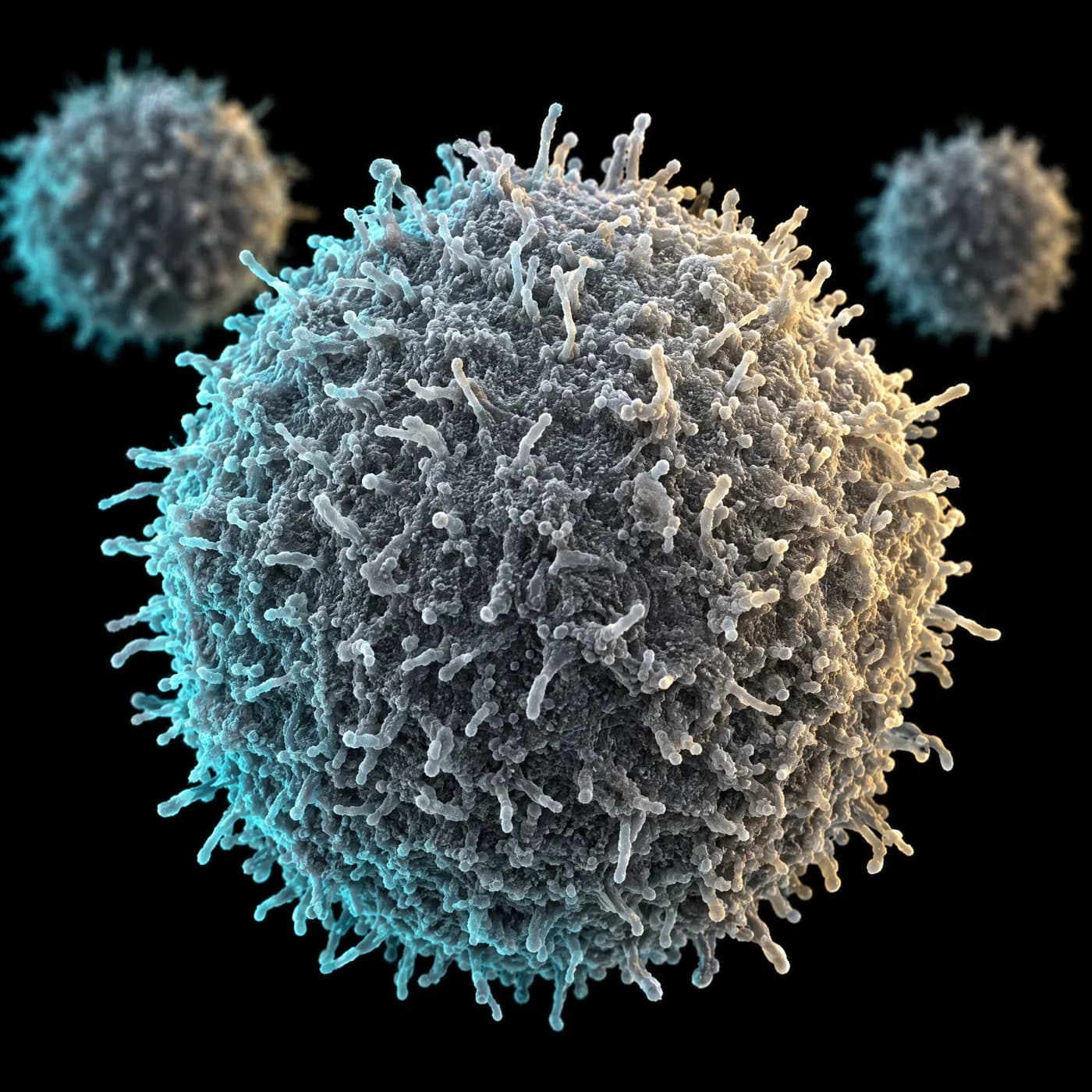
Stands in for fading thymic signals. T-cells, a core part of the immune system, mature in the thymus, which declines with age. Thymalin is built as thymic hormone replacement. It is proposed to restore T-cell maturation, rebalance T-helper and T-suppressor cells, and normalize cellular and humoral (antibody-based) immunity.
Two dipeptides may carry the effect. A 2023 study traces activity to two dipeptides inside the extract, KE (Lys-Glu, lysine-glutamic acid) and EW (Glu-Trp, glutamic acid-tryptophan). It proposes they influence gene expression and protein synthesis, and models their link to immune-related gene pathways.
Reaches blood-forming stem cells. In cell studies, Thymalin activated differentiation of human hematopoietic (blood-forming) stem cells. It also modulated inflammation and proliferation in monocyte and macrophage cell lines.
Sources:PMID 37686182PMID 33237528
How to dose it
Thymalin runs as a short course of daily injections into the muscle, mixed from a freeze-dried powder.
Dose tiersMost people run ~5 to 10 mg a day for ~5 to 10 days, then rest.
- Clinical course dose:
- ~5–10 mg into the muscle per day for ~5–10 days. The range from Russian clinical use in oncology support, infectious disease and post-surgical recovery.
- Long-term trial course:
- Annual courses in the landmark trial, in the first 2–3 years of a 6–8-year follow-up. One subgroup got Thymalin plus the pineal peptide epithalamin yearly for 6 years.
- Frequency:
- Course-based, not continuous. A short course, then weeks to months off.
How to injectInto the muscle, usually the upper outer buttock, outer thigh or shoulder.
- Injection site:
- The upper outer buttock (gluteal muscle) is the usual site in Russian practice. Outer thigh or shoulder (deltoid) suit smaller volumes. Rotate sites across the course.
- What to mix it with:
- Dissolved in bacteriostatic water or 0.9% saline right before injection, 1–2 mL per dose.
- Time of day:
- Evening where it fits. A consistent daily time across the course matters more. See Best time to take it above.
Cycle and breaksShort, set courses with rests between, the classic Russian bioregulator pattern.
- Standard course:
- 5–10 consecutive daily injections into the muscle (~5–10 mg each). Russian clinical use typically runs 1–2 such courses per year.
- Rest between courses:
- Several weeks to months, no back-to-back cycling. The long-term trial used annual courses, the best-documented interval.
- Pairing with epithalamin:
- In the landmark trial, the combined Thymalin + epithalamin arm had the largest mortality drop, ~4.1× lower than control.
Mixing the vialA 10 mg vial plus 2 mL bacteriostatic water gives 5 mg per mL.
- Mixing:
- At 10 mg in 2 mL bacteriostatic water or saline, 5 mg takes the full 1 mL, 100 units on a 100-unit insulin syringe. 2.5 mg takes 50 units.
- Volume note:
- One 10 mg vial in 2 mL makes two 1 mL injections of 5 mg each, inside the 1–2 mL per muscle site. The calculator handles other vial sizes.
Sources:PMID 14523363
Best time to take it
Implied best time
Evening (or consistent)
An evening dose lines the immune signal up with the overnight repair window. A consistent daily time matters most.
- Much of the body's immune consolidation and repair runs overnight, so an evening dose lines the thymic signal up with it.
- Thymalin has no published half-life, since it is a mix of many peptides. With no clearance curve to time against, day-to-day consistency wins.
- It runs as a short daily course of injections into the muscle. Keeping the same daily slot across the course is the practical priority.
Sources:PMID 14523363
What to stack it with


Thymalin pairs with another immune arm or Khavinson bioregulator. Two thymic preparations at once push the same lever twice.
Thymalin + Thymosin Alpha-1Thymic restoration plus downstream T-cell signaling, two stages of one system.
- Why it works:
- Thymosin Alpha-1 is a defined 28-amino-acid peptide that boosts T-helper cells, natural killer cells and cytokine signaling, downstream of Thymalin.
- The protocol:
- Thymalin ~5–10 mg into the muscle daily for 5–10 days, with Thymosin Alpha-1 1.5 mg under the skin twice weekly alongside or after, as a separate injection.
- Outcome:
- People run it for broad immune competence and in chronic-infection settings.
Thymalin + ThymogenSynthetic Glu-Trp (glutamic acid-tryptophan), one of Thymalin's active dipeptides.
- Why it works:
- Thymogen is one active piece of the extract in a defined dose.
- The protocol:
- Thymalin ~5–10 mg daily for 5–10 days, then Thymogen as nasal drops or into the muscle, per its preparation, between courses. Running both during a course is likely redundant.
- Outcome:
- People run it between courses to keep thymic signaling going.
Thymalin + Epithalamin (Epitalon)The landmark trial's pairing, with its largest mortality drop.
- Why it works:
- Epithalamin and its synthetic form Epitalon are pineal bioregulators, proposed to normalize melatonin and circadian signaling. Thymalin adds the thymic side of immune aging.
- The protocol:
- Thymalin ~5–10 mg daily for 5–10 days plus Epitalon 10 mg into the muscle daily ×10 days. The trial ran both as overlapping annual courses.
- Outcome:
- Reached for in longevity protocols. The trial's combined arm had ~4.1× lower mortality than control.
Support nutrients
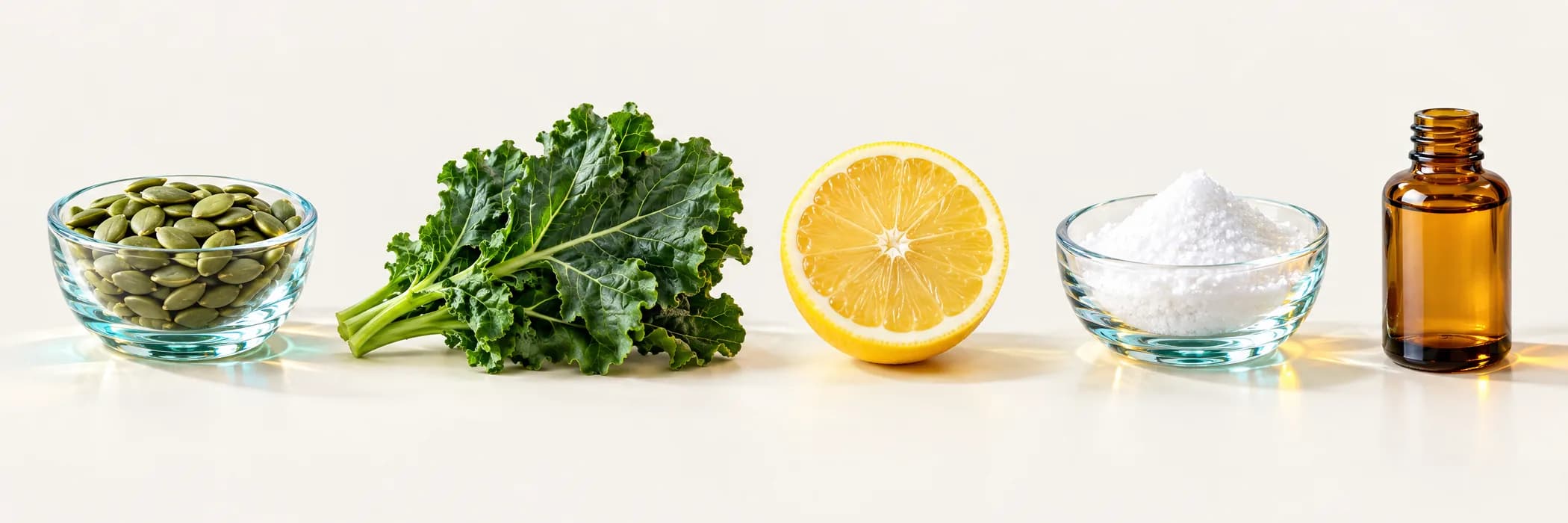
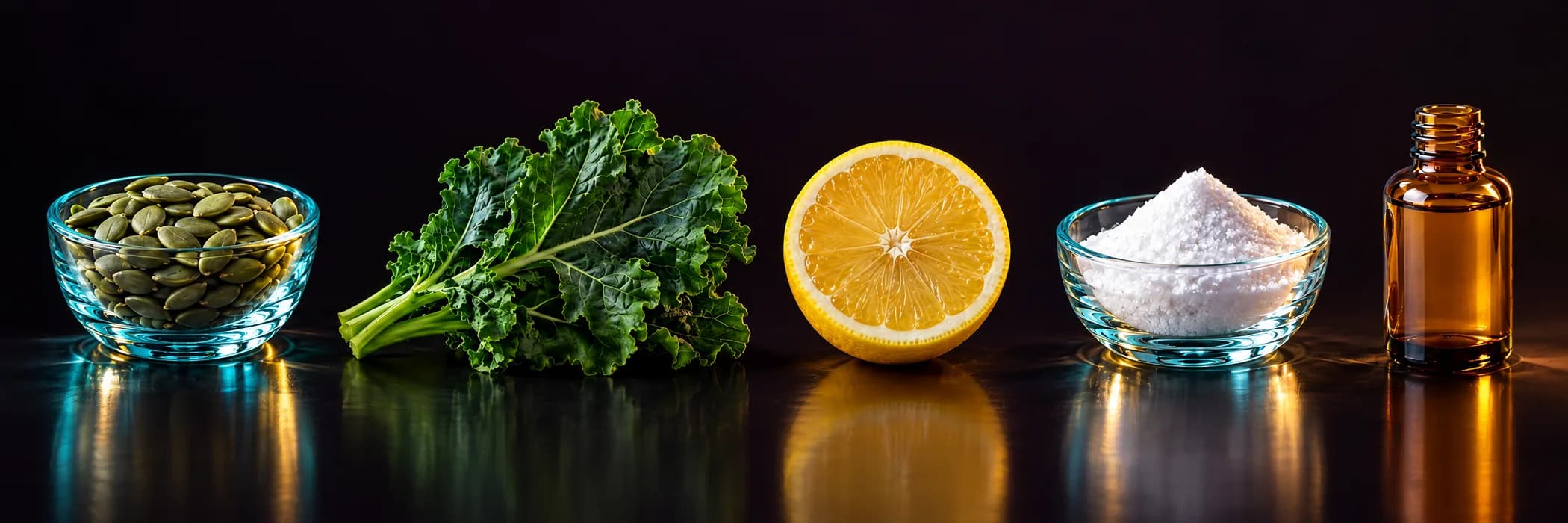
Thymalin works on the thymus and T-cells, so people add the nutrients those run on. Zinc leads the list.
Thymus and T-cell nutrientsZinc, vitamin D and selenium, the nutrients most tied to thymic hormone activity and T-cell function.
- Zinc:
- 15–30 mg zinc picolinate or bisglycinate daily. The thymic hormone thymulin needs zinc, and so does T-cell development. Severe deficiency shrinks the thymus and blunts T-cell immunity.
- Vitamin D:
- Dose to blood level of 25-OH-D (the vitamin D blood marker). Most adults need 2,000–5,000 IU (international units) daily to reach at least 30 ng/mL. Deficiency damps T-cell function.
- Selenium:
- 100–200 mcg selenomethionine daily. Immune cells rely on it for antioxidant defense, and too little blunts their activation. It is toxic at high doses, so stay in range.
Immune building blocksProtein and vitamin C, the raw materials an immune response uses up.
- Dietary protein:
- At least 1.2–1.6 g per kg body weight daily, from whole food. Immune cells, antibodies and thymic peptides are built from amino acids. Too little impairs the immune response.
- Vitamin C:
- 500–1,000 mg daily, split across meals. Immune cells hold it far above blood levels, and it supports immune-cell function and antioxidant defense during immune activation.
Little to offsetA 5–10 day course has no known depletion cost, so there is little to offset.
- Copper with long-term zinc:
- The course itself needs no offset. If zinc runs long-term past the course, people keep copper balanced with 2 mg copper bisglycinate per 30–50 mg sustained zinc.
Dose calculator
Reconstitution calculator
Calculated for a 1 mL U-100 insulin syringe (100 units/mL).
Units per dose
100 units
Draw this many units on a U-100 syringe
Each unit holds 50 mcg
- Volume per dose
- 1 mL
- Doses per vial
- 2
- Concentration
- 5 mg/mL
One vial lasts
- Daily
- 2 days
- Every other day
- 4 days
- 5×/week
- 2 days
- Large draw (100 units). That's normal for mg doses. To check it, multiply the units by what each unit holds. You should get your dose.
Research use only. Not for human consumption. Outputs are reference values based on research literature. Verify all measurements independently.
Side effects and what to watch
What people notice. Little. Decades of Russian clinical use describe it as well tolerated as a short course of injections into the muscle, with no major safety signal.
Worth knowing. It is an extract of animal tissue, so in theory it can trigger a reaction to foreign protein, and batches can vary. Its safety record comes from older Russian reports, so rare or long-term effects may not have been captured.
Common questions
How is Thymalin dosed?
~5–10 mg a day as an injection into the muscle, across a 5–10 day course. A 10 mg vial mixed with 2 mL bacteriostatic water gives 5 mg per 1 mL draw.
Do I need to cycle Thymalin?
Yes. It runs as 5–10 daily injections, then weeks to months off. Russian clinical use typically runs 1–2 courses a year, and the long-term trial used annual courses.
What does Thymalin stack with?
Thymosin Alpha-1 adds downstream T-cell signaling. Epitalon is the Khavinson pairing from the long-term trial. Thymogen fits between courses, since running it during one pushes the same lever twice.
What did the long-term trial find?
Khavinson and Morozov followed 266 elderly people for 6–8 years. Mortality was about two-fold lower on Thymalin alone and up to ~4.1× lower with epithalamin added, versus control.
Is Thymalin a single peptide?
No. It is an extract, a mix of small polypeptides from calf and cattle thymus, with no single formula or sequence. Databases that show a formula for it are listing thymulin, a different peptide.
Is it the same as thymulin or thymosin alpha-1?
No. Thymulin and thymosin alpha-1 are single, defined peptides. Thymalin is a multi-peptide extract.
Deep dive
Doses used in studies · Molecular identity · References
10From the researchDoses used in studies
These are the doses used in the studies, from Russian clinical practice and the long-term Khavinson trial to cell work.
| Dose | Route | Model | Outcome | Sources: |
|---|---|---|---|---|
| ~5–10 mg daily ×5–10 d | IM (reconstituted) | Russian clinical practice, immune adjunct (oncology, infection, surgery, burns) (CITED) | Reported immunomodulation / immune normalization; reported usage from clinical literature, exact per-product mg/day not registry-verified | PMID 14523363 |
| Annual courses ×6 yr | IM | Human geroprotector trial, 266 elderly, 6–8 yr observation (Khavinson & Morozov 2003) | CLAIMED ~2.0–2.1× lower mortality vs control (Thymalin alone), ~1.6–1.8× (epithalamin alone), up to ~4.1× for the combined, annually-dosed subgroup; open-label, single-program, never independently replicated | PMID 14523363 |
| Course-based | IM | Russian oncology use, disseminated cervical cancer combined treatment (Vishnevskaia 1991) | Reported as an immunological adjunct in combined cancer treatment; older Russian-language report, lower-tier evidence | PMID 2014686 |
| In vitro | Cell culture | Hematopoietic stem-cell differentiation (Khavinson 2020) | CLAIMED activation of human hematopoietic stem-cell differentiation; mechanistic in-vitro work from the originating lineage | PMID 33237528 |
11ChemistryMolecular identity
- Molecular formula
- Not applicable (mixture)
- Composition
- Standardized complex of low-molecular-weight polypeptides extracted from calf/cattle thymus gland (a mixture, not one molecule)NCBI MeSH C032805; PMID 37686182
- Defined single molecule?
- No. It is an extract / mixture with no single structureNCBI MeSH C017757 ('unknown MF')
- Molecular weight
- Not applicable (mixture of low-MW polypeptides)NCBI MeSH C032805
- Characterized constituents
- Short dipeptides incl. KE (Lys-Glu) and EW (Glu-Trp) identified as bioactive componentsPMID 37686182 (Int J Mol Sci 2023)
- CAS (preparation)
- 79621-14-0 (NCBI MeSH registry; refers to a compound of unknown MF)NCBI MeSH UID 67032805
- Misattribution warning
- The name 'Thymalin' wrongly resolves in PubChem to CID 3085284; that record is Thymulin/Nonathymulin (C33H54N12O15, MW 858.9, pGlu-Ala-Lys-Ser-Gln-Gly-Gly-Ser-Asn), a DIFFERENT defined molecule. Do not treat as Thymalin's formula.PubChem CID 3085284 (verified)
- Molecular target
- No single defined receptor; proposed thymic-hormone-like restoration of T-cell differentiation and immune balance (originator-school claim, not independently established)PMID 37686182; Russian clinical literature (CITED)
- Half-life
- Not established (no published pharmacokinetics; it is a multi-component extract, not a single molecule)Not established
- Origin / developer
- V.G. Morozov & V.Kh. Khavinson (USSR Military Medical Academy; St. Petersburg Institute of Bioregulation and Gerontology)PMID 14523363
- Regulatory status
- Registered & used in USSR/Russia (IM immunomodulator); NOT FDA-approved; Western grey-market 'research chemical' onlyRussian clinical literature (CITED); absence of FDA record
12Primary sourcesReferences
- PMID 14523363Khavinson & Morozov, Neuro Endocrinol Lett 2003. Landmark geroprotector trial (266 elderly, 6–8 yr; Thymalin ± epithalamin; claimed mortality reduction)
- PMID 37686182Linkova et al., Int J Mol Sci 2023. KE & EW dipeptides 'in the composition of the Thymalin drug' and gene expression
- PMID 33237528Khavinson et al., Bull Exp Biol Med 2020. Thymalin activates differentiation of human hematopoietic stem cells
- PMID 2014686Vishnevskaia et al., Vopr Onkol 1991. Thymalin in combined treatment of disseminated cervical cancer (Russian-language)
- NCBI MeSH C032805NCBI MeSH Supplementary Concept, 'thymalin' (extract; registry compound of unknown molecular formula)
Reviewed by Ki Researcher Team · Research use only · Not medical advice · Updated 2026-09-24