
Glutathione
GSH · the cell's principal intracellular antioxidant (a tripeptide)
Glutathione is the tripeptide your cells make as their main antioxidant. People run it for antioxidant support, detox and liver health. It neutralizes free radicals directly, recharges spent vitamins C and E, and is the molecule the liver uses to tag toxins for clearance.
Buy Glutathione600 mg or 1,500 mg vial
Ki Researcher is affiliated with Ki Peptides.
Ships to the US only. Buyers must be 21 or older.
At a glance
- Dose
- 200 to 600 mg per session (400 mg is standard)
- How often
- 2–3 times a week, up to daily at 600 mg
- How
- An injection under the skin or into the muscle
- When
- Morning or after training, no strict timing
- Cycle
- Continuous, or 4–8 weeks on and 2–4 off
The 30-second versionEverything on this page, fast
Master Antioxidant · Detox & Liver · Skin-Brightening · Longevity
The cell's master antioxidant. Glutathione neutralizes reactive oxygen species directly, recharges vitamins C and E, and fuels the liver's Phase II detox, the step that tags toxins for clearance.
The basics
- A small tripeptide (glutamate + cysteine + glycine) your cells make for themselves and hold at high concentrations.
- Most people inject it, under the skin or into the muscle, because swallowed glutathione is largely broken down in the gut.
Why people use it
- Front-line antioxidant. The reactive sulfur on its cysteine neutralizes free radicals directly. It's the main antioxidant inside your cells.
- Detox and liver support. It's the substrate the liver's Phase II enzymes use to tag toxins for clearance. The liver holds the most of it.
- Recharges other antioxidants. It regenerates the spent forms of vitamins C and E, acting as the hub of the antioxidant network.
- Skips the gut. Swallowed glutathione largely breaks down in the gut, which is why people inject it instead of taking capsules.
Stacks well with
- NAD⁺ is the natural partner. Glutathione clears radicals while NAD⁺ keeps its recycling fuel, NADPH, stocked.
Good to know
- A cloudy mix is usually normal, and gentle swirling should clear it. Discard it if it won't clear, shows particles or turns yellow.
- Myth to drop. The Tylenol (acetaminophen) overdose antidote is N-acetylcysteine, a precursor, not glutathione itself.
- The Philippine regulator warns of serious harm from high-dose IV (intravenous) glutathione for skin-whitening.
What it does
Antioxidant defense and liver detox both run through this one molecule.
- The body's master antioxidantIts reactive sulfur neutralizes reactive oxygen species directly. Cells hold it at high levels as their front-line defense.
- Detox and liver supportIt's the substrate liver enzymes use to tag toxins for clearance, and the liver holds the most of it.
- Recharges your other antioxidantsIt regenerates the spent forms of vitamins C and E, acting as the hub of the antioxidant network.
- An injection that skips the gutSwallowed glutathione breaks down in the gut, so injecting it skips that loss entirely.
- Pairs well with NAD+It runs on the NADPH that NAD+ metabolism feeds, so glutathione handles the scavenging while NAD+ recharges the recycling.
How it works
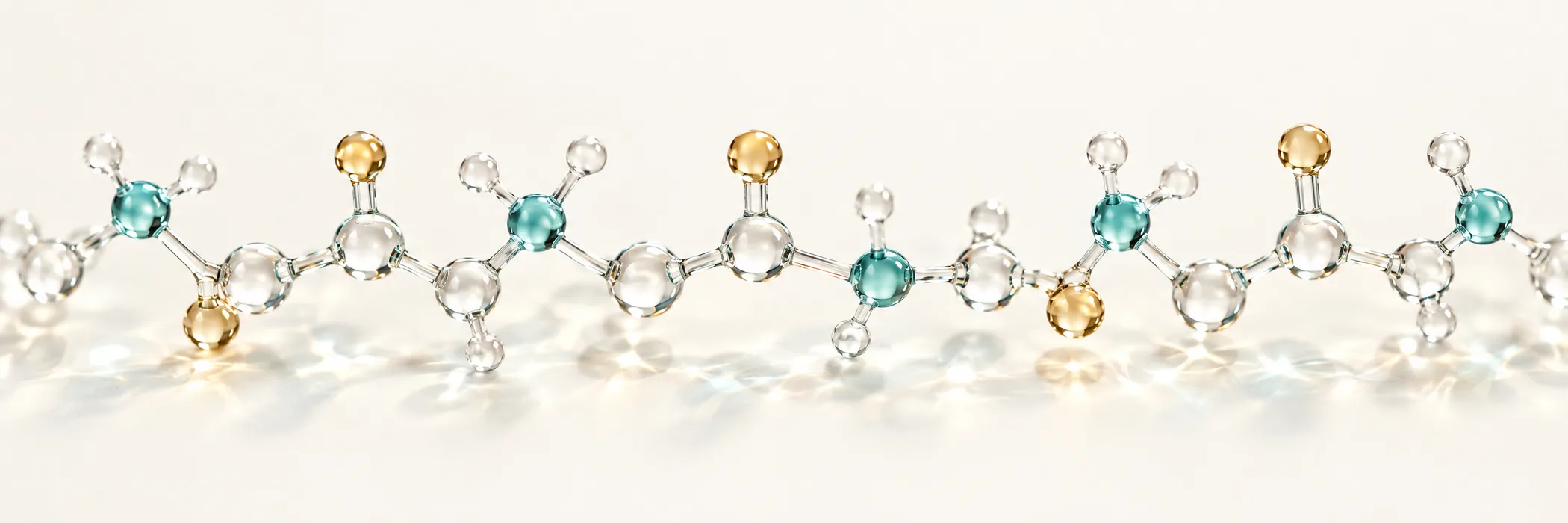
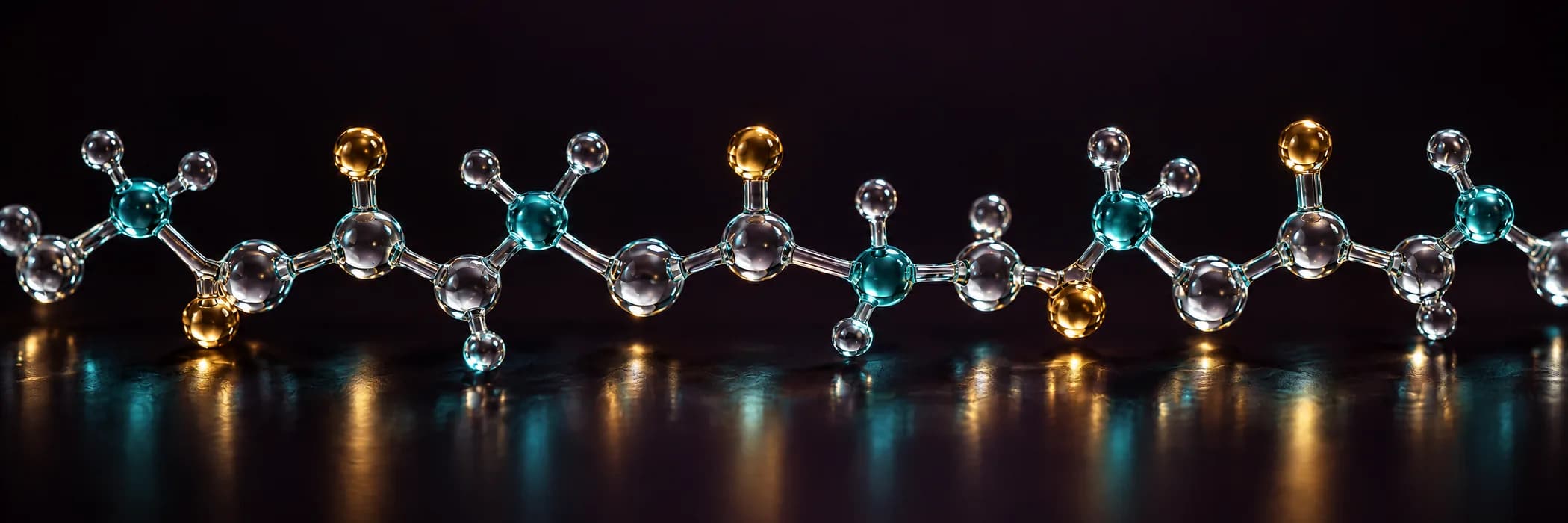
Neutralizes free radicals directly. The reactive sulfur group on glutathione's cysteine donates electrons to neutralize reactive oxygen and nitrogen species. It becomes GSSG, its oxidized form, and glutathione reductase regenerates it (GSH) using NADPH. The GSH-to-GSSG ratio is a key redox readout.
Powers liver detox. It's the cofactor for glutathione peroxidase, which breaks down hydrogen peroxide and lipid peroxides, and the substrate the liver's Phase II enzymes attach to toxins and drugs to flush them out. It also regenerates spent vitamins C and E.
Built differently from ordinary peptides. Two enzymes assemble it, glutamate-cysteine ligase then glutathione synthetase, rather than the cell's usual ribosome. The bond between glutamate and cysteine is unusual, which makes glutathione resistant to ordinary peptidases.
How to dose it
Most people inject glutathione under the skin or into the muscle, since swallowing it breaks it down in the gut.
Dose tiersThe standard is 400 mg per session, 2–3 times a week.
- Low / maintenance:
- 200 mg per session, 2–3 times a week. For maintenance, redox support, or a first tolerance check.
- Standard:
- 400 mg per session, 2–3 times a week. The middle range for antioxidant or liver support.
- Higher / acute:
- 600 mg per session, up to daily. Clinic IV protocols run higher, 1 to 2 g or more, given by a practitioner.
How to injectIt goes into the fat under the skin. Rotate sites between shots.
- Injection site:
- Belly, a few inches from the navel, outer thigh, or the love-handle area. Rotate sites to avoid irritation.
- Measuring the dose:
- At 100 mg per mL, 200 mg is 2 mL, two draws on a 1 mL U-100 syringe. 400 mg is 4 mL and 600 mg is 6 mL.
- Time of day:
- No strict time of day. Morning and post-workout are common.
- Food window:
- Meals don't matter. Injection doesn't compete with food for absorption.
Cycle and breaksYour body makes it, so many run it continuously. Others cycle it on and off.
- Continuous approach:
- Some run 200 to 400 mg, 2 to 3 times a week, indefinitely for redox or liver support.
- Pulsed cycle:
- 4 to 8 weeks on, then 2 to 4 weeks off. Used for a structured detox or loading protocol.
- Washout check:
- Some track red-blood-cell GSH or the GSH-to-GSSG ratio during a break to see if baseline status shifted.
Mixing the vialThe default mix is a 600 mg vial with 6 mL of bacteriostatic water.
- Mixing:
- That's 100 mg per mL, and each mL reads 100 units on a U-100 syringe.
- Why 6 mL:
- It keeps the concentration a round 100 mg per mL, which makes the math simple and cuts syringe measuring errors.
Best time to take it
Implied best time
Morning (or consistent)
Most people take glutathione in the morning or after a workout. Timing is flexible.
- Glutathione supports ongoing antioxidant and detox work rather than one timed pulse, so a regular schedule matters more than any specific hour.
- Morning fits its daytime role. Post-workout is the other common choice, since exercise briefly raises oxidative stress.
- It clears the blood fast (human IV half-life ~14 min), so what matters is regular exposure, not catching a peak.
Sources:PMID 1907548
What to stack it with


Its best support is the cofactors above. The one peptide pairing is NAD+.
Glutathione + NAD+Glutathione clears oxidative stress while NAD+ fuels the NADPH that recharges it.
- Why it works:
- Glutathione reductase rebuilds GSH from GSSG using NADPH, which comes from NAD+ metabolism. Running both keeps that fuel supply stocked, so the two reinforce each other.
- The protocol:
- Glutathione 200 to 400 mg, 2 to 3 times a week, alongside NAD+ at 25 to 100 mg daily or 5-on-2-off. No need to sync timing.
- Outcome:
- People reach for this pairing in longevity and mitochondrial-health contexts, where oxidative stress and NAD+ decline are both in play.
Why no second peptideGlutathione's best complement is nutritional, not another peptide.
- The reasoning:
- Peptide pairs usually hit different levers. Other peptides don't target radical scavenging or Phase II detox, so NAC and the recycling cofactors are the better partners.
Support nutrients
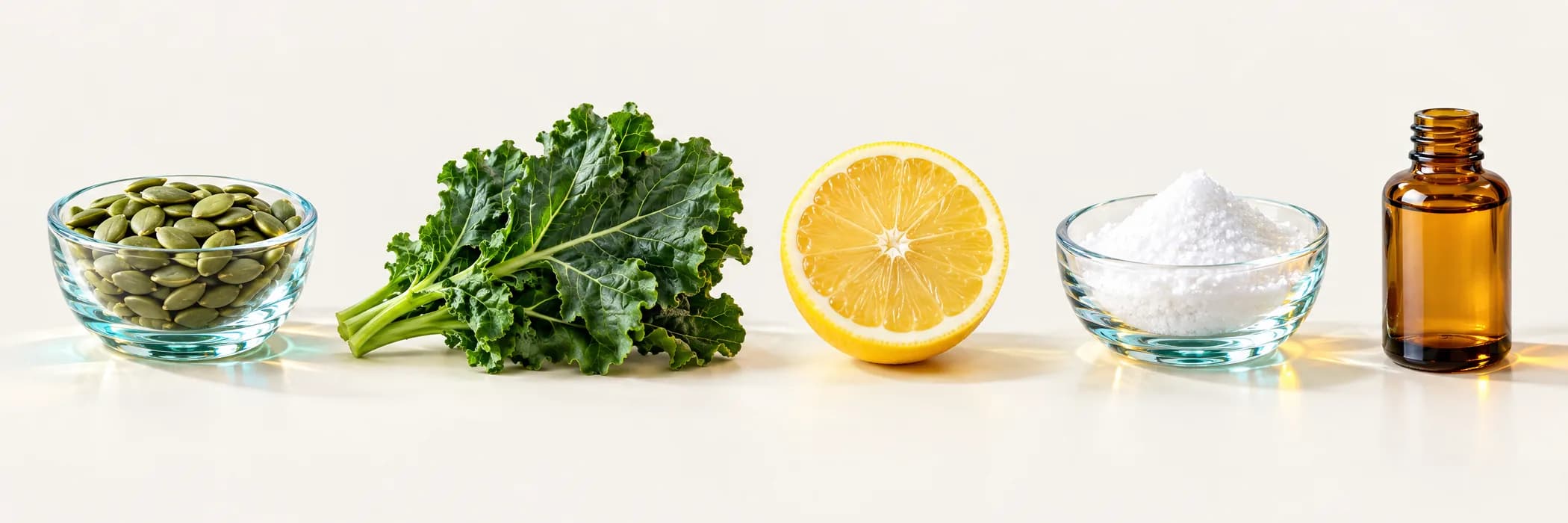
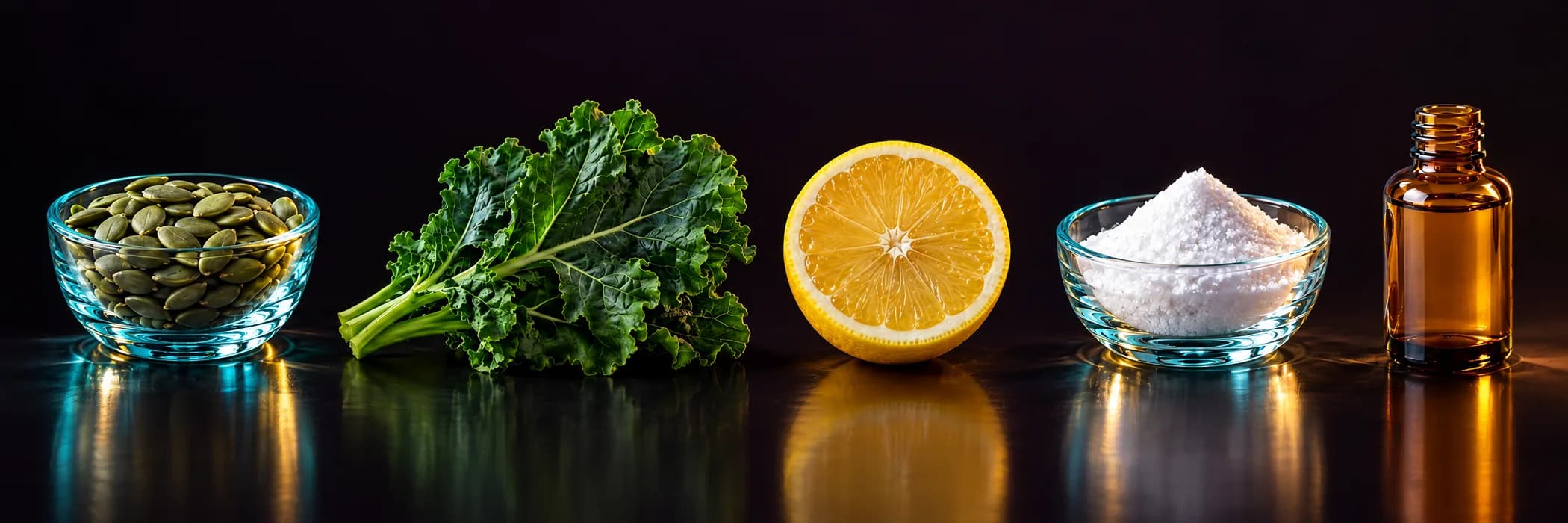
These give your body the building blocks to make glutathione and the fuel to recycle it.
Glutathione building blocksThe body builds glutathione from cysteine, glutamate and glycine.
- NAC (N-acetylcysteine):
- 600 to 1,800 mg a day, in divided doses with food. The stable cysteine donor used to raise glutathione status.
- Glycine:
- 1 to 3 g a day, alongside NAC. The second building block, often co-limiting in older adults.
- Glutamate:
- Plentiful in dietary protein. Eating 1.2 to 2 g of protein per kg bodyweight a day covers it, so there's no need to supplement glutamate.
Recycle spent glutathioneGSH gets oxidized after neutralizing a radical. These fuel the two enzyme systems that recycle it.
- Selenium:
- 100 to 200 mcg a day as selenomethionine, built into glutathione peroxidase. Don't exceed 400 mcg a day, the upper limit.
- Riboflavin (B2):
- 50 to 100 mg a day. As FAD (flavin adenine dinucleotide), it's the cofactor for glutathione reductase, which rebuilds GSH from GSSG using NADPH.
- Alpha-lipoic acid (ALA):
- 300 to 600 mg a day with a meal. It regenerates oxidized glutathione and recycles vitamins C and E.
- Vitamin C:
- 500 to 1,000 mg a day. It reduces GSSG to active GSH via the ascorbate-glutathione cycle. Take apart from ALA if either upsets your stomach.
Raise liver glutathioneThe liver holds the most glutathione and handles detox work.
- Silymarin (milk thistle):
- 140 to 420 mg a day of standardized silymarin (70 to 80%). It raises liver glutathione synthesis. Take with a fatty meal for absorption.
Dose calculator
Reconstitution calculator
Calculated for a 1 mL U-100 insulin syringe (100 units/mL).
Units per dose
400 units
That's 4 mL, more than a 1 mL syringe holds.
Each unit holds 1,000 mcg
- Volume per dose
- 4 mL
- Doses per vial
- 1
- Concentration
- 100 mg/mL
One vial lasts
- Daily
- 1 day
- Every other day
- 3 days
- 5×/week
- 2 days
- Dose volume (4 mL) exceeds the 1 mL syringe capacity. Use a larger syringe or split the draw.
Research use only. Not for human consumption. Outputs are reference values based on research literature. Verify all measurements independently.
Side effects and what to watch
What people notice. Oral glutathione is well tolerated in studies. Inhaled forms can trigger bronchospasm, a sudden airway tightening, in people prone to it.
The Philippine regulator's advisory ties IV glutathione for skin-lightening to liver, kidney and nervous-system damage, severe skin reactions and infection from unregulated use. Health authorities have linked the practice to deaths.
Glutathione made by your body or taken orally is low-concern. The documented serious harm comes from unregulated high-dose IV use.
Sources:PH FDA 2019-182
Common questions
Does glutathione raise antioxidant levels?
It depends on the route. A single oral dose barely moves blood glutathione, since most breaks down in the gut. A six-month randomized trial found daily oral dosing modestly raised body stores over time. An IV dose clears within minutes.
Is glutathione the Tylenol overdose antidote?
No. The antidote is N-acetylcysteine, a glutathione precursor that restocks the liver's own glutathione. Glutathione itself isn't given for an overdose.
Is glutathione a peptide?
Technically. It's a tripeptide of three amino acids, but an unusual one. Two enzymes build it instead of a ribosome, and its bond resists ordinary peptidases. It's the body's main antioxidant, not a signaling peptide.
My glutathione turned cloudy. Is that normal?
Yes, briefly. The dense 600 mg powder can look milky while dissolving. Swirl, don't shake. Discard if it won't clear, shows particles or turns yellow. Refrigerate in the dark and use within 28 days. It can lose strength to oxidation while still looking clear.
Deep dive
Doses used in studies · Blood markers to track · Molecular identity · References
10From the researchDoses used in studies
These are the doses used in the published studies. Route matters a lot, since oral and IV glutathione behave very differently.
| Dose | Route | Model | Outcome | Sources: |
|---|---|---|---|---|
| 250 / 1000 mg/day | Oral | Human RCT · 6 months | Raised body GSH stores vs placebo | PMID 24791752 |
| Single oral dose | Oral | Human PK | No acute rise in blood GSH | PMID 1362956 |
| 500 mg/day | Oral | Human RCT · 4 weeks (skin) | Lower melanin index at 2 of 6 sites | PMID 20524875 |
| Off-label | IV | Skin-whitening (clinic use) | No robust efficacy; serious harms reported | PH FDA 2019-182 |
| Per protocol | Intranasal | Parkinson's RCT | No benefit vs placebo | PMID 28436395 |
| Per protocol | Inhaled | Cystic fibrosis RCT | No consistent clinical benefit | PMID 23631796 |
11Labs before / during / afterBlood markers to track
Markers a researcher might track for redox and antioxidant status, as general context, not glutathione-specific endpoints.
Whole-blood or red-blood-cell glutathione and the GSH-to-GSSG ratio are direct redox readouts. Cysteine availability matters too, since it's often the limiting substrate for making glutathione, which is why N-acetylcysteine is studied for raising it.
Sources:PMID 6137189
12ChemistryMolecular identity
- Molecular weight
- 307.33 g/mol
- Molecular formula
- C10H17N3O6S
- Monoisotopic mass
- 307.0838 Da
- Water solubility
- 292.5 mg/mL (water)
- XLogP
- −4.5 (highly hydrophilic)
- Topological polar surface area
- 160 Ų
- H-bond donors / acceptors
- 6 donors · 8 acceptors
- CAS / UNII
- 70-18-8 · GAN16C9B8O
- Oxidized form (GSSG)
- C20H32N6O12S2 · 612.6 g/mol
- Structure
- γ-L-glutamyl-L-cysteinyl-glycine (tripeptide; non-ribosomal, γ-peptide bond)PubChem CID 124886
- IUPAC name
- (2S)-2-amino-5-[[(2R)-1-(carboxymethylamino)-1-oxo-3-sulfanylpropan-2-yl]amino]-5-oxopentanoic acidPubChem CID 124886
- Molecular role
- Principal intracellular antioxidant; glutathione-peroxidase cofactor + glutathione-S-transferase substrate (redox / Phase II detox)Research literature
- Plasma half-life
- ~14 min (human IV; t½ 14.1 ± 9.2 min, n=10)PMID 1907548Half-life curve →
- Regulatory status
- Endogenous antioxidant + dietary supplement; injectable/IV glutathione is compounded, not FDA-approved as a drugResearch literature
13Primary sourcesReferences
- PubChem CID 124886PubChem CID 124886
- PubChem CID 65359PubChem CID 65359 (GSSG)
- PMID 6137189Glutathione metabolism (review)
- PMID 15822171Glutathione-S-transferases (review)
- PMID 1362956Witschi et al. 1992 (oral PK)
- PMID 1907548Aebi et al. 1991 (high-dose IV PK in man; plasma t½ 14.1 min, n=10)
- PMID 24791752Richie et al. 2015 (6-mo RCT)
- PMID 20524875Arjinpathana & Asawanonda 2012 (skin RCT)
- PH FDA 2019-182Philippine FDA Advisory No. 2019-182
- PMID 28436395Mischley et al. 2017 (intranasal PD RCT)
- PMID 19230029Hauser et al. 2009 (IV PD pilot)
- PMID 23631796Griese et al. 2013 (inhaled CF RCT)
Glutathione
600 mg or 1,500 mg vial
Ki Researcher is affiliated with Ki Peptides.
Ships to the US only. Buyers must be 21 or older.
Reviewed by Ki Researcher Team · Research use only · Not medical advice · Updated 2026-09-24