
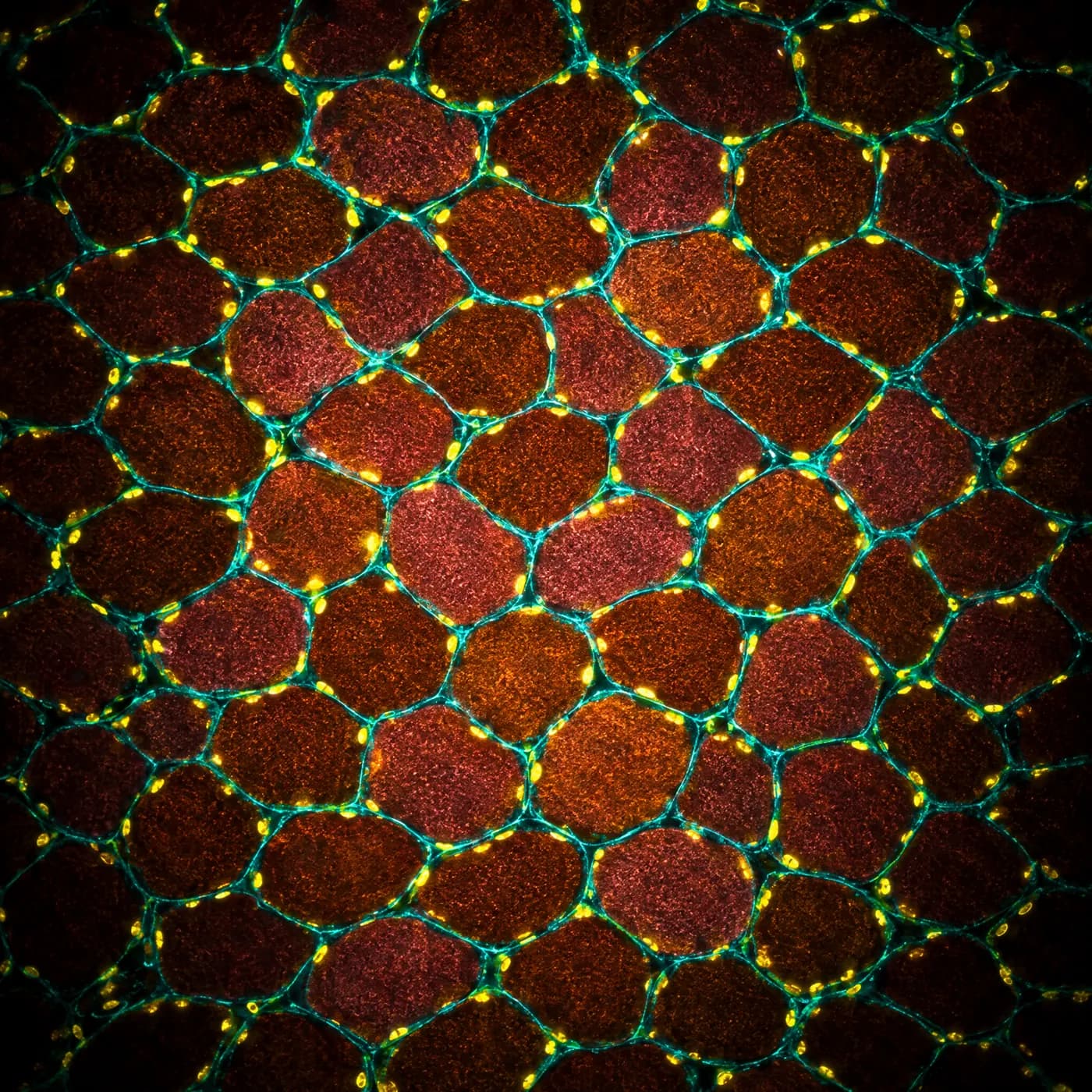
IGF-1 LR3
Long-[Arg³] Insulin-like Growth Factor 1 · 83-AA IGF-1 analog
IGF-1 LR3 is a lab-modified IGF-1, the body's growth signal, built to slip past the carrier proteins that hold IGF-1 back. People run it as the whole-body base of a bulk cycle. More stays free, so it acts stronger and longer than native IGF-1.
At a glance
- Dose
- 20–50 mcg a day, starting at 20–30 mcg
- How often
- Once a day
- How
- A small injection under the skin
- When
- After training and within 15–30 min of a carb meal, never fasted
- Cycle
- 4–6 weeks on, then a 4–8 week break
The 30-second versionEverything on this page, fast
Lean muscle · Systemic IGF-1 · Bulk-cycle base · Long-acting
The long-acting, whole-body base of the muscle-growth peptides, the one people build a bulk cycle around. IGF-1 LR3 is built to slip past the IGF-binding proteins that buffer natural IGF-1, so far more free peptide reaches the receptor and switches on the PI3K–Akt–mTOR muscle-building signal for an all-day anabolic base.
The basics
- A lab-modified, long-acting IGF-1 of 83 amino acids. Native IGF-1 with an arginine swap at position 3 plus a 13-amino-acid extension that lets it escape the binding proteins.
- The appeal is systemic, whole-body muscle growth you build a bulk cycle around.
Why people use it
- Build muscle past your usual ceiling. It switches on the IGF-1 receptor and the PI3K–Akt–mTOR pathway, the body's main protein-building signal, with far more staying free and active than native IGF-1.
- Grow new muscle cells. Through the Ras–MAPK arm it drives proliferation (hyperplasia), more cells rather than only larger ones, which sets it apart from a simple anabolic.
- An all-day anabolic base. Escaping the binding proteins keeps free peptide reaching the receptor, a once-daily, whole-body signal that holds through a training block.
- Channels nutrients into worked muscle. Dosed after training it lands when the receptor is most primed and blood flow to the trained muscle is up.
Stacks well with
- IGF-1 DES is the division of labor. DES is the short, local post-workout pulse while LR3 holds the systemic long-acting base.
- Ipamorelin / CJC-1295 raise your natural growth hormone, and with it your own IGF-1, to complement the LR3 you inject.
Good to know
- Blood sugar can drop (hypoglycemia). LR3 lowers glucose through insulin-receptor cross-talk, so tie every dose to carbs and keep fast-acting carbs (glucose tabs, juice) on hand.
- Do not stack it with insulin. That pairs two blood-sugar-lowering agents and can drive severe hypoglycemia.
- It needs a calorie surplus and training. In a deficit, animal data showed LR3 raised protein breakdown rather than sparing muscle.
- Banned in sport (WADA S2.3, IGF-1 analogues), so it will trigger an anti-doping positive.
What it does
The long-acting, whole-body base of the muscle-growth peptides, the one people build a bulk cycle around.
- Build muscle past your usual ceilingPeople reach for it to push muscle growth. Far more stays free to fire PI3K–Akt–mTOR, the main protein-building signal.
- Grow new muscle cellsThrough the Ras–MAPK arm it drives hyperplasia, more muscle cells rather than only bigger ones.
- An all-day anabolic baseEscaping the binding proteins keeps free peptide reaching the receptor, a once-daily, whole-body signal that holds through a training block.
- Channels nutrients into worked muscleDosed after training, it lands when the receptor is most primed and blood flow to the trained muscle is up.
- Pairs cleanly with a local pulseIt holds the long, whole-body background while IGF-1 DES adds a short, local hit after training.
How it works
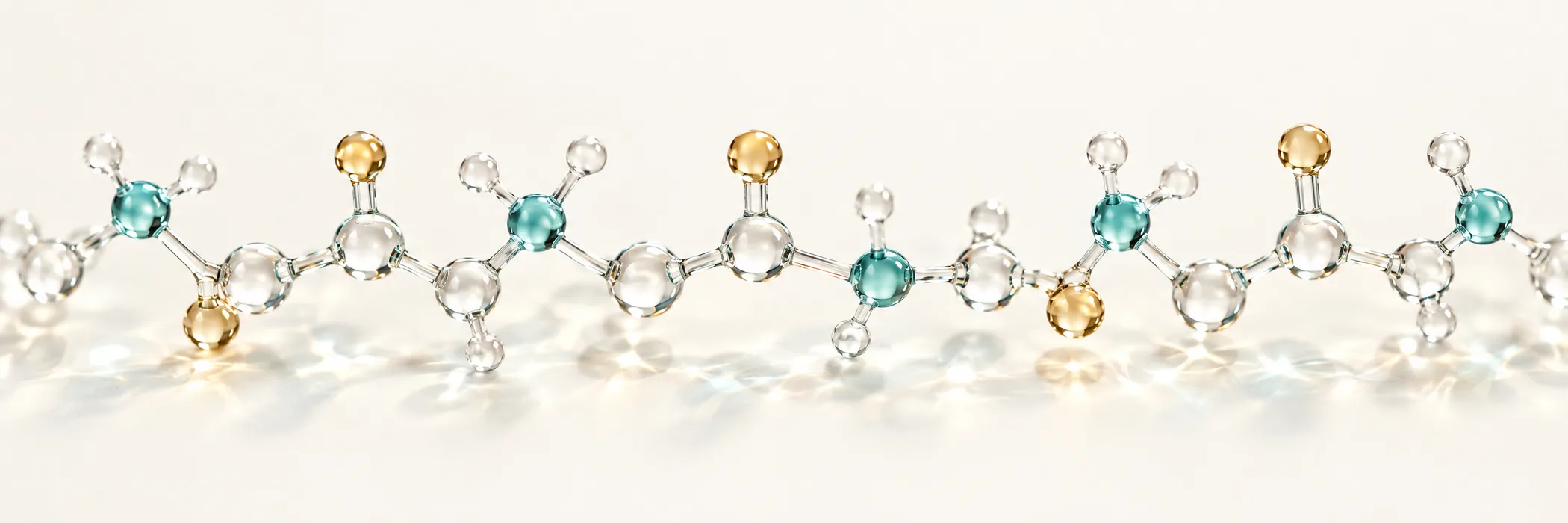
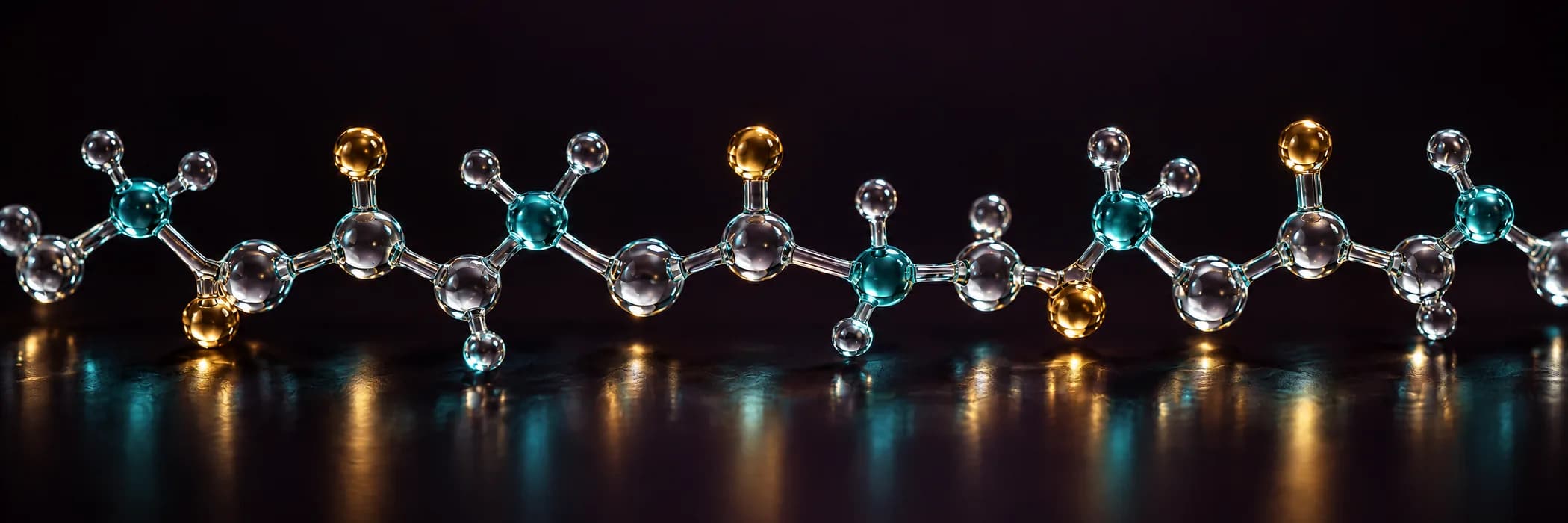
Switches on the growth receptor. LR3 binds the IGF-1 receptor. Its PI3K–Akt–mTOR chain tells the cell to build protein. Its Ras–MAPK chain tells it to divide (hyperplasia), adding more cells rather than only bigger ones.
Slips past the carrier proteins. Six IGF-binding proteins soak up native IGF-1. LR3's arginine swap and 13-amino-acid extension make it bind them poorly, so far more reaches the receptor free.
Strongest where those proteins are. That free fraction explains the "about 3× stronger" figure. In lab dishes without binding proteins, LR3 is weaker than native IGF-1.
Nudges the insulin side. The IGF-1 and insulin receptors are close cousins, so LR3 can push blood sugar low (hypoglycemia). In animals, LR3 infusion dropped blood glucose and insulin.
How to dose it
Most people run IGF-1 LR3 as a small injection under the skin, once a day.
Dose tiersMost people run 20–50 mcg per day. Experienced users sometimes go higher.
- Entry or first cycle:
- 20–30 mcg once daily. The starting range to check tolerance and your blood-sugar response before scaling.
- Standard:
- 40–50 mcg once daily. The core range for an anabolic or body-composition cycle.
- Higher range:
- Up to ~100 mcg/day, the upper end experienced users report. Hypoglycemia risk rises substantially here.
How to injectIt goes into the fat under the skin. Site, timing and carbs matter most.
- Injection site:
- Belly (an inch or two clear of the navel), love handles or outer thigh. Rotate sites each dose to avoid irritation and fatty lumps.
- Measuring the dose:
- On a U-100 syringe, at 1 mg + 1 mL bacteriostatic water, 20 mcg takes 2 units and 50 mcg takes 5 units. The calculator handles other vials.
- Time of day:
- Most inject after training, some at a consistent morning time on rest days. Avoid dosing before sleep with no food on board.
- Food window:
- Never inject fasted. Inject within 15–30 minutes of a carbohydrate-containing meal, or keep fast-acting carbs (glucose tabs, juice) on hand for a low.
Cycle and breaksSet blocks limit constant growth signaling and keep the receptor responsive.
- Standard cycle:
- The usual block is 4–6 weeks of daily dosing. Some cap at 4 weeks, others push to 8. Shorter is more conservative.
- Washout:
- An equal or longer break, typically 4–8 weeks. The aim is to restore receptor sensitivity.
- No indefinite use:
- Constant receptor activation drives cell division, and a higher IGF-1 axis is linked to several cancers. Time-limited blocks reflect that concern.
Mixing the vialA 1 mg vial takes 1 mL of bacteriostatic water. The calculator does other mixes.
- Mixing:
- That makes 1,000 mcg per mL. On a U-100 syringe, 20 mcg takes 2 units, 30 mcg takes 3 units, 40 mcg takes 4 units, 50 mcg takes 5 units.
- Why 1 mL:
- It keeps the math simple. Each unit holds exactly 10 mcg at this dilution.
Best time to take it


Implied best time
Post-workout (or morning)
Most people take IGF-1 LR3 once a day after training, and at a consistent morning time on rest days.
- Right after training the receptor is most primed and blood flow to worked muscle is up. A carb-and-protein meal afterward helps blunt the blood-sugar dip.
- Once a day is enough, since free peptide keeps reaching the receptor. A consistent morning time on rest days keeps the signal steady.
- LR3 lowers blood glucose, so the dose goes with a carbohydrate-containing meal and is never taken fasted before sleep.
Sources:PMID 39638246PMID 8053901
What to stack it with


Split the work, push the upstream GH axis, or add recovery. Avoid doubling the same lever.
LR3 + IGF-1 DESDES is the short, local pulse. LR3 is the long, whole-body base.
LR3 + Ipamorelin + CJC-1295Ipamorelin and CJC-1295 raise your own growth hormone (GH), and with it IGF-1.
- Why it works:
- Ipamorelin triggers a GH pulse without cortisol or prolactin spikes. CJC-1295 extends it.
- The protocol:
- Ipamorelin 200–300 mcg + CJC-1295 (with DAC) 2 mg twice weekly, empty stomach or post-workout. LR3 20–50 mcg/day. Run all three for the 4–6 week LR3 cycle.
- Outcome:
- Better sleep and recovery. IGF-1 rises, so people monitor it.
LR3 + BPC-157 + TB-500Tendon and ligament recovery under heavy training.
Insulin + LR3Two blood-sugar-lowering agents, the most dangerous stack here.
- The risk:
- Severe hypoglycemia (below 70 mg/dL) can cause confusion, seizures or cardiac events.
- The appeal:
- In tumour-bearing rats, the pair synergized dramatically for weight gain.
- Harm reduction:
- Keep fast carbs close, know low-sugar signs, never dose fasted.
Support nutrients
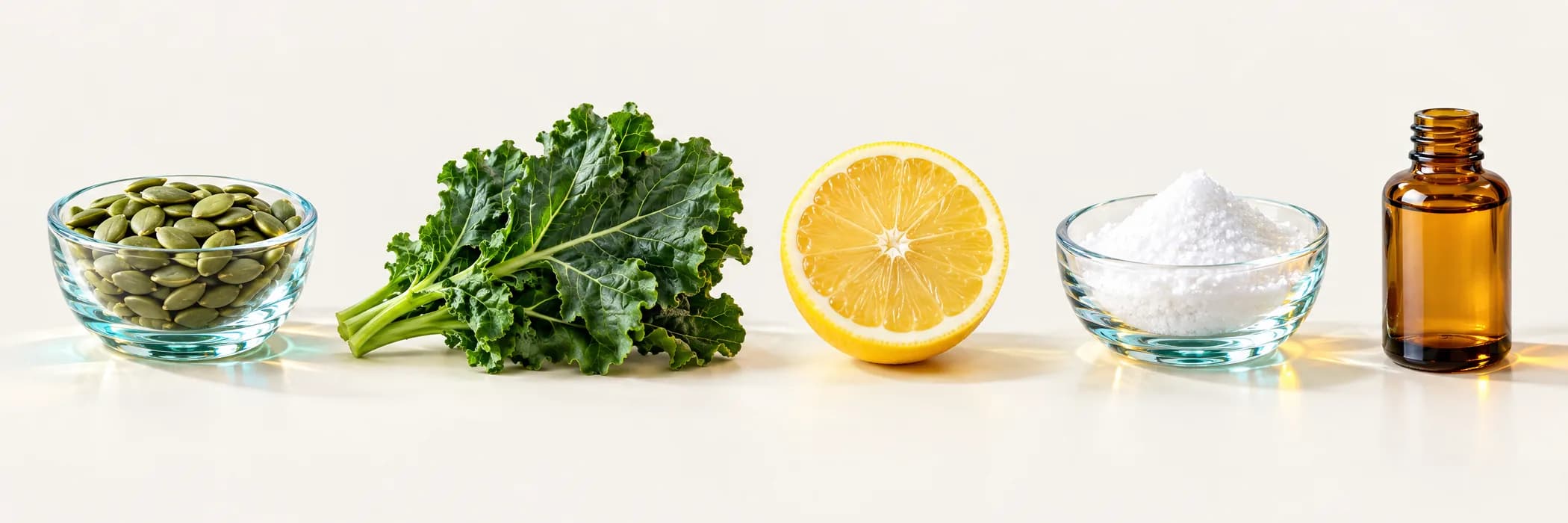
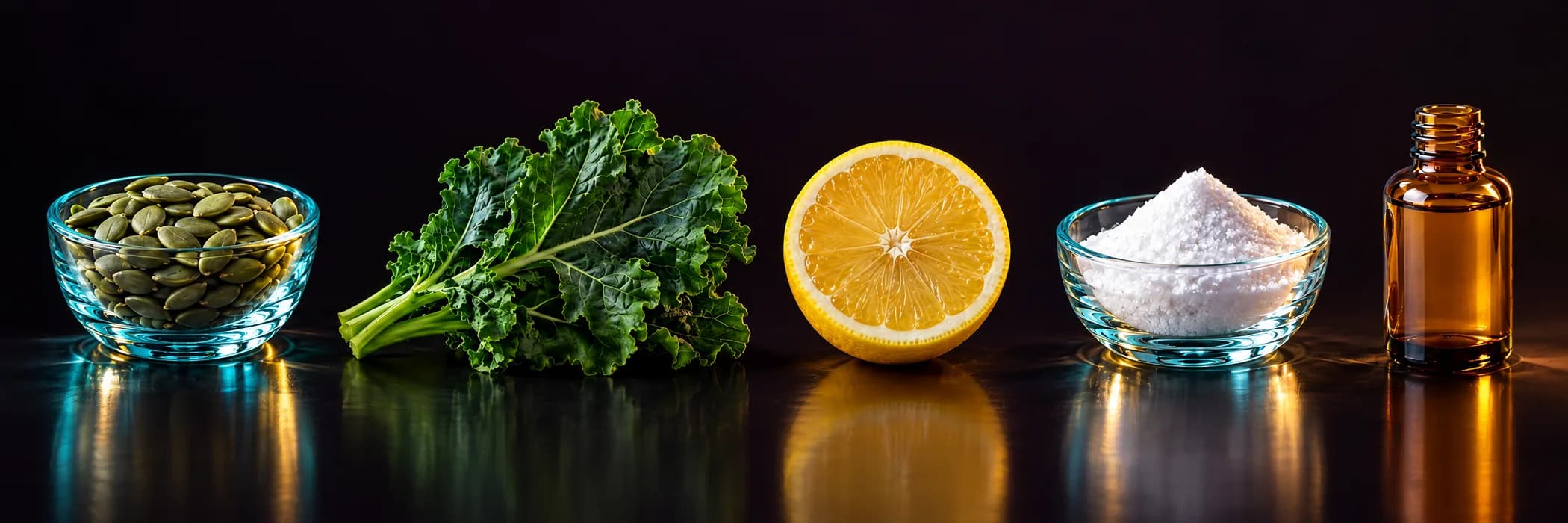
These feed the growth signal, steady your blood sugar and give LR3 a target.
Protein to build withWithout raw material, the growth signal has nothing to build.
- Protein target:
- 1.8–2.2 g per kilogram per day (about 0.8–1.0 g per pound). Food-restricted animals on LR3 broke down more muscle protein.
- Leucine timing:
- 3–5 g of leucine around training (or with the dose on rest days). Whey, chicken and eggs are leucine-rich.
- Calorie surplus:
- A modest surplus, roughly 200–400 kcal above maintenance, gives the signal energy to build with.
Keep blood sugar steadyLR3 lowers blood glucose. Carbs around the dose blunt the drop.
- Meal window:
- Inject within 15–30 minutes of a meal with 30–60 g of carbs. Lows are most likely fasted or at bedtime without food.
- Fast-acting carbs on hand:
- Some keep glucose tablets (15–20 g), juice or a sports drink nearby, especially in the first cycle.
- Chromium picolinate:
- 200–400 mcg chromium picolinate daily supports insulin sensitivity. A background support, not a substitute for carb timing.
- Magnesium glycinate:
- 300–400 mg before bed. Insulin-receptor function needs magnesium, and low levels worsen glucose swings.
- Skip insulin:
- Adding insulin stacks a second blood-sugar-lowering agent, the community's most dangerous IGF stack.
Give it a targetIGF-1 grows what you train.
- Resistance training:
- The IGF-1 axis amplifies the stimulus from progressive overload. Animal data, native IGF-1 studies included, show the largest effect in worked tissue.
- Timing:
- Most dose after training, and at a consistent morning time on rest days.
Dose calculator
Reconstitution calculator
Calculated for a 1 mL U-100 insulin syringe (100 units/mL).
Units per dose
5 units
Draw this many units on a U-100 syringe
Each unit holds 10 mcg
- Volume per dose
- 0.05 mL
- Doses per vial
- 20
- Concentration
- 1 mg/mL
One vial lasts
- Daily
- 20 days
- Every other day
- 40 days
- 5×/week
- 28 days
Research use only. Not for human consumption. Outputs are reference values based on research literature. Verify all measurements independently.
Side effects and what to watch
What people notice. Low blood sugar (hypoglycemia) is the best-documented and most immediate effect. IGF-1 analogs lower glucose through insulin-receptor cross-talk, shown directly in animals. It is much worse when stacked with insulin.
How people handle it. They dose near a carbohydrate-containing meal, keep fast-acting carbs on hand and never combine LR3 with insulin.
Worth knowing. Sustained IGF-1-receptor signaling tells cells to divide and resists their programmed death, and a higher IGF-1 axis is linked to several cancers in population studies. In some rats under metabolic stress, LR3 increased muscle protein breakdown. Chronic excess may bring organ overgrowth and acromegaly-type effects.
Common questions
What is IGF-1 LR3?
A long-acting IGF-1 analog of 83 amino acids. An arginine swap at position 3 and a 13-amino-acid extension let it escape the IGF-binding proteins, so people run it as the base of a bulk cycle.
How is IGF-1 LR3 dosed?
Most people run 20–50 mcg per day as a small injection under the skin, after training and near a carb-containing meal. A cycle runs about 4–6 weeks.
What does it stack with?
Most often IGF-1 DES 50–100 mcg after training for a local pulse, or Ipamorelin with CJC-1295 to raise your own growth hormone. Never with insulin.
Does IGF-1 LR3 have a 20–30 hour half-life?
That popular figure has no primary source. In rats, LR3 was cleared faster than native IGF-1. Its long action comes from escaping the binding proteins, which leaves more peptide free.
How does it differ from IGF-1 DES?
Opposite designs. LR3 is extended to 83 amino acids for long, whole-body action. IGF-1 DES is missing the first three (67 amino acids), more potent but much shorter-acting, so it suits short, timed hits.
Why does it lower blood sugar?
IGF-1 can partly activate the closely related insulin receptor, which drives glucose into cells. Inject with a carbohydrate-containing meal nearby, keep fast-acting carbs on hand in early cycles and never combine LR3 with insulin.
Deep dive
Doses used in studies · Molecular identity · References
10From the researchDoses used in studies
These are the doses used in the published animal and cell studies. In rats, LR3 cleared from plasma roughly ten times faster than native IGF-1.
| Dose | Route | Model | Outcome | Sources: |
|---|---|---|---|---|
| 98 nmol/kg/day | SC infusion (7 days) | Rat (food-restricted) | Modest weight gain; did NOT spare muscle; raised protein breakdown in adults | PMID 11472075 |
| 200–500 mcg/day | SC infusion (6–7 days) | Rat (tumour-bearing) | Lowered glucose + insulin; synergized with insulin for weight gain | PMID 8053901 |
| ~1–100 ng/mL | Cell-culture media | In vitro (CHO, fibroblasts) | Potent growth supplement, its actual intended use | Sigma-Aldrich I1271 |
| Local IM infusion | Intramuscular (native IGF-1) | Rat (single muscle) | Localized hypertrophy, the basis cited for "site injection" (but native IGF-1, not LR3) | PMID 9572822 |
| Plasma clearance | IV (PK) | Rat | LR3 cleared ~10× FASTER than native IGF-1, which debunks "long half-life" | PMID 7693845 |
11ChemistryMolecular identity
- Molecular weight
- 9,111.45 g/mol
- Molecular formula
- C400H619N111O115S9
- CAS / UNII
- 143045-27-6 · M9L22Y19H9
- Sequence (83 AA)
- MFPAMPLSSLFVNGPRTLCGAELVDALQFVCGDRGFYFNKPTGYGSSSRRAPQTGIVDECCFRSCDLRRLEMYCAPLKPAKSASigma-Aldrich I1271
- Structure / class
- 83-AA IGF-1 analog: native IGF-1 70-AA core (Glu3→Arg) + 13-AA N-terminal extension from methionyl porcine GHSigma-Aldrich I1271
- Physical form
- Lyophilized powder (E. coli–expressed recombinant); reconstitute for cell-culture useSigma-Aldrich I1271
- Molecular target
- IGF-1 receptor (IGF-1R) agonist; very low IGF-binding-protein (IGFBP) affinitySigma-Aldrich I1271
- Half-life
- No human PK data; in rats cleared as fast as / faster than native IGF-1PMID 7693845
- Regulatory status
- Research reagent; not FDA-approved; prohibited in sport (WADA S2.3, IGF-1 analogues)WADA Prohibited List
12Primary sourcesReferences
- Sigma-Aldrich I1271MilliporeSigma I1271 (Long R3 IGF-1 datasheet)
- PMID 1378742Francis et al. 1992 (J Mol Endocrinol)
- PMID 7693845Bastian et al. 1993 (clearance)
- PMID 11472075Tomas et al. (food-restricted rat)
- PMID 8053901IGF/insulin in tumour-bearing rats
- PMID 9572822Local IGF-1 muscle hypertrophy (rat)
- PMID 39638246IGF-1 signaling landscape (review)
- UniProt P05019UniProt P05019 (native IGF-1)
- WADA S2.3WADA Prohibited List S2.3
Reviewed by Ki Researcher Team · Research use only · Not medical advice · Updated 2026-09-24