
CJC-1295
Short-acting GHRH analog · Mod GRF, the no-DAC form
CJC-1295 is a GHRH (growth-hormone-releasing hormone) analog that tells the pituitary to release its own growth hormone (GH). The no-DAC form, Mod GRF 1-29, gives a short GH pulse, so people run it 1–3 times a day, often with Ipamorelin, for body composition and recovery.
Buy CJC-129510 mg vial, no DAC
Ki Researcher is affiliated with Ki Peptides.
Ships to the US only. Buyers must be 21 or older.
At a glance
- Dose
- No-DAC 100 mcg per shot; DAC ~1 mg weekly
- How often
- No-DAC 1–3× daily; DAC once weekly
- How
- A small injection under the skin
- When
- No-DAC at bedtime on an empty stomach; DAC any time
- Cycle
- 8–12 weeks on, then a 4-week break
The 30-second versionEverything on this page, fast
GH support · Lean body composition · Recovery · IGF-1 boost
The GHRH half of the classic GH stack. CJC-1295 gets your pituitary to release your own growth hormone. The no-DAC form, Mod GRF 1-29, gives a short pulse you time yourself, usually at bedtime with Ipamorelin in the same shot.
The basics
- A lab-made GHRH analog. It copies GHRH's first 29 amino acids with four swaps that resist the enzymes that break GHRH down.
- It comes in two forms, short-acting no-DAC / Mod GRF 1-29 (1–3× daily, usually with a GHRP, a ghrelin-receptor peptide) and long-acting DAC (once weekly).
Why people use it
- Raises your own GH. It flips the pituitary's GHRH receptor, the same switch natural GHRH uses.
- A pulse you can time. Without DAC's albumin hook it clears fast, so each shot gives one GH burst.
- Bigger pulse with a GHRP. With Ipamorelin, two receptors fire together for more GH than either alone.
- Built for body composition and recovery. People run it for both, since sustained GH and IGF-1 drive protein synthesis.
Stacks well with
- Ipamorelin is the classic partner. CJC-1295 works the GHRH receptor and Ipamorelin the ghrelin receptor, for a bigger GH pulse than either alone.
- BPC-157 (+ TB-500) adds local tissue repair to the anabolic GH backdrop, for injuries and recovery.
Good to know
- The no-DAC form usually runs with a GHRP like Ipamorelin, in the same shot.
- Inject the no-DAC dose on an empty stomach. A meal raises insulin and somatostatin (GH's off-switch), which blunt the pulse.
- GH transiently raises blood sugar and lowers insulin sensitivity, so watch glucose on a longer cycle.
- Banned in tested sport (WADA, prohibited at all times), which matters if you compete.
- Every published human trial used the long-acting DAC form, which kept GH up for days from one shot.
What it does
The GHRH half of the classic growth-hormone stack.
- Raise your own growth hormoneIn a placebo-controlled trial of 42 healthy adults, one DAC shot raised average GH 2–10-fold for at least 6 days.
- Its key swap slows clearanceIn 10 men, GHRH(1-29) with CJC-1295's position-2 swap cleared about half as fast as the plain version.
- Keeps the body's natural pulse intactA week after one DAC shot, healthy men's GH pulses kept their size and frequency while baseline GH rose 7.5-fold.
- Normal growth in mice lacking GHRHMice born without GHRH reached normal weight, length and body composition on 5 weeks of daily DAC shots.
- Lifts GH without cortisol or prolactinIn healthy adults, one DAC shot raised GH with no significant rise in cortisol, prolactin, TSH or LH.
- More GH with a GHRPIn a study of 18 men, low GHRP-6 doses plus GHRH released GH synergistically.
Sources:PMID 16352683PMID 17018654PMID 16822960PMID 7962295PMID 2108187
How it works
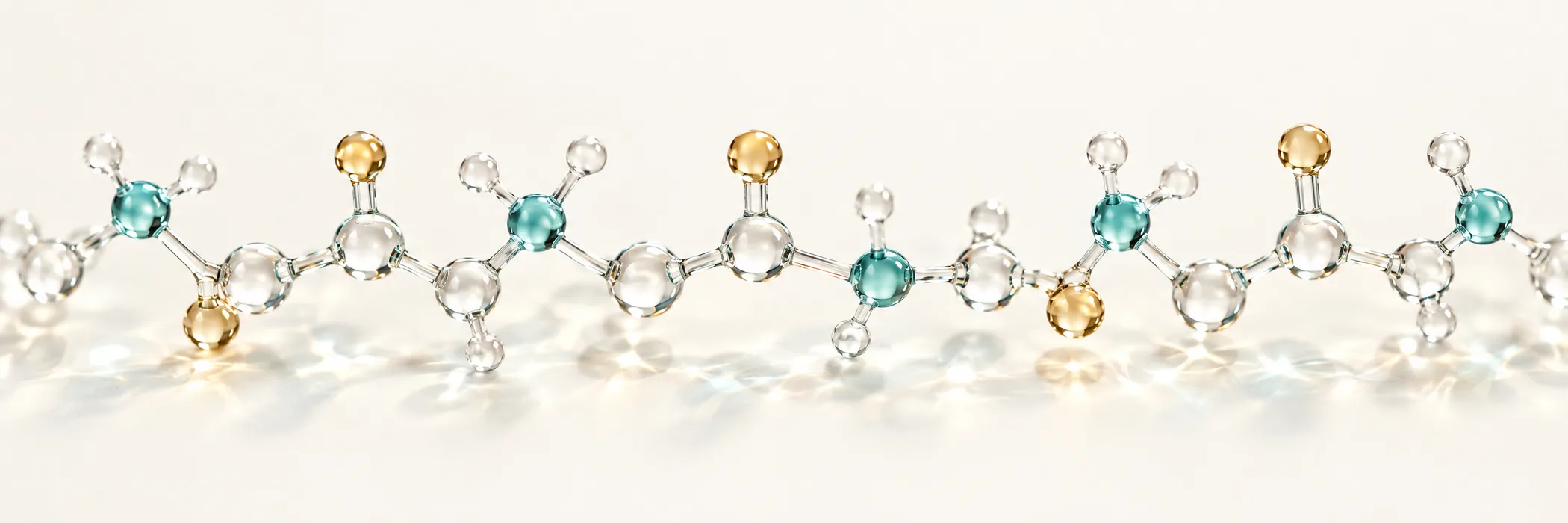
Turns on the GH switch. CJC-1295 activates the GHRH receptor on the pituitary's somatotroph cells, same as native GHRH.
Four swaps against breakdown. The no-DAC form copies GHRH's first 29 amino acids with four changes. The swap at position 2 slows clearance. In men, a version with only that swap cleared at about half the rate of GHRH(1-29).
Short pulse without DAC. With no albumin hook, the no-DAC form clears fast, so each shot gives one GH burst.
The DAC form lasts days. It binds serum albumin. In healthy men it kept the natural GH pulse rhythm while trough GH rose about 7.5-fold, mean GH 46% and IGF-1 45%.
Sources:PMID 15817669PMID 17018654PubChem CID 91971820PubChem CID 91976842PMID 7962295
How to dose it
No-DAC runs 1–3× daily, usually with a GHRP in the same shot. DAC runs weekly.
Dose tiersMost people run no-DAC at 100 mcg, 1–3× daily. The DAC form runs ~1 mg weekly.
- No-DAC form, standard dose:
- 100 mcg, 1–3× daily. Almost always paired with a GHRP, e.g. Ipamorelin 100–200 mcg, in the same syringe.
- No-DAC form, upper range:
- Up to 200 mcg per shot, 1–2× daily, the top of the range users report.
- DAC form, if that's your vial:
- ~1 mg (1,000 mcg) once weekly, up to ~2 mg. Larger study doses kept GH up ≥6 days and IGF-1 up 9–11 days.
How to injectBoth forms go into the fat under the skin. Rotate sites.
- Injection site:
- The belly (2–3 cm clear of the navel), love-handle area or outer thigh. Rotate sites to avoid lipohypertrophy, fatty lumps from repeat injections.
- Measuring the dose:
- 10 mg + 2 mL bacteriostatic water = 5,000 mcg/mL. On a U-100 syringe, 100 mcg takes 2 units, 200 mcg 4 units, the DAC form's 1 mg 20 units.
- Timing and food:
- No-DAC: bedtime is the anchor dose, empty stomach, food clear 2 hours before and after; morning and post-workout are the common second and third doses. DAC: any time.
Cycle and breaksThe usual run is 8–12 weeks, then a 4-week break.
- No-DAC form cycle:
- 5 days on, 2 days off is common, or 8–12 weeks daily then a 4-week washout, like other secretagogues.
- DAC form cycle:
- 8–12 weeks of once-weekly dosing, then a 4-week break. A few shots kept IGF-1 raised through ~4 weeks.
- Lab check:
- IGF-1 is the marker to track. Check a baseline, then again at 6–8 weeks; above the age-adjusted reference range, reduce dose or pause.
Mixing the vialThe default is 10 mg with 2 mL bacteriostatic water.
- Standard mix:
- 10 mg + 2 mL bacteriostatic water = 5,000 mcg/mL. On a U-100 syringe, 100 mcg takes 2 units.
- Alternative no-DAC mix:
- 10 mg + 3 mL bacteriostatic water (the vial's maximum) = about 3,333 mcg/mL, so 100 mcg takes 3 units, spread across more syringe units.
Sources:PMID 16352683PMID 17018654PMID 15817669PMID 42395176
Best time to take it
Implied best time
Bedtime (empty stomach)
Bedtime on an empty stomach for the no-DAC form. The weekly DAC shot can go any time.
- The largest natural GH pulse fires in early slow-wave sleep; bedtime is the anchor dose, with morning and post-workout as common secondary doses.
- A meal raises insulin and somatostatin, GH's off-switch, both of which blunt the pulse. Keep the no-DAC dose about 2 hours clear of food.
- The DAC form keeps GH elevated all week, so its once-weekly shot can go any time of day.
Sources:PMID 16352683PMID 17018654
What to stack it with


CJC-1295 supplies one of two GH-pulse signals. The best partners are a GHRP (ghrelin-receptor peptide) working the other signal, or a repair pathway.
CJC-1295 + IpamorelinThe classic GH stack. Sold pre-mixed as the CJC-1295 / Ipamorelin blend, always the no-DAC form.
- Why it works:
- Ipamorelin, a GHRP (ghrelin-receptor peptide), hits the ghrelin receptor, different from CJC-1295's GHRH receptor, firing a bigger combined pulse.
- No-DAC protocol:
- No-DAC 100 mcg + Ipamorelin 100–200 mcg in the same syringe, 1–3× daily. Bedtime is the anchor dose.
- DAC protocol:
- DAC ~1 mg once weekly + Ipamorelin 100–200 mcg 1–3× daily, injected separately. DAC holds a floor, Ipamorelin adds peaks.
- Outcome:
- Used for body composition and recovery.
CJC-1295 + BPC-157 (+ TB-500)Pairs the anabolic GH backdrop with a tissue-repair signal.
- Why it works:
- BPC-157 promotes tendon, ligament and gut-lining repair through its own pathways. TB-500 pulls repair cells to the injury while CJC-1295 supplies the anabolic backdrop.
- The protocol:
- No-DAC 100 mcg + Ipamorelin 100–200 mcg at bedtime. BPC-157 250–500 mcg daily near the injury. TB-500 on its own schedule, a higher weekly dose for 2–4 weeks then maintenance.
- Outcome:
- People run it for soft-tissue injuries, post-surgical recovery and training wear needing repair.
Skip a second GHRH analogSermorelin and Tesamorelin work the same receptor as CJC-1295, adding no synergy.
- Why it's redundant:
- Both hit the same receptor on the same pituitary cells, adding load without a GHRP's two-signal boost.
- The right choice:
- Pick one GHRH analog and pair it with a GHRP.
Support nutrients
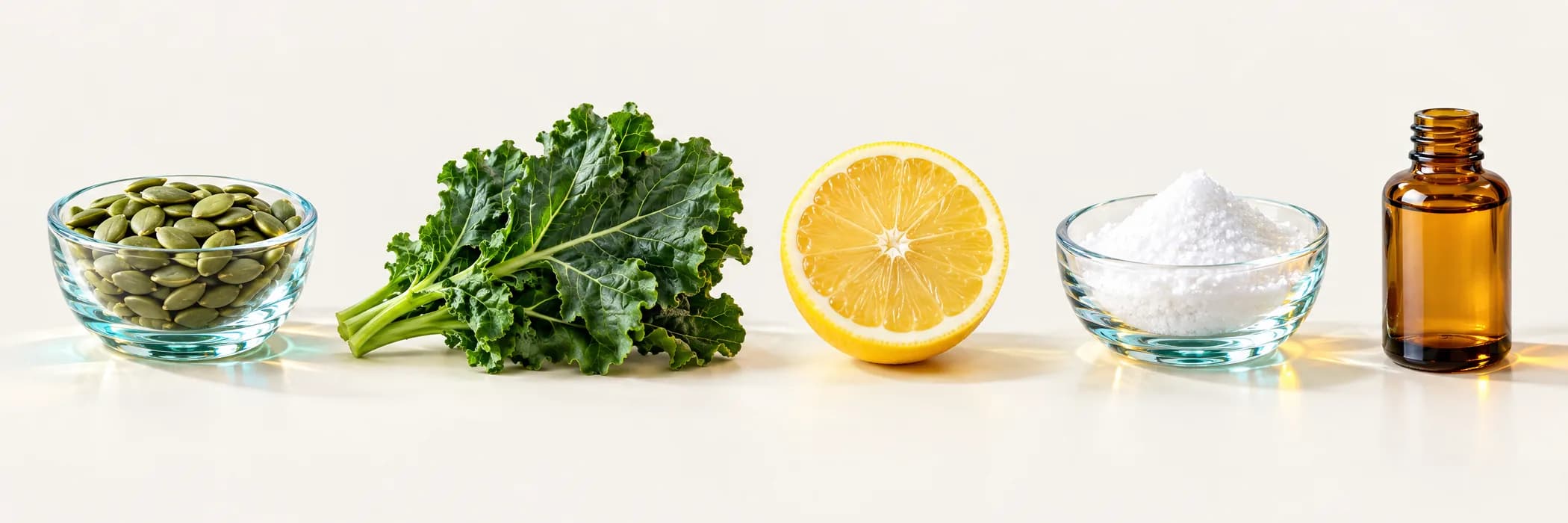
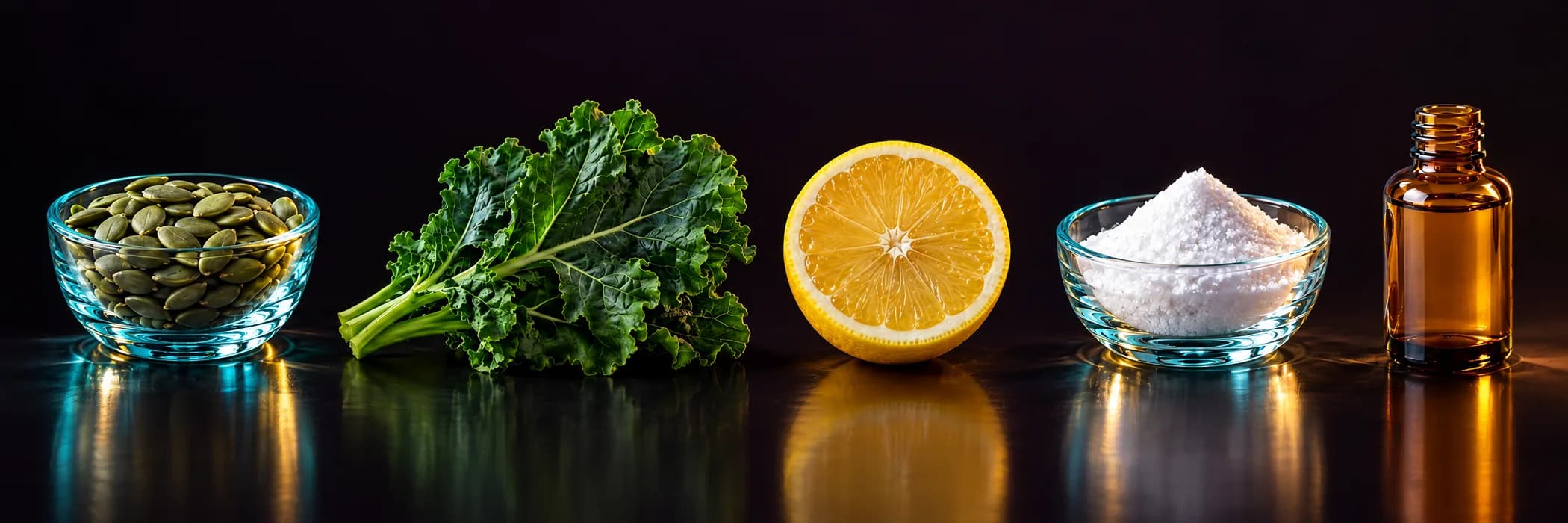
Somatostatin caps GH release. These cofactors ease that brake, offset the glucose rise, or feed the building signal.
Lower the somatostatin brakeSomatostatin blocks GH release. Lowering its tone gives CJC-1295 more room.
- L-arginine:
- 3–6 g on an empty stomach, 30–60 minutes before the injection. Lowers somatostatin, widening the window for GH output.
- Glycine:
- 3–10 g at bedtime. Lowers somatostatin and improves slow-wave sleep, protecting the GH pulse.
- Alpha-GPC:
- 300–600 mg, 30–60 minutes before the injection. Raises acetylcholine, lifting GH and lowering somatostatin.
Counter the glucose riseGH raises blood sugar. These offset that over a longer cycle.
- Berberine:
- 500 mg with meals, 2–3× daily. Activates AMPK and improves insulin sensitivity.
- Alpha-lipoic acid (ALA):
- 600 mg with a meal. Moves glucose into muscle and supports mitochondria.
- Magnesium glycinate:
- 200–400 mg elemental magnesium at bedtime. Supports insulin signaling and glucose use, and helps sleep.
Supply the building blocksGH and IGF-1 signal tissue building. Without raw material, that signal stalls.
- Dietary protein:
- 1.6–2.0 g per kg body weight a day (about 0.7–0.9 g per lb). IGF-1 drives protein synthesis; leucine-rich sources trigger it best.
- ZMA (zinc + magnesium + vitamin B6):
- ~30 mg zinc, 450 mg magnesium, 10 mg B6, on an empty stomach 30–60 minutes before bed. Low zinc is linked to lower IGF-1; B6 supports GH synthesis.
- Vitamin D3 + K2:
- Keep serum 25(OH)D at 50–80 ng/mL for IGF-1 and tissue quality. K2 (MK-7, ~100–200 mcg/day) sends calcium to bone rather than soft tissue.
Dose calculator
Reconstitution calculator
Calculated for a 1 mL U-100 insulin syringe (100 units/mL).
Units per dose
2 units
Draw this many units on a U-100 syringe
Each unit holds 50 mcg
- Volume per dose
- 0.02 mL
- Doses per vial
- 100
- Concentration
- 5 mg/mL
One vial lasts
- Daily
- 100 days
- Every other day
- 200 days
- 5×/week
- 140 days
Research use only. Not for human consumption. Outputs are reference values based on research literature. Verify all measurements independently.
Side effects and what to watch
What people notice. In early DAC-form trials, CJC-1295 was reported safe and relatively well tolerated at 30–60 µg/kg doses. Injection-site soreness is common for this class.
A 2006 Phase 2 trial in HIV-associated lipodystrophy was halted after a participant died; no link to the drug was established.
Worth knowing. GH briefly raises blood sugar and lowers insulin sensitivity, so people watch glucose on longer cycles.
Sources:PMID 16352683aidsmap 2006
Common questions
What is the difference between CJC-1295 "with DAC" and "no-DAC"?
They're different molecules sold under one name. No-DAC (Mod GRF 1-29) has four swaps, clears fast and runs daily. DAC adds an albumin-binding linker that stretches its half-life to 6–8 days, and all human research used it.
How does the DAC form last so much longer than natural GHRH?
A small linker binds serum albumin, the blood's main carrier protein. Anchored there, it resists the enzymes that break natural GHRH down in minutes, so it circulates for days. The no-DAC form has no linker and clears fast.
Does CJC-1295 disrupt the body's natural growth-hormone rhythm?
No. In a human study of the DAC form, stimulation preserved the frequency and size of natural GH pulses while raising the baseline. The no-DAC form adds a short pulse per shot.
What does CJC-1295 stack well with?
Ipamorelin is the classic pairing. CJC-1295 works the GHRH receptor and Ipamorelin the ghrelin receptor for a bigger combined pulse. Some also add BPC-157 and TB-500 for tissue repair alongside the GH boost.
What is CJC-1295's half-life?
The DAC form lasts about 5.8–8.1 days, so it runs weekly. The no-DAC form has no albumin hook and clears fast. A one-swap version cleared with a 6.7-minute half-time in men.
Deep dive
Doses used in studies · Molecular identity · References
10From the researchDoses used in studies
Every published human dose study used the long-acting DAC form. These are its doses, per kilogram of body weight.
| Dose | Route | Model | Outcome | Sources: |
|---|---|---|---|---|
| 30 or 60 µg/kg | Subcutaneous | Human (DAC; healthy, 21–61 y) | GH up 2–10× for ≥6 d; IGF-1 up 1.5–3× for 9–11 d; best-tolerated 30–60 µg/kg | PMID 16352683 |
| 60 or 90 µg/kg | Subcutaneous | Human (DAC; healthy men) | Preserved GH pulsatility; trough GH +7.5×, mean GH +46%, IGF-1 +45% | PMID 17018654 |
| Single injection | Injection | Rat (DAC; Sprague-Dawley) | Plasma detectable >72 h; ~4× GH AUC over 2 h vs hGRF(1-29) | PMID 15817669 |
11ChemistryMolecular identity
- Molecular weight
- 3,367.9 g/mol (no DAC)
- Molecular formula
- C152H252N44O42 (no DAC)
- Monoisotopic mass
- 3,365.89 Da (no DAC)
- Sequence (29 AA)
- Tyr-D-Ala-Asp-Ala-Ile-Phe-Thr-Gln-Ser-Tyr-Arg-Lys-Val-Leu-Ala-Gln-Leu-Ser-Ala-Arg-Lys-Leu-Leu-Gln-Asp-Ile-Leu-Ser-Arg-NH2PubChem CID 56841945
- CAS / UNII
- 863288-34-0 (no DAC, supplier-listed; no UNII) · 446262-90-4 · 62RC32V9N7 (with DAC)PubChem CID 56841945 (depositor) · CID 91971820; FDA GSRS
- DAC form
- CJC-1295 with DAC: C165H269N47O46, 3,647.2 g/mol (monoiso 3,645.02 Da). 30 residues, the last a lysine carrying an albumin-binding maleimidopropionamidePubChem CID 91971820; PMID 15817669
- Structure / class
- Short-acting GHRH(1-29) analog with four swaps (D-Ala2, Gln8, Ala15, Leu27) that resist breakdown, and no albumin linkerPubChem CID 56841945; PMID 42395176
- Molecular target
- GHRH receptor (GHRHR) on pituitary somatotrophsPMID 16352683
- Half-life
- No DAC: not measured in a published study (a one-swap analog, D-Ala2-GHRH(1-29), cleared with a 6.7 min half-time IV in men). With DAC: ~5.8–8.1 days (human SC)PMID 42395176; PMID 7962295; PMID 16352683Half-life curve →
- Regulatory status
- Not FDA-approved; only the DAC form reached human trials (Phase 2) · WADA S2 prohibitedFDA / research literature
12Primary sourcesReferences
- PubChem CID 91971820PubChem CID 91971820 (CJC-1295 with DAC)
- PubChem CID 91976842PubChem CID 91976842 (CJC-1295 without DAC / Mod-GRF 1-29)
- PMID 16352683J Clin Endocrinol Metab 2006 (CJC-1295 human PK/PD/safety, multi-day GH/IGF-1)
- PMID 17018654J Clin Endocrinol Metab 2006 (preserved GH pulsatility under continuous stimulation)
- PMID 15817669Endocrinology 2005 (hGRF(1-29)-albumin bioconjugate; original CJC-1295 ID, rat)
- WADAWADA Prohibited List (S2, GHRH analogues prohibited at all times)
- FDAFDA, bulk drug substances under section 503A (Category 2 history)
- aidsmap 2006aidsmap (Jul 2006). Phase 2 lipodystrophy trial halted after participant death
- PMID 16822960Am J Physiol Endocrinol Metab 2006 (daily CJC-1295 normalizes growth in GHRH-knockout mice)
- PMID 7962295Soule et al., J Clin Endocrinol Metab 1994 (D-Ala2 in GHRH(1-29) halves its clearance in men)
- PMID 2108187Bowers et al., J Clin Endocrinol Metab 1990 (GHRP and GHRH release GH synergistically in men)
- PMID 42395176Dominikowski et al., Front Endocrinol 2026 (GH-axis peptides, from clinical evidence to self-administration)
CJC-1295
10 mg vial, no DAC
Ki Researcher is affiliated with Ki Peptides.
Ships to the US only. Buyers must be 21 or older.
Reviewed by Ki Researcher Team · Research use only · Not medical advice · Updated 2026-10-19