
GHRP-6
Growth-hormone-releasing peptide · ghrelin-receptor (GHS-R1a) agonist
GHRP-6 is the original growth-hormone-releasing peptide (GHRP), six amino acids that fire your own growth hormone (GH) pulse. People run it on a bulk, where the strongest appetite surge in the GHRP family helps them eat enough. It helped discover ghrelin, the hunger hormone.
At a glance
- Dose
- 100–300 mcg per injection, 100 mcg to start
- How often
- 1–3 times a day; some split morning and bedtime
- How
- A small injection under the skin (belly, flank or outer thigh)
- When
- Bedtime on an empty stomach, about 2 hours clear of food
- Cycle
- 8–12 weeks on, then 4 weeks off
The 30-second versionEverything on this page, fast
The original GHRP · Your own GH · Appetite for a bulk · Recovery
The original GH-releasing peptide and the hungriest of the family. GHRP-6 works the ghrelin receptor to fire your own growth-hormone pulse instead of injecting GH, and it brings the strongest appetite surge of the GHRP family, which is why people reach for it on a bulk.
The basics
- A lab-made six-amino-acid peptide that tells the pituitary to release growth hormone through the ghrelin receptor (GHS-R1a), not the GHRH doorway.
- The tool compound used to discover ghrelin, the 'hunger hormone', so raising GH and driving appetite come as a package.
Why people use it
- Raises your own GH. It fires the body's natural GH pulse through the ghrelin receptor, so your own feedback and rhythm stay intact.
- A big appetite drive for eating phases. The hungriest GHRP, with a clear hunger surge ~20–30 min after a dose, used to eat enough on a weight-gain phase.
- Synergizes with a GHRH analog. It stacks with CJC-1295 or Sermorelin for a combined GH pulse bigger than either alone.
- A bulk and recovery backdrop. The GH and IGF-1 rise plus the appetite push is what people pair for weight-gain and recovery phases.
Stacks well with
- CJC-1295 is the classic GH stack. CJC works the GHRH receptor and GHRP-6 the ghrelin receptor, two angles into one bigger pulse.
- Sermorelin is the gentler GHRH partner. Same synergy, shorter-acting and easier to cycle.
Good to know
- Past ~200 mcg, extra dose also raises cortisol, ACTH and prolactin.
- The hunger surge usually settles over the first 1–2 weeks. For a cleaner GH profile with less appetite, ipamorelin or GHRP-2 are the usual swaps. Don't run two GHRPs together, since they hit the same receptor and add side effects without extra GH.
- Banned in tested sport (WADA), which matters if you compete.
What it does
The original GH-releasing peptide, and the one that helped reveal ghrelin. Here's what draws people to it.
- Raises your own growth hormoneIn 18 healthy men, its top IV dose lifted peak GH to 68.7 µg/L, against 1.2 on placebo.
- A strong appetite drive for a bulkIn rats, a single injection under the skin raised food intake for up to 7 hours.
- Three times the GH of GHRHIn 11 healthy adults, one IV dose of GHRP-6 released about three times the GH of a similar GHRH dose.
- Supports body composition and recoveryIn 5 healthy men, seven nasal doses 8 hours apart lifted IGF-1 (GH's downstream messenger) from 94.5 to 125.8 µg/L.
- The field's reference GHRPIn 1984, Cyril Bowers, Frank Momany and colleagues reported it released GH in rats, monkeys, lambs, calves and chicks.
Sources:PMID 2108187PMID 15191362PMID 7883854PMID 1915110PMID 6714155
How it works
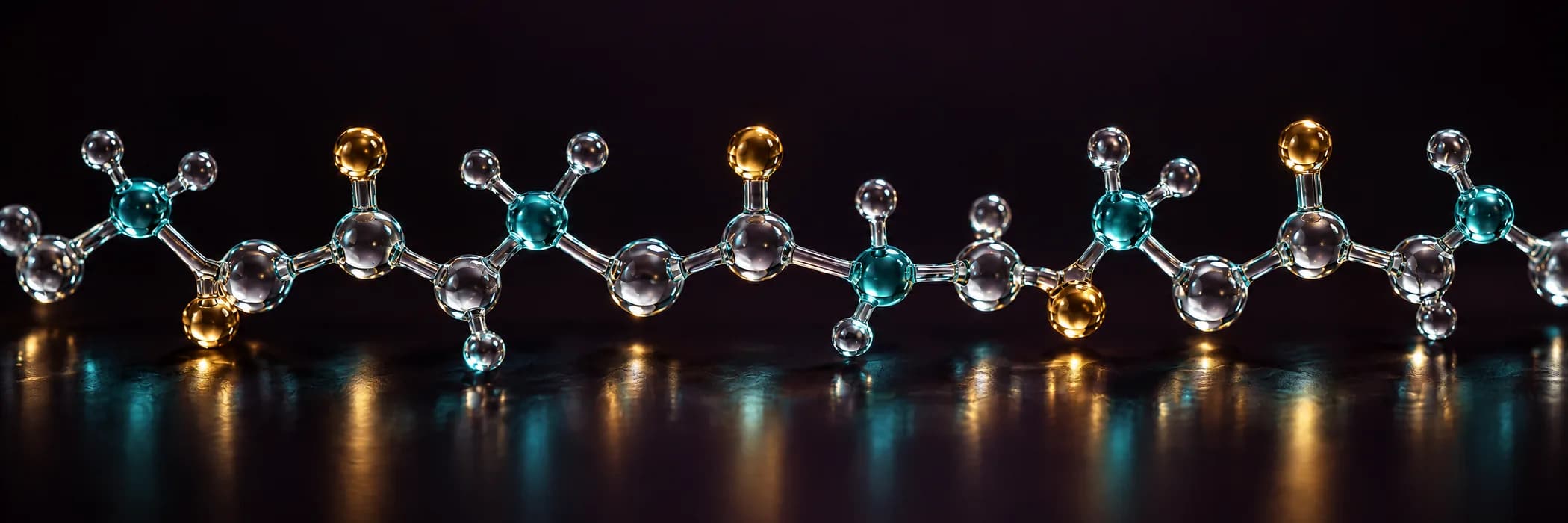
Fires your own GH pulse. GHRP-6 switches on the growth-hormone-secretagogue receptor (GHS-R1a) in the pituitary and the hypothalamus, the brain region that directs it. Researchers found this receptor with GHRP-class peptides, and it later proved to be ghrelin's.
Runs through the hypothalamus. That is the main site in the living body. In patients with the hypothalamus cut off from the pituitary, the GH response and its synergy with growth-hormone-releasing hormone (GHRH) vanished. It also needs the body's own GHRH for its biggest pulse.
Drives appetite and stress hormones. At higher doses, it also raises ACTH (adrenocorticotropic hormone, the signal for cortisol) and prolactin. In rats, dosing into the brain switched on feeding centers through neuropeptide-Y signaling.
Sources:PMID 2108187PMID 7883854JCEM 83(4):1186PMID 10336729PMID 11751604
How to dose it
A small injection under the skin, fasted, about 2 hours clear of food. Hunger surges ~20–30 minutes later.
Dose tiersMost people run 100–200 mcg per injection, 1–2× daily, up to 300 mcg on a bulk.
- Low / conservative:
- 100 mcg per injection, to gauge appetite and tolerance first.
- Standard:
- 100–200 mcg per injection, 1–2× daily. GH still rises while cortisol and prolactin stay modest.
- High (appetite / bulk phase):
- 200–300 mcg per injection, up to 3× daily. GH plateaus above ~1 µg/kg; more mostly adds cortisol, ACTH and prolactin. 300 mcg is the practical ceiling for most adults.
How to injectUnder the skin into fat, fasted. Rotate sites.
- Injection site:
- Belly (at least 2 inches from the navel), love handles or outer thigh. Rotate to prevent fatty lumps (lipohypertrophy).
- Measuring the dose:
- At 5 mg in 2 mL bacteriostatic water, 100 mcg takes 4 units on a U-100 syringe. The calculator handles any vial.
- Time of day:
- Bedtime fasted is the anchor; fasted morning or pre-workout are extras. Inject ~2 hours after a meal, then hold food at least 30–60 minutes.
- The hunger surge:
- Appetite climbs ~20–30 minutes after. On a bulk, have a protein-forward meal ready; on a cut, dose when hunger is manageable.
Cycle and breaksGH peptides run in cycles to keep the receptor responsive.
- Standard cycle:
- 8–12 weeks of daily use, then evaluate. Many run 5-days-on / 2-days-off to limit tachyphylaxis (a fading response).
- Washout:
- 4 weeks off between cycles. Check IGF-1 mid-cycle and after washout, since GH pulses unpredictably.
- Appetite note:
- Hunger usually fades within the first 1–2 weeks. For less appetite, GHRP-2 or ipamorelin run cleaner.
Mixing the vialThe on-page calculator does this live for any vial.
- Mixing:
- 5 mg vial with 2 mL bacteriostatic water makes 2,500 mcg per mL.
- Lower doses:
- At 2,500 mcg per mL on a 100-unit (1 mL) syringe, 100 mcg takes 4 units · 150 mcg takes 6 units · 200 mcg takes 8 units.
- Higher doses:
- At 2,500 mcg per mL, 250 mcg takes 10 units · 300 mcg takes 12 units.
Best time to take it
Implied best time
Bedtime (empty stomach)
Most people inject GHRP-6 at bedtime, fasted. Some add a fasted morning or pre-workout dose for a second GH pulse.
- The body's biggest natural GH pulse fires in early deep sleep. A bedtime dose stacks GHRP-6's pulse on top of it.
- Food raises insulin and somatostatin, GH's off-switch, which blunt the pulse. Keep the dose ~2 hours clear of eating and hold food 30–60 min after.
- The hunger surge hits ~20–30 minutes after a dose. If you're cutting, time the injection where that appetite is manageable.
Sources:PMID 10336729
What to stack it with


GHRP-6 + CJC-1295The classic stack, taken fasted in the morning and/or at bedtime.
- Why it works:
- CJC-1295 works the GHRH receptor, GHRP-6 the ghrelin receptor, a synergy shown in human studies. CJC-1295's long half-life holds GHRH tone between doses.
- The protocol:
- GHRP-6 100–200 mcg + CJC-1295 without DAC (the non-depot form) 100 mcg, in the same or adjacent sites. The DAC form runs 2 mg once or twice weekly, separately.
- Outcome:
- For the biggest pulse. Hunger stays; Ipamorelin is the swap without it.
GHRP-6 + SermorelinThe gentler, shorter-acting GHRH partner.
- Why it works:
- Sermorelin works the GHRH receptor and clears fast, tying the GHRH input to each injection.
- The protocol:
- GHRP-6 100–200 mcg + sermorelin 100–200 mcg, co-injected under the skin, mostly at bedtime. Both clear fast, sparing your GH rhythm.
- Outcome:
- An easier-to-cycle protocol, or a first step before a longer-acting analog.
GHRP-6 aloneSolo, using the hunger surge to eat enough.
- Why it works:
- The GHRP family's strongest appetite signal, no partner to manage.
- The protocol:
- 100–300 mcg, 1–3× daily, before meals so the hunger meets planned eating. 200–300 mcg is used when appetite, not GH, is the goal.
- Outcome:
- Not for a cut: the hunger works against a deficit.
GHRP-6 + another GHRPRedundant. Side effects stack, GH does not.
- GHRP-6 + ipamorelin / GHRP-2 / Hexarelin:
- All four hit GHS-R1a; any two double cortisol, prolactin and appetite for no extra GH. For a cleaner profile, swap GHRP-6 for Ipamorelin or GHRP-2; don't run both.
Support nutrients
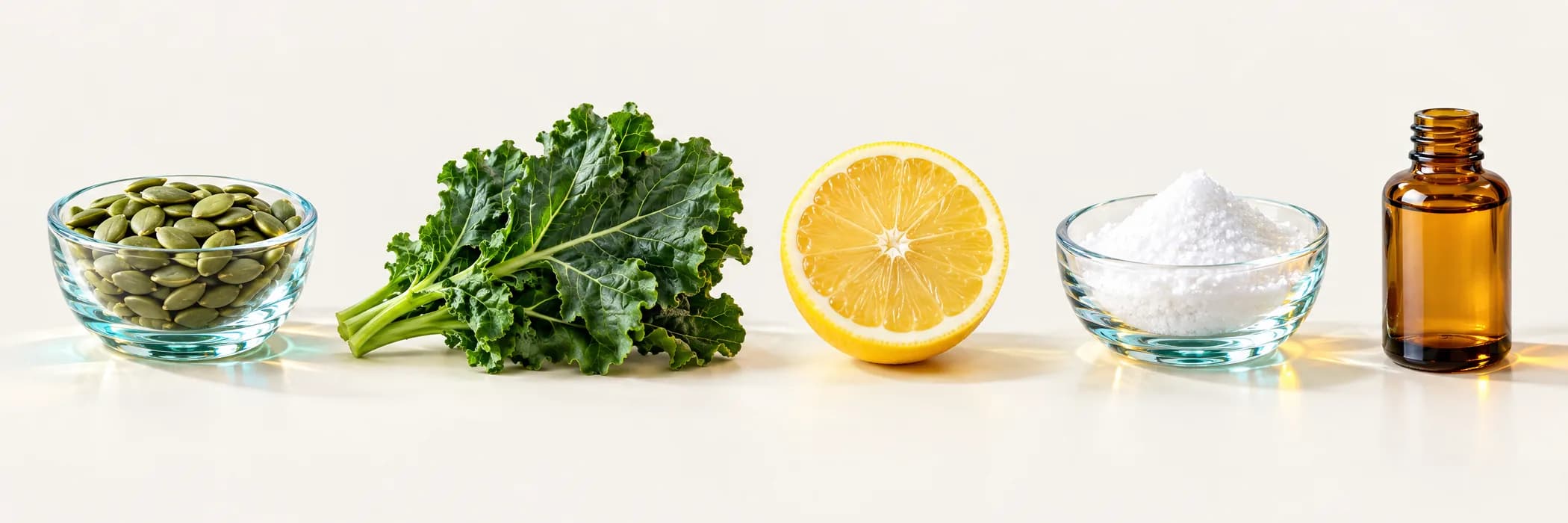
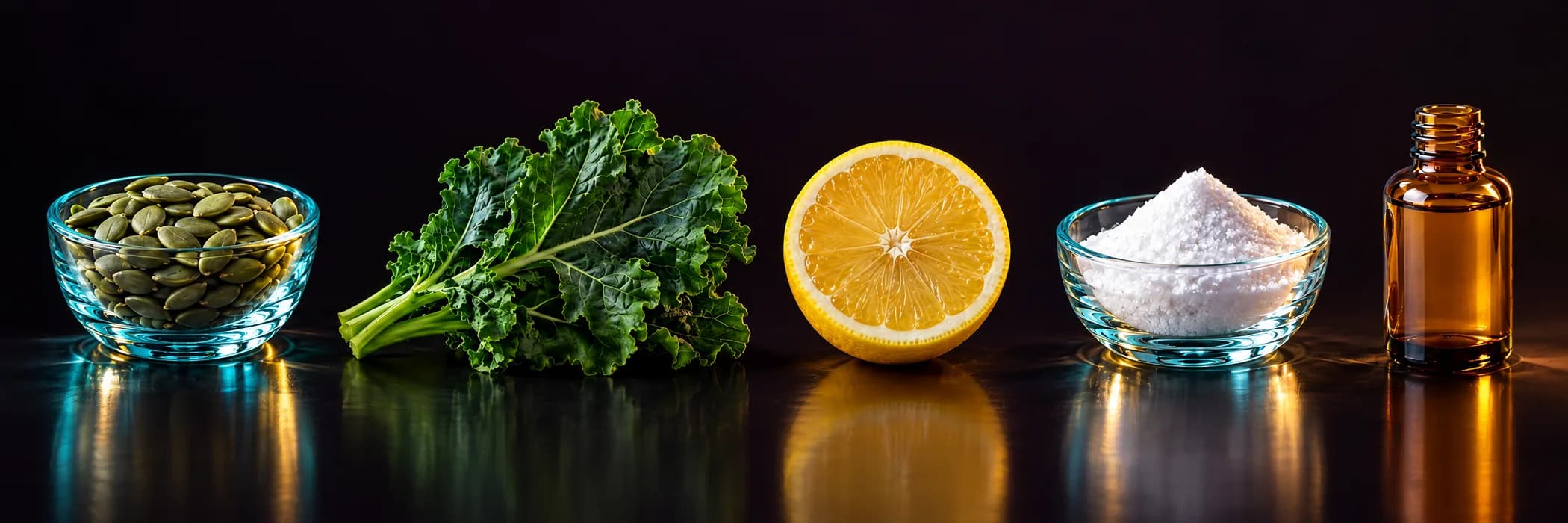
Feed a bigger GH pulseL-arginine eases somatostatin, GH's off-switch. Alpha-GPC adds a second GH-release route.
- L-arginine:
- 3–6 g, 30–60 minutes before the injection, on an empty stomach. For a higher pulse, best at bedtime or fasted AM.
- Alpha-GPC:
- 300–600 mg, 30–60 minutes before dosing. Raises acetylcholine; 600 mg is linked to the biggest pre-exercise GH boost.
Manage appetite and cortisolHunger is the main cost, then cortisol and prolactin.
- Protein-first meals:
- Have a protein-forward meal ready (30–50 g protein, low-glycemic carbs). On a cut, this hunger is why people switch to ipamorelin or GHRP-2.
- Berberine 500 mg:
- With the post-dose meal. Supports insulin sensitivity, helping keep GH's glucose drift out of fat.
- Alpha-lipoic acid (ALA) 300–600 mg:
- With the post-dose meal, especially on multiple daily doses. Supports insulin sensitivity against blood-sugar swings from repeated GH pulses.
- Keep doses moderate:
- Cortisol and prolactin climb at higher doses, ~1 µg/kg intravenous (~200 mcg under the skin). Phosphatidylserine 400 mg is a common cortisol buffer.
Give it material to build withIGF-1 builds only if the raw material is there.
- Protein 1.6–2.0 g/kg/day:
- The minimum for an anabolic goal, easy on GHRP-6's appetite. Steer calories to protein and complex carbs, favoring leucine-rich whey, eggs and meat.
- ZMA before bed:
- Zinc 30 mg, magnesium glycinate 400 mg and B6 10 mg, 30–60 minutes before the bedtime dose. Zinc helps make IGF-1; magnesium supports deep sleep.
- Vitamin D3 2,000–5,000 IU/day:
- Low vitamin D is linked to a blunted GH axis.
Dose calculator
Reconstitution calculator
Calculated for a 1 mL U-100 insulin syringe (100 units/mL).
Units per dose
4 units
Draw this many units on a U-100 syringe
Each unit holds 25 mcg
- Volume per dose
- 0.04 mL
- Doses per vial
- 50
- Concentration
- 2.5 mg/mL
One vial lasts
- Daily
- 50 days
- Every other day
- 100 days
- 5×/week
- 70 days
Research use only. Not for human consumption. Outputs are reference values based on research literature. Verify all measurements independently.
Side effects and what to watch
What people notice. Hunger, often strong, from its action on the ghrelin receptor, as animal feeding studies show. At higher doses, it also raises ACTH, cortisol and prolactin, a built-in trait of the GHRP class, not an impurity.
How people handle it. They keep doses moderate and plan a protein-forward meal for the hunger window.
Sources:PMID 10336729PMID 11751604
Common questions
Does GHRP-6 make you hungry?
Yes. It switches on the ghrelin receptor, which drives feeding in animal studies. Expect a clear hunger surge ~20–30 minutes after a dose; it usually settles within the first 1–2 weeks.
How is GHRP-6 different from GHRP-2 and ipamorelin?
All three hit the same ghrelin receptor. GHRP-2 is commonly reported as the stronger GH releaser per microgram, and ipamorelin gives a cleaner GH profile with less appetite. GHRP-6 brings the biggest appetite surge of the family.
How does GHRP-6 differ from sermorelin or CJC-1295?
Sermorelin and CJC-1295 work the GHRH receptor; GHRP-6 works the ghrelin receptor. Because the pathways are independent, pairing a GHRP with a GHRH analog releases more GH than either alone.
How is GHRP-6 dosed?
Most people run 100–200 mcg per injection, 1–2× daily, starting at 100 mcg, on an empty stomach with bedtime as the anchor. On a bulk, 200–300 mcg up to 3× daily. 300 mcg is the practical ceiling.
Do I need to cycle GHRP-6?
Most people do. A standard run is 8–12 weeks of daily use, often 5-days-on / 2-days-off, then 4 weeks off. Checking IGF-1 mid-cycle and after the break shows how you respond.
What is GHRP-6's half-life?
In a human intravenous study, the distribution half-life was about 7.6 minutes and the elimination half-life about 2.5 hours.
Deep dive
Doses used in studies · Molecular identity · References
10From the researchDoses used in studies
These are the doses used in the published studies, mostly single-dose GH tests in healthy men. Most doses are per kilogram of body weight.
| Dose | Route | Model | Outcome | Sources: |
|---|---|---|---|---|
| 0.1, 0.3, 1.0 µg/kg | IV bolus | Human (normal men) | Dose-dependent GH release; submaximal doses synergize with 1 µg/kg GHRH | PMID 2108187 |
| 90 µg (+ GHRH 100 µg). Fixed doses, not per-kg | IV | Human (hypothalamo-pituitary disconnection) | GH response and GHRH synergy abolished → hypothalamic site of action | PMID 7883854 |
| 100, 200, 400 µg/kg | IV bolus | Human (9 healthy men) | Pharmacokinetic characterization (dose-proportional AUC) | PMID 23099431 |
| 30 µg/kg intranasal; 300 µg/kg oral | Intranasal / oral | Human (normal young men) | Intranasal raised nocturnal GH; oral negligible; ACTH trended up | PMID 10336729 |
| Central (icv) | Intracerebroventricular | Rat | Induced feeding; blocked by a neuropeptide-Y (Y1) receptor antagonist | PMID 11751604 |
11ChemistryMolecular identity
- Molecular weight
- 873.0 g/mol
- Molecular formula
- C46H56N12O6
- Monoisotopic mass
- 872.44 Da
- Sequence (6 AA)
- His-D-Trp-Ala-Trp-D-Phe-Lys-NH₂Bowers et al. (PMID 2108187)
- Structure / class
- Synthetic GHRP-class hexapeptide (GHS-R1a agonist)PMID 2108187
- CAS number
- 87616-84-0Widely cited (not registry-verified)
- Molecular target
- GHS-R1a (ghrelin receptor); hypothalamus + pituitaryPMID 2108187
- Half-life
- ~7.6 min dist · ~2.5 h elim (human IV)PMID 23099431Half-life curve →
- Regulatory status
- Not approved any country (research chemical) · WADA S2 prohibitedResearch literature / WADA
12Primary sourcesReferences
- PubChem CID 4345065PubChem, GHRP-6 (CID 4345065)
- PMID 2108187Bowers et al. 1990. GHRP-6 GH release and GHRH synergy in normal men (JCEM)
- PMID 23099431Cabrales et al. 2013. Human IV pharmacokinetics of GHRP-6 (Eur J Pharm Sci)
- PMID 10336729Frieboes et al. 1999. Nocturnal GH/ACTH, route comparison (J Neuroendocrinol)
- PMID 7883854Popovic et al. 1995. GHRP-6 GH secretion abolished in hypothalamo-pituitary disconnection (JCEM 80(3))
- JCEM 83(4):1186GHRP-6 requires endogenous hypothalamic GHRH for maximal GH stimulation (JCEM 1998)
- PMID 11751604Lawrence et al. 2002. Central ghrelin/GHRP-6 induce feeding via NPY (rat, Endocrinology)
- PMID 11739476Wren et al. 2001. Ghrelin increases food intake in humans (+28%) (JCEM)
- WADA Prohibited List S2WADA Prohibited List, S2 Peptide Hormones / GH secretagogues (GHRP-6 named)
- PMID 15191362Tung et al. 2004. GHRP-6 under the skin raises food intake and fat in rats, glucocorticoid-dependent (Eur J Endocrinol)
- PMID 1915110Hayashi et al. 1991. Intranasal GHRP-6 raises GH and IGF-1 in normal men (Endocrinol Jpn)
- PMID 6714155Bowers et al. 1984. A new synthetic hexapeptide that specifically releases GH in vitro and in vivo (Endocrinology)
Reviewed by Ki Researcher Team · Research use only · Not medical advice · Updated 2026-10-19