
Sermorelin
Growth-hormone-releasing hormone analog · GRF(1-29)NH₂
Sermorelin, the active 29-amino-acid piece of growth-hormone-releasing hormone (GHRH), triggers growth hormone (GH) release. People run it for body composition, recovery and sleep. Adequate nightly dosing raised GH and insulin-like growth factor 1 (IGF-1) within two weeks in older adults.
At a glance
- Dose
- 200–500 mcg a night; start at 200–300 mcg
- How often
- Once a day, at night
- How
- A small injection under the skin; rotate sites
- When
- Bedtime on an empty stomach, 2 hours clear of carbs or fat
- Cycle
- 8–12 weeks on, then a 4–8 week break
The 30-second versionEverything on this page, fast
Your own GH · Body composition · Sleep and recovery · Human-tested
Sermorelin raises your own growth hormone instead of injecting it, so the natural pulse and feedback stay intact. Adequate nightly dosing lifted GH and IGF-1 within two weeks in older adults, which is why people run it for body composition, recovery and sleep.
The basics
- A copy of the active 1–29 fragment of GHRH, the signal your brain sends the pituitary to release growth hormone.
- A secretagogue, not growth hormone itself. It prompts your own GH instead of supplying it, so the body's normal feedback still applies.
Why people use it
- Raises your own GH instead of replacing it. The pituitary releases it, so the natural pulse and feedback control stay.
- A gentle, short pulse. Its very short action gives a brief pulse rather than a sustained flood, often preferred by older or newer users.
- Supports IGF-1 and body composition. Adequate nightly dosing in older adults raised overnight GH and IGF-1 within two weeks. IGF-1 is the growth factor GH works through.
- A documented human track record. Studies tested it in children with GH deficiency and in healthy older adults.
Stacks well with
- Ipamorelin, the cleanest GH pairing. Sermorelin works the GHRH receptor and ipamorelin the ghrelin receptor, so the combined pulse beats either alone.
- BPC-157 for soft-tissue injury recovery. Sermorelin lifts systemic GH and IGF-1 while BPC-157 drives local healing.
Good to know
- Empty stomach is the lever. Food raises insulin and free fatty acids, which switch on somatostatin, the GH off-switch, and blunt the pulse.
- Banned in tested sport (WADA), which matters if you compete.
- The IGF-1 response varies. Nightly dosing raised it in most studies; one using a single 2 mg nightly dose in older men did not. Some run 5 days on, 2 days off to keep somatostatin tone down.
What it does
Here is what draws people to it.
- Raises your own growth hormoneIn 10 men around 68, two weeks of the higher twice-daily dose lifted GH and IGF-1 to young men's levels.
- A milder, more natural GH pulseIn older adults on a close sermorelin analog, each nightly shot triggered a 2-hour GH burst within 10 minutes.
- Supports IGF-1 and body compositionIn a 6-month trial in older adults, nightly shots raised IGF-1 about 35%, added lean mass and trimmed belly fat.
- A documented human track recordIn 86 GH-deficient children, bedtime shots nearly doubled growth speed in 6 months, from 4.1 to 8.0 cm a year.
- Stronger upper body in older menIn 11 men aged 64–76, six weeks of nightly shots improved upright-row and shoulder-press strength and crunch endurance.
Sources:PMID 1379256PMID 9141536PMID 18488883PMID 8772599PMID 9005976
How it works
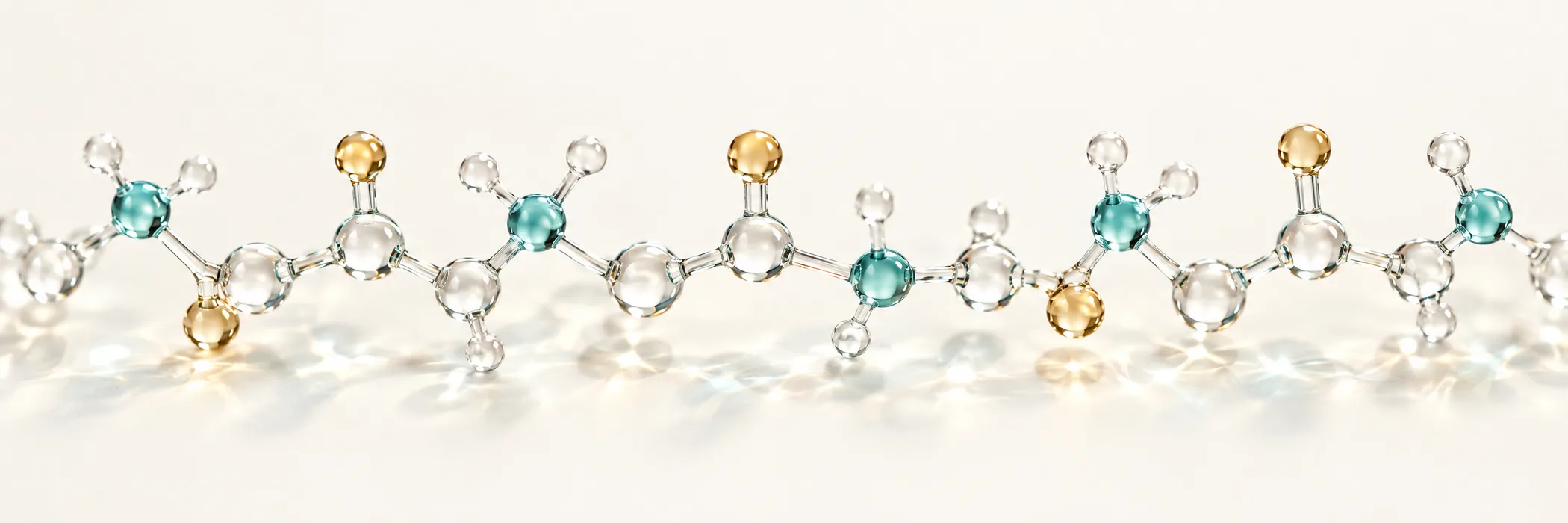
Switches on the GH trigger. Sermorelin binds the GHRH receptor on the pituitary's growth-hormone-making cells, which release your own GH in bursts. It is the first 29 of the natural hormone's 44 building blocks, with full GH-releasing activity.
Keeps the body's brakes on. Normal feedback still gates the output. The Geref label lists raised somatostatin (GH's off-switch), untreated underactive thyroid, obesity, high blood sugar and high free fatty acids as blunting the response.
Raises IGF-1. GH drives the liver to make insulin-like growth factor 1 (IGF-1), which carries much of GH's effect. In older adults, nightly dosing raised overnight GH, IGF-1 and its carrier IGFBP-3 within two weeks. Another study's single 2 mg nightly dose raised GH but not IGF-1.
Sources:GEREF SPC (HPRA)PMID 18031173PMID 9141536PMID 9005976
How to dose it
Most people inject it under the skin at bedtime, on an empty stomach.
Dose tiersMost people run 200–500 mcg nightly. The older-adult studies used higher doses.
- Low / introductory:
- 200–300 mcg once daily at bedtime, where younger adults start to gauge tolerance and sleep response. The Vittone 1997 study used 2 mg nightly in elderly men.
- Standard:
- 300–500 mcg once daily at bedtime, the most common range.
- Upper range (less common):
- Some go up to ~500 mcg. Past that, a saturated receptor adds no proportional GH gain, and continuous dosing raises somatostatin tone over time.
How to injectSite, timing and the food window shape the GH response.
- Injection site:
- Lower belly (2 inches / ~5 cm clear of the navel), love handles or outer thigh. Rotate sites to prevent irritation and fatty lumps.
- Timing:
- Bedtime, fully fasted, at least 2 hours after carbs or fat. The biggest GH surge comes ~60–90 min into sleep; the older-adult studies dosed at ~21:00.
- Measuring the dose:
- At 5 mg + 2 mL on a U-100 insulin syringe, 200 mcg takes 8 units and 500 mcg takes 20 units. The on-page calculator does other mixes.
- Food window:
- No carbs or fat for ~2 hours before injecting. Protein-only or fasted is fine, as are water and unflavored electrolytes.
Cycle and breaksCycles keep somatostatin tone from dulling the response.
- Standard cycle:
- 8–12 weeks of nightly dosing, then reassess IGF-1 and body composition. The older-adult study ran 16 weeks.
- Washout:
- 4–8 week break between cycles. Check fasting IGF-1 during it, aiming for mid-normal for age. Somatostatin tone normalizes within a few weeks off.
- Pulsatile option:
- Some run 5 days on, 2 days off instead of daily. Two unblocked days per week aim to lower somatostatin tone and keep receptor sensitivity.
Mixing the vialQuick reference for a 5 mg vial and a U-100 (100-unit, 1 mL) insulin syringe.
- Mixing:
- 5 mg + 2 mL bacteriostatic water: 2,500 mcg/mL. 250 mcg takes 10 units, 300 mcg takes 12 units, 400 mcg takes 16 units, 500 mcg takes 20 units.
Best time to take it
Implied best time
Bedtime (empty stomach)
Most people inject it at bedtime on an empty stomach, lining up with the body's largest natural GH surge.
- The largest natural GH pulse fires in early deep sleep, about 60–90 min after falling asleep. The older-adult studies dosed around 21:00 for this reason.
- Carbs raise insulin and fat raises free fatty acids. Both switch on somatostatin, GH's off-switch, and blunt the response. Allow about 2 hours after eating.
- Its action is very short (~6–7 min half-life when given into a vein). Keeping a consistent nightly time matters more than the exact hour.
Sources:GEREF SPC (HPRA)PMID 9141536
What to stack it with


Sermorelin is the GHRH arm. A GHRP works a different receptor for a bigger pulse. Another GHRH analog (CJC-1295, Tesamorelin) is redundant.
Sermorelin + IpamorelinThe cleanest GH stack, GHRH arm plus selective GHRP arm.
- Why it works:
- Ipamorelin works the ghrelin receptor, so the pulse beats either alone. At standard doses it barely raises cortisol or prolactin.
- The protocol:
- Sermorelin 200–300 mcg + ipamorelin 200–300 mcg in one syringe, once daily at bedtime, ~2 hours fasted. Some run ipamorelin twice daily (morning + bedtime).
- Outcome:
- The most common sermorelin stack, for body composition, sleep and recovery.
Sermorelin + GHRP-2A stronger pulse than ipamorelin, with more cortisol and appetite.
- Why it works:
- GHRP-2, a potent ghrelin-receptor peptide, gives a bigger pulse than ipamorelin but meaningfully raises cortisol and prolactin at standard doses.
- The protocol:
- Sermorelin 200–300 mcg + GHRP-2 100–200 mcg co-injected once daily at bedtime, fasted. Most keep GHRP-2 at 100 mcg to limit cortisol and appetite.
- Outcome:
- Picked over ipamorelin only when maximal GH matters, as in injury recovery. Second choice for general wellness or long cycles.
Sermorelin + BPC-157Adds a direct tissue-repair signal to the GH pulse.
- Why it works:
- BPC-157 promotes new blood vessel growth and repair in tendons, ligaments and gut through a non-GH pathway. Sermorelin adds systemic GH and IGF-1.
- The protocol:
- Sermorelin 200–300 mcg at bedtime + BPC-157 250–500 mcg once daily, often morning or around training. Given at separate times, not co-injected.
- Outcome:
- For soft-tissue injury and post-surgical recovery.
Sources:GEREF SPC (HPRA)PMID 9141536
Support nutrients
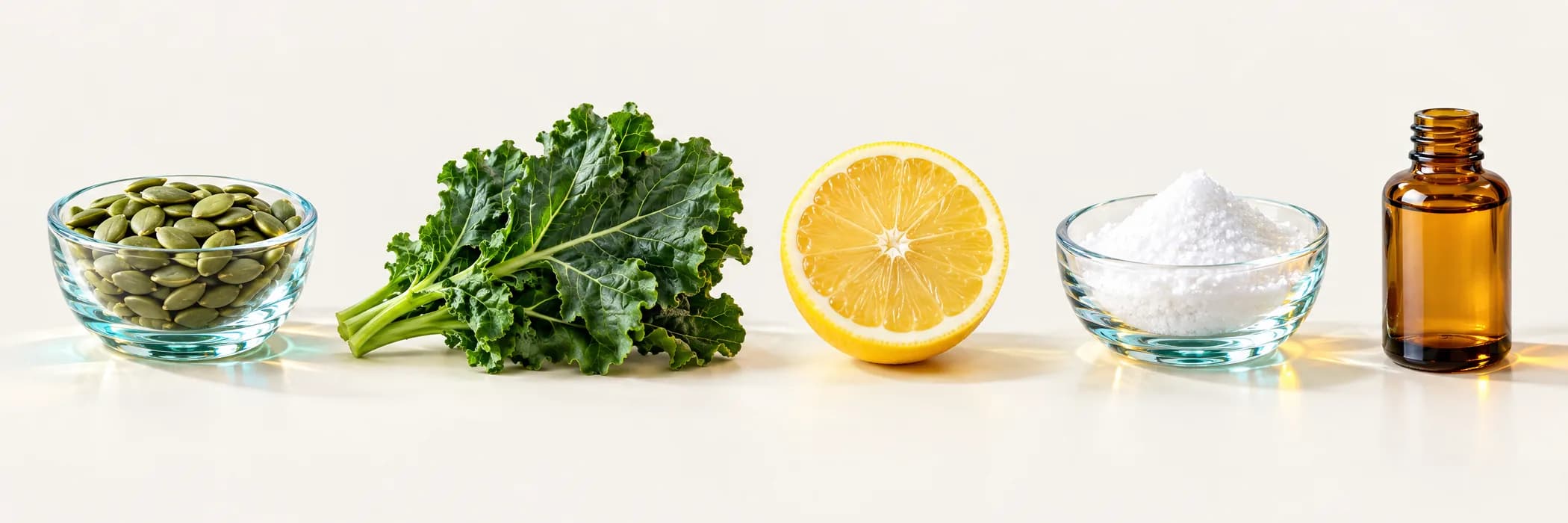
These ease the pulse's brakes and feed what GH builds.
Ease the somatostatin brakeSomatostatin is GH's off-switch. People take these to lower it.
- L-arginine:
- 3–6 g ~30 min before injecting, taken to lower somatostatin. Citrulline malate (3–6 g) is gentler on the gut.
- Glycine:
- 3–10 g before bed. Mildly raises GH and promotes deep sleep, where the nightly GH surge lands.
- Alpha-GPC:
- 300–600 mg ~30 min before injecting. Acutely raises GH by damping somatostatin. 600 mg is better studied; 300 mg is a good start.
Keep blood sugar steadyGH can raise fasting glucose and insulin.
- Berberine:
- 500 mg twice daily with meals. Improves insulin sensitivity and fasting glucose, best on cycles over 8 weeks or with borderline glucose.
- Alpha-lipoic acid (ALA):
- 600 mg daily with the largest meal. Improves insulin sensitivity by a different route than berberine.
- Magnesium glycinate or threonate:
- 300–400 mg elemental magnesium before bed, for insulin sensitivity and deep sleep. Threonate if sleep is the goal.
Feed what GH buildsIGF-1 builds tissue from protein.
- Protein intake:
- 1.6–2.0 g per kg per day (~0.7–0.9 g per pound). Build meals around ≥2.5–3 g leucine (roughly 30–40 g quality protein per meal).
- ZMA (zinc + magnesium + B6):
- Zinc 30 mg, magnesium 450 mg, B6 10.5 mg, 30–60 min before the bedtime dose, fasted. Low zinc tends to blunt IGF-1. Pick this or the magnesium above.
- Vitamin D3:
- 2,000–5,000 IU daily, dosed to a 25-hydroxyvitamin D (25(OH)D) of 40–60 ng/mL. Deficiency blunts many pathways the pulse feeds.
Sources:GEREF SPC (HPRA)PMID 18031173
Dose calculator
Reconstitution calculator
Calculated for a 1 mL U-100 insulin syringe (100 units/mL).
Units per dose
12 units
Draw this many units on a U-100 syringe
Each unit holds 25 mcg
- Volume per dose
- 0.12 mL
- Doses per vial
- 16
- Concentration
- 2.5 mg/mL
One vial lasts
- Daily
- 16 days
- Every other day
- 33 days
- 5×/week
- 23 days
Research use only. Not for human consumption. Outputs are reference values based on research literature. Verify all measurements independently.
Side effects and what to watch
What people notice. Generally well tolerated in children and in diagnostic testing. The most common reaction is injection-site pain, swelling or redness, in about one in six patients in one monograph. Occasional facial flushing or warmth fades within minutes. Dizziness, hyperactivity, drowsiness and hives are rarer. Nightly dosing under the skin in older adults briefly raised blood fats.
With intravenous use. Diagnostic dosing into a vein adds taste changes, headache, nausea, vomiting, paleness and chest tightness.
Skip it or take care if. The label says to skip it with an allergy to sermorelin or its inactive ingredients, and in pregnancy or breastfeeding. In animal studies it was well tolerated up to 100× the recommended human dose.
Sources:RxList (secondary)GEREF SPC (HPRA)PMID 18031173PMID 9141536
Common questions
How is sermorelin dosed?
Most people run 200–500 mcg as one injection under the skin at bedtime, on an empty stomach. The starting range is 200–300 mcg and the standard range 300–500 mcg.
Do I need to cycle sermorelin?
Most people do. A standard run is 8–12 weeks of nightly dosing, then a 4–8 week break. Some run 5 days on, 2 days off to keep somatostatin tone down.
How is sermorelin different from HGH?
HGH (somatropin) is growth hormone given directly. Sermorelin prompts your own pituitary to release it, so the body's normal feedback stays in control.
What is sermorelin's half-life?
Very short, about 6–7 minutes after an intravenous dose per the label (some monographs cite 11–12 minutes). The GH response peaks around 30 minutes and lasts two to three hours.
Does sermorelin raise IGF-1?
Yes, in most studies. Nightly dosing under the skin raised IGF-1 within two weeks in older adults. A single 2 mg nightly dose in older men did not produce a significant rise.
What does sermorelin stack with?
Ipamorelin is the classic partner for a bigger combined pulse. GHRP-2 pushes GH harder, BPC-157 adds local repair for injuries. CJC-1295 and Tesamorelin work the same receptor, so pairing them is redundant.
Deep dive
Doses used in studies · Molecular identity · References
10From the researchDoses used in studies
These are the doses from the published studies, which covered pituitary-function testing, children with GH deficiency and short studies in older adults.
| Dose | Route | Model | Outcome | Sources: |
|---|---|---|---|---|
| 1.0 µg/kg (single) | IV | Human (pituitary-function test) | Provokes GH peak ~30 min; diagnostic test for GH deficiency | GEREF SPC (HPRA) |
| 1 µg/kg + arginine | IV | Human (suspected GHD) | GHRH+arginine test more specific than GHRH alone | PMID 18031173 |
| 30 µg/kg nightly | SC | Children (idiopathic GHD) | Sustained increase in height velocity over 12 months and catch-up growth in the majority. The review states the recommended once-daily regimen has NOT been directly compared with somatropin; the arms that underperformed somatropin were continuous infusion and 3-divided-dose regimens, not this nightly one | PMID 18031173 |
| GRF(1-29) twice daily | SC | Children (n=18, GH-deficient) | 12/18 increased height velocity over 6–18 mo | PMID 2879138 |
| Continuous infusion, 6 mo | SC | Children (n=6, partial GHD) | Mixed: growth response in 3/6; GH output declined over 6 mo | PMID 8329829 |
| 10 µg/kg nightly (21:00), 16 wk | SC | Healthy older adults (n=19, 55–71), [Nle²⁷] analog | ↑ nocturnal GH, ↑ IGF-1 & IGFBP-3 by 2 wk; sex-dependent lean-mass / libido changes; transient hyperlipidemia | PMID 9141536 |
| 2 mg nightly, 6 wk | SC | Healthy elderly men (n=11, 64–76) | ↑ nocturnal GH; no significant IGF-1 change; single nightly dose less effective than multiple daily | PMID 9005976 |
11ChemistryMolecular identity
- Molecular weight
- 3,357.9 g/mol
- Molecular formula
- C149H246N44O42S
- Monoisotopic mass
- 3,355.82 Da
- CAS / UNII
- 86168-78-7 · 89243S03TE
- Sequence (29 AA)
- YADAIFTNSYRKVLGQLSARKLLQDIMSR-NH₂PubChem CID 16132413
- Structure / class
- Synthetic GHRH(1-29) amide (GRF 1-29 NH₂)GEREF SPC
- Molecular target
- GHRH receptor (GHRHR) on pituitary somatotrophsPMID 18031173
- Regulatory status
- Formerly FDA-approved (Geref); now compounded-only · WADA S2.2.4 prohibitedFDA / research literature
12Primary sourcesReferences
- PubChem CID 16132413PubChem, Sermorelin (CID 16132413)
- GEREF SPC (HPRA)GEREF 50 Summary of Product Characteristics (Serono, HPRA)
- Fed. Reg. 2013-04827FDA Federal Register, 4 Mar 2013. GEREF not withdrawn for safety/effectiveness
- PMID 18031173Prakash & Goa 1999. Sermorelin: review of use in childhood GH deficiency
- PMID 2879138Ross et al. 1987. GHRH treatment of GH deficiency (Lancet)
- PMID 9141536Khorram, Laughlin & Yen 1997. Long-term [Nle27]GHRH(1-29) in age-advanced adults
- PMID 9005976Vittone et al. 1997. Single nightly GHRH(1-29) in healthy elderly men
- PMID 8329829Tauber et al. 1993. Continuous SC GHRH(1-29) in partial GHD
- WADA Prohibited List S2.2.4WADA Prohibited List, S2.2.4 Growth Hormone-Releasing Factors
- RxList (secondary)RxList monograph, Sermorelin acetate (label-derived PK)
- PMID 1379256Corpas et al. 1992. Twice-daily GHRH(1-29) restores GH and IGF-1 in old men
- PMID 18488883Hersch & Merriam 2008. GHRH and GH secretagogues in normal aging (review)
- PMID 8772599Thorner et al. 1996. Once-daily GHRH(1-29) in GH-deficient children
Reviewed by Ki Researcher Team · Research use only · Not medical advice · Updated 2026-10-19