
Tesamorelin
Stabilized GHRH analog · FDA-approved for HIV-associated visceral fat
Tesamorelin is an FDA-approved growth-hormone-releasing hormone (GHRH) analog that makes the pituitary release its own growth hormone (GH). People run it to cut deep belly fat and recompose. In its pivotal trial, visceral fat fell about 15% and IGF-1 rose about 80% over 26 weeks.
Buy Tesamorelin5 mg or 10 mg vial
Ki Researcher is affiliated with Ki Peptides.
Ships to the US only. Buyers must be 21 or older.
At a glance
- Dose
- 2 mg a day; some start at 1 mg
- How often
- Once daily
- How
- A small injection under the skin
- When
- Bedtime, about 2–3 hours after your last meal
- Cycle
- 8–16 weeks on, then 4–8 weeks off
The 30-second versionEverything on this page, fast
Visceral Fat · GHRH Analog · Growth Hormone · Body Recomposition
The one FDA-approved growth-hormone peptide in this catalog. In its pivotal trial, Tesamorelin cut deep visceral belly fat about 15% and raised IGF-1 around 80% over 26 weeks, by getting the pituitary to release its own GH in its natural rhythm.
The basics
- A stabilized GHRH analog. It signals your pituitary to make and release your own growth hormone, which raises IGF-1 and selectively trims visceral fat.
- FDA-approved as Egrifta (and Egrifta SV / WR) for reducing excess abdominal fat in HIV-associated lipodystrophy.
Why people use it
- Targets deep visceral belly fat. About 15% reduction in the metabolically active fat around your organs over 26 weeks, not just fat under the skin.
- Raises your own GH instead of injecting it. It keeps the body's natural pulses and feedback intact, then lifts IGF-1 about 80%.
- Backed by human trials. FDA-approved with two pivotal Phase III trials, so the numbers come from people.
- Supports body recomposition. Less visceral fat plus higher IGF-1 is why people run it off-label, for fat loss with lean-tissue support.
Stacks well with
- Ipamorelin, the classic pairing. It adds the ghrelin-receptor arm to Tesamorelin's GHRH arm, for a bigger combined pulse.
- GHK-Cu, a tissue-repair layer for recomposition. Tesamorelin handles the metabolic side while GHK-Cu drives collagen and skin or connective-tissue remodeling.
Good to know
- The benefit holds while you run it. Visceral fat returns toward baseline about 3 months after you stop.
- Watch your blood sugar. GH briefly raises glucose, and about 5% reached an HbA1c of 6.5% or higher versus 1% on placebo. Check fasting glucose and HbA1c before starting and at 8 weeks. Berberine and alpha-lipoic acid help cushion it.
- Fasted bedtime timing is the whole game. Don't add another GHRH analog like sermorelin or CJC-1295. It hits the same receptor and adds no pulse.
- Common side effects are joint pain and reactions where you inject. The reactions hit about 25% versus 14% on placebo. Banned in sport (WADA) at all times.
What it does
An FDA-approved growth-hormone peptide with human trial numbers behind it.
- Cuts deep visceral belly fatIn 412 adults with HIV, CT scans showed visceral fat fell 15.2% over 26 weeks and rose 5.0% on placebo.
- Lifts your own GHIn 13 healthy men, 2 weeks of shots raised overnight GH from 0.7 to 1.2 µg/L, in bigger pulses.
- Backed by human trialsIn two Phase III trials of 806 adults with HIV, a year on it kept visceral fat down 17.5%.
- Targets deep fat, not skin fatIn 404 adults with HIV, visceral fat fell 10.9% in 6 months, while fat under the skin held steady.
- Supports body recompositionIn two 26-week trials in adults with HIV, lean mass rose 1.2–1.3 kg and trunk fat fell 0.8–1.0 kg.
- Trims liver fat tooIn 61 adults with HIV and fatty liver, a year on it cut liver fat 37% versus placebo.
Sources:PMID 18057338PMID 20943777PMID 20554713PMID 20101189FDA labelPMID 31611038
How it works
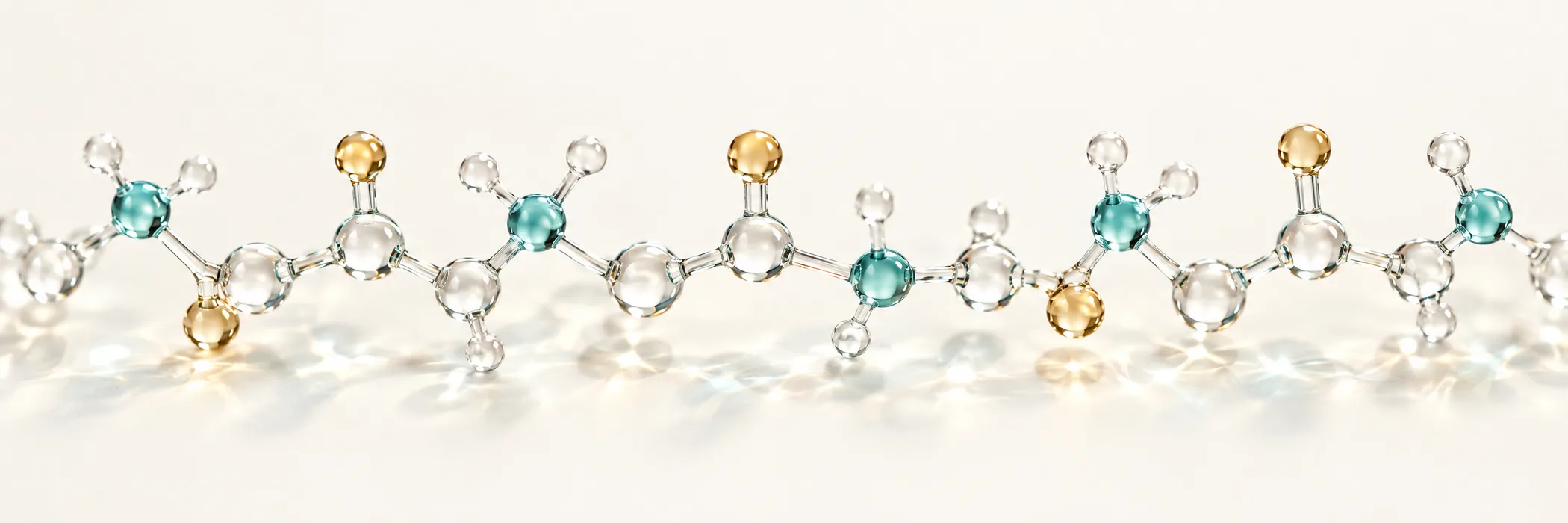
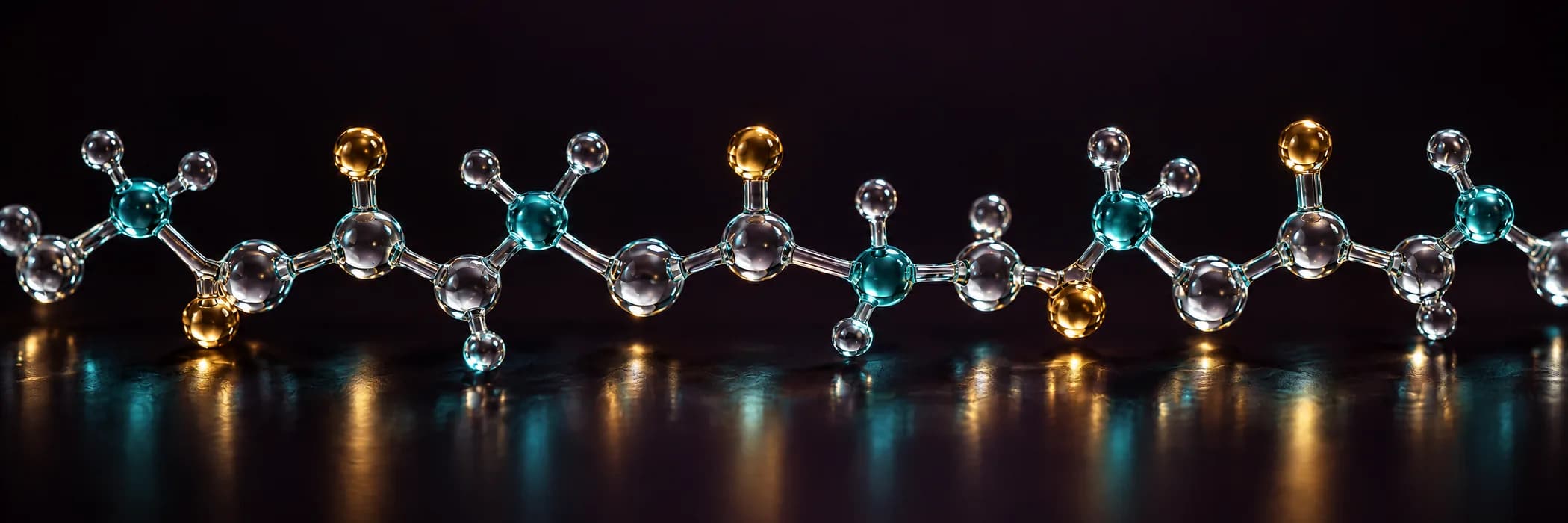
Turns on the body's own GH. Tesamorelin binds the GHRH receptor on the pituitary cells that make growth hormone, switching on both its production and its natural pulsatile release. That GH then raises insulin-like growth factor 1 (IGF-1), the messenger behind many of its effects, and selectively shrinks visceral fat, the deep fat packed around the organs.
Built to last. It's the 44-amino-acid sequence of human GHRH carrying a small fatty tag on one end that protects it from fast enzymatic breakdown. Because it raises the body's own GH rather than replacing it, natural feedback and rhythm stay intact.
How to dose it
One small injection under the skin (SC) at bedtime. The core dose is FDA-approved.
Dose tiersThe standard is 2 mg once a day; some start at 1 mg.
- Approved / trial dose:
- 2 mg once daily SC, the trial dose. Visceral fat fell 15%, IGF-1 rose 81% over 26 weeks.
- Current formulations:
- Egrifta SV (1.4 mg/day) and WR (1.28 mg/day) are the 2 mg/day dose reformulated, not less. Off-label, people mirror the original 2 mg or SV's 1.4 mg.
- Conservative off-label start:
- 1 mg once daily to check tolerance first.
How to injectBedtime and an empty stomach matter most.
- Time of day:
- Inject at bedtime, about 2–3 hours after the last meal. Food raises insulin and somatostatin, which blunt the GH pulse.
- Food window:
- Skip food for 2–3 hours before the shot. Eating afterwards is fine: the ~8-minute half-life means the signal is done.
- Injection site:
- Rotate the belly (2–3 cm from the navel), love handles and outer thigh.
- Measuring the dose:
- Draw it on a U-100 syringe. At the standard 10 mg + 2 mL mix, 1,400 mcg takes 28 units, 2,000 mcg takes 40 units.
Cycle and breaksOff-label cycles run 8–16 weeks, then 4–8 weeks off.
- Standard cycle:
- 8–16 weeks of daily use. Phase III measured the visceral-fat drop at 26 weeks; off-label cycles run about 12 weeks, then reassess.
- Washout:
- 4–8 weeks off. Check IGF-1 and fasting glucose during the break. Both should normalize. If IGF-1 stays high, extend it.
- Why it isn't permanent:
- Fat returns about 3 months after stopping in the trial extension, so the approved use is continuous. Off-label cycles accept that and re-run as needed.
- Monitor:
- Fasting glucose and HbA1c before starting and at 8 weeks (label: HbA1c reached 6.5% in 5% vs 1% on placebo). IGF-1 at baseline and midpoint; lower the dose if high.
Mixing the vialThe calculator defaults to 10 mg with 2 mL bacteriostatic water.
- Mixing:
- 10 mg + 2 mL bacteriostatic water gives 5,000 mcg/mL. On a U-100 syringe, 1 mg takes 20 units, 1,400 mcg takes 28 units, 2 mg takes 40 units.
Best time to take it


Implied best time
Bedtime (empty stomach)
Most people inject Tesamorelin at bedtime on an empty stomach, ~2–3 hours after the last meal.
- Overnight sleep brings the body's biggest natural GH pulse. Dosing at bedtime lines the peptide up with that surge instead of fighting it.
- Food raises insulin and somatostatin, which both blunt the GH pulse, so dosing goes 2–3 hours clear of the last meal.
- Its half-life is short, about 26–38 minutes for original Egrifta and about 8 minutes for Egrifta SV, so the signal fires fast and clears.
Sources:FDA label
What to stack it with


Tesamorelin drives the GHRH arm of the GH axis. Partners that hit a different lever work best.
Tesamorelin + IpamorelinThe classic GH stack. Tesamorelin drives one receptor, Ipamorelin drives another, for a bigger pulse.
- Why it works:
- GH fires from two signals, GHRH and ghrelin. Tesamorelin mimics one; ipamorelin mimics the other.
- The protocol:
- Tesamorelin 1–2 mg SC plus ipamorelin 200–300 mcg SC, both at bedtime on an empty stomach, drawn into one syringe or given as two nearby shots, rotating sites.
- Outcome:
- The go-to combo for body composition, fat loss with lean tissue kept. Check IGF-1 at 8 weeks and dial back if it runs above the normal range.
Tesamorelin + GHK-CuA recomposition layer. Tesamorelin handles the metabolic side; GHK-Cu handles tissue and skin repair.
- Why it works:
- GHK-Cu works directly on tissue, raising collagen and triggering TGF-β, the main tissue-remodeling signal.
- The protocol:
- Tesamorelin 1–2 mg SC at bedtime, plus GHK-Cu 1–2 mg SC once daily, typically in the morning, as a separate injection.
- Outcome:
- Common for recomposition, fat loss plus skin and connective-tissue quality, and in anti-aging protocols.
Not with sermorelin or CJC-1295Both are GHRH analogs too. Stacking them with tesamorelin presses the same receptor twice.
- Why it doesn't help:
- They bind the same GHRH receptor tesamorelin uses. A second GHRH molecule competes for the receptor.
- What to do instead:
- If the GHRH arm alone isn't enough, add a growth-hormone-releasing peptide (GHRP) like ipamorelin or GHRP-2, which hits the ghrelin receptor.
Support nutrients
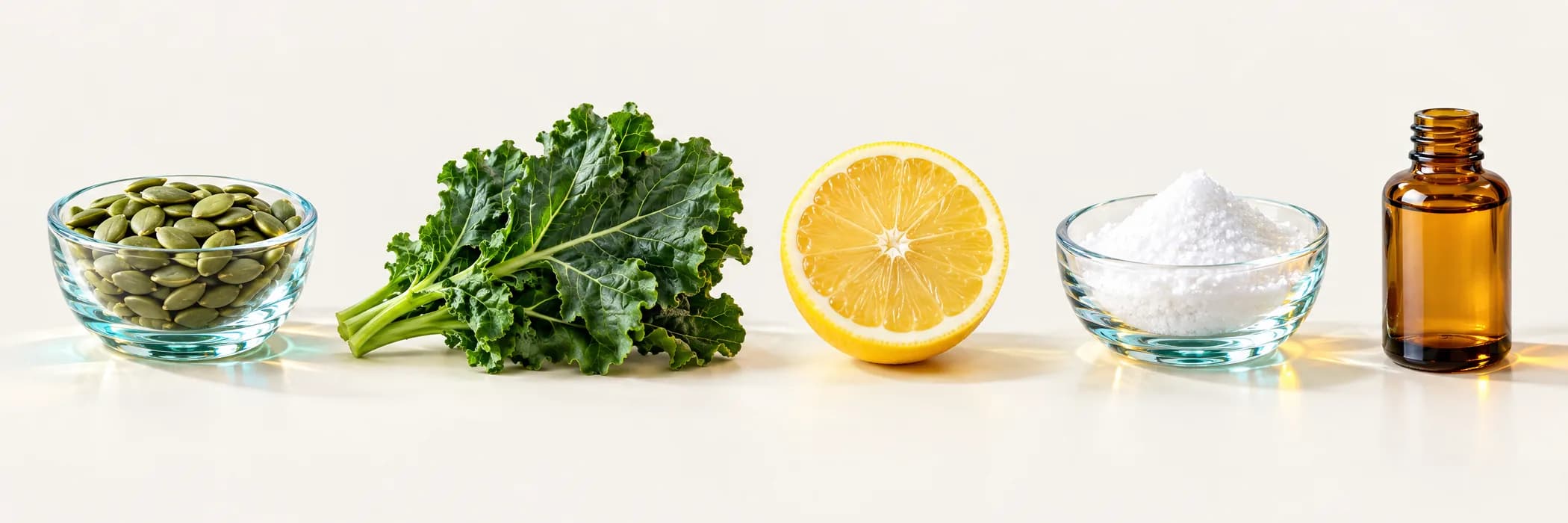
Somatostatin and insulin brake the GH pulse, and GH nudges blood sugar up. These ease the brakes, steady glucose and feed what GH builds.
Loosen GH's off switchCholine and arginine take pressure off somatostatin, GH's main brake, so the signal lands harder.
- Alpha-GPC (choline precursor):
- 300–600 mg about 30–60 minutes before the injection. It may sharpen the GH pulse.
- L-Arginine:
- 3–6 g on its own, on an empty stomach, about 30 minutes before injection. Not with a protein meal.
Offset the glucose bumpGH briefly raises blood sugar. These keep it from creeping up.
- Berberine:
- 500 mg with each meal, 1,500 mg a day. Activates AMPK to improve insulin sensitivity and lower post-meal glucose. Take it apart from supplements you want to absorb well.
- Alpha-lipoic acid (ALA):
- 600 mg once daily with a meal. A mitochondrial cofactor that improves insulin-driven glucose uptake.
- Monitoring note:
- Check fasting glucose and HbA1c before starting and at 8 weeks. Berberine and ALA cushion, not replace, monitoring. If fasting glucose climbs well above baseline, reassess the cycle.
Fuel the lean-tissue buildIGF-1 drives protein synthesis. These supply the raw material.
- Protein intake:
- 1.6–2.0 g per kilogram of body weight a day, since IGF-1 needs amino acids to build with.
- ZMA before bed:
- Zinc 30 mg, magnesium glycinate 450 mg and B6 10.5 mg, about 30–60 minutes before injection, on an empty stomach.
- Vitamin D:
- 2,000–5,000 IU daily, dosed to a blood level of 50–80 ng/mL. Muscle and bone carry vitamin D receptors too.
Dose calculator
Reconstitution calculator
Calculated for a 1 mL U-100 insulin syringe (100 units/mL).
Units per dose
40 units
Draw this many units on a U-100 syringe
Each unit holds 50 mcg
- Volume per dose
- 0.4 mL
- Doses per vial
- 5
- Concentration
- 5 mg/mL
One vial lasts
- Daily
- 5 days
- Every other day
- 10 days
- 5×/week
- 7 days
- Large draw (40 units). That's normal for mg doses. To check it, multiply the units by what each unit holds. You should get your dose.
Research use only. Not for human consumption. Outputs are reference values based on research literature. Verify all measurements independently.
Side effects and what to watch
What people notice. Joint and muscle aches, pain and swelling in the limbs. Reactions where you inject, such as redness, itching, pain or bruising, hit about 25% versus 14% on placebo. Roughly 4% have an allergic-type reaction.
Skip it or take care if. You have active cancer, a disrupted pituitary axis, are pregnant, or are allergic to tesamorelin or mannitol.
Worth watching. It raises IGF-1 and can nudge blood sugar (about 5% reach an HbA1c of 6.5% or higher versus 1% on placebo) and cause fluid retention, including carpal tunnel. In critically ill patients, growth-hormone drugs carry a higher-mortality signal.
Sources:FDA label
Common questions
What do people run tesamorelin for?
Off-label, for body composition, meaning visceral-fat loss with lean-tissue support. It's FDA-approved (brand Egrifta) for excess belly fat in adults with HIV-associated lipodystrophy.
How is it different from taking growth hormone?
It doesn't supply GH directly. It signals the pituitary to release its own GH in its natural pulsing rhythm, then that raises IGF-1, so the body's own feedback stays in control.
Why inject at bedtime on an empty stomach?
Food raises insulin and somatostatin, both of which blunt the GH pulse. Injecting 2–3 hours after the last meal clears both brakes, and bedtime lines it up with the body's biggest natural overnight GH surge.
What is tesamorelin's half-life?
It depends on the formulation. Original Egrifta, the 2 mg trial dose, runs about 26 to 38 minutes; the newer Egrifta SV is about 8 minutes. It's a short signal that triggers a GH pulse.
Does the effect last after you stop?
No. In the Phase III extension, people who stopped saw their visceral fat drift back toward baseline within about three months. Keeping the benefit means staying on it.
Is tesamorelin banned in sport?
Yes. It's prohibited in sport at all times, in and out of competition, as a GHRH analog.
Deep dive
Doses used in studies · Blood markers to track · Molecular identity · References
10From the researchDoses used in studies
These are the doses from the pivotal human trials and the drug label.
| Dose | Route | Model | Outcome | Sources: |
|---|---|---|---|---|
| 2 mg | SC daily | Human (pivotal Phase III, n=412) | Visceral fat −15.2% vs +5.0% placebo; IGF-1 +81% over 26 weeks | PMID 18057338 |
| 2 mg | SC daily | Human (Phase III + extension, n≈404) | Benefit reverses toward baseline ~3 months after discontinuation | PMID 20101189 |
| 1.4 mg / 1.28 mg | SC daily | Human (current FDA-approved Egrifta SV / WR) | Reformulated equivalents of the 2 mg trial dose | FDA label |
11Labs before / during / afterBlood markers to track
The label sets what a clinician tracks on tesamorelin. A clinician watches IGF-1, since the drug raises it and a persistent rise may call for stopping.
They also watch glucose (fasting glucose and HbA1c), since growth hormone can blunt glucose tolerance. About 5% reached an HbA1c of 6.5% or higher in the Phase III trials versus 1% on placebo.
Sources:FDA labelPMID 18057338
12ChemistryMolecular identity
- Molecular weight
- 5,135.9 g/mol
- Molecular formula
- C221H366N72O67S
- Monoisotopic mass
- 5,132.72 Da
- CAS / UNII
- 218949-48-5 · MQG94M5EEO
- Structure / class
- Synthetic GHRH (GRF 1-44) analog; N-terminal trans-3-hexenoyl groupPubChem CID 16137828
- Brand / approval
- Egrifta / Egrifta SV / Egrifta WR, FDA-approved (HIV lipodystrophy)FDA label (Egrifta SV)
- Molecular target
- GHRH receptor (GHRHR) on pituitary somatotrophsPMID 18057338
- Half-life
- ~26–38 min (original Egrifta, 2 mg); ~8 min (Egrifta SV reformulation); Tmax ~0.15 hFDA labels (Egrifta / Egrifta SV)Half-life curve →
- Regulatory status
- FDA-approved (HIV lipodystrophy) · WADA S2 prohibitedFDA / WADA
13Primary sourcesReferences
- PubChem CID 16137828PubChem CID 16137828 (Tesamorelin)
- FDA labelFDA label / DailyMed, Egrifta SV (tesamorelin) prescribing information
- FDA labelFDA label, Egrifta WR (tesamorelin) 2025 prescribing information
- PMID 18057338Falutz et al., N Engl J Med 2007 (pivotal Phase III, VAT/IGF-1)
- PMID 20101189Falutz et al., J Acquir Immune Defic Syndr 2010 (Phase III + extension, discontinuation)
- NBK548730LiverTox (NIH), Tesamorelin monograph (approval, mechanism, liver fat)
- WADAWADA Prohibited List (S2.2.4, GHRH analogues; tesamorelin named, prohibited at all times)
- PMID 20943777Stanley et al., J Clin Endocrinol Metab 2011 (GH pulsatility, healthy men)
- PMID 20554713Falutz et al., J Clin Endocrinol Metab 2010 (pooled Phase III, 806 patients, 52 weeks)
- PMID 31611038Stanley et al., Lancet HIV 2019 (liver fat, 12-month trial)
Tesamorelin
5 mg or 10 mg vial
Ki Researcher is affiliated with Ki Peptides.
Ships to the US only. Buyers must be 21 or older.
Reviewed by Ki Researcher Team · Research use only · Not medical advice · Updated 2026-10-19