
IGF-1 DES
des(1-3) Insulin-like Growth Factor 1 · 67-AA truncated IGF-1
IGF-1 DES is IGF-1, the body's growth signal, with the first three amino acids trimmed off. People inject it into the trained muscle for a brief growth pulse. Studies rate it roughly ten times stronger than native IGF-1, short-acting where IGF-1 LR3 runs long.
At a glance
- Dose
- 50 mcg to start, then 75–100 mcg per session
- How often
- Once per session on training days only, typically 3–5 a week
- How
- A small injection under the skin over the muscle you just trained
- When
- Within 15–30 min of finishing training, or 15–20 min before
- Cycle
- 4–6 weeks on, then 4–6 weeks off
The 30-second versionEverything on this page, fast
Site-targeted · Ultra-potent · Short-acting · Local muscle
The short, strong member of the IGF family. Dropping IGF-1's first three amino acids means DES barely binds the carrier proteins, so it lands roughly ten times more potent than native IGF-1 in cell and animal studies, fired as a brief, local muscle-building pulse into the trained muscle. With no reservoir holding it, it is short-acting.
The basics
- A naturally occurring short IGF-1 (native IGF-1 minus Gly-Pro-Glu, leaving 67 residues).
- The brief, local complement to a long-acting base like IGF-1 LR3.
Why people use it
- A potent local pulse. It hits the IGF-1 receptor harder than native IGF-1, roughly 10× more potent in cells and growth-hormone-deficient mice, firing protein synthesis where it is injected.
- Built for one muscle at a time. With no binding-protein reservoir to carry it around the body, it stays brief and concentrates the growth signal in the worked muscle.
- Timed to the training window. Injected around the workout, it lands while blood flow to the muscle is still up and its IGF-1 receptors are elevated.
- The strong-but-brief complement. The natural partner to a long-acting systemic signal, most often IGF-1 LR3 holding the all-day base.
Stacks well with
- IGF-1 LR3 is the classic division of labor. LR3 holds the systemic all-day base while DES delivers the targeted local pulse.
- MGF / PEG-MGF wake satellite cells in the same post-workout window. MGF opens the door, DES builds through it.
Good to know
- Blood sugar can drop hard (hypoglycemia). DES is the most potent glucose-lowering IGF variant, so never inject fasted and keep fast carbs on hand.
- Do not pair it with insulin. The combination compounds the glucose drop unpredictably.
- Prohibited in sport (WADA S2), which matters if you compete.
What it does
The short, strong member of the IGF family, injected into the muscle you are training for a local hit.
- A potent local muscle-building pulseRoughly ten times more potent than native IGF-1 in cells and growth-hormone-deficient mice, firing protein synthesis where injected.
- Built for one muscle at a timeWith no binding-protein reservoir, it stays brief. People use that to concentrate the growth signal in one worked muscle.
- Timed to the training windowInjected around the workout, it lands while blood flow to the muscle is up and its IGF-1 receptors are elevated.
- The brief partner to a long-acting baseMost often paired with IGF-1 LR3, which holds the all-day background while DES delivers the targeted pulse.
- Pairs with a satellite-cell primerAfter training, mechano growth factor (MGF) is proposed to wake satellite cells, the muscle's stem cells. DES then drives proliferation.
How it works
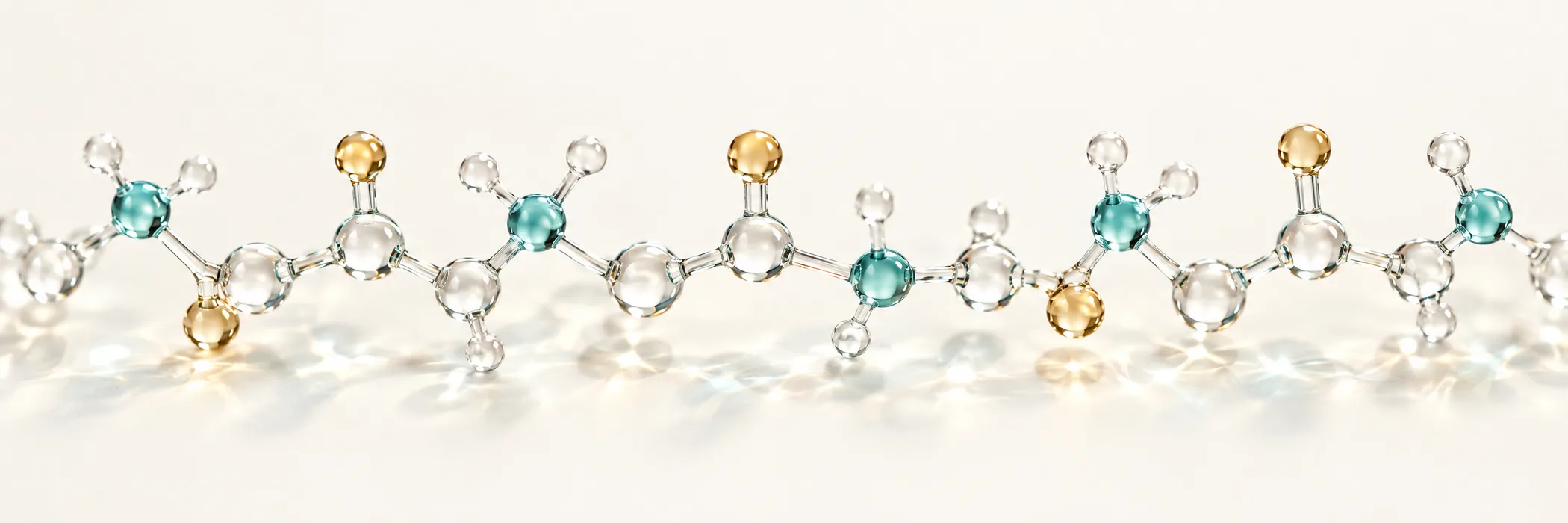
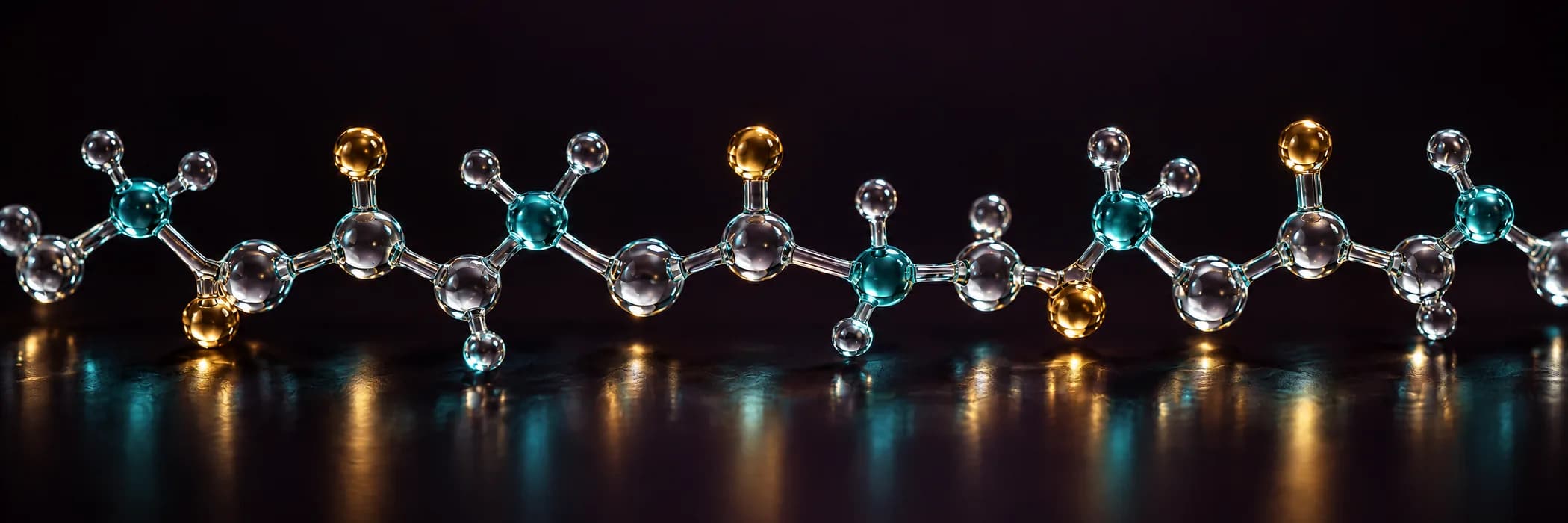
Switches on the growth receptor. Like native IGF-1, DES activates the IGF-1 receptor (IGF-1R). That fires PI3K–Akt, the protein-building pathway, and MAPK, the cell-division pathway. Studies confirm the Akt signal in living tissue.
Slips past the carrier proteins. Native IGF-1 is held by six IGF-binding proteins (IGFBPs). The glutamate at position 3 is what lets them bind. DES lacks it, so the binding proteins essentially cannot inhibit it. More DES reaches the receptor, making it roughly ten times more potent than native IGF-1 in cells and growth-hormone-deficient mice.
Drops blood sugar hardest. The same escape makes DES the most potent IGF variant at lowering blood sugar. In pigs and monkeys it caused a stronger, longer drop (hypoglycemia) than native IGF-1.
Sources:PMID 8930132PMID 2539101PMID 2280209PMID 9415072PMID 12745670
How to dose it
Most people inject it under the skin over the muscle they just trained, once per session.
Dose tiersMost people run 75–100 mcg per session, starting at 50 mcg to check tolerance.
- Low / introduction:
- 50 mcg per session to test tolerance, into the worked muscle within 15 minutes of finishing training.
- Standard:
- 75–100 mcg per session, the most common working dose. Into the target muscle just before or within 15 minutes after training.
- High:
- 100–150 mcg per session, the upper end of what the community runs. Low-blood-sugar risk rises with dose, so fast carbs are essential.
- Frequency:
- Once per training session, training days only. It is short-acting, so rest-day doses add nothing.
How to injectInject under the skin over the muscle you just trained.
- Injection site:
- The fat over the worked muscle, like the outer quad on leg day. Use a new spot in that muscle each session.
- Timing:
- Within 15–30 minutes after training, while blood flow and receptors are up. Some inject 15–20 minutes before; after is more common.
- Measuring the dose:
- At 1 mg/mL on a U-100 insulin syringe, 50 mcg takes 5 units, 75 mcg takes 7.5 units, 100 mcg takes 10 units. The on-page calculator handles any mix.
- Food window:
- Never inject fasted. Eat a mixed meal or carb-containing workout meal within 30 minutes of the dose. DES lowers glucose hardest of the IGF family.
Cycle and breaksRuns are short, 4–6 weeks on then 4–6 weeks off, to limit sustained receptor stimulation.
- Standard cycle:
- 4–6 weeks on, training days only (typically 3–5 doses per week). Longer runs extend theoretical receptor desensitization and cell-division exposure.
- Washout:
- 4–6 weeks off between cycles. Co-run compounds such as IGF-1 LR3 usually stop at the same time.
Mixing the vialA 1 mg vial takes 1 mL of bacteriostatic water.
- Mixing:
- That makes 1,000 mcg per mL. On a 100-unit insulin syringe, 50 mcg takes 5 units, 100 mcg takes 10 units, 150 mcg takes 15 units.
- Why 1 mL:
- Clean, round syringe units across the 50–150 mcg range, with no fractions at the low end.
Best time to take it

Implied best time
Around training (local)
Most people inject it into the worked muscle within about 15–30 minutes of training, for a brief, local growth pulse.
- It is potent but short-acting, so people fire it while the trained muscle is receptive, with blood flow and IGF-1 receptors still up.
- The workout sets the timing, not the clock. Post-training is most common, and some inject 15–20 minutes before. Training days only.
- Always dose with a carbohydrate-containing meal in the same window and never inject fasted. DES is the most potent glucose-lowering IGF variant.
Sources:PMID 2539101PMID 9415072
What to stack it with


A second IGF variant needs its own job.
IGF-1 DES + IGF-1 LR3LR3 holds the all-day base while DES hits the trained muscle.
- Why it works:
- LR3 also escapes the binding proteins but lasts all day, body-wide.
- The protocol:
- DES 50–100 mcg into the trained muscle post-workout, 3–5× per week. LR3 20–60 mcg once daily under the skin, morning or post-workout, rotated away from DES sites. 4–6 week cycle.
- Outcome:
- Focused growth in one muscle on an LR3 whole-body base. Low-blood-sugar risk compounds; watch glucose closely.
IGF-1 DES + MGF / PEG-MGFMechano growth factor (MGF) activates satellite cells, the muscle's stem cells. DES then drives proliferation.
- The protocol:
- Post-training: MGF 200–400 mcg (or PEG-MGF 100–200 mcg) into the worked muscle, then DES 50–100 mcg there or nearby within 15–30 minutes. PEG-MGF runs 2× per week, DES every session.
- Outcome:
- For growth in one muscle only.
IGF-1 DES + BPC-157 / TB-500For injuries. BPC-157 and TB-500 lay the repair base.
- Why it works:
- BPC-157 promotes new blood vessel growth and TB-500 drives cell migration. DES adds growth on top.
- The protocol:
- BPC-157 250–500 mcg once or twice daily near injury, rotated. TB-500 2–2.5 mg twice weekly, 4–6 weeks, then maintenance. DES 50–100 mcg into recovering muscle on training or light-activity days.
- Outcome:
- For tears, partial avulsions or severe delayed-onset muscle soreness with structural damage. Never inject fasted and keep carbs close.
Support nutrients
Protein and leucineLeucine co-triggers the protein building DES drives.
- Protein target:
- 1.8–2.2 g per kg of body weight per day (0.8–1.0 g per pound) in a caloric surplus, plus 30–50 g high-leucine protein (whey, eggs, leucine-spiked blend) around training.
- Leucine pulse:
- 3–5 g free-form leucine in the injection window maxes out mTOR, the protein switch.
- Timing:
- Pre- or immediately post-workout, in the same 15–30-minute window as the injection.
Carbs for blood sugarCarbs with every dose are essential, since DES drops blood sugar hardest.
- Carbs with the dose:
- 30–60 g of fast-acting carbs (rice, oats, banana, dextrose) within 30 minutes of the injection. Never inject fasted.
- Fast carbs on hand:
- Keep glucose tablets, juice or a sugary snack close during and for 60–90 minutes after the injection.
- Glucose awareness:
- Signs are shakiness, lightheadedness, cold sweat, racing heart and sudden hunger. Take fast carbs and skip further doses until you know why. Consider a glucose monitor the first cycle.
- Skip insulin:
- Insulin plus DES is a known dangerous practice. It compounds the glucose drop unpredictably.
Train the target muscleTraining primes the worked muscle for DES.
- Train that muscle first:
- Resistance-train it, then inject it around the session. Skipping training removes the main amplifier.
- Progressive overload:
- Real overload, not just movement, raises local receptors and nutrient uptake. Light sessions do less.
- Zinc + magnesium:
- 15–30 mg zinc picolinate or bisglycinate daily and 200–400 mg magnesium glycinate or malate nightly support the growth hormone and IGF-1 axis.
Dose calculator
Reconstitution calculator
Calculated for a 1 mL U-100 insulin syringe (100 units/mL).
Units per dose
10 units
Draw this many units on a U-100 syringe
Each unit holds 10 mcg
- Volume per dose
- 0.1 mL
- Doses per vial
- 10
- Concentration
- 1 mg/mL
One vial lasts
- Daily
- 10 days
- Every other day
- 20 days
- 5×/week
- 14 days
Research use only. Not for human consumption. Outputs are reference values based on research literature. Verify all measurements independently.
Side effects and what to watch
What people notice. Low blood sugar (hypoglycemia) is the best-documented and most immediate effect. In pigs and monkeys, DES caused the strongest and longest-lasting glucose drop of all the IGF variants tested.
How people handle it. Never inject fasted, keep fast carbs close and skip insulin, which magnifies the drop.
Worth knowing. Sustained IGF-1 receptor signaling tells cells to divide and resist programmed death. That theoretical cancer-promotion concern covers the whole IGF-1 axis, DES included.
Sources:PMID 9415072PMID 12745670
Common questions
What is IGF-1 DES?
A naturally occurring short form of IGF-1, the body's growth signal, missing its first three amino acids (Gly-Pro-Glu). That leaves 67 amino acids. The body makes a little by enzyme trimming.
How is IGF-1 DES dosed?
The common working dose is 75–100 mcg per training session, starting at 50 mcg, with 100–150 mcg at the high end. It goes under the skin over the muscle you just trained, within 15–30 minutes of finishing.
How does it differ from IGF-1 LR3?
DES is shorter (67 amino acids), more potent and short-acting, used as a brief pulse into the worked muscle. LR3 is longer (83 amino acids) and long-acting, for steady whole-body exposure. Both escape the binding proteins.
What does it stack with?
Most often IGF-1 LR3, which holds the all-day base while DES hits one muscle. MGF or PEG-MGF pair in the same post-workout window. For injuries, people add BPC-157 and TB-500.
Do I need to cycle it?
Most people do. A typical run is 4–6 weeks on, training days only (3–5 doses per week), then 4–6 weeks off.
Why does it drop blood sugar so hard?
It escapes the binding proteins that buffer native IGF-1's glucose-lowering action. In animal studies it caused the strongest, longest-lasting glucose drop of the variants tested. Always have carbohydrates on board.
Deep dive
Doses used in studies · Molecular identity · References
10From the researchDoses used in studies
These are the doses used in the published studies, in animals and cells. DES repeatedly beats native IGF-1 at a fraction of the dose.
| Dose | Route | Model | Outcome | Sources: |
|---|---|---|---|---|
| 3 µg vs 30 µg IGF-1 | Injection (~3 wk) | Mouse (GH-deficient lit/lit) | DES at 3 µg matched IGF-1 at 30 µg on growth (~10× more potent) | PMID 2280209 |
| In vitro | Cell-culture media | Cultured cells | ~10× more potent than IGF-1 at proliferation + hypertrophy | PMID 8930132 |
| 42–270 µg/kg | IV bolus | Marmoset monkey | Most potent + most prolonged hypoglycemia of all variants tested | PMID 9415072 |
| 20–50 µg/kg | IV bolus | Pig | 2–3× more potent glucose-lowering; 4–8× greater hypoglycemia over 4 h | PMID 9415072 |
| Systemic | In vivo | Diabetic rat (retina) | Normalized IGF-1R and phospho-Akt signaling | PMID 12745670 |
11ChemistryMolecular identity
- Molecular weight
- 7,371.48 g/mol
- Molecular formula
- C319H501N91O96S7
- CAS / UNII
- 112603-35-7 · AG0WVP88OA
- Sequence (67 AA)
- TLCGAELVDALQFVCGDRGFYFNKPTGYGSSSRRAPQTGIVDECCFRSCDLRRLEMYCAPLKPAKSAUniProt P05019 (mature IGF-1 minus Gly-Pro-Glu)
- Structure / class
- Truncated IGF-1: native mature IGF-1 (70 AA) lacking the N-terminal tripeptide Gly-Pro-GluUniProt P05019
- Physical form
- Lyophilized powder (recombinant); naturally occurring IGF-1 variant in brain, colostrum, uterine tissueResearch literature
- Molecular target
- IGF-1 receptor (IGF-1R) agonist; negligible IGFBP binding (IGFBPs do not inhibit it)PMID 2539101
- Half-life
- Not established (short-acting; no human PK study)Not established
- Regulatory status
- Research reagent; not FDA-approved; prohibited in sport (WADA S2.3, IGF-1 analogues)WADA Prohibited List
12Primary sourcesReferences
- PMID 2539101Ross et al. 1989 (IGFBPs do not inhibit DES)
- PMID 8930132des(1-3)IGF-1 potency review
- PMID 2280209Gillespie et al. 1990 (lit/lit mice)
- PMID 9415072Tomas et al. 1997 (hypoglycemia potency)
- PMID 7561610Yamamoto & Murphy 1995 (endogenous formation)
- PMID 12745670des(1-3)IGF-1 IGF-1R/Akt in vivo
- UniProt P05019UniProt P05019 (native IGF-1)
- WADA S2WADA Prohibited List S2
Reviewed by Ki Researcher Team · Research use only · Not medical advice · Updated 2026-09-24