
AHK
Copper-binding tripeptide (Ala-His-Lys) · hair-follicle research
AHK is a three-amino-acid peptide (Ala-His-Lys), a close cousin of the copper peptide GHK. People apply its copper form, AHK-Cu, to the scalp for hair, in serums labeled 'Copper Tripeptide-3'. In a 2007 lab study it promoted human hair-follicle cell growth and lengthened cultured follicles.
Buy AHK-Cu100 mg vial
Ki Researcher is affiliated with Ki Peptides.
Ships to the US only. Buyers must be 21 or older.
At a glance
- Dose
- Roughly 100–500 ppm (parts per million) of AHK-Cu in a leave-on serum
- How often
- Once or twice daily, per the product's directions
- How
- Applied to the skin or scalp in a serum
- When
- Morning or evening, with your skincare routine
- Cycle
- Continuous, like any leave-on serum
The 30-second versionEverything on this page, fast
Copper Peptide · Hair Follicle · Topical · GHK Cousin
A tiny copper-carrying tripeptide (Ala-His-Lys) used topically for hair. Research shows AHK-Cu promotes hair-follicle cell growth and lengthens follicles at picomolar to nanomolar concentrations.
The basics
- AHK is GHK with the first amino acid (glycine) swapped for alanine. The form people use is its copper complex, AHK-Cu.
- Sold as 'Copper Tripeptide-3' in leave-on hair and scalp serums. It is a topical.
Why people use it
- Hair-follicle support is its main draw. Research shows it raises dermal-papilla-cell growth and drives follicle elongation.
- A cell-protective signal. It shifts markers away from cell death (raises Bcl-2/Bax, lowers cleaved caspase-3 and PARP), the proposed basis for keeping follicle cells alive.
- A topical copper peptide, applied to the skin or scalp as 'Copper Tripeptide-3'.
- A GHK cousin that carries copper like GHK-Cu, the better-studied member of the same copper-peptide family.
Stacks well with
- GHK-Cu is the same-family cousin with a far larger research base. Both deliver copper, so running two is more copper, not necessarily more benefit.
Good to know
- AHK-Cu is a topical copper peptide. It goes in serums on the skin or scalp.
- It's a copper peptide, so skip high-dose copper supplements on top and keep it to its own mix, never pooled with other actives.
What it does
A copper peptide people reach for to support hair, applied to the scalp.
- Supports hair-follicle growthIn a 2007 study, AHK-Cu increased growth of human dermal-papilla cells and lengthened cultured human follicles.
- Turns down the cell-death signalThe same study showed raised Bcl-2/Bax and lower cleaved caspase-3 and PARP, the proposed basis for supporting follicle cells.
- Works at tiny concentrationsCell growth and follicle lengthening showed up at picomolar to nanomolar concentrations, extremely low amounts.
- Made for leave-on scalp serumsAs 'Copper Tripeptide-3' it goes into leave-on hair and scalp serums at low percentages. It is applied, not injected.
- A copper-carrying GHK cousinGHK with one amino acid swapped. Like GHK-Cu it carries copper, the family people use for collagen and matrix support.
Sources:PMID 17703734
How it works
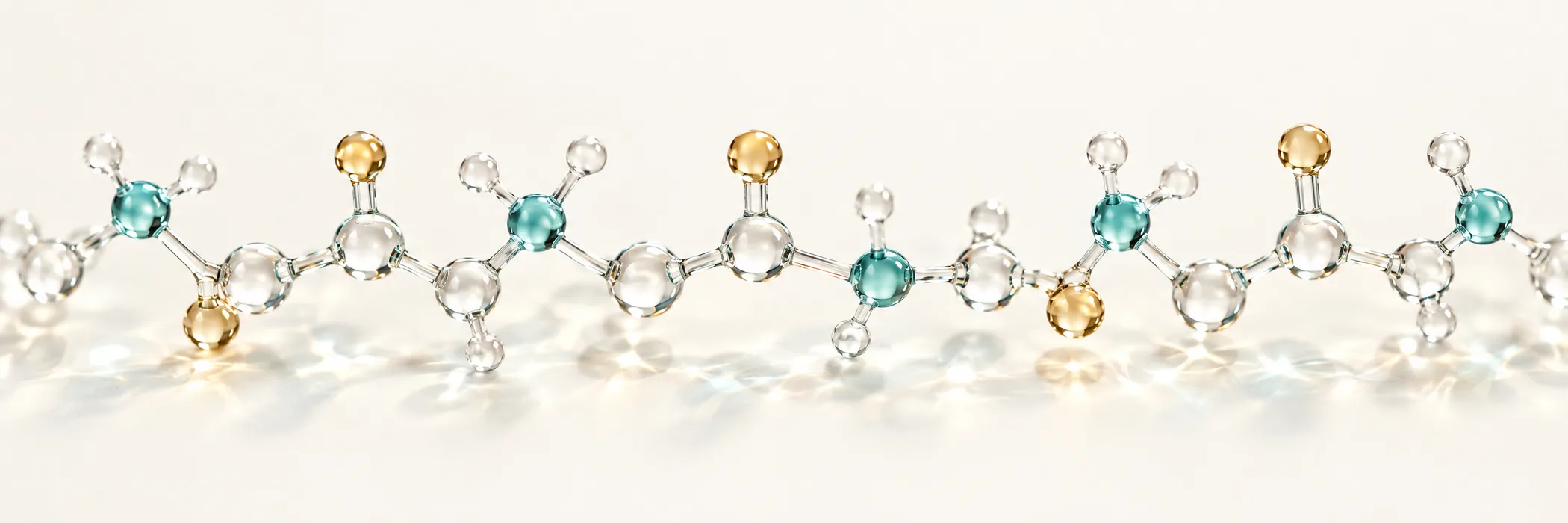
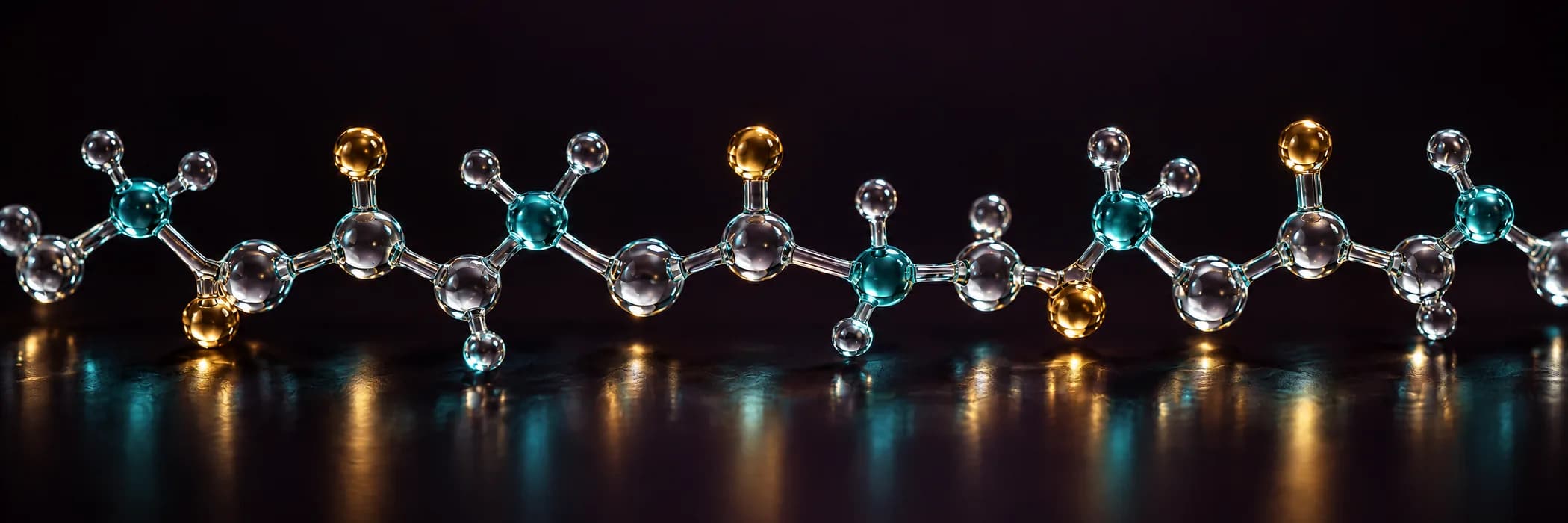
Carries copper. AHK is GHK with its first amino acid, glycine, swapped for alanine. Like GHK-Cu, it holds a copper(II) ion in a chelate, a molecular claw, forming AHK-Cu.
Grows the follicle's signaling cells. In a 2007 study (Pyo et al.), picomolar-to-nanomolar AHK-Cu increased growth of cultured human dermal papilla cells, the cells at the follicle base that govern hair growth. It also lengthened human follicles kept alive in a dish.
Turns down the cell-death signal. AHK-Cu raised the Bcl-2/Bax ratio and lowered cleaved caspase-3 and PARP, markers of the cell's self-destruct pathway. The markers showed it more clearly than the direct count of dying cells.
Sources:PMID 17703734PubChem CID 7408502PubChem CID 168431292
How to dose it
AHK-Cu is used on the skin. People apply it to the scalp in a leave-on serum, not as an injection.
Doses used in the studiesThe one published study added AHK-Cu to cultured cells and follicles at picomolar to nanomolar concentrations.
- Concentration:
- 10⁻¹² to 10⁻⁹ M (picomolar to nanomolar) AHK-Cu, added directly to the culture medium of human dermal-papilla cells and human hair follicles kept alive in a dish.
- Reading the number:
- This is a concentration in a culture dish. It does not convert into a milligram amount you apply or inject.
How to take itPeople apply it to the scalp in a leave-on serum at ~100–500 ppm (parts per million).
- In a serum:
- Labels list it as 'Copper Tripeptide-3', its cosmetic ingredient (INCI) name. Leave-on hair and scalp serums commonly carry ~100–500 ppm, applied to skin or scalp, not injected.
- What the use rests on:
- Topical use rests on the hair-follicle study above plus the general copper-peptide rationale.
Handling a research vialIt is also sold as a freeze-dried powder that people mix with bacteriostatic water.
- What's sold:
- AHK-Cu also comes as a lyophilized (freeze-dried) powder. People reconstitute it with bacteriostatic water to handle it as a solution.
- Injecting it:
- No injectable dose has been published, so this page lists none. If you handle it alongside other peptides, treat it as a copper peptide (see the stacking card below).
Sources:PMID 17703734
Best time to take it
Implied best time
Not established (topical use)
Apply it as part of your skincare routine, morning, evening or both, following the product's directions.
- It is a leave-on serum ingredient, so it follows the daily skincare routine you already have, according to the formulation.
- No half-life has been published for AHK-Cu, so there is no peak to time an application around.
What to stack it with


Its closest relative is its cousin GHK-Cu, and some topical formulas use both. One handling rule covers every copper peptide.
AHK-Cu + GHK-CuSame family, one amino acid apart. Some topical formulas use both.
- How they differ:
- GHK-Cu is the original copper tripeptide (glycine-histidine-lysine). AHK-Cu swaps that first glycine for alanine. GHK-Cu has the larger research base, and AHK-Cu's research is a hair-follicle study.
- Choosing between them:
- No head-to-head study has compared AHK-Cu with GHK-Cu, so the 'more hair-specific' label has nothing behind it. Don't choose one over the other on that basis.
- Combining them:
- Some topical formulas use both. Both deliver copper, so running two copper peptides is more copper, not necessarily more benefit.
Mixing with other peptidesCopper is reactive, so a copper peptide stays in its own syringe or mix.
- Keep copper peptides on their own:
- Same rule as GHK-Cu. Copper is a reactive metal, so keep AHK-Cu in its own syringe or mix, never pooled with others. The Learn section's mixing guide covers why.
Support nutrients
AHK-Cu brings its own copper. Keep your minerals balanced and cover the basics that hair and skin are built on.
Keep copper and zinc balancedIt already delivers copper, so keep zinc and copper supplements moderate and paired.
- Copper and zinc:
- Like GHK-Cu, AHK-Cu carries copper, so high-dose copper supplements on top are not 'more is better'. High-dose zinc competes with copper for absorption. Keep both moderate and paired.
Cover the hair and skin basicsProtein, sleep and fixing an iron or vitamin-D deficiency do the real work for hair.
- Hair and skin basics:
- The evidence-backed levers are adequate protein, correcting an iron or vitamin-D deficiency if you have one, sleep, and not smoking. AHK-Cu goes on top of those.
Side effects and what to watch
What people notice. Topical copper peptides can occasionally cause local irritation or contact sensitivity where they are applied.
How people handle it. Copper is a redox-active (reactive) metal, so people don't layer a copper peptide freely with strong actives.
Worth knowing. These points come from copper peptides as a class. AHK-Cu has no safety study of its own.
Common questions
What do people use AHK-Cu for?
Hair. It goes on the scalp in leave-on serums as 'Copper Tripeptide-3'. In a 2007 lab study it promoted human hair-follicle cell growth and lengthened cultured follicles.
How is AHK-Cu used?
On the skin. Leave-on hair and scalp serums commonly carry ~100–500 ppm, applied once or twice daily per the product's directions, as part of a morning or evening routine.
Do I need to cycle AHK-Cu?
There is no defined on/off cycle. People run it continuously, like any leave-on serum.
How does AHK-Cu differ from GHK-Cu?
By one amino acid. GHK-Cu starts with glycine and AHK-Cu with alanine, and both carry copper. GHK-Cu has the larger research base. Some topical formulas use both, which means more copper, not necessarily more benefit.
Can you inject AHK-Cu?
It is a topical ingredient, and no injectable dose has been published. It is also sold as a lyophilized powder that people reconstitute with bacteriostatic water. Keep it in its own syringe, since copper is a reactive metal.
Deep dive
Doses used in studies · Molecular identity · References
09From the researchDoses used in studies
These are the amounts from the one published study and from cosmetic use. The study figures are culture concentrations, added to cells in a dish.
| Dose | Route | Model | Outcome | Sources: |
|---|---|---|---|---|
| 10⁻¹²–10⁻⁹ M | In vitro / ex vivo | Cultured human dermal-papilla cells + ex vivo human hair follicles (organ culture) | Increased dermal-papilla-cell proliferation and hair-follicle elongation; raised Bcl-2/Bax and lowered cleaved caspase-3 / PARP (anti-apoptotic signal); the direct apoptosis reduction (Annexin V / PI) was not statistically significant | PMID 17703734 |
| Low % topical (~100–500 ppm) | Topical (cosmetic) | Cosmetic hair/scalp serums (ingredient use) | Used as the cosmetic ingredient 'Copper Tripeptide-3'; no published controlled human efficacy trial | |
| Injected / systemic | Not applicable | None published | No animal-in-vivo or human study exists; no injectable dose, pharmacokinetics, or safety data. Vendor injectable 'mg' figures are not literature-derived |
10ChemistryMolecular identity
- Monoisotopic mass
- 354.20155 Da (free AHK)
- Molecular weight
- 354.41 g/mol (free AHK); AHK-Cu complex ≈ 415.93 g/mol (free complex) or 451.39 g/mol (monohydrochloride)PubChem CID 7408502 / 168431292
- Molecular formula
- C₁₅H₂₆N₆O₄ (free AHK); C₁₅H₂₄ClCuN₆O₄⁻ for the AHK-Cu monohydrochloridePubChem CID 7408502 / 168431292
- Sequence
- Ala-His-Lys (L-alanyl-L-histidyl-L-lysine), 3 AA; AHK-Cu is this peptide chelated to Cu(II)PubChem CID 7408502
- Structure / class
- Synthetic copper-binding tripeptide; GHK analog with N-terminal Gly→Ala (C14→C15). AHK-Cu = INCI Copper Tripeptide-3PubChem CID 7408502; INCI
- Copper coordination
- 1:1 Cu(II) chelate analogous to GHK-Cu (histidine imidazole + N-terminal amine + amide N); inferred from structure (no published AHK-Cu crystal structure)Copper-peptide coordination chemistry (inferred); no measured AHK-Cu structure
- CAS / UNII
- 126828-32-8 · 1AVY5QO8WR (free AHK); the AHK-Cu complex circulates as CAS 767286-83-9 (free complex) or 682809-81-0 (monohydrochloride)PubChem CID 7408502 / supplier registries
- PubChem CID
- 7408502 (free AHK) · 168431292 (AHK-Cu monohydrochloride)PubChem
- Water solubility
- Freely water-soluble; highly hydrophilic (free AHK computed XLogP −4.0, TPSA 176 Ų)PubChem CID 7408502 (computed properties)
- Origin
- Synthetic tripeptide; GHK analog (N-terminal glycine → alanine)Research literature
- Molecular target
- No classic receptor. Copper(II)-carrying peptide; reported pro-proliferative/anti-apoptotic signaling in cultured hair-follicle (dermal-papilla) cellsPMID 17703734 (in vitro / ex vivo only)
- Half-life
- Not established (no published pharmacokinetics or half-life for AHK or AHK-Cu)Not established
- Regulatory status
- Cosmetic ingredient (INCI 'Copper Tripeptide-3'); not an FDA-approved drug; no approved medical indicationINCI / FDA
11Primary sourcesReferences
- PubChem CID 7408502PubChem CID 7408502 (Ala-His-Lys / free AHK; C15H26N6O4, MW 354.41, CAS 126828-32-8)
- PubChem CID 168431292PubChem CID 168431292 (AHK-Cu monohydrochloride; copper(II) Ala-His-Lys complex, INCI Copper Tripeptide-3, CAS 682809-81-0)
- PMID 17703734Pyo et al., Arch Pharm Res 2007 (tripeptide-copper complex AHK-Cu: dermal-papilla-cell proliferation + ex vivo human hair-follicle elongation, in vitro/ex vivo)
AHK-Cu
100 mg vial
Ki Researcher is affiliated with Ki Peptides.
Ships to the US only. Buyers must be 21 or older.
Reviewed by Ki Researcher Team · Research use only · Not medical advice · Updated 2026-09-24