
Hexarelin
Growth-hormone-releasing peptide · ghrelin-receptor (GHS-R1a) agonist
Hexarelin, a six-amino-acid peptide, fires your own growth hormone (GH) pulse through the ghrelin receptor. People run it in short cycles for body composition and recovery. In human head-to-head testing it released more GH than a maximal GHRH (growth-hormone-releasing hormone) dose, on par with GHRP-2.
At a glance
- Dose
- 100 mcg per dose, at most twice a day
- How often
- Once a day to keep sensitivity; twice a day is the ceiling
- How
- A small injection under the skin; rotate sites
- When
- Bedtime on an empty stomach, at least 2 hours after eating
- Cycle
- 4–8 weeks on, then at least 4 weeks off
The 30-second versionEverything on this page, fast
Potent GH pulse · Your own GH · Short cycles · Body composition
One of the most potent GH-releasing peptides. In human head-to-head testing it released more growth hormone than a maximal dose of GHRH (growth-hormone-releasing hormone), on par with GHRP-2. It fires your own GH pulse through the ghrelin receptor, and because the response fades with continuous use and returns after a break, people run it in cycles.
The basics
- A synthetic six-amino-acid peptide that tells the pituitary to release growth hormone through the ghrelin receptor (GHS-R1a).
- A 16-week human study set its cycling rule. The GH response eased about 45% by week 16, and a 4-week break restored it fully.
Why people use it
- A powerful GH trigger. Among the strongest GH responses in the GHRP family; it releases more GH than a maximal GHRH dose.
- Raises your own GH, not injected hormone. It fires the body's natural pulse through the ghrelin receptor, keeping feedback intact.
- Stacks with a GHRH analog. It works a different receptor than CJC-1295 or Sermorelin, so the combined pulse beats either alone.
- Body composition and recovery. The GH rise is what people reach for, since GH drives protein synthesis.
Stacks well with
- CJC-1295, the long-acting GHRH arm. It works a separate receptor, and the documented combined pulse beats either alone.
- Sermorelin, the short-acting GHRH arm, for a sharper, more physiological pulse.
Good to know
- The GH response eases about 45% over 16 weeks of continuous use, then comes back fully after a 4-week break. That is why cycling matters.
- Empty stomach is the key rule. Food raises insulin and somatostatin, which can cut the GH pulse roughly in half.
- Like the whole GHRP class it also raises ACTH and cortisol. Banned in tested sport (WADA), which matters if you compete.
What it does
Hexarelin is one of the most potent GH-releasing peptides. Here's what draws people to it.
- A powerful growth-hormone triggerIn 12 healthy young volunteers, a dose into a vein released about twice the GH of the same GHRH dose.
- Raises your own GHIn 6 young men, a day of shots raised 24-hour GH by making its natural pulses bigger, not more frequent.
- Held up on long-term corticosteroidsIn 8 adults on long-term corticosteroids or with high cortisol, its GH response matched healthy people's while GHRH's was blunted.
- Faster growth in short childrenIn 8 short children, months of nasal dosing raised IGF-1 about 36% and yearly growth from 5.3 to 8.3 cm.
- A separate heart research angleIn rats with no pituitary, and so no GH, a week of hexarelin limited heart damage from blocked blood flow.
Sources:PMID 8126144PMID 11888836PMID 7561633PMID 8548949PMID 10465272
How it works
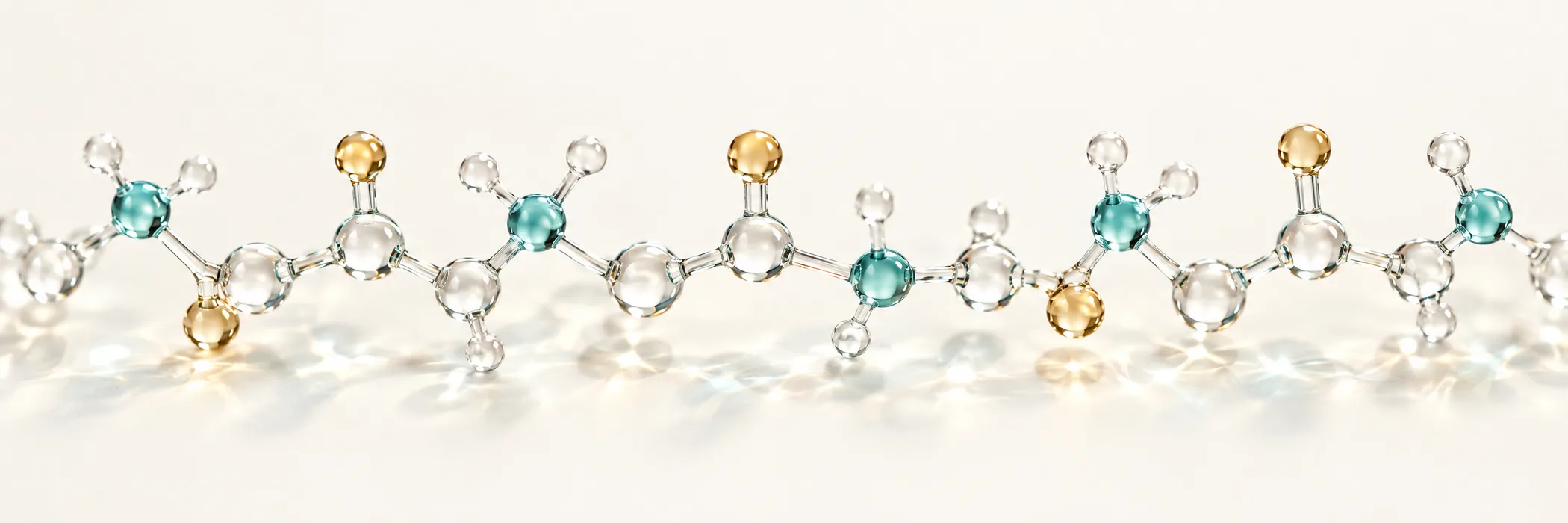
Fires your own GH pulse. Hexarelin switches on GHS-R1a, the ghrelin receptor. Growth-hormone-releasing hormone (GHRH) analogs such as sermorelin and CJC-1295 use a different receptor. Together the two classes release more GH than a maximal GHRH dose alone.
Among the most potent. In a human head-to-head it matched GHRP-2, another growth-hormone-releasing peptide (GHRP), at equal doses. Like the rest of the class, it also raises ACTH and cortisol, two stress hormones, about as much as CRH, the brain signal that triggers them. Its prolactin response is low.
A separate heart pathway. In rodent and isolated-heart studies it showed heart-protective effects through CD36, a scavenger receptor, independent of GH. Cross-linking studies have mapped the exact spot where hexarelin binds it.
Sources:PMID 8126144PMID 9285939PMID 10465272PMID 11988484PMID 15176951
How to dose it
Hexarelin is a small injection under the skin. The GH response fades with steady use and returns after a break, so people cycle it.
Dose tiersMost people run 100 mcg per injection, once or twice a day.
- Standard:
- 100 mcg once daily. The most common start, and it keeps receptor sensitivity longest.
- Split daily:
- 100 mcg twice daily (morning + pre-sleep) on an active block. The main human study also dosed twice daily.
- Why not higher?:
- In a human study, doubling the dose raised GH only about 40%. Going higher mainly adds cortisol and speeds the fade.
How to injectAn empty stomach is the key timing rule.
- Food window:
- At least 2 hours after eating, longer is better. Even a small carb or fat load can halve the pulse.
- Injection site:
- Belly (2 inches clear of the navel), love handles or outer thigh. Rotate sites to avoid fatty lumps.
- Measuring the dose:
- At the default mix (5 mg vial + 2 mL bacteriostatic water), 100 mcg takes 4 units on a U-100 syringe. The calculator adjusts live.
- Time of day:
- Bedtime for the main dose, riding the deep-sleep GH pulse. Fasted pre-workout for the second on the split-daily plan.
Cycle and breaksGH response fell ~45% over a 16-week human study, and 4 weeks off fully restored it.
- Recommended cycle length:
- 4–8 weeks on. Shorter cycles (4 weeks) build up less fade. The 16-week study is the outer edge, not a target.
- Washout:
- 4 weeks minimum off, the break that fully restored GH response. Don't cut it short.
- The fade is partial:
- It is partial and reversible, not a full shutdown. A meaningful GH response remained at week 16.
- Frequency discipline:
- Twice daily is the ceiling. For a longer block, once daily slows the fade. Three times daily speeds the fade with no extra GH.
Mixing the vialQuick reference for the default 5 mg vial.
- Mixing:
- 5 mg vial + 2 mL bacteriostatic water = 2,500 mcg/mL. On a 100-unit (1 mL) syringe, 100 mcg takes 4 units, 150 mcg 6 units, 200 mcg 8 units.
Best time to take it
Implied best time
Bedtime (empty stomach)
Most people inject Hexarelin at bedtime on an empty stomach, keeping any extra doses fasted and well separated.
- The body's biggest natural GH pulse fires in early deep sleep. A steady bedtime dose stacks hexarelin's pulse on that surge.
- Food raises insulin and somatostatin, GH's off-switch. Even a small carb or fat load can roughly halve the pulse. Doses sit ~2 hours from food.
- Its response fades faster than other GHRPs', so doses stay fasted and spaced. A fasted pre-workout dose is the usual second; bedtime is the anchor.
Sources:PMID 8126144
What to stack it with


The best partner is a GHRH peptide, which works a separate receptor.
Hexarelin + CJC-1295Ghrelin arm plus GHRH arm: more GH than a maximal GHRH dose.
- Why it works:
- CJC-1295 is a long-acting GHRH analog. The two hit separate receptors on the same pituitary cells, so together they beat a maximal GHRH dose.
- The protocol:
- Hexarelin 100 mcg + CJC-1295 with DAC (drug affinity complex), 2 mg weekly in one or two injections, or no-DAC CJC-1295 (Mod GRF 1-29), 100 mcg with each fasted dose.
- Outcome:
- A bigger, longer GH pulse from CJC-1295's extended half-life, for body composition and recovery.
Hexarelin + SermorelinThe shorter-acting GHRH partner, for a sharper, more natural pulse pattern.
- Why it works:
- Sermorelin is the native GHRH(1-29) sequence. Its short half-life gives a sharper pulse, still synergistic through a separate receptor.
- The protocol:
- Hexarelin 100 mcg + Sermorelin 200–300 mcg, injected together under the skin once or twice daily, fasted (bedtime preferred). Both are short-acting, so no offset.
- Outcome:
- Closer to natural GH secretion than CJC-1295 with DAC, for people sensitive to a long GH rise.
Why not hexarelin + another GHRP?Ipamorelin, GHRP-2 and GHRP-6 share hexarelin's receptor, so adding one is redundant.
- The redundancy problem:
- Ipamorelin, GHRP-2 and GHRP-6 all act on GHS-R1a. A second one competes for the same site and opens no new pathway.
- What to do instead:
- For a longer run with less fade, people anchor on Ipamorelin with a GHRH analog instead. Running both adds nothing.
Sources:PMID 9285939PMID 8126144
Support nutrients
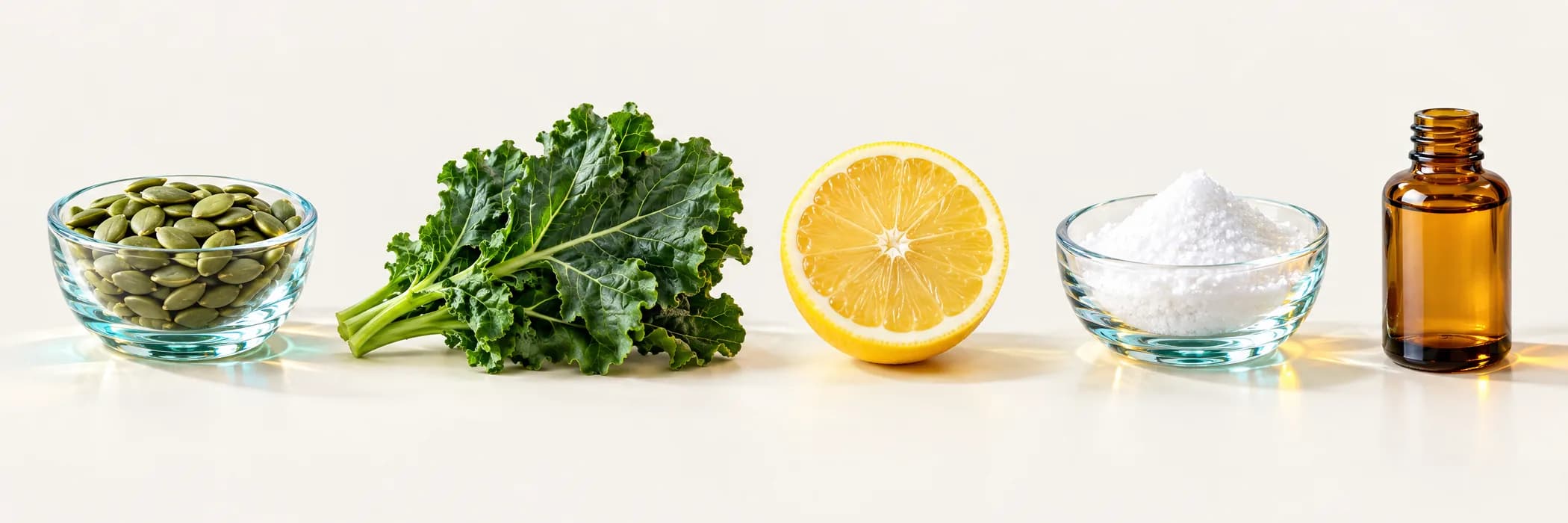
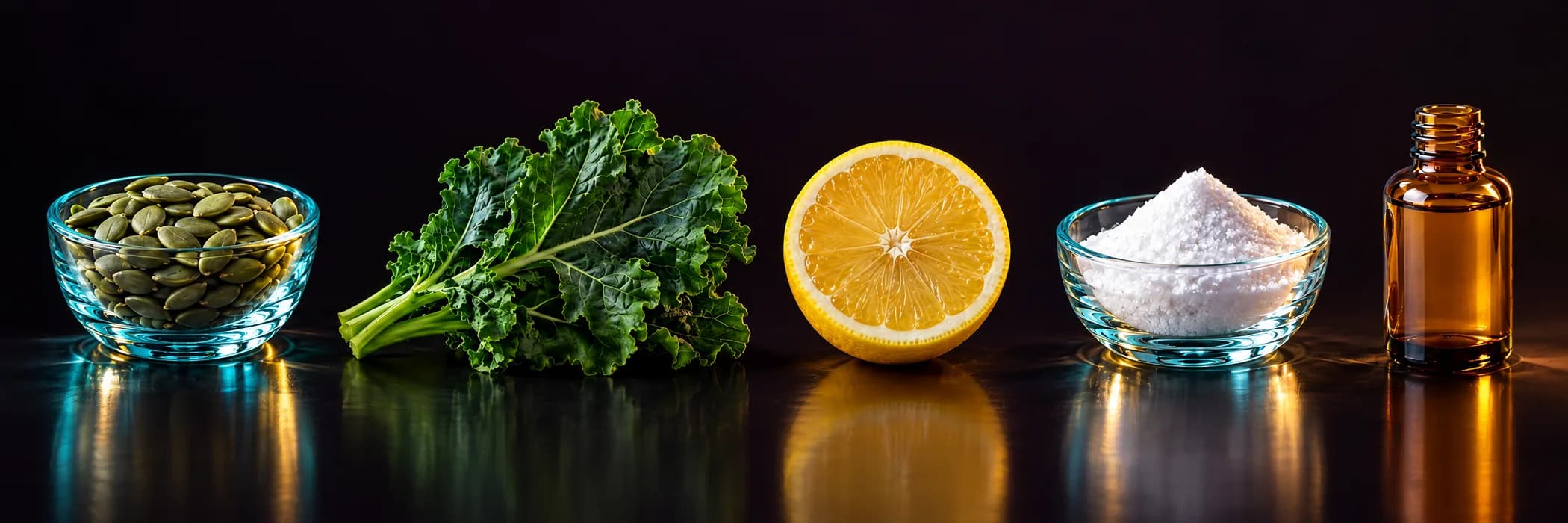
These get more from each GH pulse and offset its costs.
Make the pulse biggerSomatostatin brakes GH release. Less of it at dose time means a bigger pulse.
- L-Arginine:
- 3–6 g, 30 min before hexarelin, fasted. It lowers somatostatin and is the most reproducible nutritional GH booster. With hexarelin, IV arginine helped only older men.
- Alpha-GPC (α-glycerylphosphorylcholine):
- 300–600 mg, 30–60 min before dosing. An acetylcholine precursor that lowers somatostatin and adds to a GHRP's GH release. Also supports cognitive function.
Offset the cortisol and glucose driftGHRPs raise cortisol and can briefly blunt insulin sensitivity. These offset both.
- Berberine:
- 500 mg with the largest meal. It offsets the glucose drift, keeping fasting glucose and insulin sensitivity stable.
- Alpha-lipoic acid (ALA):
- 600 mg with meals, not fasted (it can upset an empty stomach). Insulin-sensitizing; pairs with berberine for glucose control.
- Phosphatidylserine:
- 400–800 mg before bed. Blunts the cortisol response to stress, worth it on a twice-daily cycle or when training hard.
Feed the GH signalGH drives protein synthesis through IGF-1. Without raw material, the pulse builds nothing.
- Protein:
- 1.6–2.0 g per kg of body weight daily (about 0.7–0.9 g/lb). Leucine-rich whey, eggs and meat best trigger mTOR, the protein-building arm IGF-1 activates.
- ZMA (zinc + magnesium + B6):
- 30–45 min before sleep, away from calcium. Low zinc reliably tracks low IGF-1. Magnesium supports the deep sleep where the bedtime dose lands.
- Vitamin D:
- 2,000–5,000 IU/day. Its receptors sit throughout the GH/IGF-1 axis; deficiency is linked to blunted GH release.
Dose calculator
Reconstitution calculator
Calculated for a 1 mL U-100 insulin syringe (100 units/mL).
Units per dose
4 units
Draw this many units on a U-100 syringe
Each unit holds 25 mcg
- Volume per dose
- 0.04 mL
- Doses per vial
- 50
- Concentration
- 2.5 mg/mL
One vial lasts
- Daily
- 50 days
- Every other day
- 100 days
- 5×/week
- 70 days
Research use only. Not for human consumption. Outputs are reference values based on research literature. Verify all measurements independently.
Side effects and what to watch
What people notice. Like the whole GHRP class, hexarelin raises ACTH and cortisol, two stress hormones, alongside GH. In a human study it raised them about as much as CRH, the brain signal that triggers them. Prolactin rises little. This is a class effect, not an impurity.
Worth knowing. With continuous dosing the GH response fades, partly and reversibly, which is why people cycle it.
Sources:PMID 9285939PMID 10990150
Common questions
How is hexarelin dosed?
Most people run 100 mcg once daily as a small injection under the skin. On an active block, 100 mcg twice daily (morning + pre-sleep) is the ceiling. Doubling the dose raised GH only about 40% in a human study.
When should I take it?
Bedtime on an empty stomach, at least 2 hours after the last meal, on top of the body's largest GH pulse in deep sleep. A fasted pre-workout dose is the usual second.
Do I need to cycle hexarelin?
Yes. In a human study the GH response fell about 45% over 16 weeks of twice-daily use, then fully recovered after a four-week break. Most people run 4–8 weeks on and 4 weeks minimum off.
Is hexarelin the most potent GHRP?
It is among the most potent. In a human head-to-head it matched GHRP-2, and both released more growth hormone than a maximal dose of GHRH.
How does hexarelin differ from sermorelin or CJC-1295?
Sermorelin and CJC-1295 act on the GHRH receptor. Hexarelin acts on the ghrelin receptor (GHS-R1a). The pathways are separate, so pairing the two releases more growth hormone than either alone.
What is the heart research on hexarelin?
In rodent and isolated-heart studies, hexarelin showed heart-protective effects through the CD36 receptor, independent of growth hormone.
Deep dive
Doses used in studies · Receptor dynamics + tolerance · Molecular identity · References
10From the researchDoses used in studies
These are the doses used in the published studies. A dose given per kilogram of body weight uses 1 kg ≈ 2.2 lb.
| Dose | Route | Model | Outcome | Sources: |
|---|---|---|---|---|
| 1–2 µg/kg | IV bolus | Human (young adults) | Strong dose-dependent GH rise (peak ~15–30 min); exceeds GHRH; similar to GHRP-2 | PMID 9285939 |
| Multi-route (IV / SC / intranasal / oral) | Various | Human (healthy men) | GH release by all routes; bioavailability SC ~77%, intranasal ~5%, oral <1% vs IV | PMID 8126144 |
| Twice daily | SC | Human (12 healthy elderly, 16 weeks) | GH response declined ~45% over 16 wk; partial and fully reversible after 4-wk washout | PMID 10990150 |
| IV / infusion | IV | Rat / isolated heart | GH-independent cardioprotection via CD36 (preclinical research only) | PMID 10465272 |
11Cycling rationaleReceptor dynamics + tolerance
How much it fades. In a human study, twelve healthy elderly adults took hexarelin twice daily under the skin for sixteen weeks. Their total GH release (area under the curve) fell from about 19.1 µg/L·h to about 10.5 µg/L·h by week 16, roughly a 45% drop.
How it comes back. A meaningful GH response remained at sixteen weeks. Four weeks after stopping, it was back to baseline. The authors called the fade 'partial and reversible.'
Sources:PMID 10990150
12ChemistryMolecular identity
- Molecular weight
- 887.0 g/mol (free base)
- Molecular formula
- C47H58N12O6
- Monoisotopic mass
- 886.46 Da (free base)
- CAS / UNII
- 140703-51-1 · 09QF37C617
- Sequence (6 AA)
- His-D-2-Me-Trp-Ala-Trp-D-Phe-Lys-NH₂PubChem CID 6918297
- Structure / class
- Synthetic GHRP-class hexapeptide (GHS-R1a agonist)PMID 8126144
- Molecular target
- GHS-R1a (ghrelin receptor); CD36 in cardiac tissue (preclinical)PMID 8126144
- Half-life
- ~76 min (rat IV); no clean human value establishedRat IV PKHalf-life curve →
- Regulatory status
- Investigational, approved nowhere · WADA S2.2.4 prohibitedResearch literature / WADA
13Primary sourcesReferences
- PubChem CID 6918297PubChem, Hexarelin free base (CID 6918297)
- PMID 8126144Ghigo et al. 1994. Hexarelin GH release and multi-route bioavailability in humans (J Clin Endocrinol Metab)
- PMID 9285939Arvat et al. 1997. Hexarelin & GHRP-2 GH potency and ACTH/cortisol/prolactin co-release (Peptides)
- PMID 10990150Rahim & Shalet 1998. Partial, reversible desensitization to 16-wk hexarelin (Growth Horm IGF Res)
- PMID 10465272Locatelli et al. 1999. GH-independent cardioprotection by hexarelin in rat (Endocrinology)
- PMID 11988484Bodart et al. 2002. CD36 mediates the cardiovascular action of GHRPs/hexarelin (Circ Res)
- PMID 15176951Demers et al. 2004. Mapping of the hexarelin/GHRP binding site on CD36 (Biochem J)
- PMID 25278975Mao et al. 2014. Review: hexarelin, CD36 and GH-independent cardioprotection (J Geriatr Cardiol)
- WADA Prohibited List S2.2.4WADA Prohibited List, S2.2.4 GH-Releasing Peptides (examorelin/hexarelin named)
- PMID 11888836Maccario et al. 2002. Two or three daily SC hexarelin doses and 24-h GH, PRL, ACTH and cortisol (Eur J Endocrinol)
- PMID 7561633Giustina et al. 1995. Hexarelin vs GHRH GH response with glucocorticoid excess (J Endocrinol)
- PMID 8548949Laron et al. 1995. Intranasal hexarelin raised IGF-I and growth velocity in short children (Clin Endocrinol)
- PMID 7962341Arvat et al. 1994. Arginine and GHRH restore the blunted hexarelin GH response in elderly men (J Clin Endocrinol Metab)
Reviewed by Ki Researcher Team · Research use only · Not medical advice · Updated 2026-10-19