
Retatrutide
GLP-1/GIP/glucagon triple agonist · LY3437943
Retatrutide dosing starts at 2 mg once a week and steps up every 4 weeks to 4, 9 or 12 mg. It is a GLP-1, GIP and glucagon triple agonist. In the Phase 3 TRIUMPH-1 trial, 12 mg cut body weight 25.0% over 80 weeks.
Buy GLP3-RT20 mg vial
Ki Researcher is affiliated with Ki Peptides.
Ships to the US only. Buyers must be 21 or older.
At a glance
- Dose
- 2 mg a week to start, up to 12 mg in trials
- How often
- Once weekly, same day
- How
- A small injection under the skin
- When
- One fixed weekday; many pick morning
- Ramp
- One step up every 4 weeks, starting at 2 mg
The 30-second versionEverything on this page, fast
Triple Agonist · Phase 3 Weight Loss · Liver Fat · Weekly Injection
Retatrutide is a triple agonist, one peptide that hits the GLP-1, GIP and glucagon receptors at once. In the Phase 3 TRIUMPH-1 trial it cut body weight 25.0% at 12 mg over 80 weeks. The glucagon arm, which semaglutide and tirzepatide lack, is studied to raise energy expenditure.
The basics
- A GLP-1/GIP/glucagon triple agonist (lab code LY3437943).
- A different molecule from semaglutide or tirzepatide that also hits the glucagon receptor.
Why people use it
- 25% weight loss in Phase 3. In the TRIUMPH-1 trial (obesity without diabetes) the 12 mg dose cut body weight 25.0% over 80 weeks, against 3.9% on placebo.
- A third receptor. On top of the appetite-cutting GLP-1 and GIP arms, the glucagon arm is studied to raise energy expenditure, the rationale for adding it.
- Large liver-fat reduction. A Phase 2a fatty-liver study saw liver fat drop about 80% at 8 and 12 mg over 24 weeks. The authors say the weight loss, the glucagon arm or both may explain it.
- Strong blood-sugar improvement. In the Phase 2 type 2 diabetes trial HbA1c, the blood-sugar marker, fell up to ~2 percentage points alongside substantial weight loss.
Stacks well with
- Cagrilintide adds the amylin axis, the one satiety pathway that doesn't overlap retatrutide's three receptors.
- Ipamorelin + CJC-1295, a growth-hormone stack to preserve lean mass against a steep deficit.
Good to know
- Gut side effects (nausea, diarrhea, vomiting, constipation) are the main issue. In TRIUMPH-2 (obesity with type 2 diabetes), diarrhea hit 27 to 34% and nausea 14 to 28% by dose, against 13% and 8% on placebo.
- Every arm in TRIUMPH-1 to -4 started at 2 mg and climbed one step every 4 weeks to its target. In the Phase 2 obesity trial, a 2 mg start partly reduced gut side effects compared with a 4 mg start.
- A 20 mg vial mixed with the same water as a 10 mg vial is twice as strong. Re-check the units for every new vial.
What it does
Phase 3 weight results, plus liver-fat and blood-sugar results from Phase 2.
- 25% weight loss in Phase 3In the Phase 3 TRIUMPH-1 trial, the 12 mg dose cut body weight 25.0% over 80 weeks.
- A third receptor the others lackThe glucagon arm is intended to raise energy expenditure, on top of the GLP-1 and GIP arms that cut appetite.
- Liver fat down roughly 80%It fell this much at 8 and 12 mg in Phase 2a. Weight loss, glucagon or both may drive it.
- Strong blood-sugar improvementIn the Phase 2 type 2 diabetes trial, HbA1c, the blood-sugar marker, fell up to about 2 percentage points.
- One injection a weekA ~6-day half-life supports one injection a week, with no meal timing to manage.
- Pairs with amylinAmylin is the one appetite pathway it leaves untouched, so people layer Cagrilintide for extra satiety.
Sources:PMID 42814954PMID 37385280PMID 38858523PMID 35985340PMID 36354040
How it works
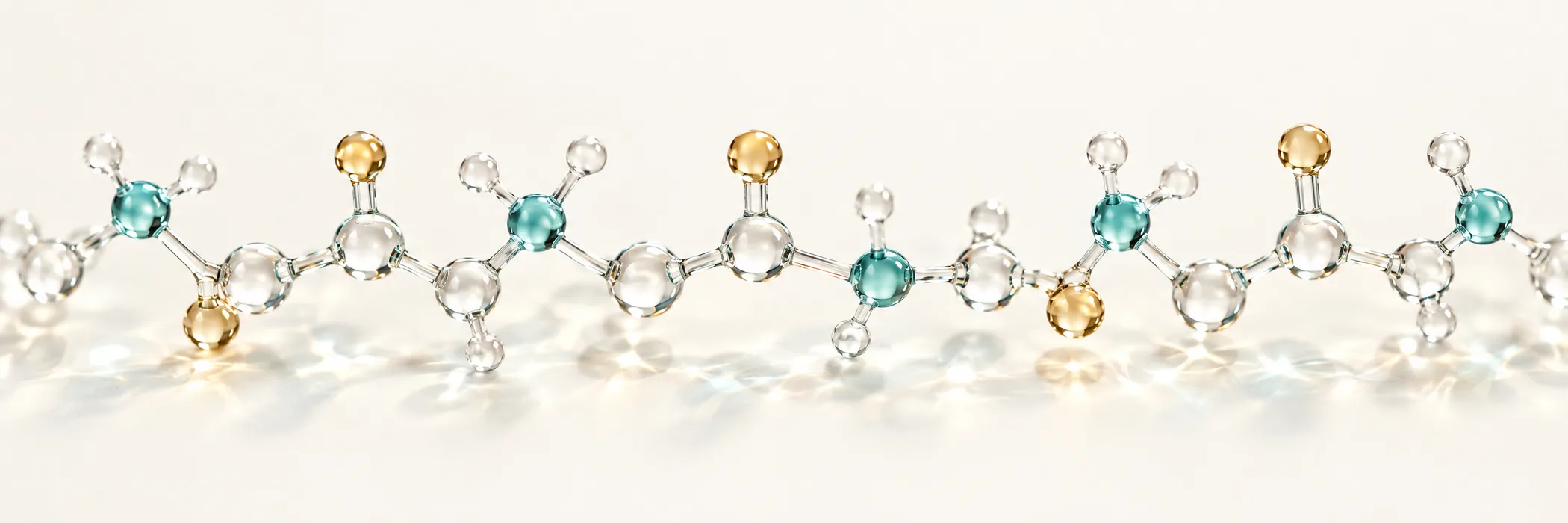

Retatrutide switches on three receptors at once, so it is an agonist at all three. They are the glucagon-like peptide-1 (GLP-1) receptor, the glucose-dependent insulinotropic polypeptide (GIP) receptor and the glucagon receptor.
Cuts appetite. The GLP-1 and GIP arms suppress appetite and improve blood-sugar control, the way the GLP-1 drug class works.
Raises energy burn. The glucagon arm is intended to raise energy expenditure. Eating less while burning more is the proposed basis for the larger weight loss versus single or dual agonists.
Lasts a week. It carries a fatty-diacid chain and non-natural amino acids (Aib and α-methyl-leucine). Its pharmacokinetics support once-weekly dosing.
How to dose it
One injection a week under the skin, stepped up every 4 weeks.
Dose tiersEvery arm in TRIUMPH-1 to -4 started at 2 mg a week.
- Starting dose:
- 2 mg once a week under the skin (subcutaneous, SC).
- The ladder:
- 2, 4, 6, 9, then 12 mg, one step every 4 weeks. It reaches 4 mg at week 4, 9 mg at week 12, 12 mg at week 16.
- Targets:
- 4 mg (−17.6% body weight at 80 weeks), 9 mg (−23.7%) or 12 mg (−25.0%) in TRIUMPH-1, each a separate arm.
- Phase 2 ladder:
- 2, 4, 8, then 12 mg. A separate arm held 1 mg for 48 weeks (−8.7%).
- Stepping back:
- TRIUMPH let people step back a dose for gut side effects.
How to injectOne injection a week. The half-life is about 6 days.
- Injection site:
- Abdomen (two inches clear of the navel), outer thigh or upper arm. Rotate sites weekly.
- Day and time:
- One fixed weekday, often the morning.
- Food:
- No food window. Many people eat light on step-up days.
- Split doses:
- No published trial tested splitting the weekly shot.
- Measuring the dose:
- A U-100 insulin syringe. The calculator below gives the units.
Cycle and breaksTRIUMPH-1 and -2 ran 80 weeks, 16 of step-ups and 64 at the target.
- Cycling off:
- No published reason to cycle off. Every published trial dosed continuously.
Mixing the vialSyringe units depend on the vial size and the water added.
- 20 mg vial (calculator default):
- 2 mL gives 10 mg per mL. 2 mg = 20 units, 4 mg = 40, 6 mg = 60, 9 mg = 90, 12 mg = 120 (two draws).
- 10 mg vial:
- 2 mL gives 5 mg per mL. 2 mg = 40 units, 4 mg = 80, 6 mg = 120 (two draws).
- Vial swap:
- 40 units hold 4 mg from a 20 mg vial but 2 mg from a 10 mg vial.
- 10-fold errors:
- A poison-center report on compounded semaglutide found two 10-fold overdoses and one person dosing in mL and units. Set the dose in mg; the calculator gives the units.
Sources:PMID 41090431PMID 42814954PMID 37366315PMID 38858523PMID 37385280PMID 36354040PMID 37392810
Best time to take it


Implied best time
Anytime (consistent, weekly)
People take retatrutide on one fixed day each week, at whatever hour suits them.
- Its half-life is about 6 days, so blood levels stay broadly steady all week. Holding one weekday keeps them even.
- It works with or without food. Many people eat light or sip ginger tea on step-up days.
- Nausea is sharpest during the ramp, so many people dose in the morning to keep any early queasiness in waking hours.
Sources:PMID 36354040
What to stack it with


Retatrutide already drives GLP-1, GIP and glucagon, so semaglutide, tirzepatide or survodutide are redundant.
Retatrutide + CagrilintideAmylin is the one satiety pathway retatrutide leaves untouched.
- Why it works:
- Cagrilintide is an amylin analog, a fourth satiety signal that duplicates none of retatrutide's three. CagriSema (semaglutide + cagrilintide) Phase 3 data supports the logic.
- The protocol:
- Cagrilintide runs its own slow ramp (typically 0.3–2.4 mg once weekly under the skin). People establish retatrutide first, then add it, never both at once.
- Outcome:
- Maximum satiety and the steepest deficit. Protein, creatine and lifting matter even more.
Retatrutide + Ipamorelin / CJC-1295A growth-hormone nudge that protects muscle in a steep deficit.
- Why it works:
- Both raise growth hormone, which promotes lean-mass retention and fat mobilization, with no receptor overlap.
- The protocol:
- Ipamorelin 200–300 mcg + CJC-1295 (no-DAC) 100–200 mcg under the skin, 1–2× daily, 5-on/2-off, before bed or training on an empty stomach. Creatine 3–5 g/day and 1.6–2.0 g/kg protein alongside.
- Outcome:
- Maximum fat loss with minimum muscle loss. Nausea cofactors stay in, since it does not ease the gut.
Retatrutide + BPC-157Gut-lining support for the nausea-heavy weeks of the ramp.
- Why it works:
- BPC-157 is studied for healing the gut lining and restoring motility, with no receptor overlap.
- The protocol:
- BPC-157 250–500 mcg once daily under the skin, abdomen, rotated with the weekly retatrutide site. Typically the first 8–16 weeks, then tapered.
- Outcome:
- For gut side effects that limit step-ups or linger. It does not reduce retatrutide's weight loss.
Support nutrients


Muscle first, then the gut and the liver.
Keep your muscleThe top priority at 20–24% body-weight loss.
- Protein:
- 1.6–2.0 g per kg of body weight per day, protein first at every meal, toward 2.0 g/kg when lifting.
- Lifting:
- Minimum 2–3 sessions per week of compound lifts. Without it, loss splits approximately 75% fat / 25% lean mass.
- Creatine:
- 3–5 g/day monohydrate, no loading, in water with a meal.
Nausea and constipationGut side effects hit ~35% in the diabetes trial.
- Ginger (nausea):
- 1–2 g standardized ginger extract per day, divided with meals. On step-up days, before the first meal.
- Vitamin B6 (nausea):
- 25–50 mg pyridoxine daily, mainly through the first 4–8 weeks of step-ups.
- Constipation:
- Magnesium glycinate 300–400 mg at bedtime, 25–35 g/day dietary fiber (psyllium husk 5–10 g is fastest) and ≥2.5 L water daily.
Electrolytes and vitaminsEating much less means taking in fewer nutrients.
- Electrolytes:
- Sodium 1,000–2,000 mg/day added, potassium 2,000–3,000 mg/day via food or supplement, magnesium 300–400 mg/day. Fatigue and cramps point here first.
- Multivitamin:
- A complete daily multivitamin covering B12, iron, calcium, zinc and folate, with methylcobalamin B12.
Liver supportLiver fat fell about 80% at 8 and 12 mg in Phase 2a.
- Choline:
- 500–1,000 mg choline bitartrate or CDP-choline daily, which the liver uses to export fat. Eggs (147 mg each), liver and beef add more.
- Omega-3 (EPA/DHA):
- 2–3 g combined EPA and DHA daily from fish oil, with meals.
Dose calculator
Reconstitution calculator
Calculated for a 1 mL U-100 insulin syringe (100 units/mL).
Units per dose
40 units
Draw this many units on a U-100 syringe
Each unit holds 100 mcg
- Volume per dose
- 0.4 mL
- Doses per vial
- 5
- Concentration
- 10 mg/mL
One vial lasts
- Daily
- 5 days
- Every other day
- 10 days
- 5×/week
- 7 days
- Large draw (40 units). That's normal for mg doses. To check it, multiply the units by what each unit holds. You should get your dose.
Research use only. Not for human consumption. Outputs are reference values based on research literature. Verify all measurements independently.
Side effects and what to watch
What people notice. Nausea, diarrhea, vomiting and constipation, mostly mild to moderate in Phase 2. In TRIUMPH-2 (Phase 3, obesity with type 2 diabetes), diarrhea hit 27 to 34% and nausea 14 to 28% by dose, against 13% and 8% on placebo.
How people handle it. They climb the 4-week ladder from 2 mg and step back a dose when gut side effects get hard, as TRIUMPH allowed. In Phase 2, starting at 2 mg rather than 4 mg partly reduced them.
Worth knowing. In the Phase 2 obesity trial, heart rate rose with dose, peaked around 24 weeks, then declined. TRIUMPH-2 also saw dysesthesia, an abnormal skin sensation, in 4 to 7% against 1% on placebo.
Sources:PMID 42810372PMID 41090431PMID 37366315PMID 37385280
Common questions
How is retatrutide dosed?
Once a week under the skin, starting at 2 mg and stepping up every 4 weeks to 4, 9 or 12 mg, as in the Phase 3 trials.
How many units is a dose on a 10 or 20 mg vial?
With 2 mL of water, 2 mg is 20 units from a 20 mg vial, the calculator's default, and 40 from a 10 mg vial. The calculator takes any mix.
Can I split the weekly retatrutide dose?
No published trial tested a split; all gave one weekly injection. For gut side effects, the trials used the 4-week ramp and stepping back a dose.
Why do some retatrutide schedules list 1 or 8 mg?
Those are Phase 2 obesity-trial doses (1, 4, 8 and 12 mg). Phase 3 uses 4, 9 and 12 mg, reached in 4-week steps from 2 mg.
What are the main side effects of retatrutide?
Nausea, diarrhea, vomiting and constipation, mostly mild to moderate and dose-related. TRIUMPH-2 (obesity with type 2 diabetes) also saw more dysesthesia (an abnormal skin sensation) and low blood pressure than placebo.
How is it different from semaglutide or tirzepatide?
Semaglutide (Ozempic, Wegovy) hits the GLP-1 receptor and tirzepatide (Mounjaro, Zepbound) adds GIP. Retatrutide also hits the glucagon receptor, which is intended to raise energy expenditure.
Deep dive
Doses used in studies · Molecular identity · References
10From the researchDoses used in studies
These are doses from the published human trials, each given once a week under the skin.
| Dose | Route | Model | Outcome | Sources: |
|---|---|---|---|---|
| 1 mg | SC weekly | Human (Phase 2 obesity, n=338) | −8.7% body weight at 48 weeks | PMID 37366315 |
| 4 mg | SC weekly | Human (Phase 2 obesity, n=338) | −17.1% body weight at 48 weeks | PMID 37366315 |
| 8 mg | SC weekly | Human (Phase 2 obesity, n=338) | −22.8% body weight at 48 weeks | PMID 37366315 |
| 12 mg | SC weekly | Human (Phase 2 obesity, n=338) | −24.2% body weight at 48 weeks vs −2.1% placebo | PMID 37366315 |
| up to 12 mg | SC weekly | Human (Phase 2 type 2 diabetes, n=281) | HbA1c up to −2.02% at 24 weeks; body weight up to −16.94% at 36 weeks | PMID 37385280 |
| up to 12 mg | SC weekly | Human (Phase 2a MASLD/fatty liver, n=98) | Liver-fat reduction −81.4% (8 mg) / −82.4% (12 mg) at 24 weeks | PMID 38858523 |
| 4 mg | SC weekly | Human (Phase 3 TRIUMPH-1, obesity without diabetes, n=2,339) | −17.6% body weight at 80 weeks | PMID 42814954 |
| 9 mg | SC weekly | Human (Phase 3 TRIUMPH-1, obesity without diabetes, n=2,339) | −23.7% body weight at 80 weeks | PMID 42814954 |
| 12 mg | SC weekly | Human (Phase 3 TRIUMPH-1, obesity without diabetes, n=2,339) | −25.0% body weight at 80 weeks vs −3.9% placebo | PMID 42814954 |
| 4, 9 or 12 mg | SC weekly | Human (Phase 3 TRIUMPH-2, obesity with type 2 diabetes, n=1,152) | −11.9%, −16.8% and −18.8% body weight at 80 weeks vs −5.1% placebo | PMID 42810372 |
| 4, 9 or 12 mg | SC weekly | Human (Phase 3 TRANSCEND-T2D-1, type 2 diabetes, n=537) | HbA1c −1.69, −1.86 and −1.94 points vs −0.81 placebo; body weight −11.5%, −13.9% and −15.3% vs −2.6% at 40 weeks | PMID 42250575 |
11ChemistryMolecular identity
- Molecular weight
- ~4,731 Da
- Molecular formula
- C221H342N46O68
- Monoisotopic mass
- 4728.47 Da
- CAS / UNII
- 2381089-83-2 · NOP2Y096GV
- Structure / class
- Synthetic lipidated peptide; GLP-1/GIP/glucagon triple receptor agonist (retatrutide / LY3437943)PubChem CID 171390338; Guide to Pharmacology 13769
- Molecular target
- GLP-1 receptor + GIP receptor + glucagon receptor (GCGR) triple agonistGuide to Pharmacology 13769
- Half-life
- ~6 days (supports once-weekly SC dosing)PMID 36354040 (retatrutide phase 1b)Half-life curve →
- Regulatory status
- Investigational; not FDA-approved (Phase 3, TRIUMPH program)ClinicalTrials.gov
12Primary sourcesReferences
- PubChem CID 171390338PubChem CID 171390338 (Retatrutide / LY3437943, free acid)
- PMID 35985340Coskun et al., Cell Metab 2022 (discovery, triple-agonist pharmacology, PK)
- PMID 36354040Urva et al., Lancet 2022 (LY3437943 Phase 1b, type 2 diabetes; half-life about 6 days)
- PMID 37366315Jastreboff et al., N Engl J Med 2023 (Phase 2 obesity trial)
- PMID 37385280Rosenstock et al., Lancet 2023 (Phase 2 type 2 diabetes trial)
- PMID 38858523Sanyal et al., Nat Med 2024 (Phase 2a MASLD substudy of the Phase 2 obesity trial; per-arm dose steps)
- PMC11255275Li et al., Cell Discovery 2024 (structural insights into triple agonism at GLP-1R/GIPR/GCGR by retatrutide)
- PMID 41090431Giblin et al., Diabetes Obes Metab 2026 (TRIUMPH Phase 3 design; 2 mg start, 4-week dose steps, 80-week treatment in TRIUMPH-1 to -3)
- PMID 42814954Jastreboff et al., N Engl J Med 2026 (TRIUMPH-1, Phase 3 obesity trial, 80 weeks)
- PMID 42810372Bellido et al., Lancet 2026 (TRIUMPH-2, Phase 3, obesity with type 2 diabetes, 80 weeks)
- PMID 42250575Bajaj et al., Lancet 2026 (TRANSCEND-T2D-1, Phase 3, type 2 diabetes, 40 weeks)
- PMID 37392810Lambson et al., J Am Pharm Assoc 2023 (compounded semaglutide dosing errors, poison-center case series)
- ClinicalTrials.gov NCT05929066ClinicalTrials.gov, TRIUMPH Phase 3 program (NCT05929066 completed; NCT05931367 completed; NCT06662383 vs tirzepatide, active)
GLP3-RT
20 mg vial
Ki Researcher is affiliated with Ki Peptides.
Ships to the US only. Buyers must be 21 or older.
Reviewed by Ki Researcher Team · Research use only · Not medical advice · Updated 2026-10-04