
Cagrilintide
Long-acting amylin analog · once weekly under the skin · the amylin half of CagriSema
Cagrilintide is a long-acting copy of amylin, the pancreatic fullness hormone. It adds an appetite brake GLP-1 drugs lack, so people run it for weight loss, usually with semaglutide as CagriSema. In REDEFINE-1 the pair cut 22.7% of body weight, versus 11.8% for cagrilintide alone.
At a glance
- Dose
- Start 0.3–0.6 mg, step up toward 2.4 mg
- How often
- Once a week, same day
- How
- A small injection under the skin
- When
- One fixed day each week (the hour doesn't matter)
- Ramp
- Hold 4 weeks, then climb ~0.3–0.6 mg every 4 weeks
- Cycle
- 16–26 weeks minimum, up to 68 weeks in trials
The 30-second versionEverything on this page, fast
Amylin Analog · Appetite Control · Weight Loss · Once-Weekly
The amylin half of CagriSema, the most-talked-about combo in obesity research. It adds an appetite brake the GLP-1 drugs don't have, and it raises weight loss when paired with semaglutide.
The basics
- A lab-made, long-acting copy of amylin, a pancreatic hormone that signals fullness and slows the stomach.
- A different class from Ozempic/Wegovy (those are GLP-1); the whole point is to stack the two pathways.
Why people use it
- A separate appetite lever. Amylin works through its own receptor, so it adds a brake GLP-1 drugs lack. That's why it's paired with them, not swapped in.
- Big weight loss when paired. CagriSema (Semaglutide + cagrilintide) hit ~22.7% mean weight loss in the Phase 3 REDEFINE-1 trial, more than either alone.
- Works on its own too. Up to ~11.8% weight loss over 68 weeks as monotherapy, and it edged out liraglutide in a Phase 2 head-to-head.
- Spares more lean mass. Trials show amylin analogs preserve muscle while cutting fat better than GLP-1 alone.
Stacks well with
- Semaglutide, the trial-backed CagriSema pairing. Amylin and GLP-1 run through different brain circuits, so the weight loss adds up. Both ramp slowly together, on the same day.
- Tirzepatide, the cutting-edge pairing. It adds the amylin axis on top of tirzepatide's dual GIP/GLP-1 action for a deeper combined effect. It's newer, so ramp slower.
Good to know
- Gastrointestinal (GI) side effects, meaning nausea, constipation and diarrhea, lead the list. Worse on the combo (~79.6% in REDEFINE-1 vs ~39.9% placebo) than alone (~20–47% nausea).
- Slow titration is your main lever. The GI hit is dose-dependent and front-loaded, so ramp gradually and inject after a light, low-fat meal.
- Weight tends to come back after stopping, like the GLP-1s. The loss holds mostly while you're on it.
- The headline numbers belong to CagriSema, not cagrilintide alone. Always check which arm a figure is from.
What it does
Why people run the amylin half of obesity research's most-discussed combination.
- An appetite brake GLP-1 drugs lackAmylin works through its own receptor, a separate pathway from the GLP-1 drugs.
- About 22.7% weight loss with semaglutideIn REDEFINE-1, CagriSema (Semaglutide + cagrilintide) produced about 22.7% mean weight loss, more than either alone.
- Up to 11.8% loss on its ownAs monotherapy it hit up to 11.8% weight loss over 68 weeks, edging out Liraglutide in a head-to-head.
- Spares more lean massTrials report amylin analogs preserve more lean mass than GLP-1 alone while cutting fat.
- One shot a weekIts ~7-day half-life supports one injection a week, often the same day as a GLP-1 partner.
Sources:PMID 40544433PMID 34798060PMID 33894838PMID 40609154
How it works
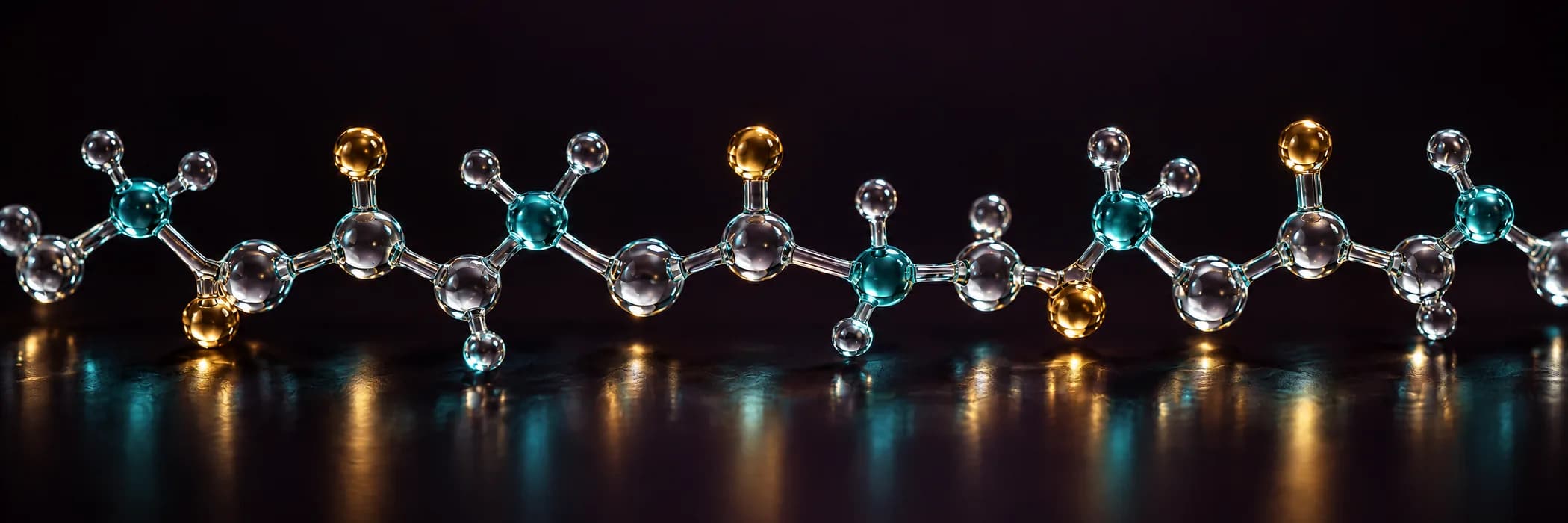
Cagrilintide switches on the amylin receptor, the target of a hormone released with insulin. GLP-1, a gut hormone, works through a different pathway, which is why the two combine.
Targets three receptors. It activates AMY1R and AMY3R, plus the calcitonin receptor. Removing the helper proteins RAMP1 and RAMP3 in animal studies erased its weight effect.
Acts on the brainstem. It works mainly through the area postrema, a satiety and nausea center, then the nucleus of the solitary tract, the parabrachial nucleus and the hypothalamus.
Builds fullness, spares muscle. The result is deeper satiety and a slower stomach that cuts food intake. Research suggests weight loss stays partly independent of appetite suppression; trials report lean mass spared as fat drops.
Sources:PMID 40609154PMID 34288673
How to dose it
A once-weekly injection under the skin. People climb slowly toward the 2.4 mg trial dose to keep nausea down.
Dose tiersMost people start at 0.3–0.6 mg weekly and step up toward the 2.4 mg trial dose.
- Starting / low dose:
- 0.3–0.6 mg subcutaneous (SC) once weekly, the lowest doses in phase 2. Most start here, holding 4 weeks before stepping up.
- Escalation ladder:
- Step up ~0.3–0.6 mg every 4 weeks. The phase 2 range ran 0.3 mg to 4.5 mg; most cap around 2.4 mg.
- Target / trial dose:
- 2.4 mg SC once weekly, the REDEFINE-1 Phase 3 dose. Alone, ~11.8% at 68 weeks; with semaglutide 2.4 mg, ~22.7%.
- Monotherapy vs combination:
- The headline numbers belong to CagriSema, not cagrilintide alone. Check which arm a figure comes from.
How to injectOne weekly shot under the skin. Rotate sites, and eat light beforehand.
- Injection site:
- Abdomen (2–3 cm from the navel), outer thigh or upper-arm fat. Rotate sites weekly to prevent lipohypertrophy.
- Day and time of week:
- Pick one day a week and hold it. Consistency matters more than the day.
- Food window:
- A light, low-fat meal before injecting eases nausea, since the drug already slows the stomach.
Cycle and breaksPeople run it as a sustained course, since weight loss builds with time.
- Minimum useful duration:
- 16–26 weeks minimum. Phase 2 ran 26 weeks, phase 3 to 68 weeks. Under 12 weeks does little.
- Ongoing maintenance:
- Weight loss holds mostly while active. Stopping in trials led to regain; maintenance used a lower weekly dose.
- Washout:
- With a ~7-day half-life, a ~4-week washout clears it. Recheck fasting glucose, lipids and body composition after a course.
Mixing the vialThe calculator defaults to a 5 mg vial with 2 mL of bacteriostatic water.
- Mixing:
- 5 mg + 2 mL bacteriostatic water = 2,500 mcg/mL, so 300 mcg takes 12 units, 600 mcg 24 units, 1,200 mcg 48 units and 2,400 mcg 96 units.
- Dose unit conversion:
- Cagrilintide is dosed in mg in trials, not mcg. 2.4 mg equals 2,400 mcg, or 96 units at this mix.
Best time to take it

Implied best time
Anytime (consistent, weekly)
Most people take cagrilintide on one fixed day each week. The day matters, the hour does not.
- Its ~7-day half-life keeps levels steady all week, with no daily peak to time. Effects build over months, so week-to-week consistency matters most.
- Many run it alongside Semaglutide in CagriSema, where both injections land on the same day, so aligning the two is the practical habit.
- Nausea is the main day-to-day variable, so many dose on a low-activity day, away from training.
Sources:PMID 33894838
What to stack it with


A second amylin drug would be redundant. The useful partners add a lever cagrilintide lacks, above all a GLP-1 drug.
Cagrilintide + Semaglutide (CagriSema)The only stack here with Phase 3 data, sold pre-mixed as a blend.
- Why it works:
- Amylin acts in the brainstem for satiety and gastric braking; GLP-1 acts on hypothalamic and vagal circuits. Different receptors, additive effect.
- The protocol:
- Cagrilintide 2.4 mg SC weekly plus Semaglutide 2.4 mg SC weekly, titrated together.
- Outcome:
- REDEFINE-1 (n=3,417, 68 weeks): CagriSema −22.7% vs cagrilintide alone −11.8% and semaglutide alone −16.1%. Gastrointestinal (GI) effects are additive too (~79.6% vs ~39.9% placebo).
Cagrilintide + TirzepatideAdds the amylin axis tirzepatide lacks, atop its dual incretin action.
- Why it works:
- Tirzepatide hits GIP and GLP-1 but not amylin. Cagrilintide adds a third satiety mechanism.
- The protocol:
- Cagrilintide titrating 0.3 to 2.4 mg SC weekly alongside tirzepatide's ramp from 2.5 mg SC weekly. It's a newer pairing, so people ramp slower.
- Outcome:
- Covers GIP, GLP-1 and amylin at once, the frontier of the class.
Cagrilintide + creatine + growth hormone (GH) secretagogueProtects lean mass under any amylin or GLP-1 protocol.
- Why it works:
- Deep appetite suppression can catabolize muscle. Creatine cuts protein breakdown; Ipamorelin or CJC-1295 adds growth-hormone (GH) pulses through a separate axis.
- The protocol:
- Creatine 3–5 g daily. Ipamorelin 200–300 mcg SC at bedtime, 5-on/2-off weekly. Resistance training 3–4 days weekly.
- Outcome:
- Steers the loss toward fat, not muscle.
Support nutrients
Cagrilintide slows digestion and crushes appetite. These supplements settle the gut and guard muscle.
Settling nauseaGinger and vitamin B6 ease the ramp's queasy weeks.
- Ginger:
- 1–2 g ginger extract, or 1–2 cups ginger tea, 20–30 minutes before injection day's first meal. It targets the same gut receptor anti-nausea drugs do.
- Vitamin B6 (pyridoxine):
- 25–50 mg B6 daily. Doses above 100 mg a day long-term carry nerve-damage risk.
Constipation reliefSlower digestion plus less food causes constipation. Manage it early.
- Magnesium glycinate or citrate:
- 300–400 mg elemental magnesium at night. Start at 200 mg, building up over 1–2 weeks.
- Soluble fiber (psyllium):
- 5–10 g psyllium husk in 250–300 mL water daily, apart from injection time.
- Hydration:
- At least 2.5–3 L water daily.
Electrolytes and mineralsEating less, plus nausea or diarrhea, depletes electrolytes fast.
- Sodium:
- Don't cut sodium hard. Add a pinch of salt if fatigue, headaches or light-headedness show up.
- Potassium:
- Potassium-rich foods daily, or 100–200 mg potassium citrate if restricted.
- Magnesium:
- Covered above.
Protein, creatine and liftingProtecting lean mass is the priority.
- Protein:
- 1.6–2.0 g per kg of current body weight daily (0.7–0.9 g per lb); protein-first meals.
- Creatine monohydrate:
- 3–5 g daily, no loading phase.
- Resistance training:
- 2–4 sessions per week protects muscle in a deficit.
Cover nutrient gapsLess food means fewer micronutrients coming in.
- Broad-spectrum multivitamin:
- One daily multivitamin with food, covering iron, B12, zinc and folate.
- Vitamin D3 + K2:
- 2,000–4,000 IU vitamin D3 with 100 mcg K2, daily with a fat-containing meal.
Dose calculator
Reconstitution calculator
Calculated for a 1 mL U-100 insulin syringe (100 units/mL).
Units per dose
96 units
Draw this many units on a U-100 syringe
Each unit holds 25 mcg
- Volume per dose
- 0.96 mL
- Doses per vial
- 2
- Concentration
- 2.5 mg/mL
One vial lasts
- Daily
- 2 days
- Every other day
- 4 days
- 5×/week
- 2 days
- Large draw (96 units). That's normal for mg doses. To check it, multiply the units by what each unit holds. You should get your dose.
Research use only. Not for human consumption. Outputs are reference values based on research literature. Verify all measurements independently.
Side effects and what to watch
What people notice. Nausea, constipation and diarrhea lead the list. Alone, nausea hits about 20–47% of people versus 18% on placebo. Paired with semaglutide as CagriSema, GI effects run higher, about 79.6% versus 39.9% on placebo.
How people handle it. The slow titration is the main lever, since the GI hit is dose-dependent and front-loaded.
Worth knowing. A dedicated heart-rhythm study found no meaningful QT effect even at the top 4.5 mg dose.
Common questions
What is cagrilintide?
It's a long-acting copy of amylin, a pancreatic hormone that signals fullness and slows the stomach. It's a weekly injection, run alone or alongside semaglutide as CagriSema, and works through a separate pathway from the GLP-1 drugs.
How is it different from Ozempic or Wegovy?
Those are GLP-1 drugs, copying a gut hormone. Cagrilintide copies amylin, made in the pancreas. The two pathways converge, so pairing them as CagriSema adds more weight loss than either alone.
How much weight loss does it produce?
Alone, up to about 11.8% over 68 weeks in trials. Paired with semaglutide as CagriSema, REDEFINE-1 reported 22.7% average weight loss, though that number comes from the pair, not cagrilintide alone.
How is it dosed?
As a once-weekly injection under the skin. Most people start at 0.3–0.6 mg, step up roughly every 4 weeks, and anchor around the 2.4 mg trial dose.
Do I need to cycle it?
No short cycle. People run it 16 to 26 weeks at minimum. The trials ran out to 68 weeks, with about a 4-week washout to clear it.
What does it stack with?
Semaglutide, in the trial-backed CagriSema pairing, for additive weight loss. Tirzepatide, a newer combination adding the amylin axis. Creatine and a GH secretagogue like ipamorelin protect lean mass.
Deep dive
Doses used in studies · Molecular identity · References
10From the researchDoses used in studies
These are the doses used in the published trials, including the CagriSema Phase 3 program. All were weekly injections under the skin.
| Dose | Route | Model | Outcome | Sources: |
|---|---|---|---|---|
| 0.16–4.5 mg | SC weekly (20 wk) | Human (Phase 1b, + semaglutide 2.4 mg, no diabetes, single center) | −17.1% with cagrilintide 2.4 mg and −15.4% at the 4.5 mg TOP dose, vs 9.8% and 8.0% for matched placebo cohorts (all on semaglutide 2.4 mg). The best result was not at the highest dose; well tolerated | PMID 33894838 |
| 0.3–4.5 mg | SC weekly (26 wk) | Human (Phase 2 monotherapy, n=706, obesity, no diabetes) | Weight −6.0% to −10.8% vs −3.0% placebo; 4.5 mg −10.8% vs liraglutide −9.0% (p=0.03) | PMID 34798060 |
| 2.4 mg | SC weekly | Human (CagriSema Phase 2, type 2 diabetes) | CagriSema −15.6% vs cagrilintide −8.1% vs semaglutide −5.1% | PMID 37364590 |
| 2.4 mg | SC weekly (68 wk) | Human (REDEFINE-1 Phase 3, n=3,417, obesity, no diabetes) | CagriSema −22.7% vs cagrilintide −11.8%, semaglutide −16.1%, placebo −2.3% (trial-product estimand) | PMID 40544433 |
| up to 4.5 mg | SC weekly | Human (Thorough QT study, n=105 healthy) | No clinically relevant QTcF prolongation at 4.5 mg | PMID 39279639 |
11ChemistryMolecular identity
- Molecular weight
- 4409 g/mol
- Molecular formula
- C194H312N54O59S2
- Monoisotopic mass
- 4406.25 Da
- Amino acids
- 37-residue pramlintide-like backbone
- Structure / class
- Acylated long-acting amylin analog; 14E/17R, 25P/28P/29P, C-terminal Pro; C20 diacid via γ-Glu linkerPMID 34288673 (J Med Chem 2021)
- CAS / UNII
- 1415456-99-3 · AO43BIF1U8PubChem CID 171397054; FDA UNII
- Molecular target
- Amylin receptors (AMY1R/AMY3R) + calcitonin receptor (agonist)PMID 34288673
- Half-life
- ~7 days (~159–195 h; secondary PK aggregation)PMID 33894838 (phase 1b PK)Half-life curve →
- Regulatory status
- Investigational; not FDA-approved (only the CagriSema combination has an NDA on file)Novo Nordisk filing
12Primary sourcesReferences
- PubChem CID 171397054PubChem CID 171397054 (Cagrilintide)
- PMID 34288673Kruse et al., J Med Chem 2021 (development of cagrilintide)
- PMID 40609154Brain amylin receptors 1 and 3 mediate cagrilintide weight loss (2025)
- PMID 33894838Enebo et al., Lancet 2021 (phase 1b cagrilintide + semaglutide)
- PMID 34798060Lau et al., Lancet 2021 (phase 2 cagrilintide monotherapy)
- PMID 37364590Frias et al., Lancet 2023 (CagriSema phase 2, type 2 diabetes)
- PMID 40544433Garvey et al., REDEFINE 1, NEJM 2025 (CagriSema phase 3, 68 weeks, n=3,417; NCT05567796)
- PMID 39279639Thorough QT study, cagrilintide up to 4.5 mg (2024)
- WADA 2026WADA 2026 Prohibited List (cagrilintide not named; S2 by class inference)
Reviewed by Ki Researcher Team · Research use only · Not medical advice · Updated 2026-09-24