
Survodutide
Glucagon (GCGR) + GLP-1 dual agonist · once weekly · developed for obesity and fatty-liver disease (MASH)
Survodutide switches on two receptors, glucagon and GLP-1 (glucagon-like peptide-1). People run it for weight loss and liver-fat clearance. In phase 2, up to 62% saw fatty-liver disease (MASH) improve without worsening fibrosis. Phase 3 reported up to 13.0% mean weight loss over 76 weeks.
At a glance
- Dose
- 1.2–6.0 mg a week, titrated up gradually
- How often
- Once weekly
- How
- A small injection under the skin (belly fat)
- When
- Any consistent weekday, the hour does not matter
- Ramp
- Step up slowly, a fast ramp is what brings on the nausea
The 30-second versionEverything on this page, fast
Deep liver-fat clearance · Strong weight loss · Glucagon + GLP-1 · Energy expenditure
A glucagon (GCGR) + GLP-1 dual agonist studied for the deepest liver-fat clearance of the class plus strong weight loss. Its glucagon arm adds a calorie-burn lever the GLP-1-only drugs lack, which is why the liver, not the scale, is its real differentiator.
The basics
- Hits two receptors at once: GLP-1 (appetite, blood sugar) plus glucagon (calorie burn, liver-fat burning).
- Developed by Boehringer Ingelheim + Zealand Pharma for obesity and fatty-liver disease (MASH).
Why people use it
- A standout liver-fat profile. Its signature result, a big MASH improvement driven by the glucagon arm burning fat right inside the liver.
- Substantial weight loss. Strong reductions across the obesity trials.
- An extra calorie-burn lever. The glucagon arm raises resting energy expenditure, on top of eating less.
- Better blood sugar. The GLP-1 arm improves glucose control despite the glucagon arm.
Stacks well with
- Cagrilintide adds the amylin axis, a satiety lever that overlaps neither the GLP-1 nor the glucagon arm.
- Protein + resistance training protects lean mass while the steep deficit drives fat loss.
Good to know
- Nausea during the dose-titration is the main issue. Titrate slowly and it settles.
- Expect a modest bump in resting heart rate.
- The glucagon arm is the whole story. It's why liver-fat clearance is its signature.
What it does
People run it for weight loss and liver-fat clearance. The liver is where it stands out.
- A standout liver-fat resultIn phase 2, up to 62% saw MASH improve without worsening fibrosis; up to 67% had a large liver-fat drop.
- About 13% weight lossIn phase 3 (SYNCHRONIZE-1), mean weight loss at 76 weeks was 13.0% on 6.0 mg, against 5.4% on placebo.
- Extra calorie burn at restIts glucagon arm is studied to raise resting energy expenditure, so you burn more on top of eating less.
- Better blood sugar despite the glucagon armIn a phase 2 diabetes study net glucose improved and it edged out Semaglutide on HbA1c, a blood-sugar marker.
- One injection a weekA ~6–7-day half-life from albumin binding supports one injection a week, with or without food.
Sources:PMID 41187967PMID 42253238PMID 38847460PMID 38330987PMID 36356832
How it works
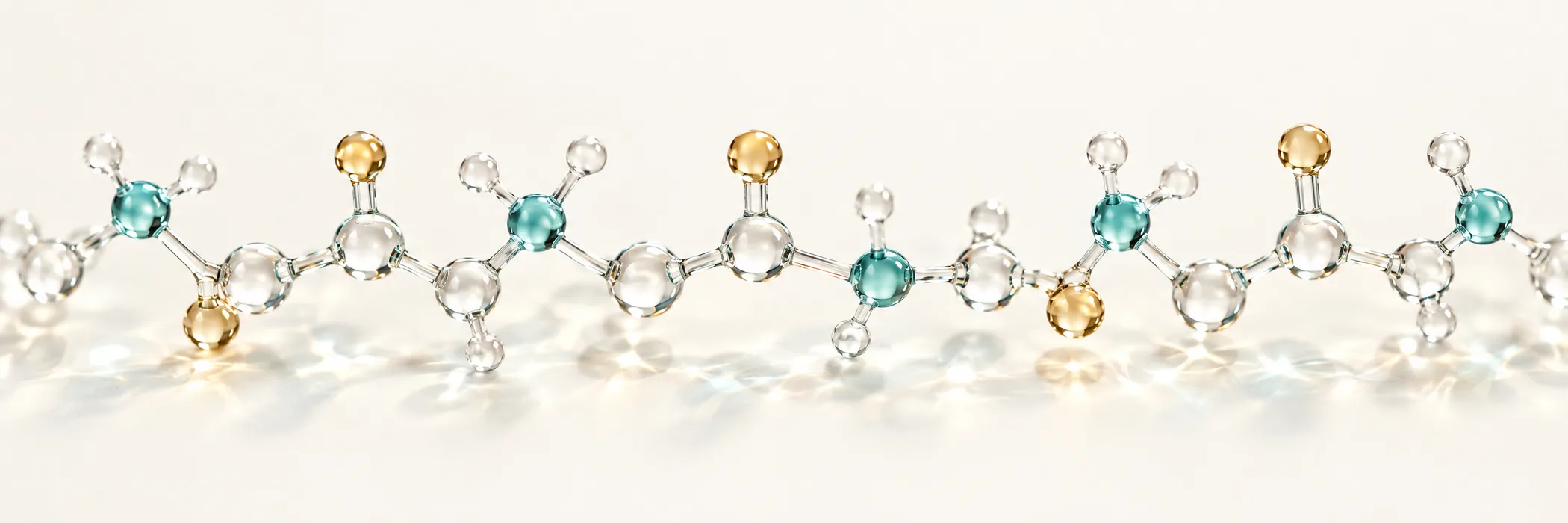
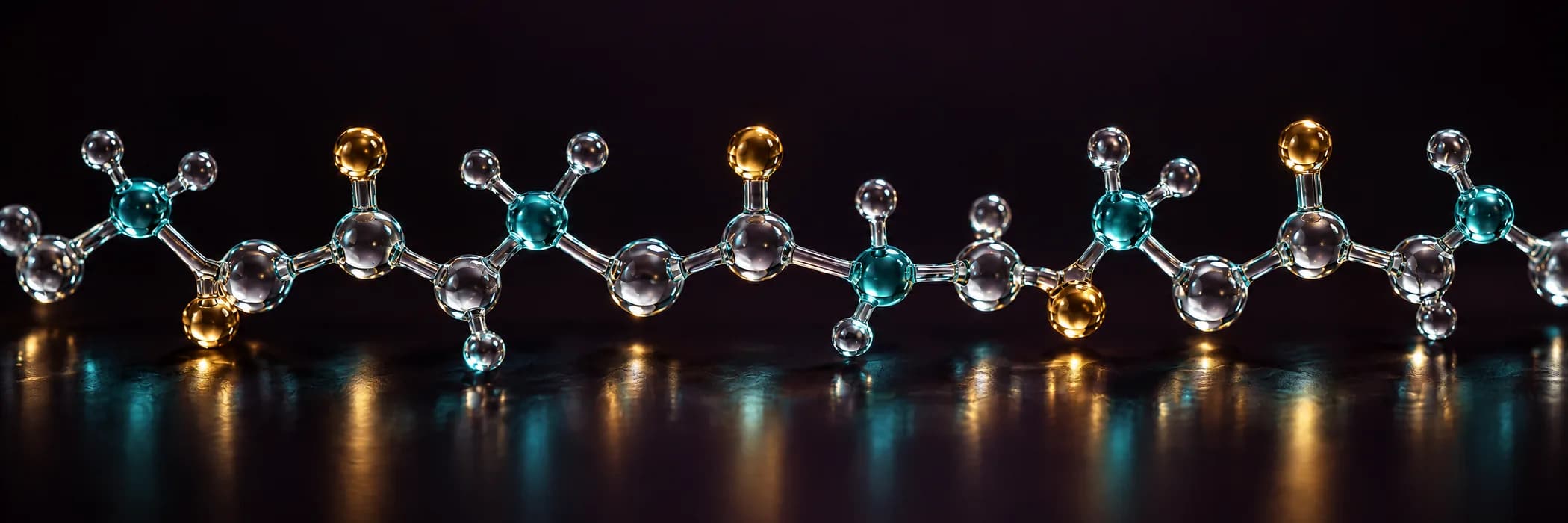
Two receptors, one molecule. Survodutide switches on the GLP-1 receptor (the target of Ozempic and Wegovy) and the glucagon receptor (GCGR) with roughly equal potency. It is built on the glucagon backbone.
Curbs appetite, steadies sugar. The GLP-1 arm promotes fullness and slows stomach emptying, so you eat less. It triggers insulin mainly when blood sugar is high, so on its own it rarely drives sugar too low.
Burns calories and liver fat. The glucagon arm raises calorie burn at rest and acts directly on liver cells to burn stored fat and make less new fat. That is why it is studied for MASH (fatty-liver inflammation and scarring) independently of weight loss. Net blood sugar still improved in trials.
Sources:PMID 36356832PMID 38847460
How to dose it
Once a week under the skin, stepped up every 4 weeks. The slow ramp keeps nausea down.
Dose tiersOnce weekly, from 1.2 mg up to 6.0 mg, stepping up every 4 weeks.
- Starting dose:
- 1.2 mg once weekly, stepped up every 4 weeks.
- Obesity target (phase 2):
- Up to 4.8 mg/week. Completers at the top dose averaged ~18.7% weight loss over 46 weeks; a large share reached ≥20%.
- Obesity target (phase 3, SYNCHRONIZE-1):
- 3.6 mg and 6.0 mg/week arms. At 76 weeks, 12.2% and 13.0% mean weight loss vs 5.4% placebo; 72.6% and 71.9% reached ≥5% vs 46.3%.
- MASH target (phase 2, LIVERAGE):
- 2.4, 4.8 and 6.0 mg/week arms. MASH resolved without worsening fibrosis: 47% / 62% / 43% vs 14% placebo. Liver fat down ≥30%: 63% / 67% / 57% vs 14%.
- Steady state:
- Around week 5, matching the ~6–7-day half-life from albumin binding.
How to injectInto the fat under the skin, once every 7 days. Rotate sites.
- Injection site:
- Belly (several centimeters from the navel), outer thigh or outer hip. Rotate weekly to avoid lumps and irritation.
- Weekly timing:
- The same weekday every week (Monday-to-Monday, Saturday-to-Saturday) keeps levels even.
- Food window:
- Meals do not affect absorption, but big or fatty meals worsen ramp nausea. Smaller, low-fat meals around injection day ease it.
Cycle and breaksTrials ran 46–76 weeks. Built for sustained use, not short cycles.
- Trial durations:
- Phase 2 obesity: 46 weeks. Phase 2 MASH: 48 weeks. Phase 3 obesity (SYNCHRONIZE-1): 76 weeks.
- Discontinuation:
- Weight tends to return after stopping, as across the GLP-1 and glucagon class.
- Titration on restart:
- After a gap of more than 2 weeks, people re-titrate from a lower dose because gut tolerance resets.
Mixing the vialThe calculator defaults to a 10 mg vial in 2 mL of bacteriostatic water.
- Mixing:
- 10 mg in 2 mL bacteriostatic water makes 5,000 mcg/mL. On a U-100 syringe (100 units = 1 mL), 2.4 mg takes 48 units, 4.8 mg takes 96 units.
- Why 2 mL:
- Doses land at 0.5–1.0 mL, right for an injection under the skin. The calculator handles other vials.
Sources:PMID 38330987PMID 38847460PMID 41187967PMID 42253238
Best time to take it


Implied best time
Anytime (consistent, weekly)
One fixed day each week. The day you hold matters, the hour does not.
- Its half-life is about 6–7 days, so blood levels stay steady across the week. Holding one weekday (Monday-to-Monday) keeps the level even.
- Effects build over weeks. Steady state arrives around week 5 and weight loss accrues over months, so week-to-week consistency is what counts.
- Food does not matter, though smaller, low-fat meals around injection day ease early nausea. Some pick a quiet day so queasiness is least disruptive.
Sources:PMID 41187967
What to stack it with


Another GLP-1 (semaglutide, liraglutide) or tirzepatide is redundant on the shared axis. Useful partners cover what survodutide does not.
Survodutide + CagrilintideAdds amylin, the one satiety pathway survodutide does not cover.
- Why it works:
- Cagrilintide adds an amylin-receptor signal, a separate post-meal fullness brake independent of GLP-1.
- The protocol:
- Survodutide on its ramp plus cagrilintide 0.3–0.6 mg once weekly, same day at different sites or offset by 3 days.
- Outcome:
- People add it when weight loss stalls on survodutide alone, for extra fullness without doubling up on GLP-1.
Survodutide + creatine + liftingThe lean-mass protocol. Rapid weight loss costs muscle without it.
- Why it works:
- Some of the loss is lean mass. Creatine backs training under a deficit; lifting keeps muscle protein synthesis going.
- The protocol:
- Survodutide at titration dose plus creatine monohydrate 3–5 g/day (no loading), 3–4 sessions a week of compound lifting and protein 1.6–2.0 g/kg/day.
- Outcome:
- For people chasing body composition over scale weight.
Survodutide + BPC-157Gut-lining support for the steep ramp, not for weight loss.
- Why it works:
- Gut side effects, seen in 55.3% in the phase 2 diabetes trial, were the top reason people left. BPC-157 is studied for gut-lining repair.
- The protocol:
- BPC-157 250–500 mcg under the skin once daily through the ramp (the first 8–12 weeks). Once a stable dose sits well, people taper it or stop.
- Outcome:
- People with a sensitive gut add it to blunt ramp-period nausea and motility upset.
Support nutrients
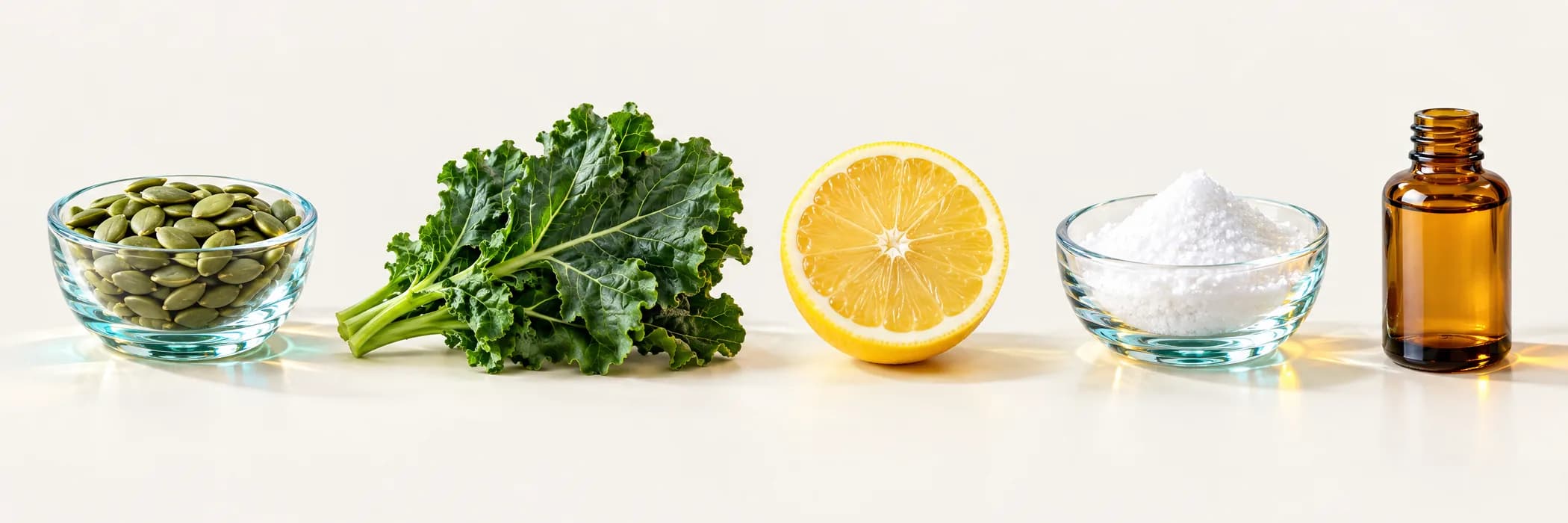
Settle the gut, keep muscle, feed the liver.
Nausea and constipationGut trouble peaks on the ramp.
- Nausea → ginger + B6:
- Ginger 1–2 g, capsule or tea, 30 minutes before injection day and 1–2 days after. Vitamin B6 (pyridoxine) 25–50 mg/day.
- Constipation → magnesium + fiber + hydration:
- Magnesium glycinate or citrate 300–400 mg/day, soluble fiber 10–15 g/day (psyllium, oats, vegetables), at least 2–3 L water daily.
Electrolytes and micronutrientsEating far less drains minerals and vitamins.
- Electrolytes:
- ≥500 mg sodium, ≥300 mg potassium and 200–300 mg magnesium daily. Cramps, fatigue or headache signal a shortfall.
- Multivitamin:
- One a day covers zinc, B vitamins, iron (in women) and A, D, E, K.
Protect lean massUnchecked, a substantial share of the loss is muscle.
- Protein target:
- 1.6–2.0 g per kg a day (0.7–0.9 g/lb). Protein first at every meal.
- Resistance training:
- 3–4 sessions a week of compound lifts (squats, presses, rows). Cardio alone protects muscle less.
- Creatine 3–5 g/day:
- Creatine monohydrate 3–5 g/day, safe indefinitely. Backs training, modestly spares lean mass.
Feed the liverThese keep the glucagon arm's liver-fat clearing unopposed.
- Choline 400–550 mg/day:
- Lets the liver export fat. Two large eggs give about 300 mg.
- Omega-3 (EPA/DHA) 2–4 g/day:
- 2–4 g combined EPA+DHA from fish oil daily, top end for the best liver-fat data.
- Limit fructose + alcohol:
- Both refill liver fat, so refined sugar, fruit juice and alcohol stay minimal.
- Glycemic awareness:
- With pre-diabetes or insulin resistance, people check fasting glucose during the ramp.
Dose calculator
Reconstitution calculator
Calculated for a 1 mL U-100 insulin syringe (100 units/mL).
Units per dose
96 units
Draw this many units on a U-100 syringe
Each unit holds 50 mcg
- Volume per dose
- 0.96 mL
- Doses per vial
- 2
- Concentration
- 5 mg/mL
One vial lasts
- Daily
- 2 days
- Every other day
- 4 days
- 5×/week
- 2 days
- Large draw (96 units). That's normal for mg doses. To check it, multiply the units by what each unit holds. You should get your dose.
Research use only. Not for human consumption. Outputs are reference values based on research literature. Verify all measurements independently.
Side effects and what to watch
What people notice. Nausea, vomiting and diarrhea, concentrated during dose escalation. In phase 3 SYNCHRONIZE-1, gut side effects, typically mild to moderate, hit 80.9% on 3.6 mg and 89.7% on 6.0 mg versus 47.9% on placebo. In the phase 2 diabetes trial, 15.9% stopped for side effects versus 5.1%.
How people handle it. A slow ramp, smaller low-fat meals around injection day, and ginger with vitamin B6.
Worth knowing. Heart rate rises modestly, a mean 2.3–7.3 beats per minute across doses, a known effect of the class. Glucagon normally raises blood sugar, but trials showed no high-sugar signal and net glucose improved.
Sources:PMID 42253238PMID 38095657
Common questions
How is survodutide dosed?
Once a week under the skin. Trials started at 1.2 mg, stepped up every 4 weeks, and topped out at 4.8 mg in the phase 2 obesity trial and 6.0 mg in the phase 2 MASH trial and phase 3.
How is it different from tirzepatide?
Tirzepatide pairs GLP-1 with GIP (glucose-dependent insulinotropic polypeptide); survodutide pairs it with glucagon. That arm adds calorie burn at rest and direct burning of liver fat, its edge for fatty-liver disease (MASH).
How much weight do people lose?
Up to 13.0% mean weight loss at 76 weeks in phase 3 SYNCHRONIZE-1 (6.0 mg; 12.2% on 3.6 mg), versus 5.4% on placebo. Phase 2 reported ~18.7% in completers over 46 weeks.
What did the liver trial show?
Up to 62% saw MASH improve without worsening fibrosis, versus 14% on placebo, and up to 67% had a ≥30% drop in liver fat, over 48 weeks.
Do I need to cycle it?
No. It is built for sustained use, and weight tends to return after stopping. After a gap of more than 2 weeks, people re-titrate from a lower dose.
What does it stack with?
Cagrilintide for a second fullness pathway, creatine with lifting and protein to keep muscle, and BPC-157 for gut comfort during the ramp. Another GLP-1 or tirzepatide is redundant.
Deep dive
Doses used in studies · Molecular identity · References
10From the researchDoses used in studies
These are the doses used in the human trials, all once-weekly injections under the skin, across the obesity, MASH (liver) and type 2 diabetes programs.
| Dose | Route | Model | Outcome | Sources: |
|---|---|---|---|---|
| up to 4.8 mg | SC weekly (46 wk) | Human (Phase 2 obesity, n=387, BMI ≥27, no diabetes) | ~18.7% mean weight loss at top dose (completers); a large share reached ≥20%; not yet plateaued at wk 46 | PMID 38330987 |
| 2.4 / 4.8 / 6.0 mg | SC weekly (48 wk) | Human (Phase 2 MASH, n=293, biopsy-confirmed, fibrosis F1–F3) | MASH improved w/o fibrosis worsening: 47% / 62% / 43% vs 14% placebo; ≥30% liver-fat drop: 63% / 67% / 57% vs 14% | PMID 38847460 |
| up to 2.7 mg | SC weekly (16 wk) | Human (Phase 2 type 2 diabetes, n≈411, HbA1c 7.0–10.0%) | HbA1c −1.71% (1.8 mg arm) vs semaglutide 1 mg −1.47%; greater weight loss than semaglutide | PMID 38095657 |
| 3.6 / 6.0 mg | SC weekly (76 wk) | Human, SYNCHRONIZE-1 Phase 3 obesity, n=725 (NEJM 2026 results) | Mean weight loss at week 76 (primary analysis) was 12.2% on 3.6 mg and 13.0% on 6.0 mg vs 5.4% on placebo; 72.6% and 71.9% vs 46.3% lost at least 5% (P<0.001). GI side effects, mostly mild to moderate, in 80.9% and 89.7% vs 47.9% | PMID 42253238 |
11ChemistryMolecular identity
- Molecular weight
- 4231.63 g/mol (free base)
- Molecular formula
- C192H289N47O61
- Monoisotopic mass
- 4229.10 Da
- Amino acids
- 29-residue acylated glucagon analog
- Structure / class
- Glucagon (GCGR) + GLP-1 receptor dual agonist; Ac4c at position 2, C-terminal amide, C18 diacid at Lys24 via GSGSGG-γGlu spacerPMID 36356832 (Mol Metab 2022)
- CAS / UNII
- 2805997-46-8 · 2ALA66NS64PubChem CID 168429725; FDA UNII
- Molecular target
- Glucagon receptor (GCGR) + GLP-1 receptor (dual agonist)PMID 36356832
- Half-life
- ~6–7 days (functional; secondary estimate)Phase 1 PK summariesHalf-life curve →
- Regulatory status
- Investigational; not FDA-approved (FDA Breakthrough Therapy + Fast Track for MASH)Boehringer Ingelheim / Zealand Pharma
12Primary sourcesReferences
- PubChem CID 168429725PubChem CID 168429725 (Survodutide)
- PMID 36356832Zimmermann et al., Mol Metab 2022 (discovery/pharmacology)
- PMID 38330987le Roux et al., Lancet Diabetes Endocrinol 2024 (phase 2 obesity)
- PMID 38847460Sanyal et al., NEJM 2024 (phase 2 MASH)
- PMID 38095657Blüher/le Roux et al., Diabetologia 2024 (phase 2 type 2 diabetes)
- PMID 41187967SYNCHRONIZE-1 phase 3 obesity (baseline-design paper)
- PMID 42253238le Roux et al., N Engl J Med 2026 (SYNCHRONIZE-1 phase 3 results, 76 weeks)
- WADA 2026WADA 2026 Prohibited List (survodutide not named; S2/S0 by class inference)
Reviewed by Ki Researcher Team · Research use only · Not medical advice · Updated 2026-09-24