
Tirzepatide
FDA-approved dual GIP + GLP-1 receptor co-agonist · once-weekly (SC)
Tirzepatide is the FDA-approved peptide behind Mounjaro and Zepbound, one molecule that copies two gut hormones, GLP-1 and GIP. People run it for weight loss and steadier blood sugar. In SURMOUNT-1 the 15 mg dose took off about 20.9% of body weight in 72 weeks.
At a glance
- Dose
- Start 2.5 mg, step up over months to 5–15 mg
- How often
- Once a week, same day
- How
- A small injection under the skin
- When
- Any time of day; just hold the same weekday
- Ramp
- Hold each step ~4 weeks so your gut adjusts
The 30-second versionEverything on this page, fast
Dramatic weight loss · Appetite control · Blood-sugar control · Once-weekly
The most powerful weight-loss medicine to date. In trials tirzepatide delivered ~21% average weight loss, beat semaglutide head-to-head and turns appetite and "food noise" down hard, all through a dual gut-hormone mechanism on one injection a week.
The basics
- A peptide that copies two gut hormones at once (GLP-1 + GIP), the "dual" edge over Ozempic.
- Sold as Mounjaro (diabetes) and Zepbound (weight loss, sleep apnea).
Why people use it
- The biggest weight loss of any approved drug. About 21% at the top dose in trials.
- Beat semaglutide (Ozempic) head-to-head on weight and blood sugar.
- Turns appetite and "food noise" down hard. A calorie deficit gets easier to hold.
- Strong blood-sugar control, and the first drug approved for sleep apnea in obesity.
Stacks well with
- Cagrilintide adds amylin, a second appetite brake on its own pathway.
- Ipamorelin or CJC-1295, a growth-hormone nudge to protect muscle during the loss.
Good to know
- Nausea is the main side effect. Worst while ramping, it eases at a steady dose.
- Stop and the weight tends to return, so people run it long term.
- Some of the loss is muscle. Protein and lifting protect it.
What it does
- About 20.9% of body weight lostIn the SURMOUNT-1 trial the 15 mg dose took off about 20.9% of body weight over 72 weeks.
- Beat semaglutide head to headIn SURPASS-2, 15 mg cut HbA1c (long-term blood sugar) 2.30 percentage points versus 1.86 on Semaglutide, with more weight lost.
- Appetite and "food noise" turned down hardIt works two gut-hormone receptors that slow the stomach and quiet appetite, so a calorie deficit gets easier to hold.
- Strong blood-sugar controlAs Mounjaro for type 2 diabetes it raises insulin and lowers HbA1c, a long-term blood-sugar marker, more than GLP-1 alone.
- Approved for sleep apnea tooZepbound is the first drug approved for obstructive sleep apnea in people with obesity, based on the SURMOUNT-OSA trial.
- One shot a weekOne injection on a fixed day, with no meal timing to manage.
Sources:PMID 35658024PMID 34170647PMID 38912654DailyMed (Mounjaro)
How it works
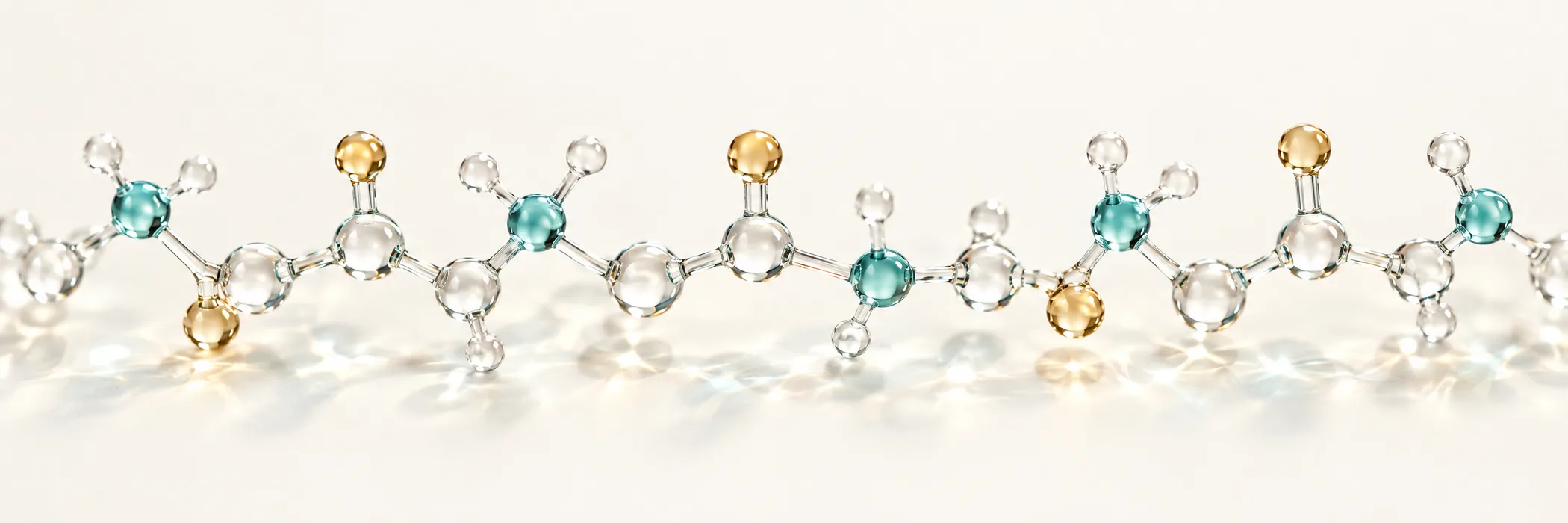

Tirzepatide is the first dual incretin agonist. It switches on the receptors for GLP-1 and GIP (glucose-dependent insulinotropic polypeptide), two gut hormones released after eating.
Works two levers at once. The GLP-1 arm raises insulin when blood sugar is high, slows the stomach and quiets appetite in the brain. The GIP arm adds its own boost to insulin and is thought to help how the body handles fat.
Beats GLP-1 alone. In the SURPASS-2 trial it cut blood sugar and body weight more than semaglutide, which works through GLP-1 only.
Sources:PMID 34170647DailyMed (Mounjaro)
How to dose it
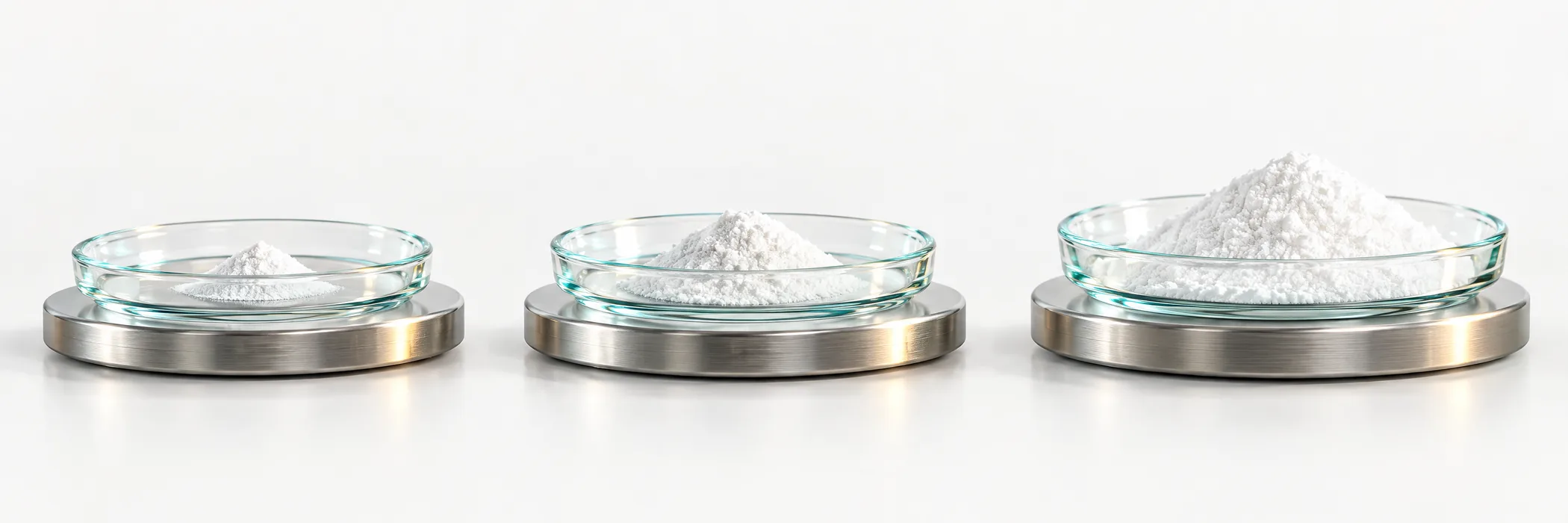
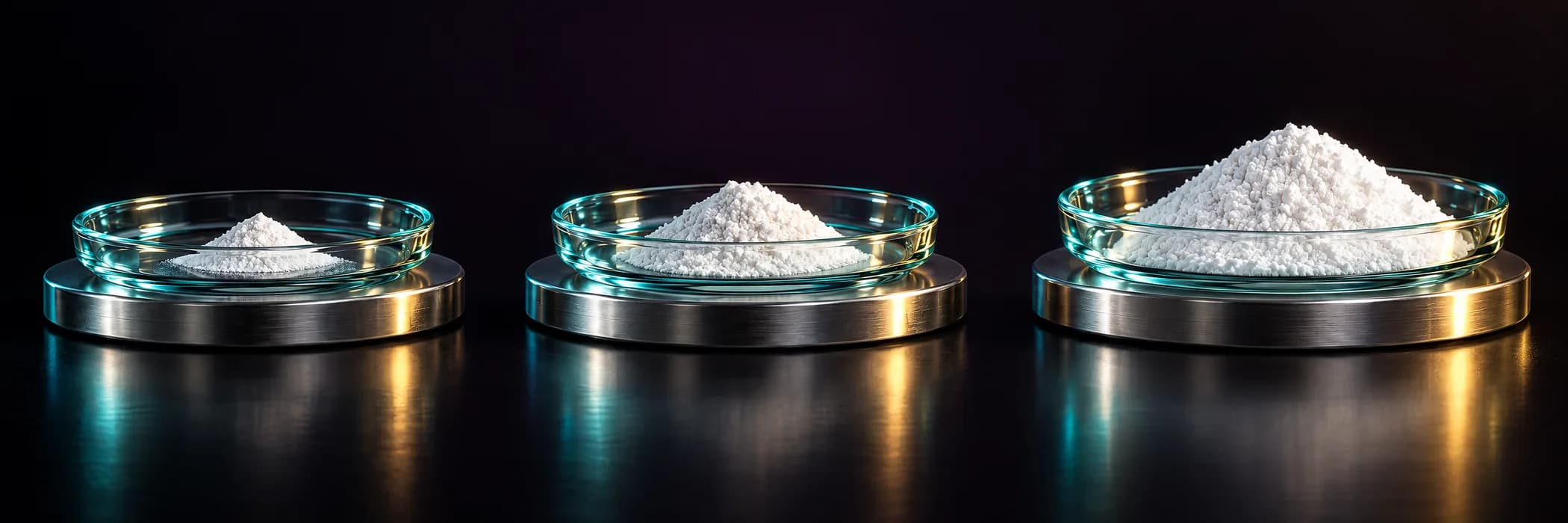
A weekly shot under the skin, stepped up every 4 weeks to ease nausea.
Dose tiersPeople start at 2.5 mg and add 2.5 mg every 4 weeks.
- Weeks 1–4:
- 2.5 mg once weekly, a starter dose. Hold the full 4 weeks.
- Weeks 5–8:
- 5 mg once weekly, the first maintenance dose. Hold at least 4 weeks.
- Steps 3–6:
- Then add 2.5 mg every 4 weeks or longer: 7.5 → 10 → 12.5 → 15 mg weekly, the max dose.
- Maintenance doses:
- Zepbound: 5, 10 or 15 mg weekly. Mounjaro for children 10 and older tops out at 10 mg weekly.
- If side effects hit:
- Hold the dose for another 4 weeks before the next increase.
How to injectOne shot a week. A fatty-acid linker gives it a ~5-day half-life.
- Injection site:
- Abdomen (at least 2 inches from the navel), outer thigh or upper arm, rotated each week.
- Day of the week:
- Pick one consistent day. The ~7-day interval allows a 1-day shift either way.
- Food:
- Works any time, with or without food.
- Missed dose:
- Within 4 days, inject when you remember. After that, skip it and resume on schedule. No doubling up.
Cycle and breaksPeople run it continuously, with no cycling.
- Duration:
- Open-ended, for as long as diabetes or weight management continues.
- On stopping:
- Weight tends to return. The SURMOUNT-4 withdrawal group saw substantial regain within 52 weeks.
- Stomach symptoms:
- They peak during titration and ease at a steady dose. If they linger, stay on that step longer.
Mixing the vialFor research vials, not the pre-filled pen.
- Default mix:
- 30 mg vial + 1.5 mL bacteriostatic water makes 20 mg per mL. The calculator opens on the 10 mg maintenance dose, reached by ramping up from 2.5 mg.
- Maintenance draw:
- At 20 mg/mL, 10 mg takes 50 units (0.5 mL) on a 100-unit syringe. One 30 mg vial gives three 10 mg doses.
- Dose to units:
- At 20 mg/mL, 2.5 mg takes 12.5 units, 5 mg 25 units, 7.5 mg 37.5 units, 10 mg 50 units, 12.5 mg 62.5 units and 15 mg 75 units.
Sources:DailyMed (Mounjaro)PMID 35658024
Best time to take it

Implied best time
Anytime (consistent, weekly)
Most people take tirzepatide on one fixed day each week. The day matters, the clock does not.
- Its half-life is about 5 days, so blood levels stay steady across the week. Holding the same weekday keeps them even.
- Effects build over weeks, not hours, so no single dose's timing changes the outcome. Week-to-week consistency does.
- It works with or without food. Nausea, worst during titration, is the main variable, so some people dose on a quiet day.
Sources:DailyMed (Mounjaro)
What to stack it with


Tirzepatide already works both GLP-1 and GIP, so another GLP-1 drug adds nothing new. Useful partners work a different lever.
Tirzepatide + CagrilintideTwo different satiety hormones stacked for deeper appetite control.
- Why it works:
- Cagrilintide copies amylin, a satiety hormone that slows the stomach and curbs appetite through its own receptor, distinct from tirzepatide's.
- The protocol:
- Tirzepatide stays at 5–15 mg weekly. Cagrilintide ramps on its own schedule, from 0.3 mg to 2.4 mg weekly. Same day at different sites, or different days.
- Outcome:
- Two different appetite brakes instead of two doses of the same one.
Tirzepatide + Ipamorelin / CJC-1295A growth-hormone nudge to protect muscle during a ~20% weight loss.
- Why it works:
- At ~20% weight loss, the deficit suppresses growth hormone. Ipamorelin or CJC-1295 restore that signal through a separate pathway.
- The protocol:
- Ipamorelin 200–300 mcg, or CJC-1295 without DAC 100–200 mcg, 2–3 times daily, cycled 8–12 weeks on and 4 off.
- Outcome:
- Suits people who see muscle going with the fat. It protects the lean-tissue share of the loss.
Support nutrients
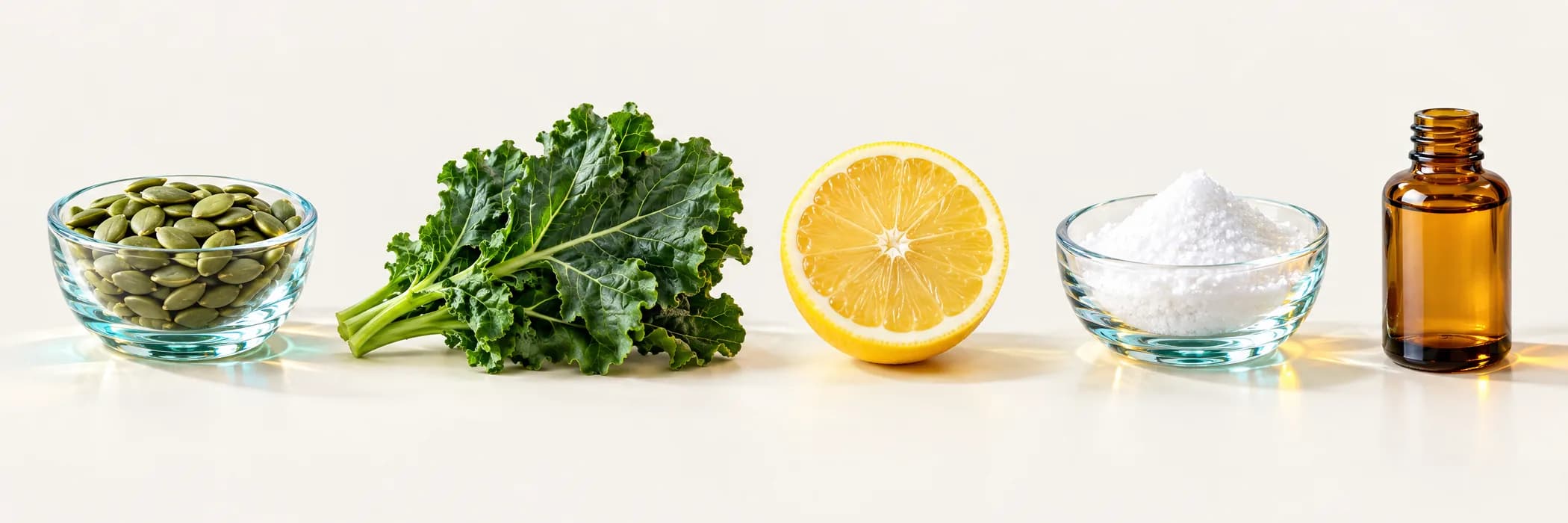
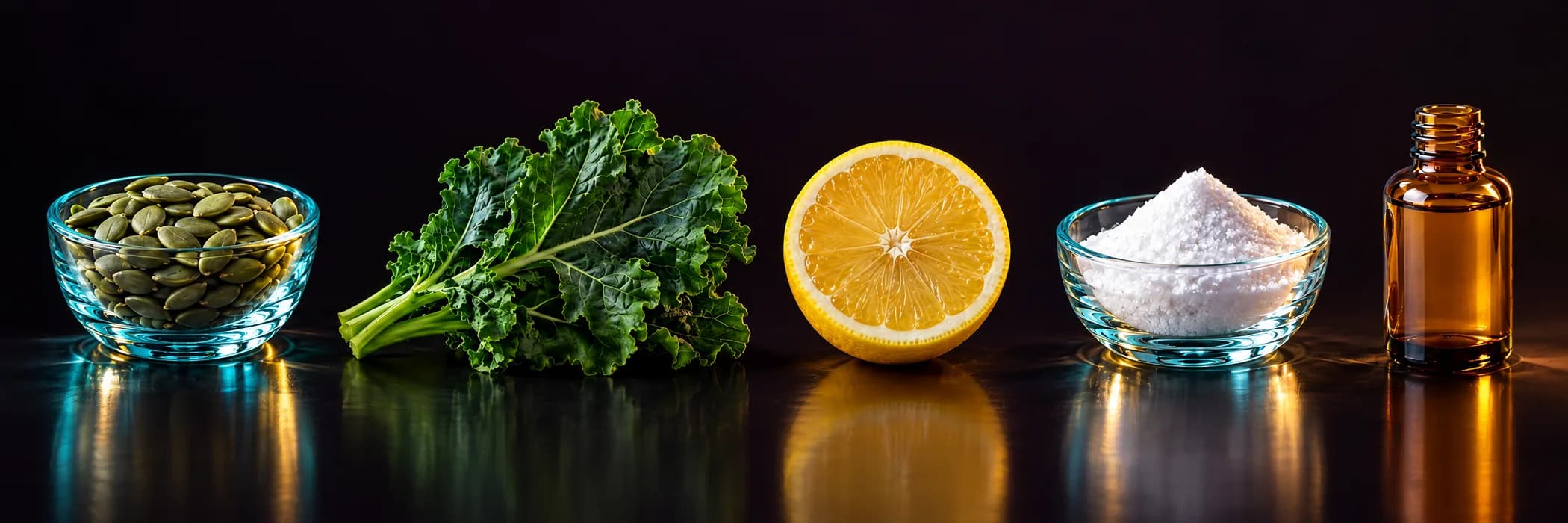
These settle the stomach, protect muscle and fill the nutrient gaps of eating less.
Nausea and stomach upsetThe slow ramp does most of the work. These help with the rest.
- Ginger:
- 1–2 g ginger (5% gingerols), 30 minutes before the shot and for 1–2 days after, during titration steps.
- Vitamin B6:
- 25–50 mg at bedtime on injection day.
- Meals:
- Small, low-fat meals during titration. High-fat meals worsen nausea when the stomach is already slowed.
ConstipationThe second most common lasting side effect.
- Magnesium:
- 300–400 mg magnesium bisglycinate at bedtime, to draw water into the colon.
- Soluble fiber:
- 10–15 g psyllium a day in divided doses, ramped up over 2 weeks.
- Hydration:
- At least 2–2.5 L of water a day, since eating less means drinking less.
Protein, creatine and liftingThe top priority. Part of the weight lost is muscle.
- Protein target:
- 1.6–2.0 g protein per kg of bodyweight a day, protein first at meals.
- Resistance training:
- 2–3 sessions a week of progressive resistance training. It comes before any supplement.
- Creatine:
- 3–5 g creatine monohydrate daily, with the protein meal or after training.
Electrolytes and micronutrientsEating much less means fewer minerals and vitamins coming in.
- Electrolytes:
- About 500 mg sodium, 1,000 mg potassium and 200 mg magnesium daily. Fatigue and cramps are early signs.
- Multivitamin:
- A daily multivitamin. Watch B12, iron and calcium, 1,000–1,200 mg a day from food and supplements combined.
- Vitamin D:
- Dosed to a blood level of 40–60 ng/mL, since obesity often means a starting deficit.
Dose calculator
Reconstitution calculator
Calculated for a 1 mL U-100 insulin syringe (100 units/mL).
Units per dose
50 units
Draw this many units on a U-100 syringe
Each unit holds 200 mcg
- Volume per dose
- 0.5 mL
- Doses per vial
- 3
- Concentration
- 20 mg/mL
One vial lasts
- Daily
- 3 days
- Every other day
- 6 days
- 5×/week
- 4 days
- Large draw (50 units). That's normal for mg doses. To check it, multiply the units by what each unit holds. You should get your dose.
Research use only. Not for human consumption. Outputs are reference values based on research literature. Verify all measurements independently.
Side effects and what to watch
What people notice. Nausea, diarrhea, vomiting, constipation, dyspepsia and belly pain. They scale with dose and are worst during titration.
How people handle it. Most of this eases once the dose steadies. Weight tends to return after stopping, so people plan to keep going.
Skip it or take care if. The label says to skip it with a personal or family history of medullary thyroid carcinoma or multiple endocrine neoplasia type 2 (MEN 2). The label also lists acute pancreatitis, gallbladder disease, kidney injury from dehydration, low blood sugar with insulin or sulfonylureas, and worsening diabetic retinopathy.
Competing? It's on the WADA Monitoring Program, tracked but not prohibited.
Sources:DailyMed (Mounjaro)PMID 35658024
Common questions
What is tirzepatide?
It's an FDA-approved dual agonist, a single peptide that activates both the GIP and GLP-1 receptors. It's sold as Mounjaro for type 2 diabetes and Zepbound for weight loss and sleep apnea, as a once-weekly injection.
How is tirzepatide different from semaglutide?
Semaglutide activates one receptor, GLP-1. Tirzepatide activates two, GIP and GLP-1. In the SURPASS-2 head-to-head trial it produced bigger blood-sugar and weight drops than semaglutide.
How much weight do people lose?
In the SURMOUNT-1 trial the 15 mg weekly dose took off about 20.9% of body weight over 72 weeks, against 3.1% on placebo, the biggest of any approved drug.
Why does the dose start so low?
Nausea, diarrhea and vomiting scale with dose. Starting at 2.5 mg and stepping up by 2.5 mg every 4 weeks lets the gut adjust. The 2.5 mg starter is for tolerability only.
What does tirzepatide stack with?
Cagrilintide for a second, different satiety pathway. Ipamorelin or CJC-1295 without DAC to protect muscle during the weight loss. A second GLP-1 drug adds nothing new.
Does it affect birth control?
It can. Slowing the stomach may make oral birth control less reliable, so the label advises a backup method for 4 weeks after starting and after each dose increase.
Deep dive
Doses used in studies · Molecular identity · References
10From the researchDoses used in studies
These are the doses used in the big human trials, including a head-to-head against semaglutide and the sleep-apnea trial.
| Dose | Route | Model | Outcome | Sources: |
|---|---|---|---|---|
| 5 / 10 / 15 mg | SC weekly (40 wk) | Human (SURPASS-2, T2D, head-to-head vs semaglutide 1 mg, n=1,879) | HbA1c −2.01 / −2.24 / −2.30% vs −1.86% semaglutide; 15 mg superior | PMID 34170647 |
| 5 / 10 / 15 mg | SC weekly (72 wk) | Human (SURMOUNT-1, obesity, no diabetes, n=2,539) | Mean weight −15.0 / −19.5 / −20.9% vs −3.1% placebo | PMID 35658024 |
| 10 or 15 mg | SC weekly (52 wk) | Human (SURMOUNT-OSA, obesity + sleep apnea) | Apnea-hypopnea index −25.3 (no PAP) / −29.3 (on PAP) events/hr vs placebo | PMID 38912654 |
11ChemistryMolecular identity
- Molecular weight
- 4813.53 Da
- Molecular formula
- C225H348N48O68
- Monoisotopic mass
- 4810.52 Da
- Amino acids
- 39-residue GIP-based backbone
- Structure / class
- Dual GIP/GLP-1 receptor co-agonist; Aib at positions 2 and 13, C-terminal amide, Lys20 with C20 fatty-diacid linkerDailyMed (Mounjaro)
- CAS / UNII
- 2023788-19-2 · OYN3CCI6QEPubChem CID 156588324; FDA UNII
- Molecular target
- GIP receptor + GLP-1 receptor (dual agonist)DailyMed (Mounjaro)
- Brand / approval
- FDA-approved as Mounjaro (T2D), Zepbound (obesity & OSA)FDA label
- Regulatory status
- FDA-approved drug; WADA 2026 Monitoring Program (monitored, not prohibited)FDA / WADA 2026
12Primary sourcesReferences
- PubChem CID 156588324PubChem CID 156588324 (Tirzepatide, free peptide)
- DailyMed (Mounjaro)DailyMed, Mounjaro (tirzepatide) label
- PMID 34170647Frías et al., NEJM 2021 (SURPASS-2, vs semaglutide)
- PMID 35658024Jastreboff et al., NEJM 2022 (SURMOUNT-1, obesity)
- PMID 38912654Malhotra et al., NEJM 2024 (SURMOUNT-OSA, sleep apnea)
- WADA 2026WADA 2026 Monitoring Program (GIP/GLP-1 agonists monitored, not prohibited)
Reviewed by Ki Researcher Team · Research use only · Not medical advice · Updated 2026-09-24