
AOD-9604
Modified GH lipolytic fragment · metabolic / fat loss
AOD-9604 is a 16-amino-acid piece of the growth hormone (GH) tail plus a tyrosine. People run it for fat loss without growth hormone's push on blood sugar and insulin-like growth factor 1 (IGF-1). Six placebo-controlled human trials found it safe on both counts.
At a glance
- Dose
- 300 mcg a day (some run up to 500–600 mcg)
- How often
- Once a day
- How
- A small injection under the skin, rotating sites
- When
- Fasted, first thing in the morning or before cardio
- Cycle
- 8–12 weeks daily, then 4 weeks off
The 30-second versionEverything on this page, fast
Fat loss · GH fragment · Metabolic · Clean safety
The fat-loss piece of growth hormone with a rare strength. AOD-9604 went through six placebo-controlled human trials and came out well tolerated, with no IGF-1 rise and no blood-sugar penalty.
The basics
- A modified piece of growth hormone (residues 177-191 plus a tyrosine), built to isolate its fat-burning tail.
- Reduced fat gain in obese rodents and stayed well tolerated across six human trials.
Why people use it
- Clean safety record. Across six randomized, placebo-controlled human trials it was indistinguishable from placebo, with no serious adverse events and no immune reaction.
- No IGF-1 rise. The design held. It keeps the fat signaling without growth hormone's growth-promoting baggage.
- No blood-sugar penalty. Glucose handling stayed intact in the human trials.
- Built for fat. In obese rodents it reduced fat gain and raised fat breakdown without harming insulin sensitivity.
Stacks well with
- Tesamorelin is the growth-hormone-axis pairing. It carries Phase III fat-reduction evidence, and AOD-9604 layers the fat-burning fragment on top.
- CJC-1295 + Ipamorelin drive the GH pulse. AOD-9604 adds the fat-burning fragment on top.
Good to know
- Banned in tested sport at all times (WADA S2, GH fragments), which matters if you compete.
- People take it on an empty stomach, ideally before cardio, and wait 15–30 min before eating.
- It slots into GH-axis routines because it carries no IGF-1 or blood-sugar effect of its own.
What it does
- A clean record in six human trialsIn six randomized placebo-controlled human trials it matched placebo on tolerability, with no immune reaction or serious adverse events.
- No IGF-1 riseUnlike full growth hormone, it raised no IGF-1 across the human program. The fat signaling stays, the growth-promoting side goes.
- No blood-sugar penaltyGlucose handling stayed intact in the human trials, the downside people worry about with growth hormone.
- Less fat gain, more fat breakdownIn obese rodents the fragment reduced fat gain and raised fat breakdown, the effect people run it for.
- Slots into growth hormone stacksWith no IGF-1 or glucose effect of its own, people run it alongside CJC-1295 + Ipamorelin or Tesamorelin.
How it works
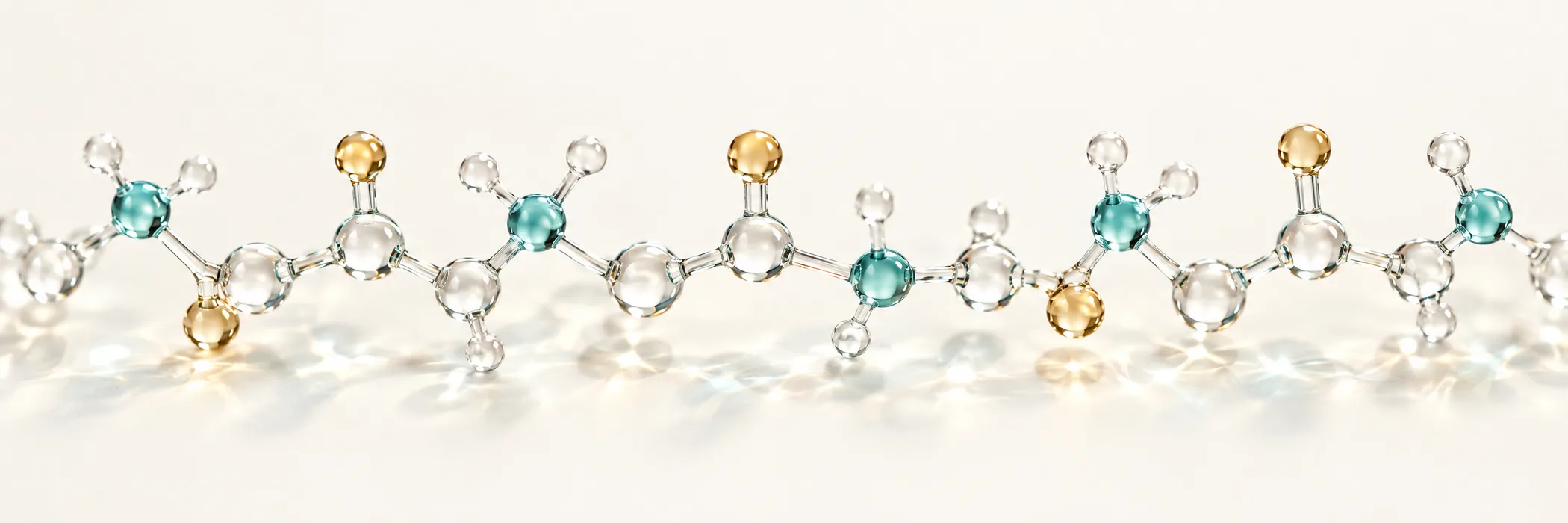
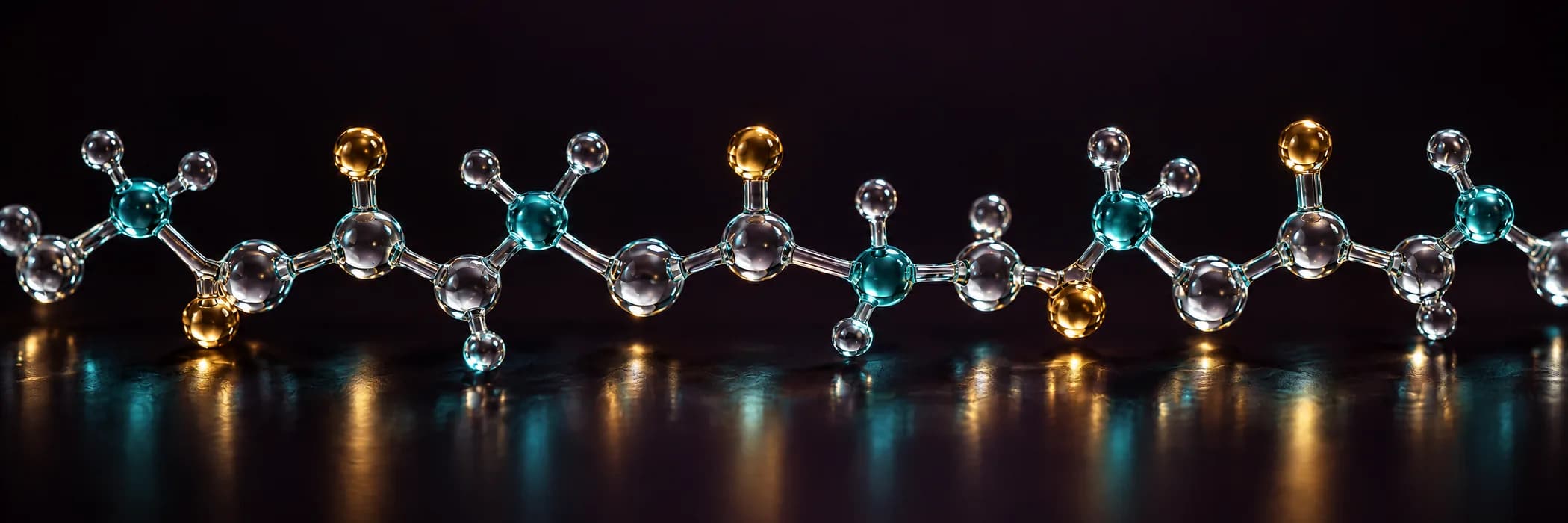
The fat-burning tail of growth hormone. AOD-9604 is residues 177-191 of growth hormone's C-terminal tail, with a tyrosine added at the front. It keeps the fat-breakdown (lipolytic) and fat-storage-blocking actions and drops the parts that drive IGF-1, raise blood glucose and promote general growth.
Less weight gain without the insulin cost. In obese Zucker rats, oral AOD-9604 cut body-weight gain by more than half over 19 days. Insulin sensitivity stayed intact, unlike on full growth hormone.
More β3 switches on fat cells. It raises the number of β3-adrenergic receptors, the switch that tells a fat cell to burn fat, though its fat-breaking action does not run directly through them.
How to dose it
Most people run AOD-9604 as a small injection under the skin, once a day, fasted in the morning.
Dose tiersMost people run 300 mcg once a day, and some go up to 500–600 mcg.
- Standard:
- 300 mcg once daily under the skin, on an empty stomach. The most common dose and the calculator default, far below the multi-milligram oral doses of the human trials.
- Higher range:
- Up to 500–600 mcg once daily under the skin, used by people who saw no effect at the standard dose.
How to injectA small injection into belly, love-handle or thigh fat, fasted in the morning.
- Injection site:
- Abdomen (a couple of inches clear of the navel), love-handle area or outer thigh. Rotate sites to prevent irritation and lipohypertrophy (fatty lumps from repeated injections in one spot).
- Measuring the dose:
- On a U-100 insulin syringe, at 5 mg vial + 2 mL bacteriostatic water (2,500 mcg/mL), 300 mcg takes 12 units. The on-page calculator handles any vial size.
- Time of day:
- Fasted, first thing in the morning is the most common choice. Insulin blunts fat-breaking signaling, so an empty-stomach dose keeps insulin out of the way.
- Food window:
- Wait 15–30 minutes after the injection before eating, to avoid an insulin spike around the dose.
Cycle and breaks8–12 weeks of daily dosing, then 4 weeks off.
- Standard cycle:
- 8–12 weeks of daily dosing. The human obesity trial ran 24 weeks and found no weight-loss benefit over placebo, so longer cycles have no support.
- Break:
- 4 weeks off between cycles.
Mixing the vialA 5 mg vial with 2 mL bacteriostatic water gives 2,500 mcg per mL.
- Mixing:
- 5 mg vial + 2 mL bacteriostatic water = 2,500 mcg/mL. On a 100-unit (1 mL) syringe, 300 mcg takes 12 units, 500 mcg 20 units, 600 mcg 24 units.
- Why 2 mL into a 5 mg vial:
- It keeps the draw a practical syringe volume, instead of 2–3 near-invisible units that are hard to measure.
Sources:PMID 11146367DOI 10.4021/jem157w
Best time to take it


Implied best time
Morning, fasted (or pre-cardio)
Most people take AOD-9604 first thing in the morning on an empty stomach, sometimes right before fasted cardio.
- Insulin blunts fat-mobilizing signaling. An empty-stomach dose rides the body's overnight fat-burning window instead of fighting a post-meal insulin spike.
- A morning dose before fasted cardio lines it up with training, when free fatty acids are most available to burn.
- People wait roughly 15–30 minutes after the injection before eating, to keep insulin low around the dose.
Sources:DOI 10.4021/jem157w
What to stack it with


People pair AOD-9604 with growth-hormone-raising peptides or its parent fragment.
AOD-9604 + TesamorelinTesamorelin drives the growth hormone pulse and AOD-9604 adds the fat-burning fragment.
- Why it works:
- Tesamorelin works the GHRH (growth-hormone-releasing hormone) receptor, with Phase III evidence for cutting visceral fat in HIV-associated lipodystrophy. AOD-9604 is added to work fat breakdown from a second growth-hormone angle.
- The protocol:
- Tesamorelin 2 mg under the skin once daily at bedtime, its clinical-program dose. AOD-9604 300 mcg under the skin, fasted in the morning, at a separate site.
- Outcome:
- Aimed at visceral or abdominal fat.
AOD-9604 + CJC-1295 (no DAC) / IpamorelinCJC-1295 and Ipamorelin raise your own growth hormone; AOD-9604 adds the fat-burning fragment.
- Why it works:
- CJC-1295 (a GHRH analog) and Ipamorelin (a growth-hormone-releasing peptide) produce a synergistic GH pulse. AOD-9604 is added for its own fat-breaking signaling from the GH tail.
- The protocol:
- CJC-1295 no-DAC 100 mcg + Ipamorelin 100 mcg, injected together under the skin at bedtime. AOD-9604 300 mcg in the morning, fasted.
- Outcome:
- A common fat-loss and body-recomposition stack.
AOD-9604 + Fragment 176-191Fragment 176-191 is the bare growth hormone tail AOD-9604 was built from.
- How they differ:
- Fragment 176-191 is GH residues 176-191 without AOD-9604's added tyrosine. Both draw on the same rodent fat-breakdown work, but only AOD-9604 went through human trials.
- The protocol:
- AOD-9604 300 mcg + Fragment 176-191 200–300 mcg, both under the skin in the morning, fasted. Drawn separately or injected at nearby sites.
- Outcome:
- For people exploring the tail fragments.
Support nutrients
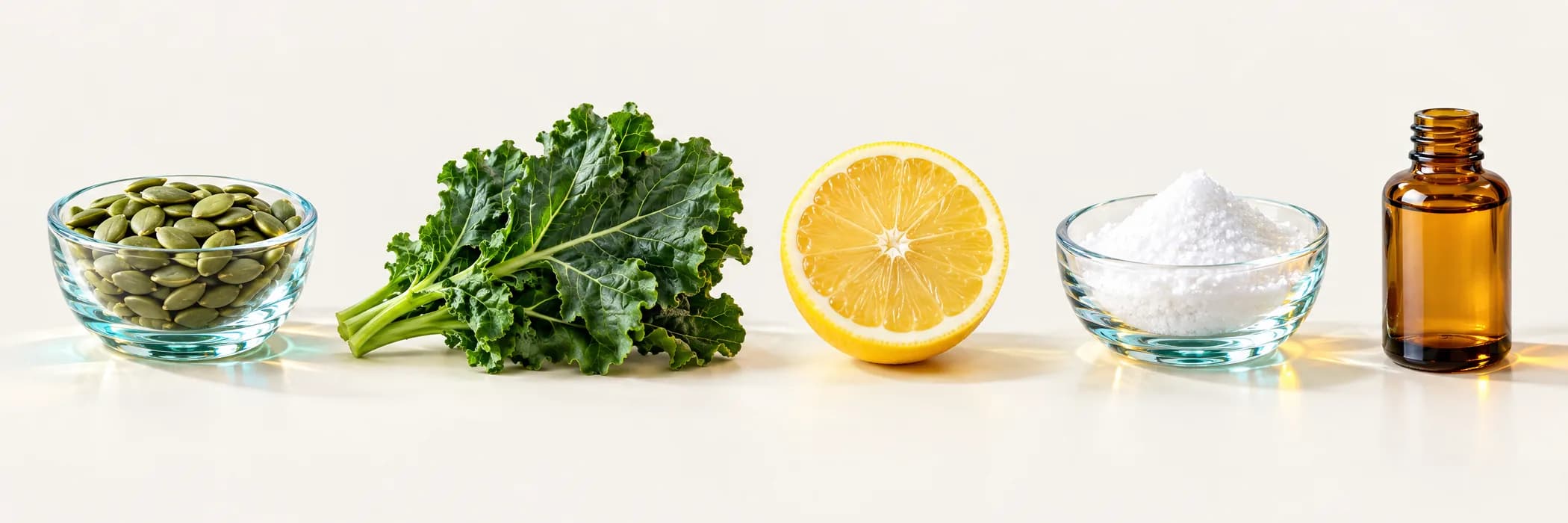
A calorie deficit, protein and resistance training drive fat loss. These cards give the amounts.
The calorie deficit that drives fat lossA sustained calorie deficit is what moves body weight, so people set it up first.
- Target:
- A deficit of roughly 300–500 kcal/day gives consistent fat loss you can sustain. Larger cuts speed muscle loss and raise dropout.
- Deficit first:
- Run the deficit first. AOD-9604 does not substitute for it.
Keep the loss fat, not muscleProtein and resistance training keep the weight you lose coming from fat, not muscle.
- Protein target:
- 1.6–2.0 g per kilogram of body weight per day (about 0.7–0.9 g/lb), the range shown to preserve lean mass in a calorie deficit. It comes before any other supplement.
- Resistance training:
- At least 3 sessions per week of compound lifts or resistance-band work.
- Protein + fiber for satiety:
- Protein and dietary fiber blunt hunger and make the deficit sustainable. Eat them at every meal.
Make the cut feel easierA calorie cut shifts water and minerals. These inputs keep the diet from feeling harder.
- Electrolytes:
- Sodium 1,500–2,300 mg, potassium 2,000–3,500 mg, magnesium 300–400 mg, to offset the shifts of eating fewer carbs. Most people on a cut feel better within 48 hours of fixing these.
- Sleep:
- 7–9 hours. Short sleep disrupts the appetite hormones ghrelin and leptin, and the deficit breaks down in practice.
Dose calculator
Reconstitution calculator
Calculated for a 1 mL U-100 insulin syringe (100 units/mL).
Units per dose
12 units
Draw this many units on a U-100 syringe
Each unit holds 25 mcg
- Volume per dose
- 0.12 mL
- Doses per vial
- 16
- Concentration
- 2.5 mg/mL
One vial lasts
- Daily
- 16 days
- Every other day
- 33 days
- 5×/week
- 23 days
Research use only. Not for human consumption. Outputs are reference values based on research literature. Verify all measurements independently.
Side effects and what to watch
What people notice. Very little. Across six randomized, double-blind, placebo-controlled human trials, safety and tolerability matched placebo, with no treatment-related serious adverse events or withdrawals.
Markers stayed clean. No rise in IGF-1, no effect on glucose tolerance and no anti-drug antibodies (immune proteins the body makes against a foreign substance).
Sources:DOI 10.4021/jem157w
Common questions
How is AOD-9604 dosed?
Most people run 300 mcg once a day under the skin, fasted. Some go up to 500–600 mcg. Cycles run 8–12 weeks of daily dosing, then 4 weeks off.
When should I take it?
First thing in the morning on an empty stomach, often right before fasted cardio. People wait 15–30 minutes after the injection before eating, to keep insulin low around the dose.
Does AOD-9604 cause weight loss in people?
In obese rodents it cut fat gain. In the 24-week human obesity trial of about 500 adults it produced no more weight loss than placebo, and obesity development stopped in 2007. People run it on top of a calorie deficit.
What does it stack with?
Tesamorelin or CJC-1295 + Ipamorelin at bedtime, with AOD-9604 kept on a fasted morning schedule. Some add Fragment 176-191 in the morning.
How is AOD-9604 different from Fragment 176-191?
AOD-9604 is growth hormone residues 177-191 with an extra tyrosine added at the front (Tyr-hGH 177-191), a synthetic change. The plain fragment lacks it. AOD-9604 is the one that went through a clinical development program.
Does AOD-9604 work through the β3 fat-burning receptor?
Not directly. Like growth hormone, it raises the number of β3-adrenergic receptors on fat cells. Knockout-mouse work showed its fat-breaking action is not directly mediated by that receptor.
Deep dive
Doses used in studies · Blood markers to track · Molecular identity · References
10From the researchDoses used in studies
These are the doses used in the published studies, from the rodent work to the oral and intravenous human trials.
| Dose | Route | Model | Outcome | Sources: |
|---|---|---|---|---|
| 500 µg/kg, oral, 19 days | Oral | Obese Zucker rats | Reduced body-weight gain by >50% and increased adipose lipolytic activity; a euglycemic clamp showed no adverse effect on insulin sensitivity (unlike full growth hormone) | PMID 11146367 |
| Chronic, 14 days | Intraperitoneal | Obese mice + β3-receptor knockout mice | Both growth hormone and AOD-9604 reduced body weight/fat and raised β3-receptor expression; the chronic effect was LOST in β3-knockout mice, while an acute rise in energy expenditure persisted. Lipolysis is not mediated directly via the β3 receptor | PMID 11713213 |
| 25–400 µg/kg, single dose | Intravenous | Humans (placebo-controlled) | Well tolerated; no rise in serum IGF-1; no impairment of glucose tolerance | DOI 10.4021/jem157w |
| 0.25–54 mg/day, multiple-dose | Oral | Humans (placebo-controlled) | Safety and tolerability indistinguishable from placebo; no anti-drug antibodies; no treatment-related serious adverse events | DOI 10.4021/jem157w |
| Oral, ~24 weeks | Oral | Phase IIb obesity trial (~502 randomized adults) | FAILED its primary endpoint and produced no greater weight loss than placebo; obesity development was discontinued in 2007. (This pivotal 24-week failure was never published as a peer-reviewed, PubMed-indexed trial, and no AOD-9604 study is registered on ClinicalTrials.gov at all; only the earlier, positive 12-week study appeared, as a 2005 conference abstract. The row is deliberately uncited because there is nothing to cite, which is itself the finding.) |
11Labs before / during / afterBlood markers to track
IGF-1 stays put. Across the human trials AOD-9604 produced no rise in serum IGF-1, the blood hormone through which growth hormone drives most tissue growth. It does not act through that pathway the way full growth hormone does.
Blood sugar stays steady. Glucose tolerance and carbohydrate metabolism showed no impairment in the human trials. The two markers people watch on growth hormone stayed clean.
Sources:DOI 10.4021/jem157w
12ChemistryMolecular identity
- Molecular formula
- C78H123N23O23S2
- Molecular weight
- 1,815.1 g/mol
- Monoisotopic mass
- 1,813.86 Da
- CAS / UNII
- 221231-10-3 · 7UP768IP4M
- Compound class
- Peptide, modified hGH C-terminal lipolytic fragmentPubChem CID 71300630
- Amino-acid sequence
- Tyr-Leu-Arg-Ile-Val-Gln-Cys-Arg-Ser-Val-Glu-Gly-Ser-Cys-Gly-Phe (16 aa; Cys7–Cys14 disulfide)PubChem CID 71300630
- Parent fragment
- Human GH 177-191 (lipolytic C-terminal domain) + N-terminal TyrStier et al. 2013, J Endocrinol Metab
- Molecular target
- No direct receptor; lipolytic action not β3-AR-mediated (modulates β3 expression)PMID 11713213
- Half-life
- ~3 min (pig IV plasma); no published human half-life despite six human trialsMoré & Kenley 2014, J Endocrinol MetabHalf-life curve →
- Regulatory status
- Not approved any country; obesity development discontinued 2007Research / developer record
- US compounding status
- FDA 503A Category 2 (significant safety concerns) 2023; removed 2024 on nominator withdrawalFDA interim 503A bulk-substances list
- Anti-doping status
- Prohibited at all times (WADA: S0 in the 2013 statement; now explicitly named under S2, GH fragments)WADA Prohibited List / WADA 2013 statement
13Primary sourcesReferences
- PubChem CID 71300630PubChem CID 71300630 (AOD-9604; C78H123N23O23S2, ~1815.1 g/mol; CAS 221231-10-3)
- PMID 11146367Ng et al., Horm Res 2000 (synthetic lipolytic domain AOD9604: weight gain ↓>50% in obese Zucker rats; no insulin-sensitivity penalty)
- PMID 11713213Heffernan et al., Endocrinology 2001 (hGH & AOD9604 in obese mice + β3-AR knockouts; lipolysis NOT directly β3-mediated)
- DOI 10.4021/jem157wStier, Vos & Kenley, J Endocrinol Metab 2013 (human safety across six placebo-controlled trials: well tolerated, no IGF-1 rise, no glucose impairment, no immunogenicity)
- FDA 503A bulk-substances listFDA. Interim policy on 503A bulk drug substances (AOD-9604 placed in Category 2, significant safety concerns, 2023; removed 2024 on nominator withdrawal)
- WADA Prohibited List, S2 / 2013 statementWADA Prohibited List. Prohibited at all times (S0 non-approved substances per the 2013 WADA statement; now explicitly named as a GH fragment under S2, peptide hormones)
Reviewed by Ki Researcher Team · Research use only · Not medical advice · Updated 2026-09-24