
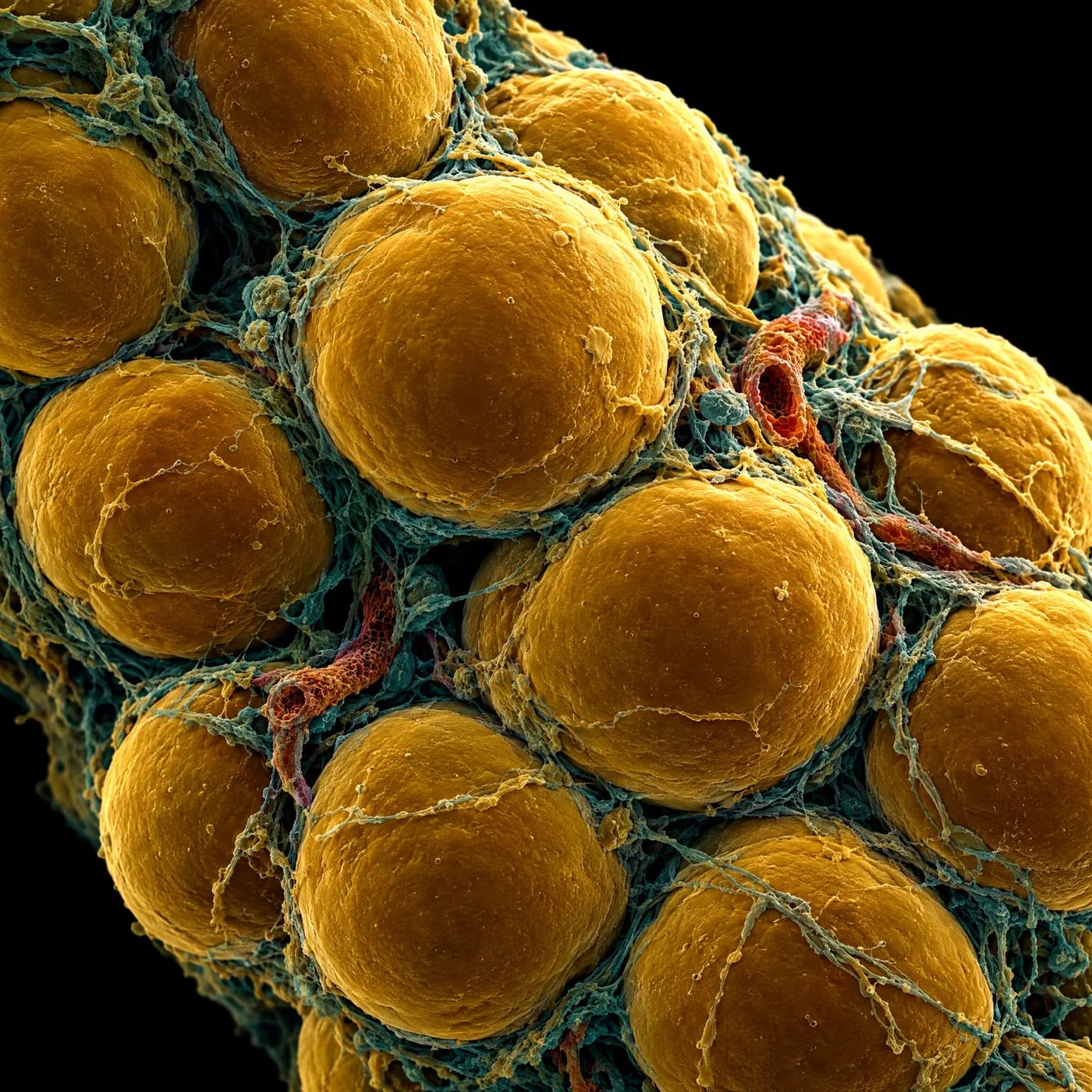
HGH Fragment 176-191
Unmodified GH C-terminal fragment · metabolic / fat loss
HGH Fragment 176-191 is growth hormone's last 16 amino acids, run for fat loss. In a 1993 lab study, the related 177-191 piece blocked new fat from forming, like intact growth hormone. Unlike modified AOD-9604, it is the natural tail, with nothing added.
At a glance
- Dose
- 250–500 mcg a day, starting at 250 mcg
- How often
- Once a day, or split as 250 mcg twice a day
- How
- A small injection under the skin, rotating sites
- When
- Fasted in the morning or at bedtime, 30–60 min clear of food
- Cycle
- 8–12 weeks daily, then 4 weeks off
The 30-second versionEverything on this page, fast
Fat loss · GH fragment · Metabolic · Body recomposition
The fat-loss tail of growth hormone (GH), run on its own. Its documented action is blocking fat storage (anti-lipogenic), and it shares its sequence family with its better-known sibling AOD-9604.
The basics
- The unmodified tail of growth hormone, its last 16 amino acids (residues 176-191) made as a stand-alone peptide.
- A targeted metabolic fat-loss peptide built around growth hormone's fat-active region.
Why people use it
- Blocks fat storage. In the founding lab study, the closely related 177-191 piece stopped new fat from forming, roughly like intact growth hormone.
- Isolates the fat part of growth hormone. The tail research tied to the hormone's effect on fat, made on its own without the rest of the hormone.
- A simple low-volume routine. One small microgram dose a day that fits a fasted-morning, pre-training habit.
- Slots into a GH-axis stack. Pairs with its sibling AOD-9604 or with GH secretagogues, which raise your own GH pulse.
Stacks well with
- AOD-9604 is the tyrosine-modified sibling from the same sequence, the closest fat-loss pairing.
- CJC-1295 / Ipamorelin raise your own GH pulse alongside the fragment's fat-storage block.
Good to know
- Banned in tested sport at all times; the WADA list names 'hGH 176-191' (S2.2.3). Matters if you compete.
- Worth a fasting-glucose check on cycle. GH tail fragments can nudge blood glucose and insulin upward.
- AOD-9604 is a separate molecule (the 177-191 piece plus an added tyrosine), a close cousin rather than the same thing.
- People inject it fasted and clear of food (about 30–60 min) for the cleanest fat-loss window.
What it does
- Blocks new fat from formingIn rats, synthetic hGH 177-191 matched the intact hormone on blocking new fat, and glycerol release showed no fat breakdown.
- Less weight gain in obese miceObese mice treated long-term with the 177-191 sequence gained less weight and carried less fat tissue.
- Beat growth hormone on fat-cell sugar uptakeIn fat cells from obese rats, the 177-191 sequence cut sugar uptake more than intact growth hormone at equal concentrations.
- Smaller fat cells in obese ratsIn a 20-day rat study of its sibling AOD9401 (hGH 177-191), fat cells shrank from 110 to 80 microns.
How it works
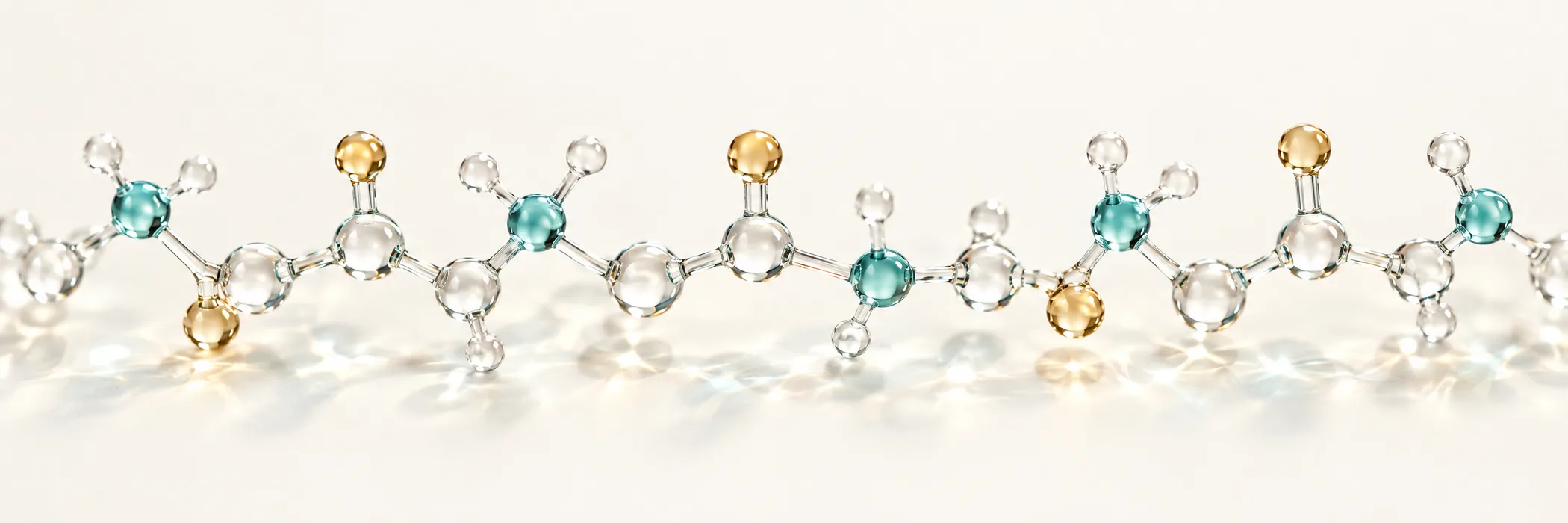
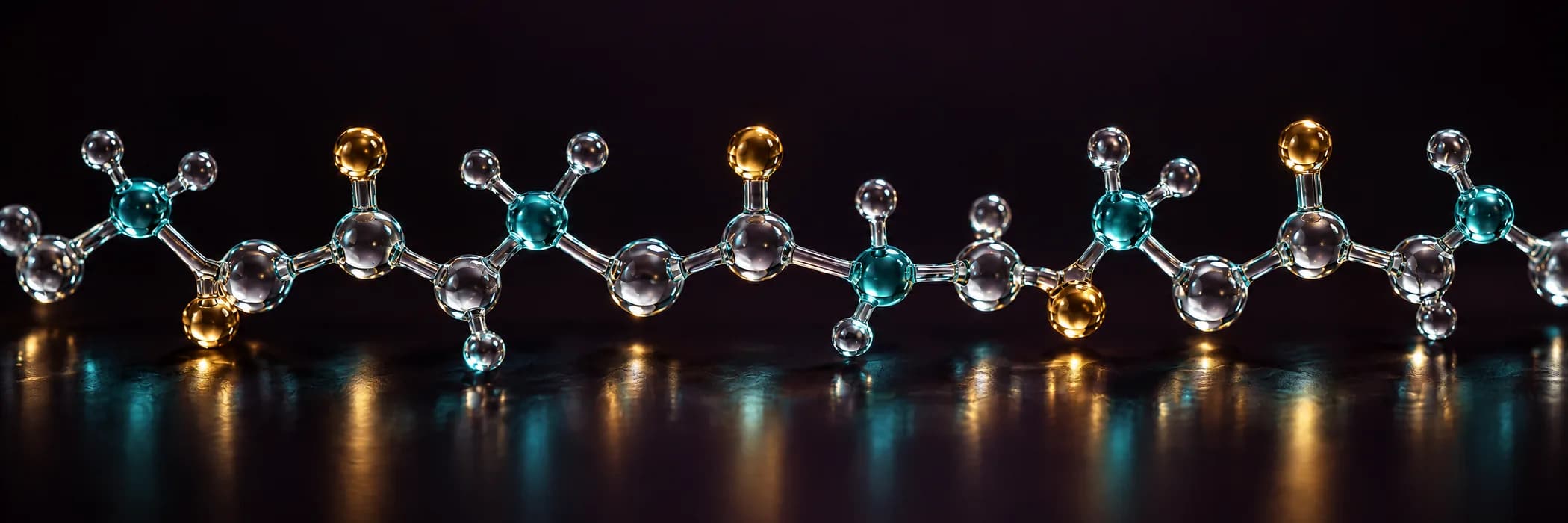
The fat-active tail. Research traced much of growth hormone's effect on fat to its tail end. This fragment is that tail, the final 16 residues of the 191-amino-acid hormone. Receptor mapping places this stretch inside a receptor-binding region, part of how the hormone drives IGF-1 (insulin-like growth factor 1).
Blocks new fat. In the founding study, the closely related 177-191 piece blocked new fat from forming, essentially like intact growth hormone. It did not significantly break down stored fat.
The β3 link. In obese mice, AOD-9604 raised levels of the β3-adrenergic receptor, but its fat breakdown did not run directly through that receptor.
Blood sugar. In rats, fragments spanning this region raised blood glucose and insulin and reduced insulin sensitivity.
How to dose it
Most people run HGH Fragment 176-191 as a small injection under the skin, once a day, on an empty stomach.
Dose tiersMost people run 250–500 mcg once a day, starting at 250 mcg.
- Starting dose:
- 250 mcg once daily, to gauge your response before a full cycle.
- Standard range:
- 250–500 mcg once daily, the range most people run.
- Split dosing:
- Some run 250 mcg twice daily (500 mcg total) for steadier coverage across the day.
How to injectA small injection under the skin on an empty stomach, rotating sites each dose.
- Injection site:
- The abdomen (a couple of inches clear of the navel), the outer thigh or the love handles. Rotate sites to avoid irritation and fatty lumps (lipohypertrophy).
- Measuring the dose:
- At 5 mg in 2 mL bacteriostatic water, 250 mcg takes 10 units on a U-100 insulin syringe. The on-page calculator does any vial size.
- Timing:
- Fasted, in the morning before the first meal (often before cardio), at bedtime, or both. A split second dose goes midday fasted or right before training.
- Food window:
- People dose 30–60 minutes before eating.
Cycle and breaksMost people run 8–12 weeks of daily dosing, then take 4 weeks off.
- Standard cycle:
- 8–12 weeks of daily dosing. AOD-9604's Phase II trials ran 12–24 weeks, and most users stay at the shorter end.
- Washout:
- 4 weeks off between cycles. Track body composition over the break with a body scan (DEXA) or tape measurements.
- Glucose check during a cycle:
- Check fasting glucose now and then during a cycle. In rats, growth-hormone tail fragments raised blood glucose and insulin.
Mixing the vial5 mg vial + 2 mL bacteriostatic water = 2,500 mcg per mL.
- Mixing:
- At 2,500 mcg/mL on a 100-unit (1 mL) insulin syringe, 250 mcg takes 10 units, 300 mcg takes 12 units, 400 mcg takes 16 units, 500 mcg takes 20 units.
- Why 2 mL for a 5 mg vial:
- Small microgram doses land on readable syringe markings instead of tiny fractions.
Best time to take it


Implied best time
Morning or bedtime, fasted
People inject it on an empty stomach, in the morning (often before cardio), at bedtime, or both.
- Insulin blunts fat-mobilizing (lipolytic) signals, so an empty-stomach dose avoids fighting a post-meal insulin spike. It is the same logic used with AOD-9604.
- A morning dose before cardio pairs with a fasted training window. A fasted bedtime dose follows the habit of dosing into the overnight window.
- In practice, fasted means roughly 30–60 minutes clear of food around the dose.
What to stack it with


It stacks with its sibling AOD-9604 and with secretagogues, compounds that raise your own growth hormone.
Fragment 176-191 + AOD-9604Its tyrosine-modified sibling, run alongside it to cover both angles on fat loss.
- Why it works:
- AOD-9604 is the 177-191 piece plus a tyrosine (Tyr-hGH 177-191), which went through six human trials. People add the fragment's fat-storage block alongside it.
- The protocol:
- Fragment 176-191 250 mcg + AOD-9604 250 mcg as separate injections under the skin, fasted morning. Or 300 mcg each, 600 mcg/day combined. Same site rotation and food window.
- Outcome:
- People reach for it to cover both angles on growth hormone's fat-loss tail. Track body composition to see what it does for you.
Fragment 176-191 + CJC-1295 or IpamorelinA secretagogue raises your own growth-hormone pulse while the fragment blocks fat storage.
- Why it works:
- CJC-1295 (a growth-hormone-releasing hormone analog) and Ipamorelin (a growth-hormone-releasing peptide) make the pituitary release more of your own growth hormone. The fragment is a second lever.
- The protocol:
- Fragment 176-191 250–500 mcg fasted morning. Ipamorelin 200–300 mcg 2–3× daily, one before sleep. Or CJC-1295 without DAC (drug affinity complex; MOD-GRF 1-29), often at 100 mcg per injection.
- Outcome:
- People run it for fat loss and recomposition with full growth-hormone support. The fragment dose stays the same. Growth-hormone stacks can raise fasting glucose, so glucose checks matter more here.
Support nutrients
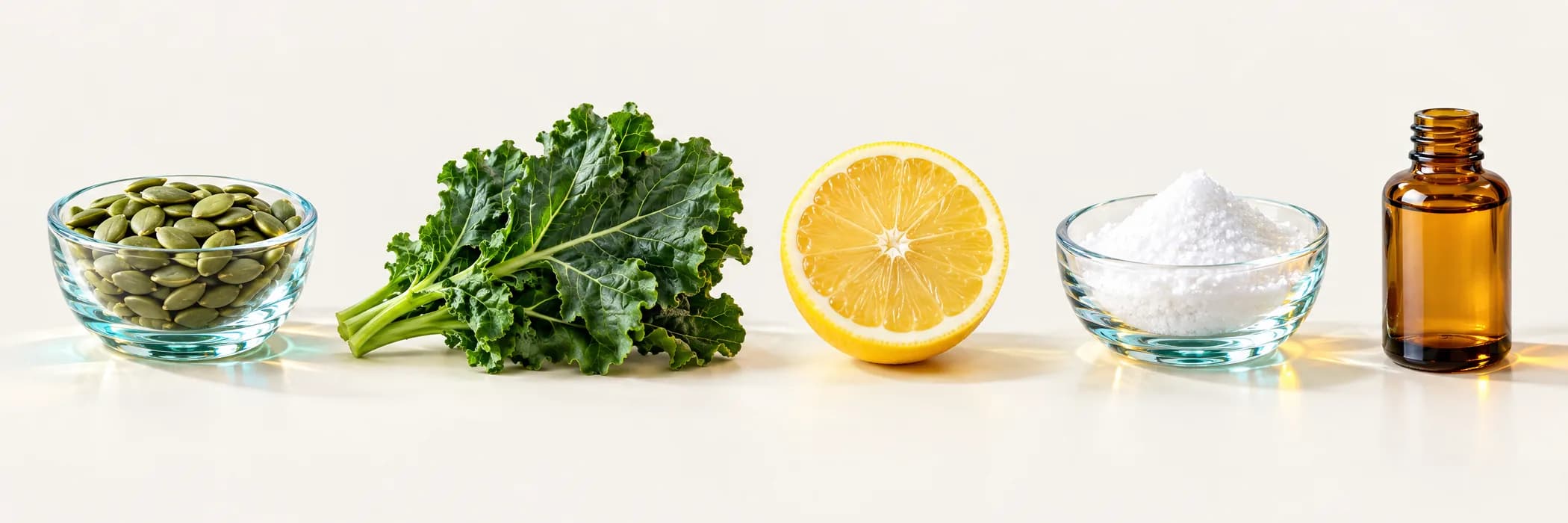
What drives the fat loss, plus a glucose check.
Protein and a calorie deficitProtein and a steady deficit decide whether the weight you lose is fat.
- Protein:
- 1.6–2.0 g per kg of body weight per day (about 0.7–0.9 g per lb), across 3–4 meals, from leucine-rich meat, eggs, dairy or whey.
- Calorie deficit:
- A sustained 300–500 kcal/day deficit drives fat loss. No peptide replaces it.
- Dietary fiber:
- 25–35 g/day from whole plant foods. It raises fullness, slows stomach emptying and blunts post-meal glucose spikes.
Resistance trainingTraining turns a deficit into fat loss instead of muscle loss.
- Resistance training:
- 3–4 sessions per week of compound strength work. Keeping muscle raises resting calorie burn. On training days, people dose Fragment 176-191 in the morning before the session.
- Cardio (optional):
- 2–3 sessions per week of interval or moderate cardio, if recovery allows. It pairs with the fasted morning dose.
Keep blood sugar in checkRat studies found these fragments raise blood sugar, so people track fasting glucose.
- Glucose monitoring:
- Check fasting glucose at baseline, at 4 weeks and at cycle end. Normal is below 100 mg/dL. Pause if it trends upward mid-cycle.
- Magnesium:
- 300–400 mg magnesium glycinate or malate daily, ideally with the evening meal. It supports insulin sensitivity and often runs low when dieting.
- Electrolytes on aggressive cuts:
- Sodium, potassium and magnesium can run short when food drops sharply. Low levels cause fatigue and cramps often blamed on the peptide, so replace them first.
Dose calculator
Reconstitution calculator
Calculated for a 1 mL U-100 insulin syringe (100 units/mL).
Units per dose
12 units
Draw this many units on a U-100 syringe
Each unit holds 25 mcg
- Volume per dose
- 0.12 mL
- Doses per vial
- 16
- Concentration
- 2.5 mg/mL
One vial lasts
- Daily
- 16 days
- Every other day
- 33 days
- 5×/week
- 23 days
Research use only. Not for human consumption. Outputs are reference values based on research literature. Verify all measurements independently.
Side effects and what to watch
At the injection site. Rotating sites avoids local irritation and fatty lumps.
Worth knowing. In rats, growth-hormone fragments spanning this region raised blood glucose and insulin and reduced insulin sensitivity. That is why people check fasting glucose during a cycle.
Half-life. No human half-life (the time for blood levels to fall by half) has been published for the fragment.
Sources:PMID 645904
Common questions
What does HGH Fragment 176-191 do for fat?
People run it for fat loss. In the founding lab study, the closely related 177-191 piece blocked new fat from forming (anti-lipogenic), like intact growth hormone. It did not significantly break down stored fat.
How is HGH Fragment 176-191 different from AOD-9604?
Fragment 176-191 is the unmodified tail of growth hormone, the natural 16-residue sequence. AOD-9604 is the shorter 177-191 piece with an added tyrosine at the front, and it went through six human trials.
How is it dosed?
Most people run 250–500 mcg once a day as a small injection under the skin, starting at 250 mcg. Some split it as 250 mcg twice a day. People dose fasted, morning or bedtime.
Do I need to cycle it?
People run 8–12 weeks of daily dosing, then take 4 weeks off. Tracking body composition over the break shows what the cycle did.
Does it affect blood sugar?
Rat studies say it can. Growth-hormone fragments spanning this region raised blood glucose and insulin and reduced insulin sensitivity. People check fasting glucose at baseline, at 4 weeks and at cycle end.
What does it stack with?
Its sibling AOD-9604, at 250 mcg each as separate fasted morning injections. Or a secretagogue like Ipamorelin at 200–300 mcg 2–3× daily, with the fragment dose unchanged.
Deep dive
Doses used in studies · Molecular identity · References
10From the researchDoses used in studies
These are the doses used in the studies, lab and animal work on the fragment plus a mouse study of its sibling AOD-9604.
| Dose | Route | Model | Outcome | Sources: |
|---|---|---|---|---|
| In-vitro / ex-vivo | Tissue | Rat adipose tissue (isolated hGH 177-191 fragment) | Anti-lipogenic activity essentially identical to intact growth hormone (blocked formation of new fat), but NO significant lipolytic (fat-breakdown) effect was found | PMID 8358331 |
| ~5 nmol/kg | Injection | Rats (hGH C-terminal fragments, residues 178-191 region) | Raised blood glucose and plasma insulin and reduced insulin sensitivity; the C-terminal region carries growth hormone's diabetogenic action, not a 'glucose-safe' profile | PMID 645904 |
| Chronic, 14 days | Intraperitoneal | Obese mice + β3-receptor knockout mice (AOD-9604, NOT the bare fragment) | AOD-9604 raised β3-receptor expression and reduced fat; the chronic effect was lost in β3-knockout mice; lipolysis not mediated directly via β3. Attributed to AOD-9604, the modified analog | PMID 11713213 |
| Human | Not applicable | Bare 176-191 fragment in humans | NO published human trial exists for the bare fragment. The placebo-controlled human trials, the failed 24-week Phase IIb obesity study, and the 2007 discontinuation all belong to AOD-9604 (a different, chemically modified molecule) and must not be read as data on 176-191 |
11ChemistryMolecular identity
- Molecular formula
- C78H123N23O22S2
- Molecular weight
- ~1799.1 g/mol
- Monoisotopic mass
- 1797.87 Da
- CAS number
- 66004-57-7
- Compound class
- Peptide, unmodified hGH C-terminal fragment (residues 176-191)PubChem CID 16131230
- Amino-acid sequence
- Phe-Leu-Arg-Ile-Val-Gln-Cys-Arg-Ser-Val-Glu-Gly-Ser-Cys-Gly-Phe (16 aa; Cys7–Cys14 = hGH Cys182–189 loop)UniProt P01241
- Parent molecule
- C-terminal 16 residues of mature human growth hormone (191 aa)UniProt P01241
- Relationship to AOD-9604
- AOD-9604 is a DIFFERENT molecule, the 177-191 sub-fragment plus an added N-terminal tyrosine (Tyr-hGH 177-191)FDA PCAC materials
- Molecular target
- No direct receptor; anti-lipogenic in fat tissue; not a β3-AR agonist (the β3 data belong to the AOD-9604 analog, where lipolysis was not β3-mediated)PMID 8358331 · PMID 11713213
- Half-life
- Not established (no published human pharmacokinetics for the bare fragment; any '~30 min' figure online is unsourced)Not establishedHalf-life curve →
- Regulatory status
- Not an approved drug in any country; no published human trial of the bare fragmentResearch / regulatory record
- Anti-doping status
- Prohibited at all times (WADA S2.2.3, GH analogues & fragments; names 'hGH 176-191')WADA Prohibited List
12Primary sourcesReferences
- PubChem CID 16131230PubChem CID 16131230 (Somatotropin 176-191; C78H123N23O22S2, ~1799.1 g/mol; CAS 66004-57-7)
- UniProt P01241UniProt P01241. Somatotropin (human growth hormone); mature sequence and disulfides (verifies residues 176-191 = FLRIVQCRSVEGSCGF, Cys182–189 loop)
- PMID 8358331Wu & Ng, Biochem Mol Biol Int 1993 (synthetic hGH 177-191: anti-lipogenic like intact GH; NO significant lipolytic effect)
- PMID 645904Ng & Bornstein, Am J Physiol 1978 (hGH C-terminal fragments raise blood glucose/insulin and reduce insulin sensitivity in rats; diabetogenic)
- PMID 11713213Heffernan et al., Endocrinology 2001 (hGH & AOD-9604 in obese mice + β3-AR knockouts; β3 expression raised but lipolysis NOT directly β3-mediated; AOD-9604, not the bare fragment)
- WADA Prohibited List, S2.2.3WADA Prohibited List. Prohibited at all times; names 'hGH 176-191' under S2.2.3 (GH, its analogues and fragments)
- PMID 7987248Natera, Jiang & Ng, Biochem Mol Biol Int 1994 (chronic synthetic hGH 177-191 in obese ob/ob mice: lower cumulative body-weight gain, less adipose tissue mass, lipogenesis inhibited)
- PMID 8118430Wijaya & Ng, Biochem Mol Biol Int 1993 (hGH 177-191 cut basal and insulin-stimulated glucose uptake in obese Zucker rat adipocytes; more potent than intact hGH at equimolar concentrations)
- PMID 11116208Ng et al., J Mol Endocrinol 2000 (AOD9401, the synthetic hGH 177-191 domain, in obese Zucker rats: adipocyte diameter 110 to 80 µm over 20 days; no insulin resistance or glucose intolerance)
- PMID 2471267Cunningham & Wells, Science 1989 (alanine scan of hGH: residues 2 to 19, 54 to 74 and 167 to 191 are the three segments implicated in receptor recognition)
Reviewed by Ki Researcher Team · Research use only · Not medical advice · Updated 2026-10-19