

Semax
Synthetic ACTH(4–10) analog · neuroprotective / nootropic
Semax is a synthetic seven-amino-acid peptide built on a fragment of ACTH (adrenocorticotropic hormone), engineered to resist breakdown. People run it for focus and mental drive. Russia registers it as a nasal-drop medicine for stroke recovery. Research shows it raises BDNF, a brain-growth signal.
Buy Semax10 mg vial
Ki Researcher is affiliated with Ki Peptides.
Ships to the US only. Buyers must be 21 or older.
At a glance
- Dose
- 600–900 mcg a day
- How often
- Once, or split morning and midday
- How
- Nasal drops or spray, or a small injection under the skin
- When
- Morning to early afternoon, clear of sleep
- Cycle
- 2–4 weeks on, 1–2 weeks off
The 30-second versionEverything on this page, fast
Sharper focus · Mental drive · Neuroprotection · Russian nootropic
The focus-and-drive nootropic from Russia, where it's a registered brain medicine. People run it for sharper focus and mental drive without the jittery stress response, and research shows it switches on a brain-growth (BDNF) signal.
The basics
- A short synthetic peptide based on a fragment of the stress hormone ACTH.
- A registered nasal-drop brain medicine in Russia; used elsewhere as a nootropic.
Why people use it
- Sharper focus and mental drive. Raises the brain's dopamine and serotonin tone.
- A brain-growth (BDNF) signal. The root of its neuroprotective reputation.
- Drive without the jitters. It skips the stress-hormone response of full ACTH.
- Pairs with Selank for focus and calm at once.
Stacks well with
- Selank is the classic Russian combo. Semax drives, Selank takes the edge off.
- Alpha-GPC or CDP-choline feeds the acetylcholine your focus runs on.
Good to know
- Run it in cycles. The focus effect can dull with nonstop use.
- Don't dose late. It's activating and can disrupt sleep.
- Nasal drops are the classic route, the one every human study used.
What it does
Semax is the focus-and-drive peptide of the Russian nootropic tradition.
- Sharper focus and mental driveNasal Semax improved attention and short-term memory in human volunteers, tested at both the start and end of the day.
- Raises a brain-growth signalIn 110 stroke survivors randomized to Semax or not, blood BDNF rose 188–191% in a month, against 57–113% without it.
- Russia's stroke-recovery medicineIn stroke rehab, patients on Semax made 62–79% of their five-month self-care gain in month one, against 22–44% without it.
- Drive without the stress responseHormone tests found none of ACTH's adrenal-stimulating or skin-pigment activity, and in stressed rats it lowered the stress hormone corticosterone.
- Faster gut-lining healing in a human studyOf patients with hard-to-heal peptic ulcers, 89.5% healed in two weeks on standard drugs plus Semax nose drops, vs 30.8%.
Sources:DOI 10.4236/nm.2013.44035PMID 9173745PMID 29798983PMID 3006824PMID 33459919PMID 12459874
How it works
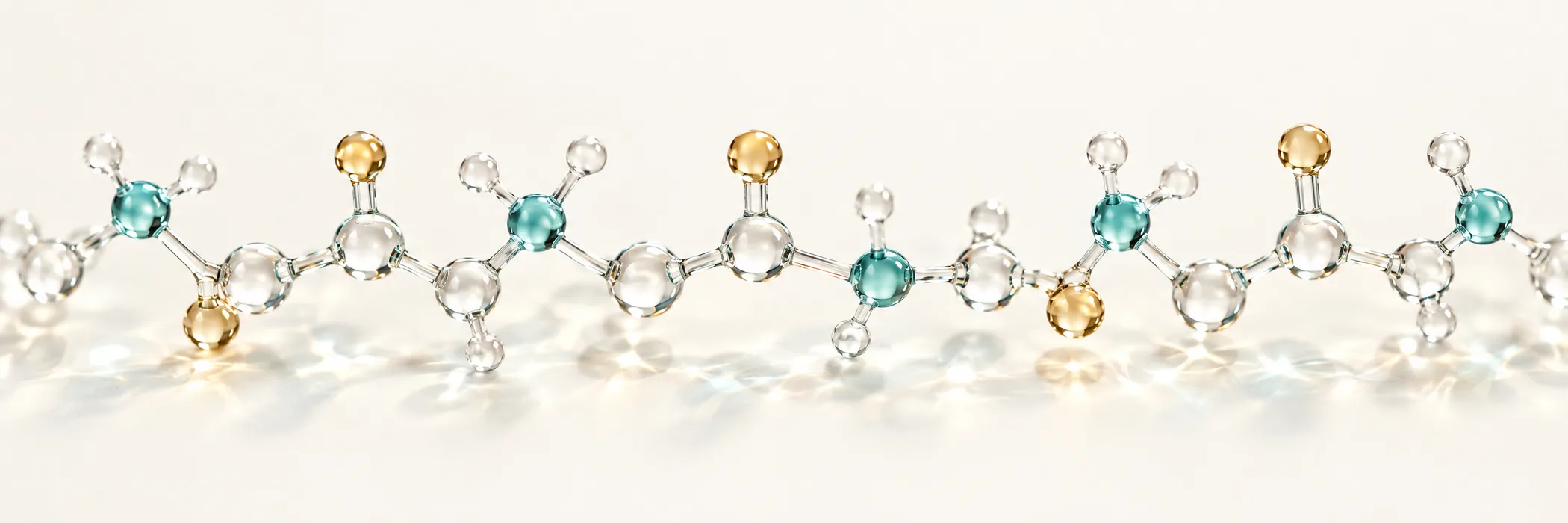

A stabilized ACTH fragment. Semax keeps the Met-Glu-His-Phe core of ACTH(4-7) and adds a Pro-Gly-Pro tail that resists breakdown. It carries ACTH's brain signaling without the classic stress-hormone response.
Raises brain-growth factors. In rat hippocampus, a single dose raised BDNF and NGF and activated TrkB, the BDNF receptor that drives neuron survival and plasticity.
Backs its use in stroke. In a rat stroke model, Semax raised BDNF, NGF and NT-3 gene activity in the injured cortex, the mechanism behind its Russian stroke use.
A proposed receptor link. Semax may also act through melanocortin receptors, a hypothesis, not yet a settled mechanism.
How to dose it
Most people run Semax as nasal drops. Some inject it.
Dose tiersThe common range is 600–900 mcg a day.
- Low / entry:
- 400–600 mcg/day. A first-use check.
- Standard (intranasal):
- 600–900 mcg/day: 2–3 drops per nostril of the 0.1% mix, 2–3 times, in the first half of the day, for 3–5 days.
- Higher:
- 900–1,200 mcg/day: from the registered top to single-dose research. At 1.0 mg, more false responses came with the attention gain (1996 study). Clinical label: 800–8,000 mcg/day, 6–20 mg/day at 1%.
- Acute / clinical reference:
- 12–18 mg/day for 5–10 days is the Russian stroke regimen.
How to spray itNasal drops or spray, split between nostrils.
- How to dose:
- Tilt your head back, put half the dose in each nostril (300 mcg split), then sniff.
- Why it works:
- The nose-to-brain route carries Semax along the olfactory nerves, partly bypassing the bloodstream; in rodents it reached brain tissue within minutes.
- Time and food:
- Morning to early afternoon; skip within 4–6 hours of bed. Meals don't matter; avoid nose-blowing.
How to injectAn injection under the skin. Every human study used the nasal route.
- Why nasal instead:
- Kolomin's review: 0.093% of a nasal dose reaches the brain in 2 minutes, versus 0.01% given intravenously.
- Site and rotation:
- Inject into fat at belly, outer thigh or hip; rotate sites.
- Measuring the dose:
- On a U-100 syringe from a 10 mg + 2 mL mix (5,000 mcg/mL): 300 mcg takes 6 units, 600 mcg takes 12 units.
Cycle and breaks2–4 weeks on, then 1–2 weeks off.
- Typical cycle:
- 2–4 weeks daily; 1–2 weeks for a short push, 6 weeks for longer runs.
- Washout:
- 1–2 weeks between cycles, 4 weeks after a longer run; if it fades early, stop.
Mixing the vialThe calculator does this math live.
- Mixing for spray:
- 10 mg in 3 mL, topped to 10 mL in a dropper bottle, is 0.1%, 50 mcg per drop.
- For intranasal use:
- 10 mg + 2 mL = 5,000 mcg/mL (0.5%). 0.05 mL = 250 mcg. 800 mcg = 0.16 mL, about 3 drops. A needleless 1 mL syringe measures it.
Sources:Russian state register (ГРЛС)PMID 11517472PMID 10741256PMID 16523722PMID 16996037
Best time to take it

Implied best time
Morning to early afternoon
Most people take Semax in the morning or early afternoon, so it's active while you work, not while you sleep.
- Semax raises dopamine and serotonin tone, so the alertness it brings is wanted during waking hours, not at night.
- That same activation is why people avoid dosing late, since it can interfere with falling asleep.
- For a morning-plus-midday split, both doses stay in the first half of the day to cover the whole work window.
Sources:PMID 16996037
What to stack it with


Semax drives focus and neurotrophic tone. The best partners add a different lever, not a repeat of the same one.
Semax + SelankThe classic Russian combo. Semax drives focus, Selank adds calm.
- Why it works:
- Semax raises BDNF and dopamine tone, the drive half. Selank is thought to calm through the GABA and serotonin systems, without sedation.
- The protocol, nasal:
- 300 mcg Semax in the morning, plus 300 mcg Selank in the morning or midday, both as nasal drops.
- The protocol, injected:
- 600–900 mcg Semax plus 900 mcg Selank, both once daily by injection, morning or one AM and one midday.
- Outcome:
- The go-to combo for cognitive performance and anxious-focus goals; both compounds share the same mostly-Russian evidence base.
Semax + Alpha-GPCA choline supplement that feeds the acetylcholine your focus runs on.
- Why it works:
- Alpha-GPC supplies choline, the raw material for acetylcholine, central to attention and memory. Semax works in parallel, not through it.
- The protocol:
- 600–900 mcg Semax (AM) plus 300–600 mg Alpha-GPC taken 30 minutes before or with the first dose.
- Outcome:
- The most common non-peptide pairing, for sustained focus and working memory during demanding stretches.
Support nutrients
Semax raises BDNF and nudges dopamine and serotonin. These cofactors feed that biology or take its edge off.
Feed the neurotransmitter pathwayRaw materials for the dopamine, acetylcholine and serotonin signals Semax nudges.
- Alpha-GPC or CDP-choline:
- 300–600 mg a day. Choline builds acetylcholine, the attention neurotransmitter; take it with your morning dose.
- Omega-3 DHA:
- 1–2 g a day. DHA is the fat neurons are built from, the raw material for BDNF-driven growth.
- B6, folate and B12:
- B6 (P5P) 25–50 mg, methylfolate 400–800 mcg, methylcobalamin B12 500–1,000 mcg a day, in the morning. This trio builds dopamine and serotonin from their precursors.
Raise BDNF naturallyExercise and sleep raise BDNF on their own, adding to the same signal.
- Aerobic exercise:
- 3–5 sessions a week, 20–40 minutes each. The best-proven way to raise BDNF in humans; time it with a Semax day.
- Sleep:
- 7–9 hours, prioritized. BDNF and TrkB sensitivity track slow-wave sleep; poor sleep undoes the signal.
Take the edge offSemax's activating nudge can show up as evening restlessness in some people.
- Magnesium glycinate:
- 200–400 mg in the evening. It supports sleep onset, the standard offset for a stimulating compound taken earlier in the day.
Dose calculator
Reconstitution calculator
Calculated for a 1 mL U-100 insulin syringe (100 units/mL).
Units per dose
16 units
Draw this many units on a U-100 syringe
Each unit holds 50 mcg
- Volume per dose
- 0.16 mL
- Doses per vial
- 12
- Concentration
- 5 mg/mL
One vial lasts
- Daily
- 12 days
- Every other day
- 25 days
- 5×/week
- 17 days
Research use only. Not for human consumption. Outputs are reference values based on research literature. Verify all measurements independently.
Side effects and what to watch
What people notice. Very little. Kolomin's review of the 1% stroke-strength formulation, ten times stronger than the 0.1% dosed here, reports nasal-lining discoloration in 10% of patients and a mild blood-glucose rise in 7.4% of patients with diabetes. A 187-patient study reported a low side-effect rate, including in older adults.
Skip it or take care if. You're on an anticoagulant. Semax forms a complex with heparin, and repeated intranasal dosing at 1,000 mcg/kg stimulated anticoagulation in animals. Its label excludes acute mental illness, anxiety disorders, past seizures, young children, pregnancy and breastfeeding.
Worth knowing. A 27-patient study at 12 mg/day found no effect on the course of motor neuron disease. Some brain-injured patients had abnormal brain-wave bursts after Semax.
Sources:DOI 10.4236/nm.2013.44035PMID 15792140PMID 18379501PMID 16634437Russian state register (ГРЛС)PMID 10199046
Common questions
What is Semax?
Semax is a synthetic seven-amino-acid peptide built on a fragment of the hormone ACTH. In Russia it's a registered nasal-drop medicine for stroke recovery and mental fatigue; elsewhere it's used as a nootropic for focus.
How does Semax work?
In rodent studies, a dose raises BDNF and NGF and activates TrkB, the BDNF receptor, supporting neuron survival. That's the mechanism behind its Russian stroke use, without ACTH's classic stress-hormone response.
How is Semax dosed?
Most people run 600–900 mcg a day as nasal drops: 2–3 drops of the 0.1% mix per nostril, 2–3 times, in the first half of the day.
Do I need to cycle Semax?
Most people run it 2–4 weeks on, then take 1–2 weeks off, since the focus effect can dull with nonstop use. If the effect fades before the cycle ends, that's the signal to stop.
What is Semax's half-life?
No validated human half-life has been published. In rodents the parent peptide breaks down fast, while its Pro-Gly-Pro tail lasts longer and the effects outlast the peptide itself.
What is NA-Semax-Amidate, and how does it differ from Semax?
It's a modified Semax with added stability groups, sometimes called stronger or longer-acting, though that's not published research. It's a different molecule (PubChem CID 172638603), not interchangeable with Semax.
Deep dive
Doses used in studies · Molecular identity · References
10From the researchDoses used in studies
These are the doses and models from the studies and the Russian registration record.
| Dose | Route | Model | Outcome | Sources: |
|---|---|---|---|---|
| 12 mg/day (moderate), 18 mg/day (severe); 5–10 day course | Intranasal | Human, acute hemispheric ischemic stroke (n≈30 vs 80 controls) | Reported accelerated regression of cerebral and focal (especially motor) deficits; non-randomized, Russian-language | PMID 11517472 |
| Intranasal 0.1% / 1% solution | Intranasal | Human, registered Russian drug (stroke, cognitive, optic-nerve indications) | Marketed formulation strengths; 0.1% carries the broad indication list including adaptation and mental fatigue, 1% is registered for moderate-to-severe acute ischemic stroke only | Russian state register (ГРЛС) |
| Endonasal / drops | Intranasal | Human, optic nerve disease (controlled, 3-group) | Reported improved visual acuity, visual-field extension, and optic-nerve electrical sensitivity; small, Russian-language | PMID 10741256 |
| 50 µg/kg, single dose | Intranasal | Rat, hippocampus (mechanism) | Increased BDNF protein, BDNF mRNA, and TrkB phosphorylation; improved conditioned-avoidance behavior | PMID 16996037 |
| Repeated dosing | Intranasal | Rat, permanent MCAO ischemia (mechanism) | Semax enhanced transcription of Bdnf, Ngf, Nt-3, TrkA and TrkC. TrkB was enhanced by the Pro-Gly-Pro metabolite rather than by Semax itself; worth keeping straight, since "and their Trk receptors" overstates what Semax did | PMID 19633950 |
11ChemistryMolecular identity
- Molecular weight
- 813.9 g/mol
- Molecular formula
- C₃₇H₅₁N₉O₁₀S
- Monoisotopic mass
- 813.34796 Da
- CAS / UNII
- 80714-61-0 · I5FAL2585H
- PubChem CID
- 9811102
- Sequence
- Met-Glu-His-Phe-Pro-Gly-Pro (MEHFPGP), 7 AA heptapeptidePubChem CID 9811102
- Structure / class
- Synthetic ACTH(4-7) fragment (Met-Glu-His-Phe) + C-terminal Pro-Gly-Pro stabilizing tail; neuropeptide / nootropicPubChem CID 9811102; research literature
- Water solubility
- Freely water-soluble; hydrophilic (computed XLogP −2.8, TPSA 312 Ų)PubChem CID 9811102 (computed properties)
- Molecular target
- Neurotrophic: upregulates BDNF/NGF and TrkB receptor activation (rodent brain); proposed melanocortin-system activity (unconfirmed). No classic single receptorPMID 16996037 (rodent BDNF/TrkB); melanocortin link proposed only
- Half-life
- No validated human plasma half-life published; parent peptide rapidly degraded with Pro-Gly-Pro the dominant longer-lived metabolite (rodent)PMID 16523722 (rat intranasal kinetics)
- Origin
- Synthetic ACTH(4-7) fragment + C-terminal Pro-Gly-ProResearch literature
- Regulatory status
- Registered prescription drug in Russia (intranasal; on the Russian Vital & Essential Medicines list); not FDA/EMA-approvedRussian state register (ГРЛС)
12Primary sourcesReferences
- PubChem CID 9811102PubChem CID 9811102 (Semax / ACTH(4-7) Pro-Gly-Pro)
- PMID 16996037Dolotov et al., Brain Res 2006 (Semax raises BDNF protein/mRNA and TrkB phosphorylation, rat hippocampus)
- PMID 16635254Dolotov et al., J Neurochem 2006 (specific brain binding KD ≈ 2.4 nM; basal-forebrain BDNF, rat)
- PMID 17353092Agapova et al., Neurosci Lett 2007 (region-specific NGF/BDNF transcript changes, rat brain)
- PMID 19633950Dmitrieva et al., Cell Mol Neurobiol 2010 (Semax & PGP upregulate BDNF/NGF/NT-3 + Trk receptors after cerebral ischemia, MCAO rat; epub 2009)
- PMID 16523722Shevchenko et al., Bioorg Khim 2006 (intranasal brain penetration & rapid degradation; PGP dominant metabolite, rat)
- PMID 11517472Gusev, Skvortsova, Miasoedov et al., Zh Nevrol Psikhiatr 1997 (Semax in acute ischemic stroke; 12/18 mg/day intranasal)
- PMID 10741256Polunin et al., Vestn Oftalmol 2000 (Semax in optic nerve disease; controlled 3-group study)
- PMID 15792140Gusev et al., Zh Nevrol Psikhiatr 2005 (Semax in chronic cerebrovascular insufficiency, n=187; tolerability)
- PMID 18379501Serdiuk et al., Zh Nevrol Psikhiatr 2007 (1% Semax 12 mg/day in motor neuron disease, n=27; NULL result on disease course)
- PMID 29798983Gusev et al., Zh Nevrol Psikhiatr 2018 (Semax at different stages of ischemic stroke, n=110; plasma BDNF measured in humans)
- PMID 30225715Lebedeva et al., Bull Exp Biol Med 2018 (intranasal 1% Semax, 24 healthy volunteers; resting-state fMRI; the paper states no mg dose; the 1.2 mg figure appears in the 2020 companion study)
- PMID 16634437Liapina et al., Izv Akad Nauk Ser Biol 2006 (comparative anticoagulant effects of proline-containing regulatory peptides incl. Semax and Selank)
- Russian state register (ГРЛС)Russian state register of medicines (ГРЛС). Semax 0.1% ЛП-№(009449)-(РГ-RU), Semax 1% ЛП-№(010596)-(РГ-RU), Selank 0.15% ЛП-№(010951)-(РГ-RU); registered indications, dose regimens, course lengths and storage
- WADAWADA Prohibited List 2026 (neither Semax nor Selank is named; S0 covers substances with no approval by ANY governmental regulator)
- DOI 10.4236/nm.2013.44035Kolomin et al., Neuroscience & Medicine 2013;4:223–252 (review: Semax/Selank pharmacology, intranasal BBB penetration, named adverse-effect rates)
- PMID 12459874Ivanikov et al., Bull Exp Biol Med 2002 (intranasal 1% Semax added to standard drugs in refractory peptic ulcer; healing by day 14)
- PMID 3006824Ponomareva-Stepnaia et al., Biull Eksp Biol Med 1986 (Semax shows no steroidogenic or melanocyte-stimulating activity)
- PMID 33459919Svishcheva et al., Bull Exp Biol Med 2021 (Semax given before restraint stress lowers serum corticosterone, rat)
- PMID 9173745Asmarin et al., Zh Vyssh Nerv Deiat 1997 (developers' 15-year review: memory and attention effects lasting 20–24 h after a nasal dose, animals and humans)
- PMID 10199046Alekseeva et al., Anesteziol Reanimatol 1999 (Semax in posthypoxic encephalopathy, n=73; paroxysmal EEG activity after dosing in some patients)
Semax
10 mg vial
Ki Researcher is affiliated with Ki Peptides.
Ships to the US only. Buyers must be 21 or older.
Reviewed by Ki Researcher Team · Research use only · Not medical advice · Updated 2026-10-19