

Selank
Synthetic tuftsin analog · anxiolytic
Selank is a synthetic seven-amino-acid peptide built on tuftsin, a natural immune fragment, with the same stabilizing tail as Semax. People run it for calm focus without sedation. It's a registered anti-anxiety drug in Russia, backed by four human trials.
Buy Selank10 mg vial
Ki Researcher is affiliated with Ki Peptides.
Ships to the US only. Buyers must be 21 or older.
At a glance
- Dose
- 900 mcg a day
- How often
- 1 to 3 times a day, mostly morning and midday
- How
- Nasal spray, or a small injection under the skin
- When
- Daytime, since it calms without making you drowsy
- Cycle
- 10–14 day courses, then a 2–4 week break
The 30-second versionEverything on this page, fast
Calm focus · Anti-anxiety · Non-sedating · Russian nootropic
Calm without the fog. Selank takes the edge off anxiety with a benzodiazepine's calm and none of the drowsiness, plus an anti-fatigue lift. Semax's classic calm partner.
The basics
- A short synthetic peptide based on the immune molecule tuftsin.
- Registered anti-anxiety nasal drops in Russia; used elsewhere as a calm-focus nootropic.
Why people use it
- Calm without drowsiness. Benzo-like anxiety relief, but you stay clear and awake.
- Quiets a racing, anxious mind. Slows the breakdown of the body's own calming peptides.
- An anti-fatigue lift rides along with the calm.
- The calm half of the Semax combo. Focus plus composure.
Stacks well with
- Semax, the classic Russian combo. Selank calms, Semax drives, for focus under pressure.
- NA-Selank-Amidate, the longer-acting version, for once-daily dosing.
Good to know
- No drowsiness, so it fits daytime and pre-stress use.
- A single dose before a high-stress moment is common, alone or alongside a course.
- Effects seem to outlast the peptide in the blood, so short courses go a long way.
What it does
A Russian nootropic for a calm, clear head.
- Calm focus without drowsinessIn a 60-patient trial, no one on Selank was sedated at day 14, against everyone on the benzodiazepine phenazepam.
- Take the edge off fastIn 20 adults with generalized anxiety, 40% improved sharply within 3 days, their anxiety score falling from 20.3 to 7.0.
- An anti-fatigue lift tooIn 62 patients, Selank matched the benzodiazepine medazepam's anxiety relief and, unlike medazepam, also eased fatigue.
- Quiets an anxious mindIn highly anxious rats dosed daily, anxiety behavior fell from day 2 and stayed down through all 4 weeks.
- Keeps your thinking sharpOver 14 days, time to finish an attention test held steady on Selank but rose 35% on the benzodiazepine phenazepam.
Sources:PMID 25176261DOI 10.1016/S0924-9338(12)75281-1PMID 18454096PMID 16963804
How it works
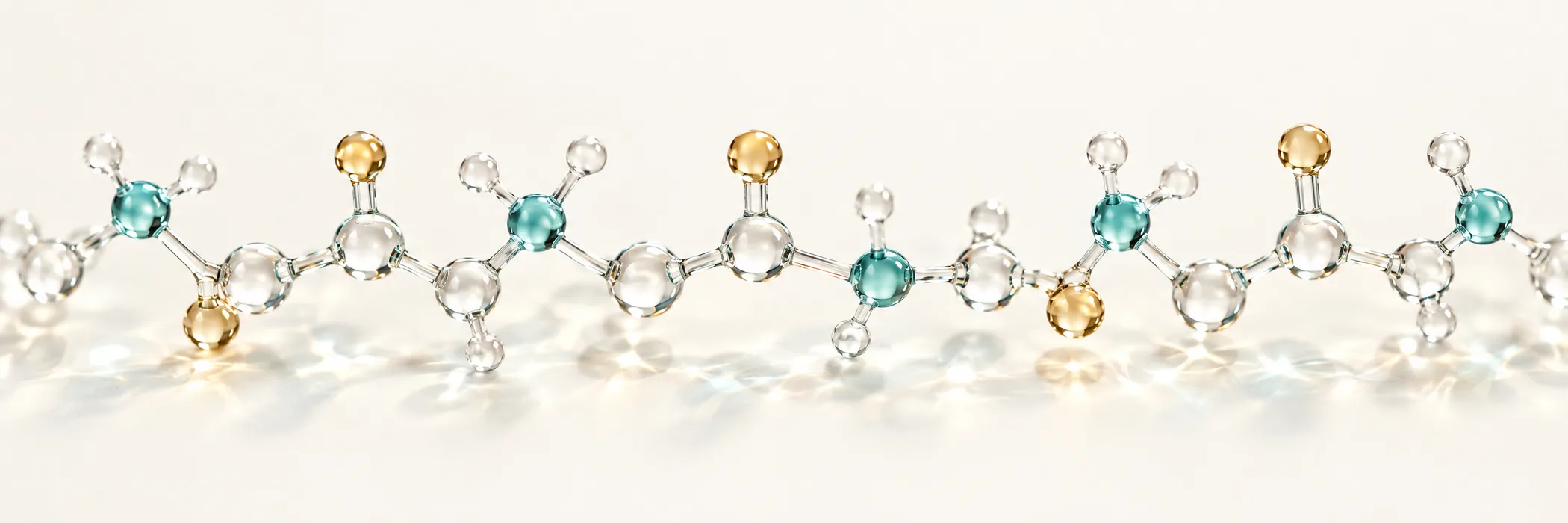

Builds on tuftsin. Selank keeps tuftsin's sequence, a natural immune peptide, and adds a tail that resists the enzymes that break peptides down fast.
Protects the body's own calming molecules. In human serum, Selank blocks the enzymes that break down enkephalins, the body's calming and pain-relieving compounds. In the clinical trial, enkephalin broke down fast in patients' blood, and treatment slowed that breakdown.
Nudges GABA and serotonin, in rodents. In rat brain, it raises BDNF (brain-derived neurotrophic factor), a growth protein, and shifts genes for GABA, the brain's main calming signal, and changes serotonin metabolism.
Also tunes immunity. In patients' blood cells in the lab, it silenced the gene for interleukin-6, an inflammation signal. Treated patients' immune signals shifted.
Sources:PMID 11443939PMID 18454096PMID 18841804PMID 26924987DOI 10.1134/S1607672910010023PMID 18577961PMID 19803361
How to dose it
Selank goes in the nose first, as the registered Russian nasal solution. Injecting the mixed powder is the second option.
Dose tiersThe standard range is 900 to 1,800 mcg a day, higher for acute stress.
- Low / first use:
- 450 to 900 mcg a day, half the registered dose up to all of it (6 to 12 drops), to gauge response.
- Standard:
- 900 to 1,800 mcg a day. The registered regimen, 2 drops per nostril 3 times daily for 14 days, equals 900 mcg a day.
- Higher / acute:
- 1,800 to 2,700 mcg a day. 2,700 mcg a day is the dose from the Phase II trials and the over-50 study. A single 10 to 14 day course.
How to spray itThe registered routine is 2 drops per nostril, 3 times a day.
- How:
- 2 drops per nostril, 3 times a day for 14 days, 12 drops at 75 mcg each, for 900 mcg a day. Sniff gently toward the top of the nose.
- Concentration:
- 5 mg in up to 3 mL, topped to 3.3 mL in a dropper bottle, gives 0.15%, 75 mcg per 0.05 mL drop.
- Food window:
- Take with or without meals.
How to injectThe backup route. Human studies all used the nasal route.
- Site:
- Abdomen a couple of inches from the navel, outer thigh, or flank. Rotate sites each dose to avoid irritation.
- Measuring the dose:
- On a U-100 syringe: 900 mcg takes 18 units, 1,800 mcg takes 36 units, 2,700 mcg takes 54 units, from a 10 mg vial plus 2 mL bacteriostatic water.
- Timing:
- Daytime. Split doses go morning and midday; skip late evening if sensitive.
Cycle and breaksMost people run 10 to 14 day courses, then 2 to 4 weeks off.
- Standard cycle:
- 14 days of daily use, as registered.
- Longer courses:
- Some run 3 to 4 week courses. The effect seems to outlast the peptide.
- Washout:
- 2 to 4 weeks off between courses.
- As needed:
- Some use it for 1 to 3 days around a stressful event, not a full course.
Sources:Russian state register (ГРЛС)PMID 18454096PMID 16637290PMID 11443939
Best time to take it
Implied best time
Daytime (as needed)
Most people take it during the day, on a schedule or before a demanding task.
- Selank is non-sedating, with a calm-without-drowsiness window of several hours, so people use it in waking hours rather than as a sleep aid.
- It's reported to act fast without sedating, so a single dose ahead of a stressful moment is common, instead of or alongside a daily schedule.
- No validated human half-life is published, so people time it by its non-sedating effect.
Sources:PMID 18454096PMID 16637290
What to stack it with


Selank's edge is calm without sedation. Good partners add a different lever instead of doubling the same calm signal.
Selank + SemaxThe classic Russian combo. Selank brings the calm, Semax the drive.
- Why it works:
- Semax drives cognitive activation and BDNF; Selank balances the edge that can bring. Same Pro-Gly-Pro design, different main effects.
- The protocol:
- Selank 900 mcg a day, Semax 600 to 900 mcg a day, 10 to 14 days. Nasal: one nostril each, or alternate morning and afternoon. Injected: separate sites or co-inject.
- Outcome:
- People combine it for focus under pressure and a quieter mind, when Semax alone tips into restlessness.
NA-Selank-Amidate instead of SelankA longer-acting version of Selank. Pick one or the other for a course.
- Why it's a swap:
- Same tuftsin core, with N-acetyl and amide changes that slow breakdown further, extending the calm window past standard Selank.
- The protocol:
- NA-Selank-Amidate runs lower, 100 to 300 mcg a day, intranasal or injected, for its longer activity.
- Outcome:
- Chosen by people who want once-daily dosing or find standard Selank doesn't last long enough.
Support nutrients


Selank's calming mechanism runs through enkephalins, GABA and serotonin. These cofactors feed those systems or add a complementary calm lever.
Calming neurotransmitter building blocksMagnesium, L-theanine and tryptophan feed the GABA and serotonin systems Selank works on.
- Magnesium glycinate:
- 300 to 400 mg at night. Supports GABA tone and calms the excitatory NMDA receptor, with little stomach upset.
- L-theanine:
- 100 to 200 mg with each dose. Promotes a calm, alert brain state without sedation, the same lever Selank pulls.
- Tryptophan or 5-HTP:
- Tryptophan 500 mg or 5-HTP 50 to 100 mg, at night, away from Selank dosing. Feeds the serotonin Selank is reported to shift.
Feed the B6 bottleneckP5P, the active form of vitamin B6, sets the pace of GABA and serotonin production.
- Pyridoxal-5-phosphate (P5P):
- 25 to 50 mg in the morning. The active form of B6 that both pathways need; standard B6 converts more slowly.
Protect the nasal liningSelank is unusually clean, so the main thing to offset is a dry nose from spraying.
- Hydration if you spray it:
- Nasal use can dry the nasal lining. Stay hydrated and rinse with saline between courses, not at the same time.
Dose calculator
Reconstitution calculator
Calculated for a 1 mL U-100 insulin syringe (100 units/mL).
Units per dose
18 units
Draw this many units on a U-100 syringe
Each unit holds 50 mcg
- Volume per dose
- 0.18 mL
- Doses per vial
- 11
- Concentration
- 5 mg/mL
One vial lasts
- Daily
- 11 days
- Every other day
- 22 days
- 5×/week
- 15 days
Research use only. Not for human consumption. Outputs are reference values based on research literature. Verify all measurements independently.
Side effects and what to watch
What people notice. Very little. Russian clinical reports describe it as well tolerated and non-sedating, matching a benzodiazepine's calming effect without the drowsiness.
Worth knowing. The safety data come from small, short trials run by the drug's developers. One small trial reported no dependence or withdrawal.
Sources:PMID 18454096
Common questions
What is Selank?
Selank is a synthetic seven-amino-acid peptide, built on the immune peptide tuftsin. In Russia it's a registered nasal anxiolytic for anxiety and neurasthenia.
How does Selank work?
In human serum, it slows the enzymes that break down the body's own enkephalins, letting them build up. In rodents it also nudges BDNF, GABA genes and serotonin.
Is Selank as good as a benzodiazepine?
In one human trial, yes, against the benzodiazepine medazepam. It matched the anti-anxiety effect without the sedation, plus an anti-fatigue lift. Later work found it also softened a benzodiazepine's own side effects.
What does Selank stack with?
Semax, the classic Russian pairing: Selank 900 mcg a day with Semax 600 to 900 mcg a day, both intranasal for 10 to 14 days.
What is Selank's half-life?
No validated human half-life has been published. The parent peptide breaks down fast, but the calming effect seems to outlast it in the body.
Deep dive
Doses used in studies · Molecular identity · References
10From the researchDoses used in studies
These are the doses used in the published studies and the Russian drug registration.
| Dose | Route | Model | Outcome | Sources: |
|---|---|---|---|---|
| Course of intranasal Selank vs medazepam | Intranasal | Human, GAD & neurasthenia (n=30 Selank vs 32 medazepam) | Anxiolytic effect comparable to the benzodiazepine medazepam, plus an antiasthenic/anti-fatigue effect. What was measured is the serum HALF-LIFE of leu-enkephalin, which was low in these patients and rose on treatment, i.e. slower enkephalin degradation, not a raised enkephalin level | PMID 18454096 |
| 0.15% intranasal solution | Intranasal | Human, registered Russian drug (GAD / neurasthenia) | Marketed formulation strength; the registered course is 14 days rather than continuous use | Russian state register (ГРЛС) |
| 200 µg/kg, single dose | Intranasal | Rat, hippocampus & spleen (mechanism) | Broad transcriptomic changes; chronic 5-day dosing altered a further set of genes | DOI 10.1134/S1607672910010023 |
| Intranasal | Intranasal | Rat, hippocampus (mechanism) | Increased BDNF mRNA expression in vivo | PMID 18841804 |
| Selank ± diazepam | Intraperitoneal | Rat, elevated-plus-maze, chronic mild stress | Selank enhanced diazepam's anxiety-reducing effect under chronic mild stress | PMID 28280289 |
11ChemistryMolecular identity
- Molecular weight
- 751.9 g/mol
- Molecular formula
- C₃₃H₅₇N₁₁O₉
- Monoisotopic mass
- 751.43407 Da
- CAS / UNII
- 129954-34-3 · TS9JR8EP1G
- PubChem CID
- 11765600
- Sequence
- Thr-Lys-Pro-Arg-Pro-Gly-Pro (TKPRPGP), 7 AA heptapeptidePubChem CID 11765600
- Structure / class
- Synthetic tuftsin analog, tuftsin (Thr-Lys-Pro-Arg) + C-terminal Pro-Gly-Pro stabilizing tail; anxiolytic neuropeptide (dev code TP-7)PubChem CID 11765600; research literature
- Water solubility
- Freely water-soluble; highly hydrophilic (computed XLogP −6.1, TPSA 322 Ų)PubChem CID 11765600 (computed properties)
- Molecular target
- Inhibits enkephalin-degrading enzymes of human serum (IC50 ~20 µM), raising endogenous enkephalins; rodent BDNF + GABAergic-gene effects (no direct GABA-A binding). No classic single receptorPMID 11443939 (human-serum enkephalinase inhibition)
- Half-life
- No validated human plasma half-life published; labile parent peptide, biodegradation products characterized in rodent (tritium-labeled)PMID 16637290 (Selank biodegradation); Not established for humans
- Origin
- Synthetic tuftsin (Thr-Lys-Pro-Arg) + C-terminal Pro-Gly-ProResearch literature
- Regulatory status
- Registered prescription anxiolytic in Russia (intranasal 0.15% solution); not FDA/EMA-approvedRussian drug registry; research literature
12Primary sourcesReferences
- PubChem CID 11765600PubChem CID 11765600 (Selank / TP-7, tuftsin analog)
- PMID 11443939Kost et al., Bioorg Khim 2001 (Semax & Selank inhibit enkephalin-degrading enzymes of human serum)
- PMID 18454096Zozulia et al., Zh Nevrol Psikhiatr 2008 (principal human GAD/neurasthenia trial; Selank vs medazepam, n=62)
- PMID 25176261Medvedev et al., Zh Nevrol Psikhiatr 2014 (Selank vs phenazepam in anxiety, n=60; anxiolysis persisted ~1 week after dosing)
- PMID 26356395Medvedev et al., Zh Nevrol Psikhiatr 2015 (Selank + phenazepam vs phenazepam alone, n=70; Selank reduced the benzodiazepine's side effects)
- Russian state register (ГРЛС)Russian state register of medicines (ГРЛС). Semax 0.1% ЛП-№(009449)-(РГ-RU), Semax 1% ЛП-№(010596)-(РГ-RU), Selank 0.15% ЛП-№(010951)-(РГ-RU); registered indications, dose regimens, course lengths and storage
- WADAWADA Prohibited List 2026 (neither Semax nor Selank is named; S0 covers substances with no approval by ANY governmental regulator)
- DOI 10.1016/S0924-977X(05)80332-3Neznamov et al., Eur Neuropsychopharmacol 2005;15:S159–160. Novel anxiolytic Selank: results of the Phase II clinical trials (congress abstract; 2,700 mcg/day intranasal)
- DOI 10.1016/S0924-9338(12)75281-1Syunyakov et al., Eur Psychiatry 2012;27(Suppl 1). Rapid and slow response in GAD treated with the peptide anxiolytic Selank (congress abstract; 2,700 mcg/day intranasal)
- DOI 10.4236/nm.2013.44035Kolomin et al., Neuroscience & Medicine 2013;4:223–252 (review: Semax/Selank pharmacology and registered dosing)
- PMID 18577961Uchakina et al., Zh Nevrol Psikhiatr 2008 (immunomodulation in anxiety-asthenic patients; IL-6 suppression, Th1/Th2 shift)
- PMID 19803361Semenova et al., Eksp Klin Farmakol 2009 (Selank vs tuftsin on brain serotonin metabolism, PCPA rats)
- PMID 18841804Inozemtseva et al., Dokl Biol Sci 2008 (intranasal Selank regulates BDNF expression in rat hippocampus in vivo)
- PMID 26924987Volkova et al., Front Pharmacol 2016 (Selank affects expression of genes in GABAergic neurotransmission, rat)
- DOI 10.1134/S1607672910010023Kolomin et al., Dokl Biochem Biophys 2010 (transcriptomic response of rat hippocampus & spleen to Selank, 200 µg/kg)
- PMID 16637290Zolotarev et al., Bioorg Khim 2006 (tritium-labeled Selank biodegradation; degradation products identified)
- PMID 28280289Kasian et al., Behav Neurol 2017 (Selank enhances diazepam's anxiolysis under chronic mild stress, rat EPM)
- PMID 16963804Czabak-Garbacz et al., Pharmacol Rep 2006 (TP-7, the tuftsin analog Selank, given daily to highly anxious rats for 4 weeks)
Selank
10 mg vial
Ki Researcher is affiliated with Ki Peptides.
Ships to the US only. Buyers must be 21 or older.
Reviewed by Ki Researcher Team · Research use only · Not medical advice · Updated 2026-10-19