

N-Acetyl Semax Amidate
Longer-acting Semax analog · acetyl and amide caps · intranasal
N-Acetyl Semax Amidate is the Russian nootropic Semax with two caps, an acetyl and an amide, that block the enzymes which break Semax down fastest. It is built to last longer and be dosed less often. People run it for sharper focus and mental drive.
Buy NA-Semax Amidate10 mg or 30 mg vial
Ki Researcher is affiliated with Ki Peptides.
Ships to the US only. Buyers must be 21 or older.
At a glance
- Dose
- 300–600 mcg a day (100–150 mcg for a first run)
- How often
- Once a day, split morning and early afternoon at the top end
- How
- Nasal drops or spray, or a small injection under the skin
- When
- Morning, so the activation stays clear of sleep
- Cycle
- 10–14 days on, then an equal break
The 30-second versionEverything on this page, fast
Sharper focus · Mental drive · Longer-acting Semax · BDNF support
Semax, built to last longer. Two caps slow its breakdown, so the sharper focus and mental drive of Semax, and its brain-growth (BDNF) signal, come from fewer doses a day.
The basics
- Semax with an acetyl cap and an amide cap, built to last longer in the body.
- People run it as a focus-and-drive nootropic, dosed less often than plain Semax.
Why people use it
- Sharper focus and mental drive. Raises the brain's dopamine and noradrenaline tone for demanding work.
- A brain-growth (BDNF) signal. Research on Semax shows it raises BDNF, the brain's growth-and-plasticity signal.
- Fewer doses for the same window. The caps slow its breakdown, so one dose covers more of the day.
- Drive without the stress response. It carries the brain signal without firing the cortisol axis.
Stacks well with
- NA-Selank-Amidate brings the calm to this one's drive, the Russian focus-plus-calm pair in longer-acting form.
- Semax is the parent and shares the mechanism, so it is a swap, not a stack.
Good to know
- Longer-acting, so the same window comes from fewer doses than plain Semax.
- Mornings only. It is activating and can disrupt sleep if taken late.
- Cycle it. Focus tends to dull with nonstop use.
What it does
N-Acetyl Semax Amidate is the longer-acting take on Semax, the focus-and-drive end of the Russian nootropic tradition.
- Sharper focus and mental driveSemax is described as activating, raising the brain's dopamine and noradrenaline tone for demanding cognitive work.
- A brain-growth (BDNF) signalIn rodent brain Semax raises BDNF and NGF (nerve growth factor) and activates the TrkB receptor.
- Built to resist breakdownIn rat serum, blocking front-end enzymes cut up to 66% of Semax breakdown. The acetyl cap covers that end.
- Activation without the classic stress responseIt carries the ACTH (adrenocorticotropic hormone) fragment's brain signal without the cortisol and stress-axis effects of the full hormone.
- Pairs cleanly with a calm peptideIt works on drive rather than calm, so it slots alongside NA-Selank-Amidate or Selank for focus plus calm.
How it works
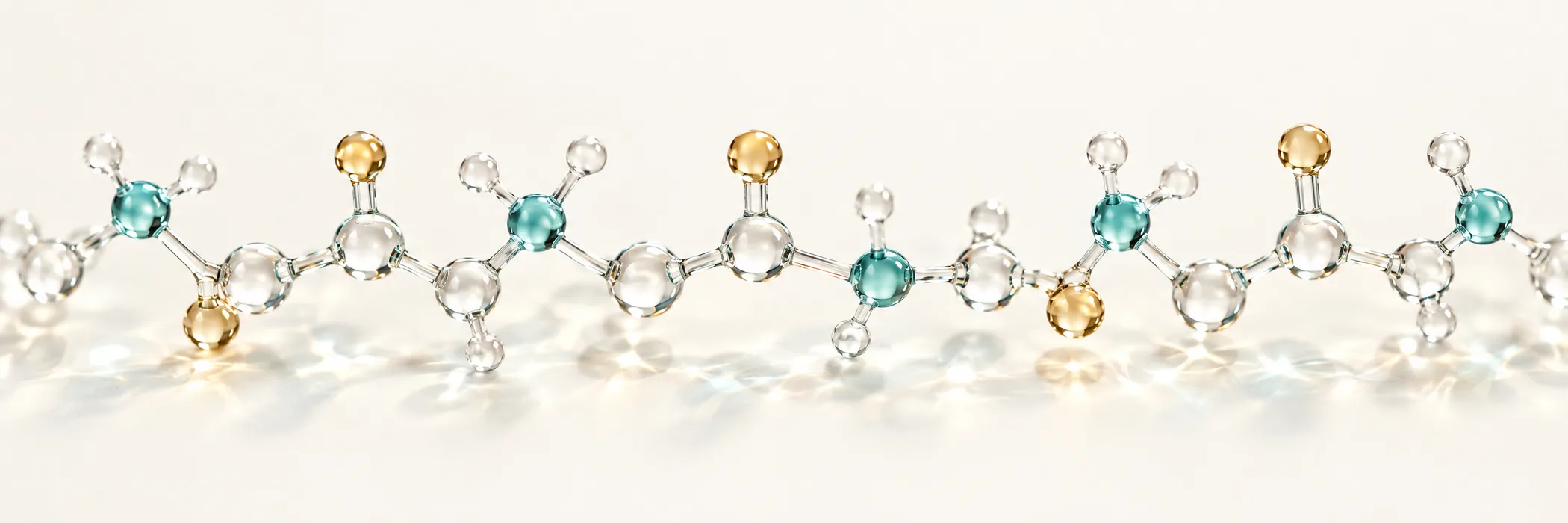
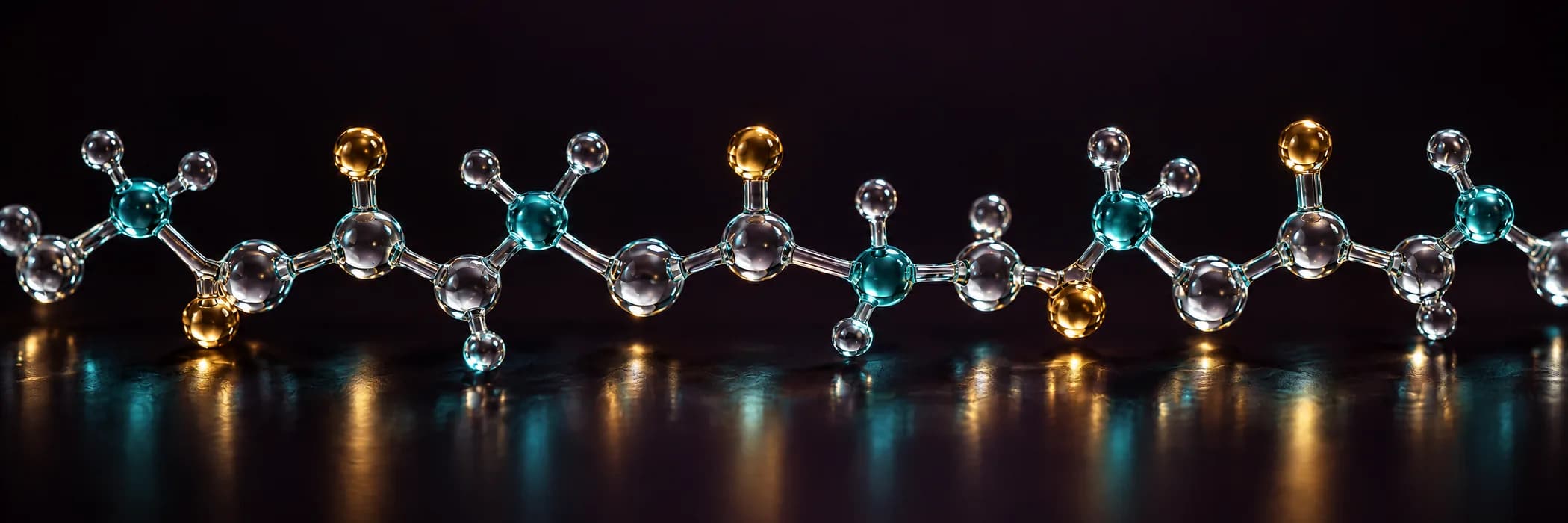
Semax, capped. Semax is an analog of ACTH(4-10), a fragment of the hormone ACTH (adrenocorticotropic hormone), keeping its brain-supporting effects without stimulating cortisol or the stress axis. The acetyl and amide caps block the enzymes that break Semax down fastest; the mechanism is Semax's, carried over through the shared backbone.
Raises brain-growth factors. In rats, intranasal Semax raised BDNF (brain-derived neurotrophic factor) in the hippocampus and activity of its receptor TrkB, with improved learning. Studies also report higher NGF (nerve growth factor) in animals.
Nudges dopamine and serotonin. In rodents Semax raised a serotonin metabolite and amplified amphetamine-evoked dopamine release, the activating side of its focus reputation.
Proposed links. Melanocortin-system and enkephalin-enzyme ties are proposed, not settled.
How to dose it
Nasal drops or spray for most people; some inject it under the skin.
Dose tiersMost people run 300–600 mcg a day nasally, from a 100–150 mcg start.
- Low / orientation:
- 100–150 mcg once daily, nasal, to feel out the response.
- Standard nootropic:
- 300–600 mcg/day nasal, in 1–2 doses. Usual entry 300 mcg once daily; top 600 mcg/day, split.
- Clinical reference (plain Semax):
- 12 mg/day (moderate stroke), 18 mg/day (severe), nasal, 5–10 days, in Russian trials. Far above the nootropic tier.
- Injection tier:
- 100–300 mcg once daily under the skin (subcutaneous), meant to cover in one shot what Semax needs several for.
How to spray or inject itNasal is the main route, reaching the brain along the olfactory nerves.
- Nasal delivery:
- Head back slightly, one spray or drops per nostril, tilt forward to coat the upper lining. Sniff gently, never hard. Alternate nostrils.
- Nasal timing:
- Morning. At 600 mcg/day, split 300 mcg morning + 300 mcg early afternoon. Nothing in the evening; it can delay sleep.
- Injection site:
- Belly (2+ cm from navel), outer thigh or love handles. Rotate sites.
- Measuring an injection:
- Draw on a U-100 insulin syringe; units in the mixing card.
- Food window:
- Meals don't matter. If congested, a decongestant 10–15 minutes before helps drops reach the lining.
Cycle and breaksShort courses with breaks, like every Russian Semax protocol.
- Standard cycle:
- 10–14 days on, then a break. Many run 2–4 weeks for nootropic goals; the clinical block is 10 days.
- Washout:
- Equal time off, 10–14 days after a 10–14 day course or 2–4 weeks after a longer run, longer action or not.
- On-demand option:
- Some run one 5-day course through an exam week or deadline instead.
Mixing the vialDefault mix and syringe units; the calculator covers other vials.
- Mixing:
- 10 mg + 2 mL bacteriostatic water = 5,000 mcg/mL.
- U-100 syringe units at 10 mg in 2 mL:
- 100 mcg takes 2 units, 150 mcg takes 3 units, 300 mcg takes 6 units, 500 mcg takes 10 units, 600 mcg takes 12 units.
- Why 2 mL:
- Calculator default; keeps drops small (10–30 µL each).
Best time to take it

Implied best time
Morning
Most people take it in the morning, so the longer-acting dose runs while you work and stays clear of sleep.
- Like Semax it is activating, raising BDNF and dopamine tone, so you want the effect at the start of the day.
- The caps make it slower to clear, so one morning dose is expected to carry further into the day; taken late, that runs into sleep.
- The higher split is 300 mcg morning and 300 mcg early afternoon, both in the first half of the day; evening doses can disturb sleep.
Sources:PMID 16996037PMID 8392718
What to stack it with


This brings the drive; either Selank brings the calm. Plain Semax is a swap, not a stack.
NA-Semax-Amidate + NA-Selank-AmidateThe main stack. This brings focus and drive, NA-Selank-Amidate brings calm.
- Why it works:
- NA-Selank-Amidate is the calming complement to Semax's stimulating side. Semax alone can feel edgy, Selank alone too sedating for work.
- The protocol:
- 300 mcg of each, nasal, in the morning, one after the other. Injected, 100–150 mcg each, together, once daily. Start each low.
- Outcome:
- People run it for sustained mental output without anxiety, or high-stress stretches where drive alone feels bad.
NA-Semax-Amidate + SelankSame pairing with shorter-acting plain Selank, easier to source and more flexible.
- Why it works:
- Selank brings the same calm against Semax's push. Its shorter window suits a midday dose without calm running into the night.
- The protocol:
- 300 mcg of this plus 300–600 mcg Selank, both nasal, in the morning. Selank can repeat midday. Injection mirrors the stack above.
- Outcome:
- Same productive calm, when Selank's shorter window helps or NA-Selank-Amidate is hard to find.
Amidate or plain SemaxPlain Semax shares the mechanism, so running both doubles one lever.
- Why not both:
- A modified Semax plus Semax pushes the same BDNF and dopamine lever twice. Pick one.
- When to prefer plain Semax:
- Semax has more published research, needs more frequent dosing (shorter half-life), and may be easier to source.
- When to prefer the amidate:
- Fewer daily doses and a steadier level between doses, the point of the caps.
Support nutrients
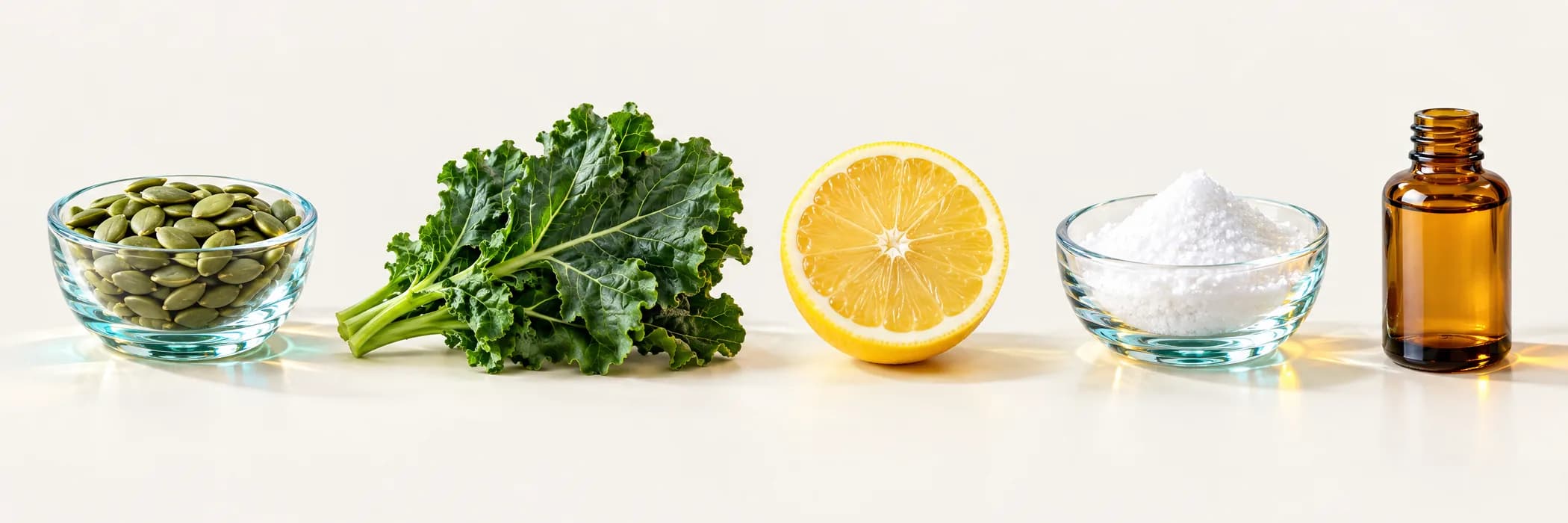
The amidate shares Semax's BDNF and dopamine biology; these feed it or take its edge off.
Feed the neurotransmitter pathwaySemax nudges acetylcholine (attention) and dopamine (drive). Keep the precursors stocked.
- Alpha-GPC or CDP-Choline:
- 300–600 mg Alpha-GPC (or 250–500 mg CDP-Choline) with breakfast. Choline builds acetylcholine; keeping it stocked heads off headache and brain fog.
- L-Tyrosine:
- 500–1,000 mg on an empty stomach, 30–60 minutes before dosing. Builds dopamine and norepinephrine; Semax increases dopamine turnover, so a full precursor pool carries that signal further.
- Omega-3 DHA:
- 1–2 g DHA daily with a fatty meal. DHA is the fat neurons are built from, the surface BDNF signals on.
- B6, B9 and B12:
- A methylated B-complex daily (methylcobalamin B12, methylfolate B9, P-5-P B6). They build dopamine and serotonin and keep homocysteine in check.
Raise BDNF without a supplementExercise and sleep raise BDNF on their own.
- Aerobic exercise:
- 20–30 minutes of moderate cardio on dosing days, ideally within 2 hours of the dose. It adds to the BDNF signal.
- Sleep (7–9 hours):
- The plasticity BDNF opens is locked in during deep sleep. 5-hour nights waste the signal; fix sleep first.
- Magnesium L-threonate:
- 144 mg elemental magnesium as L-threonate (Magtein) at bedtime. It reaches the brain and supports the plasticity BDNF drives.
Take the edge offThe one watch item is sleep; no supplement needed.
- Sleep disruption:
- Afternoon or evening doses can push sleep later. Morning only, or morning plus early afternoon for the split. If it persists, a single 300 mcg morning dose.
Dose calculator
Reconstitution calculator
Calculated for a 1 mL U-100 insulin syringe (100 units/mL).
Units per dose
6 units
Draw this many units on a U-100 syringe
Each unit holds 50 mcg
- Volume per dose
- 0.06 mL
- Doses per vial
- 33
- Concentration
- 5 mg/mL
One vial lasts
- Daily
- 33 days
- Every other day
- 66 days
- 5×/week
- 46 days
Research use only. Not for human consumption. Outputs are reference values based on research literature. Verify all measurements independently.
Side effects and what to watch
What people notice. Very little. Plain Semax is reported as well tolerated in Russian clinical use, including the intranasal stroke doses, and the amidate keeps Semax's design, built not to stimulate the cortisol or stress axis.
Worth knowing. The safety record is plain Semax's, from small Russian studies rather than a large independent database. The amidate has not been tested on its own, and long-term or high-dose use is uncharted.
Sources:PMID 11517472
Common questions
How is it different from plain Semax?
Semax with an acetyl cap at one end and an amide at the other, blocking the enzymes that break Semax down fastest. Built to last longer and be dosed less often; the effects are Semax's.
How is it dosed?
Most people run 300–600 mcg a day as nasal drops or spray, after a 100–150 mcg start. 300 mcg once daily is the usual entry; 600 mcg splits morning and early afternoon. Injected, 100–300 mcg once daily.
When should I take it?
Morning. It is activating, so people keep it clear of sleep; a split stays in the first half of the day.
Do I need to cycle it?
Yes. 10–14 days on, then an equal break; some run 2–4 weeks on, then 2–4 weeks off. A single 5-day course through an exam week is another pattern.
What does it stack with?
NA-Selank-Amidate or Selank bring the calm to this one's drive, both dosed nasally in the morning alongside it. Semax is a swap, not a stack, since the two share a mechanism.
How long does it last?
No half-life has been measured for the amidate. The acetyl cap blocks the main enzyme that breaks Semax down, so a single morning dose is expected to carry further into the day.
Deep dive
Doses used in studies · Molecular identity · References
10From the researchDoses used in studies
These are the doses from the studies, almost all of plain Semax and all clinical dosing nasal; the amidate row is community practice.
| Dose | Route | Model | Outcome | Sources: |
|---|---|---|---|---|
| 12 mg/day (moderate); 18 mg/day (severe) | Intranasal | Human RCT, acute hemispheric ischemic stroke, plain Semax (n=30 treated vs 80 control) | Faster regression of cerebral and focal (especially motor) deficits vs conventional therapy; Russian-language trial, small, not Western-replicated | PMID 11517472 |
| 50 µg/kg intranasal | Intranasal (rat) | Rats, hippocampal BDNF/TrkB, plain Semax | ↑ BDNF protein and TrkB activity, improved conditioned-avoidance learning (ANIMAL mechanistic data) | PMID 16996037 |
| 0.15 mg/kg, single dose | Intraperitoneal | Rodent, striatal monoamines, plain Semax (the abstract says "rodents"; the companion paper puts the striatal microdialysis in rat and the locomotor arm in mouse) | ↑ serotonin metabolite (~+25%), amplified amphetamine-evoked dopamine and locomotion (ANIMAL neurochemistry) | PMID 16362768 |
| ~300–1,000 µg/day (vendor) | Intranasal | N-Acetyl Semax Amidate, 'nootropic' research-chemical practice | Vendor/community dose tier with NO trial validation; the 'longer-acting, dose-less-often' rationale is extrapolated, not measured | PMID 8392718 |
11ChemistryMolecular identity
- Molecular weight
- 855.0 g/mol
- Molecular formula
- C₃₉H₅₄N₁₀O₁₀S
- Monoisotopic mass
- 854.37451 Da
- Sequence
- Ac-Met-Glu-His-Phe-Pro-Gly-Pro-NH₂ (acetyl + amide caps on Semax MEHFPGP), 7 AAPubChem CID 172638603 / concordant registries
- Structure / class
- N-acetylated, C-amidated analog of Semax (ACTH(4-10)-derived heptapeptide); end-capped for enzymatic stabilityPubChem CID 172638603
- Base peptide
- Semax (Met-Glu-His-Phe-Pro-Gly-Pro), a synthetic ACTH(4-10) analogSemax literature (PubMed, concordant)
- CAS / UNII
- 2920938-90-3 · no UNII assigned (alternate CAS 1265823-54-2 is single-vendor, unconfirmed)Concordant chemical registries (MedChemExpress/ChemScene)
- PubChem CID
- 172638603PubChem (name + formula match)
- Water solubility
- Water-soluble; hydrophilic (parent Semax computed XLogP −2.8)PubChem CID 9811102 (parent, computed)
- Molecular target
- Assumed identical to Semax. BDNF/TrkB neurotrophic axis (rodent); no amidate-specific target study existsPMID 16996037 (plain Semax, rodent); borrowed, not amidate-verified
- Half-life
- Not measured for the amidate; N-acetylation blocks the dominant aminopeptidase cleavage (chemically plausible longer action), but the circulated '30–40 min' figure is vendor extrapolation, not trial-provenPMID 8392718 (Semax aminopeptidase degradation); Not establishedHalf-life curve →
- Regulatory status
- Research chemical, approved nowhere as a distinct drug (plain Semax: Russia-only)Regulatory absence (no FDA/EMA approval)
12Primary sourcesReferences
- PMID 11517472Effectiveness of Semax in acute hemispheric ischemic stroke, Zh Nevrol Psikhiatr Im S.S. Korsakova 1997 (Russian; n=30 treated vs 80 control; 12/18 mg/day). PLAIN SEMAX
- PMID 16996037Dolotov et al., Brain Research 2006. Semax regulates BDNF and TrkB expression in the rat hippocampus (animal; plain Semax)
- PMID 16362768Eremin et al., Neurochem Res 2005. Semax activates dopaminergic and serotoninergic brain systems in rodents (animal; plain Semax)
- PMID 8392718Potaman et al., Peptides 1993. Degradation of ACTH(4-10)/Semax by rat serum enzymes (aminopeptidase-dominant; mechanistic basis for N-acetyl stabilization)
- PubChem CID 172638603PubChem Compound. N-acetyl semax amidate, CID 172638603 (C39H54N10O10S; authoritative for identity)
- WADA 2026WADA 2026 Prohibited List, S2 (peptide hormones / growth factors) and S0 (non-approved substances); Semax-class not named (status by inference)
NA-Semax Amidate
10 mg or 30 mg vial
Ki Researcher is affiliated with Ki Peptides.
Ships to the US only. Buyers must be 21 or older.
Reviewed by Ki Researcher Team · Research use only · Not medical advice · Updated 2026-09-24