
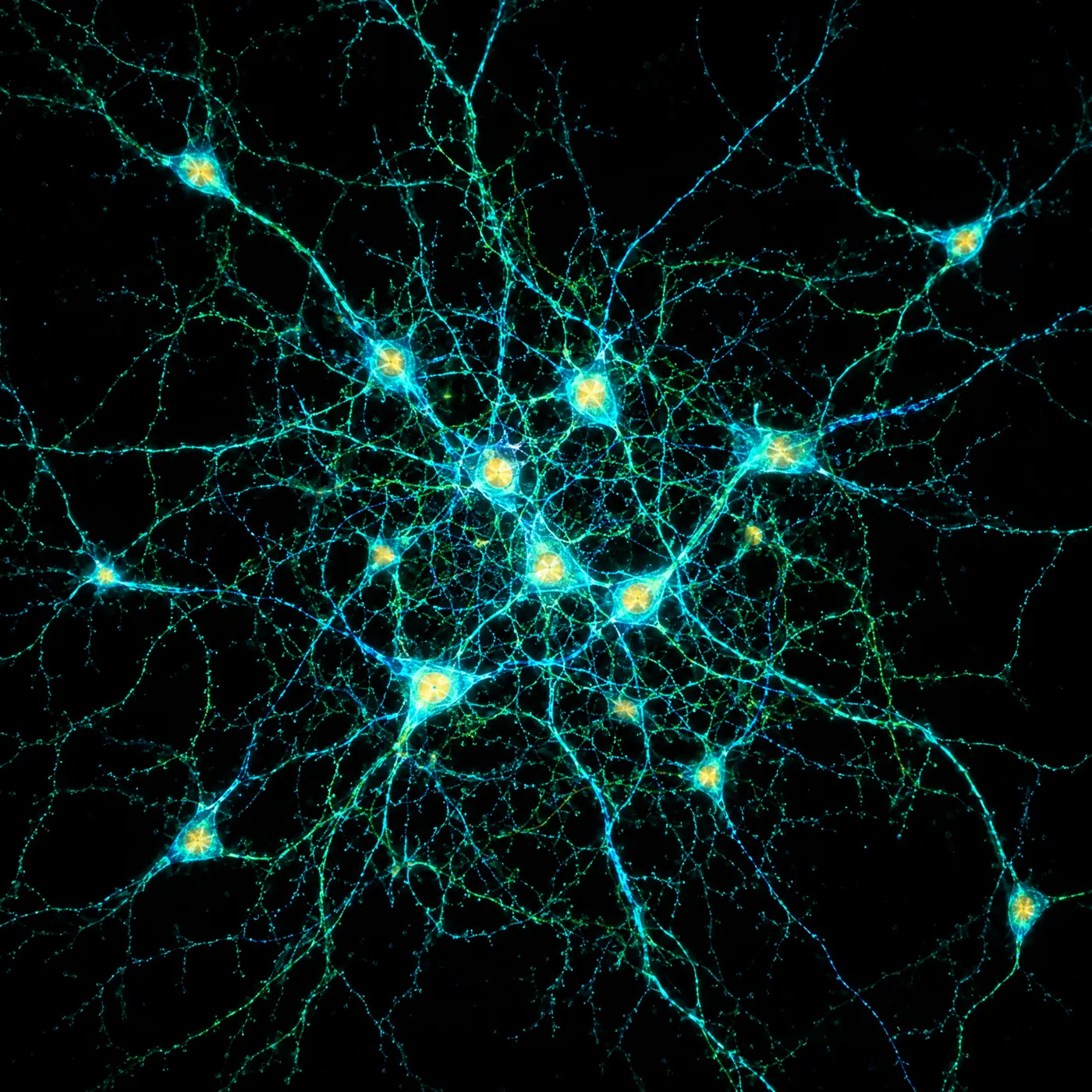
P21
CNTF-derived neurogenic tetrapeptide · built to reach the brain · Khalid Iqbal's lab
P21 is a peptide engineered from a fragment of ciliary neurotrophic factor (CNTF), built to survive digestion and reach the brain. People run it for neurogenesis and memory. In rodents it increases the birth of new neurons, raises BDNF (brain-derived neurotrophic factor) and improves memory.
At a glance
- Dose
- 500–1,000 mcg a day, starting at 500 mcg for 1–2 weeks
- How often
- Once a day
- How
- A small injection under the skin (belly fat)
- When
- Morning, timed to daytime cognition
- Cycle
- 4–8 weeks on, then a 2–4 week break
The 30-second versionEverything on this page, fast
Neurogenesis · BDNF support · Memory · Brain-penetrant
The neurogenesis peptide. P21 is a tiny CNTF-derived tetrapeptide (Ac-DGGLAG-NH₂) studied for spurring the birth of new brain cells and raising BDNF, the brain's key growth factor, with memory gains in aging models.
The basics
- A lab-engineered fragment of a natural nerve-supporting protein (CNTF), also written P021, built to cross into the brain.
- The peptide people reach for on the neurogenesis and BDNF angle, paired with focus peptides for an everyday cognitive layer.
Why people use it
- Signals new brain cells to grow. A pro-neurogenesis push, the structural cognition effect people pursue.
- Raises BDNF. The brain's main growth factor, switching on the TrkB growth pathway.
- Memory support. Studied in aging and Alzheimer's models for memory and tau changes.
- Built to reach the brain. Engineered with an adamantane group to survive the body and cross in.
Stacks well with
- Semax adds complementary BDNF from a different angle, plus acute focus on top of P21's slow neurogenic signal.
- Selank is the calmer pairing. BDNF support with stress resilience instead of stimulation.
Good to know
- Not the same molecule as the 'p21' cell-cycle protein (CDKN1A), a common name clash. This is the CNTF-derived neurogenic peptide.
- Morning dosing lines up with daytime cognition.
- Cycle it. Run 4–8 weeks, then take a 2–4 week break.
What it does
The cognitive peptide people run for neurogenesis, the slow build of new brain cells.
- More new neurons in the memory centreIn mice and rats it reliably increases the birth of new neurons in the brain's memory centre.
- Raises the brain growth factor BDNFAcross the rodent work it raises BDNF and switches on the TrkB growth pathway.
- Better memory in aging modelsIn aging and Alzheimer's rodent models it improved maze and recognition memory and lowered tau and amyloid changes.
- Built to reach the brainIt was designed with an adamantane group to survive the body and reach the brain.
- Skips the toxicity of full CNTFIn mice it lacks the appetite-suppressing toxicity that sank full-length CNTF, the reason a fragment was used.
- Stacks with the focus peptidesIt works on the slow neurogenic side, so people pair it with Semax or Selank for near-term focus.
Sources:PMID 20600002PMID 25046994PMID 24702821ADDF Cognitive Vitality
How it works
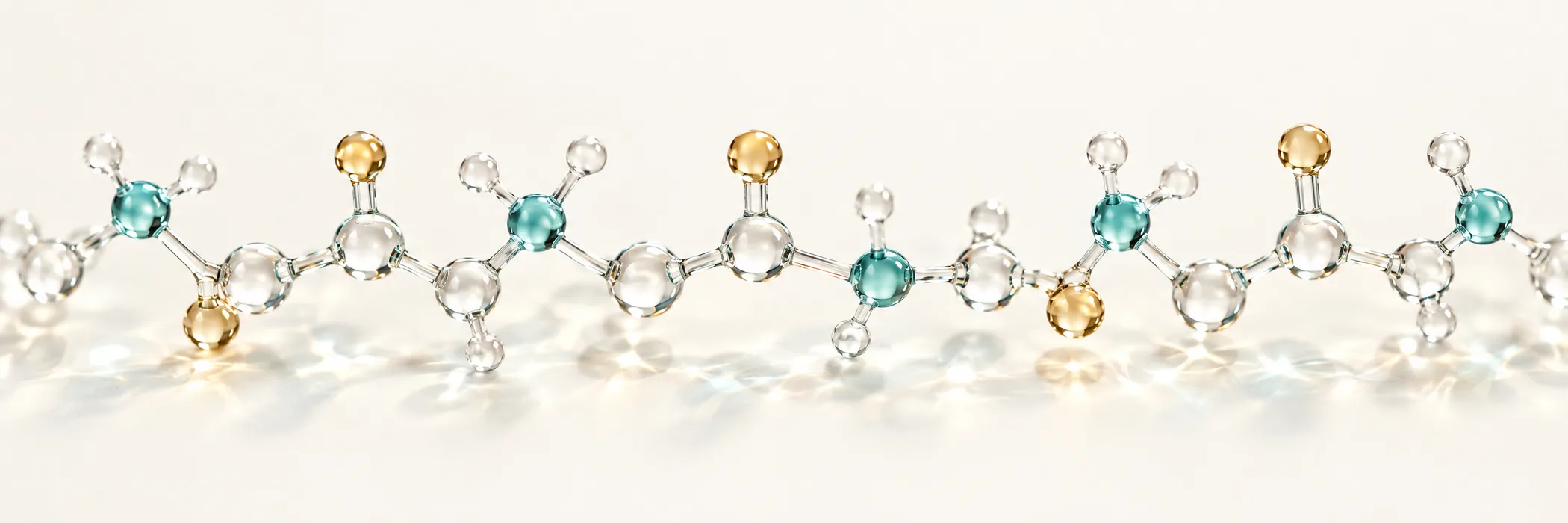

Releases the brake on new neurons. P21 competitively blocks leukemia inhibitory factor (LIF), a cytokine that holds back neural stem cells from becoming new neurons. That is thought to free neurogenesis, the birth of new neurons. In cell culture it cut LIF-driven STAT3 activation by about 30%.
Raises BDNF, cuts tau. It raises BDNF (brain-derived neurotrophic factor), which switches on the TrkB growth pathway and so inhibits GSK-3β, the main enzyme that adds harmful phosphate tags to tau. This is the proposed route to less abnormal tau in Alzheimer's models.
The result in rodents. More new neurons, more synaptic connections, less soluble amyloid and better memory. In mice lacking the CDKL5 gene it did not raise BDNF or restore neurogenesis.
How to dose it
Most people run P21 as a small injection under the skin, once a day. The rodent studies gave it by mouth, in food.
Dose tiersMost people run 500 to 1,000 mcg once a day, starting at 500 mcg.
- Common range:
- 500–1,000 mcg (0.5–1 mg) once daily, the most cited range, scaled by body weight from a rodent oral dose of ~289 µg/kg/day. Some go up to 2 mg/day.
- How the studies dosed it:
- The main rodent studies mixed it into food (60 nmol/g feed over months).
- Starting point:
- Many start at the lower end (500 mcg/day) for the first 1–2 weeks to check tolerance, then move higher.
How to injectInto the fat under the skin, once a day, rotating sites.
- Injection site:
- Belly (a couple of inches from the navel), outer thigh or love handles. Rotate sites. Reusing one spot causes irritation and lipohypertrophy, fatty lumps under the skin.
- Measuring the dose:
- At 10 mg in 2 mL (5,000 mcg/mL), 500 mcg takes 10 units on a U-100 syringe and 1,000 mcg takes 20 units. The calculator handles other vials.
- Time of day:
- Morning is the common choice for a once-daily dose.
- Food window:
- Meals don't matter. An injection under the skin bypasses the gut.
Cycle and breaksMost run 4–8 weeks of daily use, then take 2–4 weeks off.
- Typical cycle:
- 4–8 weeks of daily use, then reassess. Some mirror the Semax and Selank pattern of 4-week-on / 2-week-off.
- Washout:
- 2–4 weeks off, as a precaution.
- Long runs in rodents:
- Rodent studies ran P21 for up to 18 months with no weight loss, tumours or pain signals.
Mixing the vialThe on-page calculator does this live. Here is the quick reference for a 10 mg vial.
- Mixing:
- 10 mg with 2 mL bacteriostatic water makes 5,000 mcg/mL. On a 100-unit (1 mL) syringe, 500 mcg takes 10 units, 750 mcg 15 units, 1,000 mcg 20 units.
- Why 2 mL:
- It keeps each dose measurable on a U-100 syringe. Use the calculator for other vials or doses.
Sources:PMID 20600002PMID 24702821PMID 25046994ADDF Cognitive Vitality
Best time to take it


Implied best time
Morning
Most people take P21 in the morning, once a day, timed to daytime cognition.
- It is a daytime cognitive compound, so a morning dose lines its signal up with waking hours, the way the other cognitive peptides are used.
- Some mirror the Semax and Selank schedule, a single morning dose, cycled. That keeps a brain-active compound clear of sleep.
- The developer group reports a >3 h half-life in mice. Once-daily morning dosing is the practical habit people settle on.
Sources:ADDF Cognitive Vitality
What to stack it with


The best partners come at P21's neurogenesis goal from another angle. Doubling one lever is redundant.
P21 + SemaxThe most common pairing. P21 brings neurogenesis, Semax sharpens focus.
- Why it works:
- Semax raises BDNF and tunes dopamine and serotonin for reproducible focus and mood. P21 lifts the LIF brake on neurogenesis and raises BDNF via TrkB, a separate lever.
- The protocol:
- P21 500–1,000 mcg once daily. Semax 300–600 mcg nasally once daily, or in two doses. Both on 4-week cycles with a 2-week break. Start each alone first.
- Outcome:
- Neurogenesis plus near-term clarity and mood.
P21 + SelankA calmer pairing. Selank adds BDNF support and stress resilience.
- Why it works:
- Selank raises BDNF and calms without sedation in Russian clinical work. Its route differs, so the BDNF effects add up.
- The protocol:
- P21 500–1,000 mcg once daily. Selank 300–750 mcg nasally once or twice daily. Each on its own 4-week cycle.
- Outcome:
- For neuroplasticity plus stress or anxiety control, where stimulating Semax is the wrong fit.
P21 + DHA, choline and magnesiumThe substrate cofactors, run as a deliberate protocol, not background diet.
- Why it works:
- New neurons are built from DHA, signal through choline-made acetylcholine and wire up via magnesium-gated NMDA receptors.
- The protocol:
- P21 500–1,000 mcg once daily. DHA 1–2 g/day with a fat-containing meal. Alpha-GPC or CDP-choline 300–500 mg in the morning. Magnesium glycinate or threonate 300–400 mg in the evening.
- Outcome:
- The substrate-first way to get the most from P21, at low added risk.
Support nutrients


Some supply the building blocks new neurons need; others raise BDNF themselves.
Building blocks for new neuronsThe raw materials new neurons are built from.
- Omega-3 DHA · 1–2 g/day:
- DHA (docosahexaenoic acid) is the main structural fat in neuron membranes. Fish or algae oil, with a fatty meal.
- Choline · 400–600 mg/day:
- Choline becomes acetylcholine, the transmitter central to memory. CDP-choline (citicoline) or alpha-GPC, in the morning; it is activating.
- B6 · B9 · B12 (methylated):
- They run the methylation cycle behind neurotransmitters and myelin (nerve insulation). Methylfolate and methylcobalamin, in the morning with food.
- Magnesium glycinate or threonate · 300–400 mg/day:
- Magnesium gates the NMDA receptors behind synaptic plasticity. Threonate has the best brain-penetration data. Taken in the evening; it calms.
Habits that raise BDNFThe best-established non-drug BDNF raisers. P21 does less without them.
- Aerobic exercise · 30–45 min, 4–5×/week:
- Zone 2 cardio (brisk walking, cycling, easy jogging) is the best-proven human BDNF raiser. One session lifts it within hours.
- Sleep · 7–9 hours, consistent schedule:
- BDNF synthesis peaks in slow-wave sleep; chronic short sleep lowers it. Memory-centre neurogenesis runs mostly at night.
- Lion's Mane mushroom · 500–1,000 mg/day (optional):
- Its hericenones and erinacines stimulate nerve growth factor (NGF), a signal parallel to BDNF. With a meal.
Nothing to offset18 months of rodent dosing showed no toxicity signals to offset.
- No known cost:
- No cofactor targets a known side effect.
- General brain-health baseline:
- Enough sleep, no other untested brain-active compounds alongside it, and periodic breaks.
Dose calculator
Reconstitution calculator
Calculated for a 1 mL U-100 insulin syringe (100 units/mL).
Units per dose
20 units
Draw this many units on a U-100 syringe
Each unit holds 50 mcg
- Volume per dose
- 0.2 mL
- Doses per vial
- 10
- Concentration
- 5 mg/mL
One vial lasts
- Daily
- 10 days
- Every other day
- 20 days
- 5×/week
- 14 days
Research use only. Not for human consumption. Outputs are reference values based on research literature. Verify all measurements independently.
Side effects and what to watch
What the studies show. Mice dosed for up to 18 months showed no weight loss, no tumours and no signs of pain or distress. P21 also lacks the appetite-suppressing toxicity that sank full-length CNTF, which is why a fragment was used.
Worth knowing. It has no human adverse-event record yet. One review raised a hypothetical concern that an injected peptide like this could trigger antibodies against it. None has been seen.
Competing? It is not named on the 2026 World Anti-Doping Agency (WADA) Prohibited List, but it may fall under the S2.2 growth-factor catch-all. If you compete, get a formal ruling first.
Common questions
Is P21 the same as the p21 cancer protein?
No. This P21 (Ac-DGGLAG-NH₂) is a small neurogenic peptide built from CNTF. The 'p21' of cancer biology is a much larger cell-cycle protein made from the gene CDKN1A. They share a name only.
How is P21 dosed?
Most people run 500–1,000 mcg once a day as a small injection under the skin, starting at 500 mcg for 1–2 weeks. Some go up to 2 mg/day.
Do I need to cycle P21?
Most people do. A typical run is 4–8 weeks of daily use, then a 2–4 week break.
What does P21 stack with?
Most often Semax (300–600 mcg nasally, once daily) for focus, or Selank (300–750 mcg nasally, once or twice daily) for a calmer, stress-resilience angle. Some also run DHA, choline and magnesium alongside it.
Does it cross into the brain?
It was engineered with an adamantane group to cross the blood-brain barrier, and its brain effects in animals imply it gets in. No study has measured how much reaches the brain.
What does the animal research show?
In rodent models of aging and Alzheimer's, P21 increases neurogenesis and BDNF, lowers abnormal tau and soluble amyloid, restores synaptic markers and improves memory.
Deep dive
Doses used in studies · Molecular identity · References
10From the researchDoses used in studies
These are the doses used in the studies, all in rodents and mostly given by mouth in food.
| Dose | Route | Model | Outcome | Sources: |
|---|---|---|---|---|
| 25 nmol/day (SC depot) | SC implant (mice) | Wild-type mice, first in-vivo P021 study (Li 2010) | ↑ object-recognition & spatial memory, ↑ neurogenesis (new DG neurons), ↑ synaptic proteins; in-vitro ↓ LIF-STAT3 ~30%; RODENT/cell data | PMID 20600002 |
| ≈289 µg/kg/day | Oral gavage (aged rats) | Aged Fisher rats, cognitive-aging rescue (Bolognin 2014) | ↑ neurogenesis, ↑ BDNF/TrkB/pCREB, restored synaptic proteins; maze improvement modest; RODENT data | PMID 24702821 |
| 60 nmol/g feed | Oral / diet (mice) | 3xTg-AD Alzheimer's mice, disease-modifying study (Kazim 2014) | ↓ phospho-tau, ↓ soluble amyloid, ↑ BDNF, neurogenesis restored to wild-type, memory restored; RODENT data | PMID 25046994 |
| 60 nmol/g feed | Oral / diet (mice) | 3xTg-AD mice, diet from 3 mo continued to 21 mo (Baazaoui & Iqbal 2017) | Rescued dendritic/synaptic deficits, neurogenesis ~4× vehicle, reversed cognitive impairment (behavior n=14–20/grp); RODENT data | PMID 28655344 |
| Oral diet, postnatal | Oral / diet (mice) | 3xTg-AD mice, early-postnatal prevention (Wei 2021) | Prevented cognitive impairment, restored hippocampal BDNF; notes NO study has directly assayed brain P021 levels; RODENT data | PMID 34057082 |
| No human dose exists | Not applicable | Humans, P021 | ZERO human trials, ZERO observational studies, no established human dose, no human safety data (per ADDF report) | ADDF Cognitive Vitality |
11ChemistryMolecular identity
- Molecular formula
- C27H42N6O8
- Molecular weight
- 578.7 g/mol
- Monoisotopic mass
- 578.3064 Da
- Type
- CNTF-derived adamantylated tetrapeptide (small modified peptide)Li et al., FEBS Lett 2010 (PMID 20600002)
- Sequence
- Ac-DGGLAG-NH₂ (acetyl-Asp-Gly-Gly-Leu + C-terminal adamantyl-glycine, amidated)Li et al. 2010 (PMID 20600002); ADDF Cognitive Vitality report
- Derived from
- Active region of human ciliary neurotrophic factor (CNTF, ~residues 148–151)ADDF Cognitive Vitality report
- PubChem CID
- 56599151PubChem (name + formula match)
- Molecular target
- Competitive LIF antagonism (↓ LIF-STAT3, de-represses neurogenesis) + BDNF/TrkB → GSK-3β (↓ tau); preclinicalPMID 20600002; PMID 34057082
- CAS number
- 1246751-68-7 (single-sourced; CAS↔CID link unverified)Wikipedia / ChemIDplus (CID itself verified by name+formula)
- Not to be confused with
- p21^Cip1/Waf1 (gene CDKN1A), a different ~21 kDa cell-cycle proteinDisambiguation (distinct molecule)
- Plasma half-life
- Not established in humans (preclinical-only; the developer group reports >3 h in mice, but no human PK exists)Not establishedHalf-life curve →
- Regulatory status
- Not approved anywhere; research chemical, preclinical-onlyADDF report (no human trials on record)
12Primary sourcesReferences
- PMID 20600002Li et al., FEBS Lett 2010. Adamantane neurotrophic peptides improve learning/memory & neurogenesis in mice (foundational; defines P021/Ac-DGGLAG-NH₂)
- PMID 24702821Bolognin et al., Neurobiol Aging 2014. Rescue of cognitive-aging by a neurogenic/neurotrophic compound (aged rats)
- PMID 25046994Kazim et al., Neurobiol Dis 2014. Disease-modifying effect of chronic oral P021 in 3xTg-AD mice
- PMID 28655344Baazaoui & Iqbal, Alzheimers Res Ther 2017. Prevention of dendritic/synaptic deficits with a neurotrophic compound (3xTg-AD mice)
- PMID 34057082Wei et al., J Alzheimers Dis 2021. Early-postnatal neurotrophic treatment prevents Alzheimer-like behavior (notes brain P021 levels never directly assayed)
- ADDF Cognitive VitalityAlzheimer's Drug Discovery Foundation. Cognitive Vitality report on P021 (authoritative secondary; 'no studies have tested P021 in humans')
- WADA 2026WADA 2026 Prohibited List, S2.2 growth-factor 'regenerative capacity' catch-all; P021 not explicitly named (status by inference)
Reviewed by Ki Researcher Team · Research use only · Not medical advice · Updated 2026-09-24