
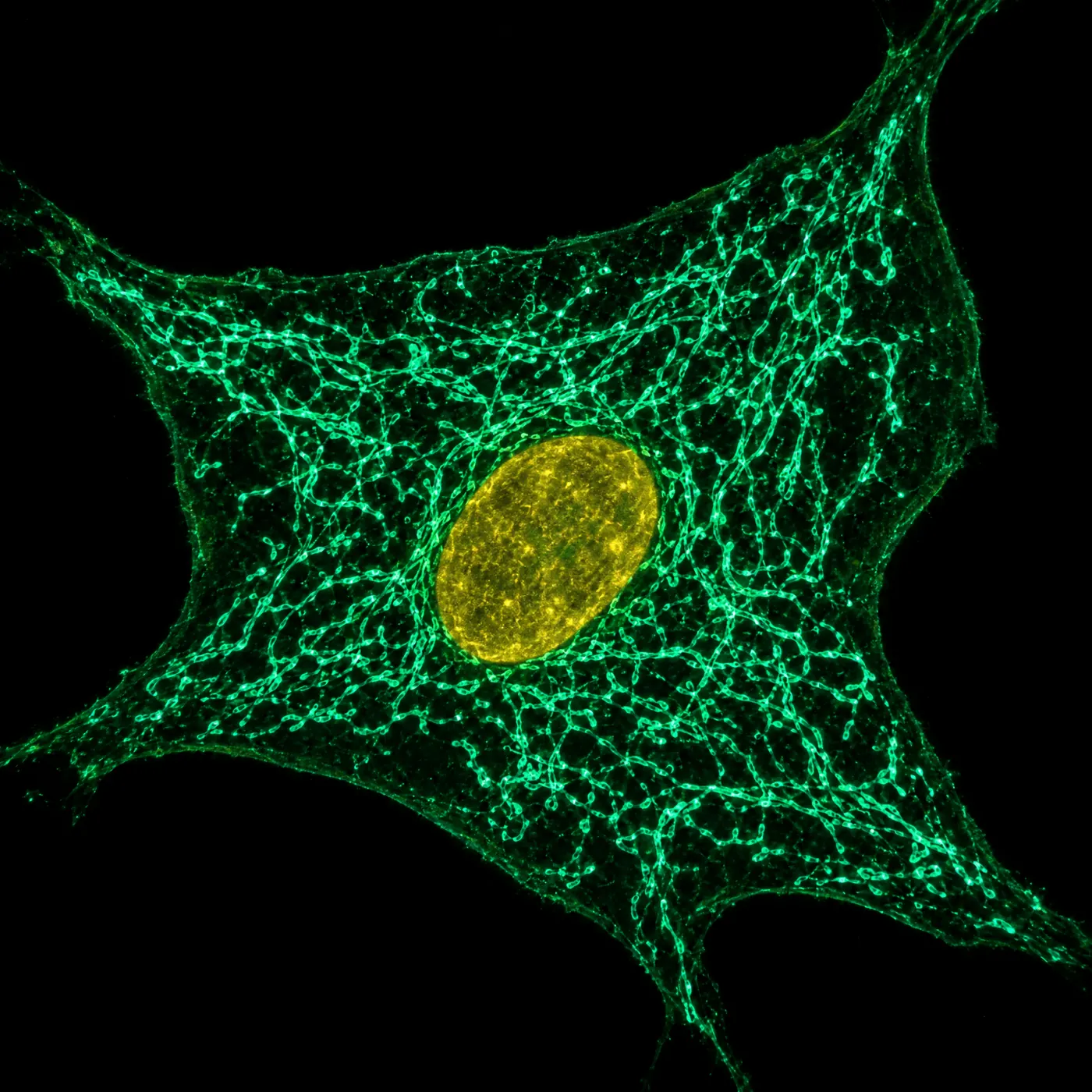
Humanin
Endogenous mitochondrial-derived peptide · encoded in the MT-RNR2 gene
Humanin is a 24-amino-acid peptide your own mitochondria make, the first mitochondrial-derived peptide identified. People run it for longevity and cell protection. Research shows it blocks programmed cell death, and blood levels fall with age while running higher in the long-lived children of centenarians.
At a glance
- Dose
- 1,000 mcg a day standard, 500 mcg for a first run
- How often
- Once a day
- How
- A small injection under the skin
- When
- Any consistent time of day; regularity beats the exact hour
- Cycle
- 4–8 weeks on, then a 2–4 week break
The 30-second versionEverything on this page, fast
Mitochondrial peptide · Cell protection · Longevity · Endogenous
The peptide your own body already makes. Humanin is the first mitochondrial-derived peptide identified. Research frames it as a cell-survival signal that blocks apoptosis (programmed cell death), and it is a promising marker of healthy aging, since levels fall with age and run higher in the long-lived.
The basics
- An endogenous 24-amino-acid peptide encoded in the mitochondrial MT-RNR2 gene, so it is part of your own biology rather than a purely synthetic compound.
- A small injection under the skin once a day. Most people run 1,000 mcg; some go up to 2,000 mcg.
Why people use it
- A molecule your body makes. The first mitochondrial-derived peptide identified, so it is part of human biology rather than a lab invention.
- Pushes back on cell death. Its best-established biology is protective. It interferes with the pro-death protein Bax and binds IGFBP-3 as a survival signal.
- Tracks healthy aging. Circulating humanin falls with age and runs higher in the long-lived children of centenarians.
- Studied for metabolic signaling. In rodent work it acted centrally, in the hypothalamus, to improve whole-body insulin sensitivity.
Stacks well with
- MOTS-c, its mitochondrial-encoded partner. Humanin signals cell survival while MOTS-c works the metabolic and exercise-mimicking pathways.
- NAD+ precursors, the age-parallel pairing. They supply the fuel humanin's mitochondrial signaling runs on.
Good to know
- Run it in cycles, 4–8 weeks of daily use then a 2–4 week break, rather than continuously.
- Rotate injection sites (belly, love handles, outer thigh) to keep the tissue happy.
- Check the label. HNG (S14G-humanin) is a lab analog reported ~1,000× more potent, so it is dosed far lower; vendor humanin is the native peptide.
What it does
A peptide your own mitochondria make, run for longevity and cell protection.
- A molecule your own body makesThe first mitochondrial-derived peptide identified, encoded in the MT-RNR2 gene and part of normal human biology.
- Pushes back on cell deathResearch shows it blocks programmed cell death by interfering with the pro-death protein Bax and binding IGFBP-3.
- A marker of healthy agingBlood humanin falls with age and runs higher in the long-lived children of centenarians, making it a promising aging biomarker.
- Studied for insulin sensitivityIn rodent work it acted centrally, in the hypothalamus, to improve whole-body insulin sensitivity.
- A natural fit for mitochondrial stacksIt pairs with MOTS-c, SS-31 and precursors of NAD+, the central cofactor of cell energy production.
Sources:PMID 14561895PMID 19623253PMID 25040290PMID 35499074
How it works
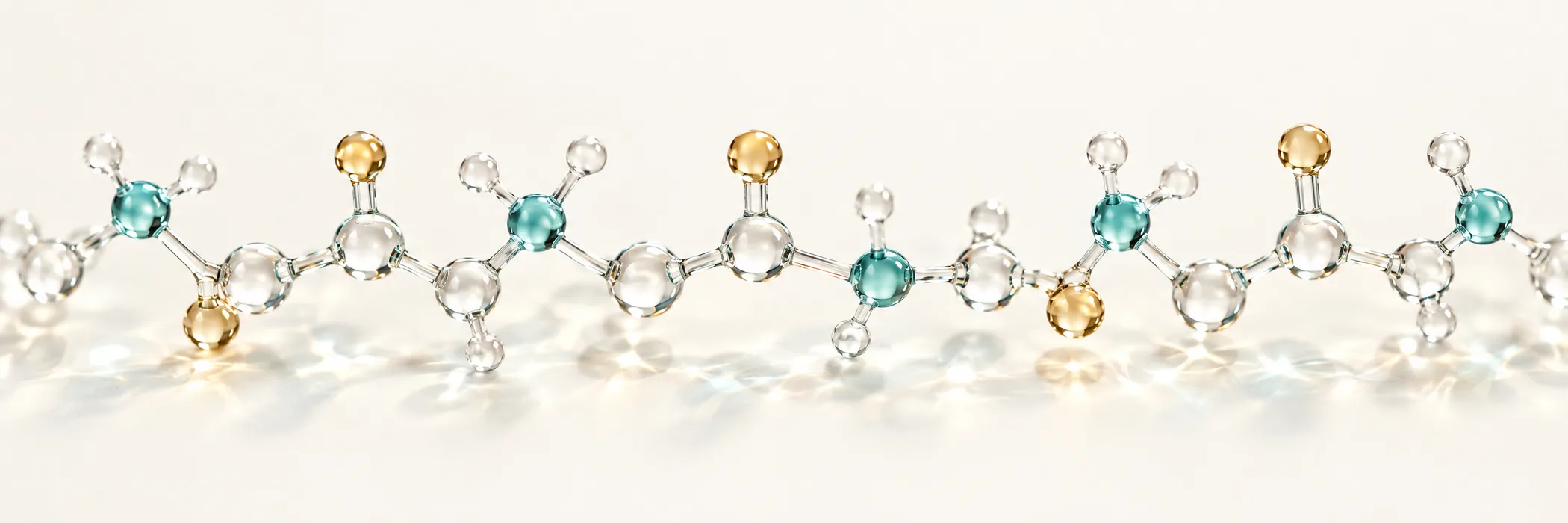
Keeps stressed cells alive. Humanin blocks pro-death signaling from the Bcl-2 protein family, notably the protein Bax. It also binds IGFBP-3, a circulating protein, and that pairing regulates cell survival.
Works through cell-surface receptors. The best-characterized is a three-part cytokine receptor complex, the receptor for ciliary neurotrophic factor (CNTF-receptor-alpha), together with WSX-1 and gp130. Humanin blocks neuronal death by engaging it. A second candidate, a formyl-peptide-receptor-like protein (FPRL1/FPR2), is less firmly pinned down.
Tunes insulin from the brain. In rats, humanin acted in the hypothalamus to improve whole-body insulin sensitivity. Much of the metabolic work used HNG (S14G-humanin), a more potent lab analog.
How to dose it
Most people run humanin as a small injection under the skin, once a day.
Dose tiersMost people run 1,000 mcg once a day, starting at 500 mcg to test response.
- Low / first run:
- 500 mcg (0.5 mg) once daily. The usual first run, to test your response before moving up.
- Standard:
- 1,000 mcg (1 mg) once daily. The most commonly reported dose for longevity and mitochondrial support.
- Higher range:
- Up to 2,000 mcg (2 mg) once daily, occasionally reported. No known edge over 1 mg.
- HNG analog note:
- HNG (S14G-humanin) is reported ~1,000× more potent. If the compound is HNG, doses run far lower, in the nanogram range in animal studies. Vendor 'humanin' is generally the native peptide.
How to injectIt goes into the fat under the skin. The calculator converts doses to syringe units.
- Injection site:
- Belly (a couple of inches clear of the navel), love handles or outer thigh. Rotate sites to prevent irritation and fatty lumps (lipohypertrophy).
- Measuring the dose:
- A U-100 insulin syringe reads in units. At 10 mg in 2 mL (5,000 mcg/mL), 500 mcg takes 10 units, 1,000 mcg takes 20 units, 2,000 mcg takes 40 units.
- Time of day:
- Any consistent daily time. See Best time to take it above.
- Food window:
- It bypasses the gut, so meals don't matter.
Cycle and breaksMost people run 4–8 weeks daily, then take a 2–4-week break.
- Standard cycle:
- 4–8 weeks of daily use, then assess. A shorter first run with careful monitoring is the cautious start.
- Washout:
- A 2–4-week break between cycles is the common convention, used to reassess.
- Pulsed alternative:
- Some run 5-days-on / 2-days-off instead of continuous daily dosing.
Mixing the vial10 mg vial plus 2 mL bacteriostatic water, drawn on a 100-unit (1 mL) syringe.
- Mixing:
- At 10 mg in 2 mL (5,000 mcg per mL), 500 mcg takes 10 units, 1,000 mcg takes 20 units, 1,500 mcg takes 30 units, 2,000 mcg takes 40 units.
- Why 2 mL:
- It matches the calculator's default, so the numbers line up. For another dilution, the calculator recomputes syringe units.
Best time to take it
Implied best time
Anytime (consistent)
Most people take humanin at one consistent daily time. It isn't time-locked, so regularity beats the exact hour.
- Its survival and metabolic signaling don't peak at one time of day, so there's no reason to favor morning over evening.
- Native humanin's half-life in people isn't established, so there's no peak to time a dose around. A steady daily slot is the practical default.
- It's run as a daily longevity compound, so a repeatable time builds the habit and keeps doses evenly spaced.
What to stack it with


Humanin's natural partners are the other mitochondrial peptides and NAD+ precursors, each from a different angle.
Humanin + MOTS-cBoth come from mitochondrial DNA but signal through different pathways.
- Why it works:
- Humanin is a cell-survival signal. MOTS-c works metabolic, exercise-mimicking pathways such as glucose metabolism.
- The protocol:
- Humanin 1,000 mcg once daily + MOTS-c 10–20 mg once daily in the morning, both under the skin. Same session is common; rotate sites.
- Outcome:
- Run in longevity stacks for both cell protection and metabolic signaling.
Humanin + SS-31 (elamipretide)Humanin signals cell survival from outside the mitochondrion; SS-31 stabilizes the membrane within.
- Why it works:
- SS-31 targets cardiolipin on the inner mitochondrial membrane, shielding the energy chain from oxidative damage. Humanin works upstream on cell survival.
- The protocol:
- Humanin 1,000 mcg once daily + SS-31 100–200 mcg daily or on alternating days, both under the skin. Rotate sites.
- Outcome:
- Reached for when membrane integrity and cell survival are both goals. SS-31 has early human trial data in specific cardiac conditions.
Humanin + NAD+ precursors (NR / NMN)Both decline with age. NAD+ precursors refill the fuel humanin's signaling depends on.
- Why it works:
- NAD+ precursors raise NAD+ inside cells, fueling the energy chain humanin's survival signal sits within.
- The protocol:
- Humanin 1,000 mcg once daily under the skin + NR 300–500 mg orally with breakfast or NMN 250–500 mg sublingually in the morning.
- Outcome:
- The most straightforward pairing. NR and NMN are the best-documented mitochondrial support, with some human trial data.
Support nutrients
Humanin works on your mitochondrial energy machinery. These cofactors keep that machinery supplied.
Refill NAD+ and CoQ10NAD+ and coenzyme Q10 run the energy chain humanin works within, and both decline with age.
- NAD+ precursors (NR or NMN):
- Nicotinamide riboside (NR) 300–500 mg/day or nicotinamide mononucleotide (NMN) 250–500 mg/day, in the morning with food. NAD+ drives mitochondrial ATP (cell energy) production.
- CoQ10 (ubiquinol form):
- 200–400 mg ubiquinol daily with a fat-containing meal, since it absorbs poorly without fat. Coenzyme Q10 carries electrons in the energy chain. Ubiquinol is the more bioavailable form.
Keep the energy reactions runningMitochondrial energy reactions stall without B vitamins, and magnesium carries the usable ATP.
- B-complex (B1, B2, B3, B5, B12):
- A quality B-complex once daily with food, covering thiamine (B1), riboflavin (B2), niacin (B3), pantothenic acid (B5) and B12. They are rate-limiting cofactors in ATP production.
- Magnesium (glycinate or malate):
- 300–400 mg elemental magnesium daily, in the evening. Cells carry usable energy as magnesium–ATP. Glycinate or malate are better tolerated than oxide.
Support insulin sensitivityThese match humanin's insulin-sensitivity signaling and cut what blunts mitochondrial function.
- Alpha-lipoic acid (ALA):
- 300–600 mg/day, taken with meals. A mitochondrial antioxidant and insulin sensitizer that works inside the mitochondrion. R-ALA, the biologically active form, is preferred.
- Metabolic-health basics:
- Exercise, the strongest known stimulus of new mitochondria, plus a low-glycemic whole-food diet and adequate sleep. No supplement replaces these for mitochondrial output.
Dose calculator
Reconstitution calculator
Calculated for a 1 mL U-100 insulin syringe (100 units/mL).
Units per dose
20 units
Draw this many units on a U-100 syringe
Each unit holds 50 mcg
- Volume per dose
- 0.2 mL
- Doses per vial
- 10
- Concentration
- 5 mg/mL
One vial lasts
- Daily
- 10 days
- Every other day
- 20 days
- 5×/week
- 14 days
Research use only. Not for human consumption. Outputs are reference values based on research literature. Verify all measurements independently.
Side effects and what to watch
What people notice. No side-effect profile has been published for injected humanin.
Worth knowing. Your body makes humanin at very low levels. Injected doses run higher, and it acts on powerful pathways such as apoptosis, insulin-like growth factor (IGF) and insulin signaling.
Competing? It isn't named on the 2026 WADA (World Anti-Doping Agency) list, but it most plausibly falls under S0, the non-approved-substances category banned at all times. If you compete, treat it as prohibited.
Common questions
Is humanin a natural part of the body?
Yes. Humanin is encoded inside the mitochondrial MT-RNR2 gene, the first mitochondrial-derived peptide identified. Your own cells make it.
What do people run humanin for?
Longevity and cell protection. Research shows it blocks programmed cell death, and blood levels fall with age while running higher in people who inherit exceptional longevity.
How is humanin dosed?
Most people run 1,000 mcg once a day as a small injection under the skin. Many start at 500 mcg to test their response, and some go up to 2,000 mcg.
Do I need to cycle humanin?
Most run 4–8 weeks of daily use, then a 2–4-week break. Some use 5-days-on / 2-days-off instead of continuous daily dosing.
What is HNG, and why does it matter?
HNG is S14G-humanin, a lab-made analog with one amino-acid change (serine to glycine at position 14). It is roughly 1,000 times more potent and more stable, so it's dosed far lower. Most striking animal results use HNG, while vendor humanin is typically the native peptide.
Deep dive
Doses used in studies · Molecular identity · References
10From the researchDoses used in studies
These rows show the published research, from cell and rat studies to human data on blood levels with age.
| Dose | Route | Model | Outcome | Sources: |
|---|---|---|---|---|
| Endogenous / in-vitro | n/a | Cell culture, discovery as a neuronal 'rescue factor' | Abolished neuronal death caused by multiple familial Alzheimer's genes and amyloid-beta, the founding finding (cells, not people) | PMID 11371646 |
| 0–10 µg/L (most evident at 1 µg/L) | In vitro (culture medium) | SH-SY5Y neuroblastoma cells, oxygen-glucose deprivation/reoxygenation, HNG analog | Blocked OGD/R-induced loss of viability and antioxidative capacity and reduced apoptosis, via Jak2/Stat3 through PI3K/AKT. Note this is a CELL model, not the animal work the surrounding rows imply; the ~1,000× potency of HNG over native humanin is supported | PMID 29043002 |
| Central infusion | ICV (brain) | Rat, central regulation of peripheral insulin action | Hypothalamic action improving whole-body insulin sensitivity (mechanistic rodent study) | PMID 19623253 |
| Observational only | n/a | Human, circulating humanin vs. age (Aging Cell 2014) | Blood humanin DECLINES with age and is regulated by IGF-I (an association, not evidence that restoring it helps) | PMID 25040290 |
| Observational only | n/a | Human, cross-sectional cohorts (summarized in reviews) | Higher in long-lived offspring of centenarians; variably associated with metabolic and Alzheimer's status; correlations, not interventional proof | PMID 35499074 |
11ChemistryMolecular identity
- Molecular formula
- C₁₁₉H₂₀₄N₃₄O₃₂S₂
- Molecular weight
- 2687.2 g/mol (average)
- Monoisotopic mass
- 2685.4822 Da
- PubChem CID
- 16131438
- Sequence
- MAPRGFSCLLLLTSEIDLPVKRRA (24 AA)PubChem CID 16131438
- Type
- Mitochondrial-derived peptide (MDP), first MDP identified; endogenousReviews, J Clin Invest 2022 (PMID 35499074)
- Gene / origin
- MT-RNR2 open reading frame (within mitochondrial 16S rRNA)Hashimoto et al., PNAS 2001 (PMID 11371646)
- Molecular target
- Pro-apoptotic Bax antagonism + IGFBP-3 binding; signals via CNTFRα/WSX-1/gp130 receptor complex (cytoprotective)PMID 14561895; PMID 19386761
- Synthetic analog
- HNG = S14G-humanin (Ser→Gly at position 14); ~1,000× more potent, used in most in-vivo workAnalog literature, Exp Ther Med 2017 (PMID 29043002)
- Plasma half-life
- Not established for native humanin (no human PK); the only PK study measured the HNG analog in rodents (~30 min mice / >4 h rats, IP), which does not transfer to native peptidePMID 23836030Half-life curve →
- Regulatory status
- Not approved as a drug anywhere; sold only as a research chemicalRegulatory record (no approval exists)
12Primary sourcesReferences
- PMID 11371646Hashimoto et al., PNAS 2001. Discovery of humanin as a neuronal 'rescue factor'
- PMID 14561895Ikonen et al., PNAS 2003. Humanin interacts with IGFBP-3 to regulate survival/apoptosis
- PMID 19386761Hashimoto et al., Mol Biol Cell 2009. Humanin acts via a CNTFRα/WSX-1/gp130 receptor complex
- PMID 19623253Muzumdar et al., PLoS One 2009. Humanin as a central regulator of peripheral insulin action (rat)
- PMID 25040290Lee et al., Aging Cell 2014. IGF-I regulates the age-dependent decline of humanin (human observational)
- PMID 29043002S14G-humanin (HNG) analog reference, neuroprotection, Exp Ther Med 2017
- PMID 35499074Review, mitochondria-derived peptides in aging and healthspan, J Clin Invest 2022
- PMID 32910336Review, mitochondrial-derived peptides in aging and age-related diseases, GeroScience 2021
- PubChem CID 16131438PubChem record. Formula, MW, sequence
- WADA 2026WADA 2026 Prohibited List (humanin not individually named; S0 status by inference)
Reviewed by Ki Researcher Team · Research use only · Not medical advice · Updated 2026-09-24