
FOXO4-DRI
Senolytic peptide · FOXO4-p53 disruptor · D-retro-inverso design
FOXO4-DRI is a senolytic peptide built to clear the worn-out 'zombie' cells that pile up with age. People run it for longevity, in short pulses rather than daily. In the 2017 Cell study it restored fitness, fur density and some kidney markers in aged mice.
At a glance
- Dose
- 1,000 mcg (1 mg) per injection
- How often
- 3 doses over 5 days, every other day
- How
- A small injection under the skin (belly fat)
- When
- Any hour; keep the same time on each injection day
- Cycle
- A 5-day pulse, then about 3 months off
The 30-second versionEverything on this page, fast
Senolytic · Longevity · Zombie-cell clearance · Pulsed protocol
The 'clear your zombie cells' peptide. FOXO4-DRI breaks FOXO4's grip on p53 so senescent cells self-destruct, the worn-out cells that pile up with age and pump out inflammation. In aged mice it restored fitness, fur density and some kidney markers.
The basics
- A D-retro-inverso (DRI) peptide, its sequence reversed and built from mirror-image amino acids so it resists enzymes and lasts longer in the body.
- Run as a small injection under the skin in short pulses, not daily.
Why people use it
- Targets the zombie cells by freeing p53 from FOXO4's grip, the mechanism nailed down in the 2017 study.
- Comparatively selective. Healthy cells don't lean on the FOXO4-p53 survival trick, so the effect skewed toward worn-out cells in the mouse and cell work.
- Reversed aging signs in mice. Clearing senescent cells restored running-wheel fitness, fur density and some kidney markers.
- Pulsed, not daily. A short burst then a long gap, so it takes far fewer injections than a daily peptide.
Stacks well with
- Quercetin, the most natural senolytic pairing. 500–1,000 mg a day hits senescent cells through a different route (blocking Bcl-2, B-cell lymphoma 2, a survival protein) than FOXO4-DRI's p53 route.
- NAD⁺ support restores the energy metabolism the zombie cells were suppressing. NMN (nicotinamide mononucleotide) 500–1,000 mg a day or NR (nicotinamide riboside) 250–500 mg a day as a continuous base.
Good to know
- It kills cells by switching on p53, so the long gaps between pulses are part of the protocol, not optional.
- Not named on the WADA list, though its catch-all clause could still apply if you compete.
What it does
FOXO4-DRI is the peptide behind the 'clear your zombie cells' idea. Here's what draws people to it.
- Targets senescent 'zombie' cellsBuilt to break FOXO4's grip on p53 so senescent cells self-destruct, the mechanism established in the 2017 study.
- Comparatively selective for worn-out cellsHealthy cells don't use the FOXO4-p53 survival trick, so in mouse and cell work the effect favored senescent cells.
- Reversed aging signs in aged miceIn the foundational study, clearing senescent cells restored running-wheel fitness, fur density and some kidney-function markers.
- Raised testosterone in aged miceA 2020 follow-up targeted senescent Leydig (testosterone-producing) cells in aged mice and raised serum testosterone.
- Pulsed, not dailyDosed as a short burst then a long gap, so it takes far fewer injections than a daily peptide.
How it works

Senescent cells hold p53 captive. As cells turn senescent, they overproduce the protein FOXO4. It binds p53, the cell's self-destruct switch, and keeps it locked in the nucleus. That stops p53 from reaching the mitochondria and triggering apoptosis (programmed cell death).
FOXO4-DRI breaks the grip. The peptide takes over the FOXO4-p53 binding site and frees p53, which drives the cell into apoptosis. Healthy cells don't rely on this survival trick, so the effect is comparatively selective for senescent cells.
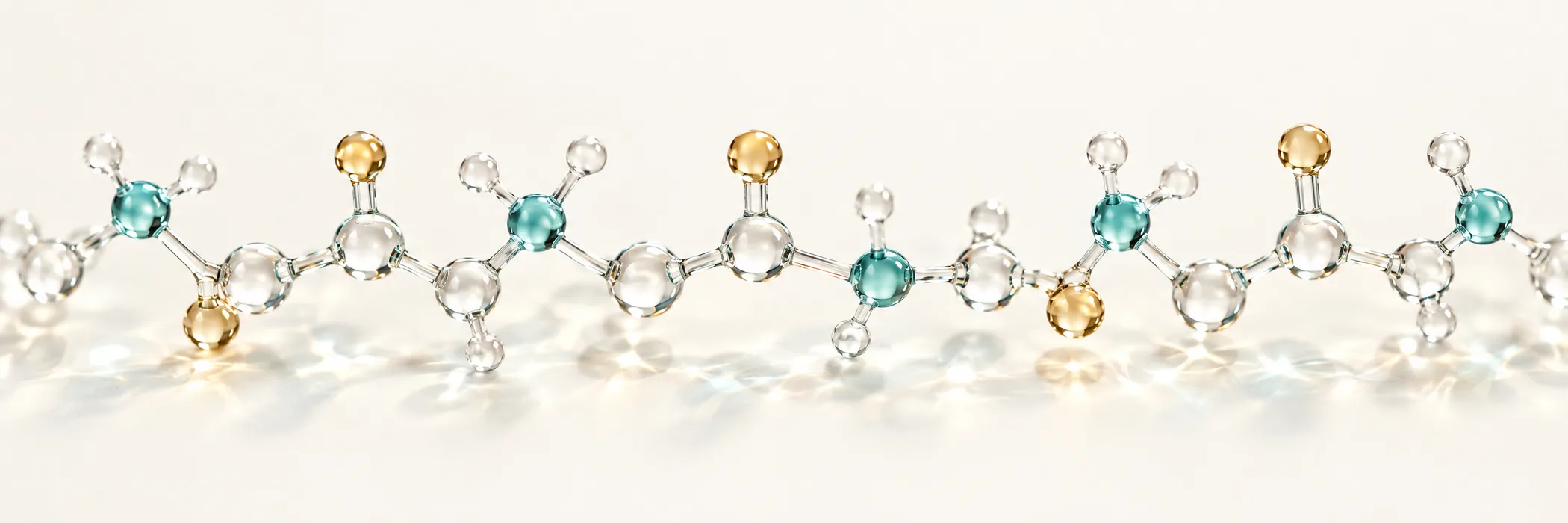
Built to last. DRI stands for D-retro-inverso. The sequence is reversed and every amino acid is swapped for its mirror-image D-form. It keeps roughly the same binding shape but resists protein-cutting enzymes, so it lasts far longer in the body.
Sources:PMID 28340339
How to dose it
People inject 1,000 mcg (1 mg) under the skin, in short pulses with long breaks.
Doses used in the studiesBoth mouse studies used 5 mg/kg, three times, every other day.
- Foundational study (Baar 2017):
- 5 mg/kg on days 1, 3 and 5, by intravenous (IV) injection in aged and fast-aging mice. Restored running-wheel fitness, fur density and renal-function markers.
- Follow-up (Zhang 2020):
- Same dose and schedule, by intraperitoneal (IP) injection in aged mice. Targeted senescent Leydig (testosterone-producing) cells, raised serum testosterone and lowered p53/p21/p16 markers.
- Human equivalent:
- The 5 mg/kg mouse dose does not convert to a human dose.
How to injectInto the fat under the skin, rotating sites.
- Injection site:
- Abdomen (two to three inches from the navel), love handles or outer thigh. Rotate sites to avoid irritation and lipohypertrophy (fatty lumps from reusing one spot).
- Measuring the dose:
- Drawn on a U-100 insulin syringe. People run 1,000 mcg, the calculator default.
- Time of day:
- Keep the same clock time each injection day.
- Food window:
- Under the skin it skips the gut, so meals don't matter.
Cycle and breaksRun in short pulses of 3 doses over 5 days, then a long break.
- Why pulsed?:
- Senescent cells build up slowly. One short pulse clears the load; dosing on only raises off-target p53 risk in healthy cells.
- Pulse length:
- 3 injections over 5 days (days 1, 3, 5) in the foundational study, alternating days for recovery.
- Gap between pulses:
- Usually one pulse per quarter (every 3 months). Some go every 4–6 months.
- Check-ins between pulses:
- People recheck inflammation markers hs-CRP (high-sensitivity C-reactive protein) and IL-6 (interleukin-6), bloodwork and recovery before the next pulse.
Mixing the vialA 10 mg vial with 2 mL bacteriostatic water holds 10 doses of 1,000 mcg.
- Mixing:
- 5,000 mcg/mL. On a 100-unit (1 mL) syringe, 500 mcg takes 10 units, 1,000 mcg takes 20 units, 1,500 mcg takes 30 units, 2,000 mcg takes 40 units.
- How long a vial lasts:
- That is 3 three-dose pulses and one spare. The calculator handles any vial size.
Sources:PMID 28340339PMID 31959736
Best time to take it


Implied best time
Anytime (pulsed cycles)
The pulse pattern matters more than the hour. A short burst clears senescent cells, then a long gap follows.
- Senescent cells build up slowly. One short pulse clears the current load, and more dosing adds no benefit while raising off-target p53 risk.
- Between pulses people wait about 3 months, one pulse per quarter. That gap is the timing decision that matters.
- Within a pulse, keep a consistent clock time on injection days. Recheck inflammatory markers and recovery in each gap before another pulse.
What to stack it with


People stack FOXO4-DRI with other senolytics that work through different routes, and with NAD⁺ (nicotinamide adenine dinucleotide) support.
FOXO4-DRI + QuercetinThe most natural senolytic pairing. Two different death-signal levers on the same zombie cell.
- Why it works:
- FOXO4-DRI frees p53. Quercetin blocks Bcl-2, a different survival signal, and also brakes NF-κB and acts as an antioxidant. The two levers complement each other.
- The protocol:
- FOXO4-DRI on the pulsed schedule (3 injections over 5 days, ~quarterly). Quercetin 500–1,000 mg/day as phytosome or isoquercetin, steady or pulsed around the injection days.
- Outcome:
- The go-to senolytic and longevity pairing.
FOXO4-DRI + FisetinAnother senolytic that clears zombie cells through routes other than p53.
- Why it works:
- Fisetin, a strawberry flavonoid, promotes senescent-cell clearance through AMPK (AMP-activated protein kinase) activation and Bcl-2 inhibition. Its antioxidant and anti-inflammatory action supports recovery after clearance.
- The protocol:
- FOXO4-DRI on the pulsed schedule. Fisetin 100–200 mg/day with food (fat-soluble), steady or as a 1–3 day burst around the injection window.
- Outcome:
- Reached for on longevity and cellular-aging goals.
FOXO4-DRI + NAD⁺ supportClear the zombie cells first, then restore the energy metabolism they were suppressing.
- Why it works:
- Senescent cells drain NAD⁺ through CD38, an enzyme that consumes it. After clearance, NMN (nicotinamide mononucleotide) or NR (nicotinamide riboside) refills NAD⁺ and supports mitochondrial biogenesis.
- The protocol:
- FOXO4-DRI on the pulsed schedule. NAD⁺ precursor (NMN 500–1,000 mg/day or NR 250–500 mg/day) as a steady base, not pulsed.
- Outcome:
- Remove the old cells, then restore energy in what remains.
Support nutrients
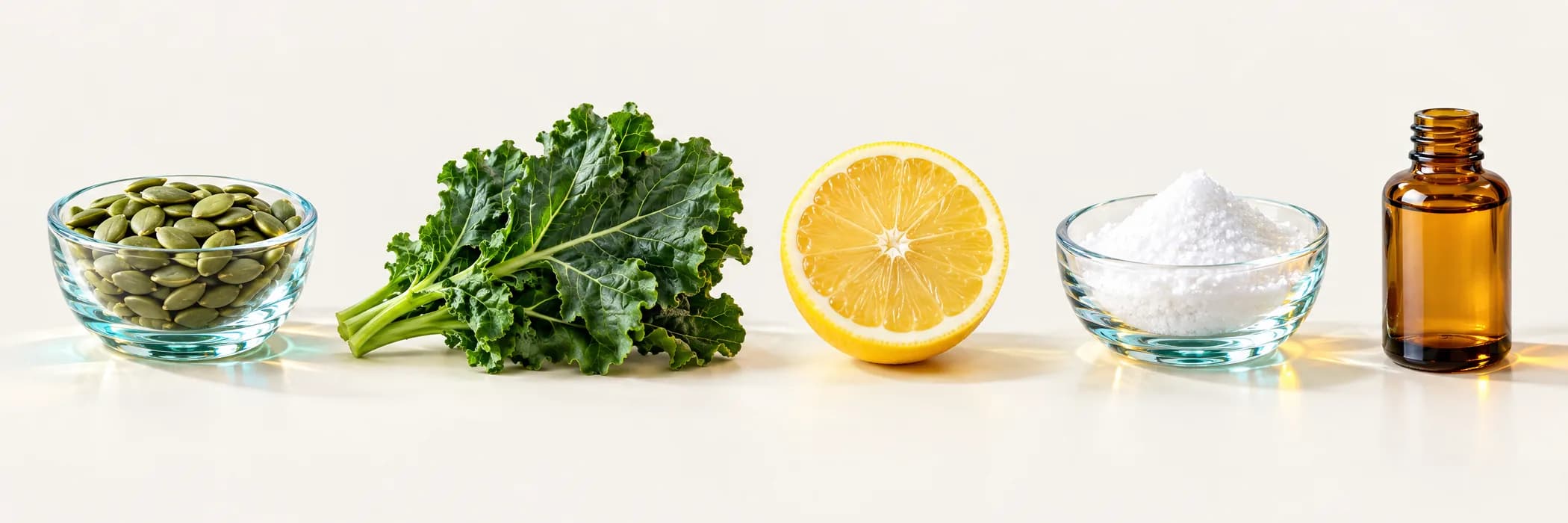
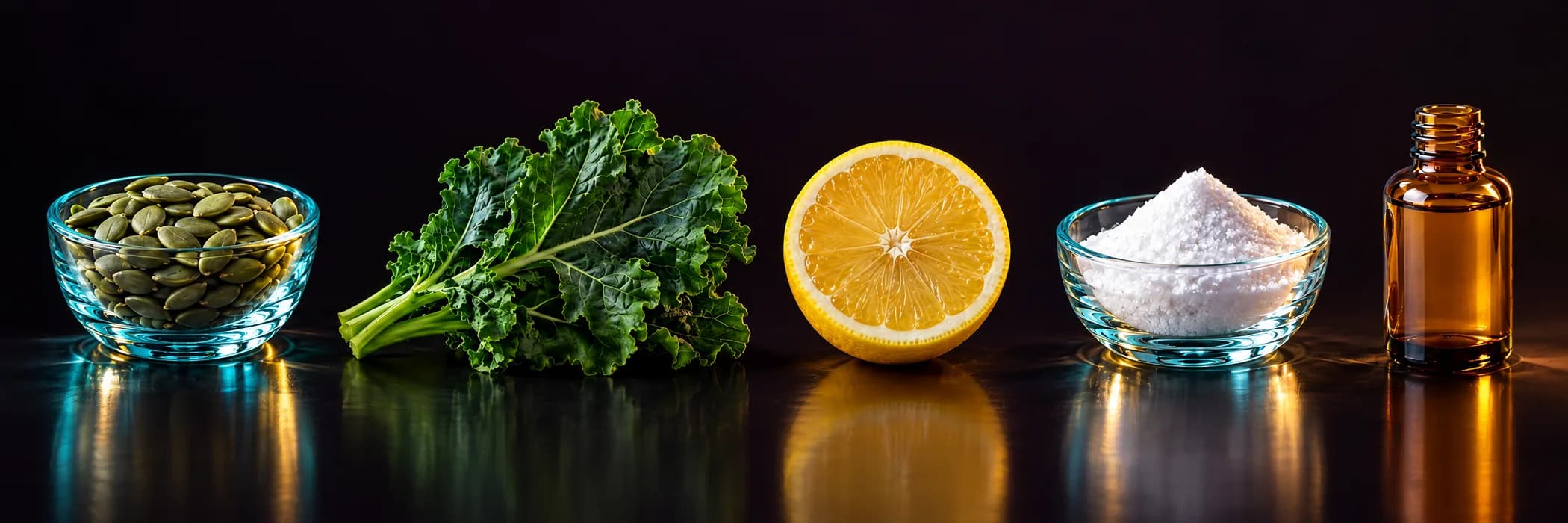
These cofactors supply material to rebuild after clearance, plus an antioxidant base.
Building blocks for repairProtein, vitamin C and glycine supply the material to rebuild.
- Protein:
- ~1.6 g per kilogram of body weight per day (roughly 0.7 g/lb), the standard reference for tissue repair.
- Vitamin C:
- 500–1,000 mg/day. It limits how fast the body makes collagen for connective tissue and skin.
- Glycine:
- 3–5 g/day (from collagen peptides or pure powder). The most abundant amino acid in collagen.
- Timing:
- Protein with meals. Vitamin C and glycine once daily, any time.
Calm senescent-cell inflammationAn antioxidant base supports tissue health through the break.
- Quercetin:
- 500–1,000 mg/day as phytosome or isoquercetin, for better absorption. Studied as a senolytic itself, it also blocks NF-κB, a key inflammation signal.
- Fisetin:
- 100–200 mg/day. A strawberry and apple flavonoid studied as a senolytic, often pulsed with quercetin.
- Omega-3:
- 2–3 g/day combined. EPA and DHA (the two main omega-3 fats) damp the SASP (senescence-associated secretory phenotype), senescent cells' inflammatory output.
- Timing:
- Quercetin and fisetin with meals; they absorb best with a little fat. Omega-3 with the largest meal.
Protecting healthy cellsNo cofactor offsets the main risk. Pulses with long breaks are the safeguard.
- In mice:
- The 2017 mouse study described it as well tolerated and selective for senescent over healthy cells.
- p53 activation:
- It kills cells by switching on p53. Off-target activation in healthy cells is the main theoretical risk.
- Sourcing:
- Identity, purity and sterility depend on the source, so check the COA (certificate of analysis).
Dose calculator
Reconstitution calculator
Calculated for a 1 mL U-100 insulin syringe (100 units/mL).
Units per dose
20 units
Draw this many units on a U-100 syringe
Each unit holds 50 mcg
- Volume per dose
- 0.2 mL
- Doses per vial
- 10
- Concentration
- 5 mg/mL
One vial lasts
- Daily
- 10 days
- Every other day
- 20 days
- 5×/week
- 14 days
Research use only. Not for human consumption. Outputs are reference values based on research literature. Verify all measurements independently.
Side effects and what to watch
What's known. In the 2017 mouse work, dosing was well tolerated and the peptide was selective for senescent over normal cells.
Worth knowing. It works by switching on p53 to kill cells, so off-target p53 activation in healthy cells is the main theoretical risk. The pulsed schedule with long breaks is the safeguard.
Sourcing. Identity, purity and sterility depend on the source.
Common questions
How is FOXO4-DRI dosed?
People run 1,000 mcg (1 mg) per injection under the skin, 3 doses over 5 days (days 1, 3, 5). The mouse studies used 5 mg/kg, three times, every other day.
Do I need to cycle it?
Yes. It runs in pulses of 3 doses over 5 days, then a long break. Usually one pulse per quarter (every 3 months); some go every 4–6 months.
Does it reverse aging?
In the 2017 study, clearing senescent cells restored running-wheel fitness, fur density and some kidney markers in aged mice. That result is why people run it for longevity.
What does 'DRI' mean?
D-retro-inverso. The sequence is reversed and every amino acid is swapped for its mirror-image D-form. It keeps roughly the same binding shape but resists protein-cutting enzymes, so it survives longer in the body.
What does it stack with?
Quercetin (500–1,000 mg a day) and fisetin (100–200 mg a day), senolytics that block a different survival signal (Bcl-2) than FOXO4-DRI's p53 route. NAD⁺ support (NMN 500–1,000 mg or NR 250–500 mg a day) runs as a steady base.
How long does a vial last?
A 10 mg vial with 2 mL bacteriostatic water covers 10 doses of 1,000 mcg, or 3 three-dose pulses and one spare. The pulsed schedule makes a vial outlast a daily peptide's.
Deep dive
Doses used in studies · Molecular identity · References
10From the researchDoses used in studies
The rows below list the research: two mouse studies at 5 mg/kg and one cell-culture study.
| Dose | Route | Model | Outcome | Sources: |
|---|---|---|---|---|
| 5 mg/kg, 3× every other day | IV | Mouse, Baar 2017, fast-aging + naturally aged + chemotoxicity (foundational) | Selectively cleared senescent cells; restored running-wheel fitness, fur density, and renal-function markers; neutralized doxorubicin chemotoxicity; well tolerated in mice | PMID 28340339 |
| 5 mg/kg, 3× every other day | IP | Mouse, Zhang 2020, aged-mouse Leydig cells | Targeted senescent testosterone-producing cells and raised serum testosterone in aged mice; lowered p53/p21/p16 markers | PMID 31959736 |
| In-vitro (no animals) | n/a | Cell culture, Huang 2021, expanded human chondrocytes | Removed >50% of late-passage senescent cartilage cells and lowered senescence markers, but did NOT improve their cartilage-forming potential | PMID 33996787 |
| None | n/a | Human, ClinicalTrials.gov search | NO registered or completed human trial; no human dose, pharmacokinetics, or safety data exist | ClinicalTrials.gov (no records) |
11ChemistryMolecular identity
- Molecular formula
- C₂₂₈H₃₈₈N₈₆O₆₄ (free base)
- Molecular weight
- ≈5358 g/mol (free base)
- Monoisotopic mass
- ≈5354.98 Da (free base)
- PubChem CID
- 167312269
- Class
- Synthetic D-retro-inverso (DRI) senolytic peptideBaar et al., Cell 2017 (PMID 28340339)
- Sequence
- Not published. FOXO4 p53-interface-derived; vendor letter sequences are internally inconsistent and unverified against the primary paperBaar et al., Cell 2017 (sequence not in accessible text)
- Molecular target
- FOXO4–p53 interaction (binds the disordered p53 transactivation domain); frees p53 → apoptosis of senescent cellsBaar et al., Cell 2017 (PMID 28340339); PMID 40593617
- Design
- Sequence reversed + every L-amino acid swapped to its D-form → protease-resistant, longer in-vivo half-life; carries a cell-penetrating elementBaar et al., Cell 2017 (PMID 28340339)
- Half-life
- Not established (no published quantitative pharmacokinetics; DRI design is protease-resistant but no numeric half-life is reported, and there is no human data)Not established
- Regulatory status
- Not approved anywhere; research chemical only; no registered human trialRegulatory record; ClinicalTrials.gov (no records)
12Primary sourcesReferences
- PMID 28340339Baar et al., Cell 2017. Targeted apoptosis of senescent cells restores tissue homeostasis (foundational mouse/cell study)
- PMID 31959736Zhang et al., Aging (Albany NY) 2020. FOXO4-DRI targets senescent Leydig cells and raises testosterone in aged mice
- PMID 33996787Huang et al., Front Bioeng Biotechnol 2021. FOXO4-DRI removes senescent cells from in-vitro expanded human chondrocytes
- ClinicalTrials.gov (no records)ClinicalTrials.gov. Search for FOXO4-DRI / Proxofim (no registered or completed human trial)
- PubChem CID 167312269PubChem record. Formula, MW, CID
- WADA 2026WADA 2026 Prohibited List (FOXO4-DRI not individually named; status by inference)
Reviewed by Ki Researcher Team · Research use only · Not medical advice · Updated 2026-09-24