
DSIP
Nonapeptide · delta sleep-inducing peptide · WAGGDASGE
DSIP (delta sleep-inducing peptide) is a nine-amino-acid peptide first isolated in 1977 from the blood of sleeping rabbits. People run it before bed to deepen slow-wave (delta) sleep. A transport system carries it across the blood-brain barrier, and a half-century of research sits behind it.
Buy DSIP10 mg vial
Ki Researcher is affiliated with Ki Peptides.
Ships to the US only. Buyers must be 21 or older.
At a glance
- Dose
- 100–300 mcg a night (start at 100 mcg)
- How often
- Once a night
- How
- A small injection under the skin
- When
- 30–60 minutes before you plan to sleep
- Cycle
- 2–4 weeks nightly, then 1–2 weeks off
The 30-second versionEverything on this page, fast
Sleep · Delta-Wave · Bedtime · On-Demand
The sleep peptide people reach for to deepen slow-wave (delta) sleep. Dosed right before bed for a calmer, deeper night, nightly or only when you need it.
The basics
- A nine-amino-acid peptide first isolated in 1977 from the blood of deep-sleeping rabbits.
- Named for the delta (slow-wave) brain-wave patterns synthetic DSIP enhanced in rabbits.
Why people use it
- Reaches for deeper delta sleep. People use it to deepen slow-wave sleep, the effect it is named for.
- On demand for rough nights. It is dosed right before bed, not built up over weeks, so some use it only for bad-sleep nights, travel or jet-lag recovery.
- Chemically well-defined. A genuine, well-characterized nine-amino-acid peptide with a half-century of research.
- Works best on a solid base. The effect is typically subtle, so pair it with sleep hygiene (consistent timing, darkness, a cool room).
Stacks well with
- Epitalon works on the pineal gland's melatonin rhythm while DSIP targets sleep depth. Run them as separate, overlapping cycles, not co-injected.
Good to know
- Expect a subtle nudge toward deeper sleep, not a knockout. Sleep hygiene does the heavy lifting.
- Not individually named on the 2026 World Anti-Doping Agency (WADA) list (S2), but its catch-all language could capture it. If you compete, check with your anti-doping authority.
What it does
People run DSIP for one thing, sleep. Here is what draws them to it.
- Deeper slow-wave sleepPeople run it to deepen delta sleep. In rabbits, synthetic DSIP enhanced delta and spindle brain-wave patterns.
- Better sleep reported in insomniacsHuman studies from the 1980s (Lancet 1981, Eur Neurol 1986) reported improved sleep in insomniacs.
- On demand for rough nightsIt is dosed right before bed, so people use it situationally for a bad-sleep night, travel or jet-lag recovery.
- Crosses into the brainA saturable transport system carries it across the blood-brain barrier.
- A small, well-defined peptideA genuine, well-characterized nine-amino-acid peptide with a half-century of research behind it.
How it works
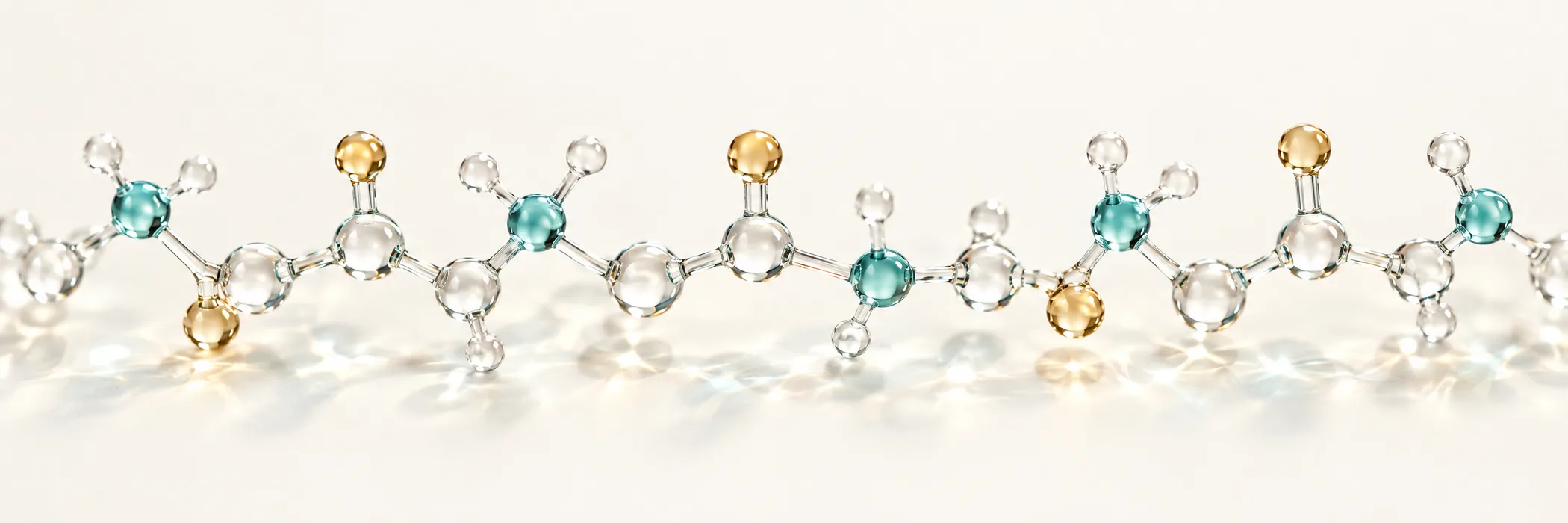
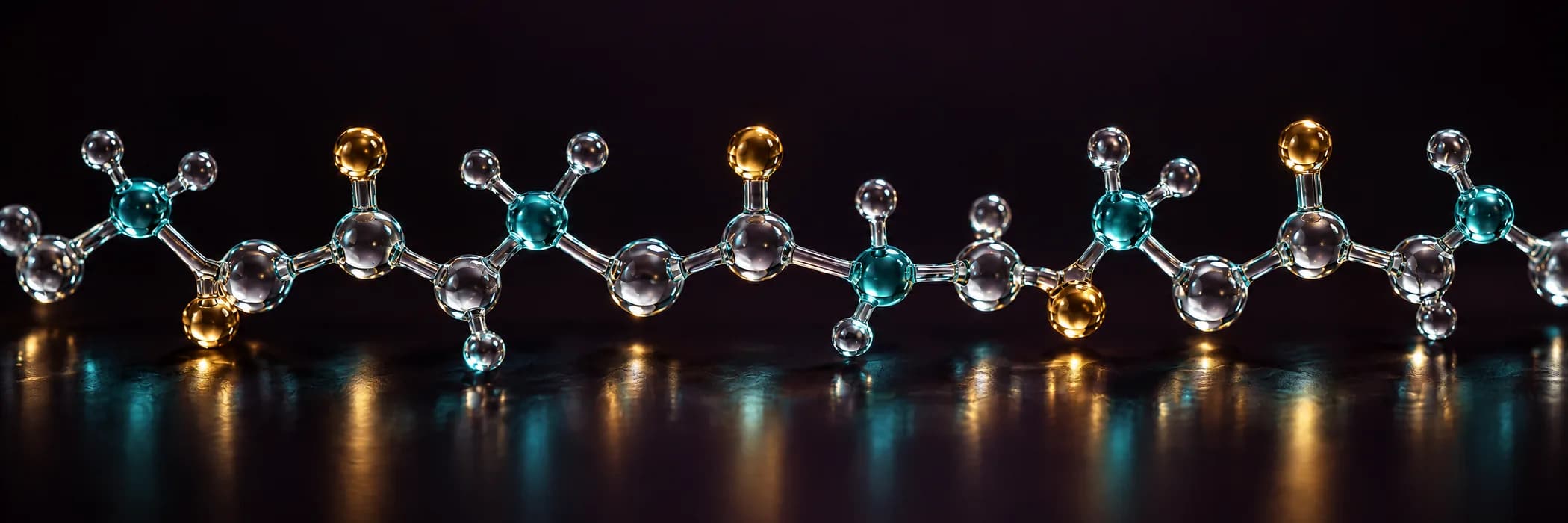
Named for delta sleep. DSIP was isolated from the blood of rabbits in deep sleep. Infused as a synthetic peptide in rabbits, it enhanced delta and spindle patterns on EEG, a recording of brain waves.
Gets into the brain. A saturable transport system carries DSIP across the blood-brain barrier.
Touches several brain signals. Research reports DSIP modulating an enzyme in the rat pineal gland through alpha-adrenergic receptors, and shifting somatostatin and growth-hormone release through a dopamine-related mechanism. A serotonin-mediated role in sleep is also proposed. No specific DSIP receptor has been identified.
Other roles under study. Older biochemistry work also proposes roles in thermoregulation, stress adaptation and antioxidant effects.
Sources:PMID 265572PMID 2547200
How to dose it
Most people run DSIP as a small injection under the skin (subcutaneous), once a night before bed. The on-page calculator is built for that route.
Dose tiersPeople run 100 to 300 mcg before bed, lower for sleep support, higher for insomnia nights.
- Starting dose:
- 100 mcg subcutaneously before bed. The starting range, used to gauge your response.
- Standard:
- 250 mcg subcutaneously before bed. The most common amount for ongoing sleep-quality goals.
- Upper end:
- Up to 300 mcg once nightly, the top of the range in the older literature. Nothing on record supports going higher.
How to injectA small injection into belly, love-handle or thigh fat, ~30 minutes before intended sleep.
- Injection site:
- Abdomen (a couple of inches from the navel), love-handle area or outer thigh. Rotate sites across uses to prevent local irritation.
- Measuring the dose:
- Draw it on a U-100 insulin syringe. The Mixing the vial card has syringe units at the 10 mg / 2 mL mix, and the calculator handles any vial size.
- Timing:
- 30–60 minutes before intended sleep, since DSIP is aimed at delta sleep.
- Food window:
- No interaction with food. Inject it independent of your last meal.
Cycle and breaksShort cycles of 2–4 weeks with a break after, or only on rough nights.
- Typical cycle:
- 2–4 weeks of nightly use, then assess whether sleep quality has changed. Some people run it only on nights they expect poor sleep.
- Break:
- 1–2 weeks off between cycles. The break is precautionary, since no receptor-saturation mechanism is established for DSIP.
- On-demand use:
- DSIP is dosed acutely, so some people keep it situational (pre-travel, acute insomnia nights, jet-lag recovery) instead of running a fixed daily cycle.
Mixing the vialA 10 mg vial plus 2 mL bacteriostatic water puts 250 mcg at 5 units.
- Mixing:
- 10 mg vial + 2 mL bacteriostatic water = 5,000 mcg per mL. On a U-100 insulin syringe: 100 mcg (2 units), 250 mcg (5 units), 300 mcg (6 units).
- Why 2 mL:
- Keeps draws in a practical syringe range (2–6 units), so small microgram doses are measurable.
Best time to take it
Implied best time
Bedtime
Take DSIP 30–60 minutes before sleep. Bedtime is the whole window.
- Its job is deeper delta (slow-wave) sleep, so the dose goes in on the approach to sleep, 30–60 minutes before you intend to fall asleep.
- It is dosed acutely right before bed, so there is no daytime or split-dose pattern to weigh.
- Food does not interact with it, so it goes in independent of your last meal.
What to stack it with


DSIP works on sleep depth, so it pairs with compounds that pull a different sleep lever, such as circadian timing.
DSIP + EpitalonEpitalon works on the pineal gland's melatonin rhythm while DSIP targets sleep depth.
- Why it works:
- Epitalon (Ala-Glu-Asp-Gly) is aimed at pineal melatonin secretion, the circadian timing side of sleep. DSIP is aimed at slow-wave sleep depth. Two different levers, not the same one twice.
- The protocol:
- DSIP 100–300 mcg subcutaneously before bed, nightly. Epitalon runs its own short course, commonly 10–20 days at 5–10 mg/day subcutaneously. Sequential or overlapping cycles, not co-injected.
- Outcome:
- People combine them for age-related sleep disruption and circadian misalignment. Ageing blunts both pineal melatonin output, which Epitalon is aimed at, and delta-sleep depth, which DSIP is aimed at.
Support nutrients
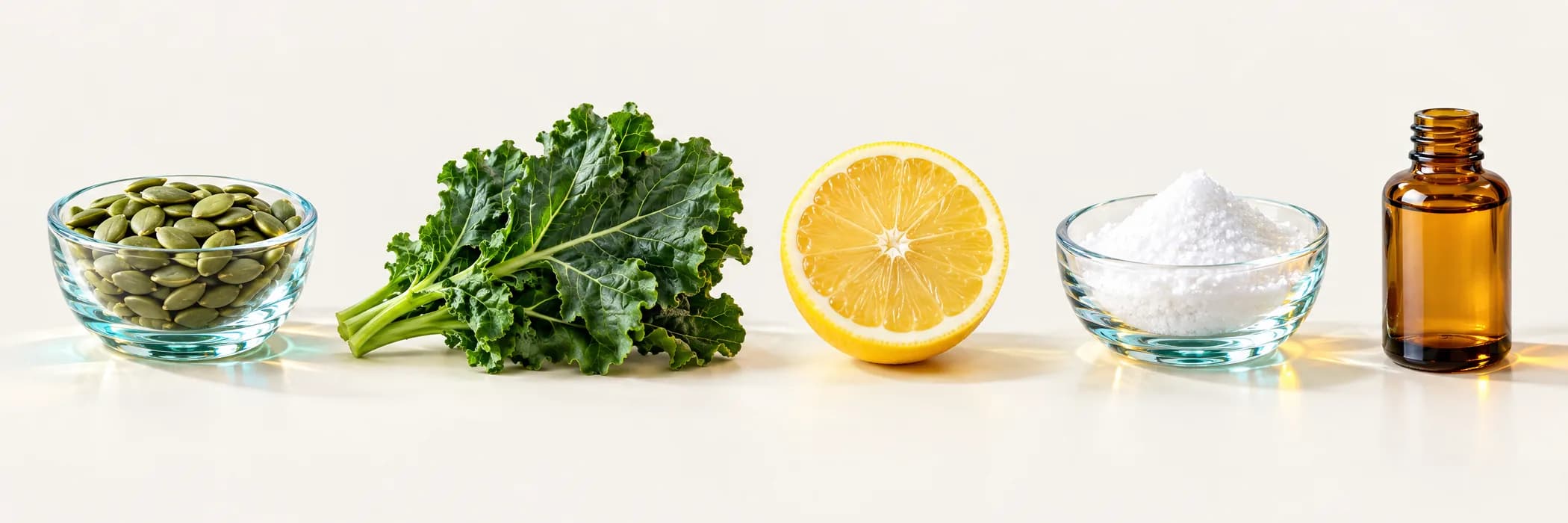
These support the same wind-down DSIP is aimed at.
Sleep hygiene firstThe most proven driver of deep sleep. Consistent timing, darkness and a cool room come first.
- Consistent sleep/wake timing:
- Same bedtime and wake time every day, weekends included.
- Light and dark control:
- Bright morning light (10–30 min outdoors or at a bright lamp) anchors the body clock. No bright screens or overhead lighting for 60–90 min before bed.
- Sleep environment:
- A cool room (around 65–68 °F / 18–20 °C), complete darkness and quiet. A core temperature drop is a primary trigger of slow-wave sleep.
Wind down with magnesium and glycineMagnesium glycinate 300–400 mg plus glycine 3 g, 30–60 minutes before bed.
- Why it helps:
- Magnesium supports calm through GABA (the brain's main calming signal), and low intake is common. Glycine slightly lowers core temperature and improved sleep onset and next-day alertness in human trials.
- Dose and timing:
- Magnesium glycinate 300–400 mg + glycine 3 g, 30–60 minutes before bed, alongside the DSIP injection.
Feed your melatonin supplyYour body builds melatonin from tryptophan. Low-dose melatonin helps with jet lag or shift work.
- Why it helps:
- Tryptophan becomes 5-HTP, serotonin, then melatonin, and vitamin B6 (pyridoxal-5-phosphate) rate-limits the last step. Melatonin at 0.3–1 mg signals night without the blunting seen at common 5–10 mg doses.
- Dose and timing:
- L-tryptophan 500–1,000 mg or 5-HTP 50–100 mg with dinner, or melatonin 0.3–1 mg 30 min before bed. No 5-HTP with selective serotonin reuptake inhibitors or serotonergic agents without medical guidance.
Dose calculator
Reconstitution calculator
Calculated for a 1 mL U-100 insulin syringe (100 units/mL).
Units per dose
5 units
Draw this many units on a U-100 syringe
Each unit holds 50 mcg
- Volume per dose
- 0.05 mL
- Doses per vial
- 40
- Concentration
- 5 mg/mL
One vial lasts
- Daily
- 40 days
- Every other day
- 80 days
- 5×/week
- 56 days
Research use only. Not for human consumption. Outputs are reference values based on research literature. Verify all measurements independently.
Side effects and what to watch
What people notice. Very little is on record. The 1980s pilot and clinical studies, run in pain and in withdrawal, did not report DSIP as overtly toxic at the doses used.
Worth knowing. The safety record comes from those small 1980s studies. No large or long-term human safety dataset exists.
Common questions
How is DSIP dosed?
Most people run 100 to 300 mcg as a small injection under the skin, once nightly. 100 mcg is the starting dose and 250 mcg is the standard.
When do I take it?
30–60 minutes before you intend to sleep. Food does not interact with it, so it goes in independent of your last meal.
Do I need to cycle DSIP?
The common pattern is 2–4 weeks of nightly use, then 1–2 weeks off. Some people skip the cycle and use it only on nights they expect poor sleep, such as pre-travel or jet-lag recovery.
What does DSIP stack with?
Epitalon is the usual partner. It works on the pineal gland's melatonin rhythm while DSIP targets sleep depth. People run them as sequential or overlapping cycles, not co-injected.
How do I mix a 10 mg vial?
Add 2 mL bacteriostatic water for 5,000 mcg per mL. At that mix on a U-100 insulin syringe, 100 mcg takes 2 units, 250 mcg takes 5 units and 300 mcg takes 6 units.
How does DSIP work?
A saturable transport system carries it across the blood-brain barrier. Research reports effects on pineal, somatostatin and growth-hormone signaling, and a serotonin-mediated role in sleep is proposed. No specific DSIP receptor has been identified.
Deep dive
Doses used in studies · Molecular identity · References
10From the researchDoses used in studies
These are the doses used in the DSIP studies, from the 1977 rabbit work to the 1980s human trials.
| Dose | Route | Model | Outcome | Sources: |
|---|---|---|---|---|
| Brain infusion | ICV | Rabbit, original isolation/characterization (1977) | Synthetic DSIP enhanced delta and spindle EEG patterns in rabbits, the basis for the name (animal EEG, not human sleep) | PMID 265572 |
| 25 nmol/kg | IV | Human RCT, double-blind crossover, chronic insomniacs (Monti 1987) | Awakenings, NREM latency and waking time all fell on DSIP, but NO significant difference was found against baseline OR against double-blind placebo nights. The NREM/stage-2 gap that did reach significance already existed at baseline. The authors concluded the improvement 'is of little clinical significance' (the key contradiction) | PMID 3583493 |
| Parenteral (1980s) | IV / SC | Human, insomnia reports, Schneider-Helmert group (Lancet 1981, Eur Neurol 1986) | Reported improved sleep in insomniacs, but mostly from one group and not independently replicated; the Lancet record has no abstract to quantify the claim | PMID 6112579 |
| Pilot dosing | Parenteral | Human, chronic pain pilot study (Larbig 1984) | Reported benefit on pronounced pain episodes, but explicitly a small uncontrolled pilot, not confirmatory | PMID 6548970 |
11ChemistryMolecular identity
- Molecular weight
- 848.8 g/mol
- Molecular formula
- C₃₅H₄₈N₁₀O₁₅
- Monoisotopic mass
- 848.3301 Da
- CAS / UNII
- 62568-57-4 · YN28Z5YZ73
- Regulatory status
- Research chemical; not FDA-approved
- Sequence
- Trp-Ala-Gly-Gly-Asp-Ala-Ser-Gly-Glu (WAGGDASGE, 9 AA)PubChem CID 68816; PMID 265572
- Structure / class
- Linear nonapeptide (free acid; INN emideltide)PMID 568769
- Molecular target
- No specific receptor ever identified; mechanism unresolved after ~50 yearsResearch literature
- Half-life
- No validated human pharmacokinetics published (vendor figures unverified)Not established
- Brand / approval
- None (never approved as a drug anywhere)Research literature
12Primary sourcesReferences
- PMID 265572Schoenenberger & Monnier, PNAS 1977. Original isolation/characterization of the delta-EEG-inducing nonapeptide (rabbit)
- PMID 568769Schoenenberger et al., Pflugers Arch 1978. Amino-acid analysis, sequence, synthesis of the nonapeptide
- PMID 3583493Monti et al., Int J Clin Pharmacol Res 1987. Double-blind crossover; sleep effect 'of little clinical significance'
- PMID 6112579Schneider-Helmert et al., Lancet 1981. 'Synthetic DSIP improves sleep in insomniacs' (no abstract on record)
- PMID 6548970Larbig et al., Eur Neurol 1984. Chronic-pain clinical pilot study
- PMID 6548969Dick et al., Eur Neurol 1984. DSIP in alcohol/opiate withdrawal syndromes
- PMID 2547200Zlokovic et al., Peptides 1989. Saturable blood-brain-barrier transport mechanism
- PubChem CID 68816PubChem record, identity (CID, formula, MW, CAS, sequence)
- WADA 2026WADA 2026 Prohibited List (DSIP not individually named; status by inference)
DSIP
10 mg vial
Ki Researcher is affiliated with Ki Peptides.
Ships to the US only. Buyers must be 21 or older.
Reviewed by Ki Researcher Team · Research use only · Not medical advice · Updated 2026-09-24