
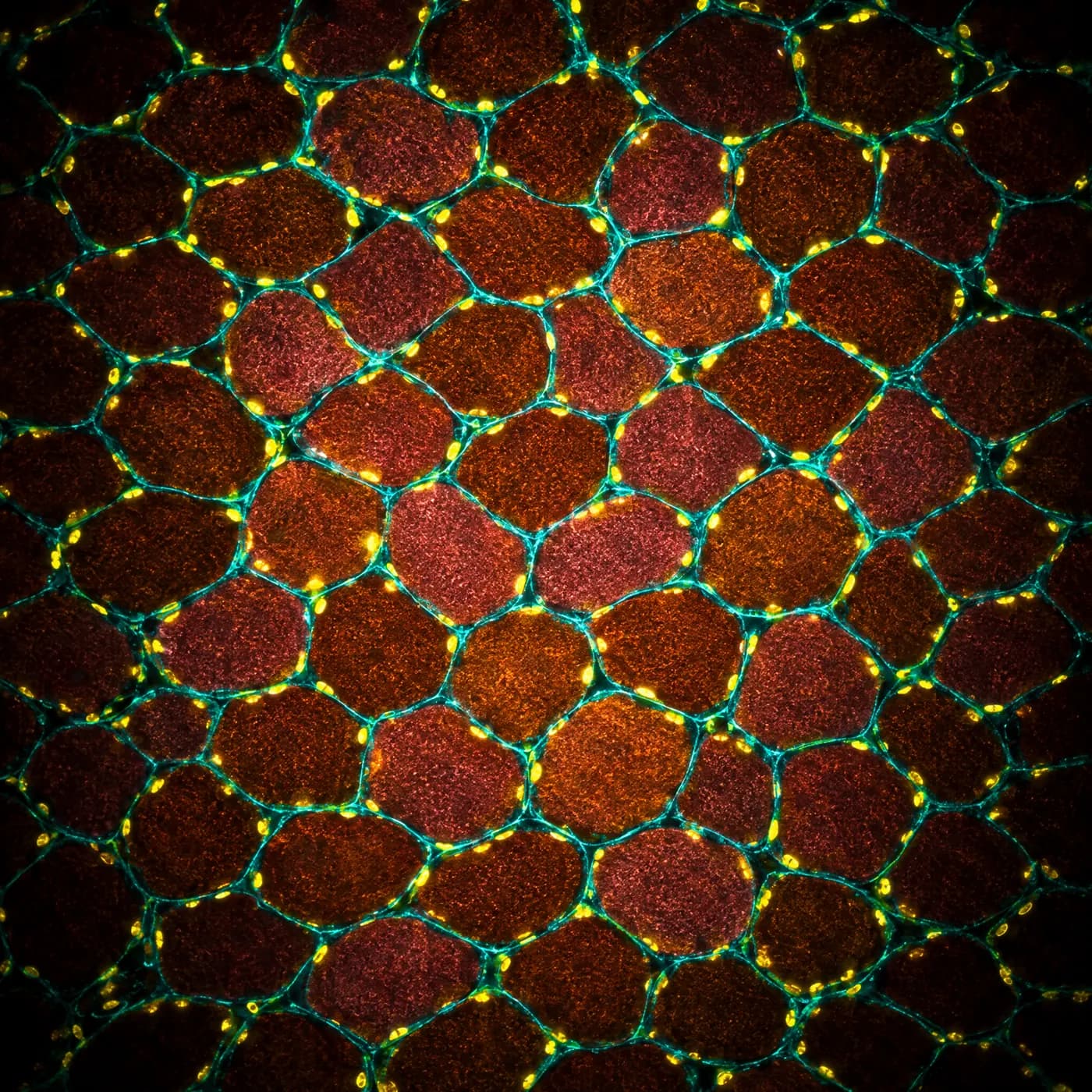
Follistatin-344
Myostatin-antagonist protein · neutralizes myostatin, the body's main brake on muscle growth
Follistatin-344 is a protein that binds and neutralizes myostatin, the body's main brake on muscle growth, plus activin A and GDF-11. People run it to let muscle grow past its normal ceiling. In mice, follistatin overexpression grew more muscle than knocking out myostatin alone.
At a glance
- Dose
- 100 mcg once a day (50–100 mcg to start)
- How often
- Once a day
- How
- A small injection under the skin, rotating sites
- When
- Any time of day, held steady across the run
- Cycle
- 10–30 days on, then at least as long off
The 30-second versionEverything on this page, fast
Myostatin brake release · Muscle growth · Blocks several brakes · Performance
Follistatin releases the body's main brake on muscle growth. It binds and neutralizes myostatin (GDF-8), activin A and GDF-11 at once, which is why follistatin overexpression in mice out-grew a plain myostatin knockout.
The basics
- A protein (not a small molecule) that antagonizes myostatin and related TGF-β (transforming growth factor beta) ligands, the signals that brake muscle growth.
- People run it as a myostatin brake release for muscle, as a small daily injection under the skin.
Why people use it
- Releases muscle's main brake. A high-affinity antagonist that neutralizes myostatin (GDF-8), the body's primary limiter on muscle growth.
- Blocks several brakes at once. It also neutralizes activin A and GDF-11. In mice, follistatin overexpression grew more muscle than knocking out myostatin alone.
- Backed by striking genetics. Double-muscled cattle, a hypermuscular child and 'mighty mice' all show what removing this brake does.
- Pairs with a growth signal. Its most coherent stack adds an anabolic signal (IGF-1 LR3) rather than doubling the same brake.
Stacks well with
- IGF-1 LR3 pulls a different lever, adding a growth signal (PI3K/Akt/mTOR) while follistatin removes the brake.
- CJC-1295 / Ipamorelin raise the growth-hormone and IGF-1 axis, a separate node from the myostatin brake.
Good to know
- Banned in tested sport (WADA names follistatin explicitly), which matters if you compete.
- The well-known human follistatin studies used gene therapy, a virus that makes muscle produce it internally.
- It is a fragile ~38 kDa (kilodalton) protein. Swirl the vial gently, never shake it.
- Don't stack it with ACE-031. Same myostatin/activin lever, so it doubles the off-target risk with no added benefit.
What it does
People run follistatin-344 to release the myostatin brake and let muscle grow past its normal ceiling.
- Releases the main brake on muscleA high-affinity binder that neutralizes myostatin (GDF-8), the body's primary brake on muscle growth.
- Blocks several muscle brakes at onceIt also neutralizes activin A and GDF-11. In mice, follistatin overexpression grew more muscle than knocking out myostatin alone.
- Backed by striking geneticsDouble-muscled cattle, a hypermuscular child with a myostatin mutation and 'mighty mice' show what removing this brake does.
- Pairs with a growth signalIGF-1 LR3, a long-acting insulin-like growth factor 1 (IGF-1) analog, adds a growth signal while follistatin removes the brake.
Sources:PMID 17726519PMID 9356471PMID 15215484UniProt P19883
How it works
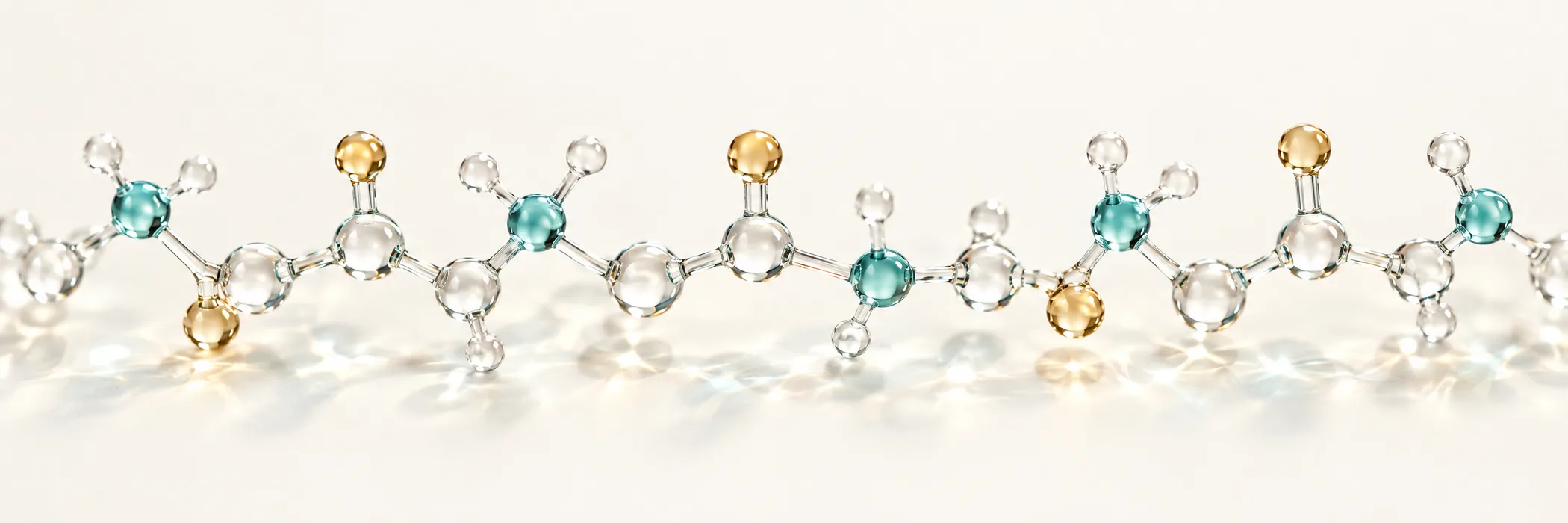
Blocks the brake signals. This secreted protein grabs several TGF-β (transforming growth factor beta) family signals, largely irreversibly, and keeps them off their receptors. Its muscle targets, myostatin (GDF-8), activin A and GDF-11, all restrain growth. It also binds some bone-morphogenetic proteins (BMPs).
Began as a fertility protein. First found in the gonads, it lowers the pituitary's release of follicle-stimulating hormone (FSH) by trapping activin. It acts broadly across the activin system, the source of its potency.
Lifts more than one brake. It neutralizes several muscle brakes at once, so it goes further than a pure myostatin blocker. In mice, follistatin overexpression grew more muscle than knocking out myostatin alone. A follistatin transgene in myostatin-null mice quadrupled muscle mass.
How to dose it
Most people run follistatin-344 (FST-344) as a small injection under the skin, once a day, in short blocks.
Dose tiersMost people run 100 mcg once daily, starting at 50–100 mcg.
- Low / trial:
- 50–100 mcg once daily. The range most often used for a first run, and some stay here for the whole run.
- Standard:
- 100 mcg once daily. The most commonly reported maintenance dose. More is not known to work better.
- Higher range:
- Up to ~200 mcg once daily, used by some. Gene-therapy trials dosed in viral genomes/kg, which don't convert to a microgram protein dose.
How to injectIt goes into the fat under the skin, where this large protein absorbs slowly.
- Injection site:
- Belly (a couple of inches clear of the navel), love handles or outer thigh. Rotate sites to avoid irritation. Some inject near the target muscle, though absorption isn't local.
- Measuring the dose:
- On a U-100 syringe at 10 mg + 2 mL, each unit holds 50 mcg: 100 mcg takes 2 units, 200 mcg takes 4 units. The calculator handles any vial.
- Time of day:
- Any time works, since it doesn't follow a hormonal rhythm. Pick one daily time and hold it across the run.
- Food window:
- Meals don't affect absorption. Inject independently of food.
Cycle and breaksMost run 10–30 days, then take at least an equal-length break.
- Cycle length:
- 10–30 days, as a short, concentrated run rather than a continuous course. Short runs are meant to avoid chronic, broad activin suppression.
- Washout:
- At minimum an equal-length break, as a precaution. Many hold 2–3 months between runs.
Mixing the vialThe default is a 10 mg vial with 2 mL of bacteriostatic water.
- Mixing:
- 10 mg vial + 2 mL bacteriostatic water = 5,000 mcg per mL. On a 100-unit (1 mL) syringe, each unit holds 50 mcg, so 150 mcg takes 3 units.
- Handle it gently:
- At ~38 kDa (kilodaltons), follistatin is a large glycoprotein, far more fragile than small peptides like BPC-157. Swirl the vial gently, never shake it.
Best time to take it


Implied best time
Anytime (consistent)
Any time of day works. Pick one daily time and hold it across the run.
- Follistatin binds and neutralizes myostatin rather than pulsing with a hormonal rhythm, so there is no circadian window to hit.
- Myostatin suppression is a slow, system-wide shift. Steady day-to-day coverage matters more than the exact hour.
- The injection under the skin works independently of meals, so food doesn't pin the dose to any part of the day.
Sources:UniProt P19883
What to stack it with


The best partners add a growth signal while follistatin lifts the brake.
FST-344 + ACE-031 (skip this pair)ACE-031 works the same myostatin and activin lever. Pick one, not both.
- Why it is redundant:
- Both block activin-receptor signaling. Blocking one brake twice does not release it further.
- Why it compounds risk:
- ACE-031's clinical program was halted after bleeding events tied to broad activin-receptor inhibition. Pairing doubles that off-target load.
- Outcome:
- Choose one agent on the myostatin pathway.
FST-344 + IGF-1 LR3The most coherent pairing. IGF-1 LR3 adds a growth signal as FST-344 lifts the brake.
- Why it works:
- IGF-1 LR3 drives the cell's main anabolic pathway (PI3K/Akt/mTOR), separate from the myostatin brake.
- The protocol:
- Both under the skin. FST-344 100 mcg once daily + IGF-1 LR3 50–100 mcg within 30 minutes post-training on training days. IGF-1 LR3 has a roughly 20–30 hour half-life.
- Outcome:
- People reach for it to maximize the anabolic environment during training. Protein (≥1.8 g/kg/day) and a calorie surplus are required.
FST-344 + CJC-1295 / IpamorelinRaises your own growth hormone (GH) and IGF-1, a more conservative entry than IGF-1 LR3.
- Why it works:
- CJC-1295, a growth-hormone-releasing hormone analog, enlarges GH pulses. Ipamorelin, a growth-hormone-releasing peptide, makes them more frequent. More GH raises liver IGF-1.
- The protocol:
- FST-344 100 mcg under the skin once daily (morning). CJC-1295 100 mcg + Ipamorelin 100 mcg in the same syringe at bedtime, on an empty stomach.
- Outcome:
- The GH route without injecting IGF-1 LR3. Same protein and calorie needs.
Support nutrients
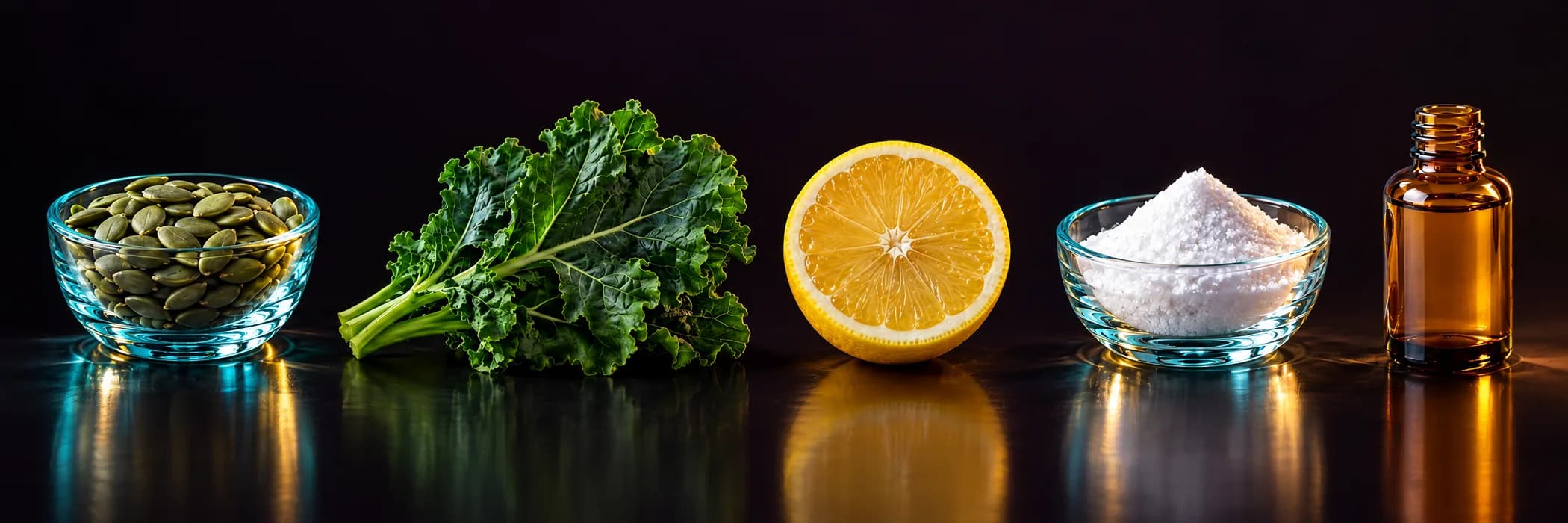
Follistatin releases the brake. Muscle still needs fuel and training to grow.
Fuel the growthProtein, leucine and a calorie surplus supply the raw material for new muscle.
- Protein intake:
- 1.8–2.2 g per kg of body weight per day (roughly 0.8–1.0 g per pound), top end in a surplus. Spread over 3–4 meals, each with ≥2.5–3 g leucine.
- Calorie surplus:
- A modest 250–500 kcal/day over maintenance. You can't grow into a released ceiling in a deficit. Track it for at least the first two weeks of a cycle.
- Timing:
- Protein within ~2 hours after training. Casein or a mixed protein before sleep slows overnight breakdown.
Give muscle a reason to growFollistatin removes a restraint. Resistance training tells the body where to build.
- Resistance training:
- Progressive overload, 3–5 days per week, on the muscles you want to grow. Trained follistatin-transgenic mice grew bigger fibers than untrained ones.
- Creatine monohydrate:
- 3–5 g per day, the best-supported training aid. It raises muscle phosphocreatine for heavier sets and more volume.
- Timing:
- Creatine any time daily, since consistency beats timing. Save your hardest training sessions for the follistatin cycle.
What no supplement coversNo nutrient narrows follistatin's broad reach or tells you what is in the vial.
- Broad reach:
- Follistatin inhibits activin, GDF-11 and BMPs body-wide, a broader footprint than myostatin alone. No nutrient narrows that.
- Vial contents:
- A vial may hold the full protein, a fragment, a short derived peptide or a mislabeled substance. Third-party testing of the lot tells you which.
Dose calculator
Reconstitution calculator
Calculated for a 1 mL U-100 insulin syringe (100 units/mL).
Units per dose
2 units
Draw this many units on a U-100 syringe
Each unit holds 50 mcg
- Volume per dose
- 0.02 mL
- Doses per vial
- 100
- Concentration
- 5 mg/mL
One vial lasts
- Daily
- 100 days
- Every other day
- 200 days
- 5×/week
- 140 days
Research use only. Not for human consumption. Outputs are reference values based on research literature. Verify all measurements independently.
Side effects and what to watch
From the gene-therapy trial. In a 6-patient Becker muscular dystrophy gene-therapy trial (Mendell 2015), no serious follistatin-related adverse events showed up over 2 years.
Worth knowing. Follistatin damps activin and related signals body-wide, and those signals help restrain tumor growth in many tissues. That raises a theoretical cancer concern with chronic, broad use.
Hormones and heart. Its native job is lowering FSH, so it could shift reproductive and endocrine balance. It also binds GDF-11, which has contested roles in heart and blood-vessel health.
About the vial. Protein vials can carry impurities, endotoxin, mislabeling or sterility problems.
Common questions
Is FLGR-242 the same as Follistatin-344?
No. Sellers call FLGR-242 a shortened follistatin built to last longer. It has no published studies, so this page's doses don't carry over.
How is follistatin-344 dosed?
Most people run 100 mcg once daily as a small injection under the skin, starting at 50–100 mcg. Some go up to ~200 mcg once daily. See the dosing cards for the syringe math.
Do I need to cycle it?
Yes, most do. Runs last 10–30 days, followed by at least an equal-length break. Many hold 2–3 months between runs.
What does it stack with?
IGF-1 LR3 or the CJC-1295 / Ipamorelin pair, which add a growth signal while follistatin removes the brake. Skip ACE-031. It works the same lever and doubles the off-target risk.
What were the famous human follistatin studies?
The well-known human studies, in Becker muscular dystrophy and inclusion body myositis, used gene therapy. A virus carried the follistatin gene so the patient's own muscle made the protein. In the Becker trial, walking distance improved in most patients.
What does '344' mean?
It names a protein isoform, not a brand. FST344 is the longer precursor, including a signal peptide. Once released it becomes the 315-residue mature protein (FST315). Testing tells you whether a vial holds the full protein, a fragment or a short peptide.
Deep dive
Doses used in studies · Molecular identity · References
10From the researchDoses used in studies
These are the studies behind follistatin. Genetics in cattle, a child and mice, plus a human gene-therapy trial dosed in viral genomes per kilogram.
| Dose | Route | Model | Outcome | Sources: |
|---|---|---|---|---|
| Genetic (loss-of-function) | n/a | Cattle, myostatin-null Belgian Blue / Piedmontese ('double-muscled') | Myostatin loss causes the hypermuscular phenotype (foundational genetics, no follistatin injected) | PMID 9356471 |
| Genetic (loss-of-function) | n/a | Human, child with homozygous myostatin mutation (Schuelke 2004) | Gross muscle hypertrophy (~2× muscle), normal heart and cognition. Proof of the pathway in humans, but it is genetics, not a drug | PMID 15215484 |
| Genetic (overexpression) | n/a | Mouse, follistatin transgene on myostatin-null background (Lee 2007) | ~4× muscle mass of wild-type, which shows follistatin blocks muscle-restraining ligands beyond myostatin alone (transgenic, not injected) | PMID 17726519 |
| ≈3–6×10¹¹ vg/kg/leg | IM gene therapy (AAV) | Human trial, Becker muscular dystrophy (Mendell 2015, n=6) | 6-minute walk improved in most; larger fibers, less fibrosis; no serious follistatin-related adverse events over 2 years, but it is AAV gene therapy, not a peptide injection | PMID 25322757 |
| None | n/a | Human, injectable follistatin-344 protein as a muscle drug | Essentially NO controlled human efficacy or safety trials exist; no validated dose; grey-market identity/purity unverified | UniProt P19883 |
11ChemistryMolecular identity
- Gene
- FST (Follistatin)
- UniProt accession
- P19883 (FST_HUMAN)
- Canonical length / weight
- 344 aa; 38,007 Da
- Type
- Single-chain secreted glycoprotein (TGF-β-ligand antagonist), a PROTEIN, not a small moleculeUniProt P19883
- Isoforms
- FST344 = precursor (incl. 1–29 signal peptide); FST315 = mature secreted form; FST288 = cell-surface-binding formUniProt P19883; NCBI Gene 10468
- Molecular target
- High-affinity antagonist of TGF-β-family ligands: binds/neutralizes activin A, myostatin (GDF-8), GDF-11, and BMPsUniProt P19883
- Molecular formula / single PubChem CID
- Not applicable (it is a glycoprotein, not a defined small molecule)By definition (protein, UniProt P19883)
- Half-life
- ~4 min initial / ~131 min terminal (rat IV, circulating follistatin protein); no human injectable PK publishedPMID 8690405Half-life curve →
- Regulatory status
- Not approved as an injectable peptide drug anywhere; gene-therapy programs are investigational onlyRegulatory record; PMID 25322757
- WADA status
- PROHIBITED at all times (S4.3, follistatin named explicitly)WADA Prohibited List S4.3
12Primary sourcesReferences
- UniProt P19883UniProt P19883 (FST_HUMAN). Follistatin protein: 344 aa, 38,007 Da, signal 1–29, isoforms, activin/myostatin/GDF-11/BMP binding
- NCBI Gene 10468NCBI Gene 10468. FST gene, isoforms FST317/FST344, FSH-inhibiting
- PMID 9356471McPherron & Lee, PNAS 1997. Double muscling in cattle from myostatin (GDF8) mutations
- PMID 15215484Schuelke et al., NEJM 2004. Myostatin mutation causing gross muscle hypertrophy in a child
- PMID 11459935Lee & McPherron, PNAS 2001. Regulation of myostatin activity / follistatin-transgenic mice
- PMID 17726519Lee, PLoS ONE 2007. Quadrupling muscle mass by targeting TGF-β pathways (follistatin Tg × myostatin-null)
- PMID 25322757Mendell et al., Mol Ther 2015. Follistatin GENE THERAPY (AAV1.CMV.FS344) for Becker muscular dystrophy
- PMID 28279643Mendell et al., Mol Ther 2017. Follistatin gene therapy for sporadic inclusion body myositis
- WADA S4.3WADA Prohibited List, S4.3 'Agents Preventing Activin Receptor IIB Activation'. Follistatin named prohibited at all times
Reviewed by Ki Researcher Team · Research use only · Not medical advice · Updated 2026-09-25