
ACE-031
Myostatin/activin 'ligand trap' fusion protein · raised lean body mass in a human trial
ACE-031 is a fusion protein, the catching part of the activin receptor type IIB joined to an antibody fragment. It works as a decoy for myostatin, the body's main brake on muscle growth. One dose in a human trial raised lean body mass about 3.3%.
At a glance
- Dose
- 0.02–3 mg/kg in the trial, muscle effect at 3 mg/kg
- How often
- Once in the healthy-volunteer study; every 2–4 weeks in the Duchenne trial
- How
- An injection under the skin, the only route for a large protein
- When
- Any time of day; the ~10–15 day half-life makes the hour irrelevant
- Cycle
- No set cycle; the Duchenne trial's 2–4 week dosing stopped over bleeding
The 30-second versionEverything on this page, fast
Myostatin trap · Lean mass · Bone formation · Long-acting
A 'ligand trap' fusion protein that soaks up myostatin, the body's main brake on muscle growth. In a single-dose human study it raised lean body mass ~3.3% and thigh-muscle volume ~5% while lowering fat, and bone-formation markers rose too.
The basics
- A fusion protein (a biologic), not a short synthetic peptide. The catching part of the activin receptor type IIB (ActRIIB) fused to an antibody (IgG1) Fc fragment.
- Long-acting by design, with a terminal half-life of roughly 10–15 days after one dose.
Why people use it
- Real muscle gain in one study. A single dose under the skin in healthy postmenopausal women raised total lean body mass ~3.3% and thigh-muscle volume ~5.1% while lowering fat.
- Removes the myostatin brake. As a soluble ActRIIB trap it mops up myostatin, activin A and growth differentiation factor-11 (GDF-11) before they reach their receptors.
- A bone-formation signal too. The same single-dose study reported raised bone-formation markers alongside the muscle effect.
- One dose acts for weeks. The antibody-fragment (Fc) fusion gives it a terminal half-life of roughly 10–15 days.
Stacks well with
- Follistatin-344 is the pairing to skip. It traps the same myostatin/activin pathway, adding no muscle benefit and more bleeding risk.
Good to know
- Repeat dosing every 2–4 weeks in the Duchenne trial stopped after the second regimen over nosebleeds and small dilated skin vessels.
- Banned in tested sport by the World Anti-Doping Agency (WADA, S4.3) at all times, which matters if you compete.
- The ~10–15 day half-life means one dose acts for weeks, so the dosing interval is what matters.
What it does
What draws people to ACE-031, and the studies behind it.
- More lean mass, less fatIn castrated mice, the mouse version of the trap raised lean mass 26% and cut fat mass 36%.
- Takes the brake off muscleIn young mice, 28 days of ACE-031 made four leg muscles 26–46% heavier, with no shift in fiber type.
- Bone-formation markers rose tooIn the single-dose study in postmenopausal women, markers of bone formation and breakdown improved at the higher doses.
- One dose acts for weeksScans in postmenopausal women caught the lean-mass gain 15 days after one shot, and it held at day 57.
Sources:PMID 23169607PMID 27462804PMID 20573726PMID 20466801PMID 22477519
How it works
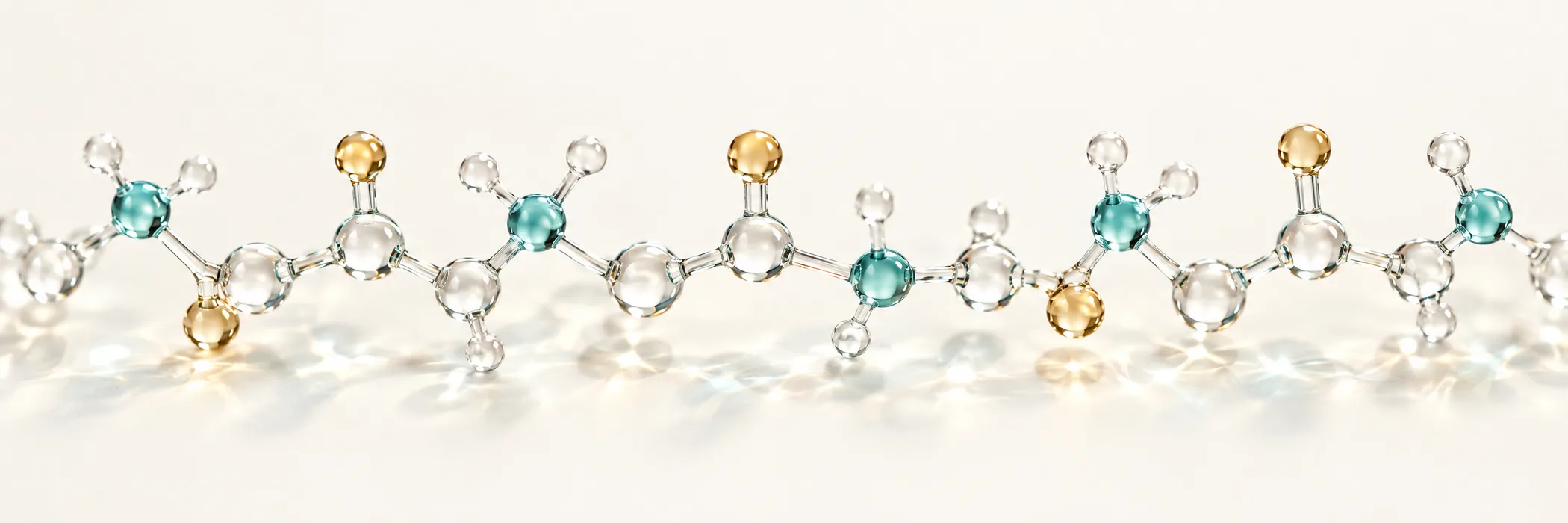
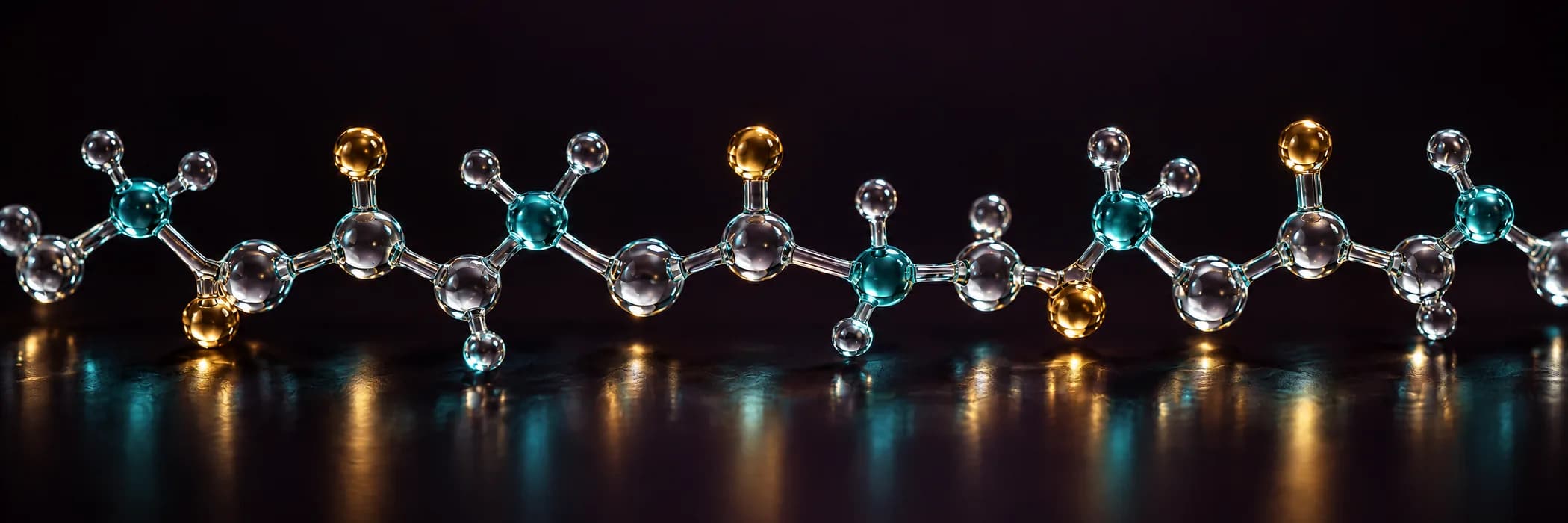
A decoy for myostatin. Myostatin (also called GDF-8) holds back muscle growth through the activin receptor type IIB (ActRIIB). ACE-031 is the catching part of that receptor fused to the Fc region of an antibody, which keeps it stable and long-lived in the blood. It binds myostatin before it docks on muscle, so the growth-limiting signal never lands.
Several brakes at once. The same trap also binds activin A, growth differentiation factor-11 (GDF-11) and several bone-morphogenetic proteins (BMPs). That broad reach removes several muscle-restraining signals together.
Blood vessels use the same signals. BMP9 signaling also keeps small blood vessels stable. Trapping it likely explains the nosebleeds and dilated surface vessels seen with repeat dosing.
Sources:PMID 23169607PMID 27462804PMID 33586684PMID 34520530
How to dose it
Every human study gave ACE-031 as an injection under the skin.
Doses used in the studiesA single dose of 0.02 to 3 mg/kg, in healthy volunteers.
- Studied range:
- 0.02 to 3 mg/kg as one dose in 48 healthy postmenopausal women. The top dose raised total lean body mass 3.3%, thigh-muscle volume 5.1% and bone-formation markers, and lowered fat.
- Repeat dosing:
- One dose was generally well tolerated. The Duchenne muscular dystrophy (DMD) trial dosed every 2–4 weeks and stopped after the second regimen for bleeding.
How to injectUnder the skin, since a large protein would be digested if swallowed.
- Injection site:
- Abdomen (a few inches clear of the navel), outer thigh or love handles. Rotate sites to avoid irritation at one spot.
- Frequency in trials:
- Once in the single-dose study, every 2–4 weeks in the DMD trial. The ~10–15 day half-life means infrequent doses, and slow clearing if a side effect appears.
- Food and timing:
- No food interaction. With a ~10–15 day half-life, a consistent dosing interval matters, not the hour.
Why the trial stoppedRepeat dosing in the Duchenne trial brought nosebleeds and dilated skin vessels.
- What happened:
- In the DMD trial (n=24, every 2–4 weeks), dosing stopped after the second regimen over epistaxis (nosebleeds) and telangiectasias (small dilated skin vessels). These were spontaneous, not injection-site reactions.
- Why it happened:
- The trap also binds BMP9, a signal small vessels depend on, which likely explains the bleeding. Acceleron's successor molecules were designed to narrow that.
- Timeline:
- Dosing stopped in February 2011, the halt announced that April. The Acceleron/Shire collaboration ended in June 2013.
- When it showed up:
- It came with repeat dosing. No dose, schedule or cofactor protocol has been shown to offset it.
Mixing the vial10 mg plus 2 mL bacteriostatic water gives 5,000 mcg per mL.
- Mixing:
- 10 mg vial + 2 mL bacteriostatic water = 5,000 mcg per mL. On a 100-unit (1 mL) insulin syringe, 1,000 mcg takes 20 units. The calculator covers others.
- Protein handling:
- Shaking denatures Fc-fusion proteins, so the biologic convention is to roll or swirl the vial gently, never shake.
Best time to take it


Implied best time
Anytime (consistent)
Time of day does not matter. ACE-031 is a long-acting trap, so a consistent dosing interval counts, not the hour.
- Its terminal half-life after one dose is roughly 10–15 days, so one injection acts across weeks and the clock time does not matter.
- The Duchenne trial gave it every 2–4 weeks. Consistency in that interval matters far more than the hour a dose lands.
- As a protein injected under the skin, it does not interact with food, so meals do not pin it to any time of day.
Sources:PMID 23169607
What to stack it with


Run one myostatin trap at a time. A growth hormone (GH) secretagogue works through a separate pathway.
ACE-031 + Follistatin-344The pairing to skip. Both trap the same pathway, adding no muscle but more bleeding risk.
- Same lever twice:
- Follistatin-344 binds activin, myostatin and GDF-11 directly. It works the same pathway from a different angle, so it adds no new mechanism.
- The compounded risk:
- ACE-031's bleeding signal likely came from trapping BMP9 on blood vessels. Follistatin traps overlapping signals, so stacking concentrates that same effect.
- The rule:
- One agent on the myostatin/activin pathway at a time. A second buys no extra muscle while the bleeding risk adds up.
ACE-031 + a GH secretagogueA growth hormone secretagogue builds tissue through a pathway separate from myostatin trapping.
- Why the pathways differ:
- Ipamorelin + CJC-1295 drive growth through the GH to insulin-like growth factor 1 (IGF-1) axis, parallel to myostatin inhibition. In principle, that hits two different brakes.
- Where it comes from:
- The pairing is mechanism logic that circulates in research communities.
Support nutrients

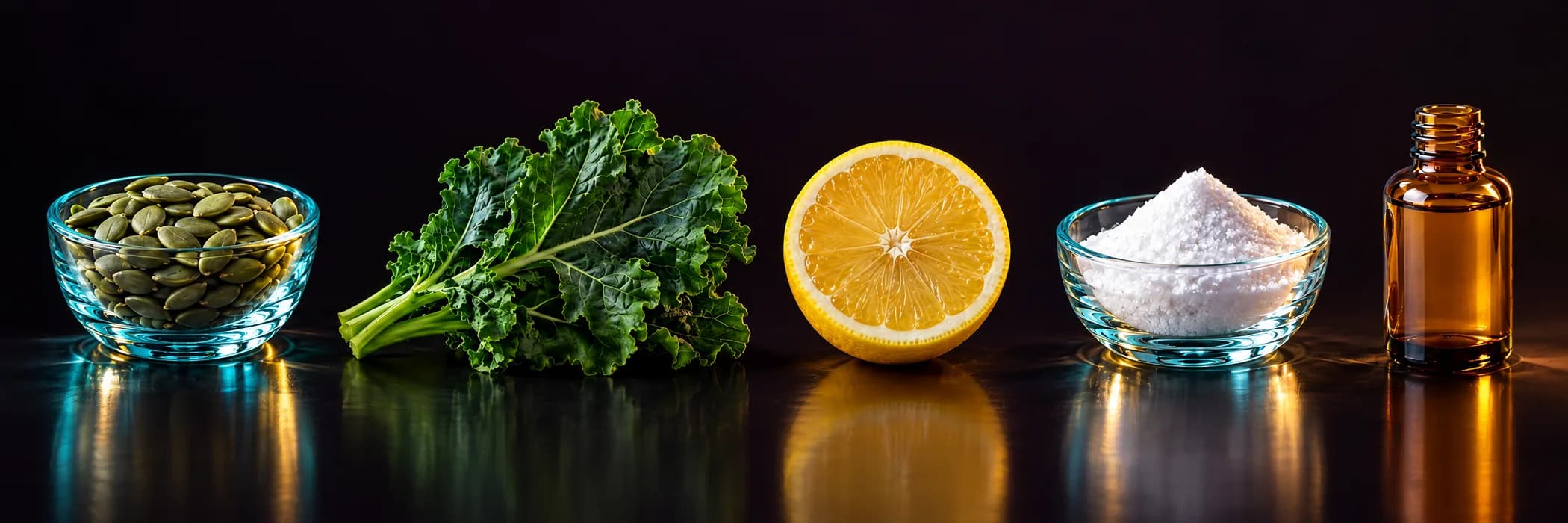
First, what to leave out because it adds to bleeding risk. Then the basics that build muscle once the brake is off.
What adds to bleeding riskBlood thinners and high-dose omega-3s add to the vascular fragility ACE-031 already causes.
- No nutrient offsets it:
- The bleeding likely comes from trapping BMP9, a signal small vessels depend on. Zinc, vitamin C or fish oil do not make up for it.
- Bleeding-risk compounders to avoid:
- Anticoagulants (warfarin, apixaban), antiplatelet drugs (aspirin at therapeutic dose, clopidogrel) and high-dose omega-3 fats EPA and DHA (≥3–4 g/day) all add to the vascular fragility this molecule causes.
Raw material for new muscleLifting the myostatin brake raises the ceiling. Protein, a calorie surplus and training build the muscle.
- Protein + leucine:
- ~1.6–2.2 g protein per kg of bodyweight per day, with ~2.5–3 g leucine per meal to trigger mTOR, the muscle-building signal. Whole protein sources hit that easily.
- Calorie surplus:
- A modest surplus of ~200–400 kcal/day above maintenance funds new tissue. Without it, the result is redistribution rather than net gain.
- Resistance training:
- Progressive resistance training directs where new muscle is added. Without it, the growth signal has no direction.
- Creatine monohydrate:
- 3–5 g daily. The one well-supported sports-nutrition aid to training output, via phosphocreatine replenishment.
Dose calculator
Reconstitution calculator
Calculated for a 1 mL U-100 insulin syringe (100 units/mL).
Units per dose
20 units
Draw this many units on a U-100 syringe
Each unit holds 50 mcg
- Volume per dose
- 0.2 mL
- Doses per vial
- 10
- Concentration
- 5 mg/mL
One vial lasts
- Daily
- 10 days
- Every other day
- 20 days
- 5×/week
- 14 days
Research use only. Not for human consumption. Outputs are reference values based on research literature. Verify all measurements independently.
Side effects and what to watch
What people notice. After one dose in healthy volunteers, injection-site redness was the most common complaint, and the drug was generally well tolerated.
Worth knowing. In the Duchenne muscular dystrophy trial, repeat dosing caused nosebleeds (epistaxis) and small dilated skin vessels (telangiectasias), and the trial stopped after the second dosing regimen.
Skip it or take care if. You are on anticoagulants or antiplatelet drugs, which add to the bleeding risk.
Sources:PMID 27462804
Common questions
Is ACE-031 a peptide?
Not in the usual sense. It is a fusion protein (a biologic), the catching part of the activin receptor type IIB joined to an antibody fragment (IgG1 Fc). It circulates in the blood and traps myostatin and related signals.
Does ACE-031 build muscle?
Yes. In a single-dose study in healthy postmenopausal women, lean body mass rose about 3.3% and thigh-muscle volume about 5% within roughly a month, and fat dropped.
How is it dosed?
The healthy-volunteer study gave a single dose of 0.02 to 3 mg/kg under the skin, with the muscle effect at 3 mg/kg. The Duchenne trial dosed every 2–4 weeks.
Does time of day matter?
No. With a terminal half-life of roughly 10–15 days, one dose acts for weeks. A consistent dosing interval matters, not the hour, and it does not interact with food.
What does ACE-031 stack with?
Skip Follistatin-344, which traps the same myostatin/activin pathway and adds bleeding risk without extra muscle. A growth hormone secretagogue such as Ipamorelin works through a separate pathway.
Deep dive
Doses used in studies · Molecular identity · References
10From the researchDoses used in studies
These are the doses used in the two published human trials, a single-dose study and a repeat-dose pediatric trial, both given under the skin.
| Dose | Route | Model | Outcome | Sources: |
|---|---|---|---|---|
| 0.02–3 mg/kg, single dose | Subcutaneous | Human, healthy postmenopausal women (Attie 2013, n=48) | At 3 mg/kg: +3.3% total lean body mass, +5.1% thigh-muscle volume, reduced fat, raised bone-formation markers; generally well tolerated as a single dose | PMID 23169607 |
| Repeat dose, every 2–4 weeks | Subcutaneous | Human, boys with Duchenne muscular dystrophy (Campbell 2017, n=24) | STOPPED after the second regimen for bleeding (epistaxis, telangiectasias); only non-significant efficacy trends. The safety signal that ended development | PMID 27462804 |
11ChemistryMolecular identity
- Type
- Soluble fusion PROTEIN (biologic), ActRIIB extracellular domain fused to human IgG1 Fc; a ligand trap / decoy receptor. NOT a small molecule or short peptideUniProt Q13705; PMID 23169607
- Receptor of origin
- Activin receptor type IIB (ActRIIB), gene ACVR2BUniProt Q13705
- Ligands trapped
- Myostatin (GDF-8), activin A, GDF-11 and related TGF-β-superfamily ligandsPMID 23169607
- Molecular formula / single PubChem CID
- Not applicable (Fc-fusion protein, not a defined small molecule)By definition (biologic)
- Half-life
- Mean terminal t½ ≈ 10–15 days (single SC dose, healthy postmenopausal women)PMID 23169607Half-life curve →
- Development status
- DISCONTINUED. DMD Phase 2 halted (announced April 2011) for a bleeding signal; program ended ~2013; never approvedPMID 27462804; sponsor disclosures
- WADA status
- PROHIBITED at all times. S4.3 (agents preventing activin receptor IIB activation); ACE-031 named as an exampleWADA Prohibited List S4.3
12Primary sourcesReferences
- PMID 23169607Attie et al., Muscle & Nerve 2013. Single ascending-dose Phase 1 in 48 healthy postmenopausal women; +3.3% lean mass at 3 mg/kg; half-life ~10–15 days
- PMID 27462804Campbell et al., Muscle & Nerve 2017. ACE-031 in ambulatory boys with Duchenne muscular dystrophy (n=24); halted for epistaxis and telangiectasias
- UniProt Q13705UniProt Q13705 (ACVR2B_HUMAN). Activin receptor type-2B, the receptor whose extracellular domain forms ACE-031's trap
- WADA S4.3WADA Prohibited List, S4.3 'Agents Preventing Activin Receptor IIB Activation'. ACE-031 named; prohibited at all times
- PMID 20573726Koncarevic et al., Endocrinology 2010. Mouse ActRIIB-Fc in castrated mice; lean mass up 26%, fat mass down 36%
- PMID 20466801Cadena et al., J Appl Physiol 2010. ACE-031 for 28 days in mice; four leg muscles 26–46% heavier, fiber type unchanged
- PMID 224775195th Cachexia Conference abstracts, J Cachexia Sarcopenia Muscle 2010 (abstract 129, Acceleron). Lean mass up by day 15 after one dose, held through day 57
- SEC Form S-1Acceleron Pharma Form S-1, SEC, August 2013. Shire agreement September 2010 with $45.0 million up front; FDA clinical hold February 8, 2011; collaboration ended June 30, 2013
- PMID 33586684Li et al., J Clin Invest 2021. ActRIIB-Fc binds BMP9 stably; BMP9 inhibition the suspected cause of the vascular events
- PMID 34520530Rodgers et al., Endocr Rev 2022. Review; BMP9 attenuation the likely cause of the nosebleeds and dilated vessels
Reviewed by Ki Researcher Team · Research use only · Not medical advice · Updated 2026-10-19