

Melanotan 1
Linear α-MSH analog · the one that became an approved drug (Scenesse) · MC1R agonist
Melanotan 1 (afamelanotide) is a copy of α-MSH (alpha-melanocyte-stimulating hormone), the signal that tells skin to make pigment. People run it for a deeper tan with far less sun. As the implant Scenesse it is FDA-approved for erythropoietic protoporphyria (EPP), where sunlight causes severe pain.
At a glance
- Dose
- Loading 500–1,000 mcg daily; maintenance 250–500 mcg once target color is reached
- How often
- Once daily for 1–2 weeks, then daily or every other day
- How
- A small injection under the skin
- When
- Evening, so any nausea passes during sleep
- Cycle
- Run until target color, then a 4–8 week break
The 30-second versionEverything on this page, fast
Sunless Tan · Photoprotection · MC1R Agonist · Approved Drug
The tanning peptide that became an approved drug. Melanotan 1 (afamelanotide) switches on MC1R, the skin's pigment receptor, to build a deeper tan with far less sun, and is the melanocortin that is FDA-approved and approved in Europe (EMA) as the implant Scenesse, for EPP.
The basics
- A linear, longer-lasting lab copy of α-MSH, the hormone that tells skin to make pigment.
- The melanocortin people reach for when they want a sunless tan, and the tanning peptide that became an approved medicine.
Why people use it
- Tan with far less sun. Flips on MC1R to drive eumelanin directly, so color builds without the usual time in the sun.
- Deeper, longer-lasting color that persists for weeks after stopping, rather than fading like an incidental sun tan.
- The pigment-focused choice. Leans toward MC1R, so it skips most of the libido and nausea load that Melanotan-2's broader receptor activity brings.
- The one that cleared the trials. FDA-approved as Scenesse for light-triggered pain in EPP, backed by controlled human trials.
Stacks well with
- Melanotan-2, the comparison rather than a combo. Same MC1R, so running both is redundant.
- PT-141, the brain-receptor (MC4R) sibling for sexual function. A separate goal with no pigment overlap.
Good to know
- Darkens existing moles and can bring out new ones, so a dermatologist mole check is part of every cycle.
- Nausea is the most common dose-dependent side effect, especially in the 500–1,000 mcg loading range. Hence evening dosing.
- A tan is modest sun protection (roughly SPF 2–4). Sun still carries skin-cancer risk regardless of pigment.
- The approved form is the Scenesse implant, which a clinician inserts about every two months. The injectable powder is the same molecule.
What it does
People reach for Melanotan 1 when a deep tan with less sun is the goal.
- A tan with far less sunIt switches on MC1R, the pigment-cell receptor, to drive eumelanin without ultraviolet (UV) light, so color builds with less sun.
- A deeper, longer-lasting colorIt raises the skin's brown-black pigment at the receptor, so the tan runs deeper and persists for weeks after stopping.
- FDA-approved as the implant ScenesseAs afamelanotide it is FDA-approved (2019) and EMA-approved (2014) for EPP, the rare disorder where sunlight causes severe pain.
- More pain-free sun time in trialsIn controlled human trials, EPP patients on the implant gained pain-free sun time versus placebo, holding up in long-term follow-up.
- More pigment-focused than Melanotan 2It leans toward MC1R, not the brain's MC4R, so the tan comes without Melanotan 2's libido and nausea load.
Sources:FDA NDA 210797PMID 26132941PMID 19656325PMID 25494545
How it works
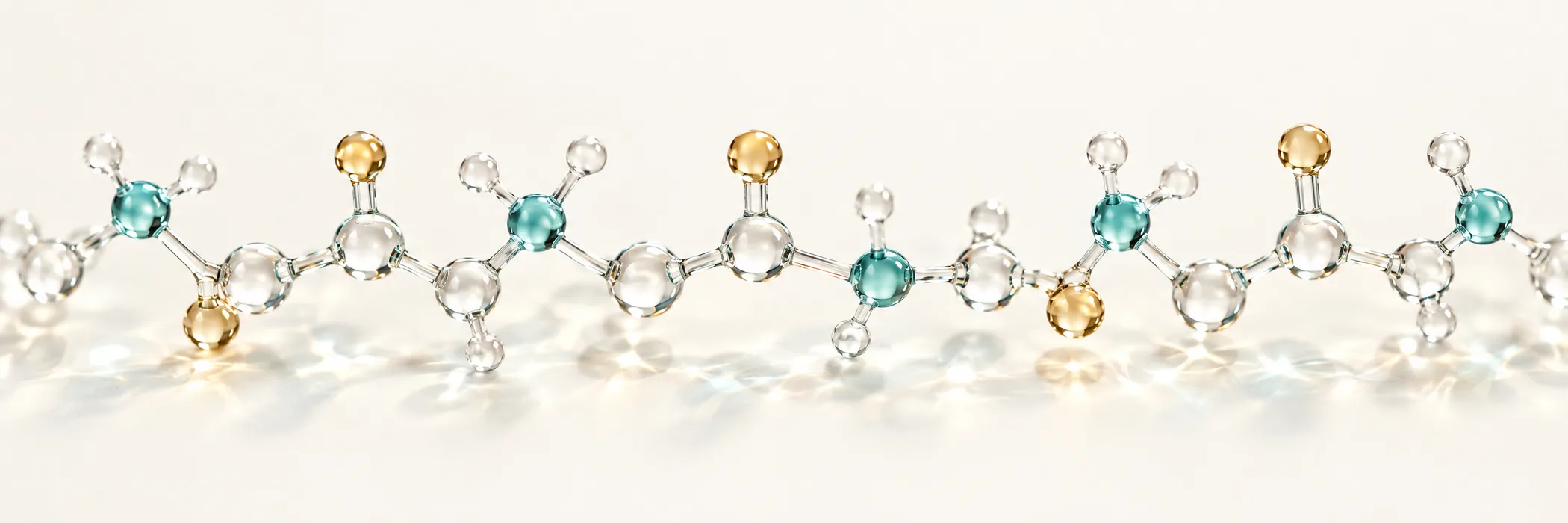

Switches on the pigment receptor. Melanotan 1 activates MC1R (the melanocortin-1 receptor) on melanocytes, the skin's pigment cells. That drives more eumelanin, the brown-to-black pigment that absorbs ultraviolet (UV) and visible light and quenches the cell-damaging molecules light creates. The drug, not the sun, drives the tan.
Built to last. Native α-MSH is destroyed within minutes. Two swaps, norleucine at position 4 and a D-form phenylalanine at position 7, block the enzymes that chop it up, so afamelanotide is far more stable and more potent at MC1R. The Scenesse implant releases it slowly over weeks.
Pigment-focused. Melanotan 1 leans toward MC1R. Melanotan 2 also hits MC4R in the brain, which gives it its libido and erection effects.
Sources:FDA NDA 210797PMID 19656325
How to dose it
A small injection under the skin. A short daily loading phase, then a lower maintenance dose.
Dose tiersMost people load at 500–1,000 mcg once daily for 1–2 weeks, then hold at 250–500 mcg.
- Loading phase:
- 500–1,000 mcg once daily for 1–2 weeks to build initial pigment. Some start at 500 mcg to check tolerance before climbing.
- Maintenance:
- 250–500 mcg once daily or every other day (EOD) once target color is reached, which cuts cumulative exposure.
- Sensitive starter:
- 250–500 mcg once daily throughout, for people prone to nausea who skip the loading phase.
How to injectA small injection into the fat under the skin, drawn on an insulin syringe.
- Injection site:
- Abdomen (two inches clear of the navel), love handles or outer thigh. Rotate sites to avoid irritation and fatty lumps.
- Measuring the dose:
- At 10 mg in 2 mL (5,000 mcg per mL), 500 mcg takes 10 units and 1,000 mcg takes 20 units on a U-100 syringe.
- Time of day:
- Evening is common, so nausea passes during sleep at the 500–1,000 mcg range. Morning works if nausea is no issue.
- Food window:
- Meal timing is personal preference; injections under the skin do not compete with food.
Cycle and breaksRun until target color, then stop. Pigment holds for weeks, and a 4–8 week break follows.
- Loading cycle:
- 1–2 weeks daily at the higher range, stopping once the color is there. Longer adds little.
- Maintenance phase:
- 250–500 mcg per shot, every other day or twice weekly, in high-sun seasons, or stop and let natural UV hold the color.
- Washout:
- A 4–8 week break between cycles. A dermatologist checks any mole that changed, darkened or appeared during the cycle.
Mixing the vial10 mg + 2 mL bacteriostatic water = 5,000 mcg per mL, live in the calculator.
- Mixing:
- 10 mg in 2 mL bacteriostatic water. On a 100-unit (1 mL) syringe, 250 mcg takes 5 units, 500 mcg 10 units, 750 mcg 15 units, 1,000 mcg 20 units.
- Why 2 mL:
- 10 mg / 2 mL puts the 500–1,000 mcg tanning doses in an easy-to-read 10–20 unit range.
Best time to take it


Implied best time
Evening
Most people dose Melanotan 1 in the evening, so any nausea or lethargy passes during sleep.
- Nausea is the most frequent dose-dependent side effect, especially in the 500–1,000 mcg loading range. Dosed in the evening, it tends to pass while asleep.
- The tan is not clock-driven. Pigment builds from MC1R activation and the UV that compounds it, so morning works too if nausea isn't an issue.
- On every-other-day maintenance, evening stays the anchor. Consistency keeps the routine simple.
Sources:FDA NDA 210797
What to stack it with


Melanotan 1 (MT-1) has two melanocortin relatives people weigh it against or run beside it.
Melanotan 1 vs Melanotan 2Both tan through MC1R. Melanotan 2 (MT-2) also hits MC4R, which adds libido and erection effects.
- Why people compare them:
- Both drive melanin via MC1R. Melanotan 2 is more potent there and hits MC4R, the brain receptor behind libido and erections. People pick MT-2 when they want those too.
- The safety trade-off:
- Melanotan 2 has the worse safety record. Case reports document eruptive and rapidly darkening moles, melanoma in users, and overdose reactions including priapism (an erection that will not go down).
- On combining them:
- Running both is redundant. Two MC1R agonists hit the same receptor, and dose-adjusting one gets the same result without adding MT-2's risks.
Melanotan 1 + PT-141PT-141 (bremelanotide) handles sexual function through MC4R with minimal pigment effect. No overlap.
- Why it works:
- PT-141 is a selective MC4R agonist. It drives libido and arousal in the brain with little MC1R activity, so little to no pigmentation. MT-1 leans the other way.
- The protocol:
- MT-1 on its own schedule (loading 500–1,000 mcg daily, then 250–500 mcg EOD). PT-141 on demand, 1–2 mg under the skin 1–4 hours before activity. The injections are independent.
- Outcome:
- MT-1's tan without MT-2's libido side effects, plus a dedicated agent for sexual function. PT-141 is FDA-approved (2019) for hypoactive sexual desire disorder (HSDD) in women.
Support nutrients
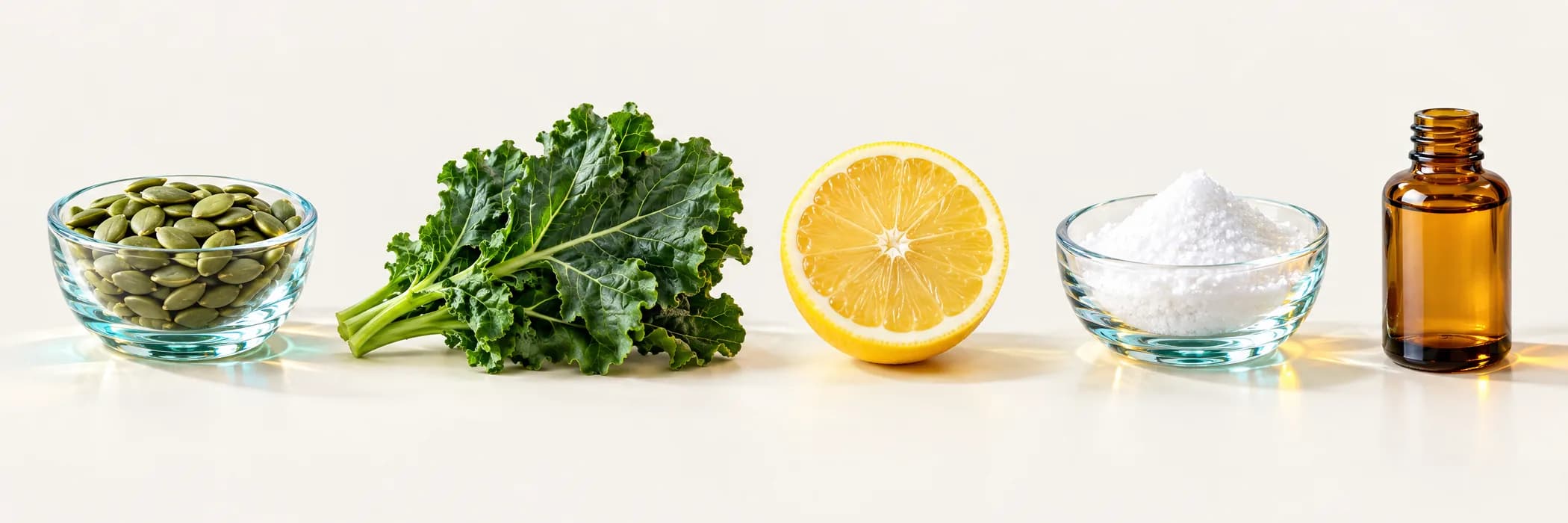
The peptide is the signal. These feed the melanin pathway and keep watch on your skin.
Melanin building blocksEumelanin is built from L-tyrosine by a copper-dependent enzyme, tyrosinase.
- L-tyrosine:
- The amino acid melanocytes build eumelanin from. 500–1,000 mg/day, typically before the main meal, is a modest top-up. Deficiency limits production, not excess.
- Copper:
- Tyrosinase cannot work without copper. 1–2 mg/day copper bisglycinate, paired with any zinc supplement, guards against depletion, since high zinc displaces copper.
- Timing:
- Both with breakfast or the largest meal. No food window relative to the injection.
Sun and the same receptorSun and Melanotan 1 both work through MC1R, so moderate UV compounds the melanin signal.
- The biology:
- UV makes skin cells (keratinocytes) release α-MSH, which switches on MC1R and drives eumelanin. Melanotan 1 switches on the same MC1R without UV.
- What a tan protects:
- A tan is modest sun protection, roughly SPF 2–4 at most. UV still carries skin-cancer risk regardless of pigment level.
Skin support and mole checksHigher melanin turnover plus UV adds oxidative load. Watching your moles is the key safeguard.
- Vitamin C + E:
- Vitamin C 500–1,000 mg/day and vitamin E 200–400 IU/day support the skin's antioxidant defense. They go with a meal containing fat, which helps E absorb.
- Mole monitoring:
- Photograph and map moles at the start of every cycle. Afamelanotide darkens moles and can bring out new ones, so a dermatologist checks any that darkened, changed shape or appeared.
Dose calculator
Reconstitution calculator
Calculated for a 1 mL U-100 insulin syringe (100 units/mL).
Units per dose
15 units
Draw this many units on a U-100 syringe
Each unit holds 50 mcg
- Volume per dose
- 0.15 mL
- Doses per vial
- 13
- Concentration
- 5 mg/mL
One vial lasts
- Daily
- 13 days
- Every other day
- 26 days
- 5×/week
- 18 days
Research use only. Not for human consumption. Outputs are reference values based on research literature. Verify all measurements independently.
Side effects and what to watch
What people notice. Skin darkening all over, which is the point. In the approved setting the most common effects are nausea, headache, fatigue, dizziness or drowsiness, and implant-site reactions. The injectable form adds injection-site pain and infection risk.
How people handle it. Evening dosing lets nausea pass during sleep. Afamelanotide darkens existing moles and can bring out new pigmented spots, so people photograph their moles and have a dermatologist check any that change. There is no established evidence that it causes melanoma.
Skip it or take care if. You have a personal or family history of skin cancer.
Competing? Afamelanotide is not specifically named on the 2026 WADA Prohibited List. Athletes check current status with their federation.
Sources:FDA NDA 210797
Common questions
How is Melanotan 1 dosed?
A small injection under the skin. Most people load at 500–1,000 mcg once daily for 1–2 weeks, then drop to 250–500 mcg daily or every other day once the color is there.
Is Melanotan 1 the same as Melanotan 2?
No. Melanotan 1 is a larger, linear copy of α-MSH that leans toward the pigment receptor MC1R. Melanotan 2 is smaller and cyclic, and also hits MC4R in the brain for libido and erection effects.
Do I need to cycle it?
Cycles are short. People run it until target color, then stop, since pigment holds for weeks. A 4–8 week break follows, with a mole check before the next run.
Why does it tan you without the sun?
It switches on MC1R, the pigment-cell receptor the sun's UV normally activates, so the skin makes more eumelanin with no light exposure. That is what helps EPP patients, who cannot tolerate sunlight.
What does it stack with?
PT-141, for sexual function through MC4R with no pigment overlap, each on its own schedule. Running it with Melanotan 2 is redundant, since both hit MC1R.
How is the approved version given?
The implant Scenesse, about the size of a grain of rice, which a clinician inserts under the skin roughly every two months. It releases slowly over weeks.
Deep dive
Doses used in studies · Molecular identity · References
10From the researchDoses used in studies
These are the doses used in the human EPP trials, all given as an implant under the skin.
| Dose | Route | Model | Outcome | Sources: |
|---|---|---|---|---|
| 20 mg sustained-release implant ×2, 60 days apart | SC implant | Human, 5 EPP patients, OPEN-LABEL and uncontrolled (the authors call for a large-scale trial) | Reduced phototoxic reactions and increased light tolerance in erythropoietic protoporphyria, the proof-of-concept for the EPP indication | PMID 19656325 |
| 16 mg controlled-release implant | SC implant | Human, EPP, randomized controlled trials (pivotal) | Increased pain-free sun-exposure time vs placebo; the RCT evidence underpinning FDA/EMA approval | PMID 26132941 |
| 16 mg implant, repeated cycles | SC implant | Human, 115 EPP patients, long-term observational | Maintained tolerability and effectiveness over extended real-world follow-up | PMID 25494545 |
11ChemistryMolecular identity
- Molecular weight
- 1646.8 g/mol
- Molecular formula
- C78H111N21O19
- Monoisotopic mass
- 1645.8365 Da
- CAS / UNII
- 75921-69-6 · QW68W3J66U
- Sequence
- Ac-Ser-Tyr-Ser-Nle-Glu-His-D-Phe-Arg-Trp-Gly-Lys-Pro-Val-NH2 (13 AA)PubChem CID 16197727
- Structure / class
- Linear [Nle4,D-Phe7]-α-MSH analog (afamelanotide / NDP-MSH)PubChem CID 16197727
- Molecular target
- Melanocortin-1 receptor (MC1R) agonistFDA Scenesse label
- Half-life
- ~15 h apparent from the controlled-release implant (bare peptide ~30 min)FDA Scenesse label (PK)Half-life curve →
- Brand / approval
- Scenesse (Clinuvel), FDA-approved 8 Oct 2019 (NDA 210797); EMA 2014; 16 mg SC implant for EPPFDA NDA 210797
- Regulatory status
- Approved (Scenesse, EPP only); grey-market injectable 'tanning' form is unapproved research materialFDA NDA 210797
- Anti-doping status
- Not specifically named on the WADA 2026 Prohibited List (verify current status)WADA 2026
12Primary sourcesReferences
- PubChem CID 16197727PubChem CID 16197727 (Afamelanotide / Melanotan 1)
- FDA NDA 210797FDA Scenesse (afamelanotide) prescribing information. MC1R agonist, 16 mg SC implant, EPP indication (approved 2019)
- PMID 26132941Langendonk et al., N Engl J Med 2015. Afamelanotide for erythropoietic protoporphyria (pivotal RCTs)
- PMID 19656325Harms et al., Photochem Photobiol 2009. α-MSH analog mitigates EPP photosensitivity (proof of concept)
- PMID 25494545Biolcati et al., Br J Dermatol 2015. Long-term observational study of afamelanotide in 115 EPP patients
- WADA 2026WADA 2026 Prohibited List. Afamelanotide/melanotan not specifically named (verify current status)
Reviewed by Ki Researcher Team · Research use only · Not medical advice · Updated 2026-09-24