
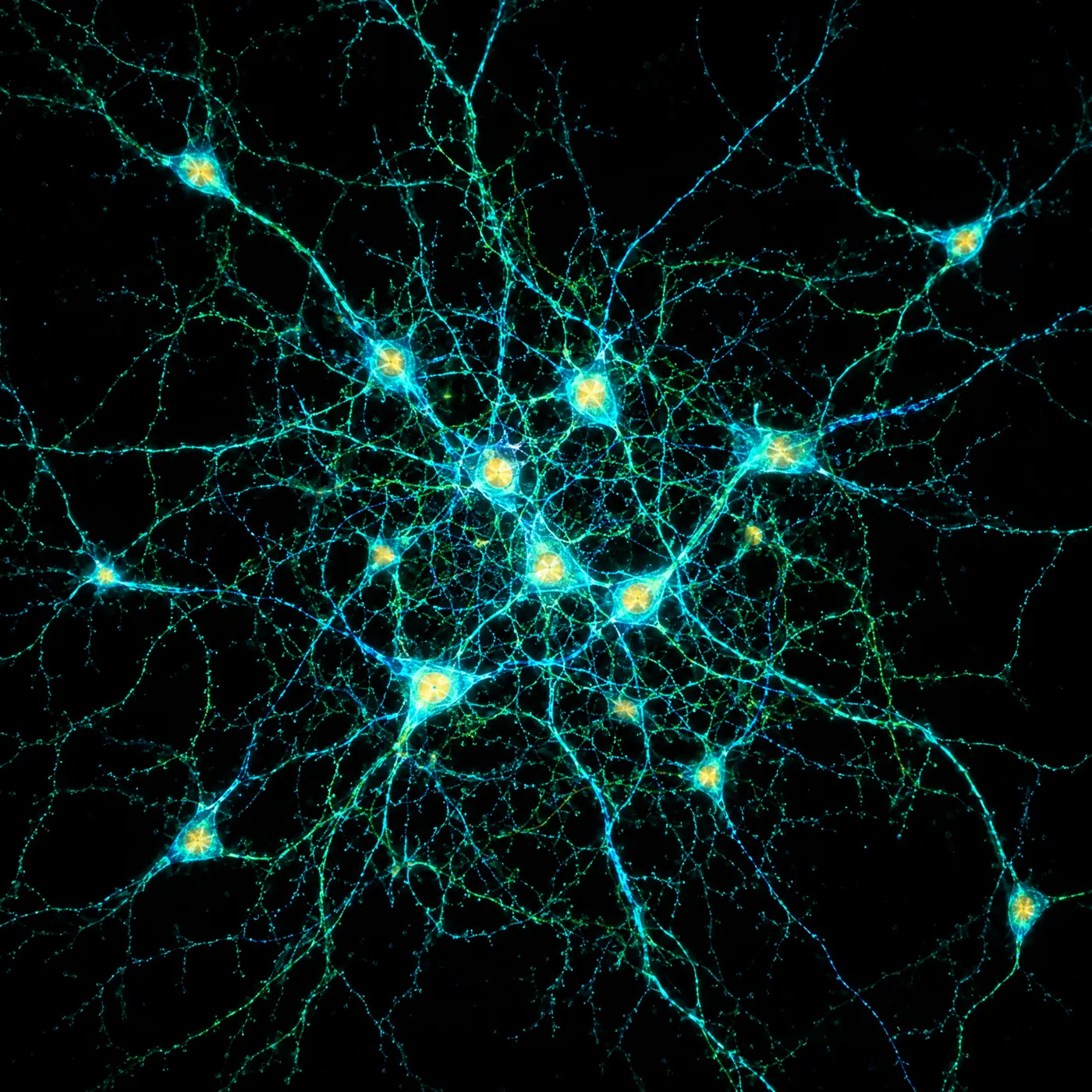
Cortexin
Cortex peptide extract from cattle and pigs · Geropharm · approved in Russia and neighboring countries
Cortexin is an extract of peptides and free amino acids from the cerebral cortex of cattle and pigs. People run it to protect neurons and support recovery after stroke and brain injury. A registered drug across Russia and neighboring countries, given as a 10-day course.
At a glance
- Dose
- Adults 10 mg a day, some courses 20 mg a day
- How often
- Once a day
- How
- An injection into a large muscle, buttock or thigh
- When
- Morning, to fit a once-daily course
- Cycle
- A 10-day course; repeat courses 3–6 months apart
The 30-second versionEverything on this page, fast
Neuroprotection · Cortex extract · Registered drug in Russia · Injected into muscle
A regional prescription drug for the brain. Cortexin is a cortex peptide extract from cattle and pigs, used across Russia and the CIS, its neighboring countries, for neuroprotection. It supports the brain's own growth-factor signaling, BDNF and NGF (brain-derived neurotrophic factor and nerve growth factor), and buffers neurons against oxidative and excitotoxic damage.
The basics
- An extract, a low-molecular-weight mix of peptides and free amino acids from the brain cortex of cattle and pigs.
- A registered drug across Russia and the CIS, made by Geropharm.
Why people use it
- A brain growth-factor angle. It supports BDNF and NGF signaling and buffers neurons against oxidative and excitotoxic damage.
- Established regional clinical use. A registered drug across Russia and the CIS for stroke, brain injury and cognitive support.
- Recovery and cognitive support. People reach for it as an add-on to standard care after injury and in cognitive decline.
- A short, defined course. A fixed 10-day run of daily injections rather than open-ended use.
Stacks well with
- Semax, a defined synthetic neuropeptide, adds a second, receptor-based route to the same BDNF and neuroprotection goal.
- Cerebrolysin is the closest analog, another animal-tissue neurotrophic extract with a complementary fragment profile. Two animal extracts together add to the allergy question.
Good to know
- An extract, not one compound, so no single formula, PubChem ID or CAS number exists. The glycine on the vial is a stabilizer, not the active part.
- Not the same thing as Cortagen, a defined synthetic four-amino-acid peptide.
- Animal brain tissue can trigger allergy. Procaine as the diluent eases injection-site stinging; check for procaine allergy first.
What it does
Cortexin is a registered brain drug across Russia and its neighboring countries. Here is what people run it for.
- Supports the brain's growth-factor signalingProposed to support BDNF and NGF signaling and buffer neurons against oxidative and excitotoxic damage, from cell and rodent studies.
- Established clinical use in RussiaA registered drug across Russia and its neighbors, used in neurology care for stroke, brain injury and cognitive support.
- Used for recovery and cognitive supportPeople reach for it after injury and in cognitive decline, as an add-on to standard care.
- A short, defined courseIt runs as a fixed ~10-day course of daily injections, the pattern it has been studied and used in.
- Pairs with other neurotrophic agentsIn its home region it is layered with Semax, a defined synthetic neuropeptide, for a second neurotrophic route.
Sources:PMID 26356623PMID 20873481PMID 35175707PMID 41782540
How it works
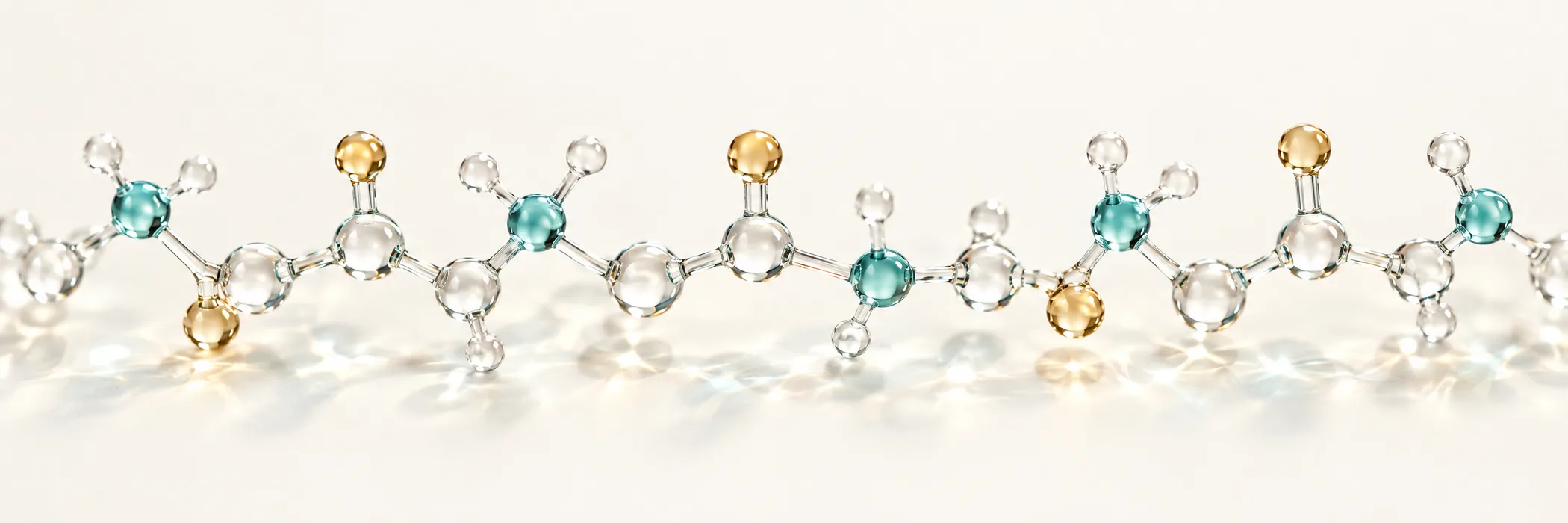
Backs the brain's growth signals. Its peptide fragments are proposed to support neuron survival like the brain's own growth factors. The proposed targets include BDNF and NGF (brain-derived neurotrophic factor and nerve growth factor), the brain's "keep this neuron alive" signals.
Shields neurons from damage. It is also proposed to act as an antioxidant, reduce cell death after injury and dampen excitotoxicity, damage from over-stimulated neurons.
What the lab work shows. A rat stroke study compared its effect on BDNF, inflammation and cell-death markers with other agents. In brain-cell cultures it stimulated signaling-molecule expression.
Fragments, not whole growth factors. Intact growth factors last only briefly in the body, so Cortexin's proposed action is neurotrophic-like fragment activity, not growth-factor replacement.
How to dose it
Cortexin runs as one daily injection into a large muscle, in a short course.
Dose tiersMost adults run 10 mg once a day. Children are dosed by body weight.
- Adults:
- 10 mg/day into muscle, the standard adult dose. Some courses use 20 mg/day for a more intensive run.
- Children ≥ 20 kg:
- 10 mg/day, the adult flat dose, once body weight clears 20 kg.
- Children < 20 kg:
- 0.5 mg/kg/day, dosed by weight for smaller children, per the Geropharm label.
How to injectA deep injection into a large muscle, not under the skin.
- Injection site:
- The upper outer quarter of the buttock is the standard adult site, the outer thigh an alternative, especially for children. Rotate sides daily across a 10-day course.
- Needle and depth:
- Typically 23–25G (gauge), 1–1.5 inch / 25–38 mm for adults, in at a 90° angle to the muscle belly, past the fat.
- Diluent:
- 0.9% saline or water for injection. Clinics sometimes use procaine (novocaine) solution instead, to ease discomfort. Check for procaine allergy first.
- Time of day:
- Morning, the clinic convention. See Best time to dose above.
Cycle and breaks10-day courses of daily injections, 3–6 months apart when repeated.
- Standard course length:
- 10 days of daily injections is the standard course. Some protocols run a second 10-day course after an interval.
- Repeat interval:
- 3–6 months is the typical gap between courses. Some neurologists repeat sooner in acute recovery.
- Context:
- Given as an add-on to standard neurological care (rehabilitation, anticonvulsants, vascular agents), not on its own.
Mixing the vialOne 10 mg vial is one adult daily dose, mixed in 1–2 mL.
- Standard mix:
- 10 mg + 1 mL saline or water for injection = 10 mg/mL, 1 mL per 10 mg adult dose. A gentler 2 mL mix (5 mg/mL): draw 2 mL.
- Procaine diluent option:
- With 0.5% procaine instead of saline, the volumes are the same, 1–2 mL per 10 mg vial. Confirm no procaine allergy first.
- No calculator needed:
- One 10 mg vial is one adult daily dose, so the bacteriostatic-water calculator does not apply here.
Sources:PMID 26356623PMID 20873481PMID 35175707Geropharm (manufacturer)
Best time to take it


Implied best time
Morning
Cortexin is given in the morning, the convention in the clinics that prescribe it.
- Clinics in Russia and its neighboring countries slot the once-daily injection into a daytime treatment routine.
- A brain peptide aimed at alertness and cognitive recovery fits the daytime. An activating signal could be less welcome near sleep.
- It runs as a fixed ~10-day daily course, so holding the same morning slot each day is the practical point.
What to stack it with


People stack Cortexin with partners that chase the same brain-support goal by another route. It is not to be confused with Cortagen, a separate synthetic four-amino-acid peptide.
Cortexin + SemaxA cortex extract plus a defined synthetic neuropeptide, two routes to the same BDNF goal.
- Why it works:
- Semax is a synthetic ACTH (adrenocorticotropic hormone) 4-10 analog. It raised BDNF and NGF in Russian lab work. It acts through defined receptors. Cortexin adds a wider cortical peptide mix.
- The protocol:
- Cortexin 10 mg into muscle once daily over a 10-day course, alongside Semax at its usual nasal dose (~300–600 mcg/day, 2–3 drops of a 0.1% solution in the nose).
- Outcome:
- Used in Russian neurological practice and by nootropic users for cognitive support and neuroprotection.
Cortexin + CerebrolysinTwo animal-derived brain extracts, the closest analog pairing. Their different fragment mixes may complement each other.
- Why it works:
- Cerebrolysin is also an injected animal-tissue extract (pig brain) proposed to act through BDNF and NGF-like activity. Its whole-brain mix differs from Cortexin's cortex fractions, so the fragments may complement.
- The protocol:
- Cortexin 10 mg/day into muscle × 10 days, with Cerebrolysin 5–10 mL by IV (into a vein) or into muscle over the same or an overlapping 10-day window.
- Outcome:
- Used in Russian clinical and nootropic settings for stroke recovery, brain injury support and cognitive decline. Two animal-tissue extracts together add to the allergy and immune-reaction question.
Support nutrients
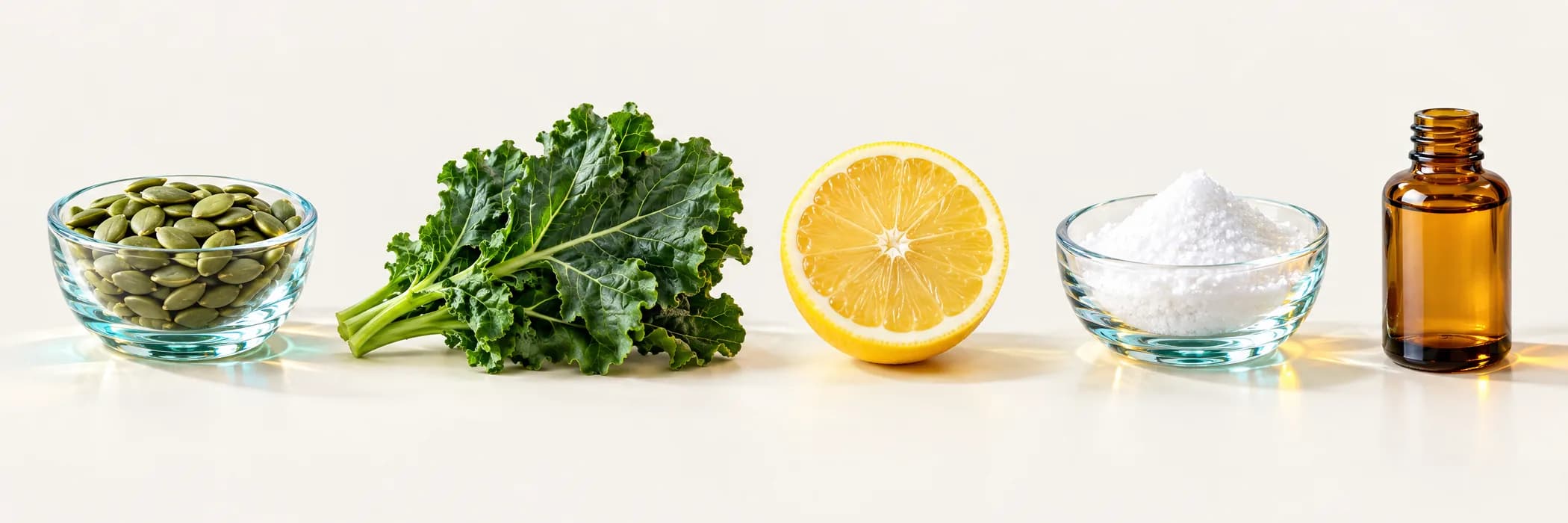
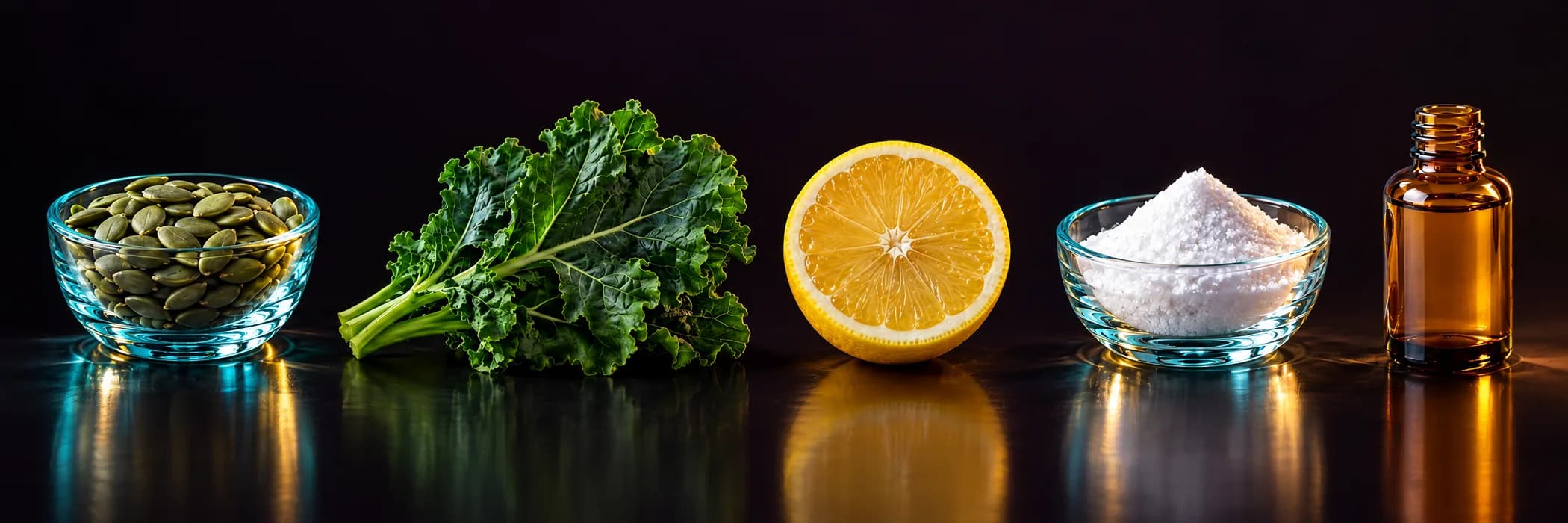
Brain-building nutrients and the habits that raise BDNF pair with Cortexin's growth-factor goal.
Brain building blocksNeurons need membrane fats and methylation support to act on a growth signal.
- Omega-3 DHA:
- DHA (docosahexaenoic acid) is the main structural fat in neuron membranes. 1–2 g DHA daily from fish oil or algal oil, taken with a fat-containing meal.
- B-complex (B6/B9/B12):
- B12 and folate keep neurotoxic homocysteine from building up. A B-complex with 400–800 mcg methylfolate (or folic acid) + 500–1,000 mcg B12 + 25–50 mg B6, daily.
- Choline (CDP-choline or Alpha-GPC):
- Builds acetylcholine, the main memory neurotransmitter, and phosphatidylcholine for neuron membranes. 300 mg CDP-choline or 300–600 mg Alpha-GPC daily.
Raise BDNF the natural wayExercise is the best-backed way to raise BDNF. Sleep protects the same pathways.
- Aerobic exercise:
- 20–40 minutes of moderate aerobic activity (brisk walking, cycling, swimming) 4–5 days/week is the best-established lifestyle input for raising BDNF in humans.
- Sleep quality:
- Memory consolidation and neurotrophic factor release concentrate in deep and REM (rapid eye movement) sleep. The target is 7–9 hours on a steady schedule. Sleep loss suppresses these pathways.
Easier injectionsThe main friction is the daily injection into muscle across a 10-day course.
- Procaine diluent option:
- Dissolving the vial in 0.5% procaine (novocaine) instead of plain saline is the clinic practice for less stinging. Confirm no procaine allergy first. A room-temperature solution also stings less.
- Site rotation:
- Alternating left and right buttock (or thigh) every day prevents local muscle irritation over a 10-day course.
Side effects and what to watch
What people notice. In its regional clinical use it is generally reported as well tolerated. The predictable local effect is a reaction at the injection site.
How people handle it. Rotating sides each day and using procaine as the diluent ease the injection site. Check for procaine allergy first.
Worth knowing. Allergic reactions are the main risk to watch, as with any product made from cattle and pig brain tissue. Long-term independent safety data outside its home market are limited.
Competing? Cortexin is not clearly listed on the WADA Prohibited List, but anti-doping catch-all rules can still apply. Athletes check with their federation.
Sources:PMID 26356623
Common questions
Is Cortexin a single peptide?
No. It is an extract, a standardized mix of small peptides and free amino acids from the cerebral cortex of cattle and pigs. Like Cerebrolysin, it has no single formula, PubChem ID or CAS number. The glycine on the vial is only a stabilizer.
How is Cortexin dosed?
Adults run 10 mg a day, and some courses use 20 mg a day. Children at or above 20 kg take 10 mg a day. Smaller children take 0.5 mg/kg a day.
How is it given?
As a daily injection into a large muscle, buttock or thigh, not under the skin. The powder is dissolved in saline or water for injection, sometimes with procaine as the diluent to ease stinging.
Do I need to cycle Cortexin?
It runs in courses. The standard course is 10 days of daily injections. When people repeat it, 3–6 months between courses is the typical gap.
What does Cortexin stack with?
Semax, a synthetic neuropeptide taken in the nose, adds a second route to the same BDNF goal. Cerebrolysin is the closest analog, another animal brain extract. Two animal extracts together add to the allergy question.
Is it the same as Cortagen?
No. Cortagen is a defined synthetic four-amino-acid peptide. Cortexin is a mixture from animal cortex.
Deep dive
Doses used in studies · Molecular identity · References
09From the researchDoses used in studies
These are the doses used in the published studies, from Russian clinical courses to rat and cell work.
| Dose | Route | Model | Outcome | Sources: |
|---|---|---|---|---|
| 10 mg/day × 15 days (add-on) | IM | Human, post-stroke epilepsy (n=46, open-label add-on) | Added to baseline therapy in 29 patients vs 17 controls; reported enhanced clinical effect; small, single-center | PMID 20873481 |
| 10 mg & 20 mg/day × 10 days | IM | Human, post-COVID neurological symptoms (observational survey) | Evaluated as a treatment course in a large observational survey, not a randomized trial | PMID 35175707 |
| Culture exposure | In vitro | Preclinical, rat brain-cortex neuronal cultures | Stimulated expression of signaling molecules (serotonin, Ki-67, vimentin); mechanistic, not clinical | PMID 25257443 |
| Rodent dosing | Intraperitoneal | Preclinical, rat middle-cerebral-artery-occlusion (stroke) model | Compared effect on BDNF, TNF-α and apoptosis markers vs other agents; rodent; no human magnitude established | PMID 41782540 |
10ChemistryMolecular identity
- Type
- Low-MW polypeptide + free-amino-acid mixture (not a single molecule)Gomazkov, Zh Nevrol Psikhiatr 2015 (PMID 26356623)
- Source
- Cerebral cortex of cattle (bovine) + pigs (porcine)Gomazkov 2015 (PMID 26356623); Geropharm label
- Composition
- Neuropeptides, free amino acids, trace elementsGomazkov 2015 (PMID 26356623)
- Peptide fraction
- Commonly described as low-molecular-weight (≤10 kDa)Secondary literature (commonly cited; not primary-analytically confirmed)
- Excipient
- Glycine (stabilizer, not an active ingredient)Geropharm label
- Molecular weight / formula / sequence
- Not applicable (multi-component mixture)By definition of the preparation
- PubChem record / CAS
- None. No single PubChem CID or defining CAS exists (mixture). Beware confounders: PMID 15159690 is Cortagen (a different synthetic tetrapeptide); 'cortexin' also names an unrelated renal gene.By definition of the preparation; PubChem (no single record)
- Molecular target
- No single defined receptor; proposed neurotrophic action via BDNF/NGF support, antioxidant and anti-excitotoxic effects; preclinical / proposed, not established in humansGomazkov 2015 (PMID 26356623); cell & rodent literature
- Half-life
- Not established (no published pharmacokinetics; multi-component extract)Not established
- Manufacturer / status
- Geropharm (Russia); registered & used in Russia/CIS (IM neuroprotective drug); not FDA/EMA-approvedGeropharm; FDA/EMA (no marketing authorization)
11Primary sourcesReferences
- PMID 26356623Gomazkov, Zh Nevrol Psikhiatr 2015. Cortexin composition & proposed mechanisms (review)
- PMID 20873481Gafurov, Zh Nevrol Psikhiatr 2010. Cortexin add-on in post-stroke epilepsy (n=46)
- PMID 35175707Putilina, Zh Nevrol Psikhiatr 2022. Cortexin 10/20 mg IM ×10d in post-COVID neurological symptoms (observational)
- PMID 25257443Umnov, Bull Exp Biol Med 2014. Cortexin stimulates signaling-molecule expression in rat cortical cultures (in vitro)
- PMID 41782540Shchulkin, Zh Nevrol Psikhiatr 2026. Cortexin vs comparators on BDNF/TNF-α/apoptosis in rat MCAO (preclinical)
- Geropharm (manufacturer)Geropharm, Cortexin product information (cattle+pig cortex polypeptides, glycine excipient, IM dosing)
Reviewed by Ki Researcher Team · Research use only · Not medical advice · Updated 2026-09-24