
Adipotide
Fat-vasculature-ablating peptide · prohibitin-homing motif with a pro-apoptotic payload
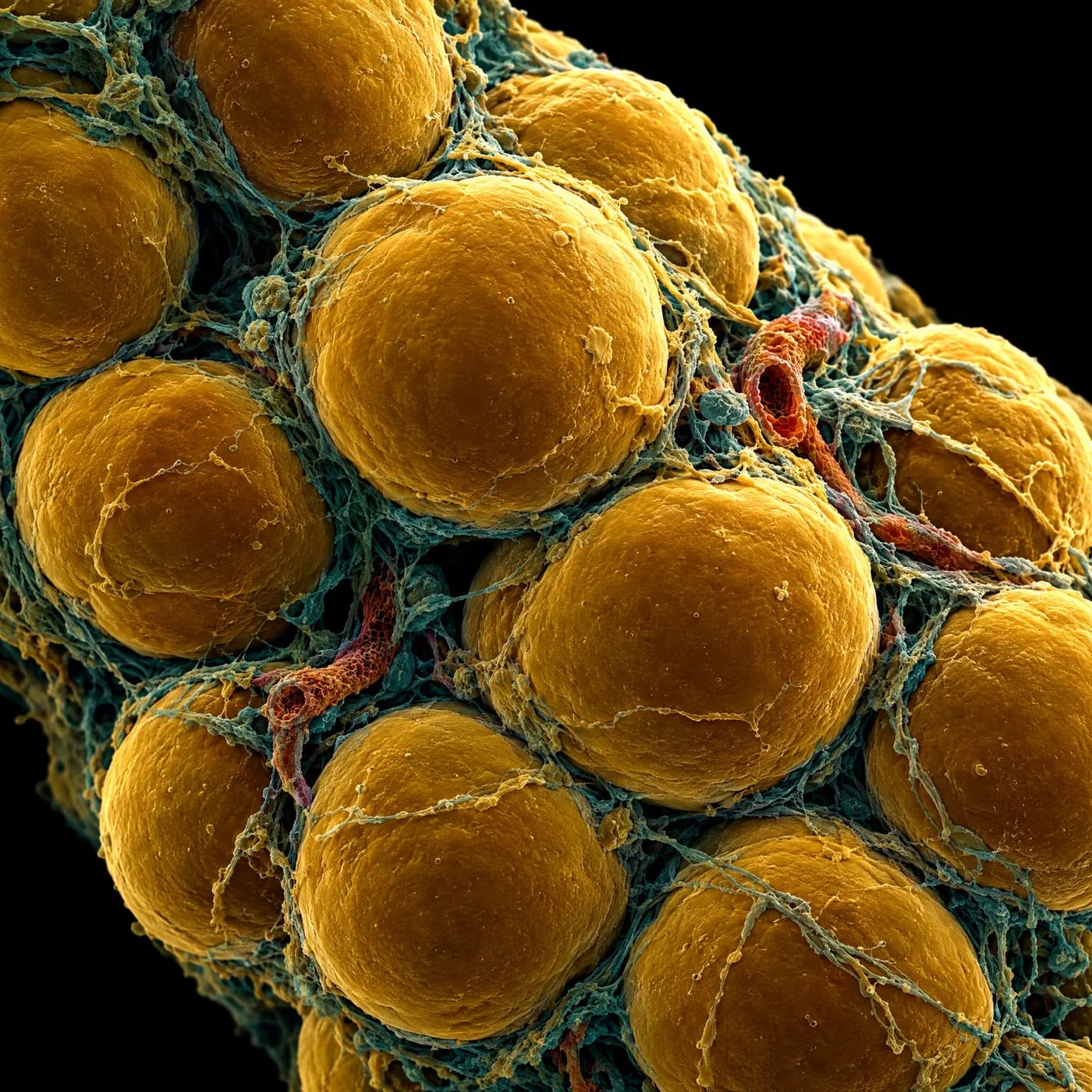
Adipotide is a two-part peptide studied for fat loss. One end homes to prohibitin, a protein on the blood vessels feeding white fat; the other makes the vessel cells self-destruct, so the fat depot shrinks. Obese monkeys lost about 11% body weight in 28 days.
At a glance
- Dose
- Monkeys: weight-based (mg/kg). Human trial: a low starting dose
- How often
- Once a day
- How
- A small injection under the skin, since a pill would be digested
- When
- Any time of day, held steady through the course
- Cycle
- A fixed 28-day course
The 30-second versionEverything on this page, fast
Fat loss · Metabolic · Vasculature-targeting · 28-day course
A different route to fat loss. Adipotide homes to the blood vessels that feed fat and makes them self-destruct, so the fat depot shrinks. In obese monkeys it produced about 11% body-weight loss over 28 days, with better insulin sensitivity.
The basics
- A two-part designed peptide: one end targets prohibitin on white-fat blood vessels, the other is a kill switch that destroys those vessel cells.
- A small injection under the skin. The primate study ran it once a day for 28 days.
Why people use it
- A new mechanism for fat loss. It cuts off the blood supply feeding white fat rather than suppressing appetite directly or raising metabolism.
- About 11% body-weight loss. The number people quote, from spontaneously obese rhesus monkeys over a 28-day course.
- Better metabolism alongside the fat loss. That primate study also showed improved insulin sensitivity and less abdominal fat on imaging.
- Targeted, not a brain drug. It works on fat-tissue blood vessels rather than the brain's appetite circuits, which is why it drew interest as a non-stimulant route. Food intake still fell in mice and monkeys.
Stacks well with
- Run alone. People do not stack it with Semaglutide or other GLP-1 (glucagon-like peptide-1) agonists, which work on appetite instead.
Good to know
- The kidneys are the marker to watch, since that is where the peptide's payload is broken down. The monkey study saw creatinine rise and mild tubular changes, largely reversed within the study.
- The default mix is a 10 mg vial in 2 mL bacteriostatic water, 5,000 mcg per mL; the on-page calculator scales any vial size.
What it does
People reach for adipotide for fat loss by a route no other weight-loss approach uses.
- Cuts off fat's blood supplyOn whole-body scans, treated rhesus monkeys ended the study with total body fat down 38.7%, against 14.8% in controls.
- About 11% body-weight loss in 28 daysOver 28 days, 10 treated rhesus monkeys lost 10.6% of body weight and 8.4% of waist size, against 5 controls.
- Better insulin sensitivity alongside fat lossThe insulinogenic index, a measure of insulin resistance, fell 48.5% in treated rhesus monkeys while rising 33.8% in controls.
- Glucose tolerance improved within daysIn obese mice on a high-fat diet, glucose tolerance improved by days 2 and 3, independent of weight loss.
Sources:PMID 22072637PMID 22733798
How it works
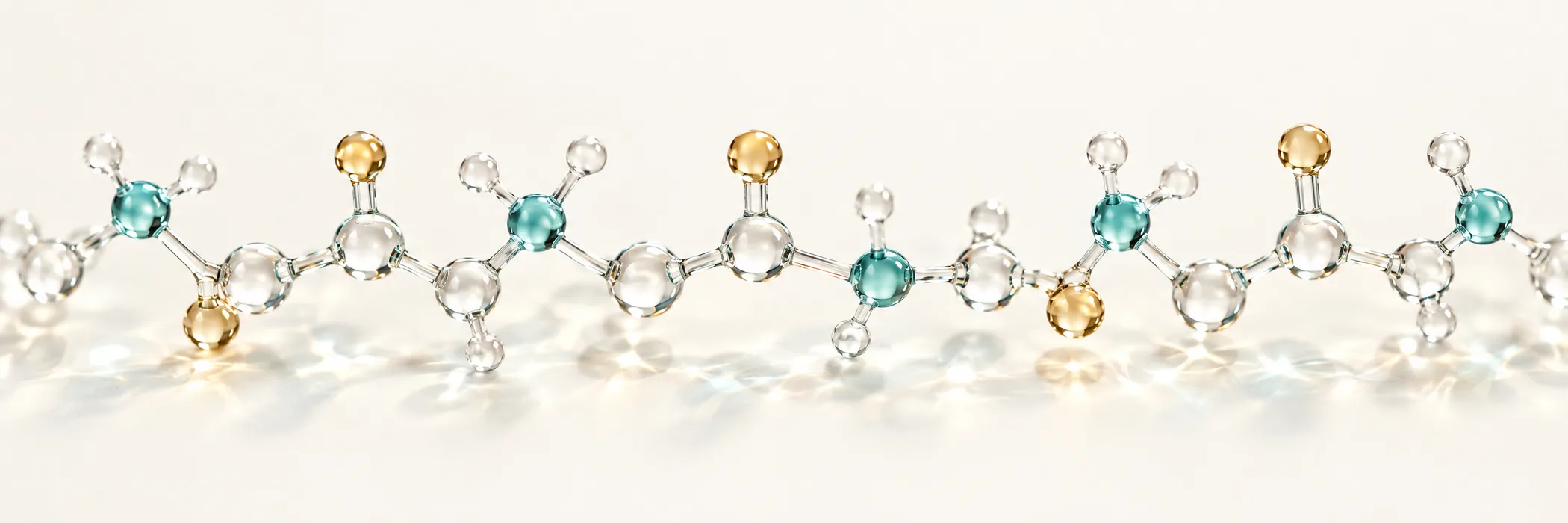
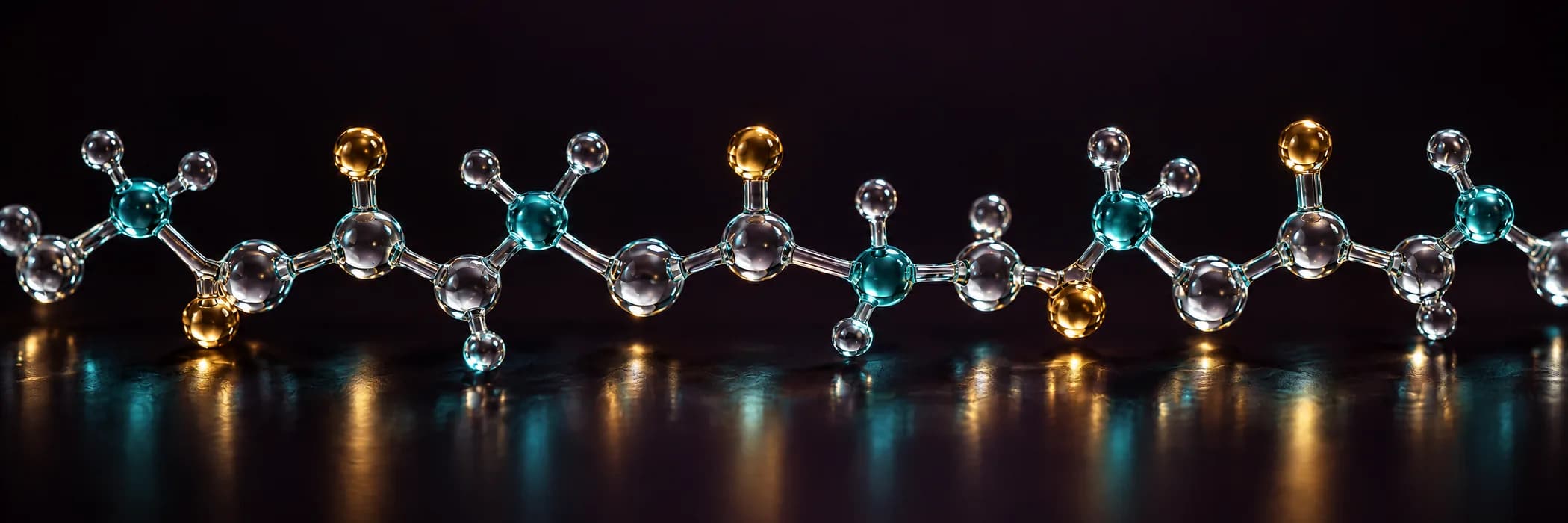
Finds fat's blood supply. One end is a short ring-shaped sequence, CKGGRAKDC, found by in-vivo phage display screening. It binds prohibitin, a protein on the inner lining of the vessels that feed white fat.
Delivers a kill switch. The other end, D(KLAKLAK)₂, is built from mirror-image D-amino acids that resist breakdown. Inside the vessel cells it disrupts the mitochondria and triggers apoptosis, programmed cell death. A glycine-glycine linker joins the two halves.
Fat shrinks as vessels regress. Adipotide does not dissolve fat directly. The vessel cells die, the vessels regress, and the underfed white fat shrinks. It acts on fat vessels, not the brain, though food intake still fell in the animal studies.
Sources:PMID 15133506PMID 22072637
How to dose it
Every study gave adipotide as a small injection under the skin. The cards below show the doses and schedule those studies used.
Doses used in the studiesMonkeys got mg/kg doses, the human trial a low starting dose, both daily for 28 days.
- Primate study (Barnhart 2011):
- Spontaneously obese rhesus monkeys got a daily injection under the skin for 28 days, dosed in mg/kg. They lost ~10.6% of body weight, and their insulin resistance improved.
- Human trial (NCT01262664):
- A Phase 1 dose-escalation in men with obesity and metastatic prostate cancer used a low starting dose over 28 days. It stopped at 4 patients enrolled, with no results posted.
- Human equivalent:
- The studies never converted the monkey mg/kg dose into a human figure.
How to injectInjected under the skin, the route in both the monkey study and the human trial.
- Injection site:
- Abdomen (a few inches clear of the navel), outer thigh or love handles. Rotate sites between injections to avoid local irritation.
- Why not oral:
- Digestive enzymes would break the peptide down before it reached the bloodstream, so injection is the only route.
- Food and timing:
- Adipotide does not interact with food, so there is no meal timing to plan around.
Kidney signs in the studiesIn monkeys, serum creatinine rose and kidney tubules showed mild changes, largely reversed within the study.
- What showed up:
- The monkey study saw rising serum creatinine and mild renal tubular degeneration, largely reversed within its 28-day follow-up. The kidney is where the peptide's payload gets broken down.
- Human trial:
- The lone human study (NCT01262664) stopped at 4 enrolled patients, before it reached a maximum tolerated dose or posted safety data.
- What protects the kidneys:
- No cofactor, hydration plan or dosing schedule has been shown to protect the kidneys from this effect.
Mixing the vialA 10 mg vial with 2 mL bacteriostatic water gives 5,000 mcg per mL.
- Mixing:
- 10 mg in 2 mL bacteriostatic water gives 5,000 mcg per mL, so 1,000 mcg takes 20 units on a 100-unit (1 mL) syringe. The calculator scales any vial.
Sources:PMID 22072637NCT01262664
Best time to take it

Implied best time
Anytime (consistent, short cycle)
Any time of day works. What matters is dosing once a day, steadily, through the whole course.
- It works slowly, shrinking fat's blood supply over days rather than peaking each day, so the hour of injection makes no difference.
- The studies gave it once daily over a fixed 28-day course, so holding that rhythm is the timing rule that matches the research.
- No human half-life has been measured, so there is no daily peak to time around.
What to stack it with


People run adipotide on its own, apart from other fat-loss agents.
Adipotide + other fat-loss agentsPeople keep adipotide apart from other fat-loss drugs and peptides.
- GLP-1 agonists (semaglutide, tirzepatide):
- Semaglutide and other GLP-1 (glucagon-like peptide-1) agonists curb appetite and slow stomach emptying, a different lever from adipotide's vessel ablation. People keep the two apart.
- Other peptide fat-loss agents (AOD-9604, frag 176-191):
- These drive fat breakdown through lipolysis signaling, not vessel ablation. Adding one does not lower adipotide's kidney risk.
- Run it alone:
- The monkey kidney signal came with repeat dosing and follows the mechanism. Any added agent is another variable, so people run adipotide alone.
Sources:PMID 22072637NCT01262664
Support nutrients
No nutrient offsets adipotide's kidney signal. These cards cover what to keep out and what any fast fat loss needs.
Keep other kidney stressors outNo supplement offsets the kidney signal, so leave out anything that also strains the kidneys.
- Why nutrients do not fix it:
- The kidney breaks down the peptide's payload, so the tubules take the load. No vitamin, mineral, antioxidant or hydration plan changes that.
- Hydration:
- Good hydration eases kidney load and supports filtration. It does not stop direct damage to the tubular cells, which is what the monkey study saw.
- What to leave out:
- Regular-dose non-steroidal anti-inflammatory drugs (NSAIDs) such as ibuprofen and naproxen, aminoglycoside antibiotics, high-dose contrast agents and any other known kidney toxin.
Protect muscle during fast fat lossProtein and electrolytes cover what any rapid fat loss demands, whatever drives it.
- Protein to limit lean mass loss:
- ~1.6–2.2 g protein per kg bodyweight per day during significant fat loss, since rapid fat loss from any cause risks muscle.
- Electrolytes:
- Sodium, potassium and magnesium, as with any protocol that drops weight fast.
- What this does not do:
- These nutrients cover what fast fat loss demands. They do not protect the kidneys or change how adipotide works.
Dose calculator
Reconstitution calculator
Calculated for a 1 mL U-100 insulin syringe (100 units/mL).
Units per dose
20 units
Draw this many units on a U-100 syringe
Each unit holds 50 mcg
- Volume per dose
- 0.2 mL
- Doses per vial
- 10
- Concentration
- 5 mg/mL
One vial lasts
- Daily
- 10 days
- Every other day
- 20 days
- 5×/week
- 14 days
Research use only. Not for human consumption. Outputs are reference values based on research literature. Verify all measurements independently.
Side effects and what to watch
What the studies saw. In monkeys, serum creatinine (a marker of kidney stress) rose with dose and kidney tubules showed mild degeneration, largely reversed within the 28-day recovery period.
Worth knowing. Dehydration is the other recurring concern, noted at the highest doses in the monkey studies.
Skip it or take care if. You already take something that strains the kidneys, such as regular NSAIDs or aminoglycoside antibiotics.
Sources:PMID 22072637NCT01262664
Common questions
How is adipotide dosed?
The monkey study dosed it by body weight (mg/kg), as a small injection under the skin once a day for 28 days. The human trial used a low starting dose, daily over the same 28 days.
How does adipotide cause weight loss?
Indirectly. One end homes to prohibitin on the blood vessels feeding white fat, and the other makes those vessel cells self-destruct. With its blood supply cut, the fat tissue shrinks. It does not burn or dissolve fat directly.
What results did the studies show?
Spontaneously obese rhesus monkeys lost about 11% of body weight over a 28-day course, with less abdominal fat and better insulin sensitivity. The original mouse study reversed obesity by ablating the blood vessels that feed fat.
When should I take it?
Time of day does not matter. It works slowly, shrinking fat's blood supply over days, so steady once-daily dosing through the 28-day course is what counts.
What does adipotide stack with?
People run it alone, apart from GLP-1 agonists such as semaglutide and fat-loss peptides such as AOD-9604.
Deep dive
Doses used in studies · Molecular identity · References
10From the researchDoses used in studies
These are the doses used in the studies, in mice, obese monkeys and one early human trial. Every study injected it under the skin.
| Dose | Route | Model | Outcome | Sources: |
|---|---|---|---|---|
| Targeted ablation (mouse) | Subcutaneous | Mouse, Kolonin 2004 (origin study) | Targeted ablation of fat-vasculature reversed obesity and established the CKGGRAKDC/prohibitin concept; no human relevance for dose | PMID 15133506 |
| Animal dose (mg/kg), 28 days | Subcutaneous, once daily | Spontaneously obese rhesus monkeys, Barnhart 2011 (n=10 treated, 5 control) | ≈10.6% body-weight loss over 28 days, reduced abdominal fat, improved insulin resistance; reversible rise in serum creatinine + mild renal tubular degeneration | PMID 22072637 |
| Low starting dose (escalation) | Subcutaneous, daily ×28 days | Human, Phase 1 in obesity + metastatic prostate cancer (NCT01262664) | TERMINATED with only 4 enrolled; NO results posted. No human efficacy or safety conclusion exists | NCT01262664 |
11ChemistryMolecular identity
- PubChem CID
- 163360068
- Molecular formula
- C₁₁₁H₂₀₆N₃₆O₂₈S₂
- Molecular weight
- 2557.2 g/mol
- Monoisotopic mass
- 2555.52 Da
- Type
- Chimeric peptidomimetic, a prohibitin-homing motif fused to a pro-apoptotic domainPMID 22072637
- Construct
- CKGGRAKDC-GG-D(KLAKLAK)₂ (homing motif + mitochondrial-disrupting payload)PMID 15133506; PMID 22072637
- InChIKey
- GZESIPHLGJDZRG-VCWDIOOSSA-NPubChem
- Molecular target
- Prohibitin (on white-adipose-tissue blood-vessel endothelium)PMID 15133506
- Half-life
- Not established (no validated human pharmacokinetics)Not established
- Regulatory status
- Not FDA-approved; no completed human efficacy trial (development stalled on a renal safety signal)ClinicalTrials.gov NCT01262664
- Human evidence
- None completed. The only human trial (NCT01262664) was terminated at 4 enrolled with no resultsClinicalTrials.gov NCT01262664
12Primary sourcesReferences
- PMID 15133506Kolonin et al., Nature Medicine 2004. Origin study: CKGGRAKDC homing peptide + prohibitin target; targeted ablation reverses obesity in mice
- PMID 22072637Barnhart et al., Science Translational Medicine 2011. Adipotide in obese rhesus monkeys: ~10.6% weight loss, improved insulin resistance, reversible renal signal
- NCT01262664ClinicalTrials.gov NCT01262664. First-in-man Phase 1 in obesity + metastatic prostate cancer; TERMINATED, n=4 enrolled, no results posted
- PubChem CID 163360068PubChem CID 163360068. Adipotide: C₁₁₁H₂₀₆N₃₆O₂₈S₂, MW 2557.2, InChIKey GZESIPHLGJDZRG-VCWDIOOSSA-N
- PMID 22733798Kim et al., Diabetes 2012. Glucose tolerance of obese mice improved on days 2 and 3, independent of weight and food intake
Reviewed by Ki Researcher Team · Research use only · Not medical advice · Updated 2026-10-19