
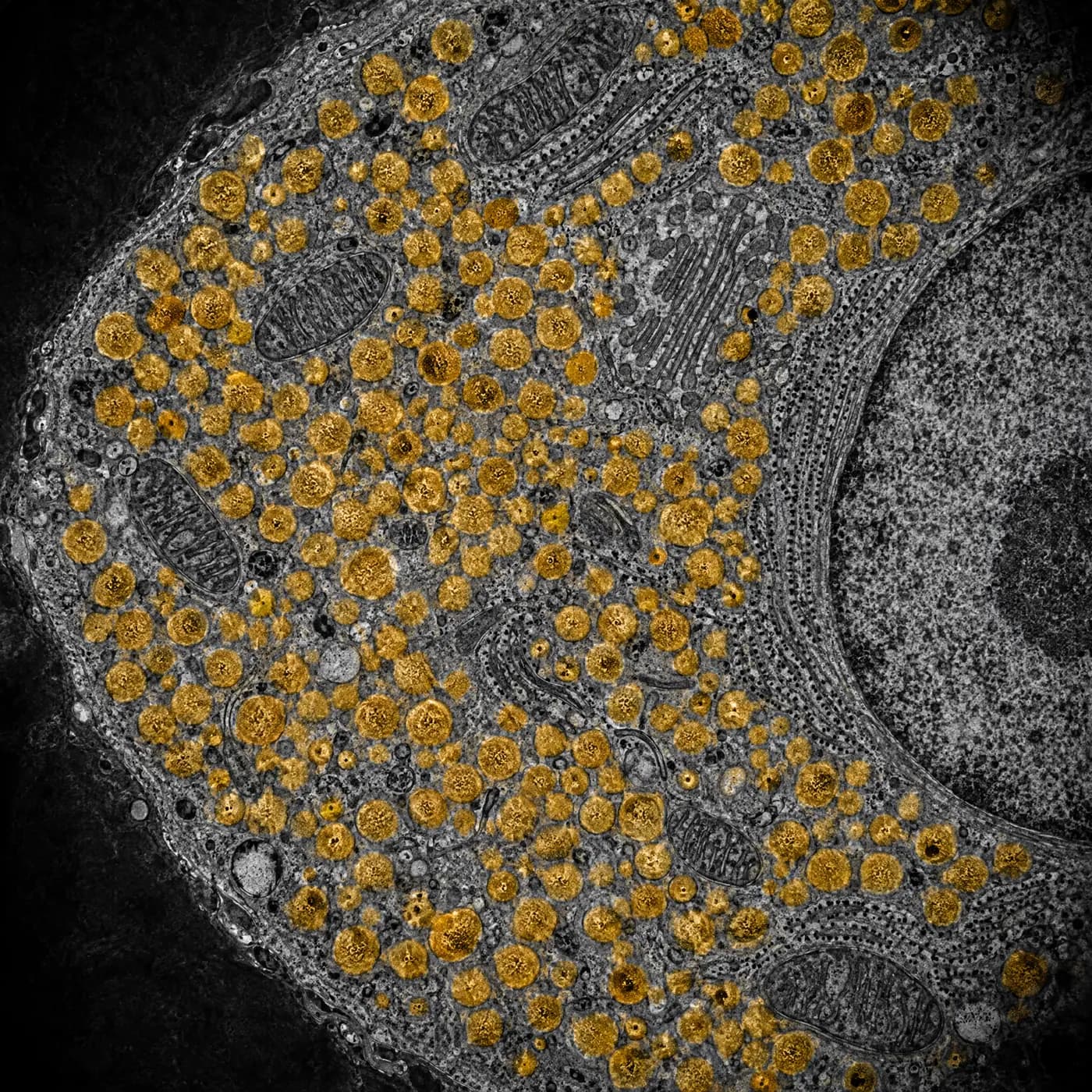
Oxytocin
Cyclic nonapeptide · FDA-approved as Pitocin · the "love hormone"
Oxytocin is the nine-amino-acid hormone tied to labor, milk letdown and bonding. As Pitocin it is FDA-approved to start or strengthen labor and control bleeding after birth. People run it as a nasal spray before social or intimate moments to feel warmer and more connected.
At a glance
- Dose
- 24 international units as standard (10 IU for a first run)
- How often
- Only around the occasion, at most 2–3 times a week
- How
- A nasal spray, split between both nostrils
- When
- About 30–45 minutes before the social or intimate occasion
The 30-second versionEverything on this page, fast
Bonding · Social connection · Intimacy · FDA-approved as Pitocin
The famous "love hormone." A nine-amino-acid hormone taken as a nasal spray around closeness, connection and intimacy, to feel warmer and more bonded in a social or partner moment. In hospitals it is the FDA-approved labor drug Pitocin.
The basics
- A copy of a hormone your body makes, the one tied to touch, warmth and bonding.
- As Pitocin it is FDA-approved for labor; the nasal spray is the social and bonding use.
Why people use it
- Feel more connected. The classic reason people run it, around closeness and warmth.
- A go-to around intimacy. Taken before a partner moment, sometimes with PT-141.
- A calmer, warmer social feeling. Some run it to take the edge off and connect more easily.
- FDA-approved as a labor medicine. The hospital drip is a settled use, separate from the spray.
Stacks well with
- Selank pairs calm with connection. Selank eases social nerves, oxytocin adds the bonding signal.
- PT-141 adds desire to the bonding signal for an intimate context.
Good to know
- An on-demand tool, not a daily one. People run it around the moment, then put it away until the next.
- Effects are subtle and vary a lot from person to person.
- The hospital labor drip and the social nasal spray are two different uses of the same hormone.
What it does
- Reached for to feel more connectedPeople spray it before social, intimate or therapy settings. In animal studies, brain oxytocin shapes pair-bonding.
- Made for closeness and intimacyTied to touch, warmth and pair-bonding. People take it before a partner moment, sometimes with PT-141 for arousal.
- A calmer social feelingSome run it to ease social anxiety. Single doses are generally mild and well tolerated.
- FDA-approved to start laborAs Pitocin, an IV (into a vein) drip, it starts or strengthens labor at term, with a near-immediate uterine response.
- Less bleeding after birthAfter birth, IV or IM (into muscle) doses cut the risk of losing 500 mL or more in 23 trials.
- Short-acting, timed to the momentIts plasma half-life is about 1–6 minutes, so the effect is brief and dosed right before it's wanted.
Sources:PMID 31032882PMID 10949753PMID 15931222PMID 32514040PMID 11274341
How it works
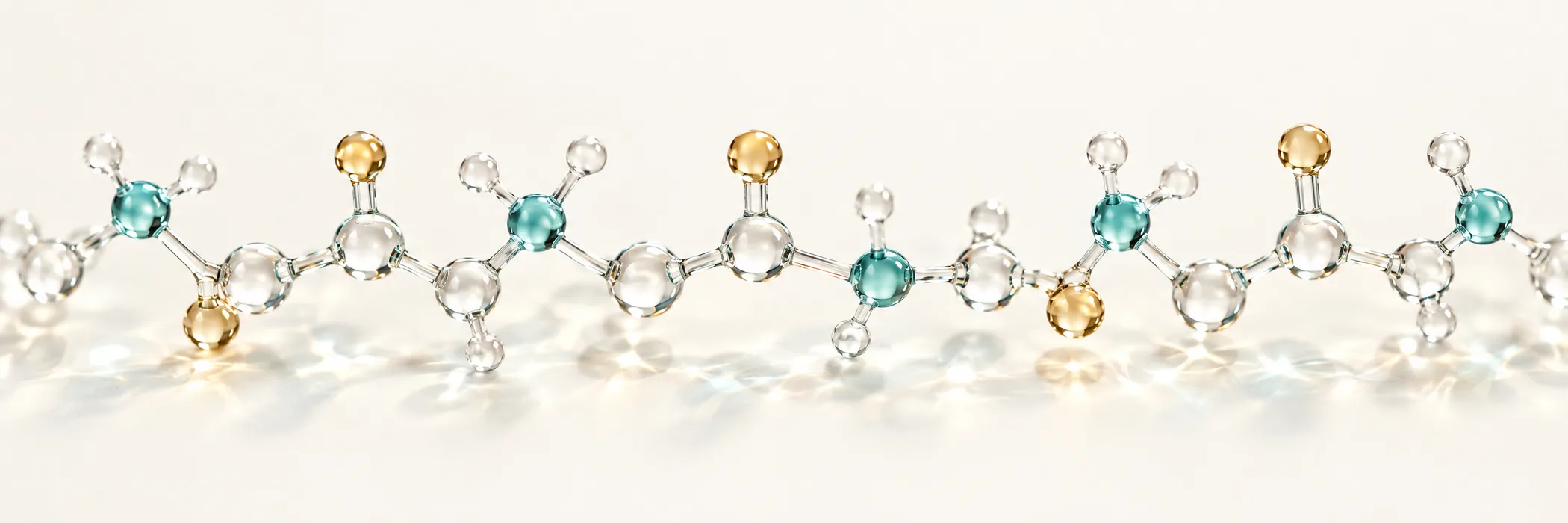
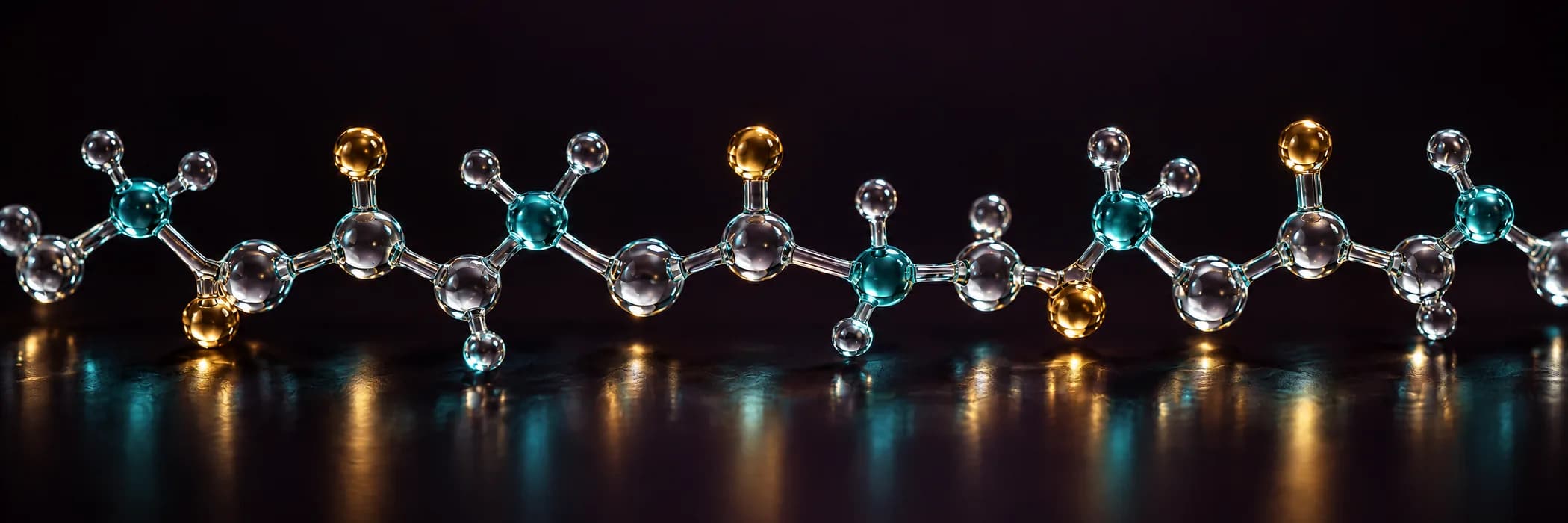
Body effects. Oxytocin switches on the oxytocin receptor (OXTR), a cell-surface switch that raises calcium inside cells. In the uterus that drives contractions. Receptors multiply near term, so it works far better for labor at term than preterm. In the breast it squeezes the cells around the milk glands to release milk.
Brain effects. In animal studies, especially rodents and prairie voles, brain oxytocin shapes pair-bonding, maternal behavior and social recognition through receptors in the amygdala and nucleus accumbens. People take it as a nasal spray aiming at these circuits.
Water balance. Oxytocin differs from vasopressin, the body's antidiuretic (water-holding) hormone, by only two amino acids. That gives it mild water-retaining activity at high doses.
Sources:PMID 11274341
How to dose it
Most people use a nasal spray before a social or intimate moment.
Dose tiersMost people spray 24 IU (International Units) per session.
- Starter:
- 10 IU per session (5 IU per nostril) as a first-use check.
- Standard:
- 24 IU per session, 12 IU per nostril. The most-cited research dose.
- Upper range:
- 40 IU per session. Some report diminishing returns above 24 IU.
- Injected:
- ~40 mcg once (≈ 24 IU) under the skin, with higher uptake than a spray.
- Hospital:
- 0.5–2 milliunits/min by titrated IV drip for labor; an IM injection after birth limits bleeding.
How to spray or inject itA nasal spray, or a small injection under the skin.
- Nasal spray:
- Atomizer or dropper, split between nostrils. Sniff gently, not down the throat. No nose-blowing 10 minutes before or after.
- Why the nose:
- The olfactory and trigeminal nerves are thought to offer a partial route to the brain.
- Injection sites:
- Belly (a couple of inches from the navel), outer thigh or love handles. Rotate sites to avoid irritation and lumps.
- Measuring:
- U-100 insulin syringe. At 2 mg in 2 mL bacteriostatic water, 40 mcg takes 4 units. The calculator handles any vial.
- Timing:
- Sprayed 30–45 minutes beforehand, injected ~30 min ahead. Many skip late evenings for calm, since some feel mildly stimulated in quiet settings.
- Food:
- No documented food interaction.
Cycle and breaksUsed around an occasion, with no continuous cycle.
- One occasion:
- One dose before a social moment, therapy or bonding experience, then none until the next.
- Why not daily:
- Daily use in trials, including autism studies, mostly missed its main goals. Long use may dull the receptor.
- How often:
- Most people use it 2–3 times per week at most, tied to occasions.
Mixing the vialOne 2 mg vial, mixed once, fills spray and syringe.
- Mixing:
- 2 mg in 2 mL bacteriostatic water = 1,000 mcg per mL. On a 100-unit syringe, 40 mcg takes 4 units, 20 mcg takes 2 units.
- IU to mcg:
- 1 IU ≈ 1.68 mcg (World Health Organization standard). At this mix, 24 IU ≈ 40 mcg ≈ 4 syringe units.
Sources:PMID 10949753PMID 15931222PMID 32514040PMID 26049207PMID 26210057DailyMed (Pitocin)
Best time to take it


Implied best time
Situational (as needed)
People dose it about 30–45 minutes before a social, intimate or therapy setting, not on a daily clock.
- Its plasma half-life is about 1–6 minutes, so the effect is brief. People time it just ahead of the moment.
- The behavioral studies dosed the nasal spray about 30–45 minutes before a social task. People follow that window.
- It's used situationally, a few times a week at most. Many skip late-evening doses, since some feel mildly stimulated in quiet settings.
Sources:DailyMed (Pitocin)
What to stack it with


Useful partners pull a different lever. Selank adds calm, PT-141 adds arousal.
Oxytocin + SelankOxytocin for social warmth, Selank for calm. Two levers on the same social-comfort goal.
- Why it works:
- Selank, a tuftsin analog, eases social nerves without sedation. Oxytocin is thought to tilt social perception toward trust. Different levers, same goal.
- The protocol (nasal):
- Oxytocin 24 IU + Selank 300 mcg, both as nasal spray or drops, 30–45 minutes before a social moment or therapy session.
- The protocol (injected):
- Oxytocin ~40 mcg + Selank 300 mcg, both under the skin, 30–45 min before the session.
- Outcome:
- People reach for it in social-anxiety, therapy and couples settings.
Oxytocin + PT-141Oxytocin for bonding, PT-141 for arousal through the melanocortin system.
- Why it works:
- PT-141 (bremelanotide) acts on MC3R/MC4R melanocortin receptors in the hypothalamus, an arousal pathway separate from oxytocin's. Arousal and bonding complement each other.
- The protocol:
- Oxytocin 24 IU nasal (or ~40 mcg injected) + PT-141 1–2 mg injected, ~45–60 minutes before intimacy. PT-141 is slower (onset 1–2 hours), so people take it slightly before oxytocin.
- Outcome:
- People reach for it in intimate and sexual-health settings.
Support nutrients
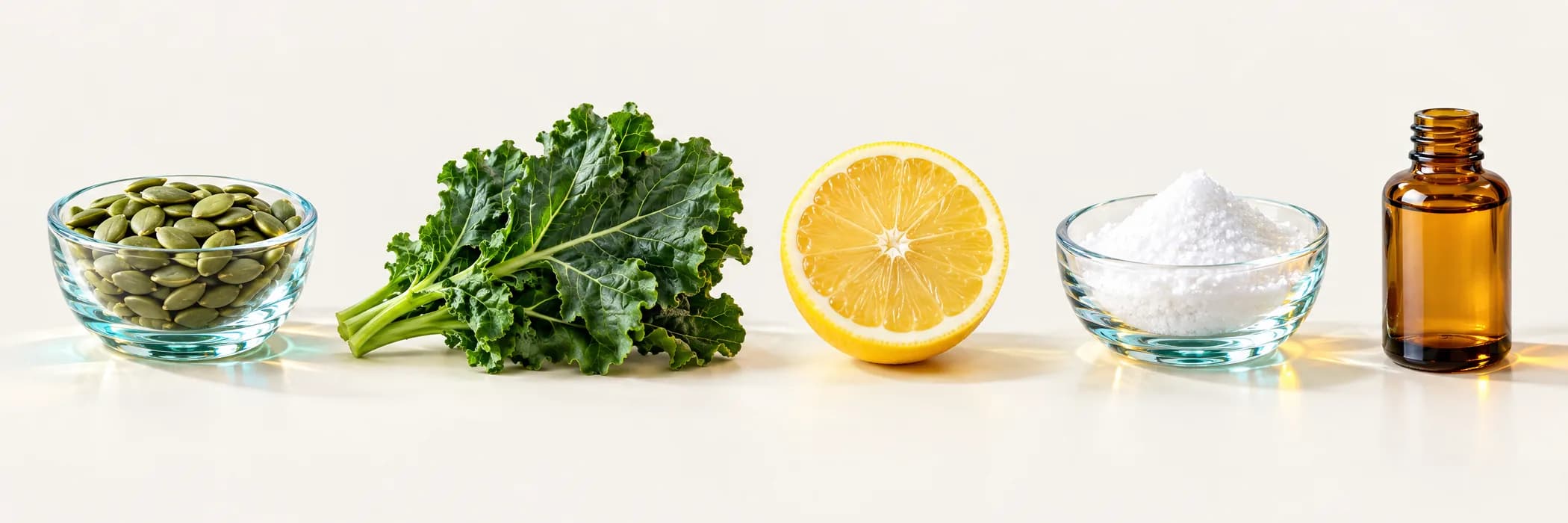
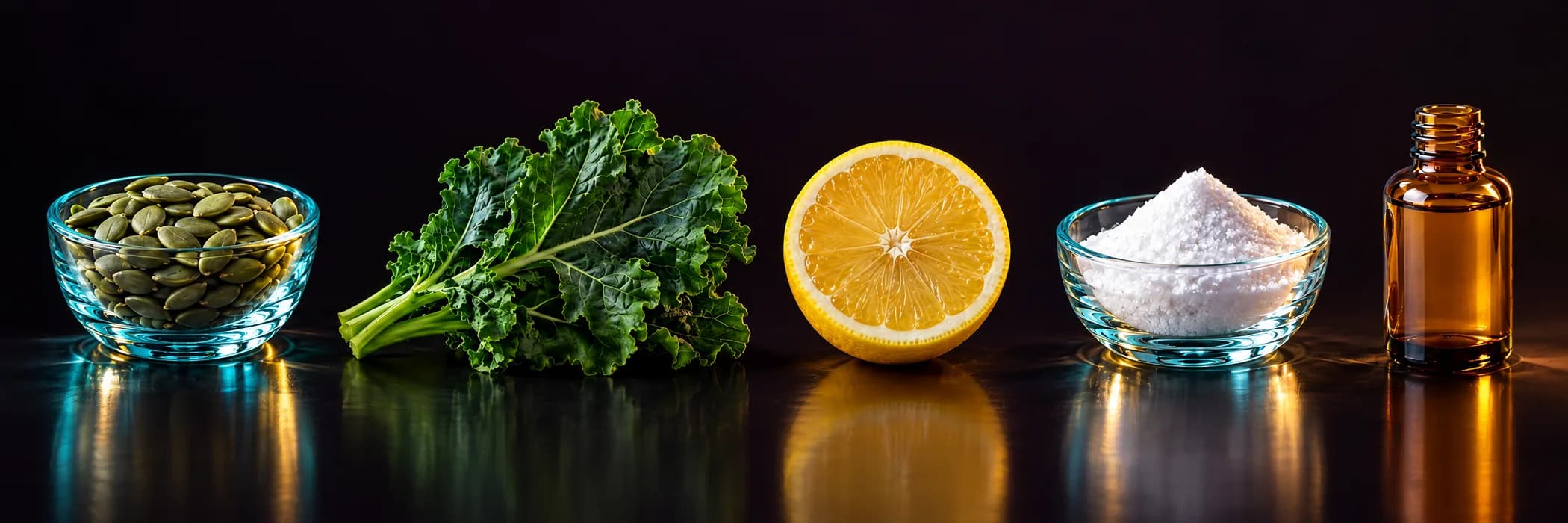
Social contact first, then the nutrients that build the hormone.
Touch and connectionSocial contact is the best-studied way to raise your own oxytocin.
- Touch and warmth:
- Warm touch, a hug or sustained closeness is the best-evidenced trigger of natural release. Warm surroundings are linked too.
- Eye contact:
- Mutual gaze and face-to-face talk are linked to release in people, and strongly in dogs and their owners.
- Singing and movement:
- Communal singing and rhythmic group movement are linked to oxytocin bonding in several studies.
- Use it in company:
- A spray used alone at a screen misses the social inputs the hormone acts on.
Building blocks for the hormonePAM (peptidylglycine alpha-amidating monooxygenase), the enzyme that finishes oxytocin, needs vitamin C and copper.
- Vitamin C, 500–1,000 mg/day:
- PAM's electron donor. Without enough, the finishing step on oxytocin slows. With food, daily.
- Copper, 2 mg/day:
- The metal at PAM's core. 2 mg copper bisglycinate or glycinate daily. High-dose zinc (>30 mg/day) competes with copper absorption, so balance them.
- Magnesium, 200–400 mg/day (glycinate, evening):
- The oxytocin receptor signals through calcium, which magnesium helps regulate. Adequate levels are linked to a calmer baseline. Evening glycinate also helps sleep.
Water balance at high dosesOxytocin is two amino acids from vasopressin, so high nasal doses may mildly retain water.
- Hydration at high doses:
- Near 40 IU, mild water retention is a theoretical risk, documented only with high-dose IV use and large fluid volumes. Worth minding when dosing high and drinking a lot.
Dose calculator
Reconstitution calculator
Calculated for a 1 mL U-100 insulin syringe (100 units/mL).
Units per dose
4 units
Draw this many units on a U-100 syringe
Each unit holds 10 mcg
- Volume per dose
- 0.04 mL
- Doses per vial
- 50
- Concentration
- 1 mg/mL
One vial lasts
- Daily
- 50 days
- Every other day
- 100 days
- 5×/week
- 70 days
Research use only. Not for human consumption. Outputs are reference values based on research literature. Verify all measurements independently.
Side effects and what to watch
What people notice. Single 24 IU nasal doses are generally mild and short-lived. Occasional headache, nasal irritation or mild gut symptoms. Serious adverse events are uncommon.
In hospital IV use. The main risk is overstimulating the uterus, which can lead to uterine rupture and fetal distress. High IV doses with large fluid volumes can cause hyponatremia (water intoxication), in severe cases seizures, coma or death. Rapid IV can drop blood pressure, vasoconstrictors can push it severely high, and arrhythmias are reported with inappropriate dosing. Nausea and vomiting occur; allergic-type reactions are rare.
Competing? It is not named on the 2026 WADA (World Anti-Doping Agency) Prohibited List. Athletes check GlobalDRO and any compounded product for prohibited co-ingredients.
Sources:PMID 10949753PMID 26210057
Common questions
How is oxytocin dosed?
Most people spray 24 IU per session, 12 IU per nostril, 30–45 minutes before a social or intimate moment. First runs start at 10 IU, and community use tops out at 40 IU. Injected, ~40 mcg matches the standard.
Do I take it every day?
No. People use it around an occasion, 2–3 times per week at most. Daily use in clinical trials mostly missed its main goals, and there is no set maintenance cycle.
Why a nasal spray?
The olfactory and trigeminal nerves are thought to offer a partial route to the brain, past the blood-brain barrier. It is also the route the behavioral research used.
Why is Pitocin given as a continuous drip?
Oxytocin's plasma half-life is only about 1–6 minutes, so a single dose wears off fast. A titrated IV infusion holds a steady contraction pattern. The same short half-life is why the spray is timed right before the moment.
What does it stack with?
Selank 300 mcg for calm, 30–45 minutes before a social moment. PT-141 1–2 mg for arousal, dosed slightly ahead since its onset takes 1–2 hours.
Is it the same as Pitocin?
Yes. Pitocin and Syntocinon are synthetic oxytocin, FDA-approved to start or strengthen labor and control bleeding after birth. The nasal spray is the same hormone.
Deep dive
Doses used in studies · Molecular identity · References
10From the researchDoses used in studies
These are the doses used in the studies, from hospital labor drips to single 24 IU nasal doses.
| Dose | Route | Model | Outcome | Sources: |
|---|---|---|---|---|
| Prophylactic oxytocin post-delivery | IV / IM | Human, 23 trials, ~10,018 women (Cochrane) | Reduces blood loss ≥500 mL vs no uterotonics/placebo (average RR 0.51) and reduces the need for additional uterotonics. Cochrane grades the 500 mL outcome LOW-quality evidence and the overall range very low to moderate, because many trials were at high risk of bias. The direction is consistent, the certainty is not high | PMID 31032882 |
| Titrated infusion (milliunits/min) | IV | Human, review of labor-induction practice | Effective induction/augmentation of labor at term; near-immediate uterine response, subsides ~1 h after stopping; strong | PMID 10949753 |
| 24 IU single dose | Intranasal | Human, 178 men (trust/investment game) | Original report: oxytocin increased trust. Influential but NOT robustly replicated (see below) | PMID 15931222 |
| 24 IU single dose | Intranasal | Human, large registered replication (>95% power) | No effect of oxytocin on trusting behavior, direct failure to replicate the 2005 trust finding | PMID 32514040 |
| Methodological analysis (not a dose) | Not applicable | Human, meta-analytic review of intranasal OT studies | Intranasal studies average ~12–16% statistical power; most published positive findings likely unreliable | PMID 26210057 |
11ChemistryMolecular identity
- Molecular weight
- 1007.2 g/mol
- Molecular formula
- C43H66N12O12S2
- Monoisotopic mass
- 1006.4365 Da
- CAS / UNII
- 50-56-6 · 1JQS135EYN
- Water solubility
- Soluble in water (and butanol)
- Sequence
- Cys-Tyr-Ile-Gln-Asn-Cys-Pro-Leu-Gly-NH2 (9 AA)PubChem CID 439302
- Structure / class
- Cyclic nonapeptide; intramolecular Cys1–Cys6 disulfide bond + C-terminal amidePubChem CID 439302
- Molecular target
- Oxytocin receptor (OXTR) agonist, Gq/calcium signalingPMID 11274341
- Brand / approval
- Pitocin / Syntocinon, FDA-approved uterotonic (IV/IM) for labor induction/augmentation & postpartum hemorrhage; NOT approved for social/bonding/anxiety usePitocin FDA label
- Anti-doping status
- Not named on the WADA 2026 Prohibited List (permitted by inference)WADA 2026
12Primary sourcesReferences
- PubChem CID 439302PubChem CID 439302 (Oxytocin)
- PMID 10949753Stubbs, Clin Obstet Gynecol 2000 (oxytocin for labor induction)
- PMID 31032882Salati et al., Cochrane Database Syst Rev 2019 (prophylactic oxytocin, third stage)
- PMID 15931222Kosfeld et al., Nature 2005 (oxytocin increases trust in humans)
- PMID 17137561Domes et al., Biol Psychiatry 2007 (oxytocin improves 'mind-reading')
- PMID 32514040Declerck et al., Nat Hum Behav 2020 (registered replication on oxytocin and trust; null)
- PMID 26210057Walum et al., Biol Psychiatry 2016 (statistical/methodological critique of intranasal OT)
- PMID 26581735Nave et al., Perspect Psychol Sci 2015 (does oxytocin increase trust? critical review)
- PMID 26049207Leng & Ludwig, Biol Psychiatry 2016 (intranasal oxytocin: myths and delusions)
- PMID 11274341Gimpl & Fahrenholz, Physiol Rev 2001 (the oxytocin receptor system)
- DailyMed (Pitocin)Pitocin (oxytocin injection, USP) FDA Prescribing Information
- WADA 2026WADA 2026 Prohibited List (oxytocin not named; permitted by inference)
Reviewed by Ki Researcher Team · Research use only · Not medical advice · Updated 2026-09-24