
Reconstitution & syringe-unit math
How to turn a vial of powder and a bottle of water into an exact number of units on an insulin syringe.
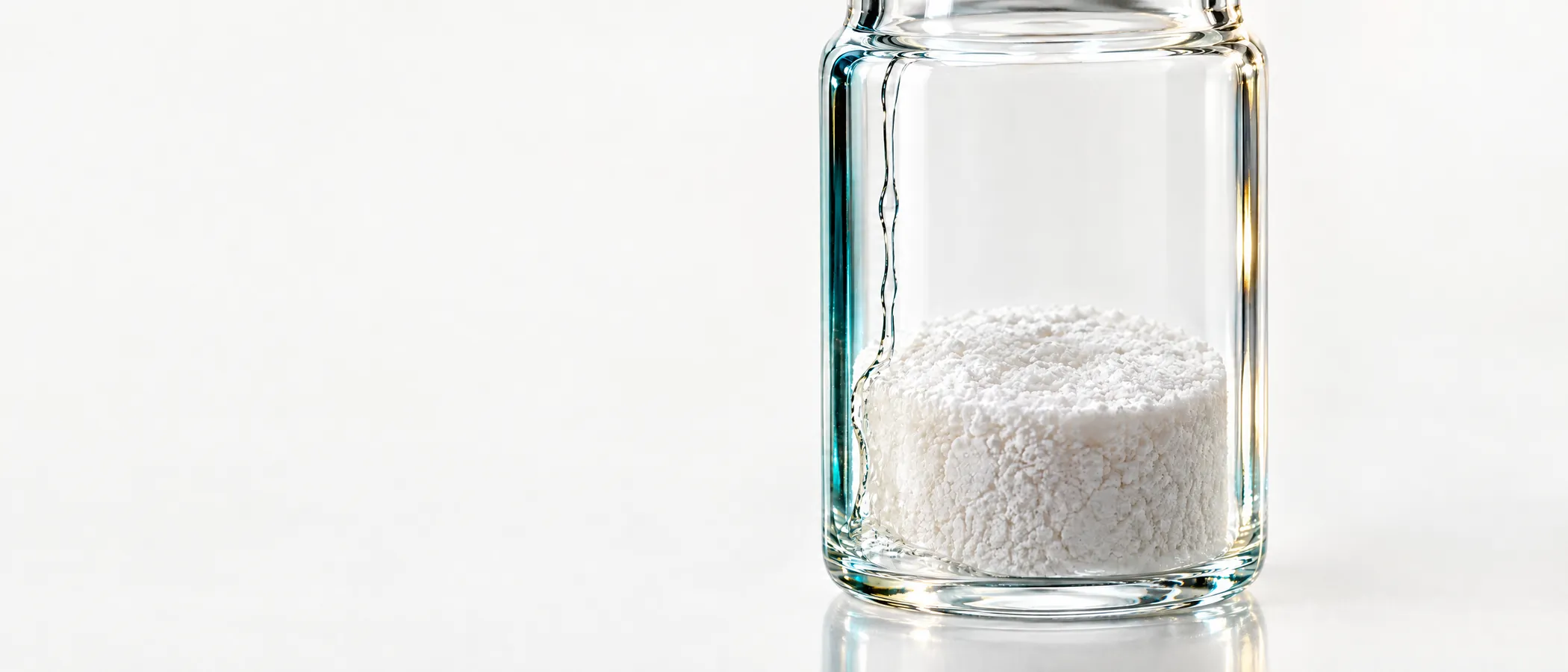
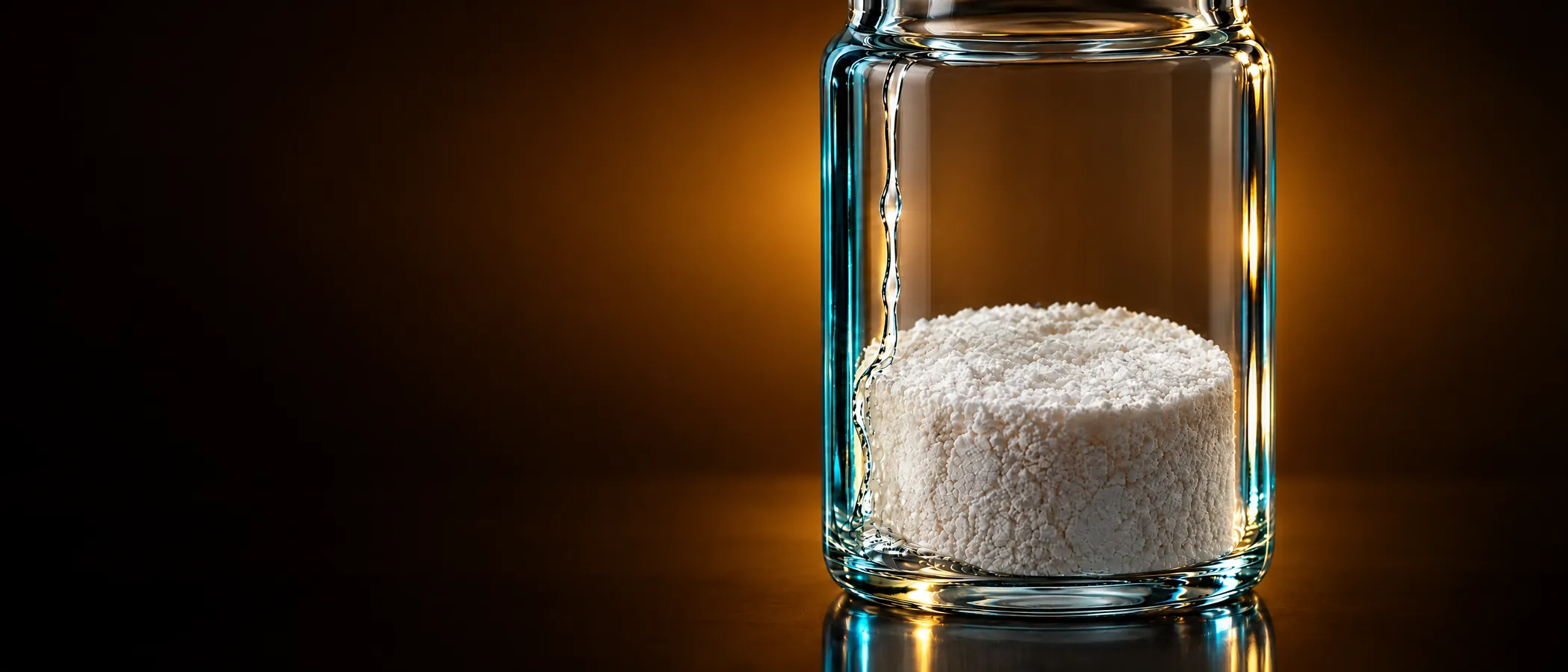
Research peptides ship as a lyophilized (freeze-dried) powder. Before anything can be measured, the powder is dissolved in bacteriostatic water. That step is called reconstitution. Once it is in solution, every dose is just a volume drawn on a syringe, and the only question is how many units that dose takes. This page shows the arithmetic; the on-site calculator does it live for any vial.
The three numbers that matter
- Peptide per vial (mg). Printed on the vial, e.g. a 10 mg vial.
- Bacteriostatic water added (mL). How much you mix in. You choose this; common values are 1, 2 or 3 mL, because a standard vial holds 3 mL at most.
- Desired dose (mcg or mg). The amount you want per injection. Remember 1 mg = 1,000 mcg.
The math, step by step
- Concentration = peptide per vial ÷ water added. A 10 mg vial in 2 mL of water is 5 mg/mL.
- Volume per dose = desired dose ÷ concentration. A 250 mcg (0.25 mg) dose at 5 mg/mL is 0.05 mL.
- Units = volume per dose × 100, on a U-100 insulin syringe (the most common kind, where 100 units = 1 mL). 0.05 mL = 5 units.
“U-100” describes the scale on the syringe, not its size. On any U-100 syringe, whether it has a 0.3 mL, 0.5 mL, or 1 mL barrel, 100 units always equals 1 mL. The barrel size only sets the largest single draw.
A worked example
Say you have a 10 mg vial of BPC-157 and add 2 mL of bacteriostatic water. Concentration is 10 ÷ 2 = 5 mg/mL. For a 250 mcg dose: 0.25 mg ÷ 5 mg/mL = 0.05 mL, which is 5 units on a U-100 syringe. The same vial gives you 40 doses (10 mg ÷ 0.25 mg).
Reference table
| Vial | Water | Dose | Concentration | Units (U-100) |
|---|---|---|---|---|
| 5 mg | 1 mL | 200 mcg | 5 mg/mL | 4 units |
| 5 mg | 2 mL | 250 mcg | 2.5 mg/mL | 10 units |
| 10 mg | 2 mL | 250 mcg | 5 mg/mL | 5 units |
| 10 mg | 3 mL | 300 mcg | 3.33 mg/mL | 9 units |
| 5 mg | 3 mL | 500 mcg | 1.67 mg/mL | 30 units |
More water spreads a small microgram dose across more units, so you are not measuring microscopic increments, which lowers the chance of a dosing error. The trade-off is a larger draw volume per dose.
What it should look like and when to toss it
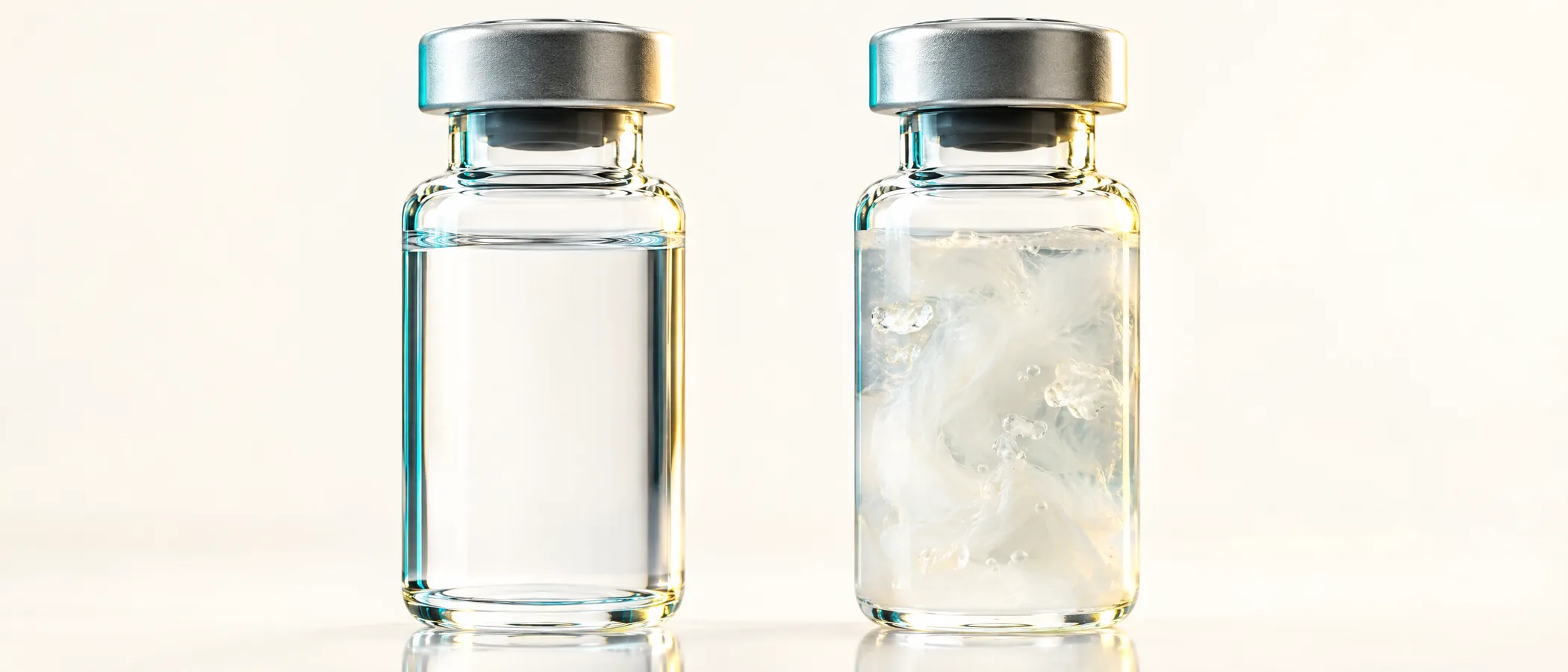
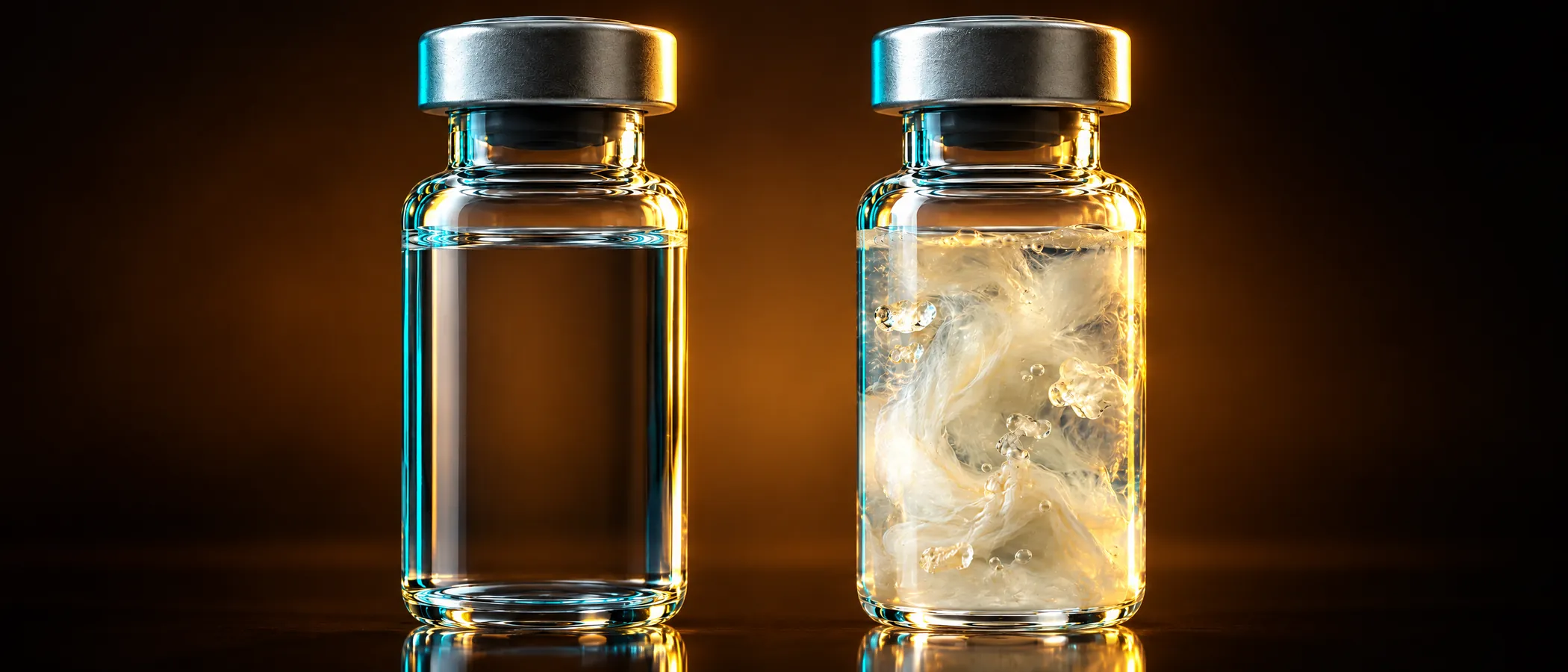
Once the water is in, the solution itself tells you whether the vial is good. Most peptides dissolve within a minute or two into a clear, colorless liquid. Adding the water can briefly look cloudy or turbulent, like a shaken snow globe, especially with a heavy powder load; that is just the solid powder dispersing before it dissolves, not a reaction. Add the water gently down the side of the vial and swirl rather than shake (hard shaking only whips in air and foam, which is unnecessary and makes the dose harder to draw). Within a minute or two it should be completely clear.
Discard the vial if any of these show up instead:
- Cloudiness or particles that do not clear after gentle swirling.
- Anything that turns cloudy, gritty, or grows floating bits after it was already clear.
- A color change from clear and colorless.
- A solution that simply never goes clear.
This is different from the cloudiness you can get when you combine two different peptides in one syringe. That haze usually means the two clashed chemically and the mix should be tossed (covered in the peptide-mixing guide). One peptide briefly clouding as its own powder dissolves and then clearing is normal; two peptides clouding when pooled is not.
Glutathione, the classic “snow globe”
Glutathione is the compound that shows this most. A standard 600 mg vial is a lot of powder, so the first moments after adding water often look milky before they clear. Glutathione is freely water-soluble. It dissolves to roughly 290 mg/mL, far more than the roughly 100 mg/mL a standard 600 mg-in-6 mL mix needs, so it fully dissolves and goes clear with a little patience and gentle swirling.
The catch is the opposite of “it can never go bad.” Glutathione is an antioxidant, which means it reacts with air (oxidizes) more readily than most peptides. Keep a reconstituted vial refrigerated, out of light, and use it within about 28 days. A solution that has yellowed has oxidized. Discard it. And because glutathione can lose strength to oxidation while still looking clear, cold storage matters on its own, not just whether the liquid looks right. See the Glutathione page for the full picture.
These are reference values. Verify every measurement, and use the calculator for your exact vial size rather than rounding from this table.
Sources
- PubChem CID 124886Glutathione, freely water-soluble (~292.5 mg/mL), so it fully dissolves at injection concentrations
Related peptides
Reviewed by Ki Researcher Team · Research use only · Not medical advice · Updated 2026-09-23