
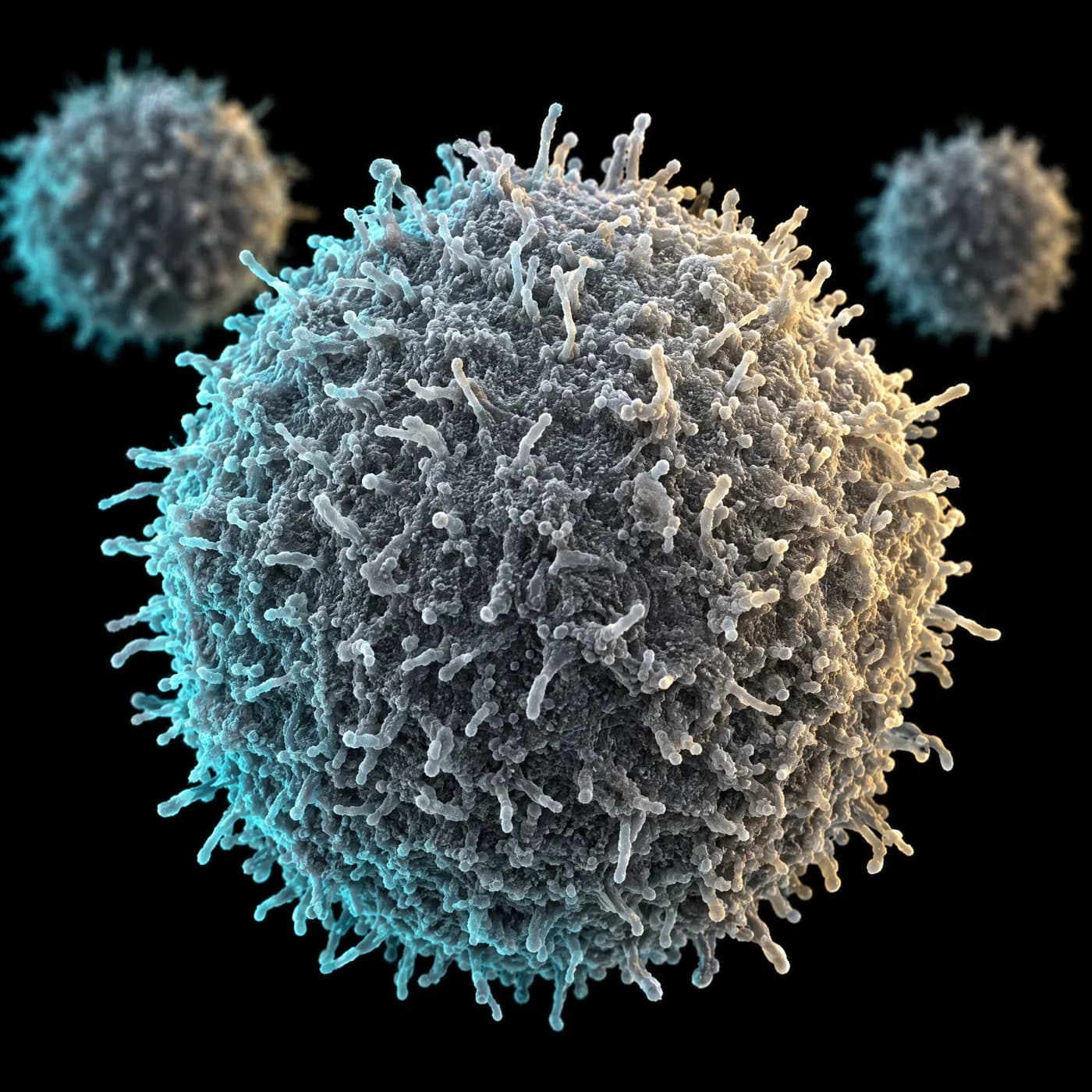
Chonluten (EDG)
Glu-Asp-Gly tripeptide · Khavinson 'Cytogen' lung and bronchi bioregulator
Chonluten is a three-amino-acid peptide (Glu-Asp-Gly) from the 'Cytogen' line of Vladimir Khavinson's St. Petersburg institute, its lung and bronchi piece. People run it for respiratory support. In cultured human immune cells it lowered the inflammatory signals TNF (tumor necrosis factor) and IL-6 (interleukin-6).
At a glance
- Dose
- 500–1,000 mcg per injection
- How often
- Once a day during the course
- How
- A small injection under the skin, not the oral extract
- When
- Any time, held to the same hour each day
- Cycle
- About 10 days on, then at least a 4–6 month break
The 30-second versionEverything on this page, fast
Khavinson Bioregulator · Immune · Tripeptide · Respiratory / Lung
The lung peptide of the Khavinson Cytogen line. In cultured immune cells it lowered the inflammatory signals TNF and IL-6, and it is the respiratory piece people slot into a tissue-by-tissue bioregulator routine.
The basics
- A synthetic tripeptide (Glu-Asp-Gly, EDG) from Vladimir Khavinson's 'Cytogen' bioregulator line, sold as the respiratory and lung peptide.
- The lung-assigned piece of a tissue-by-tissue Khavinson protocol, run for respiratory support.
Why people use it
- The respiratory slot in a Khavinson routine. It is the line's lung and bronchi piece, so tissue-by-tissue protocol builders reach for it.
- An anti-inflammatory signal. Its study lowered TNF and IL-6 in cultured immune cells.
- A well-defined molecule. The EDG tripeptide has its own chemical record, so you know what the synthetic form is.
- Short, low-burden courses. Brief pulsed runs with a long washout, not continuous use.
Stacks well with
- Thymosin Alpha-1 is the immune pairing. It works the adaptive arm of immunity while Chonluten's signal is innate anti-inflammation, so the two cover different arms.
- The Khavinson family (Epitalon, Thymalin or Thymulin) is the within-school combination, run on the line's one-peptide-per-organ logic.
Good to know
- One name, two products. The oral form is a bovine lung tissue extract; the injectable is the synthetic tripeptide, and the doses here are for the injectable.
- 'Chonluten' is the trade name. The molecule itself is Glu-Asp-Gly, so look for that when sourcing.
- Run it as short, pulsed Khavinson courses with a long washout between them, not continuously.
What it does
The lung piece of the Khavinson Cytogen line, with an anti-inflammatory result behind it.
- The respiratory slot in a Khavinson routineIt is the line's lung and bronchi peptide, so people building a tissue-by-tissue bioregulator protocol reach for it.
- Lower inflammatory signals in immune cellsResearch shows it lowered the inflammatory signals TNF (tumor necrosis factor) and IL-6 (interleukin-6) in cultured human immune cells.
- A well-defined moleculeThe EDG (Glu-Asp-Gly) tripeptide has its own chemical record, so you know what the synthetic form is.
- Short courses, long breaksIt runs as brief pulsed courses with a long washout, not continuous use, so it asks little of you.
Sources:PMID 35408963
How it works
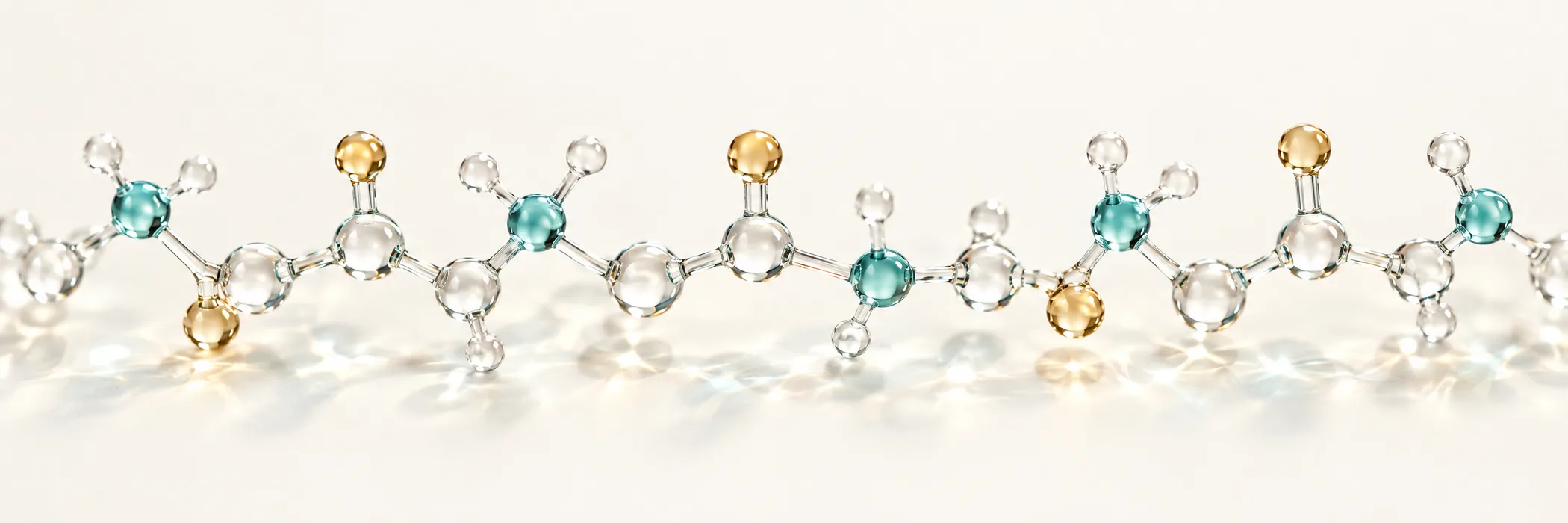
Calms inflammatory signals. In cultured human monocytes and macrophages, two kinds of immune cell, Chonluten lowered the inflammatory signals TNF (tumor necrosis factor) and IL-6 (interleukin-6) after an inflammatory trigger. It was one of five Khavinson peptides that did this.
A gene-level model. The Khavinson school proposes that ultra-short peptides like Chonluten enter the cell, reach the nucleus and bind DNA or chromatin to turn target genes up or down.
A brain-side effect too. The molecule's own chemistry and patent literature describes a stress-protective effect in the brain. It acts on biogenic amines, the brain's messenger chemicals, and on c-fos, a stress-response gene. It also acts on enkephalinase, an enzyme that breaks down natural pain-relief peptides.
Sources:PMID 35408963
How to dose it
Most people run Chonluten as a small injection under the skin, once a day, in short courses.
Dose tiersMost people run 500 to 1,000 mcg per injection, once a day.
- Range:
- 500–1,000 mcg per injection, once daily, the range Khavinson-school protocols cite for short bioregulators of this size.
- Route:
- An injection under the skin (subcutaneous). The oral or under-the-tongue extract sold under the same name is a different product.
- Frequency:
- Once daily during a pulsed course. Splitting it across the day is not part of the usual protocol.
How to injectAn injection into belly, love-handle or thigh fat, rotated between doses.
- Injection site:
- Abdomen (a couple of inches clear of the navel), love handles or outer thigh. Rotate sites between doses to avoid irritation and fatty build-up at one spot.
- Measuring the dose:
- On a U-100 insulin syringe. The Mixing the vial card gives the syringe units at the default mix, and the on-page calculator handles any vial size.
- Time of day:
- Not critical (see Best time to take it below). If stacking, space it at least 30 minutes from other peptide injections for comfort and site rotation.
- Food window:
- Inject with or without food.
Cycle and breaksShort, pulsed courses with a long break between them, the Khavinson pattern.
- Course length:
- ~10 days of consecutive daily injections, the classic Khavinson bioregulator course. Some protocols extend to 14 days.
- Washout:
- At least 4–6 months before repeating, in the school's seasonal or twice-yearly pattern. Far longer than most peptide breaks.
- Why so short:
- The school holds that a short course triggers a self-sustaining gene-expression change, so continuous dosing isn't needed.
Mixing the vialThe default is a 10 mg vial with 2 mL of bacteriostatic water.
- Mixing:
- That makes 5,000 mcg per mL. On a 100-unit (1 mL) insulin syringe, 500 mcg takes 10 units, 750 mcg takes 15 units, 1,000 mcg takes 20 units.
- Why 2 mL:
- The calculator opens on 2 mL, so the draws above match it. More water makes each draw larger.
Sources:PMID 35408963
Best time to take it


Implied best time
Anytime (consistent)
Time of day doesn't matter much. Pick one daily time for the course and hold it.
- No half-life is on record, so there is no clearance curve to time a dose against. Day-to-day consistency matters more than the hour.
- Its known effect is an anti-inflammatory signal in immune cells, with no link to time of day shown.
- Running it with other bioregulators? Fix it to the same daily slot and space the injections for comfort and site rotation.
Sources:PMID 35408963
What to stack it with


Chonluten pairs two ways, with other Khavinson bioregulators or with Thymosin Alpha-1 on the immune side.
Chonluten + Khavinson bioregulatorsThe within-school combination, one peptide per organ, each on its own course.
- Why it works:
- Khavinson assigns Chonluten to the lungs and bronchi, Epitalon to the pineal gland and aging, and Thymalin or Thymulin to the thymus. In that model each targets a different tissue.
- The protocol:
- Each peptide runs its own consecutive-day course (~10 days each), usually one after another rather than co-injected. Epitalon often runs first or separately on its longer course.
- Outcome:
- People committed to the full Khavinson bioregulator protocol run it as an anti-aging and organ-support system.
Chonluten + Thymosin Alpha-1Two arms of immunity. Chonluten damps inflammatory signals, Thymosin Alpha-1 works the adaptive side.
- Why it works:
- Chonluten lowered TNF and IL-6 in macrophages, an innate-immune effect. Thymosin Alpha-1 works the adaptive arm, promoting T-cell maturation and natural killer (NK) cell activity, and has human trial data.
- The protocol:
- Chonluten 500–1,000 mcg subcutaneously once daily for a ~10-day course, alongside or right before or after Thymosin Alpha-1 on its own schedule (commonly 1.5 mg subcutaneously twice weekly).
- Outcome:
- People reach for it when the immune system is both dysregulated and under-responsive, such as chronic immune fatigue, post-viral recovery or general immune support.
Support nutrients
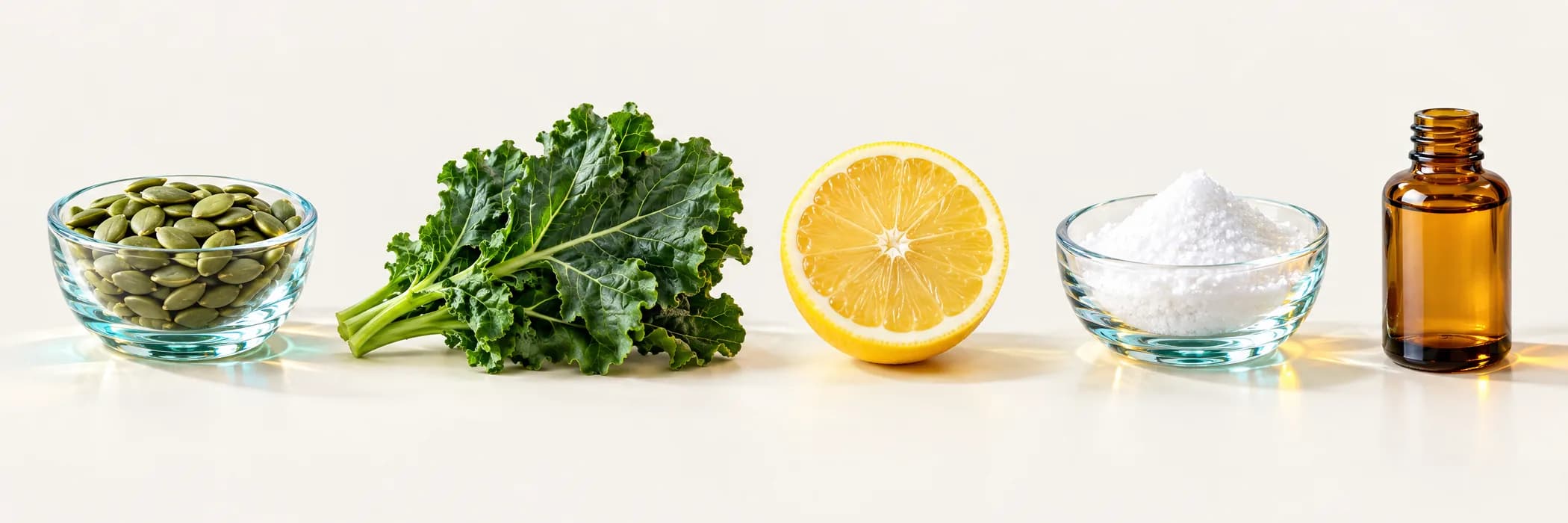
Chonluten's known effect is lowering TNF and IL-6 in immune cells. These nutrients back the same anti-inflammatory brake and feed the cells doing the work.
Strengthen the immune brakeZinc, selenium and vitamin D, the nutrients most tied to calming inflammatory signals.
- Zinc 15–30 mg:
- Zinc brakes NF-κB (nuclear factor kappa B), the switch that drives TNF and IL-6. Picolinate or bisglycinate daily with food. Above 40 mg/day sustained, add 1–2 mg copper bisglycinate.
- Selenium 100–200 mcg:
- Selenium runs the redox enzymes that damp inflammatory signaling in macrophages, the cell type tested. Selenomethionine or selenocysteine preferred. Stay under 400 mcg/day, the toxicity threshold.
- Vitamin D 2,000–5,000 IU:
- Vitamin D receptors run throughout the immune system. Get a level first and dose to the sufficient range (50–80 ng/mL). Take it with the fattiest meal of the day.
Fuel for immune cellsProtein, vitamin C and omega-3, what the immune cells doing the work consume.
- Protein 1.6–2.0 g/kg body weight:
- Amino acids are the raw material for every immune cell, and monocytes and macrophages turn over fast. Spread it across 3–4 meals.
- Vitamin C 500–1,000 mg:
- Immune cells hold it at many times the blood level. Split it morning and evening, since it clears in ~4 hours. Buffered or liposomal forms are easier on the gut.
- Omega-3 (EPA/DHA) 2–3 g combined:
- EPA and DHA (eicosapentaenoic and docosahexaenoic acid) compete with arachidonic acid for inflammatory enzymes, damping macrophage TNF and IL-6 output, the study's readout. Take with the fattiest meal.
Dose calculator
Reconstitution calculator
Calculated for a 1 mL U-100 insulin syringe (100 units/mL).
Units per dose
20 units
Draw this many units on a U-100 syringe
Each unit holds 50 mcg
- Volume per dose
- 0.2 mL
- Doses per vial
- 10
- Concentration
- 5 mg/mL
One vial lasts
- Daily
- 10 days
- Every other day
- 20 days
- 5×/week
- 14 days
Research use only. Not for human consumption. Outputs are reference values based on research literature. Verify all measurements independently.
Side effects and what to watch
What people notice. No side effects are on record.
How people handle it. Rotate injection sites between doses to avoid irritation and fatty build-up.
Worth knowing. The published study ran in cultured cells, so a human safety profile has not been mapped. One name covers two products, an oral lung tissue extract and the injectable synthetic peptide. Look for Glu-Asp-Gly when sourcing.
Using it for a lung condition? Keep your regular respiratory care in place.
Sources:PMID 35408963
Common questions
What is Chonluten?
A synthetic tripeptide (Glu-Asp-Gly, EDG), also spelled Honluten, from Vladimir Khavinson's 'Cytogen' line of short peptide bioregulators. It is the line's lung and respiratory peptide. PubChem lists the molecule as 'T-34 tripeptide'.
How is Chonluten dosed?
Most people run 500–1,000 mcg once daily as a small injection under the skin, in courses of ~10 days.
Do I need to cycle Chonluten?
Yes. It runs as ~10 days of daily injections, sometimes 14, then a break of at least 4–6 months. That is the Khavinson school's seasonal or twice-yearly pattern.
When should I take it?
Any time of day. Pick one daily time for the course and hold it. If you stack it, space it at least 30 minutes from other peptide injections.
What does Chonluten stack with?
Thymosin Alpha-1 is the immune pairing, commonly 1.5 mg twice weekly alongside a Chonluten course. The within-school option is other Khavinson bioregulators such as Epitalon or Thymalin, each on its own course, usually one after another.
Is oral Chonluten the same thing?
No. The oral product is a bovine lung tissue extract. The injectable is the synthetic Glu-Asp-Gly tripeptide, and the doses on this page are for the injectable.
Deep dive
Doses used in studies · Molecular identity · References
10From the researchDoses used in studies
The published study tested Chonluten in cultured human immune cells, as one of five Khavinson peptides in the panel.
| Dose | Route | Model | Outcome | Sources: |
|---|---|---|---|---|
| In vitro | Cell culture | Human THP-1 monocyte/macrophage cell line, 5-peptide panel (Avolio 2022, Int J Mol Sci) | Chonluten (one of five Khavinson peptides) reportedly reduced LPS-stimulated TNF and IL-6 expression. A generic anti-inflammatory signal in immune cells; not a respiratory or lung result, and a network collaboration rather than independent replication | PMID 35408963 |
11ChemistryMolecular identity
- Molecular formula
- C₁₁H₁₇N₃O₈
- Molecular weight
- 319.27 g/mol
- Monoisotopic mass
- 319.1016 Da
- Sequence (3 AA)
- Glu-Asp-Gly (EDG), H-Glu-Asp-Gly-OH, all-LPubChem CID 194641 (synonym 'T-34 tripeptide')
- Structure / class
- Synthetic tripeptide; Khavinson 'Cytogen' bioregulator (also sold as a bronchial/lung tissue extract, see note)PubChem CID 194641; Khavinson-school literature
- PubChem CID
- 194641 (as 'glutamyl-aspartyl-glycine' / 'T-34 tripeptide')PubChem ('Chonluten' is NOT a PubChem synonym; the trade-name link is vendor/single-school)
- InChIKey
- DSPQRJXOIXHOHK-WDSKDSINSA-NPubChem CID 194641 (defined L-config stereo layer)
- CAS / UNII
- 75007-24-8 · UNII not assignedPubChem CID 194641 synonyms (CAS present; no UNII in record)
- Water solubility
- Freely water-soluble (small, highly polar free-acid tripeptide; reconstituted in bacteriostatic water)Structural inference (ionizable Glu/Asp side chains)
- Molecular target
- No classic receptor identified; claimed gene-expression modulator. Vendor positioning is respiratory/lung; the one confirmed study is a monocyte anti-inflammatory (TNF/IL-6) readout, not respiratoryVendor marketing vs. PMID 35408963
- Half-life
- Not established (no published human pharmacokinetics)Not established
- Regulatory status
- Not approved by any major drug regulator; no controlled human trials locatedNo NDA/BLA/EMA record located
12Primary sourcesReferences
- PMID 35408963Avolio F, Martinotti S, Khavinson VK, Esposito JE et al., Int J Mol Sci 2022. Five Khavinson peptides (incl. Chonluten) reduced LPS-stimulated TNF and IL-6 in the human THP-1 monocyte/macrophage line (in vitro; Italy–Russia collaboration WITH Khavinson, not independent replication; respiratory thesis not tested)
- PubChem CID 194641PubChem record, identity (CID, formula, MW, CAS, InChIKey) for the tripeptide Glu-Asp-Gly. Note: 'Chonluten' is NOT a PubChem synonym; the database name is 'glutamyl-aspartyl-glycine' / 'T-34 tripeptide'
Reviewed by Ki Researcher Team · Research use only · Not medical advice · Updated 2026-09-24