
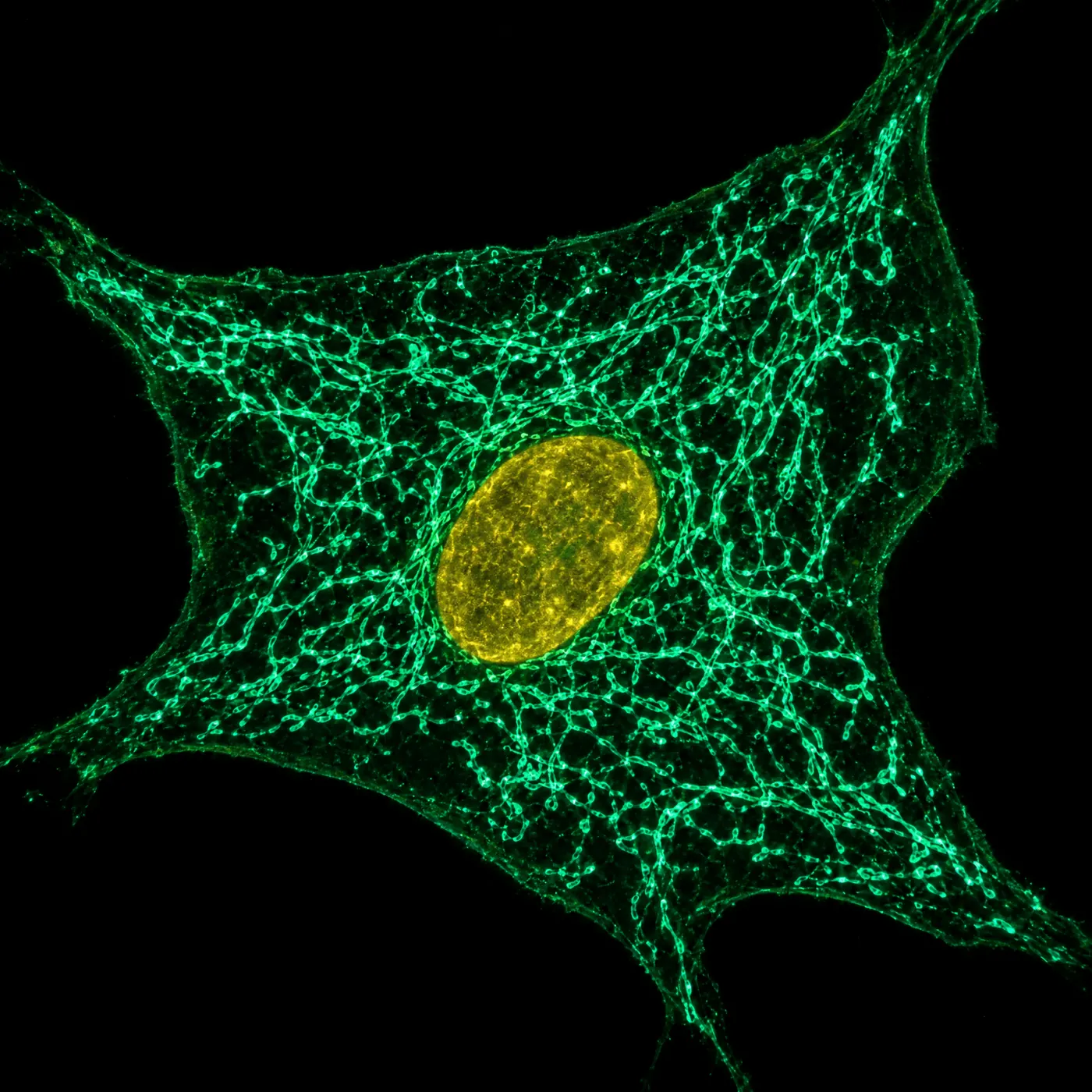
Testagen (KEDG)
KEDG tetrapeptide · Khavinson Cytogen bioregulator · studied on the thyroid axis
Testagen is a four-amino-acid peptide (Lys-Glu-Asp-Gly, KEDG) from Vladimir Khavinson's St. Petersburg institute. People run it as the reproductive slot of a short pulsed bioregulator course, often beside Epitalon. In bird studies, often given with Epitalon, it raised thyroid hormones and partly restored thyroid structure.
At a glance
- Dose
- 100–300 mcg a day, starting at 100 mcg
- How often
- Once a day, in short courses
- How
- A small injection under the skin (belly fat)
- When
- Any time of day; hold one daily time
- Cycle
- A 10-day course, 1–2 times a year
The 30-second versionEverything on this page, fast
Khavinson bioregulator · Reproductive/longevity slot · Short tetrapeptide · Pulsed course
A four-amino-acid Russian bioregulator (Lys-Glu-Asp-Gly, KEDG) run as the reproductive/longevity slot of a Khavinson tissue-by-tissue course. Its studied action is on the thyroid axis, where animal work reported higher thyroid hormones.
The basics
- A small, well-defined peptide from the Khavinson bioregulator family, one peptide assigned per tissue.
- Slotted into the reproductive/longevity spot of a multi-peptide healthy-aging course, run in short pulses.
Why people use it
- A slot in the Khavinson system. It fills the testis-assigned spot in a tissue-by-tissue bioregulator routine.
- A healthy-aging angle. Run in brief, pulsed longevity courses alongside the other family peptides.
- A small, clean molecule. A defined four-amino-acid sequence that is easy to dose and pairs simply with its family.
- Thyroid-axis data. In bird studies, often given with Epitalon, it raised thyroid hormones and partly restored thyroid gland structure.
Stacks well with
- Epitalon, the classic Khavinson longevity pairing, run together as a course.
- When testosterone is the goal, Gonadorelin or Kisspeptin-10 act directly on the reproductive axis.
Good to know
- Run it as a short course, a 10-day pulse, not daily indefinitely.
- Its studied action is on the thyroid axis; when testosterone is the goal, Gonadorelin or Kisspeptin-10 act directly on the reproductive axis.
- Time of day is flexible; pick one daily time and hold it across the course.
What it does
Testagen fills the reproductive slot of the Khavinson bioregulator family. Here is what people run it for.
- Raised thyroid hormones in bird studiesOften given with Epitalon, it raised thyroid hormones and partly restored thyroid structure in birds whose pituitary gland was removed.
- Changed thymus structure in birdsA 2013 study in the same bird model reported changes in thymus structure, pointing at an immune angle.
- Fills the reproductive slotKhavinson assigns one peptide per tissue. Testagen is the testis-assigned member, so it fills that slot in multi-peptide courses.
- A short course, not a daily habitLike the rest of the family, it runs as a 10-day course, 1–2 times a year.
- Points to direct testosterone leversFor testosterone, Gonadorelin or Kisspeptin-10 act directly on the reproductive axis, alongside zinc, vitamin D, magnesium, sleep and training.
How it works
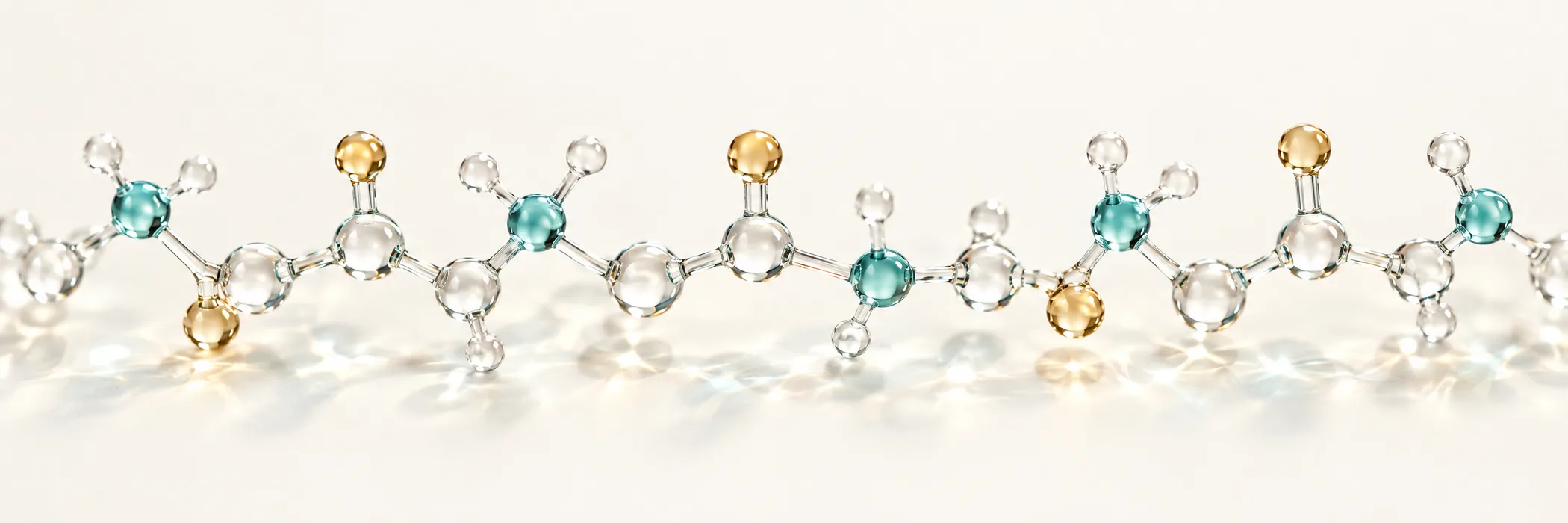
Acts at the gene level. The Khavinson school proposes that ultra-short peptides like KEDG enter the cell, reach the nucleus, bind specific DNA or chromatin regions and turn target genes up or down.
Works on the thyroid axis. Studies report that in birds whose pituitary gland had been removed, KEDG, often given with Epitalon (AEDG), raised thyroid-stimulating hormone and thyroid hormones. It also partly restored thyroid gland structure.
Named for its tissue slot. Khavinson assigns one peptide per tissue, and Testagen is the testis-assigned member. Its published studies tracked the thyroid axis.
Sources:PMID 19024016PMID 22268052
How to dose it
Most people run Testagen as one daily injection under the skin, in short courses.
Dose tiersMost people run 100 to 300 mcg once a day, starting at 100 mcg.
- Common range:
- 100 to 300 mcg once daily. People start at 100 mcg and step up by about 50 mcg every 2 weeks.
- Upper end:
- Some run 500 to 1,000 mcg/day, roughly the Cytogen capsule-course dose converted to mcg. It is not a starting dose.
- Route:
- Injection under the skin. The Khavinson bird research also used injection. The over-the-counter Cytogen line uses oral capsules.
How to injectAn injection into belly, love-handle or thigh fat, rotated between doses.
- Injection site:
- Abdomen (a couple of inches clear of the navel), love handles or outer thigh. Rotate sites between doses to prevent irritation and fatty lumps.
- Measuring the dose:
- Use a U-100 insulin syringe. Units per dose are in Mixing the vial below, and the calculator handles any vial size.
- Time of day:
- Any time. Hold one daily time across the course, and morning is a common default.
- Food window:
- Inject with or without food.
Cycle and breaksMost people run a 10-day course, 1–2 times a year.
- Course length:
- The traditional Khavinson Cytogen format is a 10-day course, 1–2 times per year, sometimes spring and autumn.
- Longer cycle:
- Some users run a 4–6 week cycle, then a 4-week washout, as with other bioregulator peptides.
- Why pulse it:
- Pulsed use is the Khavinson family convention, meant to mimic the body's own episodic peptide signaling.
Mixing the vialA 10 mg vial with 2 mL bacteriostatic water makes 5,000 mcg per mL.
- Mixing:
- At 10 mg in 2 mL bacteriostatic water, on a 100-unit (1 mL) insulin syringe, 100 mcg takes 2 units, 200 mcg 4 units and 300 mcg 6 units.
- Upper end:
- At 10 mg in 2 mL, 500 mcg takes 10 units and 1,000 mcg takes 20 units.
- Why 2 mL:
- The calculator default, fine at microgram doses. At 3 mL, the most a standard vial holds, 100–300 mcg takes 3–9 units.
Sources:PMID 19024016PMID 22268052
Best time to take it


Implied best time
Anytime (consistent)
Any time of day works. Pick one daily time and hold it across the course.
- KEDG has no known day-night rhythm to match, so nothing pulls the dose toward morning or evening.
- Unlike growth hormone peptides, which ride the nighttime pulse, or the pineal peptides Epitalon and Pinealon, Testagen has no timing anchor.
- It runs as a 10-day course, so holding the same daily time matters more than the hour. Morning is an easy default to remember.
What to stack it with


Testagen belongs to Khavinson's one-peptide-per-tissue family, so people run it beside other bioregulators.
Testagen + EpitalonThe classic Khavinson pairing. The bird thyroid studies often gave the two together.
For testosterone: Gonadorelin or Kisspeptin-10When testosterone is the goal, these two act directly on the reproductive axis.
- Why it works:
- Gonadorelin is synthetic GnRH (gonadotropin-releasing hormone), the top signal driving testosterone. Kisspeptin-10 triggers the GnRH pulse. Both have human data.
- The protocol:
- Gonadorelin 100 mcg under the skin per dose, every 90–120 minutes in research or 2–3× daily in community protocols. Kisspeptin-10 100–300 mcg, timed to the natural luteinizing hormone pulse.
- Combining with Testagen:
- When testosterone is the priority, the reproductive-axis peptide alone is the more direct route.
Testagen + Thymalin or Thymosin Alpha-1Adds thymus and immune cover, which Testagen's bird studies also touched.
- Why it works:
- Pateyuk 2013 found thymus changes in the same bird model. Thymalin, Khavinson's thymus extract, and Thymosin Alpha-1 act on immune function more directly.
- The protocol:
- Testagen 500 to 1,000 mcg plus Thymalin, or plus Thymosin Alpha-1 at 1 to 1.5 mg under the skin, run together on the Cytogen course.
- Outcome:
- Fits an immune and healthy-aging goal.
Support nutrients
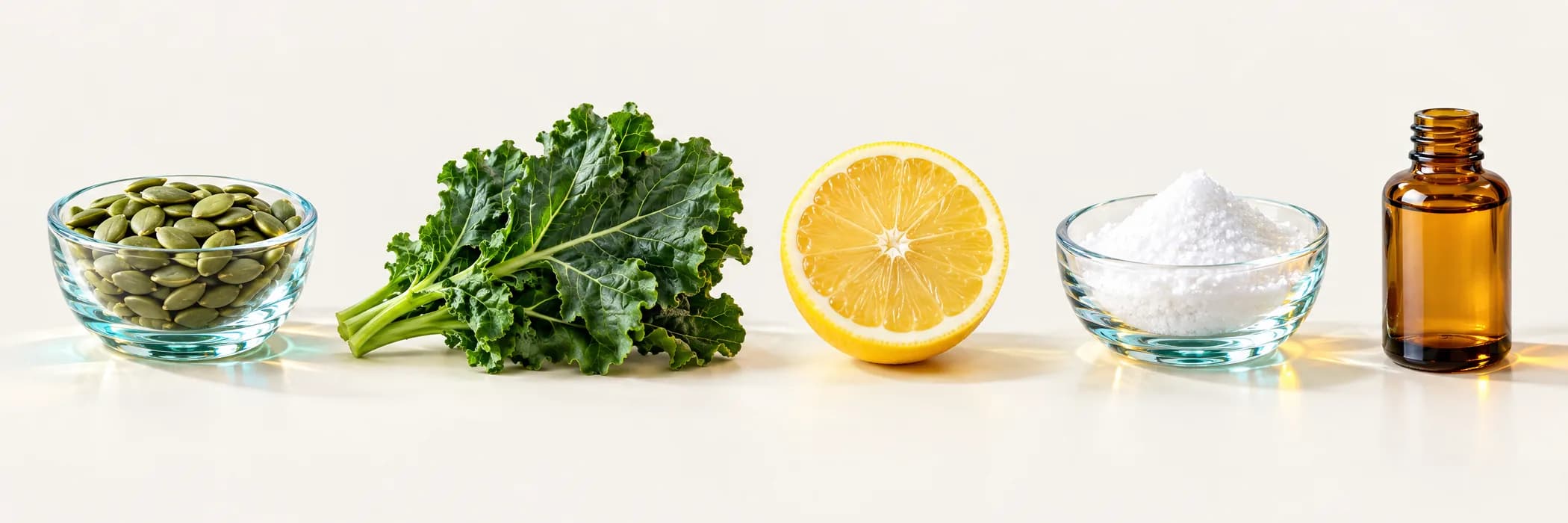
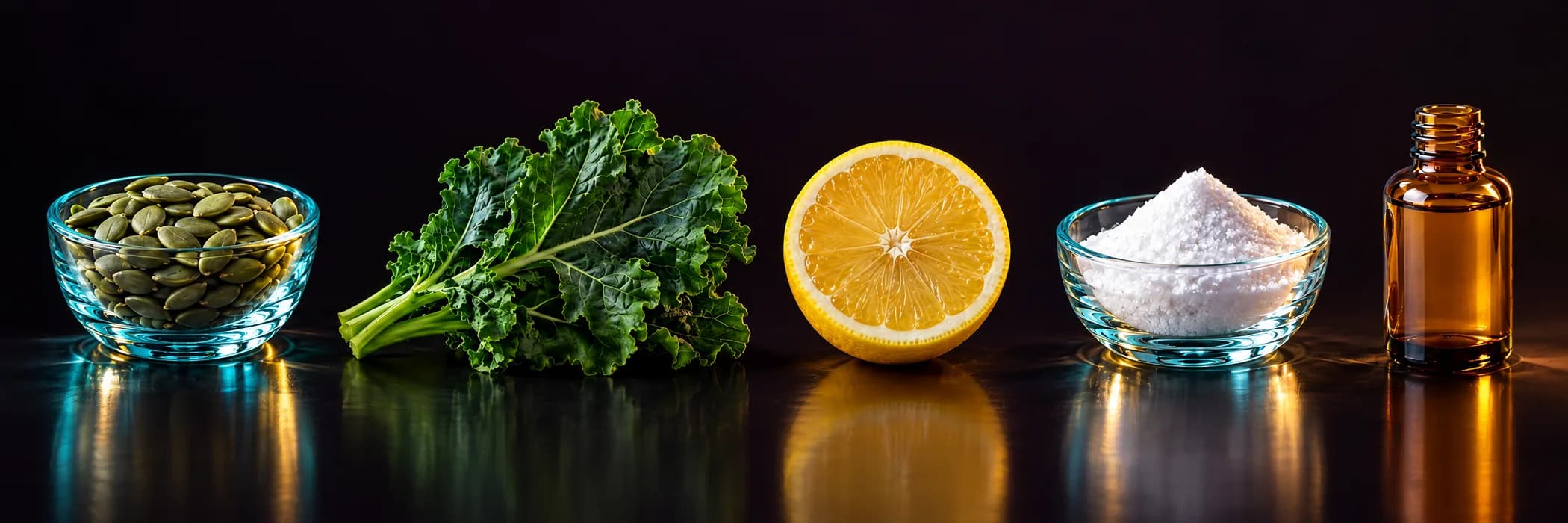
For testosterone, people add the basics the male reproductive axis runs on.
Feed testosterone productionZinc, vitamin D and magnesium, the nutrients most tied to testosterone.
- Zinc:
- 15 to 30 mg zinc picolinate or bisglycinate daily, a testosterone cofactor. Past 4 weeks, add 1 to 2 mg copper bisglycinate.
- Vitamin D:
- 2,000 to 5,000 IU vitamin D₃ daily with a fatty meal, or dose to a blood level (25-OH-D) of 40 to 60 ng/mL.
- Magnesium:
- 300 to 400 mg magnesium glycinate or malate at bedtime, for free testosterone and sleep.
- Boron:
- 3 to 10 mg boron citrate or glycinate daily. In a small one-week trial it raised free testosterone and dihydrotestosterone. 3 to 6 mg is low risk.
Habits that lift testosteroneEnough food, training and sleep keep the reproductive axis running.
- Adequate energy and body fat:
- Calorie restriction and very low body fat (below ~8–10% for most men) slow the reproductive axis. Avoid a chronic deficit.
- Resistance training:
- Compound lifts (squat, deadlift, press), 3–4 sessions per week, 45–75 minutes, high effort. They raise testosterone short term.
- Sleep quality:
- ~80% of daily testosterone is released during sleep. Under 6–7 hours lowers morning testosterone.
Antioxidants for the testesSelenium and vitamin E support the testes' antioxidant defense.
- Selenium:
- 100 to 200 mcg selenium (selenomethionine or selenium-enriched yeast) daily for sperm quality. Stay below 400 mcg/day.
- Vitamin E:
- 100 to 200 IU mixed tocopherols daily, not high-dose isolated alpha-tocopherol, which can deplete gamma-tocopherol.
- Timing:
- Both with a fatty meal, morning or midday.
Dose calculator
Reconstitution calculator
Calculated for a 1 mL U-100 insulin syringe (100 units/mL).
Units per dose
4 units
Draw this many units on a U-100 syringe
Each unit holds 50 mcg
- Volume per dose
- 0.04 mL
- Doses per vial
- 50
- Concentration
- 5 mg/mL
One vial lasts
- Daily
- 50 days
- Every other day
- 100 days
- 5×/week
- 70 days
Research use only. Not for human consumption. Outputs are reference values based on research literature. Verify all measurements independently.
Side effects and what to watch
What people notice. The published bird studies report no harm.
How people handle it. Rotate injection sites between doses to prevent irritation and fatty lumps.
Worth knowing. The bird studies were not built to track side effects, and human safety data have not been published.
Sources:PMID 19024016
Common questions
How is Testagen dosed?
Most people run 100 to 300 mcg once a day under the skin, starting at 100 mcg and stepping up about 50 mcg every 2 weeks. Some run a higher 500 to 1,000 mcg a day band.
When do people take it?
Any time of day. Pick one daily time and hold it across the course. Morning is a common default because it is easy to remember.
Do I need to cycle Testagen?
Yes. The traditional Khavinson format is a 10-day course, 1–2 times a year. Some users run a 4–6 week cycle, then a 4-week washout.
What does Testagen stack with?
Epitalon is the classic Khavinson pairing, at 5 to 10 mg a day beside Testagen. Thymalin adds thymus cover. For testosterone, Gonadorelin or Kisspeptin-10 act directly on the reproductive axis.
Does Testagen raise testosterone?
None of its published studies measured testosterone. They tracked the thyroid axis, where, often given with Epitalon, it raised thyroid hormones in birds. For testosterone, Gonadorelin or Kisspeptin-10 act directly on the reproductive axis, plus zinc, vitamin D, magnesium, sleep and resistance training.
Why is it called Testagen?
The name points at the testes, the tissue it is assigned to in Khavinson's one-peptide-per-tissue system.
Deep dive
Doses used in studies · Molecular identity · References
10From the researchDoses used in studies
These are the published Testagen studies, run in birds whose pituitary gland had been removed.
| Dose | Route | Model | Outcome | Sources: |
|---|---|---|---|---|
| In vivo | Animal study | Neonatally hypophysectomized chickens (Kuznik 2008, Bull Exp Biol Med) | KEDG (with AEDG) reportedly increased TSH and thyroid hormones and partly restored thyroid gland structure, a thyroid-axis result, not a gonadal one | PMID 19024016 |
| In vivo | Animal study | Hypophysectomized young chickens and old hens (Kuznik 2011, Bull Exp Biol Med) | Reported hormonal activity and thyroid structural effects; still thyroid-focused, still single-school, still in birds | PMID 22268052 |
| In vivo | Animal study | Hypophysectomized chickens, immunity / hemostasis (Kuznik 2010, Patol Fiziol Eksp Ter, Russian) | Reported effects on immunity, blood clotting and thyroid morphology, broad animal readouts, no human relevance established | PMID 20731122 |
| In vivo | Animal study | Hypophysectomized young and old birds, thymus (Pateyuk 2013, Bull Exp Biol Med) | Reported changes in thymus morphology; another organ entirely, and again only in birds | PMID 23658898 |
11ChemistryMolecular identity
- Molecular weight
- 447.4 g/mol
- Monoisotopic mass
- 447.1965 Da
- Sequence (4 AA)
- Lys-Glu-Asp-Gly (KEDG), H-Lys-Glu-Asp-Gly-OH, all-L (free acid)PubChem CID 123863700; sequence used in PMID 40807317
- Structure / class
- Synthetic tetrapeptide; Khavinson 'Cytogen' bioregulatorKhavinson-school literature
- Molecular formula
- C₁₇H₂₉N₅O₉PubChem CID 123863700 (matches residue calc: Lys+Glu+Asp+Gly − 3 H₂O)
- PubChem CID
- 123863700 (resolves via the sequence name H-Lys-Glu-Asp-Gly-OH; all-L stereo record)PubChem (trade names 'Testagen' / 'KEDG' are not PubChem synonyms)
- InChIKey
- HKEYFJLTNCUNAD-DCAQKATOSA-NPubChem CID 123863700
- CAS / UNII
- Unverified, not assertedVendor-quoted CAS 1026993-38-3 unconfirmed; no UNII in the PubChem record
- Water solubility
- Freely water-soluble (small, highly polar free-acid tetrapeptide; reconstituted in bacteriostatic water)Structural inference (ionizable Lys/Glu/Asp side chains)
- Molecular target
- No classic receptor identified. Vendor positioning is testosterone/reproductive/prostate, NOT supported by the actual studies, which are thyroid-axis (in birds, single-school)Vendor marketing vs. confirmed literature
- Half-life
- Not established (no published human pharmacokinetics)Not established
- Regulatory status
- Not approved by any major drug regulator; no human trials locatedNo NDA/BLA/EMA record located
12Primary sourcesReferences
- PMID 19024016Kuznik BI, Pateyuk AV, Rusaeva NS, Bull Exp Biol Med 2008. KEDG (with AEDG) in neonatally hypophysectomized chickens: increased TSH and thyroid hormones, partial thyroid structural recovery (animal; single-school)
- PMID 22268052Kuznik BI, Pateyuk AV et al., Bull Exp Biol Med 2011. Hormonal activity and thyroid structure in hypophysectomized young chickens and old hens (animal; single-school)
- PMID 20731122Kuznik BI, Pateiuk AV et al., Patol Fiziol Eksp Ter 2010 (Russian). Effects on immunity, hemostasis and thyroid morphology in hypophysectomized chickens (animal; single-school)
- PMID 23658898Pateyuk AV, Baranchugova LM, Rusaeva NS, Obydenko VI, Kuznik BI, Bull Exp Biol Med 2013. Effect on thymus morphology in hypophysectomized young and old birds (animal; single-school)
- PMID 40807317Dobriţescu A, Samide A, Cioateră N et al., Molecules 2025. KEDG ('Testagen peptide') as a COPPER-CORROSION inhibitor in saline. MATERIALS-SCIENCE study, NOT biomedical: it confirms the sequence but says nothing about hormones, thyroid, testes or health. Listed only to flag misrepresentation
Reviewed by Ki Researcher Team · Research use only · Not medical advice · Updated 2026-09-24