
Livagen (KEDA)
KEDA tetrapeptide · Khavinson 'Cytogen' liver bioregulator
Livagen is a four-amino-acid peptide (Lys-Glu-Asp-Ala, KEDA) from Vladimir Khavinson's St. Petersburg institute, the liver member of its bioregulator family. People run it for liver and cellular-aging goals. In immune cells from elderly donors it loosened age-condensed DNA and switched ribosomal genes back on.
At a glance
- Dose
- 100–500 mcg per injection
- How often
- Once a day during a pulsed course
- How
- A small injection under the skin (belly or outer thigh)
- When
- Any time of day; most people pick the morning
- Cycle
- 10-day courses, then several weeks to months off
The 30-second versionEverything on this page, fast
Liver support · Cellular aging · Khavinson bioregulator · Longevity
The Khavinson family's liver tetrapeptide. Livagen (KEDA) loosened age-condensed DNA and reactivated ribosomal genes in cells from elderly donors, the result people reach for it on, and fills the liver and cellular-aging slot of the bioregulator system.
The basics
- A four-amino-acid synthetic peptide (Lys-Glu-Asp-Ala, KEDA) from Vladimir Khavinson's Russian bioregulator line, the family's liver peptide.
- A well-defined molecule with a documented chromatin finding in cells from elderly donors.
Why people use it
- A cellular-aging showcase. In lymphocytes from elderly donors it loosened age-condensed DNA and switched ribosomal genes back on, one of the family's most striking cell results.
- The liver slot of the Khavinson system. The member people add to a family course for the liver and cellular-aging front.
- Used in longevity routines. Its chromatin finding reads as reversing the age-related packing away of genes, so it lands in broad healthy-aging protocols.
- Pairs with the liver's own antioxidant. Glutathione works by a different mechanism, so the two cover the liver from two angles.
Stacks well with
- Epitalon, the most common Khavinson pairing, liver plus pineal. Both show the same chromatin-reactivation pattern.
- Glutathione, the liver's master antioxidant, works by a different mechanism and covers the liver from another angle.
Good to know
- Its citable finding is ribosomal-gene reactivation, not the interferon-gamma activation often repeated online.
- Start at the low end of the range and run short pulsed courses.
- Time of day is flexible. Pick one daily time and hold it across the course; morning is the common default.
What it does
Livagen is the liver member of the Khavinson bioregulator family. Here is what people run it for.
- Switches genes back on in aged cellsIn immune cells from elderly donors it loosened age-condensed DNA and switched ribosomal genes back on.
- The liver slot of the familyEach Khavinson peptide is assigned a tissue. Livagen's is the liver, and that is the reason most people try it.
- A fit for longevity routinesIts chromatin finding reads as reversing the age-related packing away of genes, so it lands in healthy-aging routines.
- A short, defined courseLike the rest of the family, it runs in brief pulsed courses, often 10–14 days, rather than daily indefinitely.
- Pairs with the liver's own antioxidantPeople pair it with Glutathione, the liver's master antioxidant, which works by a different mechanism.
How it works
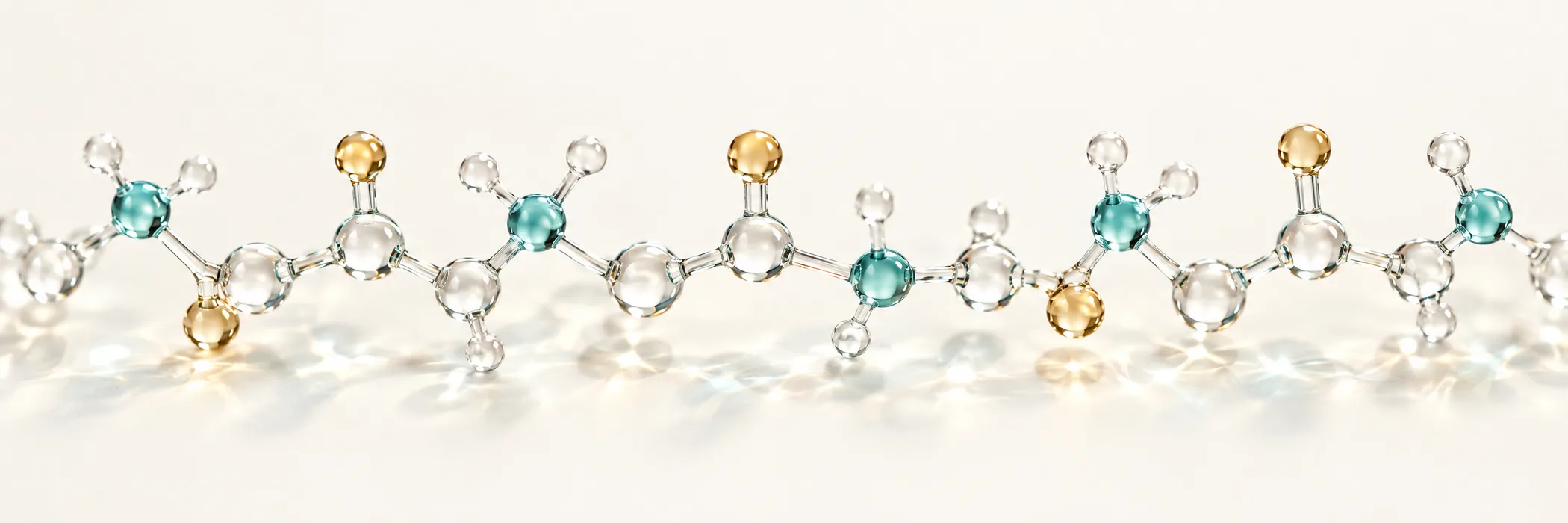
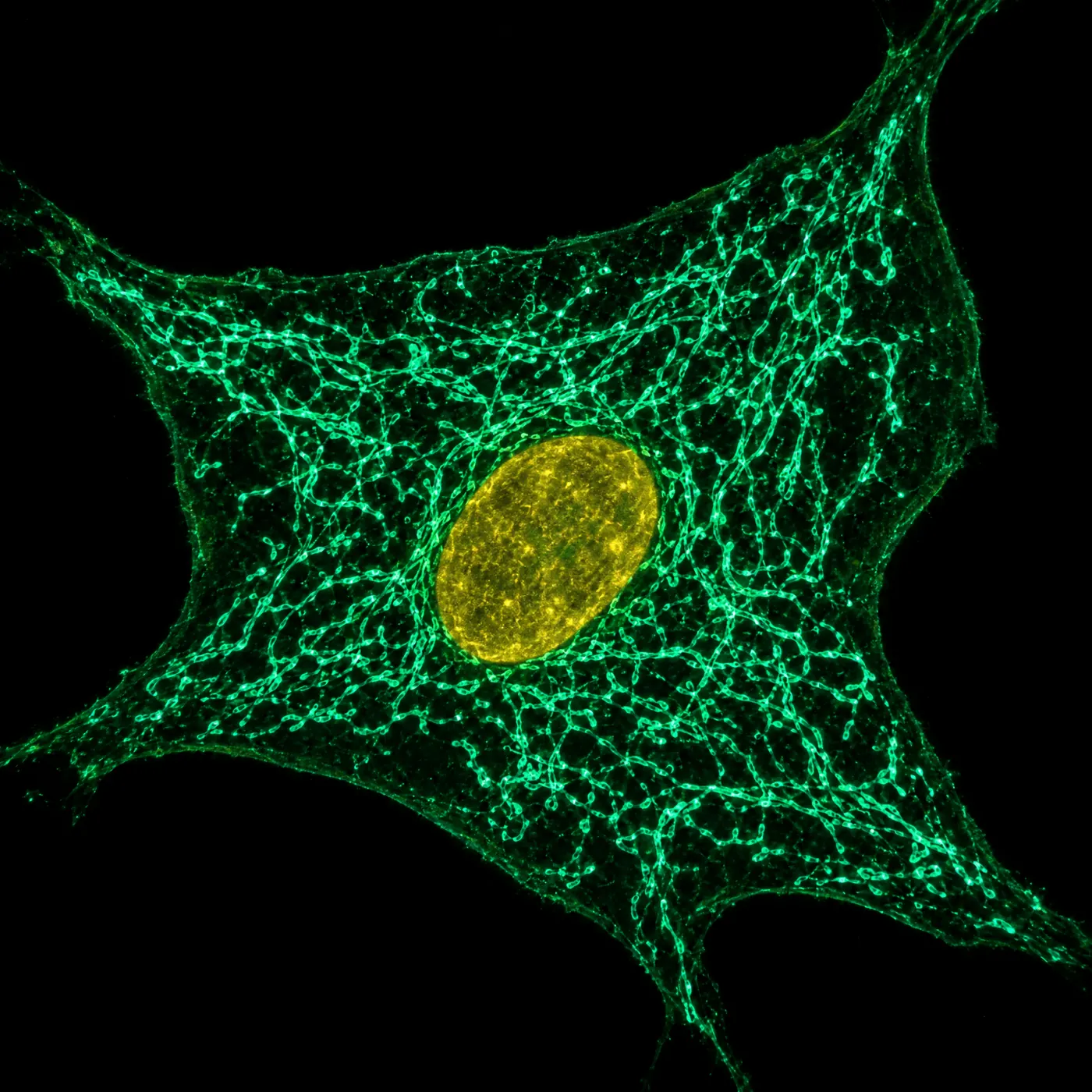
Loosens age-packed DNA. In immune cells (lymphocytes) from donors aged 75–88, Livagen decondensed pericentromeric heterochromatin, DNA that age had packed away, and switched ribosomal genes back on. A 2002 paper and a 2006 follow-up report it.
Slows enkephalin breakdown. In a cell-free serum assay it inhibited the enzymes that break down enkephalins, natural pain-related signalling molecules. Its IC50, a test-tube potency value, was around 20 µM, more potent than several reference inhibitors. It did not bind µ- or δ-opioid receptors directly.
A gene-level idea. The Khavinson group proposes that ultra-short peptides reach the nucleus, bind DNA and regulate genes. Livagen's chromatin result is its showcase. The finding is ribosomal-gene reactivation, not the interferon-gamma activation often repeated online.
How to dose it
Most people run Livagen as a small injection under the skin, once a day, in short pulsed courses.
Dose tiersMost people run 100 to 500 mcg per injection, once a day.
- Range:
- 100–500 mcg per injection under the skin, the range most cited in Khavinson-style protocols for short bioregulator peptides.
- Frequency:
- Once daily, usually in the morning, is the most common pattern for pulsed courses. Some protocols run 10-day blocks.
- Route:
- Under the skin, into belly or outer-thigh fat, the route the on-page calculator is built for.
How to injectA small injection into belly or outer-thigh fat, rotating sites between doses.
- Injection site:
- Abdomen (a couple of inches clear of the navel) or outer thigh. Rotate sites between doses to avoid irritation and fatty lumps (lipohypertrophy).
- Measuring the dose:
- Draw it on a U-100 insulin syringe. The Mixing the vial card below gives the syringe units, and the calculator handles any vial size.
- Time of day:
- Not critical. Hold one daily time across the course; morning is the common default.
- Food window:
- Inject with or without meals.
Cycle and breaksShort pulsed courses, a brief gene-regulatory signal, then a break.
- Course length:
- 10-day courses are the most cited pattern, from the Khavinson group's own clinical write-ups. Some people run 2–4-week cycles.
- Washout:
- The Khavinson group describes several months off between courses. Community cycles run 4–12 weeks on, 4–8 weeks off.
- Labs between cycles:
- A liver-function panel (liver enzymes ALT, AST and GGT) can track liver health, though not a Livagen effect specifically.
Mixing the vialA 10 mg vial plus 2 mL bacteriostatic water gives 5,000 mcg per mL.
- Mixing:
- 10 mg vial + 2 mL bacteriostatic water = 5,000 mcg per mL.
- Syringe units at 10 mg in 2 mL:
- On a U-100 (1 mL) insulin syringe, 100 mcg takes 2 units, 200 mcg takes 4 units, 250 mcg takes 5 units, 500 mcg takes 10 units.
- Concentration:
- The 2 mL mix is fairly concentrated, so low doses (100–200 mcg) take just 2–4 units. The calculator at 3 mL, the vial's maximum, gives 3–6 units.
Sources:PMID 12533768PMID 12942748
Best time to take it

Implied best time
Anytime (consistent)
Time of day isn't critical for Livagen. Pick one daily time you'll keep and hold it across the course.
- Livagen is a liver bioregulator, not a circadian one. Nothing in its proposed mechanism ties its effect to a time of day.
- Unlike the pineal members of the family (Epitalon, Pinealon), there's no body-clock reason to push it to the evening or the morning.
- It runs in short courses, often 10–14 days, so the same daily time matters more than the hour. Morning is the easy-to-remember default.
What to stack it with


Livagen usually runs inside the Khavinson family, one peptide per tissue. For the liver, Glutathione is the other natural partner.
Livagen + EpitalonThe most common Khavinson pairing, liver plus pineal.
- Why it works:
- Epitalon is the pineal and telomere peptide, Livagen the liver one, so the targets don't overlap. A 2006 study found both reactivate chromatin in aged immune cells.
- The protocol:
- Livagen 100–500 mcg once daily + Epitalon 5–10 mg once daily, both under the skin, as pulsed 10–14-day courses.
- Outcome:
- Run in the full Khavinson protocol to cover more tissues in one course.
Livagen + GlutathioneFor liver antioxidant support, add the liver's own master antioxidant.
- Why it works:
- Glutathione is the liver's master antioxidant. Liver stress depletes it and intravenous or under-the-skin dosing replenishes it. It works by a different mechanism.
- The protocol:
- Livagen 100–500 mcg once daily + glutathione 200–600 mg (reduced L-glutathione) once daily or on alternating days, both under the skin. NAC above is the oral alternative.
- Outcome:
- Run as a liver-antioxidant support combination.
Livagen + VilonAdds the family's immune member, liver plus thymus.
- Why it works:
- Vilon (Lys-Glu) is the thymic bioregulator. A 2006 study found both reactivate chromatin in aged immune cells, and the Khavinson group pairs them for their different tissues.
- The protocol:
- Livagen 100–500 mcg once daily + Vilon 100–500 mcg once daily, both under the skin, as concurrent or sequential 10-day pulsed courses.
- Outcome:
- Run in the full Khavinson multi-peptide protocol as a liver plus immune pairing.
Support nutrients
People who run Livagen for the liver often add the nutrients the liver's own metabolism and antioxidant defence run on.
Liver building blocksCholine, NAC (N-acetylcysteine) and methylation B-vitamins cover fat export, glutathione and methylation.
- Choline:
- 400–550 mg/day with meals, as CDP-choline or alpha-GPC. The liver needs it to export fat particles (VLDL), and low choline drives fat buildup in liver cells.
- NAC (N-acetylcysteine):
- 600 mg once daily with food, which eases the mild nausea some users report. It supplies cysteine, the limiting building block for glutathione, the liver's primary antioxidant.
- Methylation B-vitamins:
- A B-complex with 400 mcg methylfolate, 500–1,000 mcg methylcobalamin (B12), 25–50 mg B6 and 10–25 mg riboflavin, in the morning with food. Methylation drives fat processing and detox.
Milk thistle and daily habitsMilk thistle is the best-studied liver botanical. Alcohol and calorie habits matter even more.
- Silymarin (milk thistle extract):
- 140–420 mg/day standardised to 70–80% silymarins, with food. Multiple trials in alcoholic liver disease and non-alcoholic fatty liver disease show modest improvements in liver enzymes (ALT, AST).
- Alcohol and calorie intake:
- Excess alcohol and a chronic calorie surplus are the two primary causes of fatty liver disease. No supplement or peptide overrides them.
Help recycle glutathioneSelenium keeps the enzymes that recycle glutathione up to speed, useful alongside NAC.
- Selenium:
- 100–200 mcg/day from Brazil nuts (1–2 per day) or selenomethionine. It runs the enzymes that recycle glutathione, useful alongside NAC. Do not exceed 400 mcg/day, the toxicity threshold.
Dose calculator
Reconstitution calculator
Calculated for a 1 mL U-100 insulin syringe (100 units/mL).
Units per dose
6 units
Draw this many units on a U-100 syringe
Each unit holds 50 mcg
- Volume per dose
- 0.06 mL
- Doses per vial
- 33
- Concentration
- 5 mg/mL
One vial lasts
- Daily
- 33 days
- Every other day
- 66 days
- 5×/week
- 46 days
Research use only. Not for human consumption. Outputs are reference values based on research literature. Verify all measurements independently.
Side effects and what to watch
Worth knowing. The published work is in cells and serum, so it maps no side-effect profile in people.
How people handle it. Start at the low end of the range and run short pulsed courses. Rotate injection sites to avoid irritation and fatty lumps.
Sources:PMID 12533768
Common questions
What is Livagen?
A four-amino-acid peptide (Lys-Glu-Asp-Ala, KEDA) from Vladimir Khavinson's line of short peptide bioregulators. Each one is assigned a tissue, and Livagen is the liver member. People run it for liver and cellular-aging goals.
How is Livagen dosed?
Most people run 100 to 500 mcg once a day as a small injection under the skin, in short pulsed courses. See the dosing cards for mixing and syringe units.
When should I take it?
Time of day isn't critical. Pick one daily time and hold it across the course. Morning is the common default.
Do I need to cycle Livagen?
Yes. It runs in short courses. 10-day courses are the most cited, and some people run 2 to 4 weeks. The Khavinson group describes several months off between courses.
What does Livagen stack with?
Other Khavinson bioregulators, most often Epitalon (liver plus pineal), and also Vilon (liver plus immune). For liver antioxidant support, people add Glutathione 200 to 600 mg under the skin.
Does Livagen activate the interferon-gamma gene?
That claim is widely repeated online but is not in the primary literature. The citable finding is that it switched ribosomal genes back on and loosened age-condensed DNA in immune cells from elderly donors.
Deep dive
Doses used in studies · Molecular identity · References
10From the researchDoses used in studies
These are the settings used in the published studies, all cell or serum work from the Khavinson network and its Tbilisi collaborators.
| Dose | Route | Model | Outcome | Sources: |
|---|---|---|---|---|
| In vitro | Cell culture | Cultured lymphocytes from old donors (75–88 yr) (Khavinson 2002, Bull Exp Biol Med; the flagship chromatin paper) | Livagen reactivated ribosomal genes, decondensed pericentromeric heterochromatin, and released age-repressed genes. A chromatin-loosening signal in aged cells, not a clinical outcome (this is ribosomal-gene reactivation, NOT interferon-gamma activation) | PMID 12533768 |
| IC50 ≈ 20 µM | Cell-free assay | Human serum enkephalin-degrading enzyme assay (Kost 2003, Izv Akad Nauk Ser Biol) | Livagen (defined as Lys-Glu-Asp-Ala) inhibited enkephalinase, IC50 ≈ 20 µM, more potent than puromycin/leupeptin; no direct µ/δ-opioid receptor binding. A biochemical potency value, not a dose | PMID 12942748 |
| In vitro | Cell culture | Old-donor lymphocytes; Epitalon, Livagen, Vilon (Lezhava 2006, Georgian Med News) | All three reactivated chromatin (ribosomal-gene/NOR reactivation, heterochromatin decondensation) in old-donor lymphocytes, which corroborates the chromatin finding within the same network | PMID 16705247 |
| In vitro | Cell culture | Lymphocyte chromatin in senile subjects (Khavinson 2004, Bull Exp Biol Med) | Short peptides including Livagen affected lymphocyte chromatin in senile subjects, a further single-school chromatin observation | PMID 15085253 |
11ChemistryMolecular identity
- Molecular formula
- C₁₈H₃₁N₅O₉
- Monoisotopic mass
- 461.21218 Da
- CAS number
- Unverified, not asserted
- UNII
- Unverified, not asserted
- Sequence (4 AA)
- Lys-Glu-Asp-Ala (KEDA), all-LPubChem CID 87919683; PMID 12942748 (Kost 2003)
- Structure / class
- Synthetic tetrapeptide; Khavinson 'Cytogen' bioregulatorPubChem CID 87919683; Khavinson-school literature
- Molecular weight
- 461.5 g/molPubChem CID 87919683 (displayed property value)
- InChIKey
- IKVDKWACACMDLR-BJDJZHNGSA-NPubChem CID 87919683
- PubChem CID
- 87919683 (reachable only via 'H-Lys-Glu-Asp-Ala-OH'; 'Livagen'/'KEDA' are not PubChem synonyms)PubChem
- Water solubility
- Highly water-soluble (computed XLogP −7.7)PubChem CID 87919683 (computed)
- Molecular target
- No direct opioid-receptor binding; inhibits enkephalin-degrading enzymes in vitro (IC50 ≈20 µM) and decondenses chromatin / reactivates ribosomal genes in aged-donor lymphocytes; single-schoolPMID 12942748; PMID 12533768
- Half-life
- Not established (no published pharmacokinetic data; only an in-vitro enzyme IC50 exists)Not established
- Regulatory status
- Not approved by any major drug regulator; no independent external replication locatedNo NDA/BLA/EMA record located
12Primary sourcesReferences
- PMID 12533768Khavinson VKh, Lezhava TA, Monaselidze JG et al., Bull Exp Biol Med 2002. Flagship: Livagen reactivates ribosomal genes and decondenses pericentromeric heterochromatin in old-donor lymphocytes
- PMID 12942748Kost NV et al., Izv Akad Nauk Ser Biol 2003. Livagen (defined as Lys-Glu-Asp-Ala) inhibits serum enkephalin-degrading enzymes, IC50 ≈20 µM; no µ/δ-opioid receptor binding (primary-sources the KEDA sequence)
- PMID 16705247Lezhava T, Monaselidze J, Kadotani T et al., Georgian Med News 2006. Epitalon, Livagen, Vilon reactivate chromatin (ribosomal-gene/NOR reactivation, heterochromatin decondensation) in old-donor lymphocytes
- PMID 15085253Khavinson VKh, Lezhava TA, Malinin VV, Bull Exp Biol Med 2004. Short peptides (incl. Livagen) affect lymphocyte chromatin in senile subjects
- PMID 17460203Lezhava T, Jokhadze T, Ann N Y Acad Sci 2007. Peptide-induced activation of pericentromeric/telomeric heterochromatin in old-individual lymphocytes
- PubChem CID 87919683PubChem record, identity (CID, formula, MW, sequence). Reachable only via 'H-Lys-Glu-Asp-Ala-OH'; 'Livagen'/'KEDA' are not PubChem synonyms
Reviewed by Ki Researcher Team · Research use only · Not medical advice · Updated 2026-09-24