
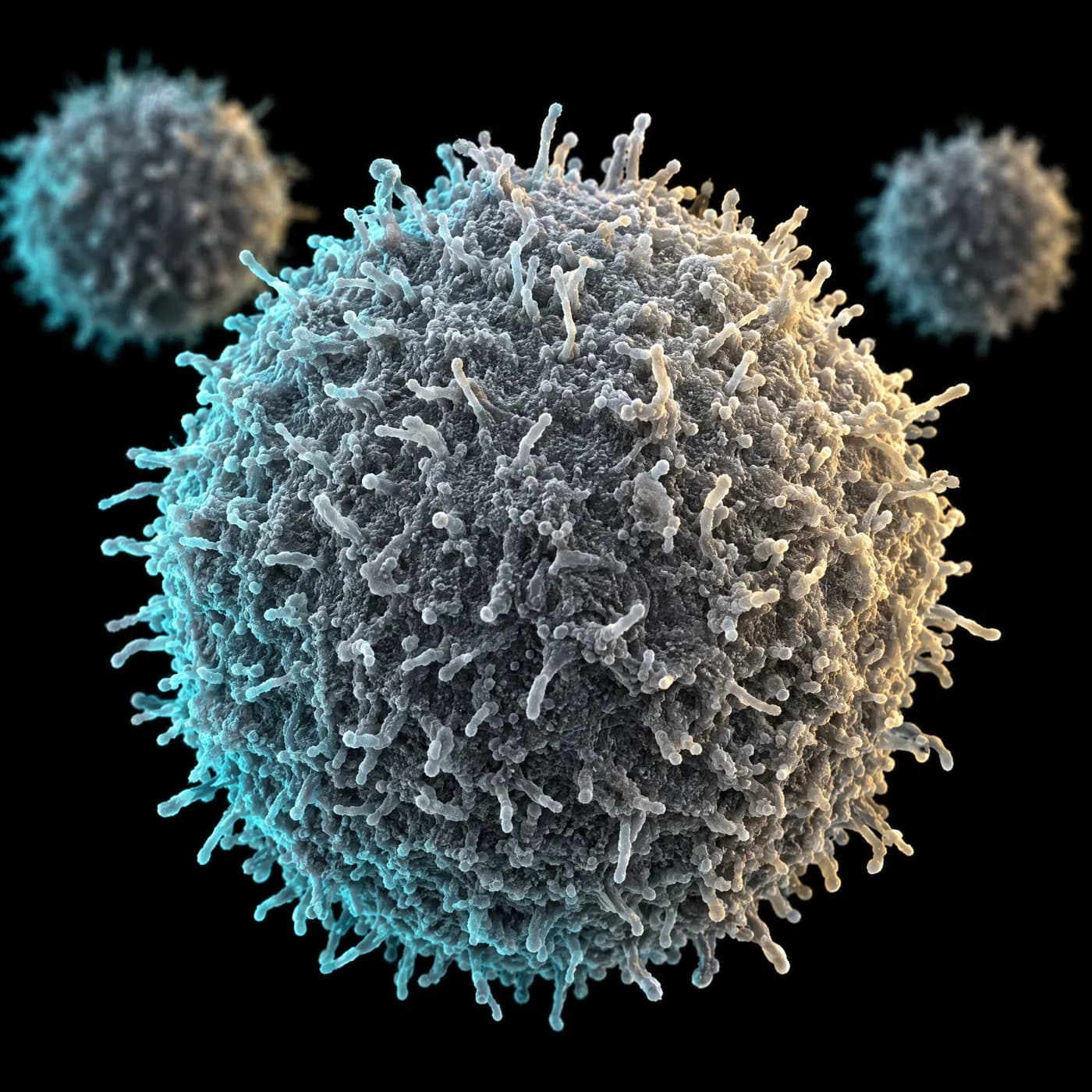
Crystagen
Khavinson 'Cytogen' short peptide · the line's immune-system bioregulator
Crystagen is a short peptide from the 'Cytogen' bioregulator line developed at Vladimir Khavinson's St. Petersburg institute, the set's immune piece. People run it for immune resilience in aging. Research from the institute reports it activates the immune system's B-cells in the aging spleen.
At a glance
- Dose
- 100–300 mcg per injection (or an equivalent capsule)
- How often
- Once a day through the course
- How
- A small injection under the skin, or a capsule under the tongue
- When
- Any steady daily time, at most a mild evening lean
- Cycle
- 10–30 day courses once or twice a year, 1–3 months between
The 30-second versionEverything on this page, fast
Immune Bioregulator · Khavinson Short Peptide · Immune Resilience
The immune piece of the Khavinson short-peptide line. Research from the institute reports it activates B-cells in the aging spleen, and people run it in short periodic courses for immune resilience as they age.
The basics
- A commercial immune 'bioregulator' from Vladimir Khavinson's Russian 'Cytogen' line.
- Sold as an oral or sublingual capsule, and as an injectable research peptide.
Why people use it
- Fills the immune slot in a Khavinson routine. It is the line's immune-assigned peptide.
- A B-cell story. The Khavinson group's paper reports it activates B-cells in the aging spleen.
- Course-based, aging-focused. Run like the rest of the Cytogen line, in short periodic courses aimed at immune resilience.
- Runs alongside the immune basics. Zinc, vitamin D, protein and sleep are the foundation it sits on.
Stacks well with
- Thymosin Alpha-1 is the immune-modulating partner, and it brings peer-reviewed human data to the pair.
- Thymalin or Thymogen is the same-family Khavinson pairing. They cover the thymus and T-cell side while Crystagen covers B-cells in the spleen.
Good to know
- It comes in two forms. The retail capsule goes under the tongue or by mouth; the research vial is injected, and the calculator here is for the vial.
- Run it the way the rest of the Cytogen line runs, in short courses once or twice a year with a 1–3 month gap.
- Its one-peptide-per-tissue logic means it slots beside Vilon or Vladonix in a fuller Khavinson stack.
What it does
Crystagen is the immune piece of the Khavinson bioregulator line. Here is what people run it for.
- Fills the immune slot in a routineIt is the line's immune-assigned short peptide, so people building a tissue-by-tissue bioregulator protocol use it there.
- B-cell activation in the aging spleenA Khavinson-group paper reports it activates B-cells, and groups it with Vilon and Thymogen as immunoprotective.
- Short courses for immune resilienceRun like the rest of the Cytogen line, in short periodic courses aimed at immune resilience in aging.
- Capsule or injectionSold as an oral or sublingual capsule, and as an injectable research peptide.
- Pairs with the immune basicsZinc, vitamin D, protein and sleep are the immune foundation people run alongside it.
Sources:PMID 28976144
How it works
Part of the bioregulator system. Khavinson's framework proposes that very short peptides enter cells and influence gene expression in one tissue. Crystagen is the line's immune-system peptide.
Activates B-cells. The one paper that names it, a Khavinson-group review of the aging spleen, groups Crystagen with Vilon and Thymogen as immunoprotective. It reports Crystagen activates B-cells of the immune system, without causing cell renewal in the aging spleen.
Sources:PMID 28976144
How to dose it
Crystagen comes as a capsule taken by mouth or under the tongue, or as a research vial injected under the skin daily, in short courses.
Dose tiersMost people run 100 to 300 mcg per injection, once a day.
- Route:
- An injection under the skin for the research vial, or a capsule under the tongue or by mouth for the retail form. The calculator covers the injection.
- Range:
- 100–300 mcg per injection (or an equivalent oral or sublingual capsule dose), once daily for 10–30 day courses.
- Where it comes from:
- The range comes from product directions.
How to injectAn injection into belly, love-handle or thigh fat, rotated between doses.
- Injection site:
- The abdomen (a couple of inches clear of the navel), love handles or outer thigh. Rotate sites between doses to prevent irritation and fatty lumps (lipohypertrophy).
- Measuring the dose:
- Draw it on a U-100 insulin syringe. At 10 mg in 2 mL bacteriostatic water, 200 mcg takes 4 syringe units. The calculator handles any vial size.
- Time of day:
- Any consistent daily time, with at most a mild evening lean.
- Food window:
- The injection is independent of meals. The capsule usually goes on an empty stomach, per the product directions.
Cycle and breaksLike the rest of the Khavinson line, it runs in short repeated courses.
- Course length:
- 10–30 day courses, one to two times per year. This is the standard Khavinson-line pattern.
- Washout:
- A 1–3 month break between courses, the broader Khavinson-line convention.
- Why short courses:
- Short, pulsed cycling is how the Khavinson school designed its bioregulators to run.
Mixing the vialA 10 mg vial plus 2 mL bacteriostatic water gives 5,000 mcg per mL.
- Mixing:
- 10 mg vial + 2 mL bacteriostatic water = 5,000 mcg per mL.
- On the syringe:
- On a 100-unit (1 mL) syringe, 100 mcg takes 2 units, 200 mcg 4 units, 300 mcg 6 units. 500 mcg (10 units) is a reference mark, not a dose.
- Other vial sizes:
- The calculator adjusts the units for any vial size.
Sources:PMID 28976144
Best time to take it

Implied best time
Anytime (consistent)
Any steady daily time through the course works, with at most a mild evening lean.
- There is no published half-life or absorption data to time a dose against, so the same time each day is what counts.
- People who lean toward the evening do it because immune consolidation and repair run overnight.
- If you cycle it alongside other Khavinson-line peptides, put them in the same daily slot to keep the course simple.
Sources:PMID 28976144
What to stack it with


People pair it with other Khavinson immune peptides or with Thymosin Alpha-1.
Crystagen + Thymalin or ThymogenThymus and T-cell peptides beside Crystagen's B-cell role in the spleen.
- Why it works:
- Thymalin (thymus extract peptides) and Thymogen (Glu-Trp) are the line's thymus and T-cell peptides. Crystagen covers B-cells, so the pair aims at both arms of adaptive immunity.
- The protocol:
- Each on its own 10–30 day Khavinson-line course, staggered or overlapping, at each product's usual dose.
- Outcome:
- Aimed at broad immune restoration in aging, the Khavinson program's goal.
Crystagen + Thymosin Alpha-1Adds a thymic peptide with peer-reviewed human data.
- Why it works:
- Thymosin Alpha-1 (Tα1), a 28-amino acid thymic peptide, enhances T-cell maturation and dendritic cell function. It has clinical use in hepatitis B and some cancer-adjuvant settings.
- The protocol:
- Tα1 at ~1.5 mg under the skin twice weekly, in 4–12 week courses, with Crystagen at its usual dose and course length.
- Outcome:
- Broader immune modulation. Crystagen brings B-cell activation, Tα1 T-cell and innate modulation.
Crystagen + Vilon or VladonixAdds vascular or broad longevity peptides to the immune pair.
- Why it works:
- Vilon (Lys-Glu) is the vascular bioregulator, Vladonix the immune and cardiovascular one. Khavinson layers peptides across tissues, treating aging deficits as system-wide.
- The protocol:
- Separate 10–30 day courses, 1–2× per year each. The most discussed order runs Crystagen with one immune-family peptide first, then a vascular or longevity peptide in a separate course.
- Outcome:
- The broadest stack in the family, aimed at whole-system bioregulator restoration.
Support nutrients
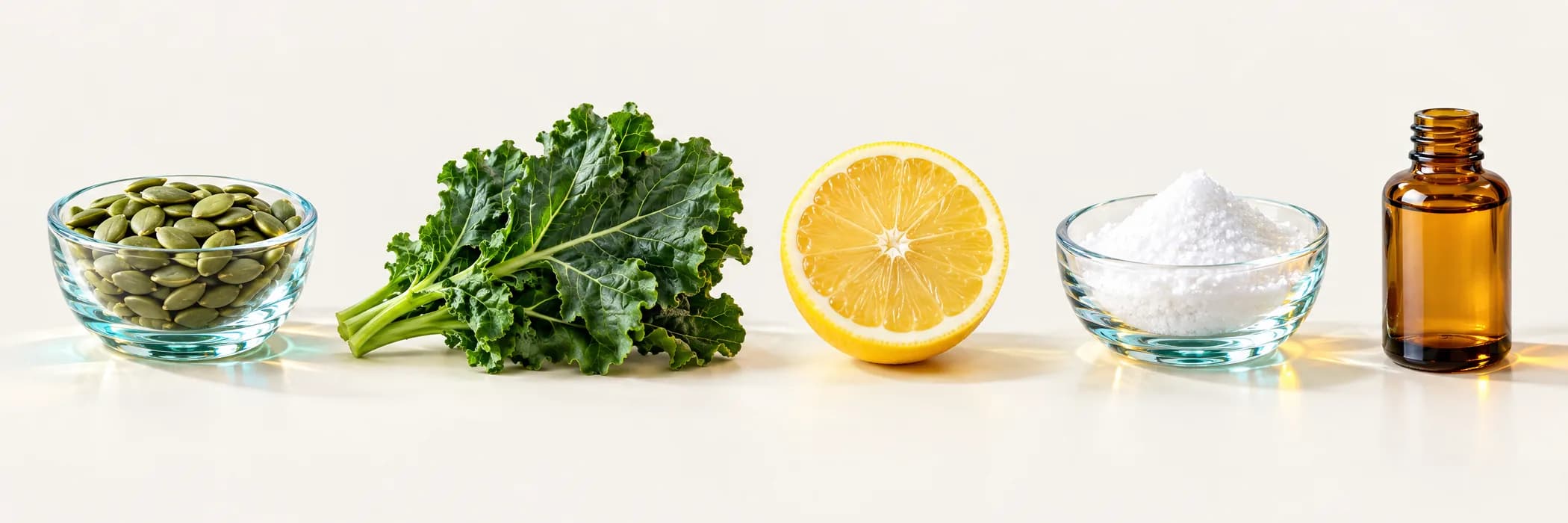
People add the nutrients immune cells run on.
Fuel immune activationZinc, vitamin D and selenium, the nutrients immune activation depends on.
- Zinc:
- Essential for normal immune and T-cell function. 15–30 mg zinc picolinate or bisglycinate daily. Past 4 weeks, add 1–2 mg copper bisglycinate to prevent copper depletion.
- Vitamin D:
- Its receptors sit on nearly every immune cell, B-cells included. Most adults need 2,000–5,000 IU (international units) daily to reach a sufficient blood level. Test first if possible.
- Selenium:
- Needed for the glutathione peroxidase enzymes that shield immune cells from oxidative stress. 100–200 mcg selenomethionine daily. Do not exceed 400 mcg/day, since the therapeutic window is narrow.
Raw material for antibodiesImmune cells, B-cells most of all, run on protein.
- Protein:
- Antibodies are proteins. Low intake is a primary driver of weak immunity in older adults. Target ≥1.2–1.6 g/kg bodyweight daily from whole food.
- Vitamin C:
- Supports immune cell function and neutrophil motility, and depletes fast during an immune response. 500–1,000 mg daily in split doses, with 2–3 g/day during active illness.
Sleep and a tested productSleep is the biggest free immune lever. Testing shows what is in the product.
- Sleep:
- 7–9 hours a night. Cytokine release, B-cell activity and immune memory consolidate mostly during sleep. No supplement overrides a chronic sleep deficit.
- Third-party testing:
- Sellers list different sequences, so check what is in the product. Third-party COA (certificate of analysis) testing is limited without a reference standard, but still tells you more.
Dose calculator
Reconstitution calculator
Calculated for a 1 mL U-100 insulin syringe (100 units/mL).
Units per dose
4 units
Draw this many units on a U-100 syringe
Each unit holds 50 mcg
- Volume per dose
- 0.04 mL
- Doses per vial
- 50
- Concentration
- 5 mg/mL
One vial lasts
- Daily
- 50 days
- Every other day
- 100 days
- 5×/week
- 70 days
Research use only. Not for human consumption. Outputs are reference values based on research literature. Verify all measurements independently.
Side effects and what to watch
What people notice. Sellers describe it as well tolerated, and no serious harm has been documented.
How people handle it. Rotate injection sites between doses to prevent irritation and fatty lumps.
Worth knowing. No formal safety studies have been published. Purity and identity depend on the source, which is why third-party testing matters.
Common questions
How is Crystagen dosed?
Most people run 100–300 mcg per injection, or an equivalent oral capsule, once a day through a 10–30 day course.
Do I need to cycle Crystagen?
Yes. It runs in 10–30 day courses, one to two times a year, with a 1–3 month break between courses.
When do people take it?
Any steady daily time through the course, with at most a mild evening lean, since immune repair runs overnight.
What does Crystagen stack with?
Other Khavinson immune peptides. Thymalin or Thymogen cover the thymus and T-cell side while Crystagen covers B-cells. Thymosin Alpha-1 brings peer-reviewed human data, and Vilon or Vladonix extend it to a fuller stack.
Capsule or injection?
Both exist. The retail capsule goes under the tongue or by mouth, usually on an empty stomach. The research vial is injected under the skin, and the calculator here is for the vial.
What is Crystagen made of?
A short peptide, but sellers list different sequences. Some call it a three-amino-acid peptide (often given as Glu-Asp-Pro), others a four-amino-acid one. No primary source settles it, so this page lists no sequence.
Deep dive
Doses used in studies · Molecular identity · References
10From the researchDoses used in studies
This is the review behind Crystagen's B-cell effect. It reports the effect and gives no dose.
| Dose | Route | Model | Outcome | Sources: |
|---|---|---|---|---|
| Not asserted | Not applicable (review) | Spleen short-peptide immunoprotection review, the ONLY record naming Crystagen (Chervyakova/Khavinson 2014, Russian, English abstract) | Qualitative claim only: Crystagen 'activates B-cells of the immune system' but does not cause cell renewal in the aging spleen; no sequence, no dose, single-school | PMID 28976144 |
11ChemistryMolecular identity
- Molecular formula
- Unverified, not asserted
- Molecular weight
- Unverified, not asserted
- CAS number
- Unverified, none found
- Sequence
- Unverified, not asserted (vendors disagree: tripeptide EDP vs tetrapeptide; no primary source)PubChem PUGREST.NotFound; conflicting vendor claims
- Class
- Commercial Khavinson 'short peptide' / 'Cytogen' immune bioregulator (supplement)SPIBG commercial line (CITED)
- PubChem CID
- None (no CID exists for 'Crystagen')PubChem PUGREST.NotFound (compound)
- PubChem SID
- None (no substance record exists)PubChem PUGREST.NotFound (substance)
- Monoisotopic mass
- Unverified, not asserted (no confirmed structure to compute from)No primary record
- Molecular target
- Unverified. The single primary record claims only that it 'activates B-cells' in the aging spleen; HSP/cytokine mechanisms in vendor copy are unsourcedPMID 28976144 (Chervyakova 2014; Russian)
- Half-life
- Not established (no pharmacokinetics; chemical identity itself unconfirmed)Not established
- Peer-reviewed literature
- Exactly one PubMed record names Crystagen (PMID 28976144; Russian, English abstract only)PubMed esearch (verified 2026-05-30)
- Regulatory status
- NOT FDA-approved; sold as a dietary supplement / 'Cytogen' bioregulator; Western grey-market onlyAbsence of FDA record; commercial sources (CITED)
12Primary sourcesReferences
- PMID 28976144Chervyakova, Linkova, Chalisova, Khavinson et al., Adv Gerontol 2014. Molecular aspects of immunoprotective peptide activity in aging spleen (the only record naming Crystagen; Russian, English abstract)
- PubChem PUGREST.NotFoundPubChem. Name lookup for 'Crystagen' returns no compound and no substance record (chemistry unverifiable)
Reviewed by Ki Researcher Team · Research use only · Not medical advice · Updated 2026-09-24