

Wolverine Blend
Injury & soft-tissue stack · BPC-157 10 mg + TB-500 10 mg, two vials
The Wolverine stack pairs BPC-157 with TB-500, the actin-binding fragment of Thymosin β4, as two 10 mg vials. People run both for tendon, ligament and muscle recovery. Run each on its own schedule, or combine them into one vial for one daily draw.
Buy Wolverine StackTwo 10 mg vials, BPC-157 and the TB-500 fragment
Ki Researcher is affiliated with Ki Peptides.
Ships to the US only. Buyers must be 21 or older.
At a glance
- Dose
- Combined, 500–1,000 mcg of blend a day (300–500 mcg the first week)
- How often
- Once daily, split morning and night for an active injury
- How
- A small injection under the skin (belly fat)
- When
- Evening, to ride your overnight repair window
- Cycle
- 4–6 weeks on, then a 2–4 week break
The 30-second versionEverything on this page, fast
Injury recovery · Tendons & ligaments · Soft-tissue repair · Two vials, one stack
The classic recovery pair, sold as two vials. Wolverine pairs BPC-157's blood-supply-building repair with TB-500's cell-migration sequence, 10 mg of each. Run them on their own schedules, or combine both into one vial for a single daily draw at a straight 1 : 1.
The basics
- Two vials, 10 mg of BPC-157 and 10 mg of TB-500 (the Ac-LKKTETQ fragment of Thymosin β4). Combined in one vial they make a 1 : 1 blend, one draw for both.
- The injury member of the blend family, the copper-free pair. GLOW adds GHK-Cu for skin and scars, and KLOW adds KPV on top of that.
Why people use it
- Studied for tendon, ligament and muscle recovery. BPC-157 grows fresh blood supply into the repair zone while TB-500 pulls repair cells in.
- Two different levers. Blood supply and cell arrival are separate halves of the same job.
- Works body-wide. Both peptides circulate, so the signal reaches tissue far from the injection.
- Your choice of schedule. Separate vials let each peptide keep its own schedule. Combined, one daily draw covers both.
Stacks well with
- GHK-Cu, 1–2 mg daily when skin or scar quality matters too. Pre-mixed with both peptides, it's GLOW.
- KPV, 300–500 mcg daily when inflammation is part of the problem. With GHK-Cu in the mix as well, the pre-mixed answer is KLOW.
Good to know
- Combined at 1 : 1, both run on one schedule. Daily, BPC-157 lands in its own range while TB-500 arrives as a steady drip instead of its usual weekly shot. Kept separate, each runs its own schedule.
- Combined, twice-weekly dosing to suit TB-500 doesn't fit. A 2–2.5 mg TB-500 shot is 40–50 units of the blend, which carries 2–2.5 mg of BPC-157 in one hit and none on the other five days.
- No copper in either vial, so none of the metal-and-methionine worry that follows GLOW and KLOW, and the usual zinc-plus-copper cofactor pairing works the normal way round here.
- Banned in tested sport. BPC-157 and TB-500 are both on the WADA list.
- TB-500's sequence spurs vessel growth and cell migration, so people with an active or recent cancer skip this stack.
- Once mixed, refrigerate and finish within about 4 weeks. Combined, the two vials last 20 days at 10 units a day.
What it does
The two-peptide answer when an injury is the goal.
- Studied for tendon, ligament and muscle recoveryIn rats, BPC-157 closed a thigh tendon-to-muscle gap that never heals alone, with full function back by day 42.
- Tendon cells primed for growth hormoneIn rat tendon cells, BPC-157 raised growth-hormone receptors up to sevenfold, and added growth hormone then made them multiply faster.
- Faster closure of skin woundsIn aged mice, the uncapped TB-500 sequence raised wound closure and collagen by day 7, matching the full protein.
- Works far from the injection siteIn rats with a cut knee ligament, BPC-157 in drinking water alone improved strength and function over 90 days.
- Draws in the cells that build vesselsIn lab tests, TB-500's seven-amino-acid sequence drew human vessel-lining cells as strongly as the whole Thymosin β4 protein.
Sources:PMID 34829776PMID 25415472PMID 12581423PMID 20225319PMID 14500546
How it works
Builds blood supply. BPC-157 switches on the growth of new blood vessels into a healing site through the VEGFR2–Akt–eNOS pathway. It also speeds fibroblasts, the cells that rebuild connective tissue, and drives organized collagen laydown.
Brings in the repair cells. TB-500 is Ac-LKKTETQ, the actin-binding piece of Thymosin β4. In lab tests the uncapped sequence moved vessel-lining cells and sprouted vessels as well as the whole protein, and sped skin repair in aged mice.
Two levers, one job. Blood supply and cell arrival are different halves of a repair. Both peptides circulate after an injection under the skin, so they reach tissue far from the needle.
Sources:PubChem CID 9941957PubChem CID 62707662UniProt P62328PMID 27847966PMID 33051481PMID 21030672PMID 25415472PMID 17628536PMID 25313062PMID 14500546PMID 12581423
How to dose it
Run the two vials apart or combine them for one daily shot, half BPC-157 and half TB-500.
Dose tiersCombined, each unit holds 100 mcg of blend, 50 mcg of each peptide.
- Low or first week, 3–5 units (300–500 mcg):
- 150–250 mcg of each daily, BPC-157's low band. TB-500 totals 1.05–1.75 mg a week, inside its 0.5–2 mg light range. Used to check tolerance or as maintenance between injuries.
- Standard, 5–10 units (500–1,000 mcg):
- 250–500 mcg of each, once daily, BPC-157's full standard band. TB-500 totals 1.75–3.5 mg a week, around its 2–2.5 mg weekly maintenance.
- Top, 10 units (1,000 mcg):
- 500 mcg of each a day, often split AM and PM at 250 mcg BPC-157 each. TB-500 totals 3.5 mg a week. BPC-157's 500 mcg/day sets the ceiling.
Separate or combinedBPC-157 runs daily, TB-500 weekly. Separate vials keep both schedules. Combined, daily wins.
- Separate vials:
- Each follows its own page. BPC-157 runs daily, TB-500 weekly or more often while loading.
- Combined, daily wins:
- BPC-157 gets its own 250–500 mcg band and schedule. TB-500 arrives as a steady daily drip.
- Twice a week doesn't fit:
- A 2–2.5 mg TB-500 shot is 40–50 units (0.40–0.50 mL). That carries 2–2.5 mg of BPC-157, four to five times its daily ceiling.
- For a TB-500 loading phase:
- TB-500 loads at 4–5 mg a week (2–2.5 mg twice weekly). Ten combined units a day give 3.5 mg. One extra 500 mcg–1 mg TB-500 shot weekly reaches 4–4.5 mg.
How to injectInto body fat, on the schedule you chose.
- Injection site:
- Abdomen, love handles or outer thigh. Rotate sites to avoid irritation and fatty lumps. Both peptides circulate, so injecting near the injury is optional.
- Time of day:
- Evening, or any steady daily time. For the AM/PM split, space doses 10–12 hours apart.
- Food:
- With or without food.
Cycle and breaks4–6 weeks on, then 2–4 weeks off. Start early after the injury.
- Acute-injury block:
- 5–10 combined units daily. The two vials last 20 days at 10 units, so 4 weeks takes a stack and a half, 6 weeks just over two.
- Maintenance block:
- 6–8 weeks at 3–5 units a day, 150–250 mcg of each peptide.
- Maintenance vial size:
- Only 10 mg at 5 units (20 days) fits the 4-week vial life. At 3 units it runs 33 days. 20 mg runs 67 at 3, 40 at 5.
- Washout:
- 2–4 weeks off after a 4-week block, the full 4 after 6 weeks or longer. Reassess the injury before repeating.
Mixing the vialBoth vials combined in 2 mL of bacteriostatic water = 10,000 mcg/mL.
- Units on a U-100 syringe:
- 3, 5, 7.5 and 10 units hold 300, 500, 750 and 1,000 mcg. Halve each per peptide.
- Other vial sizes:
- A pre-mixed 10 mg (5/5) vial with 1 mL matches.
- Read the split:
- The calculator splits any draw by peptide. It assumes the 10/10 recipe, so check your label.
- Vial life:
- Combined, the pair is 20 doses at 10 units, 40 at 5. Refrigerate and finish within about four weeks.
Sources:PMID 27847966PMID 36588717PMID 20225319PMID 34829776PMID 10469335PMID 34346165PMID 20536472
Best time to take it

Implied best time
Evening
Most people inject Wolverine in the evening, so both repair signals work through the body's overnight recovery window.
- The body does most of its rebuilding overnight. Deep sleep brings the natural growth-hormone pulse and the least load on healing tissue.
- Both peptides clear the blood within hours, so a steady daily slot matters more than the hour.
- Morning works too. For the 5 units AM + 5 units PM split, space the two 10–12 hours apart and favor the evening half.
Sources:PMID 36588717PMID 23084823
What to stack it with


Wolverine already pairs the two main repair signals, so useful additions come from a different angle.
Wolverine + extra TB-500Raises TB-500 to a real loading phase without touching the BPC-157 dose.
- Why it works:
- Combined, BPC-157 stops at 500 mcg/day, which caps the blend's TB-500 at 3.5 mg a week, just under its 4–5 mg/week loading band. A third vial raises only TB-500.
- The protocol:
- Wolverine 10 units daily plus one 500 mcg–1 mg TB-500 shot a week, 4–4.5 mg weekly for the first 4–6 weeks. A full 2–2.5 mg twice-weekly protocol on top overshoots.
- Injection tips:
- Rotate sites. The top-up can be co-drawn with the daily dose.
- Outcome:
- People run it on a fresh tendon, ligament or post-surgical injury, then keep the blend alone for maintenance.
Wolverine + KPVAdds an inflammation brake to the two repair signals.
- Why it works:
- KPV turns down NF-κB, the master inflammation switch, so repair happens in calmer tissue with less scarring. TB-500's sequence drives cell migration, while calming inflammation is KPV's whole job.
- The protocol:
- Wolverine 5–10 units daily plus KPV 300–500 mcg under the skin once daily, co-drawn or nearby. Taper as swelling resolves. Want GHK-Cu too? That pre-mix is KLOW.
- Outcome:
- People run it on acute sprains, inflamed tendons and post-surgical swelling, where calming the tissue matters as much as the repair.
Wolverine + GHK-CuAdds copper-peptide collagen remodeling for skin, scars and connective-tissue quality.
- Why it works:
- GHK-Cu drives collagen and matrix synthesis and delivers the copper that cross-links new fibers. Wolverine handles blood supply and cell arrival. GHK-Cu handles the quality of what gets built.
- The protocol:
- Wolverine 5–10 units daily plus GHK-Cu 1–2 mg under the skin daily, at separate rotated sites.
- Or run GLOW:
- Ten units of GLOW gives 333 mcg each of BPC-157 and TB-500, still inside BPC-157's 250–500 mcg band, plus 1.67 mg GHK-Cu. Separate vials keep the copper dose independent.
- Outcome:
- People run it when scar quality, skin or post-surgical remodeling matters alongside the injury.
Support nutrients
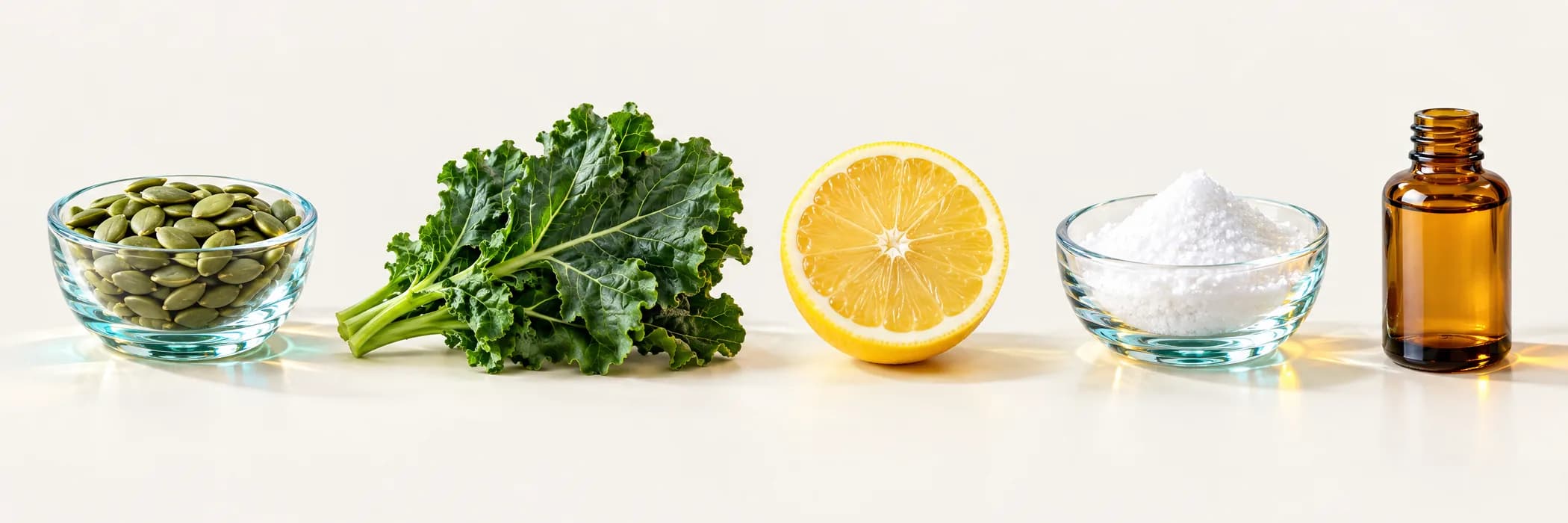
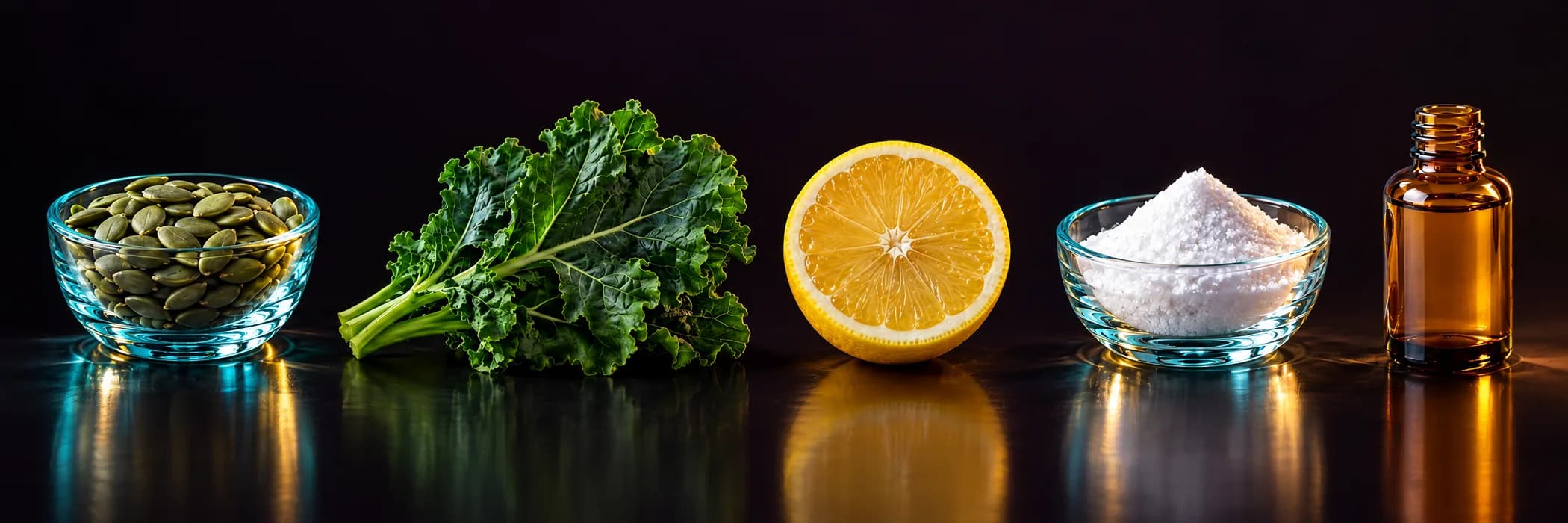
Feed the repair both peptides signal for. Nothing here is in either vial, so the standard stack applies.
Collagen building blocksBoth peptides signal for new tissue. These supply the raw material it is built from.
- Hydrolyzed collagen + vitamin C:
- 10–15 g collagen peptides (Type I/III) with 500 mg vitamin C, 30–60 min before activity. In a human study, vitamin-C gelatin before exercise doubled a collagen-synthesis marker.
- Glycine, proline and protein:
- The bulk of collagen's sequence. People keep protein at 1.6–2.0 g/kg/day and often add 5–10 g/day glycine during the acute phase.
Feed the nitric-oxide pathwayBPC-157 works through eNOS and TB-500's sequence sprouts vessels. New vessels need nitric oxide to open.
- L-arginine or L-citrulline:
- L-arginine 3–6 g/day or L-citrulline 3 g/day, which converts more efficiently. Morning or pre-workout on an empty stomach. People with low blood pressure skip it.
Add the cross-linking mineralsZinc shapes the remodel, copper cross-links new collagen. No copper in either vial, so add it.
- Zinc 15–30 mg:
- Zinc picolinate or bisglycinate daily, with food. It powers the enzymes that clear damaged matrix, so repair stays organized instead of scarring.
Sources:PMC2589959PMID 27852613PMID 9587142PMC5793244PMID 27847966PMID 33051481
Dose calculator
Reconstitution calculator
Calculated for a 1 mL U-100 insulin syringe (100 units/mL).
Units per dose
5 units
Draw this many units on a U-100 syringe
Each unit holds 100 mcg
This dose contains
- BPC-157250 mcg
- TB-500250 mcg
Fixed ratio. Every draw carries all of the vial's peptides in the same proportions; only the total changes.
- Volume per dose
- 0.05 mL
- Doses per vial
- 40
- Concentration
- 10 mg/mL
One vial lasts
- Daily
- 40 days
- Every other day
- 80 days
- 5×/week
- 56 days
Research use only. Not for human consumption. Outputs are reference values based on research literature. Verify all measurements independently.
Side effects and what to watch
What people notice. Injection-site irritation and fatty lumps from reusing one spot are the usual complaints, and rotating sites fixes both.
What the research shows. BPC-157's animal toxicology found no serious toxicity. In 28-day studies, clotting time shifted in rats and dogs and liver-related markers rose. Dogs' creatinine, a kidney marker, dipped at high doses and recovered. In human IV trials, full-length Thymosin β4, TB-500's parent protein, was well tolerated up to 1,260 mg with no serious adverse events. A woman using a BPC-157 and TB-500 product got skin and gum darkening that returned when she restarted it.
Skip it or take care if. You have an active or recent cancer. TB-500's sequence drives vessel growth and cell migration in lab tests, which can also feed a tumor. Kept as two vials, each peptide can be adjusted on its own.
Sources:PMID 32334036PMID 34346165PMID 20536472PMID 36613994PMID 34992578WADAFDA briefing document (BPC-157), PCAC July 2026
Common questions
What peptides are in the Wolverine stack?
BPC-157 and TB-500, 10 mg of each, as two vials. TB-500 here is Ac-LKKTETQ, the actin-binding fragment of Thymosin β4. Pre-mixed 20 mg vials and a half-size 10 mg version use the same 1 : 1 recipe.
How is the Wolverine stack dosed?
Combined in 2 mL, most people run 5–10 units once a day, 500–1,000 mcg of blend, half BPC-157 and half TB-500. Kept separate, BPC-157 runs daily and TB-500 weekly, as on their own pages.
Should I combine the two vials or keep them separate?
Combined, you dose daily, which keeps BPC-157 in its 250–500 mcg band and gives 1.75–3.5 mg of TB-500 a week. Separate vials let TB-500 keep its weekly schedule, including a twice-weekly loading phase.
How long do people run the Wolverine stack?
Most run 4–6 weeks on, then 2–4 weeks off. Maintenance blocks run 6–8 weeks at 3–5 units a day.
Wolverine, GLOW or KLOW?
They nest. Wolverine is the injury pair. GLOW adds 50 mg GHK-Cu for skin and scars. KLOW adds 10 mg KPV for inflamed skin.
How long does a Wolverine stack last?
Combined, the two vials make 20 doses at 10 units and 40 at 5. Refrigerate once mixed and finish within about four weeks.
Deep dive
Doses used in studies · Molecular identity · References
10From the researchDoses used in studies
Doses from the studies behind each peptide. TB-500 rows marked full-length used the whole Thymosin β4 protein, not the fragment.
| Dose | Route | Model | Outcome | Sources: |
|---|---|---|---|---|
| 10 µg/kg BPC-157 + 60 µg/kg TB-500 daily, 30 days | Intraperitoneal | Rat (Achilles tendon repair), each peptide alone and the pair | Only TB-500 raised load to failure significantly (median 37.4 vs 26.9 N, 4 tendons per group); TB-500 and the pair improved Movin histology scores; the pair did no better than either peptide alone | PMID 42542926 |
| 10 µg/kg | Intraperitoneal | Rat (ligament, 90 days), BPC-157 | Ligament healing + biomechanics | PMID 20225319 |
| 10 µg/kg | IP / oral (drinking water) | Rat (myotendinous, days 7–42), BPC-157 | Functional + microscopic recovery | PMID 34829776 |
| 10 µg/kg | Intraperitoneal | Rat (Achilles tendon, days 1–14), BPC-157 | Higher load to failure, better function and full tendon integrity restored | PMID 14554208 |
| 20–500 µg/kg | IV & IM | Rat (PK), BPC-157 | Pharmacokinetics (n=6/group) | PMID 36588717 |
| 0.01% | Topical | Aged mice (26 months, skin wounds), uncapped TB-500 sequence | More wound closure and collagen by day 7, comparable to full-length Tβ4 | PMID 12581423 |
| 10 mg, single dose | Subcutaneous | Horse (thoroughbred geldings), TB-500 (Ac-LKKTETQ) | Plasma peak at 1–2 h; below quantification by 6–10 h | PMID 23084823 |
| Topical / IP | Topical / IP | Rat (dermal wound), full-length Tβ4 | +42% re-epithelialization (d4), up to +61% (d7) | PMID 10469335 |
| IP / intramyocardial | IP / intramyocardial | Mouse (myocardial infarction), full-length Tβ4 | Improved cardiac function after infarction | PMID 15565145 |
| 0.05–25 µg/kg | Intravenous | Human (Phase I PK/safety, n=84; one dose or 10 daily doses), full-length Tβ4 | Dose-proportional PK; no dose-limiting toxicity | PMID 34346165 |
| 42–1260 mg | Intravenous | Human (Phase I PK/safety, n=40; one dose, then 14 daily doses), full-length Tβ4 | Dose-proportional PK; well tolerated | PMID 20536472 |
11ChemistryMolecular identity
- Composition
- BPC-157 10 mg + TB-500 10 mg (Ac-LKKTETQ), as two vials or one pre-mixed 20 mg vialCross-source vendor agreement
- Ratio
- 1 : 1 by mass, 50 % BPC-157 · 50 % TB-500Calculated
- Structure / class
- Two research peptides sold together, as two vials or co-lyophilized in one vial. Not a new molecule; each keeps its own identity and pharmacologyCross-source vendor agreement
- BPC-157 (10 mg)
- GEPPPGKPADDAGLV (15 AA) · C62H98N16O22 · 1,419.5 g/mol · CAS 137525-51-0PubChem CID 9941957
- TB-500 (10 mg)
- Ac-LKKTETQ (7 AA, Thymosin β4 residues 17–23) · C38H68N10O14 · 889.0 g/mol · CAS 885340-08-9PubChem CID 62707662
- Vial size
- Two 10 mg vials (20 mg in all), or one pre-mixed 20 mg vial. A pre-mixed half-size 10 mg (5/5) vial is also sold. Combined in 2 mL, the pair gives 10,000 mcg/mL, as does the 10 mg vial with 1 mLCross-source vendor agreement
- Molecular target
- Two separate targets. BPC-157 acts via the nitric-oxide / VEGFR2–Akt–eNOS angiogenic pathway; TB-500 carries Thymosin β4's actin-binding segment, which drives vessel-cell migration and sprouting in lab testsPMID 27847966 · PMID 14500546
- Half-life (per component)
- No single clock. BPC-157 clears within minutes (<30 min, rat IV). TB-500 peaked 1–2 h after a subcutaneous dose in horses and fell below quantification by 6–10 h. Two separate curves, not onePMID 36588717 · PMID 23084823Half-life curve →
- Regulatory status
- Neither component is an approved drug; both are prohibited in sport (WADA S0 / S2.3)FDA / WADA Prohibited List
12Primary sourcesReferences
- PubChem CID 9941957PubChem CID 9941957 (BPC-157; C62H98N16O22; no sulfur, so no methionine/cysteine to oxidize)
- UniProt P62328UniProt P62328 (human Thymosin β4 / TMSB4X)
- PMID 27847966J. Mol. Med. 2017 (BPC-157, VEGFR2/angiogenesis)
- PMID 33051481Sci. Rep. 2020 (BPC-157, NO/eNOS pathway)
- PMID 21030672J. Appl. Physiol. 2011 (BPC-157, fibroblast FAK/paxillin migration)
- PMID 25415472Molecules 2014 (BPC-157, growth-hormone receptor on tendon cells)
- PMID 17628536Eur. J. Pharmacol. 2007 (BPC-157, EGR-1 and collagen laydown)
- PMID 20225319J. Orthop. Res. 2010 (BPC-157, rat ligament healing)
- PMID 34829776Biomedicines 2021 (BPC-157, rat myotendinous recovery)
- PMID 36588717Front. Pharmacol. 2022 (BPC-157, rat/dog pharmacokinetics)
- PMID 32334036Regul. Toxicol. Pharmacol. 2020 (BPC-157, formal animal safety/toxicology)
- PMID 8506348PNAS 1993 (Tβ4 actin ATP/ADP affinity)
- PMID 25313062PNAS 2014 (structural basis, Tβ4–actin)
- PMID 15565145Nature 2004 (Tβ4, ILK/Akt, cardiac repair)
- PMID 10469335J Invest Dermatol 1999 (Tβ4 wound healing, rat)
- PMID 34992578Front. Endocrinol. 2021 (Tβ4 function & application review)
- PMID 34346165J Cell Mol Med 2021 (Phase I rhTβ4, IV PK/safety)
- PMID 20536472Phase I synthetic Tβ4, IV PK/safety
- PMID 36613994RGN-259 Phase III neurotrophic keratopathy (Tβ4 eye drops)
- PMC2589959Ascorbate & collagen (review)
- PMID 27852613Shaw et al. 2017 (vitamin-C–enriched gelatin & collagen synthesis)
- PMID 9587142Rucker et al. 1998 (copper and lysyl oxidase cross-linking)
- PMC5793244Zinc in wound healing (review)
- WADAWADA Prohibited List (BPC-157 S0; Thymosin β4 S2.3; prohibited at all times)
- PMID 42542926Biçer et al., Jt Dis Relat Surg 2026 (BPC-157, TB-500 and the pair, rat Achilles tendon repair, daily for 30 days)
- PMID 14554208Staresinic et al., J Orthop Res 2003 (BPC-157, transected rat Achilles tendon, days 1–14)
- FDA briefing document (BPC-157), PCAC July 2026FDA briefing document on BPC-157, Pharmacy Compounding Advisory Committee, July 23–24, 2026
- PubChem CID 62707662PubChem CID 62707662 (TB-500, the Ac-LKKTETQ fragment of Thymosin β4)
- PMID 14500546Philp et al., FASEB J 2003 (the actin-binding site LKKTETQ drives angiogenesis)
- PMID 12581423Philp et al., Wound Repair Regen 2003 (Tβ4 and LKKTETQ in aged and diabetic mice)
- PMID 23084823Ho et al., J Chromatogr A 2012 (TB-500 in horse urine and plasma)
Wolverine Stack
Two 10 mg vials, BPC-157 and the TB-500 fragment
Ki Researcher is affiliated with Ki Peptides.
Ships to the US only. Buyers must be 21 or older.
Reviewed by Ki Researcher Team · Research use only · Not medical advice · Updated 2026-10-19