

Cagrilintide / Semaglutide Blend
Fixed-ratio metabolic blend · cagrilintide 5 mg + semaglutide 5 mg · once weekly
Cagrilintide and semaglutide in one vial, 5 mg each (CagriSema). People run it for weight loss. It works two fullness signals, amylin and GLP-1 (glucagon-like peptide-1). In a 68-week trial of 3,417 adults the pair cut body weight 20.4% on average, against 3.0% on placebo.
At a glance
- Dose
- 0.25 mg of each to start, up to 2.4 mg of each
- How often
- Once a week, same day
- How
- A small injection under the skin, one syringe for both halves
- When
- Any time of day; hold the same weekday
- Ramp
- Step up no sooner than every 4 weeks, to keep nausea manageable
The 30-second versionEverything on this page, fast
Two appetite pathways · Once-weekly · Trial-tested pairing · Slow titration
The most-studied pairing in obesity research, in one vial. Cagrilintide copies amylin and Semaglutide copies GLP-1, two different fullness signals on two different receptors, and the 68-week phase 3 trial of the pair reported 20.4% mean body-weight reduction against 3.0% on placebo. One injection a week, both halves stepped up together.
The basics
- A pre-mixed powder: 5 mg cagrilintide + 5 mg semaglutide (a 1 : 1 ratio), taken once a week.
- Known as CagriSema. Semaglutide is the Ozempic/Wegovy molecule; cagrilintide is the amylin half that the GLP-1 drugs don't have.
Why people use it
- Two satiety levers instead of one. Amylin and GLP-1 run through separate receptors, so the appetite effect adds rather than overlaps.
- The largest trial result of any pairing here. 20.4% mean weight reduction over 68 weeks in 3,417 people, and 22.7% among those who stayed on it.
- More than either half alone. In the same trial, semaglutide alone reached 16.1% and cagrilintide alone 11.8%, against 22.7% for the pair.
- One weekly shot for both. The two share a ~7-day half-life, so they ramp and dose on the same schedule.
Stacks well with
- Protein, creatine and resistance training are the most important things to run alongside, since a large share of GLP-1 weight loss is lean mass and appetite suppression makes protein hard to hit.
- Ipamorelin + CJC-1295, a growth-hormone nudge people add to defend lean mass through a long deficit.
Good to know
- Stomach effects are the main cost. Nausea, vomiting, diarrhea and constipation affected about four in five trial participants versus two in five on placebo, mostly mild and fading. The slow ramp is the lever.
- Semaglutide's label says to skip it with a personal or family history of medullary thyroid carcinoma or multiple endocrine neoplasia type 2 (MEN 2).
- Weight comes back after stopping, so people run it long term.
- A 10 mg vial is only about two doses at the 2.4 mg target, so plan supply in weeks, not months.
- In a 2026 head-to-head at 84 weeks the pair reached 23% weight loss, short of matching tirzepatide 15 mg.
What it does
- Two appetite pathways instead of oneAmylin and GLP-1 cut food intake through separate receptors, so the two effects add rather than duplicate.
- 20.4% of body weight lostIn REDEFINE 1 (68 weeks, 3,417 adults), 20.4% mean loss against 3.0% on placebo, 22.7% for those who stayed on.
- More than either half aloneThe same trial ran each alone. Semaglutide reached 16.1% and cagrilintide 11.8%, against 22.7% for the pair.
- One weekly injection for both halvesBoth last about a week, so one shot and one ramp cover both. Simpler than two vials on two schedules.
- 23% at 84 weeks in a head-to-headIn a 2026 head-to-head over 84 weeks the pair reached 23% weight loss, short of matching tirzepatide 15 mg.
Sources:PMID 40544433PMID 34798060Regulatory status tracker (Drugs.com)
How it works
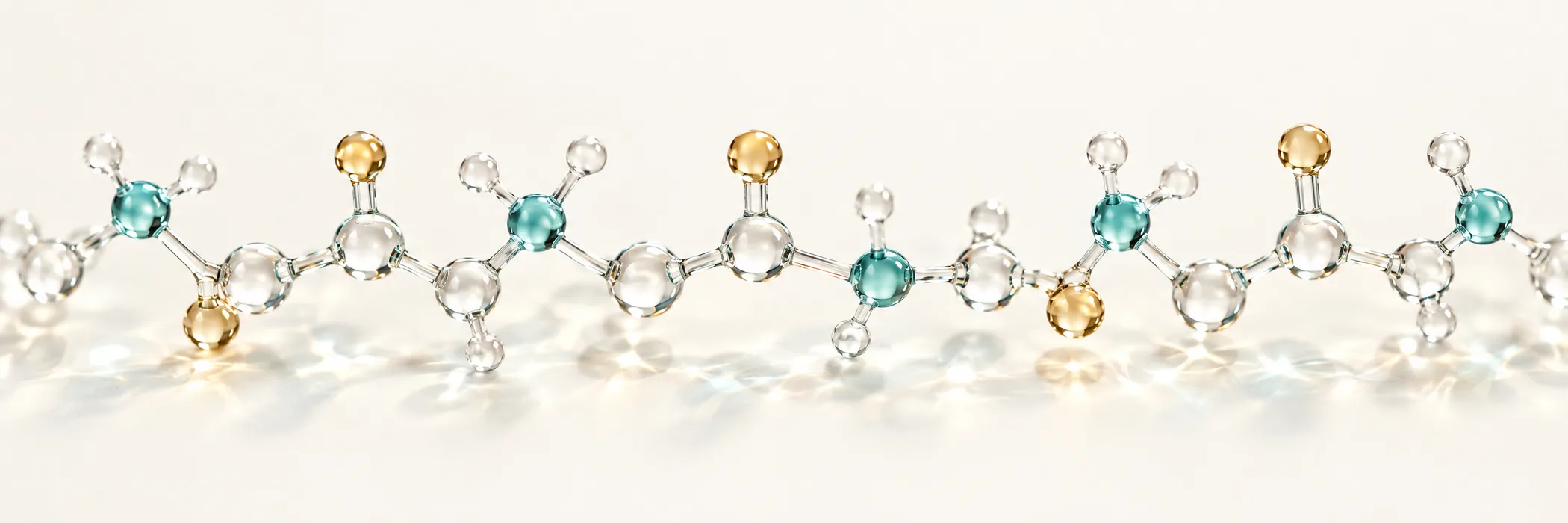

Every draw carries both in the vial's ratio. The 2.4 mg + 2.4 mg pairing is what Novo Nordisk developed as CagriSema and took through phase 3.
The GLP-1 half. Semaglutide, the FDA-approved Ozempic and Wegovy molecule, is a long-acting copy of glucagon-like peptide-1, the gut hormone released after eating. It slows the stomach, raises fullness and releases insulin when blood sugar is high.
The amylin half. Cagrilintide is a long-acting copy of amylin, a pancreas hormone that signals fullness and slows the stomach through its own receptors. Separate circuits, so the effects add rather than overlap. In phase 3 each alone lost less than the two together.
Both last about a week. One weekly shot suits both.
Sources:PubChem CID 56843331PubChem CID 171397054PMID 34288673DailyMed (Wegovy)PMID 40544433PMID 33894838
How to dose it
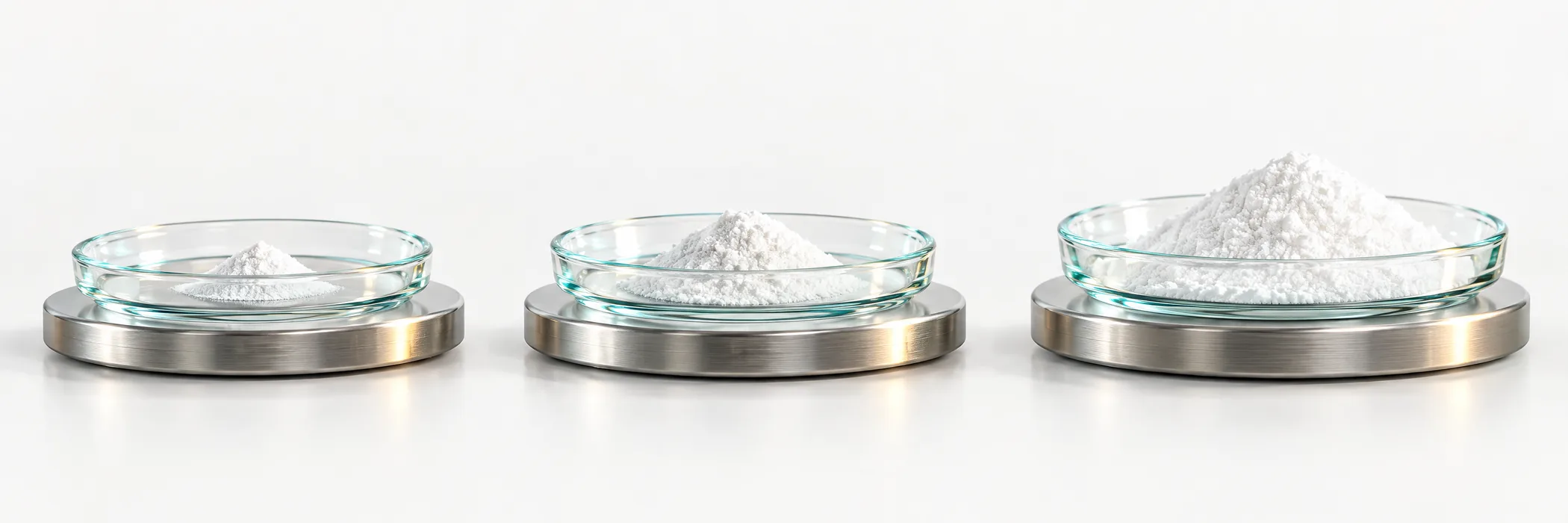
One weekly shot. Both halves climb together, 0.25 mg of each up to 2.4 mg, each rung held at least four weeks.
Dose tiers0.25 mg of each to start, up to 2.4 mg, each rung held four weeks minimum.
- Weeks 1–4:
- 0.25 mg of each. The starter rung for tolerability, semaglutide's own starting dose and below the 0.3–0.6 mg cagrilintide's page gives for starting it alone.
- Weeks 5–8:
- 0.5 mg of each. The first meaningful step; appetite suppression is commonly noticed here.
- Weeks 9–12:
- 1.0 mg of each. A pairing tested in its own phase 3 arm, worth knowing if a lower maintenance dose is the goal.
- Weeks 13–16:
- 1.7 mg of each. Also a trialed pairing.
- Week 17 onward:
- 2.4 mg of each, the phase 3 target. People hold at the last tolerated rung rather than pushing through stomach effects.
How to injectOne weekly injection into the fat under the skin covers both halves.
- Injection site:
- Abdomen (at least two inches from the navel), outer thigh or upper arm. Rotate week to week to avoid lipohypertrophy, fatty lumps from reusing one spot.
- Measuring the dose:
- U-100 syringe, 10 mg in 1 mL. 5 units hold 0.25 mg of each, 10 units 0.5 mg, 20 units 1.0 mg, 34 units 1.7 mg, 48 units 2.4 mg.
- Day of the week:
- One consistent day; the hour does not matter. A shift of up to a couple of days is fine. Many pick a day where a rough evening matters least.
- Food window:
- Food does not affect the shot. Smaller, lower-fat meals through the ramp weeks are the usual advice, since a slowed stomach handles heavy fatty meals worst.
How long a vial lastsDoses are milligrams, not micrograms, so plan supply in weeks, not months.
- A 10 mg vial is about two maintenance doses:
- At 4.8 mg of blend per week (2.4 mg of each), 10 mg gives two full doses and a 20 mg (10 mg + 10 mg) vial gives four.
- Early rungs stretch much further:
- At the 5-unit starter a 10 mg vial holds twenty doses, but a mixed vial keeps about four weeks. Mix what the next few weeks need.
- Duration, not cycles:
- Neither half is cycled. The trials ran 68 weeks of continuous use, and weight comes back after stopping, so the effect holds while dosing continues.
Mixing the vialQuick numbers for the standard 10 mg vial; the on-page calculator splits any draw live.
- Mixing:
- 10 mg vial + 1 mL bacteriostatic water = 10,000 mcg per mL of blend, 5,000 mcg/mL of each. Each unit on a U-100 syringe holds 50 mcg of each.
- Why 1 mL:
- Each half sits at 5 mg/mL, the semaglutide page's mix, so the same rungs carry over. Mixing in 2 mL puts 2.4 mg at 96 units, nearly the whole syringe.
- What the split assumes:
- A 1 : 1 vial, which matches every pairing tested so far (2.4/2.4, 1.7/1.7, 1.0/1.0). It cannot make the planned high-dose arm of 2.4 mg cagrilintide with 7.2 mg semaglutide.
Sources:PMID 40544433DailyMed (Wegovy)PMID 33894838Regulatory status tracker (Drugs.com)
Best time to take it


Implied best time
Anytime (consistent, weekly)
Pick one weekday and hold it. The hour does not matter; the seven-day gap and the four-week steps do.
- Both halves have a roughly week-long half-life, so blood levels depend on which day you inject, not which hour.
- Meals do not affect the shot. Many pick a quiet day, since stomach effects peak in the first day or two after a step up.
- A steady seven-day gap keeps levels even. Slipping a couple of days one week is fine and does not restart the ramp.
Sources:DailyMed (Wegovy)PMID 33894838
What to stack it with


The blend covers two of the three appetite axes in wide use, so another satiety signal adds little. Useful partners cover what it costs you.
The blend + Ipamorelin / CJC-1295A growth-hormone partner for the lean mass this class costs. The blend keeps its weekly day.
- Why it works:
- Weight lost here includes lean mass. Ipamorelin and CJC-1295 raise your own growth-hormone pulse, which favors fat mobilization and lean-tissue retention, an axis the blend does not touch.
- The protocol:
- Ipamorelin 200–300 mcg under the skin at bedtime on an empty stomach, with CJC-1295 no-DAC 100 mcg alongside, or the pre-mixed blend. Only the growth-hormone pair needs fasting.
- Outcome:
- People who are already lean, or who rely on muscle for performance, add it so the weight lost skews toward fat.
The blend + BPC-157Gut-comfort support for the ramp weeks, when stomach effects peak.
- Why it works:
- BPC-157 is studied for gut-lining healing and gut motility. Nausea and discomfort from this pairing concentrate in the first days after each step up.
- The protocol:
- BPC-157 250–500 mcg under the skin daily through the 16-week ramp, then reassess.
- Outcome:
- People add it for comfort through the ramp, not for the weight result.
What not to addThe two common mistakes, and why.
- Another incretin:
- Adding Tirzepatide, Liraglutide or Retatrutide hits the same gut-hormone receptor family twice and mostly stacks stomach side effects. The 2026 head-to-head suggests tirzepatide alone is a comparator, not an add-on.
- More cagrilintide or semaglutide:
- Adding either half separately breaks the 1 : 1 ratio the trial evidence rests on. For a different ratio, people run separate vials, each dose tracked against its own page.
Support nutrients
It blunts appetite, slows the stomach and takes some lean mass with the fat.
Protein, creatine and liftingTop priority. A large share of the weight lost is lean mass, so protein comes first.
- Protein:
- 1.6–2.0 g per kilogram of body weight daily. Eat protein first at every meal, then vegetables, then starch. Shakes often close the gap.
- Creatine:
- 3–5 g of creatine monohydrate daily, no loading phase. One of the best-evidenced supplements for keeping lean mass in a deficit.
- Resistance training:
- Two or three sessions a week of compound movements, the signal to keep muscle.
Nausea and stomach upsetThe slow ramp is the main lever, so do not rush it. These cover the rest.
- Ginger:
- 1–2 g with meals, or as tea. One of the better-supported non-drug options for nausea.
- Vitamin B6:
- 25–50 mg with meals on heavy-nausea days, the classic nausea adjunct.
- Meal composition:
- Smaller, lower-fat, protein-and-vegetable-first meals through the ramp weeks. Heavy fatty meals sit longest in a slowed stomach and cause the worst nausea.
- For constipation:
- 25–35 g total daily fiber, mostly soluble, 300–400 mg elemental magnesium as glycinate or citrate at bedtime, and 2–2.5 L of water a day, since less food means less fluid.
Electrolytes and micronutrientsEating much less means much less of everything coming in.
- Electrolytes and a broad multivitamin:
- Sodium, potassium and magnesium all fall when food volume drops. A daily multivitamin as baseline, with an eye on B12, iron, calcium and vitamin D.
Dose calculator
Reconstitution calculator
Calculated for a 1 mL U-100 insulin syringe (100 units/mL).
Units per dose
48 units
Draw this many units on a U-100 syringe
Each unit holds 100 mcg
This dose contains
- Cagrilintide2.4 mg
- Semaglutide2.4 mg
Fixed ratio. Every draw carries all of the vial's peptides in the same proportions; only the total changes.
- Volume per dose
- 0.48 mL
- Doses per vial
- 2
- Concentration
- 10 mg/mL
One vial lasts
- Daily
- 2 days
- Every other day
- 4 days
- 5×/week
- 2 days
- Large draw (48 units). That's normal for mg doses. To check it, multiply the units by what each unit holds. You should get your dose.
Research use only. Not for human consumption. Outputs are reference values based on research literature. Verify all measurements independently.
Side effects and what to watch
What people notice. Nausea, vomiting, diarrhea, constipation and abdominal pain, in 79.6% of trial participants against 39.9% on placebo, mostly mild to moderate and passing. They scale with dose.
How people handle it. Hold the ramp, small low-fat meals, protein and lifting. With a fixed ratio, a side effect from one half means dropping the whole dose or splitting into separate vials. Weight returns after stopping.
Skip it or take care if. Semaglutide's label says to skip it with a personal or family history of medullary thyroid carcinoma or multiple endocrine neoplasia type 2 (MEN 2), and lists pancreatitis, gallbladder disease, kidney injury from dehydration, worsening diabetic retinopathy and low blood sugar with insulin or a sulfonylurea.
Sources:DailyMed (Wegovy)DailyMed (Ozempic)PMID 40544433PMID 33567185Regulatory status tracker (Drugs.com)
Common questions
What is in the vial, and is it CagriSema?
5 mg of cagrilintide and 5 mg of semaglutide freeze-dried together, a 1 : 1 ratio. 10 mg + 10 mg vials are also sold. CagriSema is Novo Nordisk's name for the same pair at 2.4 mg each.
How is it dosed?
One weekly shot under the skin, both halves together. People start at 0.25 mg of each and step up every four weeks through 0.5, 1.0 and 1.7 to 2.4 mg.
Is the weight loss 20.4% or 22.7%?
Both, from the same trial. 20.4% against 3.0% on placebo counts everyone randomized. 22.7% counts those who stayed on treatment.
Why does the blend use a 1 : 1 ratio?
The trials used it. Every pairing tested so far (2.4/2.4, 1.7/1.7, 1.0/1.0) keeps the two equal. The exception is a planned 2.4 mg cagrilintide with 7.2 mg semaglutide arm, which a 1 : 1 vial cannot make.
How long does a vial last?
Weeks, not months. At the 2.4 mg target a 10 mg vial is about two weekly doses and a 20 mg vial about four. A mixed vial keeps roughly four weeks.
What does it stack with?
Ipamorelin with CJC-1295 to protect muscle, and BPC-157 through the ramp for gut comfort. Another incretin mostly stacks stomach side effects.
Deep dive
Doses used in studies · Molecular identity · References
10From the researchDoses used in studies
Doses from the human trials of the pair, led by REDEFINE 1. The 20.4% figure counts everyone randomized, 22.7% those who stayed on treatment.
| Dose | Route | Model | Outcome | Sources: |
|---|---|---|---|---|
| 2.4 mg + 2.4 mg weekly | Subcutaneous | Human, phase 3, 68 weeks, n=3,417 (REDEFINE 1) | −20.4% mean body weight vs −3.0% placebo (treatment-policy estimand; difference −17.3 points) | PMID 40544433 |
| 2.4 mg + 2.4 mg weekly | Subcutaneous | Human, same trial, trial-product estimand | −22.7% vs −2.3% placebo among participants remaining on treatment; semaglutide alone −16.1%, cagrilintide alone −11.8% | Regulatory status tracker (Drugs.com) |
| 2.4 mg + 2.4 mg weekly | Subcutaneous | Human, phase 3 safety, 68 weeks (REDEFINE 1) | Gastrointestinal adverse events 79.6% vs 39.9% placebo; mainly transient, mild-to-moderate | PMID 40544433 |
| 2.4 mg + 2.4 mg weekly | Subcutaneous | Human, phase 3 head-to-head, 84 weeks vs tirzepatide 15 mg (REDEFINE 4) | 23% weight reduction reported (if-all-adhere estimand); did not meet the non-inferiority endpoint against tirzepatide | Regulatory status tracker (Drugs.com) |
| Multiple ascending | Subcutaneous | Human, phase 1b, cagrilintide with semaglutide 2.4 mg | Established the tolerability and PK basis for co-administration | PMID 33894838 |
| 2.4 mg weekly (cagrilintide alone) | Subcutaneous | Human, phase 2 dose-finding, 26 weeks | Dose-dependent weight reduction as monotherapy | PMID 34798060 |
| 2.4 mg + 2.4 mg vs each alone | Subcutaneous | Human, same trial, single-agent arms (trial-product estimand) | −22.7% combination vs −16.1% semaglutide alone, −11.8% cagrilintide alone, −2.3% placebo | Regulatory status tracker (Drugs.com) |
| 2.4 mg + 2.4 mg weekly | Subcutaneous | Human, phase 2, type 2 diabetes, 32 weeks | Combination exceeded both single agents on weight in a second trial | PMID 37364590 |
| 2.4 mg weekly (semaglutide alone) | Subcutaneous | Human, phase 3 obesity, 68 weeks (STEP-1) | −14.9% mean body weight vs −2.4% placebo | PMID 33567185 |
11ChemistryMolecular identity
- Composition
- Cagrilintide 5 mg · Semaglutide 5 mg = 10 mg per vial (10 mg + 10 mg = 20 mg vials also sold)Cross-source vendor agreement
- Ratio
- 1 : 1 by mass, 50 % cagrilintide · 50 % semaglutideCalculated
- Structure / class
- Fixed-ratio, co-lyophilized blend of an amylin analog and a GLP-1 receptor agonist, not a new molecule; each component keeps its own identity and pharmacologyCross-source vendor agreement
- Cagrilintide (5 mg)
- C194H312N54O59S2 · 4409 g/mol · CAS 1415456-99-3 · acylated long-acting amylin analogPubChem CID 171397054
- Semaglutide (5 mg)
- C187H291N45O59 · 4113.58 g/mol · CAS 910463-68-2 · acylated GLP-1(7-37) analogPubChem CID 56843331
- Molecular target
- Two receptor systems. Amylin receptors (AMY1R/AMY3R) plus the calcitonin receptor for cagrilintide, and the GLP-1 receptor for semaglutidePMID 34288673 · DailyMed (Wegovy)
- Half-life (per component)
- Both about a week. Cagrilintide ~7 days (~159–195 h, secondary PK aggregation), semaglutide ~7 days; the matched duration is why one weekly schedule suits bothPMID 33894838 · DailyMed (Wegovy)Half-life curve →
- Trial evidence
- The 2.4 mg + 2.4 mg pairing was tested in REDEFINE 1, a 68-week phase 3 trial in 3,417 adults (NCT05567796). The only combination on this site whose exact pair and ratio have phase 3 dataPMID 40544433
- Regulatory status
- The combination is not approved by the FDA or any other regulator; an NDA was filed 2025-12-18 and remains under review as of September 2026. Cagrilintide is not approved in any form; semaglutide is approved as a single agent. WADA 2026: GLP-1 agonists monitored, not prohibited; cagrilintide not namedRegulatory status tracker (Drugs.com)
12Primary sourcesReferences
- PubChem CID 171397054PubChem CID 171397054 (Cagrilintide)
- PubChem CID 56843331PubChem CID 56843331 (Semaglutide, free acid)
- PMID 40544433Garvey et al., NEJM 2025. REDEFINE 1: coadministered cagrilintide and semaglutide, phase 3a, 68 weeks, n=3,417 (NCT05567796)
- PMID 33894838Enebo et al., Lancet 2021 (phase 1b cagrilintide + semaglutide)
- PMID 34798060Lau et al., Lancet 2021 (phase 2 cagrilintide monotherapy)
- PMID 37364590Frias et al., Lancet 2023 (CagriSema phase 2, type 2 diabetes)
- PMID 34288673Kruse et al., J Med Chem 2021 (development of cagrilintide)
- PMID 33567185Wilding et al., NEJM 2021 (STEP-1, semaglutide 2.4 mg in obesity)
- DailyMed (Wegovy)DailyMed, Wegovy (semaglutide) label
- DailyMed (Ozempic)DailyMed, Ozempic (semaglutide) label
- Regulatory status tracker (Drugs.com)CagriSema regulatory-status tracker. Not FDA-approved; NDA filed 2025-12-18; REDEFINE 1 trial-product estimand and REDEFINE 4 topline (23% at 84 weeks, non-inferiority vs tirzepatide 15 mg not met, announced 2026-02-23)
- WADA 2026WADA 2026 (GLP-1 agonists on the Monitoring Program, not prohibited; cagrilintide not named)
Reviewed by Ki Researcher Team · Research use only · Not medical advice · Updated 2026-10-05