
Pancragen (KEDW)
KEDW tetrapeptide · Khavinson Cytogen pancreas bioregulator
Pancragen is a four-amino-acid peptide (Lys-Glu-Asp-Trp, KEDW) from Vladimir Khavinson's St. Petersburg institute, the pancreas member of its bioregulator family. People run it for glucose handling and metabolic aging. Studies report corrected glucose tolerance in aging monkeys and pancreas-structure work in rats with experimental diabetes.
At a glance
- Dose
- 500–1,000 mcg a day (some run ~50 mcg)
- How often
- Once a day, in short courses
- How
- A small injection under the skin (belly fat)
- When
- Any time of day, with a meal
- Cycle
- 10–30 day courses, then 1–3 months off
The 30-second versionEverything on this page, fast
Pancreas bioregulator · Blood sugar · Khavinson stack · Metabolic aging
The pancreas peptide of the Khavinson bioregulator family. A tiny four-amino-acid molecule (KEDW) run as the metabolic and blood-sugar slot of a tissue-by-tissue bioregulator course, on top of diet and exercise.
The basics
- A lab-made four-amino-acid peptide (KEDW), the pancreas piece of the Russian Khavinson line.
- The piece people reach for when they want a glucose and pancreas angle in a bioregulator stack.
Why people use it
- Fills the pancreas and glucose slot in a tissue-by-tissue Khavinson routine.
- Glucose handling in aging. Studies report corrected glucose tolerance in aging monkeys and pancreas-structure work in rats with experimental diabetes.
- A small, well-defined molecule. You know exactly what KEDW is.
- Sits on top of the proven levers. Diet, exercise and the well-evidenced metabolic aids stay the foundation.
Stacks well with
- Epitalon, the Khavinson pineal and longevity pairing that anchors a whole-system course.
- Cortagen, the family's heart and vessel tetrapeptide, for a metabolic plus cardiovascular angle.
Good to know
- Run it as a short course, then take a break; 10–30 days on, 1–3 months off.
- Take it at a steady time around meals; the daily rhythm matters more than the hour.
- Diet and exercise move blood sugar more than any peptide, so keep them as the base.
What it does
Pancragen is the pancreas peptide of the Khavinson bioregulator family. Here is what people run it for.
- The pancreas piece of a bioregulator routineEach Khavinson peptide targets one tissue. People building a tissue-by-tissue protocol run Pancragen as the metabolic piece.
- Supports glucose handling in agingStudies report corrected glucose tolerance in aging monkeys and pancreas-structure effects in rats with experimental diabetes.
- A small, well-defined moleculeKEDW (Lys-Glu-Asp-Trp) is a chemically verified tetrapeptide, so you know exactly what the molecule is.
- Pairs with the proven metabolic leversPeople run it on top of diet, exercise and aids like berberine and alpha-lipoic acid, not in place of them.
- Short courses, little burdenIt runs in brief pulsed courses rather than continuous use, which suits people already on the Khavinson approach to longevity.
Sources:PMID 18642713PMID 18225766PMID 25946840PMID 22448364
How it works
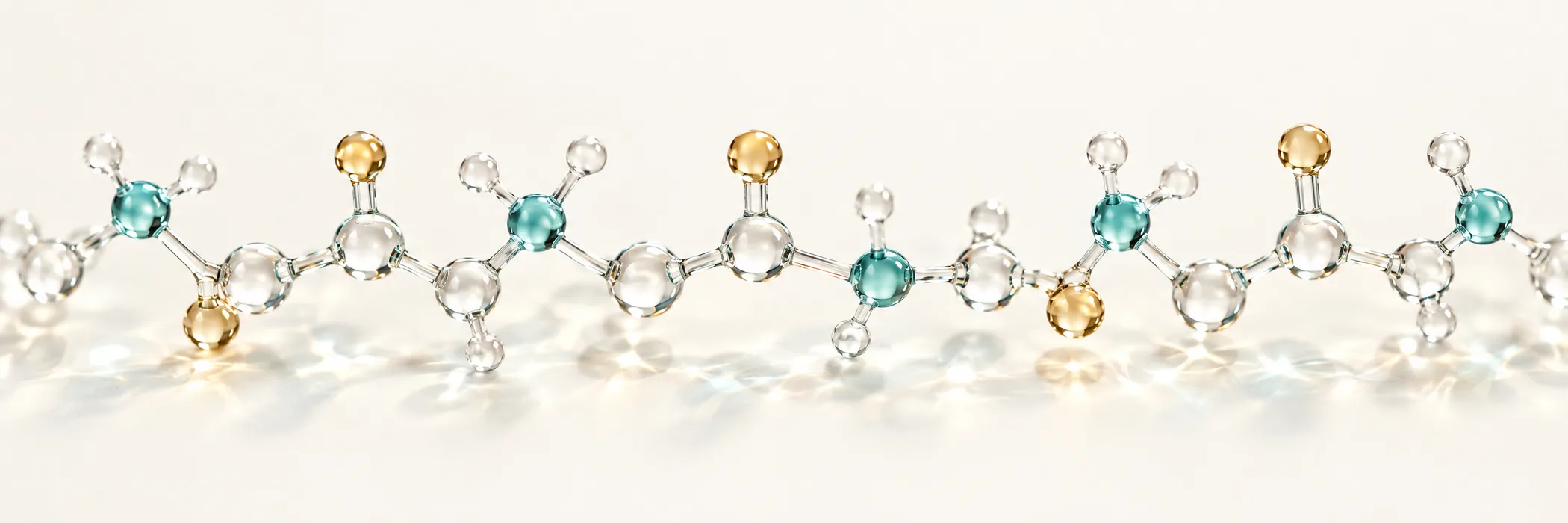
Works at the gene level. The Khavinson group proposes that short peptides like KEDW enter the cell nucleus, bind DNA promoter sequences or histones and regulate genes (switch them on and off). The aim is to restore function in aged cells of one tissue.
Aimed at the pancreas. For Pancragen the proposed target is pancreatic and islet cells, and the payoff is better glucose handling.
Binds DNA in lab tests. Molecular modeling from the Khavinson group maps how the tetrapeptide sits on DNA. A second Russian lab, Vanyushin's group, reports that it binds histones and DNA strands.
Sources:PMID 21246099PMID 23581987PMID 24770759PMID 27909961
How to dose it
Most people run Pancragen as a small daily injection under the skin, in short courses.
Dose tiersPeople run ~50 to 1,000 mcg a day; most vendor guides use 500 to 1,000 mcg.
- Conventional range:
- ~50–1,000 mcg per day. The 500–1,000 mcg in most vendor guides is the oral Pankragen-Forte capsule dose, applied to injection. People start low to gauge tolerance.
- The low camp:
- ~50 mcg, from the study in old rhesus monkeys, 50 µg/animal/day intramuscular (IM, into the muscle) × 10 days (Goncharova 2014).
- Route:
- Under the skin by convention, like the other Khavinson peptides. The monkey study used IM.
- Free acid or amide:
- Some papers name the amide KEDW-NH₂ as the active natural form, not the free-acid KEDW in the specs. Vendors rarely say which they sell.
How to injectBelly, love-handle or thigh fat, rotated from dose to dose.
- Injection site:
- Abdomen (a couple of inches clear of the navel), love handles or outer thigh. Rotate sites. Reusing one spot causes irritation and small fatty lumps (lipohypertrophy).
- Measuring the dose:
- Draw it on a U-100 insulin syringe. The Mixing the vial card gives the units; the calculator handles any vial.
- Time of day:
- Not critical. A steady daily time with a meal is the convention.
- Food window:
- Injection skips digestion, so no food window.
Cycle and breaksLike the rest of the Khavinson family, it runs in short courses.
- Standard course:
- 10–30 days of daily injection, the Khavinson bioregulator course model.
- Washout:
- 1–3 months off between courses, and the same for each Khavinson peptide run alongside it, such as Epithalamin or Cortagen.
- No chronic daily use:
- People keep it to defined courses, not indefinite daily dosing.
Mixing the vialWith 10 mg in 2 mL bacteriostatic water, 500–1,000 mcg doses take 10–20 syringe units.
- Mixing:
- 10 mg in 2 mL bacteriostatic water makes 5,000 mcg/mL. On a 100-unit (1 mL) syringe, 500 mcg takes 10 units, 750 mcg 15 units, 1,000 mcg 20 units.
- Why 2 mL:
- An easy 10–20 units per dose on a U-100 syringe. The calculator adjusts for any dilution.
Sources:PMID 18642713PMID 18225766PMID 25946840PMID 22448364
Best time to take it


Implied best time
Anytime (consistent, with food)
Time of day isn't critical. Pick a consistent daily time and take it with a meal, the usual convention.
- Pancragen has no published half-life, so there is no clearance curve to time a dose against. Day-to-day consistency matters more than the hour.
- Its target is the pancreas and glucose handling, so pairing the dose with a meal lines it up with that metabolic activity.
- If you run other Khavinson peptides alongside it, one fixed daily mealtime keeps the whole course consistent.
Sources:PMID 18642713PMID 25946840
What to stack it with


Pancragen pairs with other Khavinson bioregulators, or with a GLP-1 (glucagon-like peptide-1) drug.
Pancragen + EpitalonThe Khavinson longevity pair, pancreas plus pineal gland.
- Why it works:
- Epithalamin (Epitalon) is the Khavinson pineal peptide, studied for telomerase activation and melatonin rhythm. The pineal sets the daily rhythm that coordinates metabolic timing.
- The protocol:
- Pancragen 500–1,000 mcg daily under the skin, plus Epitalon 5–10 mg/day for a 10-day course, run together. Both follow the same course-and-rest pattern.
- Outcome:
- Reached for in a Khavinson longevity course that targets several systems at once.
Pancragen + CortagenAdds the family's heart and vessel peptide to its pancreas peptide.
- Why it works:
- Cortagen (Ala-Glu-Asp-Arg) is the Khavinson cardiovascular bioregulator. Heart risk and blood-sugar problems are tightly linked, so the pair covers both.
- The protocol:
- Pancragen 500–1,000 mcg + Cortagen 500–1,000 mcg daily under the skin, as parallel courses with the same 10–30-day length and washout.
- Outcome:
- The pairing people run for a metabolic plus cardiovascular focus.
Pancragen + semaglutide or another GLP-1Pairs Pancragen with the best-evidenced glucose tool, a GLP-1 drug.
- Why it works:
- GLP-1 drugs (semaglutide, liraglutide) raise insulin release, suppress glucagon and slow stomach emptying, a different lever from Pancragen's proposed gene regulation.
- The protocol:
- GLP-1 as prescribed, plus Pancragen 500–1,000 mcg daily under the skin on a separate course. On a GLP-1 for diabetes or metabolic disease, add Pancragen only with medical oversight.
- Outcome:
- For people already on a GLP-1 who want to add the Khavinson element.
Support nutrients
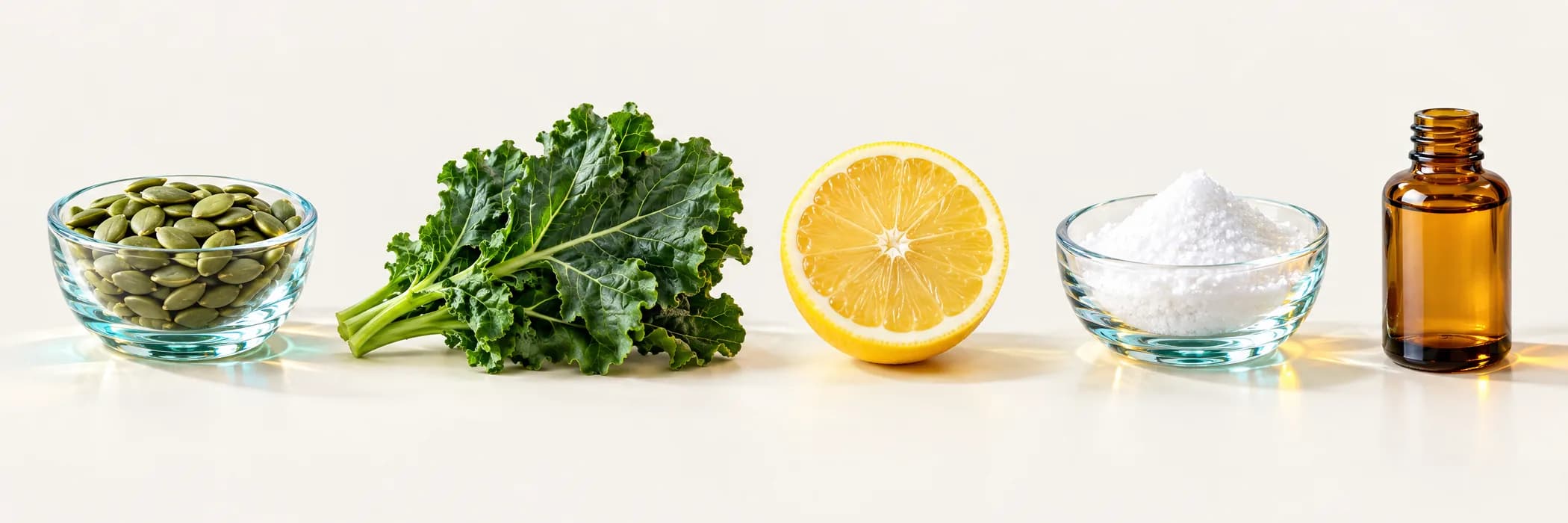
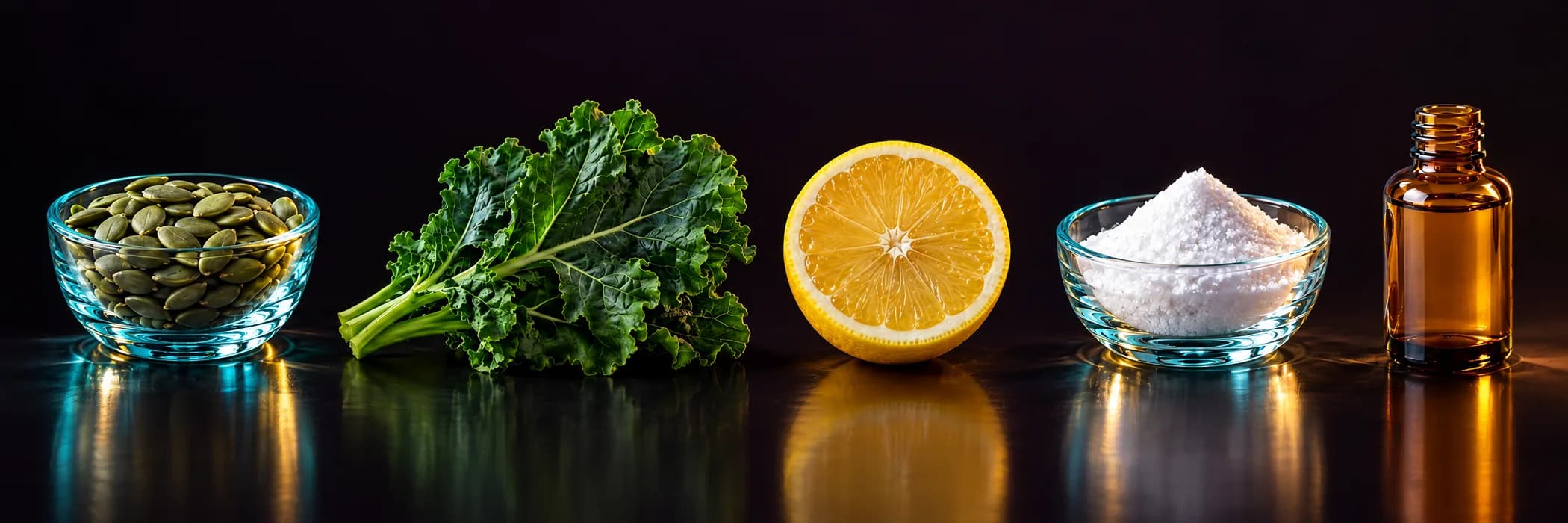
The glucose levers people run alongside Pancragen.
Diet and exercise firstThese move blood sugar more than any peptide.
- Diet composition:
- High fiber, enough protein and little refined carbohydrate or added sugar steady blood glucose. It is the biggest lever you control.
- Exercise:
- Resistance and aerobic training raise insulin sensitivity. Aim for at least 150 minutes of moderate-intensity activity weekly plus 2 strength sessions.
Minerals for insulin signalingChromium and magnesium work in insulin signaling and glucose uptake.
- Chromium:
- 200 mcg chromium picolinate daily. It boosts insulin's action at the receptor; low levels are tied to poor glucose tolerance.
- Magnesium:
- 300–400 mg magnesium glycinate or malate daily, with food to ease the laxative effect. Low magnesium tracks with insulin resistance.
Alpha-lipoic acid and berberineThe two supplements with the strongest trial evidence for glucose control.
- Alpha-lipoic acid (ALA):
- 600 mg daily (or 300 mg twice daily), taken 30 minutes before a meal. Trials show better insulin sensitivity and fasting glucose.
- Berberine:
- 500 mg berberine HCl three times daily with meals. It activates AMPK, the cell's energy sensor, much like metformin. On glucose-lowering drugs, add it only with medical oversight.
Track your glucoseA glucose meter shows whether the course is working.
- Blood glucose monitoring:
- Fasting and 2-hour after-meal readings. They also catch low blood sugar when berberine meets another glucose-lowering agent. A must when stacking them.
Enough proteinPancreatic enzymes and tissue upkeep run on amino acids.
- Protein intake:
- 1.6–2.0 g per kg of bodyweight daily, from whole foods.
Dose calculator
Reconstitution calculator
Calculated for a 1 mL U-100 insulin syringe (100 units/mL).
Units per dose
10 units
Draw this many units on a U-100 syringe
Each unit holds 50 mcg
- Volume per dose
- 0.1 mL
- Doses per vial
- 20
- Concentration
- 5 mg/mL
One vial lasts
- Daily
- 20 days
- Every other day
- 40 days
- 5×/week
- 28 days
Research use only. Not for human consumption. Outputs are reference values based on research literature. Verify all measurements independently.
Side effects and what to watch
What people notice. The animal and primate studies report no harm.
Worth knowing. Human safety data at any dose or duration have not been published.
Skip it or take care if. You have diabetes or another glucose-regulation problem, since its target is blood sugar.
Sources:PMID 18642713
Common questions
What is Pancragen?
A trade name (also Pancravit) for KEDW, a lab-made four-amino-acid peptide (Lys-Glu-Asp-Trp) from Vladimir Khavinson's Cytogen line of bioregulators. It is the pancreas peptide of the family, run for blood sugar and pancreatic function.
What does it do for blood sugar?
Studies report effects on blood glucose and pancreas structure in rats with experimental diabetes, and corrected glucose tolerance in aging rhesus monkeys. A review lays out its prospects for metabolic problems in older adults.
How does it work?
The Khavinson group proposes that short peptides like KEDW bind DNA and regulate genes (switch them on and off) in pancreatic cells. Lab studies show the peptide binds DNA and histones.
How is it dosed?
People run ~50–1,000 mcg a day under the skin; most vendor guides use 500–1,000 mcg. Courses last 10–30 days, with 1–3 months off. Vendors rarely say whether they sell the free-acid or amide form.
Deep dive
Doses used in studies · Molecular identity · References
10From the researchDoses used in studies
These are the designs used in the studies, from rats with experimental diabetes to aging monkeys and a review on older adults.
| Dose | Route | Model | Outcome | Sources: |
|---|---|---|---|---|
| In vivo | In vivo (rats) | Rats with experimental diabetes (Khavinson 2007, Bull Exp Biol Med) | Reported effects on blood glucose, capillary permeability and adhesion in experimental diabetes, an animal-model metabolic signal, not a clinical outcome | PMID 18642713 |
| In vivo | In vivo (rats) | Pancreatic functional morphology in experimental-diabetes rats (Kvetnoi 2007, Bull Exp Biol Med; as 'pancragene') | Reported effect on the functional morphology of the pancreas, a tissue-level animal signal | PMID 18225766 |
| In vivo | In vivo (primates) | Old female rhesus monkeys with impaired glucose tolerance (Goncharova 2014/2015, Advances in Gerontology) | Reported impact on endocrine pancreatic function and correction of impaired glucose tolerance in aged monkeys, a primate-model signal from a network lab, not an independent human trial | PMID 25946840 |
| Not specified | Human-oriented review | Elderly people, metabolic-disorder correction 'prospects' (Korkushko 2011, Bull Exp Biol Med) | Discusses prospects for correcting metabolic disorders in the elderly; framed as prospects, with no verifiable controlled dosing regimen; treat as a single-school, human-oriented review, not trial evidence | PMID 22448364 |
11ChemistryMolecular identity
- Monoisotopic mass
- 576.2544 Da (free acid)
- Sequence (4 AA)
- Lys-Glu-Asp-Trp (KEDW), free acid (all-L)PubChem CID 68452877
- Structure / class
- Synthetic tetrapeptide; Khavinson 'Cytogen' bioregulatorPubChem CID 68452877; Khavinson-school literature
- Molecular formula
- C₂₆H₃₆N₆O₉PubChem CID 68452877 (free-acid KEDW)
- Molecular weight
- 576.6 g/molPubChem CID 68452877 (free-acid KEDW)
- Form note
- Free-acid identifiers shown; part of the literature describes the bioactive endogenous form as the C-terminal amide KEDW-NH₂ (different exact mass); flagged, not asserted herePMID 21246099 (KEDW-NH₂) vs PubChem free-acid CIDs
- PubChem CID
- 68452877 (all-L); 18304372 (flat / undefined stereo)PubChem
- CAS / UNII
- Unverified, not assertedNo CAS or UNII in PubChem registry xrefs for CID 68452877
- Water solubility
- Water-soluble (polar free-acid tetrapeptide; lone Trp residue adds some hydrophobicity; reconstituted in bacteriostatic water)Structural inference (ionizable Lys/Glu/Asp side chains)
- Molecular target
- No classic receptor identified; claimed pancreas/islet gene-expression modulator for glucose handling (single-school positioning)Khavinson-school 'tissue-specific peptide' framework (not independently established)
- Half-life
- Not established (no published human pharmacokinetics)Not established
- Regulatory status
- Not approved by any major drug regulator; no Western/independent randomized trials locatedNo NDA/BLA/EMA record located
12Primary sourcesReferences
- PMID 18642713Khavinson VKh et al., Bull Exp Biol Med 2007. Pancragen effect on blood glucose, capillary permeability and adhesion in experimental-diabetes rats
- PMID 18225766Kvetnoi IM et al., Bull Exp Biol Med 2007. 'Pancragene' effect on functional morphology of pancreas in experimental-diabetes rats
- PMID 21246099Khavinson VKh et al., Bull Exp Biol Med 2010. Biological activity of endogenous Lys-Glu-Asp-Trp-NH₂ (KEDW-NH₂, the amide form)
- PMID 25946840Goncharova ND et al., Advances in Gerontology 2014/2015. Pancragen impact on endocrine pancreas and impaired glucose tolerance in old rhesus monkeys (primate model)
- PMID 22448364Korkushko OV et al., Bull Exp Biol Med 2011. Prospects of Pancragen for correcting metabolic disorders in elderly people (human-oriented, prospects only)
- PMID 23581987Fedoreyeva LI et al., Biochemistry (Moscow) 2013. Short peptides interact with FITC-labelled histones / oligonucleotide complexes (Vanyushin lab; partial-independent binding corroboration only)
- PMID 24770759Tarnovskaya SI et al., Bull Exp Biol Med 2014. Molecular-mechanics modelling of DNA–tetrapeptide interactions
- PMID 27909961Khavinson VK et al., Bull Exp Biol Med 2016. 'Short Peptides Regulate Gene Expression' (single-school mechanism review)
- PubChem CID 68452877PubChem record, identity (CID, formula, MW, sequence; free-acid KEDW). 'Pancragen'/'KEDW' are not PubChem synonyms; mapping is primary-sourced in the Khavinson literature
Reviewed by Ki Researcher Team · Research use only · Not medical advice · Updated 2026-09-24