
Vesugen (KED)
KED tripeptide · Khavinson Cytogen vascular bioregulator
Vesugen is a three-amino-acid peptide (Lys-Glu-Asp, KED) from Vladimir Khavinson's St. Petersburg institute, the vascular member of its bioregulator family. People run it for blood-vessel and healthy-aging goals. In cultured vascular cells it normalized endothelin-1, a vessel-tone protein, and raised the longevity-associated protein SIRT1.
At a glance
- Dose
- 100–500 mcg a day
- How often
- Once a day through the course
- How
- A small injection under the skin (belly fat)
- When
- Any time of day; most people pick the morning
- Cycle
- 10–20 days on, then a 2–4 week break
The 30-second versionEverything on this page, fast
Vascular support · Endothelial signaling · Healthy aging · Bioregulator
The vascular peptide of the Khavinson bioregulator family. A three-amino-acid peptide (Lys-Glu-Asp, KED) run for blood-vessel and healthy-aging goals in a short, contained course.
The basics
- A synthetic three-amino-acid peptide (KED), the vascular member of the Khavinson bioregulator set.
- Run in short pulsed courses, not daily and indefinitely.
Why people use it
- A vascular angle. In cultured vascular cells it normalized endothelin-1 and restored the connections between endothelial cells.
- A healthy-aging angle. The same work raised SIRT1, a protein tied to longevity research.
- The vascular piece of the bioregulator set. People add it when the goal is the blood vessels specifically.
- A short, defined course. 10–20 days on, then off, the pattern the whole family follows.
Stacks well with
- Ventfort, the other Khavinson vascular peptide, paired to cover the vascular system from two sides.
- Epitalon, the most studied of the Khavinson bioregulators, adds the whole-body aging piece alongside the vascular one.
Good to know
- Run it as a short course, on then off, the way the whole bioregulator family is used.
- Time of day is flexible. Pick one daily time and hold it across the course; most people choose the morning.
- A clean, well-defined tripeptide (KED) with a clear formula, weight and structure.
What it does
Vesugen is the vascular peptide of the Khavinson bioregulator family. Here is what people run it for.
- Supports the blood-vessel liningIn cultured vascular cells it normalized endothelin-1, a vessel-tone protein, and restored connections between endothelial cells.
- Raises a longevity proteinThe same work raised SIRT1, a protein tied to longevity research, and modulated aging-related genes in stem-cell cultures.
- Memory and attention in older adultsA Khavinson review reports that oral KED improved memory and attention in older adults with functional nervous-system disorders.
- Aimed at the vessels specificallyIn Khavinson's one-peptide-per-tissue system, Vesugen is matched to the vessel wall. People add it for vascular goals.
- A short, defined courseLike the rest of the family, it runs in brief courses of 10–20 days, not daily indefinitely.
- Works alongside vascular basicsThe cofactor cards pair it with nitric-oxide precursors, omega-3, exercise, not smoking and blood-pressure control.
How it works
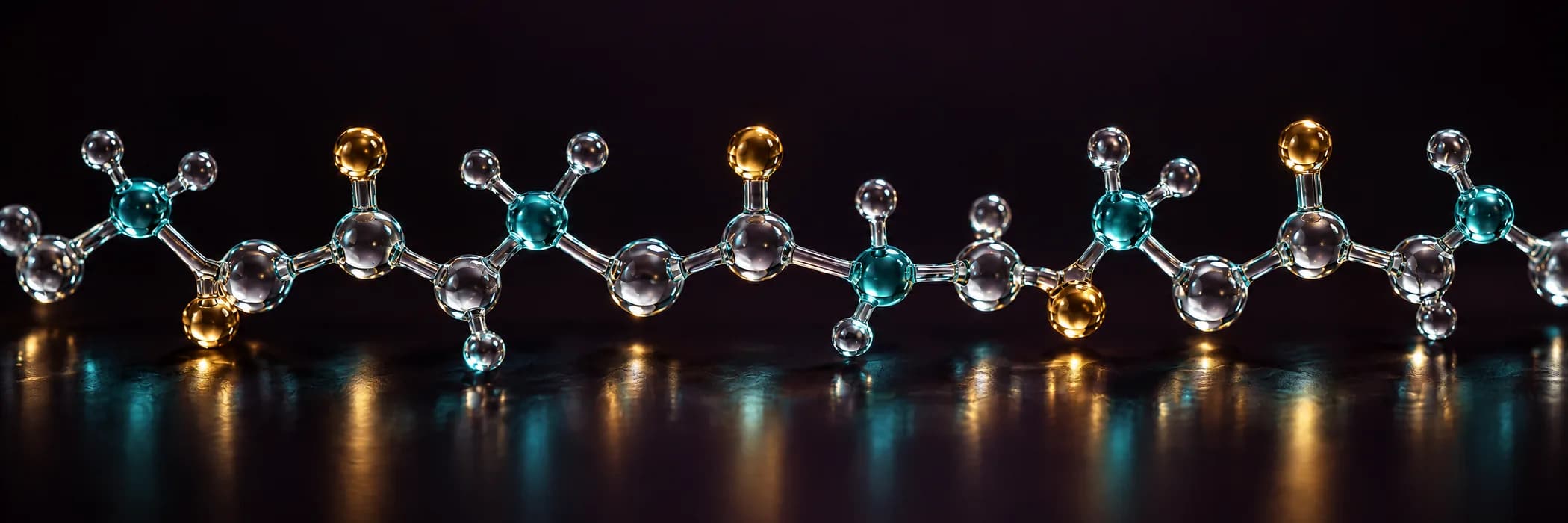
A gene-level model. The Khavinson group proposes that short peptides like KED enter the cell nucleus, bind DNA and turn target genes up or down. The group calls this peptide regulation of homeostasis.
Targets the vessel lining. In cultured vascular cells, KED normalized endothelin-1, a protein that tightens blood vessels. It restored the connexin links between endothelial cells, the cells that line the vessel, and raised SIRT1 (sirtuin-1), a DNA-repair and longevity signal.
Reaches several cell types. Cell studies also report gene and protein changes in skin fibroblasts, mesenchymal stem cells and stem cells turned into neurons.
How to dose it
Most people run Vesugen as a small injection under the skin, once a day, in short courses with breaks between.
Dose tiersMost people run 100 to 500 mcg per injection, once a day.
- Common range:
- 100–500 mcg per injection, once daily. This is the range users and practitioners cite across Khavinson's Cytogen bioregulator family.
- Route:
- Subcutaneous injection, a small injection under the skin, the route the on-page calculator is built for.
How to injectA small injection into belly, love-handle or thigh fat, rotated between injections.
- Injection site:
- The abdomen (2–3 cm clear of the navel), the love-handle area or the outer thigh. Rotate sites between injections so the same spot isn't used repeatedly.
- Measuring the dose:
- On a U-100 insulin syringe, with 10 mg in 2 mL bacteriostatic water, 100 mcg takes 2 units, 250 mcg takes 5 units, 500 mcg takes 10 units.
- Time of day:
- Most users dose in the morning. A steady daily time across the course matters more than the hour.
- Food window:
- No food timing. Inject with or without a meal.
Cycle and breaksPeople run short courses of 10 to 20 days, then take 2 to 4 weeks off.
- Standard course:
- 10–20 days of daily dosing, then a break, the usual Cytogen family pattern. Some protocols run 3–4 weeks.
- Washout:
- 2–4 weeks off between courses is common. Some users check blood pressure and a basic lipid panel during the break to track general vascular health.
- Repeat courses:
- Some users run 2–3 courses per year, following the Cytogen seasonal-course pattern.
Mixing the vial10 mg plus 2 mL bacteriostatic water gives 5,000 mcg/mL. The calculator handles other vial sizes.
- Mixing:
- 10 mg in 2 mL bacteriostatic water gives 5,000 mcg/mL. On a 100-unit syringe, 100 mcg takes 2 units, 250 mcg takes 5 units, 500 mcg takes 10 units.
- Higher dilution option:
- 3 mL, the most a standard vial holds, gives about 3,333 mcg/mL. 100 mcg takes 3 units, 250 mcg takes 7.5 units, 500 mcg takes 15 units.
Sources:PMID 28539025PMID 34173097
Best time to take it


Implied best time
Anytime (consistent)
Time of day is flexible. Pick one daily time you will keep and hold it across the course.
- Vesugen targets the blood-vessel lining, not the body clock. Nothing in how it works ties it to a time of day.
- Unlike the pineal peptides Epitalon and Pinealon, it has no melatonin logic. Morning is a common default that lines up loosely with daytime blood-pressure rhythms.
- It runs in short courses of 10–20 days, so the same daily time across the course matters more than the exact hour.
What to stack it with


Vesugen is one piece of Khavinson's one-peptide-per-tissue system, so people pair it with other bioregulators from the same family.
Vesugen + VentfortTwo vascular bioregulators, paired to cover the vascular system from two sides.
- Why it is used:
- Ventfort is matched to the heart and blood vessels, Vesugen to the vessel wall itself. Together they cover complementary vascular targets.
- The protocol:
- Both at their usual doses, commonly 100–500 mcg each, under the skin, once daily, on the same course (10–20 days on, 2–4 weeks off).
Vesugen + EpitalonAdds the most studied Khavinson bioregulator for a whole-body aging angle.
- Why it is used:
- Epitalon has the broadest research base in the family, including telomere data in small human groups and melatonin induction. With Vesugen it covers whole-body and vascular aging.
- The protocol:
- Epitalon 5–10 mg daily under the skin on a 10–20-day course, with Vesugen at its usual dose. Many users run both on the same course calendar.
Support nutrients
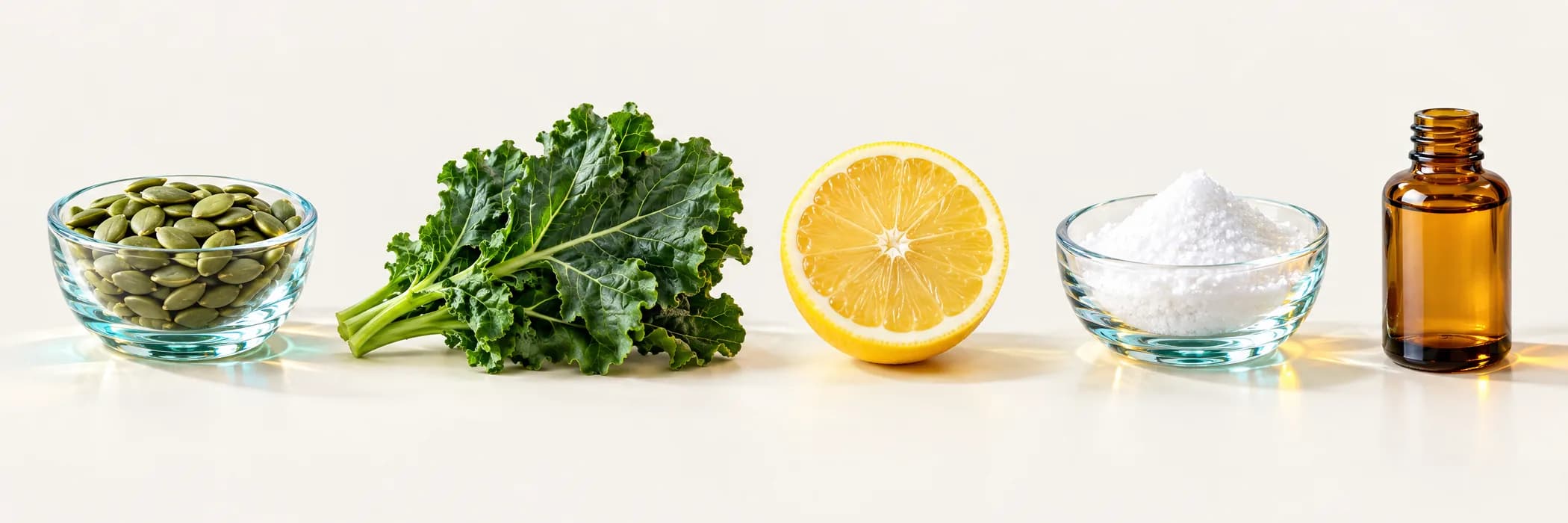
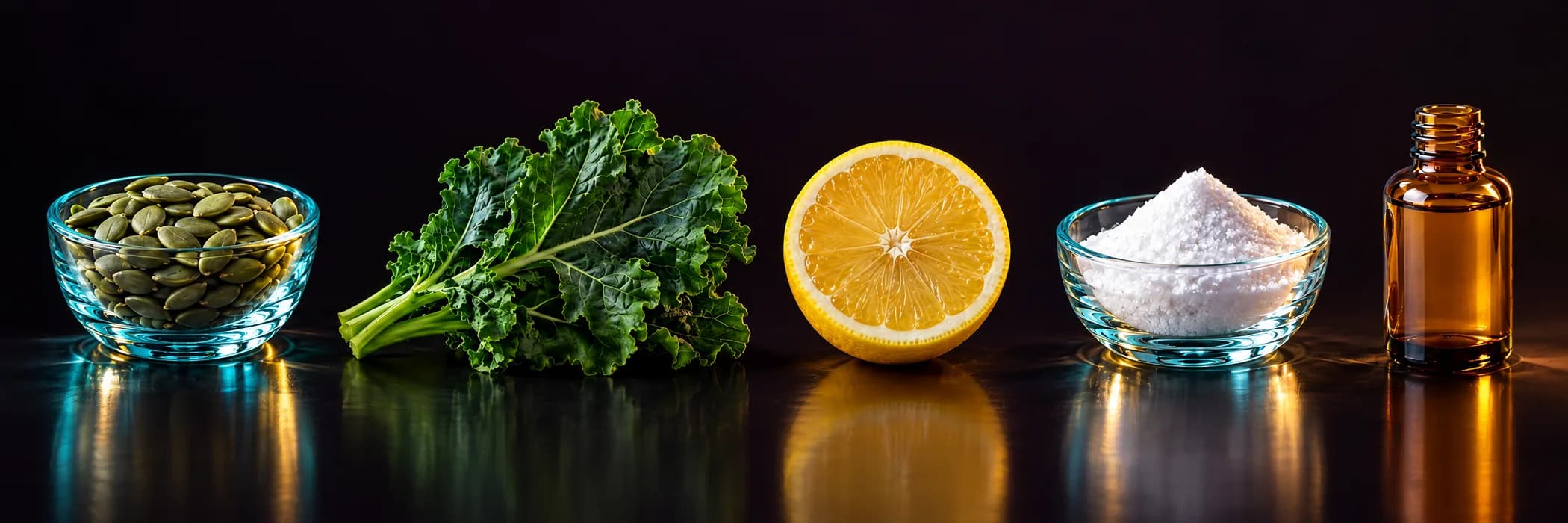
Nutrients and habits the vessel lining runs on.
Feed the nitric-oxide pathwayThe vessel lining makes nitric oxide to widen vessels.
- L-citrulline:
- 3 g once daily, empty stomach or between meals. It becomes L-arginine and outlasts arginine in the gut.
- L-arginine (alternative):
- 3–6 g/day if you skip citrulline. The direct building block, but more breaks down in the gut.
- Dietary nitrate:
- Beets, beet powder or leafy greens, whose nitrate tongue bacteria turn into nitric oxide. Aim for ~200–300 mL beet juice or a large serving of greens.
Build strong vessel wallsVessel walls are built from collagen; vitamin C runs the enzymes that make it.
- Vitamin C:
- 500 mg once or twice daily; 1,000 mg/day when needs run higher. Take it with a collagen-rich meal or supplement.
Omega-3 for the vessel liningOmega-3 fats build into vessel-lining cells and lower adhesion molecules and triglycerides.
- EPA/DHA:
- 1–2 g daily of EPA plus DHA (eicosapentaenoic and docosahexaenoic acid) from fish oil, krill oil or vegan algae. Take it with a fatty meal.
Habits that protect vesselsThe strongest established drivers of vessel-lining function.
- Exercise:
- Aerobic exercise drives nitric-oxide production: 30 minutes of moderate effort 5 days/week improves flow-mediated dilation, a vessel-lining test.
- Not smoking:
- Smoke damages the vessel lining and raises endothelin-1. Quitting is the biggest vascular step for most users.
- Blood-pressure control:
- High blood pressure wears on the vessel lining. If it runs high, less salt, the DASH (Dietary Approaches to Stop Hypertension) diet and medical care protect the vessels.
Dose calculator
Reconstitution calculator
Calculated for a 1 mL U-100 insulin syringe (100 units/mL).
Units per dose
5 units
Draw this many units on a U-100 syringe
Each unit holds 50 mcg
- Volume per dose
- 0.05 mL
- Doses per vial
- 40
- Concentration
- 5 mg/mL
One vial lasts
- Daily
- 40 days
- Every other day
- 80 days
- 5×/week
- 56 days
Research use only. Not for human consumption. Outputs are reference values based on research literature. Verify all measurements independently.
Side effects and what to watch
What people notice. The published work, mostly cell studies and small reports, describes no side effects.
How people handle it. Rotate injection sites between injections to avoid irritation and fatty lumps.
Skip it or take care if. You have a heart or blood-vessel condition, since Vesugen is aimed at the vascular system.
Sources:PMID 28539025
Common questions
What is Vesugen?
It is KED, a three-amino-acid peptide (Lys-Glu-Asp) from Vladimir Khavinson's Cytogen line of bioregulators. It is the family's vascular peptide, run for blood-vessel and healthy-aging goals.
What does Vesugen do for blood vessels?
In cultured vascular cells it normalized endothelin-1, a vessel-tone protein, restored the connexin links between endothelial cells and raised SIRT1. People run it to support the vessel lining.
How is it dosed?
Most people run 100–500 mcg as a small injection under the skin, once a day. A Khavinson review also describes oral KED in elderly people, without a set dose.
Do I need to cycle Vesugen?
Yes. People run 10–20 days of daily injections, then take 2–4 weeks off. Some run 2–3 courses per year.
When should I take Vesugen?
Any time of day works. Most people pick the morning and hold the same time across the course.
Deep dive
Doses used in studies · Molecular identity · References
10From the researchDoses used in studies
These are the settings used in the published studies, mostly cultured cells, plus a review of oral use in older adults.
| Dose | Route | Model | Outcome | Sources: |
|---|---|---|---|---|
| In vitro | Cell culture | Cultured vascular/endothelial cells (Kozlov 2016, Advances in Gerontology; the core 'vascular' paper) | KED reportedly normalised endothelin-1 expression, restored connexin-mediated endothelial cell interactions, and increased SIRT1; the 'anti-atherosclerotic substance' label is an author claim, not a trial outcome | PMID 28539025 |
| In vitro | Cell culture | Aging human mesenchymal stem cell cultures (Ashapkin 2020, Mol Biol Rep) | KED (with related peptides) modulated IGF1 / FOXO1 / TERT / NF-κB expression; IGF1 reported up several-fold, a gene-expression signal in cultured cells, not a clinical result | PMID 32399807 |
| In vitro | Cell culture | Human periodontal-ligament stem cells, neuronal differentiation (Caputi 2019, Int J Immunopathol Pharmacol) | KED (with related peptides) increased GAP43 and Nestin during neuronal differentiation, a cell-marker signal from a network collaboration, not independent replication | PMID 30791821 |
| Oral (unspecified) | Review claim | Elderly individuals with functional CNS disorders, as summarised in a Khavinson review (Khavinson 2021, Bull Exp Biol Med) | Review states oral KED 'improved memory and attention', reported without a controlled, citable dosing regimen; treat as a single-school review claim, not trial evidence | PMID 34173097 |
11ChemistryMolecular identity
- Molecular formula
- C₁₅H₂₆N₄O₈
- Molecular weight
- 390.39 g/mol
- Monoisotopic mass
- 390.1751 Da
- Sequence (3 AA)
- Lys-Glu-Asp (KED), H-Lys-Glu-Asp-OH, all-L (free acid)PubChem CID 87571363
- Structure / class
- Synthetic tripeptide; Khavinson 'Cytogen' bioregulatorPubChem CID 87571363; Khavinson-school literature
- PubChem CID
- 87571363PubChem (peptide record; not the unrelated bare-'KED' CID 130427306)
- CAS / UNII
- Unverified, not assertedNo CAS or UNII in the PubChem synonym list for CID 87571363
- Water solubility
- Freely water-soluble (small, highly polar free-acid tripeptide; reconstituted in bacteriostatic water)Structural inference (ionizable Lys/Glu/Asp side chains)
- Molecular target
- No classic receptor identified; claimed vascular/endothelial gene-expression modulator; endothelin-1, connexins, SIRT1 (single-school positioning)Khavinson-school 'tissue-specific peptide' framework (not independently established)
- Half-life
- Not established (no published human pharmacokinetics)Not established
- Regulatory status
- Not approved by any major drug regulator; no independent controlled human trials locatedNo NDA/BLA/EMA record located
12Primary sourcesReferences
- PMID 28539025Kozlov KL et al., Advances in Gerontology 2016. The core 'vascular' paper: KED normalised endothelin-1, restored endothelial connexin coupling, increased SIRT1 (in vitro; Russian)
- PMID 34173097Khavinson VK et al., Bull Exp Biol Med 2021. Review; states oral KED improved memory/attention in elderly and restores synaptic plasticity in an in-vitro AD model
- PMID 32399807Ashapkin V et al., Mol Biol Rep 2020. KED (with AED, KE) modulated IGF1/FOXO1/TERT/NF-κB in aging human MSC cultures (network collaboration, not independent replication)
- PMID 30791821Caputi S et al., Int J Immunopathol Pharmacol 2019. KED (and related peptides) increased GAP43 and Nestin in neuronal differentiation of human periodontal-ligament stem cells (Italian–St. Petersburg collaboration)
- PMID 27259496Lin'kova NS et al., Bull Exp Biol Med 2016. Peptide regulation of skin fibroblast function during in-vitro aging (KED among peptides studied)
- PubChem CID 87571363PubChem record, identity (CID, formula, MW, sequence). Note: the bare 'KED' name search returns an unrelated molecule (CID 130427306); the correct peptide CID is 87571363
Reviewed by Ki Researcher Team · Research use only · Not medical advice · Updated 2026-09-24